Geocaching in Ten Countries in One Day

Norman Roth (Norman.R), Dominik Weiss (Zweisamkite) Max Welteken (myGe0cache)

Planning is what Max Welteken (myGe0cache)  does for a living. He’s a delivery manager at a software development company in Europe. Max also gets bored doing things in what he calls a “normal or easy way.”

An idea that was neither boring nor easy struck Max recently. He wanted to log geocaches in ten countries in less and 24 hours.

Max says, “I saw the 10/24 attempt as a big project (which it was) where a lot of planning in advance was required. I spent almost a full week on fine planning the optimal route through all the 10 different countries.”

But Max knew the adventure needed co-conspirators. Max contacted two geocaching buddies, Norman Roth (Norman.R) and Dominik Weiss (Zweisamkite).

Once the team was set, Max finished his planning. He says, “I contacted all owners before we started to find out if there were any problems with the caches that might delay us on the trip. In the very beginning, we didn’t even know for sure if our goal was feasible at all, but after some iterations of planning with the Groundspeak beta map we came to the conclusion, that it´s possible to do the drive in approx. 16 hrs. PLUS the time we would need to find the caches.”
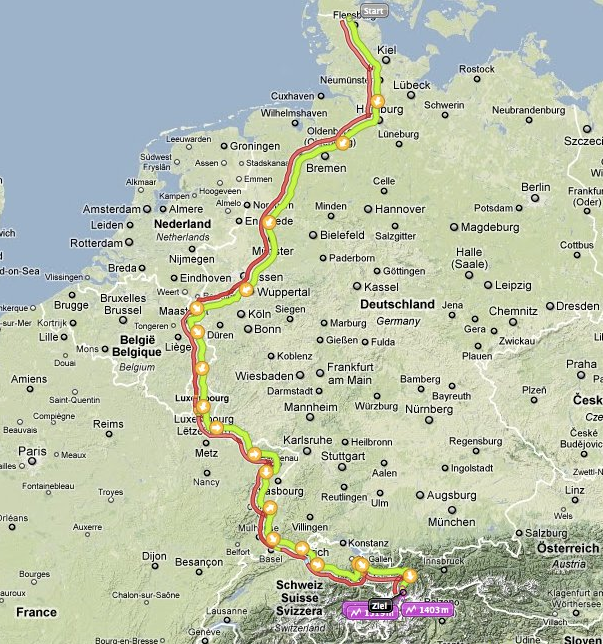
Max's route to find geocaches in 10 countries in less than 24 hours

But Max wanted to ensure the cache run didn’t sacrifice beautiful scenery for the sake of speed. The group even planned to take three vacation days to ensure the optimal time to beat traffic on their epic journey.

Max says, “What was important for us from the beginning was that we didn’t want to spend all this time and money only to see some “drive by” caches on the highways but nice and even scenic places. That made planning even more complex because we reviewed every single cache before we built it into our travel-route.”

Contacting the cache owners paid off. Some cache owners met the team along the way.  Cache owner Buck_DK actually helped launch the caching adventure a few hours before the caching run began. “The friendly owners of the first cache in Denmark invited us to meet them some hours before midnight. We had dinner.”

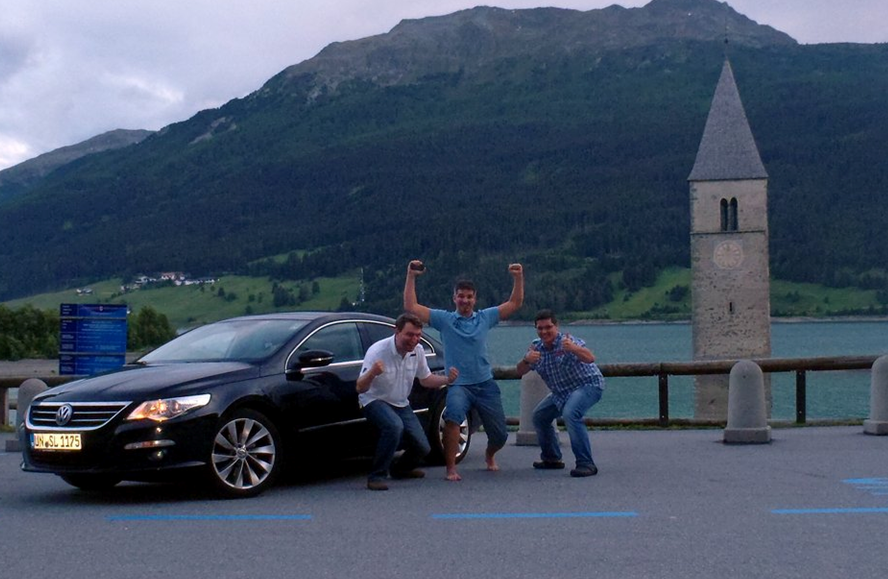
The team of three geocachers ended up logging more than 25 caches in ten countries (Denmark, Germany, Netherlands, Belgium, Luxemburg, France, Switzerland, Liechtenstein, Austria and Italy).  However the trip did not take them 24 hours. They finished the cache run in just 21 hours. Max writes, “Looking back everything worked out perfect, during the almost 30hrs drive nonstop we only had 30min of traffic jam in the city center of Zürich.”
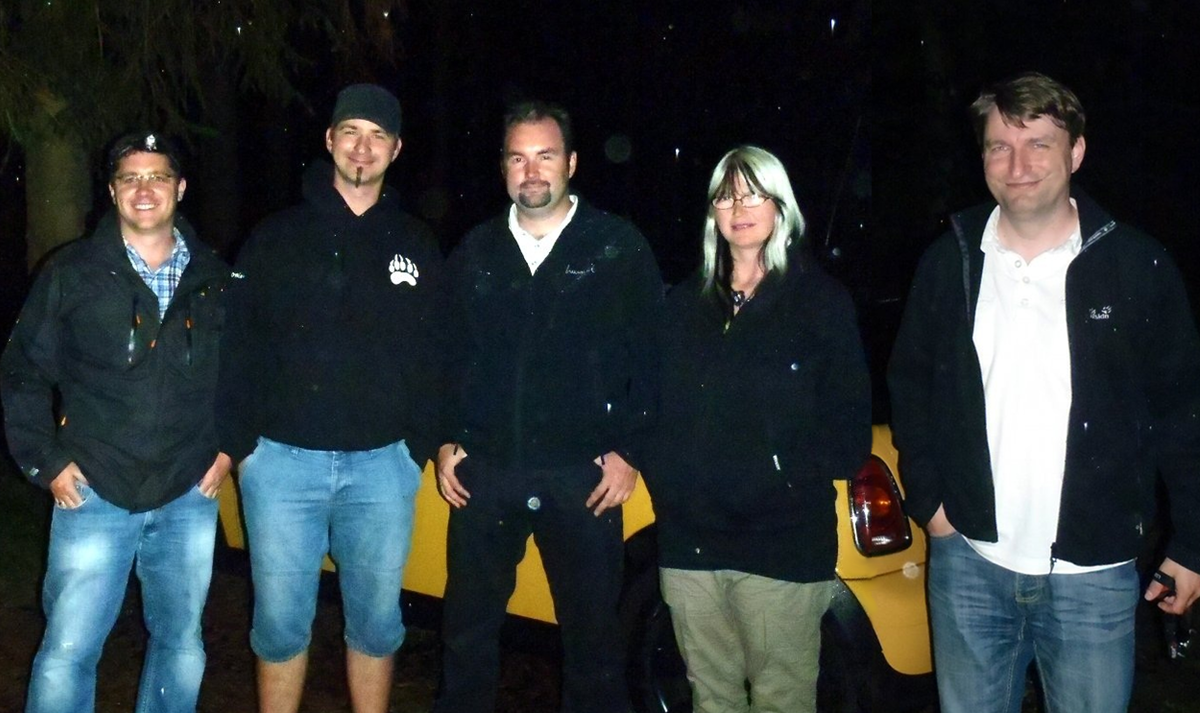
Max (MyGe0cache) - Dominik (Zweisamkite) - Benny (Buck_DK) and owner of GC2F78F - Benny´s wife Liselottea (Liselottea) - Norman (Norman.R)

Max has four pieces advice for those considering challenging themselves. He says:

1) You’ll need, “Some crazy minds (like myself 😉 to even consider doing something like this in the first place”

2) “Plan everything once, twice and once again! Print out everything even if you take notebooks/phones/GPS with you.”

3) “Go with at least with three people on a trip like this, as you will have to drive NON-Stop for more than a day. You will have to be able to sleep in the car no matter how uncomfortable it is.”

4) “Take good friends with you, not just anybody you know. After some hours the enthusiasm changes into a bad mood when everyone is exhausted and tired. During these hours you need to be a team of friends that restores the motivation again so everyone is partying once you reach the final cache.”

Watch this video to see the team in action –

[vsw id=”pqYjXgA04wY” source=”youtube” width=”425″ height=”344″ autoplay=”no”]
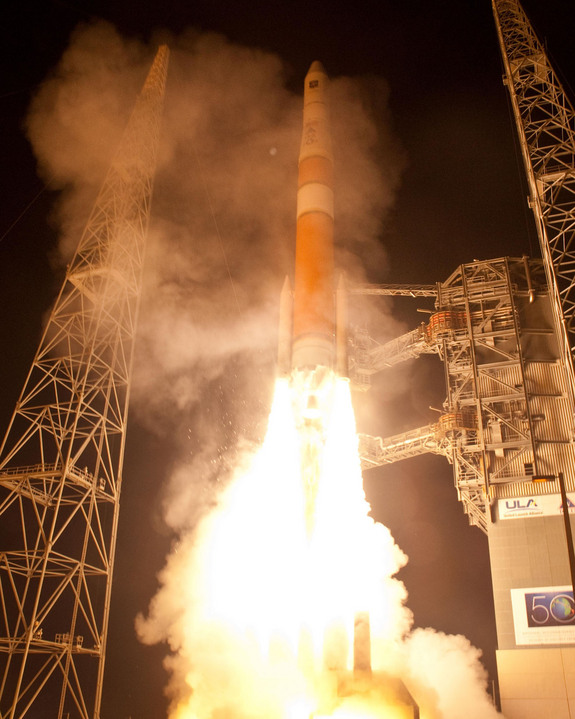
 

An inside look at the latest GPS Satellite Upgrade

U.S. GPS Satellite 2F-2

Beau Backus, or GeoBeau, is a geocacher who works in the satellite industry. He joined Geocaching.com representatives on a tour of the Boeing satellite manufacturing plant near Los Angeles, California. He says we are witnessing GPS evolve at a rapid pace: “We are really seeing a good change in the way GPS is evolving. It has gone from being strictly for military systems to where we are today; it is moving into a part of our social structure.”

On July 14, 2011, the U.S. launched its most recent GPS satellite in order to improve GPS accuracy all over the world. Whether we are aware of it or not, we have free access to billion dollar satellites on a daily basis, and it’s getting better. The U.S. government is in the process of replacing the current GPS constellation of satellites.

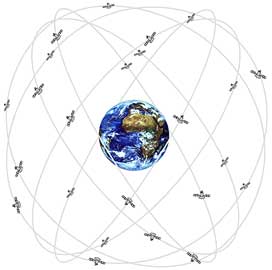
GPS Satellite Orbits

GPS satellite 2F-2  replaces a 20-year-old GPS satellite that has long surpassed its intended lifespan. This new and improved satellite features improved accuracy, enhanced internal atomic clocks, better anti-jam resistance, a signal for commercial aviation, a longer lifespan and reprogrammable on-board processors to evolve with future needs. The addition of this satellite will boost signal reception to users in difficult terrains and accuracy worldwide.

“The average geocacher has come to rely on GPS satellites always being there, and the signal always being there,” says GeoBeau.

Following the first launch of Sputnik in 1957, many satellites have been launched from countries around the world. They now orbit earth in a very particular pattern. More than 30 of those satellites are GPS satellites. Growth in the number of satellites has enabled the Global Positioning System (GPS) to become increasingly accurate.

After touring the Boeing facility in California, GeoBeau could not help but to notice the “enthusiasm that the engineers had toward geocaching and geocaching in the future.” The benefits of increased accuracy include more detailed navigation systems and 3D geo-spatial positioning, thus improving our favorite hobby of geocaching.

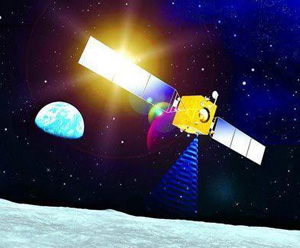
Beidou-2, China's GPS Satellite

China, Russia and the European Union have and will be launching GPS satellite systems into orbit in the near future. In April, China launched its annual satellite, the Beidou-2, and is expected to have its own fully functional GPS constellation by 2020. Russia recently launched the Glonass-K M36 in hopes of improving its consumer GPS technology. The European Union’s GPS satellite constellation, Galileo, is not expected to be ready to launch until 2014 or 2015.

The launching of new satellites means that we all have access to an increasingly accurate billion dollar commercial utility GPS upgrade for free.

Beau says that GPS hobbies like geocaching actually enable us to break down social and political barriers. “Geocaching is now a global interactive hobby that allows us to more closely interact with our brethren throughout the world.”

Hear more from GeoBeau on the importance of the GPS industry. Check out this video.

[youtube]zdlKegHPv9E[/youtube]

Strubklamm GC14D8W GEOCACHE OF THE WEEK – August 1, 2011

Strubklamm GC14D8W

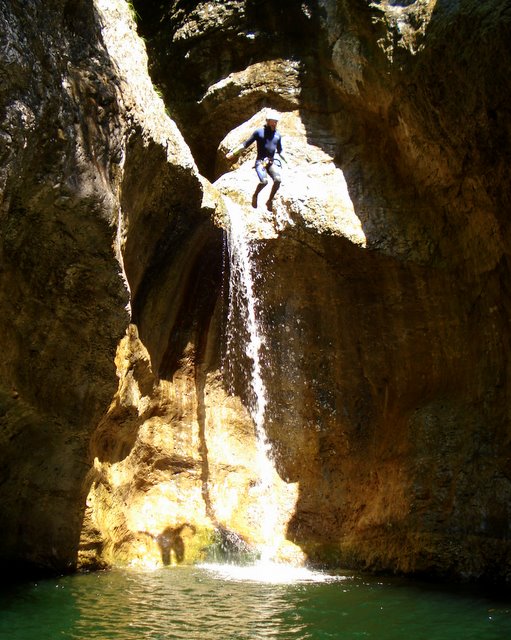
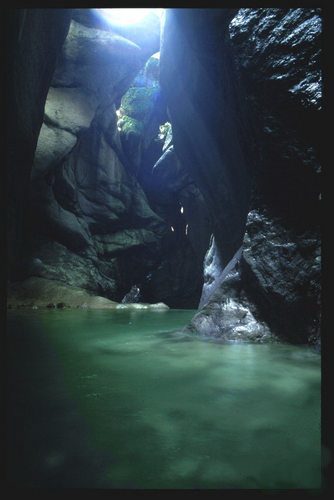
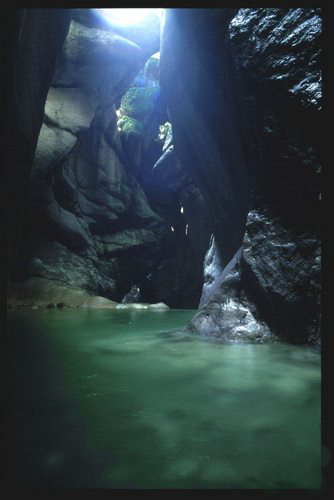
Not far from Salzburg, Austria a daring adventure waits among the steep cliffs that shoulder the Almbach River. Strubklamm (GC14D8W) is a difficulty five, terrain five geocache placed by Baumrinde & sternfänger in 2007.

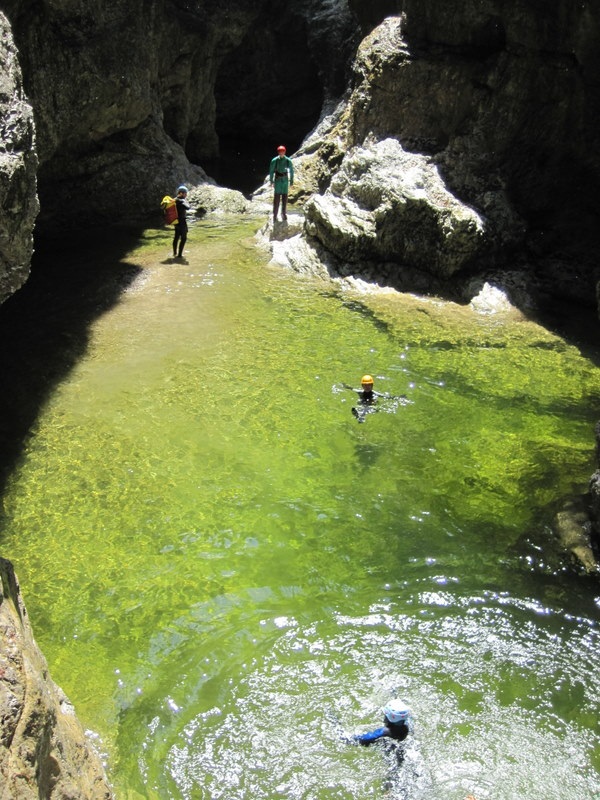
The cache owners ask geocachers to understand the risks, find the cache in groups and bring the proper equipment. The list of equipment includes a wetsuit, helmet and climbing gear.

Strubklamm GC14D8W

The cache container is located down a steep gorge. There’s more than just a cache to be found at this location. Cachers will navigate to the gorge, then climb up the canyon walls to jump off of perches (again and again) into a deep, refreshing pool of water. Some who logged a smiley on the cache say they jumped from as high as 13 meters (42 feet) into the water below.

Strubklamm GC14D8W

Continue your exploration of some of the most engaging geocaches from around the world. Explore all the Geocaches of the Week on our blog or view the Bookmark List on Geocaching.com


Geocaching.com Presents: Lost Places – Germany

[youtube]SCSLqmCGANQ[/youtube]

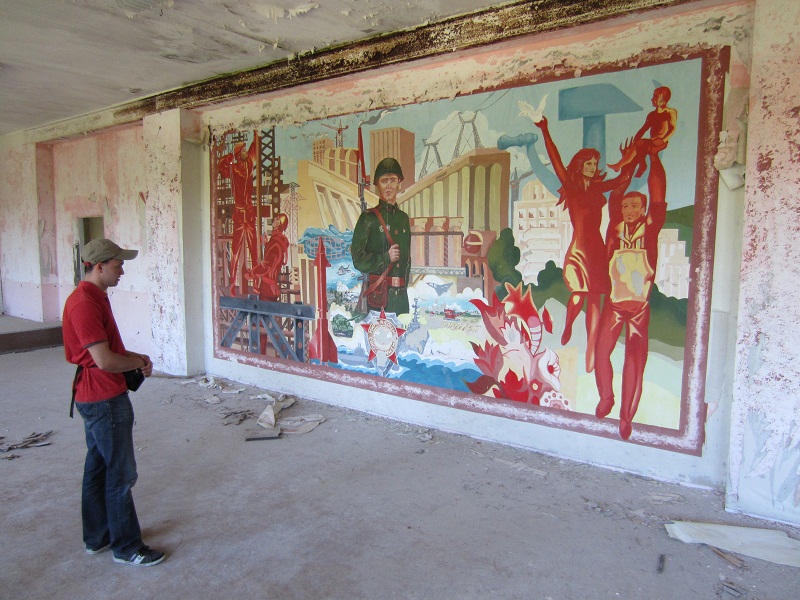
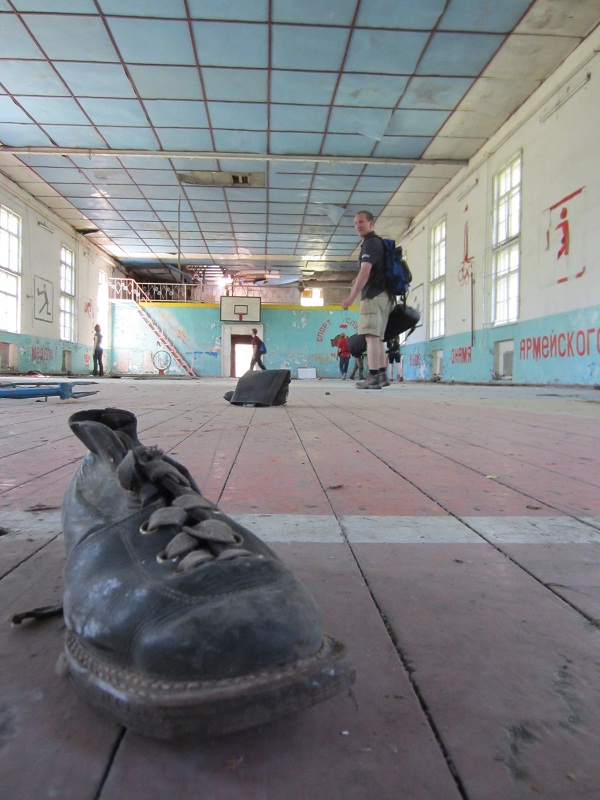
Watch the first Geocaching.com Presents video from Germany. Join a group of German geocachers as they explore an abandoned Lost Place Cache that thousands of soldiers used to call home. Lost Place Caches take geocachers to a location that has been all but forgotten by the modern world. Follow along as geocachers search a decommissioned Soviet military base to log a smiley on a difficulty 3.5, terrain 3.5 Multi-Cache. The cache, Stadt im Wald, is located in what used to be East Germany.

"Stadt im Wald" Lost Place Cache

The video is spoken entirely in German. Click the CC button for English or German subtitles.

The next Geocaching.com Presents video from Germany is scheduled to post on August 11th. Go behind the scenes with the German geocaching bloggers and musical talent (they even have their own geocaching CD) known as Dosenfischer.

"Stadt im Wald" Lost Place Cache

Sehe das erste „Geocaching.com Presents“ Video aus Deutschland. Schließ dich der Gruppe von deutschen Geocachern an, als sie einen Lost Place, der sie  zur einer ehemaligen sowjetischen Militärbasis führt, erforschen. Das Video ist komplett in deutscher Sprache.

Klicke auf die CC-Taste für die englischen oder deutschen Untertiteln. Das nächste „Geocaching.com Presents“ Video aus Deutschland soll  am 11. August veröffentlicht werden. Blicke hinter die Kulissen  mit den deutschen Geocaching Bloggers und dem musikalischen Talent (sie haben ihre eigenen Geocaching CD), das als Dosenfischer bekannt ist.

Geocachers Unite in Worldwide Hunt for Knights

Courtesy: Langley Castle

Geocachers are forming a team to track down missing knights in the United Kingdom. The Langley Knights Competition puts a cash award of up to £11,000, social media clout and worldwide prestige for the geocaching community on the line. The game plays a form of hide-and-seek that geocachers know well. Just imagine this as a quest to be on the team with the most “first to finds.” Hundreds of teams are expected to compete to find the most knights.

Will you answer the call to be part of the geocaching team? Click here to join the geocaching team and recruit your friends and family to help increase the odds of winning the competition. Team members must be recruited by July 1.

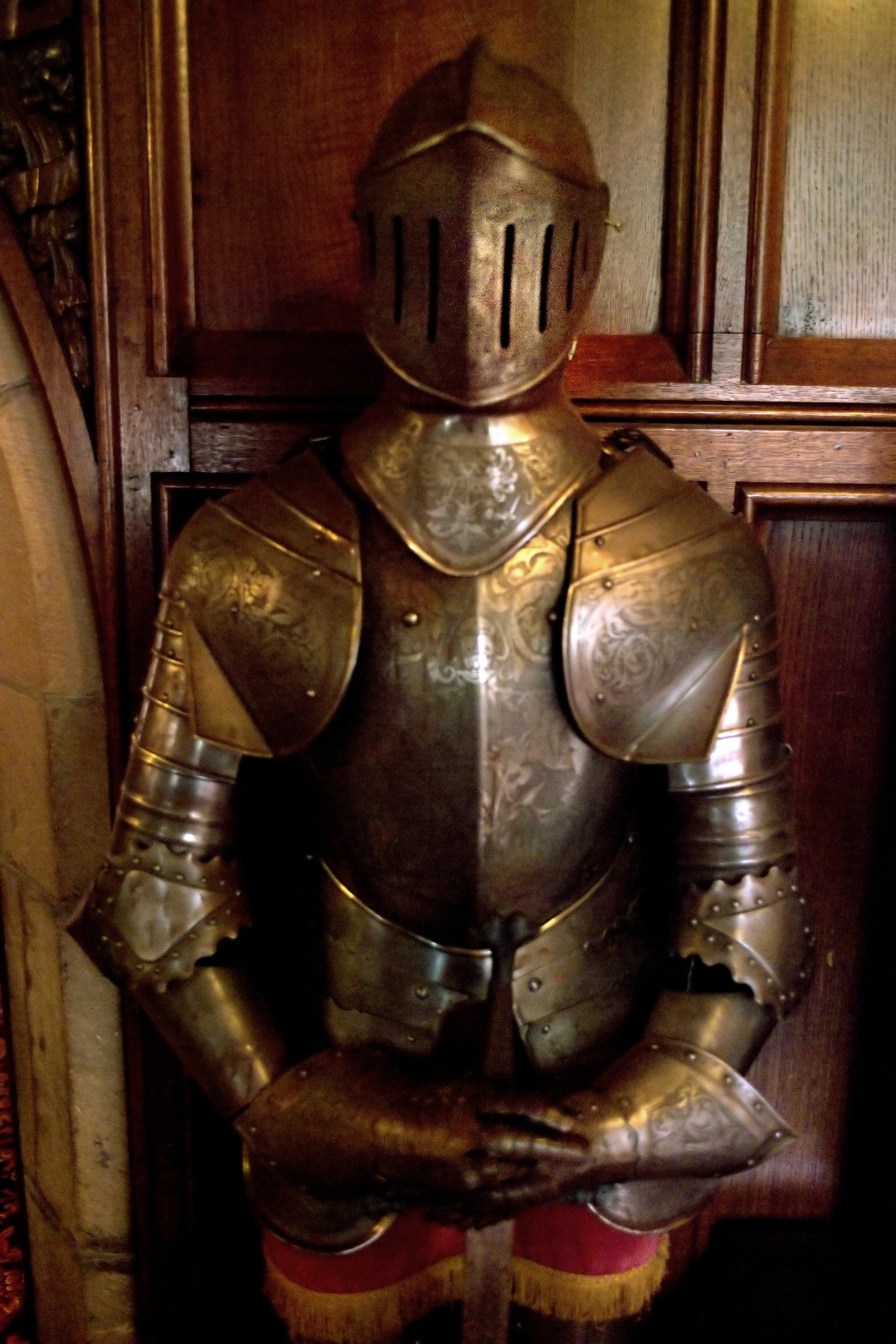
Here are the details. Five knights are being hidden around the U.K. beginning on July 2. Three knights will be real physical knights. They’ll be found in full armor in actual parks with their winning code number. Two of the knights will be virtual knights. Geocachers anywhere in the world can search for photos of the knights on Google Maps or Google Earth to find their winning codes. The “cyber knights” will appear as a photo in or near parks in the U.K.

This video offers more information.

[youtube]B2Z7NULcurk[/youtube]

The competition is being organized by MIT Sloan School of Management and Cambridge Judge Business School. They’re calling this the first ever worldwide time critical social mobilization experiment.

Photos of all five knights will be released on July 2 at 9 am British Summer Time. If all the knights are not found in the first day clues will be provided several times a day, each subsequent day. If you are the first to find a knight, you receive a £1000 reward. The person who recruited you gets £500, and the person who recruited them receives £250. Any winnings directed to Groundspeak will be donated to charity. We are open to suggestions as to which charity this should be.

More information about the Langley Knights Competition can be found here. Join the Geocaching team and recruit friends using this URL: http://bitly.com/cachersuknight

This isn’t the first time geocachers competed in a timed social media challenge. Groundspeak Geocachers came in fifth out of more than 50 teams in the DARPA Network Challenge in 2009. The Langley Knight Competition was inspired by the DARPA Challenge.

Follow this blog post for the latest on the Langley Knight Competition and the success of the geocaching team. Good luck!