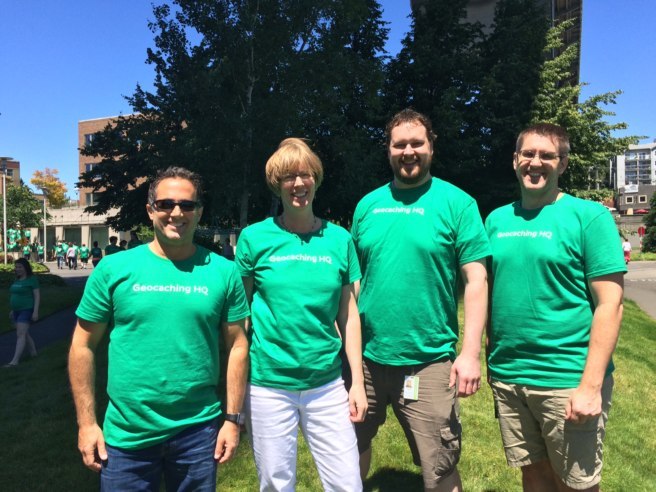
Inside Geocaching HQ Podcast Transcript (Episode 5): Questions from geocaching podcasters and bloggers

Bryan Cindy Ben F and Ben H

[music]

Chris Ronan: Hello everybody. Welcome to Inside Geocaching HQ. I’m Chris Ronan, a.k.a. Rock Chalk, one of the staff here at HQ. This is our podcast coming to you from Seattle, where summer has finally arrived. It does not rain here as much during summer. You may have heard it rains all the time in Seattle. That’s not entirely true. It pretty much rains all the time between October and April. Like, every day it rains at least a little bit during those months. So what happens is… And I only learned this recently because I moved here three years ago. What happens is the rain just suddenly stops sometime in late May and when that happens, you just have to start doing everything you want to do outdoors non-stop between late May and October when the rain finally returns. Because the weather is just amazing during the summer here. So I and a lot of my colleagues here at HQ, we’ve been out doing a lot of caching in recent days and we hope you have been too. For this episode of Inside Geocaching HQ, we are answering questions from the geocaching bloggers and podcasters of the world. They ask the questions for the show, I went around the office to find the right people to answer those questions. We have covered some very interesting subjects, so let’s get right to it.

[music]

CR: We have a question from DarrylW4 of the GeoGearHeads podcast. You can find him at geogearheads.com along with his partner, The Bad Cop. And here is Darryl’s question:

DarrylW4: We know it’s always been a battle to keep a good, free version of geocaching.com versus the full-featured premium experience, but recently I’ve been hearing more stories about cachers that have had to cut back on their caching, either financial reasons or just lack of time. And in many cases these people are telling me that, “Yeah, we like to go caching occasionally.” But especially now that the new app, the former intro app, doesn’t allow them access to a lot of the cooler caches without paying for it, they’ve stopped caching at all. One situation is a fairly active cacher I used to know got tied up with some family things and on occasion they’d go out and do the vacation or a weekend trip somewhere, do some geocaching. And since they can no longer do earth caches and some of the cooler puzzle caches and stuff like that that they liked to do though the app, they just decided, you know, it’s not worth it anymore. They archived and adopted their caches and there is one less person caching. Well, in this case it was four people but, you know, [chuckle] one less group of cachers out there that did have some cool caches, particularly earth caches out there. And I was curious to see if there’s any plans to kind of roll that back and make it more accessible to cachers who can’t or won’t pay the $30 a year for the premium membership.

CR: Thank you, Darryl. So to answer that question, we go straight to the top. Bryan Roth is the president and CEO of Geocaching HQ. Bryan, we kinda talked about this a little bit on a podcast a few months ago and it’s a question that a lot of people are interested in, and it’s something that I know that you have been thinking a lot about and the team here has been thinking a lot about.

Bryan Roth: Hey Chris, that’s true, and first of all it’s good to be back on the Geocaching HQ podcast. Thank you Darryl for the question. I guess I would start by saying that it makes me sad to hear that people are stopping geocaching for any reason. I know that sentiment is shared by a lot of us here at HQ. One of the things I can say is that over the past few months, since we spoke in March, we’ve had a number of conversations around that topic here. At the same time we’ve spent a lot of time working to add features and functionality to that app. So for those of you who have been using it, I’m sure you’ve seen quite a few improvements over the last few months. We’re really excited about that. We have quite a few more improvements on the horizon and we really can’t wait to give those to the community. So the short answer is: Yes, we are actively looking into how we might address this.

BR: Our goal is to find the right balance between charging for features so that we can support the company and giving everything away for free. As much as we would like to open the app and let everybody have unlimited access to all geocaches at no charge, we wouldn’t stay in business too long as a bootstrapped company. So really quickly, for those of you who don’t know, Geocaching HQ is not a funded company. We have not taken VC funding or private equity funding or anything like that. The revenue that comes from the community is the revenue that we use to support the company to pay our bills, to pay our employees, to provide benefits, etcetera, etcetera. So not making any money isn’t really an option. And I know a lot of people have ideas, “Oh we should sell ads or sell our customers’ data,” and things like that. And we do some advertising. We have no interest in selling our customers’ data to anybody because we don’t think that that’s the right thing to do.

BR: And so what we’ve chosen to do is try to charge for the tools that we produce to make geocaching easier to play. Historically we’ve got the website for those people who want to go play puzzle caches and multi-stage caches, and earth caches. You can go to the website and you can continue to do that for free. Use your dedicated GPS device like a Garmin, there are other mobile applications that provide GPS navigation functionality. It’s not that you can’t play, you can play. At the same time the goal is to allow other partners as well as ourselves to build better tools for the geocaching community, and for API partners they’re allowed to charge for those applications and people can pay for additional functionality. When it comes to our mobile application our goal was to build a best of breed tool, and I thing we’re getting closer and closer every day to having the best tool out there for geocaching, but also we have to find ways to leverage that tool to generate revenue.

BR: So for those people who really appreciate it and enjoy it and are geocaching actively, our ask is that they consider becoming premium members. And at the same time, we would really like to have a balance between paid features and free features so that it makes for a good introduction for new players, but really active players will help support the site and the ecosystem that powers geocaching. At this time what we are focused on, is we’re looking at where that line is drawn. And I think that, as I mentioned in March, we’re not comfortable with where it is now, hearing stories of people giving up geocaching because they can’t find the cache that they want in the app certainly doesn’t make anybody feel happy, myself included.

BR: We do have plans, we will be probably testing in the near term some different models of how that will work and so many users won’t see those tests. Normally they’re segmented among a small percentage of the audience and we look at what it does for engagement, new user activation, even premium membership conversion and retention. And if we can find a better line that allows more people to have more access without making it harder for us to support ongoing operations of the company, then that’s something that we’re gonna do. So I guess in closing, what I would say is, we are definitely planning to address this. We have testing coming up that we’re going to be doing with the community, and based on the results we do plan on making some changes going forward.

[music]

CR: So our next questions are from GeoJangie, who is a blogger, geocaching blogger, in North Dakota in the United States. And she has a couple of questions, and to answer those I am joined by Cindy Potter, who is the director of community here at Geocaching HQ. So Cindy, for people who don’t know what you do, what is it that keeps you busy here at HQ everyday?

Cindy Potter: Okay, well first my username is Frau Potter, I was first hired here because I speak German, so that’s why I have that name. But I oversee two teams that work with the community and also the volunteer reviewers, moderators and translators. The teams do all the email answering from the community, all the social media posts, a lot of the blog posts. And we also oversee the guidelines, so we’re part of the appeals process if someone has hidden a cache and they don’t feel like the process went well and they want to appeal the process, then they write to us and we give them an answer.

CR: Well we have three questions here from geocachingjangie.com. And I’m gonna spell that out and I think we’ll probably also have it in the notes for the show but www.geocachingjangie, that’s J-A-N-G, as in George, I-E.com. That’s all one, geocachingjangie, all one word, dot com. And so her first question is regarding geocaching education. She asks, has Geocaching HQ considered creating a “geocaching education workshop” to partner with cachers to teach geocaching in locations around the world with ideas and products from HQ?

CP: Wow, I love this question. As I said before, I’ve been here six years, and this is something we’ve been wanting to do for a long time. I personally love this idea, we talk about it like Geocaching 101 workshops. I feel like there’s great ambassadors out in the community that know this game and really wanna teach new players. And it does feel like we could set up a system, I call it, “Train the Trainers,” where we could have perhaps some kind of an online workshop that people could take in order to qualify to become these trainers, and then maybe we have some sort of sponsorship materials that we can share with them in order to make those events go more smoothly. And maybe in the future we have a way on the website to highlight those events a little bit more easily or to send emails to new cachers to point out when those events are available in their area. Unfortunately we have a small company here and we don’t have enough people for all the fabulous ideas there are, but, yes, I do hope that we’ll be able to do this at some point. And in the meantime, I really want to say to those people that do host those workshops that we really do value that and think it’s really cool that you’re out there helping people get started with the game.

CR: Her next question is about events and it is, “What suggestions do you have to bring a large event to a state with a smaller geocaching population?” For example, where she is from, North Dakota.

CP: North Dakota? I love North Dakota. I’ve been to North Dakota. Let’s see, well first I’d like to start by saying large isn’t necessarily best. So sometimes people have this idea that mega events… That’s the status that everybody wants, right? But there are actually some events worldwide that would qualify for mega status that actually don’t want mega status ’cause they want to keep their numbers down. Now, that doesn’t answer your question but I think my point is just that we value all levels of events and don’t just favor mega events. And that’s something we, I think, need to look at more carefully in the future, too. Like, “How can we support those medium sized events a little bit more?” So for example events that maybe have 50 or 100 people and just a variety of really fun activities without all the stress of what a mega status would have.

CP: But that said, some ways to maybe look at how to do a bigger event, I would suggest, would be looking at existing examples. So an example would be the Going Caching event that takes place in Georgia every year, moves around to different locations. I haven’t had a chance to go to it, however I’ve heard from numerous lackeys that it’s probably the most fun event they’ve ever attended. And had a chance to meet the organizers at GeoWoodstock recently, and just seeing how friendly they are and how creative they are in their design, I’d say they could probably offer some tips. Some creative kind of concept or puzzling that can be done at the event can be really fun. Another idea is partnering with your tourism agency to see if they’d be interested in helping to sponsor Geocoins. So I know that some lackeys at our office, in fact you might be one of them…

[laughter]

CP: Likes to find those events where Geocoins are part of it and will travel quite far to take part in those events. And in many cases it’s an outside agency, not the cachers themselves that are funding the coins, but an agency that’s hoping to attract tourism. And I’d also like to say that we are not the event experts here, it’s really people in the community that make the best events. So I’m probably not the best person to ask since I’ve never organized an event that large and I’m always in awe of those that can.

CR: Well I think your point about tourism agencies and such, is really important because their job is to bring people to the city, to the town.

CP: Right.

CR: So if you can go to them and say, “Hey, we’ve got geocachers out there that might wanna come to our town and if we can just give them a little carrot to do it… ” And it might be through a geocoin that you earn and the example that I think of is the Tri-Cities Mega here in Washington State in the US, but I’ve seen it at other places too. So yeah, those are all good ideas. Her next question was about new cache types and she says, “I have a feeling someone else is bound to ask this question.” She actually was the only one [chuckle] that did for this episode, but we certainly have been asked this question many times which is, “Is there a new type of geocache in the works? For example history, virtual with new regulations, etcetera.”

CP: We do wanna make improvements to the game. I will say our focus this year is more shoring up of what we do have. Obviously, we retired the classic app and a lot of our time has been put into making sure we have all the necessary features into the free app, and also doing things on the website, updating things like the dashboard and the profile that were pretty clunky pages before. I always had trouble finding things and I’m hoping as we continue to refine this page that it will be easier for people to find things, and updating the outdated logging experience as well. But we know that’s not enough, we don’t want just the pages on the website to be easier to use, we want to have more features in the game. And so we have been talking about ideas for what other things we could add into the game. We don’t have any particular news to share, but I do want the community to know that we’re cachers too. So we have ideas and we also can solicit ideas from the community of, “What would you like to see as changes to the game?” And we welcome those ideas to be shared with us.

CR: There was another question that was asked that I’d like you to be here for, because [chuckle] you and I, we’re both involved in this quite a bit and there are actually a couple of people that asked this. And the question was basically wanting an update on challenge caches and asking if they would become a distinct cache type. It’s been a little over a year since the end of the moratorium and so people were just wanting an update on how things were going. And as you and I, and the rest of the team have been talking about it over the course of weeks… I think that what was interesting when the moratorium ended, and I don’t think that we anticipated this, was that it was gonna take about six months or so, five-six months for the community to figure out the challenge checker aspect of things. And so I think the moratorium ended around April last year, April-May, and for the first four-five months it felt like things were awesome because [chuckle] nothing was really happening. And we eventually figured out that was because the challenge checker issue was something that they were figuring out. And once they did, we started getting a better sense for how things were going.

CR: And I think you would agree Cindy, we’re still in the evaluation phase because of that. And I think we wanna get through a full “season of caching” this summer and fall, being the main part of the year when it’s really busy for us and for reviewers in most parts of the world. And then, once we get into the fall, get back with reviewers and see, “Okay, how do you feel about things and have the new guidelines alleviated the stress that you were feeling about this kind of cache? And if so, where do we go from there?”

CP: Right. And something for the community to keep in mind that it’s not so simple just to add a new icon and it can create problems in itself. You know the people out there that are icon hunters. They wanna all hide every different type of icon. They wanna find every type of icon, so we need to be ready that if we were to provide an icon that we really are proud of what it has become, because there’s going to be a lot of surge in activity. And if it’s not a pretty solid cache type, it’s gonna be very frustrating for a lot of people and we don’t want to end up grandfathering something that gets out of control. And also, I also wanna say we know why the community likes challenge caches. They really love these personal achievements and that’s something that we have a strong radar on here. Ideas are spinning about different ways that we might be able to also encourage that. Nothing yet to show, but we know that that’s something that is fun. It’s fun in other games to have some sort of achievements or badges and so, we’ll see what the future brings.

[music]

CR: Okay. So, for our next questions we have Ben Hewitt from the product team here at Geocaching HQ. And I want to start by talking about a question that we had from Oboeman who writes for the Allgauer Geocacher blog which is at www.allgaeuer-geocacher.de, and we will put his web address in the podcast notes. But he had asked about, “Can you alter the unknown icon to distinguish between unknown with a traditional and unknown with a multi in the end?” That’s kind of a similar answer to another question that came in from Patrick from the Podcache, which is a great name for a pod… Don’t you think Ben?

Ben Hewitt: I do.

CR: For a geocaching podcast, podcache.de, and he asks, “Why is it not possible to do a nano icon?” And I think the answer for both of these questions is fairly similar. So, being on the product team, I’d like to see what Ben has to say about those two questions.

BH: Yeah. I’m gonna focus on the question about a nano size. That’s something that we are well aware that the community has wanted and has been interested in adding for years. And it’s something we’ve actually discussed several times amongst the product and development and design teams at HQ. Actually to a pretty great level of detail. The short answer is, it’s not nearly as easy as it seems to just add more cache sizes. Anything is possible of course, which is why we investigated, but the technology stack that our system is built on, those cache sizes are rooted pretty deeply through a variety of services and on down to the database level. And so the last time we took a look at adding a nano cache size, we discovered, in working with our engineers, that it was gonna be weeks of work just to add that one cache size.

BH: And in our estimation, the amount of work that it required was not enough to justify just taking that on as a project by itself. That said, those are the kind of things that we keep an eye on to opportunistically loop in to a larger project. Basically where that one landed after the last discussion is like, “Hey, let’s wait until we’re working again on the cache submissions process or the cache details pages on the website. And remember that there’s an interest in having a nano cache size or possibly other cache sizes.” Because that would really be the right moment to rope in some of those other wins, is when we’re really digging down and re-architecting those systems on a larger level. It makes a lot of sense to do those things then, it doesn’t make as much sense to take on these smaller additions that would require a lot of work by themselves.

CR: Next question for Ben. We go back to DarrylW4 from the GeoGearHeads podcast and here is Darryl’s next question.

DarrylW4: We recently had a long discussion about the caches along a route function on GeoGearHeads, and part of that discussion was this is a feature that people don’t really seem to use to its fullest anymore. Probably in part because so much of the caching is done via smartphones. And I was wondering is there any plan to extend the features of the caches along a route to be usable on mobile, apps or otherwise? And how about the ability to even do lists easier so that we can grab and download the caches that are found along those route files from the mobile devices better.

BH: Darryl always has good questions. Like Darryl, I am a fan of the caches along a route feature. And like Darryl, I have often thought to myself that, “Hey, this feature is kind of hidden away and is not quite user friendly enough in terms of the functionality that we’re trying to deliver.” If you know how to use it, you can do some really awesome stuff, if you’re doing a driving trip and you jump through the hoops there. And so similar to my answer that I just gave about nanos, this is really something we’ve looked at and we’re waiting for the right moment to jump on this. Caches along a route right now is a side car to pocket queries. And if and when we take on an update to that, more likely than not it would merge in with a maps project or additional work on lists, which probably most people can tell we put a lot of work into lists in the last year, year and a half. And I don’t know exactly what that would look like but my best guess is what we would do is make it easier to create caches along a route in some sort of map experience and then, as Darryl already eluded, create a list of those which then you would get for free in the mobile app once you had created a list.

[music]

CR: Okay. So for our next question we have Ben Field, who is on the IT team here at Geocaching HQ. Ben, before we get to the actual question, since you haven’t been on the podcast before, maybe just tell people a little about what you do here at HQ.

Ben Field: Yeah, I’m the director of information technology here and along with my team we support the whole systems and network infrastructure that keeps the website and mobile applications running.

CR: Kind of an important thing?

[laughter]

BF: Yeah, no doubt.

[laughter]

CR: Okay, so our question is again from DarrylW4 from the GeoGearHeads podcast, and here it is.

DarrylW4: On a fairly recent episode of GeoGearHeads we fielded a question from RReagan, a very hypothetical situation, what would happen if geocaching.com had a catastrophe and lost their servers and all of the backups, and all the backups were bad? And his question was basically, could Project-GC and all of the GSAC databases out there be used to restore it? Definitely that’s not a situation that could or should ever happen, but it did bring up an interesting question of what is the contingency plan at geocaching.com for any of these various situations? We know that years and years ago there was a fire at the data center that took it offline, we’ve seen issues with internet services as a whole because of AWS going down. Is there any information you can share with us about these plans at geocaching.com to help bring the service back online should the worst happen? Even if it isn’t a nasty, everything goes out, but just even maybe a server issue or some kind of service issue?

BF: So I see this as really a two part question. I see the first part centered around what our course of action would be in the event of a disaster such as a total loss of the data center from mudslide, earthquake or other unwelcome scenario. And, well first of all we have offsite replication for everything that makes Geocaching run, including all the geocaches, logs, trackables, etcetera, so there should never be a scenario where we would need to recover from Project-GC or GSAC databases, etcetera. But we also have the ability to run our infrastructure elsewhere. So in the event of a disaster we’d be recovering offsite copies of all of our data to a new location which would likely be a fully cloud based, at least for an interim period, and then bringing our services back online as soon as possible.

BF: Then, for the second part of the question, I think revolved around how we recover from less critical issues such as single server or service failures. And these types of failures are common in most any web service infrastructure. There are bugs in code and services can crash, server systems have hardware failures. But the idea is to build as much redundancy into the infrastructure as possible, which is what we do as much as we can within the budget that we have. The geocaching core game elements are all supported by redundant systems, so there theoretically aren’t any single points of failure. But it’s not to say that code can’t get pushed out and an issue arises that didn’t manifest itself in test or staging, or that multiple hardware failures occur at the same time which in conjuncture could cause an outage. We’ve also seen some legacy components that haven’t properly handled a failover when a device fails. But in these types of scenarios we have a lot of skilled people here who can jump on a problem and determine the quickest path to resolution and then figure out the best way to prevent anything similar going forward.

[music]

CR: There you have it, that was Ben Field. You also heard from Bryan Roth, Ben Hewitt and Cindy Potter. Thanks to the podcasters and bloggers who asked those questions. If you have a question you would like to hear us answer on the podcast, our email address is podcast@geocaching.com, that’s podcast@geocaching.com. Keep an eye on the Geocaching blog, if you are not already. There is a lot of stuff happening these days. Our summer promotion starts soon, that’s the lost treasure of Mary Hide. Read all about that on the blog. Get ready for that, it’s going to be a whole lot of fun coming up later this summer. Thanks for listening and from all of us at Geocaching HQ, happy caching.
Inside Geocaching HQ Podcast Transcript (Episode 10): Shop Geocaching

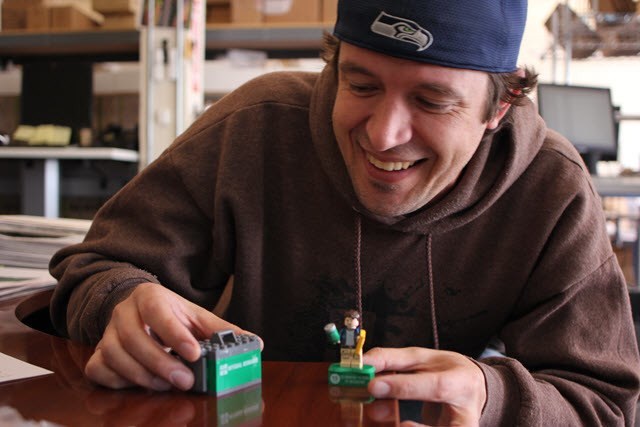
Chris Ronan: Hello, everybody. Welcome to Inside Geocaching HQ, the podcast from Geocaching HQ in Seattle. I am Chris Ronan aka Rock Chalk, one of the staff here at HQ. On this episode we hear from Mark Anderson, whose geocaching username is markstafari. Mark is a long time HQ staffer who works at the Shop Geocaching warehouse here in Seattle. It is just a couple miles away from the main Geocaching HQ office. If you have ever ordered something from Shop Geocaching, then Mark and/or his colleagues were the ones who got it ready and sent it your way. He also had a hand in creating one of the products that has been especially popular over the past couple of years. We will have more on that in just a few minutes. So here’s me and Mark talking about how things work at Shop Geocaching.

[music]

CR: Well, I remember the first time that I visited the warehouse and being a geocacher. It was kind of like Charlie Bucket going into the chocolate factory on Willie Wonka. You know what I mean?

Mark Anderson: Oh, yeah [laughter]

CR: I’m like, they better check my pockets before I leave because I might just walk off with a few things. I know it’s mostly HQ people going in there. But do you ever just have a random cacher that walks through? I have to think it’d just be amazing for them.

MA: You’re not the only one to have that reaction. Definitely, we have a little bit of signage that gives us away and we also have a cache at our location if you’re in the area. But for the most part, it’s just like, we can tell oftentimes they’re searching for the cache right outside our door, which we can see their shadow, so we can maybe prepare for them to come in. If it’s nice in the summer, we often almost daily have our big bay door open. Of course, that welcomes a lot of people to just peek and in summers we’re right off the tour boats down on the waterfront. So we get quite a few visitors in the summer believe it or not for not really advertising where our warehouse is. Most of the time respectful that we don’t have maybe a ton of time. That’s the part that sometimes they wanna talk and we’re…

CR: Yeah, it’s not a visitor situation like here at HQ. 02:44″>

MA: Exactly, yeah. We try to accommodate for sure. Ironically, as most of the caching world is going into hibernation pretty soon, this is our time to shine down at the shop. Certainly the best team I’ve every worked on in 20 plus years of shipping and receiving at various places. It’s just a super unique situation and it’s a fun environment. There are a couple of us, we’re practical jokers down there a little bit, keeping it loose ’cause it is a warehouse, it’s not the most glamorous work, but we make it a fun environment.

CR: When somebody orders something from Shop Geocaching, it doesn’t go into a monster place somewhere with hundreds of people that are filling orders. There are five of you at the HQ warehouse, correct?

MA: Yeah, we’re a small operation. Yeah, just five of us, that can be lost in the mix sometimes. But again, our volume is at a place right now where we can comfortably accommodate every order placed within the last 24 hours we’ll ship the next day. We have up until noon everyday, we’ll ship every order placed before that, so it’s as real-time as we can get it. But we are not quite the scale of Amazon yet. [laughter] Hopefully some people respect that in the fact of there can be unexpected delays here and there. I primarily work with distributor orders and stuff like that, and I’ve built a really good relationship with many of them over the years.

CR: And for people that don’t know what a distributor is, we’re talking about people around the world who are reselling geocaching stuff, right?

MA: Correct, yeah.

CR: So if somebody has a shop in Washington state or in Germany, these are the distributors.

MA: Yeah, there’s a few requirements you need to meet. I think there’s a lot of operations out of basements and such, but there are a few larger ones, particularly in Europe, where I think it is the sole business, and there’s some decent size orders that head over there.

CR: One thing I’ve had people ask me is how do you guys decide what to offer on Shop Geocaching? There are some things that seem pretty obvious like cache containers and stuff like that, but there’s a lot of creativity too that I’ve noticed. You and I were talking before we started recording about the devious containers and stuff like that. So are these things that you guys at times come up with? Or is it stuff that you hear about? What’s the mix of that in determining what ends up actually being on the site available for sale?

MA: Well, it’s a little of both, I’d say. We definitely get a lot of those ideas from… I think currently we get several of those, we source those from other distributors. If other distributors have great products they’re selling, we definitely like to be a part of that as well, so things like fake pine cones and fake rocks. Actually, fake rocks I think we’ve been able to source here, but another recent one that’s been pretty popular is insects attached to nanos. That’s just sort of a fun. [chuckle] My favorite is the spider, and I’m actually finalizing one of my own that I’m gonna put out in a while that…

CR: Cool.

MA: Just another cool point, maybe another favorite point type angle. The container itself won’t be exciting, but the reveal will be the moment. Personally, I’ve only hidden a couple of them, but that’s my goal in this upcoming year is to put some creative ones out in my neighborhood ’cause there’s certainly not many creative ones. And I know that quality caches are a big thing and especially, in keeping the game healthy and getting more and more people introduced to it. You wanna find the quality cache on that first one. I’ve introduced it to people where it hasn’t been, and they’ll never cache again if they find a wet, soggy… Yeah, I don’t know. Or just your basic container. There’s the thrill of the find, but if you can add another little element of like, “Oh, oh.” Another cool one is fake chewing gum, a chewed up piece of gum that’s stuck to a nano. Those are the ones that I like the most, even though you can’t really stash much stuff in there as far as trade-ables. The kids probably don’t like em as much, but those are my personal favorites. And again, we have a lot of freedom to source and try things like that. There’s not a strict, “We’re gonna work on this type of container.” This or this. If somebody finds something or hears about something, we can usually run with it if it’s not too expensive or within reason, I guess.

CR: One of the things that I think is really cool about what you guys do is trying to make sure that the products that are offered, they have great utility to them. We were talking, for instance, before about the tree hugger product. Maybe talk about that a little bit for people that aren’t familiar with it. It’s a really cool idea, and it’s a great way to solve this problem that’s out there that people want to hide caches on trees, for instance, and unfortunately, sometimes they nail it or they drill it, which you’re not supposed to do. That’s not in line with the guidelines.

MA: Right, it’s a no, no.

CR: And now we’ve got this product that enables you to avoid that kind of a thing and hide caches in the right way, which is tree hugger.

MA: Yeah, yeah. So my manager, I think it was about a year ago, he tracked down a source that basically had this surgical tubing with a bracket, attached around a tree, and it’s not a way out there idea, but you couldn’t… Obviously, the surgical tubing will expand as the tree grows, and so that made perfect sense for attaching a cache. And that was not the intended purpose of this product out there. It’s like a livestock fence company or something like that. So they were…

CR: It’s kinda funny how many things are created, and geocachers find a way to repurpose them for caching. And definitely their intended effect is not.

MA: They were so excited though, I think and continually trying to improve their packaging, and appearance, and super cool things like that where we can promote best practice of geocaching, the rules within the game that are not always obvious and maybe newer hiders, again, may nail or screw something to a tree or something. That’s a big no, no. Things like that are not clearly marking your cache containers as a geocache, etcetera. We try to provide all those tools or as many as we can, as many as we can source. And we’re continually working on ways to promote the best practice for geocaching, and really just help improve, especially first cacher experiences. I certainly can empathize with the first cachers. When I first even joined the company, it just was so confusing to me early on. And we’re talking this was in 2008 and 2009. Yeah, it was tough for me. And even when I went out with a couple people, and it took a while for me to really grasp it and enjoy it for what it is. And I think, now, having 10 years of experience with it and the products, it’s like kind of view things differently, and you view products in different ways. There’s a lot of things that could be related to either trackable or container.

CR: One of the things that you talked about was how you and your colleagues at the shop have the freedom to try to pursue an idea and one thing that folks will know you for whether they realize it or not, because you’re involved in this very popular product, which are the buildable toy sets. And you were involved with that from the inception.

MA: Yeah, yeah. In sort of a roundabout way, yeah. We did find a first vendor that we tinkered with a trackable two-inch figure that did really well, but the vendor wasn’t… It was a secondary hobby for them. Our current vendor is just amazing with what she can do with any of these parts. She basically re-purposes these official parts, cleans and redesigns them essentially, and she can print over these actual parts, which is allowed. And we, of course, follow all legal guidelines as far as that’s concerned. We’ve been through that a little bit. And yeah, it’s turned into a nice little selection of a spread of build your own cache containers. A couple of different figures now, a male and a female figure that come with a trackable element. And we have a kitty and a dog now that attach to those buildable parts. The small things always are a good thing and you can attach em to any of these buildable brick parts that you may have at home. Your own creations make anything trackable, that’s been popular. And then the one that started it all was as far as more of a set, and really the only one that I designed [chuckle] from the beginning was the build your own ammo can container.

CR: Oh, sure. Yeah, yeah. With a little nano that went inside of it.

MA: Yeah, yeah. And so that was our first experiment with an actual buildable follow the instructions, and the final result is a container that vaguely resembles an ammo can, with the latch down and everything. So yeah, I got to come up with a prototype with my kids. I pretty much came up with the design, but they have better eyes than me as far as finding all the parts. I was digging through the big box, the big random box at home, and I think it took two or three days before I came up with a pretty cool design that locked and presented it to just the co-workers at our weekly merchandise meeting that we have. And yeah, they all dug it and it was like, “Alright, let’s get it rolling.” I didn’t know how that sourcing parts, all the same parts for selling the same set and I was just… I didn’t think it was possible but this vendor is just amazing in her sourcing and she can make it all happen.

MA: Really, the finished product looks like it’s straight out of a factory. It’s really impressive. And even all the way down to the backer art like the card, just the packaging is all custom done by her and really a nice touch on top of the cool novelty item that these buildable toy sets have turned into in an ongoing series that it’s certainly fun to… I spearhead the projects, although I don’t design them really anymore at this point. Our vendor is super creative and she knows our themes and she’ll either throw ideas at us or we will do the same and she’ll come up with something. It’s pretty amazing to see her work or see the finished product.

CR: I’ll let you get a drink there.

MA: They don’t usually let us talk this much over at the warehouse.

[laughter]

CR: You’re getting it all out. You’re gonna get it all out today.

MA: That was my little bu-dum ching.

CR: That was pretty good. Is there a most popular product at that shop? Does it vary?

MA: Oh, golly. Well, definitely, I think trackables.

CR: Just trackables in general.

MA: Trackables in general continue to be… The old travel bug still continues to be probably the biggest selling trackable. And it’s trying to keep up with just certain events around the year. Pie day was really huge. An outside vendor did a coin for that, that was just hugely popular a couple years ago, and we had no idea. It’s those trackable coin moments that we definitely keep an eye out on.

CR: Well, I could sit here and talk about products or geocaching products for hours and hours. We’re gonna have to do a part two and a part three. We’ll bring Marty and Phil and Gary and Dylan. We’ll bring everybody from the shop and we’ll just do a big round table.

MA: Are you sure? I mean. This might be… This talk is a little too hot for most years, I know.

CR: No, I think it’s awesome. God, it’s music to my ears, I love talking about it. But thank you and we’ll chat again sometime.

MA: Oh, yeah, Chris. It was a blast.

[music]

CR: That was Mark Anderson, aka markstafari from Shop Geocaching. Interesting talk, I hope you enjoyed it. So here’s my next question. What would you like to hear us talk about on Inside Geocaching HQ? You can email us, podcast at geocaching.com is the address. That is podcast at geocaching.com. Tell us what sounds interesting and we’ll see if we can work it into an upcoming episode. Thanks again to Mark for his time. Thanks to you for listening. Until next time, from all of us at Geocaching HQ, happy caching.
[music]

Inside Geocaching HQ Podcast Transcript (Episode 4): Logging Changes, Send to Garmin

[music]

Chris Ronan: Hello everybody, this is Inside Geocaching HQ. This is our podcast, welcome. We are happy to have you. I am Chris Ronan, your host. It has been a busy time at HQ since our last episode, lots happening around here. There are now 3 million active geocaches in the world, huge milestone. Hopefully, you went out and you found the cache to get the souvenir that marked that occasion. We also had another souvenir opportunity with Cache In, Trash Out week, and another souvenir on Big Blue Switch Day, that is May 2nd, when we, essentially, celebrate the day that geocaching became possible back in the year 2000. Today, we are talking about some of the new features and changes to the Geocaching website and to our app. I will talk with Ben Hewitt about the “Send to Garmin” feature. That’s a cool new toy for those of us who cache with our Garmin GPS devices. First though, I have a chat about logging changes with three folks at HQ who have been very involved in updating the way that we will all log geocaches via the app and the website. The changes will be noticeable, but they are necessary, and I personally think that they will make logging a lot more efficient. So here is me and a few of my fellow HQers, Nadja, Becca and Stuart, talking logging.

[music]

Chris: Okay. So today we’re talking about the logging process on Geocaching.com and the Geocaching app, and we have Stuart, Nadja and Becca who are all very involved in working on logging in at HQ, in addition to lots of other stuff that they do, so maybe first we’ll hear about what they do. So Stuart, how long have you been at HQ? What is the overview of what you do at the office everyday?

Stuart Schwartz: Well, alright. Howdy. My name is Stuart Schwartz, and I am a lead developer on one of the delivery teams here at Geocaching HQ. I’ve been at the company near six years. As a lead, I effectively direct the technology as it’s being built by this team. I am one of three components to how that’s directed. There’s a technology side, a product side, and a UX side.

Nadja Conklin: Hi, I’m Nadja. I’ve been at HQ for a little over two years. I’m a product manager at HQ and I work on the web team, specifically with a core team of people including Stuart, Becca and myself, and a couple other very dedicated engineers. And yeah, as a product manager, what I do is I spend most of my time doing research and planning for projects and then helping make sure that projects and features get out the door smoothly and efficiently and in a great way that helps our users.

Becca Olson: Hi, I’m Becca. I’m a UX designer at Geocaching HQ, and I’ve been here for about four years. I work with Stuart and Nadja along with the rest of the team to make sure that the things that we’re designing work well for people. So I test them with people and work with Nadja to do research beforehand and also do the visual design.

Chris: So before we get into some of the stuff that’s gonna be changing here in the coming weeks with regards to logging your geocaches, Stuart, can we talk just first about, I think it’s just such an interesting process, just think about the fact that you have tens of millions of logs every year on ocaching.com and through the app. I think last year there was something like 80 million found logs, and I would assume there are some challenges and some… Some interesting things that you have to work through to make sure, from an engineering standpoint, all of that stuff happens the way that it should happen.

Stuart: Indeed, that’s true. First and foremost, I think the biggest challenge is not losing data or corrupting data from the past. So this game has been around for quite a while, near 15 some odd years, almost 16, I believe we just had 16. We’ve ended up with nearly one billion logs. We’re somewhere around 800 million at the moment, this is geocache and trackable logs. So the sheer volume is pretty intense and when we look at it as a whole, it’s a little overwhelming, but one piece at a time, it’s manageable.

Nadja: Okay. So we’ve talked about the enormity of the whole thing and now we have some… People are gonna start noticing some changes here in the next few weeks, next month or so. Nadja, can we talk first about why before we get into what the changes are, why are these changes going to be happening?

Nadja: Sure. Well, like Stuart was mentioning, the game has been around for about 16 years and there’s been a lot of change at HQ recently. So we’re addressing some growing pains along the way. And on the website, that’s namely… It’s around old code. Our existing logging page is in old code. And what that means is it limits the ability to work on logging and logging-related projects, namely drafts and syncing up with mobile and allowing some fun features like photos of favorite points in drafts. Without a new logging page, we wouldn’t be able to do things like that. Also old code dependencies can slow down development process, anyone that has worked in engineering, I’m sure, is familiar with that, which means that we can’t respond to customer problems as quickly as we would like to. And also the existing logging page, it’s not localized or mobile responsive. So, by working on a new logging page, we can address all of those things and also make some improvements along the way, including UX improvements and tackling some things with time zones and other exciting things.

Chris: Okay. So, there’s some interesting challenges there that need to be met and a lot of research I’m sure has gone into figuring out how to address those challenges. So, Becca, can you talk about that a little bit. What kind of research do we do, as a company, to figure out how to address these issues?

Becca: Yeah. We did a lot of research coming into this project about how people log geocaches, how people log maintenance and needs archived logs, things like that. And we do a lot of talking to users all over the world. We’ll do phone interviews and ask and we also watch them go through the current logging flow and see where they run into problems and pain points, and then we’ll take the information from all of that and start to recognize where we can improve and how we could make changes. And then once we have the product designed and developed, we’ll release it slowly to beta testers and to play testers, and ask them questions, ask for feedback along the way, and we can make changes before doing a full release to everyone.

Chris: And there are changes that are made along the way to, aren’t there? I think that there’s a thought among some people, not just with geocaching products, but any product, they think, “Oh, they’re just gonna give us what they want to give us and that’s just it.” But as beta testers know, you guys make a lot of little adjustments along the way based on the feedback that you get.

Becca: Yeah, absolutely. That’s why we wanna release to small groups at a time, and so we can gather that feedback and make quick changes before we release to everyone. And then even after we release to everyone, we’ll continue to gather feedback and make sure that we’re making changes that make it the best workflow possible.

Chris: So, as your team was doing research, Becca, was there anything that came as a surprise to you, that caught you off guard?

Becca: Yeah. With the report a problem, research, specifically, we went into that with the hypothesis that people were not logging needs maintenance, or needs archived logs because they were afraid of offending the cache owner. And as we talked to people and watched the way people did that workflow, we learned that that is partially the case, but it was also largely that people didn’t understand the difference between needs maintenance and needs archived. They maybe didn’t understand what the output of that was, who was being notified once they submitted one of those, where that log was gonna be posted. And then also people weren’t a fan of writing two separate logs, so if they’re already writing a found it log, having to go back through that process and writing a second one for needs maintenance, or needs archived. And so collecting that data was a little bit different than what we expected, and we used that to design the new workflow.

Chris: Okay. So, Nadja, what kind of things are people going to start noticing as they’re logging caches here in the next several weeks?

Nadja: Well, aside from a brand spanking new logging page that is mobile-responsive and localized and looks pretty great. One of the most exciting things is the way that Becca was referring to, how players report a problem. In the research that Becca was referring to, we learned a lot about how users do or don’t report a problem, and we noticed that there was some confusion that players were having with reporting, “It needs maintenance,” or “It needs archived.” Not knowing where that information was sent to or what benefits it has for the game. So what we wanted to do was really empower users to report problems, and in an easy way, that didn’t require them to write two different logs because we know how important it is for the community, not only with letting cache owners know when there’s something wrong with their cache, but also improving cache quality in general.

Nadja: So, something that players will see is a little flag on the bottom of… Below the log text box that allows a user to report a problem right in the context. And it’ll allow to select from some of the most commonly reported problems with caches like a wet log book or something like that. And that will be appended directly to the log text, and then on the other side, when it is on the cache details page, you’ll see not only your original log text but a separate log that shows the needs maintenance, or the needs archived log. Another great win is that players can now attach photos while they’re logging rather than waiting until after they’ve logged a geocache, which I think is a pretty big win. And we’ve also aligned a lot of things with mobile and how favorite points are awarded, things like that. So, overall, I think it’s a pretty seamless experience.

Chris: And there are some rule changes too with logging, correct? And we’ve announced a little bit of that before, but maybe we could just… People that haven’t heard, some of the changes that will be coming in that regard too.

Nadja: Yeah, exactly. So there will be some log type changes, things that we’ve wanted to do as a company for a really long time and things that our community has asked for. So, those include duplicate logs. So, for example, once you’ve found a log you won’t be able to log that find again and that would go the same for events, attending, and will attend, and webcam photo taken. And then also for cache owners, we’re making some changes there that align with the vision of the game. Cache owners will no longer be able to find DNF or needs maintenance their own caches.

Chris: Of course, change is always hard for anybody and it’s especially difficult when you’ve been logging a certain way for so long. I’m sure that there’s going to be educational opportunities here, via help center, and stuff like that. And then also a chance for people to give feedback. Correct?

Nadja: That’s absolutely correct. Throughout… When you’re using the new logging page, we’ll have an area for users to give feedback via a survey and also a link to the blog post with a lot more information on how to use the page and also connecting with any forum notes about the project as well.

Chris: So then, Stuart, getting back to the engineering side of things, we make these changes and how logging is handled, that sound pretty significant compared to what is… The way it’s been done for a long time, how does that change things on the engineering side?

Stuart: That’s a great question. Nadja mentioned earlier that we had some older code in place and that was preventing us from moving quickly, that’s pretty true. Part of the problem is that our technology, our code stack from previous years is deprecated technology, so it’s difficult to find pre-built assemblies and libraries that work with it and it’s difficult to find programmers who can work with it as well. So in today’s era, we’ve been moving to newer technologies and while moving to a newer technology, we had to make a decision, do we just port over what’s existing or we do freshen it up and give users what we believe we will converge on as a better experience? We went with the latter. The technology we chose is MVC with a single page app running on top of it, I won’t go into too many details, but it leverages an API that feeds the front end with data rather than being tightly coupled through post-backs as older web forms technology used to rely on.

Chris: And so there’s a few people out there nodding their heads and saying, “That sounds amazing,” but just, in general, it sounds like it’ll make things a lot smoother for the engineers here and enable us to move more quickly in the future, right?

Stuart: Indeed, it will allow us to move more quickly and it will allow us more flexibility in our UI, our user interface. The user interface maybe will be able to leverage functionality, the same functionality on multiple locations on our site in the future. That’s pretty exciting for an agility point of view as we want to roll out features in new areas, leveraging existing functions.

Chris: One thing we haven’t hit on yet is time zones and that is something that a lot of people may not even think about, it may not have ever affected them, but there are certain parts of the world where we hear about it quite a bit, about how the website or the app handles time zones, Nadja, how are things gonna change in that regard?

Nadja: Things are gonna change for the better. We’ve been making a lot of steps to get to a good place with time zones. For anyone that’s worked with time zones or even just done a brief Google search on time zones will know that it’s very complicated and especially with our game, it’s really important that we have time zones correct. So that doesn’t just mean for people living in Seattle, it means for people living all over the world. So what we’re doing is moving towards having time zones in the time zone of the cache. So that means that everywhere on our site in all the cache details pages, all the logs will be in the time zone of the cache which has taken a lot of work to get us here. We are very nearly done with that, it should be all in place across web and mobile in the next few weeks.

Chris: And so how does that differ for people that aren’t aware, who haven’t been affected, how does that differ from how it’s been up until this point?

Nadja: Right. So up until this point, if you were perhaps traveling to another country and you came back to your home country and were logging a cache, you might see that your date was off by a day, maybe ahead or behind. This will erase that confusion and prevent logs from being out of order, it will prevent maybe a published listing happening after some geocache logs were made. It will really just align all of those logs that come through and make sure that they’re in the correct order and in the time zone of the cache.

Stuart: So to speak to the technical side of time zones, again, this company is been around for quite a while and the code base has been around for quite a while and these features, they didn’t all start at the same time, they were tacked on at some point or another. So, in the beginning, there was just a website and the website you were allowed to put in whatever date you wanted, and it didn’t really matter what time zone or what time was specified with your find. That was… It was easy and cool and everything was just in Seattle, but as the game became more popular around the world, moved across continents, we ended up finding that people were entering the date where they think they found it, which is in their own time zone, which is where the cache is generally. So we ended up with this heterogeneous collection of time zones with the dates associated with each visit, and it’s a little confusing especially if you’re not in the same time zone as the geocache.

Stuart: But as long as everything’s listed out on the site exactly how it went in, everything kind of works out. What ended up getting really confusing was later, sometime later, we introduced mobile applications. And the mobile applications all uploaded their time zones in pacific time, no matter where you were, which would render out to the website in pacific time. So if a person had logged a find in the time zone of the cache where they thought they were and then their friend had logged it via the app at the same time in the same location, they would show up possibly as two different dates if they’re on different sides of the planet.

Stuart: So normally, these would be simple fixes, but as I mentioned earlier, ultimate goal is not to lose data so this data has come into our system with these assertions of time that aren’t necessarily correct, but they are what people have come to rely on as truth of what they’ve done. So while fixing time zones, we’ve worked really hard to coalesce everything into a similar paradigm while not losing past data. And we think we’ve done it by pushing everything into the time zone of the cache, all logs coming in through uploading field modes, through mobile apps, through our APIs, and through the web, will all come in and be stored in the timezone of the cache and displayed in the timezone of the cache. So, we believe that will create a nice, unified experience.

[music]

Chris: There’s only one person I know who can make time zones sound cool, and that is Stuart. Great talk there with Nadja, Becca, and Stuart. If you have questions about the logging changes as they are happening, please read the geocaching blog. There is a lot of great information there. So if you go to blog.geocaching.com www.geocaching.com/blog, you can read all about the logging changes, and of course, lots of other geocaching-related stuff. Also the geocaching help center will have information about the logging changes there as well. Okay, next up, “Send to Garmin.” Those of us who like to cache with a GPS device know the workflow for getting caches onto the device can be fairly involved. That is why we were very excited to release the new “Send to Garmin” feature on the website. Ben Hewitt was the point person on that project and we talked all about it.

[music]

Chris: So we released “Send to Garmin” and it’s a great feature for those of us that own Garmin devices and Ben worked on this project with the folks at Garmin and with several folks here at HQ. I wonder if we could go back to when this project was first beginning. What precipitated it? What were the things that made HQ and Garmin say, this would be a nice feature and this is something that we should start working on?

Ben Hewitt: Absolutely. Anybody who’s been around Geocaching.com long enough knows that we have a “Send to GPS” feature on cache details pages and on the little map previews on our browsing map. And anybody who’s used those long enough also knows that those have been breaking more and more over time. It’s a really handy feature if you’re able to use that. It just pops the file for the cache right on your device without having to do anything else and you can unplug and go geocaching. And we know that people love that. We’d heard a lot of support inquiries and foreign posts, and we’d seen just a lot of feedback about, “Hey, this used to work, it’s not working anymore, and it was really important to me.”

Ben: So we heard that message loud and clear. And so a while ago, I went to Bryan (Roth) and I said, “Hey Bryan, you need to set me up with a contact at Garmin so we can talk about how to fix this.” Unfortunately, it’s not something that either Garmin or us could fix with the existing “Send to GPS” functionality because the reason that doesn’t work anymore is that modern browsers don’t support that technology anymore. If you really want to do some research, you can go Googling around about this. If you check out Garmin’s communicator plugin page, they have a link to a blog from Google that explains why that technology is no longer supported, and it’s for your benefit and my benefit, and everybody’s benefit because it’s more secure. So good thing for your computer security, bad thing for “Send to GPS” technology.

Ben: So we knew we needed to do something different and we knew that we wouldn’t be able to do that by ourselves. I started working with some folks at Garmin a while ago, and I said, “Hey, how can we do this differently? We can’t do ‘Send to GPS’ anymore, you know that, we know that. What can we do differently?” They spent a little time thinking about options and they came back to us and said, “We think we could do this kind of functionality with our Garmin Express software.” If you have a Garmin device, you may already be familiar with that software. It’s really useful for keeping your device’s firmware updated. You can load new maps with it. It’s a good device management tool for your Garmin GPSs and watches, and other gizmos, if you have those. Garmin said they would build some new functionality into Garmin Express for us and for other partners that they have, but we became the guinea pig for Garmin to try something new out.

Ben: And so, it took quite a bit of back and forth. They would build something into Garmin Express, we built some new services on our end, and then they would send us a beta-build of the software and we would test. And we’d give them feedback, and they would give us feedback on our end. So there was a long period of back and forth where we were really trying to get it right, trying to set this up to be the best experience we can have it be for our mutual customers, for people who are geocachers and Garmin GPS users. That led us to the point that we got to this week, which is releasing our first version of “Send to Garmin” functionality that uses Garmin Express, and we added that on the new lists page where you can… Using Garmin Express, you can now, with a click of a button, send an entire list of geocaches to your Garmin device using Garmin Express.

Chris: So let’s talk about how it works then… You need a Garmin device, obviously. You need Garmin Express software. So somebody who’s new to this, what are the steps? I want to start using “Send to Garmin.” How do I go about it?

Ben: So there’s lots of ways that you could go through it. My personal favorite is to go to the homepage, the search page, run a search, find the caches that I’m interested in. Maybe it’s just everything in a big region or maybe it’s some specific things that I’m interested in, for the geocaching I’m doing today. Check the boxes along the side. I add them to a list, and then I go to the list page, and over on the right of each list, there’s a little dot dot dot menu, a little circle with three dots in it. If you click that, you’ll see the Send to Garmin button in there. Like you said, Chris, you have to have Garmin Express installed for this to work. You have to have your device added in Garmin Express.

Ben: Both Garmin and we, did quite a bit of work trying to onboard people to this flow, and so if you don’t have those things ready to go when you go try this, we’ve got some, but we hope our helpful pop-ups that coach you through the process of, “Here’s a link to go get Garmin Express.” Garmin has good instructions about how to set Garmin Express up. And then we have, on the lists page, some instructions about where to find it. So then, of course, though, you can create a list in lots of ways. You can add caches to a list from the map, you can add from cache details, you can add it through partner apps, and other mobile applications and desktop applications. So any way you can create a list is great, and then once you have that list, then you go back to the lists page and send it to Garmin from there.

Chris: It’s interesting when you… And I know you’ve talked to a lot of people about this too, how many different ways people have to get geocaches onto their device. And I know for me, personally, the way I would get my list onto my Garmin is, “Okay, you run a pocket query and then you gotta download the file, and then you gotta find the file and put it on to your… ” This is a… For me, personally, it’s a great streamline thing, but of course, there are other ways that… A lot of people just like being able to send that one cache onto their device. And I would imagine there’s a lot of different ways then that this functionality can find its way through the website. Maybe you could speak to at least just the possibilities of that, although we can’t say for certain exactly what’s going to happen tomorrow and the next day.

Ben: For sure, so we wanted to try something new out, that’s what this is. We know it’s brand new, we know it’s gonna take a little bit of learning for people to get used to it. And we thought that, given all we’ve done with lists over the past few years, that this was a really good first place to try it. What we released this week is not meant as a replacement for anything just yet, it’s meant as a cool new toy for people who find that workflow useful. That said, we’re also… We put in… We’re monitoring usage of this feature, we’re listening to feedback, we wanna know how it works for people and if this is a good tool for them. And if it is, then we’re absolutely… We’d love to add it to some other places, including, potentially, replacing the existing Send to GPS which still works, but you have to jump through some pretty serious hoops to get it to work. So this is a start, what we did this week, it’s not the end game, it’s a start of trying something new, it’s a start of trying a different collaboration with Garmin. I’m pretty excited about what we have to offer today, but we also know that there’s more work to do.

Chris: So there are some parameters with using this software and this new functionality, of course, you need to have a device that is supported by Garmin Express, and in our testing, I know we found that that can go back many years. There are some very old devices that do work, but there are some that don’t and that’s an unfortunate reality, right?

Ben: That’s the long and short of it. I know that Garmin has worked hard to make Garmin Express support as many of their devices as possible, but like a lot of software, and like a lot of device life spans, there are things that are no longer supported. So I feel the pain of people whose device may not be supported by Garmin Express. I’ve had some trusty old GPSs that I’ve beaten into the ground until the buttons were falling off. So I know that feeling of the beloved partner. But we are doing our best and I know Garmin is doing their best to support a wide variety of products, but the truth is that not all of them are supported by Garmin Express.

[music]

Chris: So there’s some background on the Send to Garmin functionality. Thanks to Ben for his time. Thanks again to Nadja, Becca, and Stuart for chatting about the logging changes. Good episode, hope you enjoyed it, we would love to hear what you would like us to cover on this podcast. Please drop us a line. Podcast@geocaching.com is the address. That is podcast at Geocaching.com. A few of you have written in with ideas, we’re gonna try to cover those in the coming weeks but keep those ideas coming, podcast at Geocaching.com. Thanks for stopping by, we will talk again soon. In the meantime, from all of us at Geocaching HQ, happy caching.

[music]

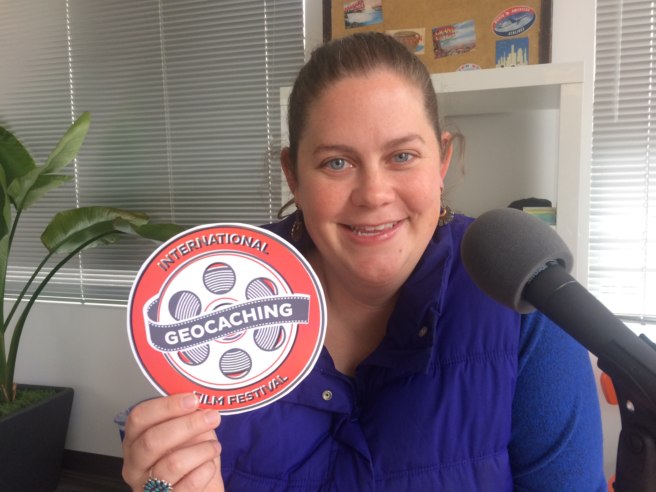
Inside Geocaching HQ Podcast Transcript (Episode 9): GIFF

[music]

Chris Ronan: Hello everybody. Guten tag, bonjour, hola. Thanks for joining us on Inside Geocaching HQ, I am Chris Ronan, username Rock Chalk, one of the staff here at HQ. On this episode we are talking about GIFF, the Geocaching International Film Festival with Erin Thompson who is the point person on GIFF for HQ. I learned some interesting things during this chat, sadly there were some terrible puns that reared their head at the end of the talk. It wasn’t a good moment, It wasn’t a good time, but we made it through, just some puns that make you groan. So if you wanna fast forward when you get to that part, I wouldn’t blame you, but up until that point it was a great talk. So without further ado, here is me and Erin chatting about GIFF.

[music]

CR: Okay. So Erin, before we get in to what you do now, let’s start with what you started doing here at HQ, you’re… ’cause a lot of people will recognize you from having visited Geocaching HQ.

Erin Thompson: Yeah, so two years ago when I started here I began in the Visitor Center. I was the Guest Experience Coordinator, and it was a super fun job. I love meeting geocachers, so all the geocachers who would come into visit headquarters, I would greet them, support them, they’d get to have a good time in the Visitor Center here at HQ. We’d talk about all the things they could do around the neighborhood, the GeoTour, all of this stuff, so it was really great to greet visitors from all over the world. And then, four months ago now, I moved over to the Community Volunteer Support Team and working specifically with translators and supporting the volunteer translators.

CR: And you’ve become a pretty hardcore cacher? But were you before? Before you…

ET: Well, compared to you…

CR: Well, but I’m just saying compared to [chuckle] rational people.

ET: Compared to rational people…

CR: Let’s not include me. [chuckle] I’m not rational. So let’s… Compared to rational people you’re pretty hardcore Geocacher. I mean you’re really into the game and…

ET: I am, yeah. I started in 2011, a friend introduced me, and very very quickly I fell in love. But originally I did often when I was traveling, I would look up neat caches in the spots where I was going. And I really didn’t have a super deep understanding of some of the different unique cache types, but I was pretty involved and I had found quite a few caches and I would consider myself very committed when I started working here. And then it just went bonkers, and I loved it, and I go geocaching all the time now. I don’t think I’m as hardcore as some but it is definitely a part of my life, yeah.

CR: Yeah, it’s hard to put that genie back in the bottle, right?

ET: Yes. Oh yeah. Yup.

[laughter]

CR: Okay, so today though, we’re talking about GIFF, Geocaching International Film Festival and your involvement with GIFF which… That began last year or was it even the year before at all?

ET: Even the year before, right after the 2015 film festival happened in November. I was asked if I wanted to help support the project going into 2016. And I said “yes, it’s such a fun promotion, I really love GIFF.” And I was very excited to be asked to help with it and it was an exciting project to take on while I was still in the Guest Experience Coordinator role and… Because I was already hearing so many stories from geocachers and thinking about the ways that those could be represented on film was really exciting and seeing the enthusiasm around the film festival really caught my attention so I started… Well now it’s almost two years being somewhat attached to the film festival. And this year I got to really step up and be the lead, before it had been coordinated by two people, generally and then this year I got to step up and lead it, so that’s been really fun.

CR: So for people who aren’t familiar with GIFF let’s give them the rundown of what exactly it is.

ET: Yeah, at Block Party in 2013 was the first… Yeah, that was the very first time the film festival happened, and it was part of Block Party here at Geocaching Headquarters. There was a call for films made by geocachers. A finalist selection of, I think of 16 films were selected and they were shown at a venue here near Geocaching HQ. And so people who came to Block Party may remember that event and attended and got to see these really fun, heartwarming videos made by geocachers. And that happened again at the Block Party in 2014. And then in 2015 it was slated to happen as part of Block Party but it rained out. The venue was outdoor, it was raining, it was very, very windy and so they had to cancel it. And I think somewhat to the benefit of geocachers around the world, a new plan was hatched to take the film reel that had already been selected for 2015 and share that globally with geocachers who wanted to create events all across the globe. And it was a huge success. From one event at headquarters with Block Party then went to event host, 400-500 event host around the world hosting this film festival weekend and getting to share those videos, the finalist videos, with thousands… Tens of thousands of geocachers around the world, and that’s where it’s come to today. We are quickly approaching the GIFF weekend of 2017. We have 17 finalists this year and so yeah… We’re really looking forward to that.

CR: Yeah, I think it’s fun to think back to 2015 and Block Party and that rain now, and how disappointed everybody was. But like you said, it really is to the benefit of the international community that we hadn’t thought before about what it’s now become. It’s kind of a happy accident that it’s become what it is now.

ET: Absolutely. Yeah, it’s really fun to see it where it is.

CR: So the people that are the finalists now, how did this process start? How many… How does a person get to that point where they are one of the finalist for this GIFF weekend?

ET: Yeah, the… GIFF is actually kind of a year-round promotion even though… I guess from the standpoint of what I’m doing here at headquarters to support that, because it’s pretty elaborate. The call for submissions for videos for filmmakers to submit their geocaching videos really goes out in early spring. And so before that, we are putting all of the new information up on the website. There’s an official Geocaching Film Festival website, and this year and the last year, we got to create a fun little video to promote submissions. Then so early spring, we are announcing this and pushing out to the social channels that it’s time to start making your videos. So that happens in early spring, but I’ll tell you that people have already told me that they are thinking about the films they wanna make for the future. So I think for filmmakers, this process is kind of year-round and it’s become something really fun to think about what they might submit for the next year. But that’s generally the schedule is in spring we put out the information, the call, we’ll often pick a theme. This year, the theme is the ‘Art of Geocaching.’ And that’s to be loosely interpreted. Geocaching can be an art in many different ways.

ET: So then we started receiving videos from filmmakers. They have to be under three minutes long. And we started accepting them through August 1st of this year, was the cut off for those films to be in. We received 50 films this year, submissions. And then here at HQ, we put together a panel of judges who are all HQ staff and we have a judging selection process during the month of August where we come down to the finalists. This year, it was 17. In the past, it’s been 16. It’s kinda fun that it’s 2017 and there are 17 finalists. It wasn’t intended, but we look for 60 minutes of content for a film reel. And we picked those final 17 in August, and then we announced that to the winners, the finalists, and also to the geocaching community in early September. And then that brought us into… Beginning of September is when event hosts… No, beginning of August event hosts could start submitting videos for November weekend of the film festival. So it kinda just rolls through the whole year, and yeah.

CR: Okay. So as the films are being judged here at HQ and are being whittled down to the finalists, what are some of the characteristics that make for a film that ends up among the finalists?

ET: Great question. So we actually have four official criteria for GIFF films that we present to filmmakers to help them think about what they might do for a film. So production quality is important. The way it looks on the screen, the quality of the video. Although we do have several finalists this year that submit and film their videos on iPhones or other mobile phone devices. So…

CR: I think I actually saw a feature film… Or I’ve seen maybe a couple of ’em that they’ve talked about how they’re filming on iPhones now. It’s the kind of thing that’s almost becoming a little more… Not necessarily common place, but certainly it’s not as much of an audity as maybe it used to be in the past.

ET: A barrier to entry, or a stretch…

CR: Right. Right.

ET: To be able to film something that would meet the quality standards that we are hoping for to show the international community. To be able to film that on something that at least a lot of people have access to. So production quality, content is really important. Is it family-friendly? Is it informative, inspiring, how…

CR: We’ve seen some really hilarious… [laughter] You kinda skip past family-friendly. [laughter] I just have to step in for a second and say we’ve seen some pretty hilarious stuff that didn’t quite unfortunately meet that one…

ET: That standard. Yeah.

CR: But it’s an important standard for our community and for our game. [chuckle]

ET: Yeah I mean, the hope is that the film festival is an event that a family could attend. I see many photos with kids attending these events, and so that’s something we do watch for, and is important in the overall game. Creativity is important. So is it a new theme that we haven’t seen before? Is it something represented in a new way that we haven’t seen? And then contribution to the global community would be the fourth one. Is it going to be relevant to a global audience? Is it something that geocachers around the globe can relate to, if that’s an emotion or a feeling or… Whatever it might be, these themes that we see in geocaching that people can relate to across the globe is something we definitely look for. Now I would say there are themes that we see a lot, that because we see them so often, they have to be done very very well in order to meet the bar. So I would say that first-to-find hunts or cache, just cache compilations of people out on a day of caching often do have… Because there are so many of them that get submitted that are that story because we love them. That is a normal day in the life geocacher activity that we all can relate to, I think most of us can. That we see that theme a lot and so the bar for that story or that storyline is often much more difficult and that’s where the creativity piece comes in. A story… A new perspective we may not have seen before often will rank a little bit higher.

CR: And so then you get to the point where you’ve got the reel and also you’re starting to look at GIFF events and that whole process. So what goes into a GIFF event? Because you also are, I think maybe you’re the decider…

[chuckle]

CR: On making sure that a GIFF event, that a submission fulfills all the various criteria. So what does that entail?

ET: Yeah. So it entails a few things, one is that, events are reviewed like, any other event would be reviewed on geocaching.com. It’s seen by a reviewer, they review it for all of the normal criteria. Now, after that there’s another step that GIFF does have as a layer, which is, event hosts have to submit a form to us and that is the form that we are reviewing. Now, it is not that difficult if the event is actually a GIFF event where the film will be shown. That’s one of the biggest pieces, is this event actually to show the finalist film videos. That should be the focus of the event, to get people together to celebrate this really fun, finalist video moment.

ET: So that’s what we’re primarily looking for when those event hosts send that form over to us. Those will get accepted if the event is on the right day. GIFF weekend is November 2nd through November 6th. So if a form comes in and there’s an event that’s outside of that window, unfortunately we won’t send them the film because then the people attending won’t get the souvenir for GIFF weekend.

ET: And so there’s just a couple things we screen for in that event process. We have 581 events currently vetted, which is the exact same number as last year, so that’s fine. And we expect a couple more stragglers might roll in over the next week. Other than that we’re looking at… There’s a few other pieces that go into it, so we’re looking at merchandise. We have some fun GIFF merchandise. That’s a project we get to work on with our creative team, getting the fun gnome stuff this year. GIFF has always been a really whimsical, fun, creative project. And so it’s fun to see the merchandise represent that. But I am most impressed by event hosts. I am seeing all of these images from all over the globe.

ET: We have events in over 50 countries this year and they’re already sending me pictures of the log books they’ve made or the voting sheets they’re gonna use and I’m just overwhelmed by how creative the geocaching community is for GIFF. I mean in general but especially for GIFF. They’re really going above and beyond, so that’s really fun to see right now.

CR: Yeah. Wasn’t there one that was like a black tie event?

ET: Yeah, I heard about one that’s a black tie event, there’s several that do all kinds of different voting. Last year there was a 3D event. So all of the geocachers brought homemade 3D glasses. They were just silly and fun to the event and so everybody had on their fun 3D glasses. Yeah, all kinds of fun ideas.

CR: Yeah, it’s always remarkable when you give an idea to the community, where they go with it is always a blast to see.

ET: Yeah, absolutely.

CR: If we go back to the films, one of the things that you and I had talked about before was the translation that goes into this right? Could you talk a little bit about that whole process with getting… Obviously these films come in different languages and then getting them translated into other languages.

ET: Yes, so one of the requirements of the submission process is that the film can be in any language but if it’s in a different language than English we do request subtitle files in English for that so that we are able to create a whole subtitle file in English. But from that point we actually transcribe all of those videos and get those uploaded so that our volunteer translators can then help to translate those into… I think we have 20 languages available this year for subtitle files for GIFF, so that those local communities all over the globe… I mean, we have Korean and Hebrew and many of the European languages available this year, which is so fun to see it. So thanks to the translators who have translated these files, it will now be available across the globe.

CR: When you talked about events, another thing I’ve seen is some of the cool voting that they do at individual events. Now HQ doesn’t have a community-wide vote on these things but we’ve seen times when individual events will vote and then even send awards to the filmmakers in other parts of the world, which is really cool.

ET: Yeah, it’s so fun. I’ve already seen several ballots that people are making for their local events. Many events I think will vote amongst the local event to pick who they think the overall audience winner should be or some events even create criteria so they might pick one… They might have three winners, one that is the overall winner or one that is the most heart felt or like the comedy award, it’s up to event hosts to decide what they want to do. The only piece that we support at Geocaching HQ I guess technically is we do a reviewer award. It’s called the ‘Signal Award’, and so we send the file of finalists out to reviewers and they get to pick their favorites and we compile those votes and then we will announce that on Tuesday, November 7th after the GIFF event.

ET: So now we do that on purpose because we don’t want to influence the local event hosts and the local communities from picking what they think will be their favorite in it. It’s amazing to see the diversity because we all… Different communities think in different ways about geocaching. So it’s fun to see them pick their video that they think is the best because it represents, I think the really wide range of styles of geocaching and what community is like. And then yes they create their own awards I’ve seen gnome trophies being sent [chuckle] to the winners. I’ve already seen a few of the awards that are ready for this year’s, that event host will be sending, so it is really fun to see how well received the videos are and also how much fun it is for the filmmakers to receive the praise from the community.

CR: Did we cover it all?

ET: I think so.

CR: I think we did, the more I think about it I think we probably should’ve filmed this, it’s about GIFF, we should have created a film reel of this interview.

ET: Yeah, it’s one of the things we like to say about GIFF around here is, it’s a little GIFFerent.

[chuckle]

CR: Oh my God! Has anybody ever said that until just now?

ET: Always.

CR: Really? I’ve never heard that.

ET: Alex and I always say that. And the winners, the filmmakers who are finalists get a free year of premium membership and we also mail them a coin, one of the GIFF coins and we like to call those ‘GIFFts’ with two Fs.

CR: Oh my gosh! Well I knew Alex was… And we should give a shout out real quick Alex and Reid…

ET: Yeah.

CR: For the work that they’ve done over the past few years, and Reid especially, it was kind of her brainchild, wasn’t it the whole GIFF thing?

ET: Yeah, and making the films, and Reid has continued to help create the trailer video for the GIFF weekends, helped create the call for submissions video, this year and last year, has done a lot of work to support it. And also I think some of the creativity and just lightheartedness of GIFF really comes from the support from Reid and Alex over the years yeah…

CR: And I knew Alex was into puns but I had no idea, the GIFFts?

ET: Yeah.

CR: GIFFerent?

ET: It’s perfect.

CR: Oh my gosh!

ET: Yeah.

CR: Oh, well that’s a good way to end this I think.

[chuckle]

CR: It can’t…

ET: Well one more, well thanks a GIFFilion.

CR: Oh my gosh! Yeah.

[chuckle]

[music]

CR: See, I warned you about those puns, it got a little rough there, didn’t it, there at the end? But we got through it. So what would you like to hear about on Inside Geocaching HQ? There is one way to let us know, email us at podcast@geocaching.com that is the address podcast@geocaching.com. Tell us what you would like us to cover, we will see if we can incorporate your ideas into an upcoming episode, we will not be doing any episodes about puns, this was the only one and it was just one of those deals where Erin slipped it in there at the end, but if I know it’s coming we don’t allow it. Alright? Sounds good? Okay I’m gonna go somewhere and try to get these puns out of my head, in the meantime from all of us at Geocaching HQ, happy caching.

Inside Geocaching HQ Podcast Transcript (Episode 3): Geocaching® app & retirement of Classic app

Ben and Bryan
Ben and Bryan

[music]

CHRIS RONAN: Hello, everybody. This is Inside Geocaching HQ, the podcast. Welcome to it. I’m Chris Ronan, the PR manager here at HQ. I’m your host for the podcast. We’ve got what I think is a very interesting show today. We are talking about the retirement of the Geocaching Classic app, and the continuing advancement of the free Geocaching® app. But before we get to that, be sure to watch the geocaching blog this week, where we will announce the community’s decision on the future of the Mission 9: Tunnel of Light APE cache. So depending on when you listen to this podcast, the news may already be out, or you may need to anxiously anticipate it for just a little bit longer. Also on the blog, we’ve got details about the recently announced Dönerstag souvenir. Attend a geocaching event on April 13th of this year, and you will earn the Dönerstag souvenir, so put that on your calendar.

Okay, on to the business at hand. The Geocaching Classic app will be retired March 23, 2017. That is less than two weeks from now. Many of you have asked questions about the app retirement. We have tried to answer as many of those questions as we can on the blog, but we thought it would be nice to chat about it here on the podcast. So today we have Bryan Roth, Geocaching HQ’s president and one of its co-founders, and we have Ben Hewitt, HQ’s product manager for mobile apps. I’m asking them the questions that you, the community, has been asking about the retirement of the Classic app.

Bryan, obviously, has a wealth of knowledge about the geocaching apps, since he has been here since the beginning. Ben is not only intimately involved with the apps, since he works with the mobile team, but he’s also a very dedicated cacher. He has more than 10,000 finds with his wife, Jayme, who also works here at Geocaching HQ. So, here we go.

[music]

CR: Okay, so we’re talking about the geocaching apps. Plural, right now, but soon will not be. We have the Classic app that will be retiring on March the 23rd, and then going forward, we will have just the Geocaching® app, which formerly known as the intro app, and the free app, however you want to call it. But before we get into talking about what happens on March 23rd, I thought it would be interesting, Bryan, since you’re the elder statesman in the room… I don’t know how you feel about that term, but we’ll use it.

BRYAN ROTH: I’m not sure how I feel about the elder part.

CR: Well, you’re a statesman, I guess, then.

BR: Alright, I’ll take statesman.

CR: Since you’re the statesman in the room, and you were around back when the currently Classic app, as we call it, was introduced back in 2008. It’s been almost nine years ago now, right?

BR: Wow, it has been nine years. That’s true. Well, back in 2007, when Apple came out with the original iPhone, we were really focused on the website, focused on building the Geocaching community, and trying to provide the right guidance to ultimately have it continue to grow. And people said to us, “Oh, are you gonna make an iPhone app?” And I don’t think anybody at the time, aside from maybe Steve Jobs, knew just how powerful the iPhone and smartphone platforms would become, and at the time we said, “This is not something we wanna focus on now. Let’s keep focusing on the website and supporting geocachers who were using their Garmins and Magellans and DeLormes and Lowrances, etc.”

And at one point, we noticed that there was a gentleman named Brian McLaughlin who was out in Oregon, I believe, and he had built a basic geocaching app that was… It was scraping the website, and he wrote to us, and he asked for permission, and he said, “Hey, I’ve got this app. I wonder if you guys would be willing to help support it.” We didn’t have an API at the time, but we looked at it and we said, “Oh, this is interesting.” People who own these iPhones, which were relatively few and far between at the time, they could go geocaching with the iPhone. And it was a relatively rudimentary app, and we said… Internally, we said, “Wow, this is kind of interesting.” We weren’t really planning on doing it anytime soon, but maybe we should talk about working with Brian more directly.

And shortcut to a few months later, and we basically said to Brian, “Look, we would like to buy what you have built so far, to give us a head start, on delivering something to the geocaching community.” And as part of the agreement, some of you old-timers may remember that in the early days of the Classic app, in the help screen, we always had a special thanks to Brian McLaughlin for giving us the opportunity to really roll out an initial iPhone app. That was in 2008, and we built on that original code base for many years after that, and we did a lot of refactoring, and rebuilt the app time and again. But the early days of that app was actually not built by us, and it was built by a geocacher who was an external, one of the early mobile app developers.

CR: And then, many years later, came what was originally known as the intro app, and is now, going forward, going to be the Geocaching® app, which is built on different technology, correct? And at the time, when it first started… I think this is important too. At the time it had a different goal than the Classic app had. And it’s been built up over the course of years and now it’s a much different app than it used to be. But I think it’s important for a lot of people who don’t realize, it’s a different technology than the Classic app is.

BR: Absolutely, and that was part of the impetus for creating the free app. Historically what we found was that because that original code base had been developed and added to, and some refactoring over time, it got to the point that our mobile engineering team was really concerned about making any changes to that Classic app because the code was… It was such that it was difficult to do. And things took two or three times as long as they would had that app been built in the modern day code base. And of course the code base had changed over time, the technologies had changed over time. That was one challenge.

The second challenge was that we realized having a $10 app created a significant barrier for new users. They would come to the app store, they would go get their iPhone, they would say, “Oh, I’m a geocacher. I wonder if there’s something… If there’s an app for geocaching.” And they would go and they would say, “Oh, it’s $10.” Well, most people were paying a dollar for an app or $2 or $3, and $10 felt like a lot of money. And so a lot of people just wouldn’t download the application. They didn’t wanna pay for it. And so we felt like we were missing out on an opportunity to educated new geocachers and to bring them into the game at no cost. And ideally get them to become geocachers. Get them to enjoy the game so that they would realize that, “Okay.” A premium membership was a natural addition to the way they played.

It wasn’t a tremendous amount of money, and they would help to support the site, help to support the ongoing development and ultimately unlock all of the features we were providing on the web and in this intro app. So we set about building an intro app using new technology and putting the Classic app, not on hold, because we would do fixes from time to time. But the primary focus of our engineering team became building this new intro app as a free-mium way to get people into the mobile app, get them to learn about geocaching and then get them to become actual players.

BEN HEWITT: In terms of thinking about the technology that supports the Classic app, like Bryan said, the app itself has become really dated and the code base of the app is really tough for us to maintain. But keep in mind too that when you’re looking at that app, when you’re using that app, you’re just seeing a tip of the iceberg of what it takes to support that app. In addition to the app itself getting harder and harder to maintain, the API that supports that app is the same, the services that support that API, all the way down to our data. In a lot of ways we’ve had to make upgrades from the ground up and supporting that app is not just keeping that app itself out in the wild, but keeping all the systems that support it up and running in addition to supporting it when questions come in.

CR: And so sometime around a year ago, officially, it was announced that going forward, at some point, the Classic app would be retired. And the free app would become the app going forward. Some people have wondered why was the decision made to move forward with the free app rather than the Classic app? I think you’ve already answered it, but maybe just reiterate it a little bit. There is a lot more potential for the free app going forward than there ever would have been for the Classic.

BR: Sure, there were actually a number of reasons. And I mentioned maybe one or two earlier. But another one of the reasons… There are a couple of reasons. So one of the complaints that we were getting over time was premium members, the folks that were paying to support the website were basically saying to us, “Hey, I’m paying $30 a year,” which incidentally has been the price since we launched premium membership 14 or 15 years ago. “Hey, I’m paying this $30 a year, and now I have to go pay for an additional app in order to play the game. That doesn’t seem fair.” And one of the things that we wanted to do, is we wanted to… If you’re a premium member, we really… Our goal is to make sure that you have the most accessible, most robust geocaching ecosystem at your fingertips. We want you to have access to all of the web-based functionalities. We wanna unlock all of the mobile functionalities.

Ultimately we’ve moved into an API program where we’re allowing third-party developers to build applications, services, websites royalty free so they don’t have to pay us, but the primary goal is for them to provide additional services to premium members. Another one of the challenges that we had, was the Classic app was a $10 one time purchase. And what we started to see, was somebody who would buy that Classic app for $10 when they had their iPhone 3; Well, when they were on their iPhone 7S or 7 Plus, they paid $10 nine years ago and there was really no incentive for them to continue to support the site on an ongoing basis. In the Classic app, basically almost everything was unlocked with the exception of pocket queries and what we said is that, as a business, as a company that’s employing 75 people full-time in Seattle, which is a challenging business market in a number of ways, we said, “Hey, our goal is, we wanna make geocaching accessible not just to ourselves and even our children, but to our children’s children and our grandchildren. How can this… I guess, our children’s children are our grandchildren.

[laughter]

BR: Maybe their grandchildren. So the question is how do we create a sustainable business model that will allow us to continue to support the game? This one time $10 fee unfortunately was not sustainable long-term. Not if we want to continue growing as a company, providing a better feature set, expanding the definition of what the game is, and what’s available to players worldwide. And so what we said is, if we can build an app on a new code base that would allow us to move beyond the challenges of this old code base, if we could make that application free so that new people could sign up and check it out and get a taste of what geocaching is, and then if we could also unlock all of the features of that application in conjunction with the premium membership which unlocks everything else that we provide, that felt like a really solid solution.

And what I’ll say at this point is we’re not done. We hear what the community is saying, we know that we have talked about retiring the Classic app and we will be retiring the Classic app full-time. We pulled it from the market a little over a year ago but it’s going to allow us to focus completely on these new applications and providing the best service not just to premium members but to all members, to people who are coming to geocaching for the first time. We wanna do a better job with education of new users. We wanna do a better job with the features and functionality in the app. And quite honestly we feel like $30 is a reasonable price to ask people, especially since it’s been the same price for so many years to help support the company, help support the website, and get access to all these features.

Now, we will be the first to admit that this is not perfect. We are not done. We have some challenges and there are things that people want that are not in this new app. We plan to either put them in the new app or enable this third-party ecosystem of API developers to provide those to the members who are really active geocachers. I guess it’s important to say that we’ve changed some things at Geocaching HQ, and our goal is to deliver the best products and services for geocachers worldwide. We’re not done. In many ways we feel like we’re just getting started and our expectation is that the changes that we make going forward are gonna be the changes that ultimately delight the users. We realize that everything that we do is… Anytime we make a change, there’s always gonna be people that are upset with us. Our goal is to make geocaching sustainable in the long-term while at the same time delivering the best products and services to the geocaching community and there are more great things to come on the horizon. And if you were here at Geocaching HQ, you would see a lot of people who are really excited for us to move forward.

CR: Okay, so March 23rd comes, what will happen? What will people who currently own the Classic app, what happens to them that day?

BH: That’s a great question and we know there’ve been a lot of questions in the community about that and we’ve been really mindful here at HQ of making sure that we get that right. The most important thing to know is that for anybody who’s out geocaching everyday, the Classic app won’t be a usable geocaching app for much longer after March 23rd. It will no longer communicate with our API. You won’t be able to run searches, you won’t be able to submit logs, any of that kind of stuff. So you’re really not gonna be able to go geocaching with it after March 23rd. That said, we know that a lot of people have a lot of data in the Classic app that’s really important to them. They’ve made offline lists over the years that are important to them. They’ve saved waypoints that are important to them. And this is one of the main reasons that we needed to move on from the Classic app is unfortunately, the Classic app doesn’t handle all that data in the best way. It’s all stored on your device. So we’re working actively to make sure, number one, that people will continue to be able to access that data on their device after March 23rd. And number two, we’re investigating ways to help people get that data off their device after March 23rd. So the upshot of all that is you won’t be able to use it to go geocaching but you should still be able to access it to get that data that you have in the Classic app and make sure you still have access to it.

CR: And what features will people see between now and then, ’cause there’s been a lot of questions about that too and there are a couple of key things coming, right? Between now and March 23rd in the new, in the Geocaching® app.

BH: Absolutely. The number one that we hear from everybody is, “I need to do field notes like I had in the Classic app.” We’ve done a lot of research on this. We really wanted to get behind the motivations. We know that it was a big request from the community, but before we just repeated exactly what was in the Classic app, we wanted to make sure that we understood what people were trying to accomplish. We feel like we’ve got a lot of good information on that, both from what you all have told us in the forums, what you’ve told us on the blog, what you tell us on social media, and in addition to the research that we did one-on-one with a lot of different users. So basically what you’re gonna see, honestly in the next week, hopefully by the time you hear this, this will already be on your phone. We’re upgrading the field notes that you’ve known for years and loved, we’re now gonna be calling them drafts in the app and on the website.

Everything that you’ve liked about field notes will continue to work just as you’ve loved it. You’ll be able to start a log in the app and then finish it up on the website. But we’ve also made a lot of changes behind the scenes to make that much more robust. You’ll be able to finish your drafts in the app. You were never able to do that before with field notes in the Classic app. You’ll be able to… After a little more time, you’ll be able to add a favorite point or a photo to a draft, and you were never able to do that with field notes before. So we really listened to a lot of what was working about field notes and also listened to a lot of things that people said that they wished field notes would do more. And the new app will have all that goodness plus some more.

CR: Okay, and then so after March 23rd, obviously things don’t just stop. What is on the horizon? What are things that your team is focused on right now for the app after March 23rd?

BH: Sure. There’s a lot of next tier features that we know we haven’t done yet, too. People are interested in things like personal cache notes. People are interested in a photo gallery like the Classic app had. And we’re not necessarily gonna to recreate everything exactly like the Classic app did, but we’re absolutely listening to the things that the community is asking for. We also know that given the history of the free app, like you guys have already mentioned, it started its life as the intro app. And there’s some things about this app that we haven’t had a chance to revisit since its inception. It used to have a different purpose. It was for a smaller audience of people that was just getting to know geocaching.

And there are some ways that this app works that we’d like to revisit and broaden that audience. Make it work better for a broader group of people. We hear you when you say that, “Hey, I’m not a newbie and I don’t want this app to treat me like a newbie.” So we’re gonna be revisiting a lot of the core experience in the app, and trying to make sure that it works for people who are brand new to the game. That’s still incredibly important to us because we want to make great geocachers through this app, but we also want it to be a really solid everyday experience for a lot of geocachers.

CR: One question we hear a lot is, “How do you guys decide what you’re going to do next?” Or, “What the features are going to be?” Because there are so many different possibilities about what you could do, not just on the app, but on the website. I hear this question about all of our products so maybe talk a little bit about, how does your team decide, and how do you gather data and research, and how do you go about trying to figure out what’s gonna be next, and what’s gonna be next after that?

BH: As you might imagine that’s a big challenge. It’s a fun challenge and one that I am lucky to be working on everyday. We hear feedback from more places than you can possibly imagine. We meet geocachers in person all the time. Everybody at HQ does. We hear feedback from all of our coworkers about what they hear from geocachers. We run surveys. We do in person research and user testing. And all of these things stack up to a list of challenges basically. We’ve been trying to be very thoughtful in the last few years. Not necessarily about just implementing features, but about really understanding what’s the task you’re trying to accomplish as a geocacher? What’s holding you back from just getting out there and having fun and finding geocaches? In a perfect world, the app and the website shouldn’t be something that you have to think about. It should just be your tool that engages you and lets you get out and do the stuff you want to do.

So our goal is to understand what are the top problems that we can solve for geocachers. What are the things that they’re not able to do now? And how can we do that? Sometimes that just means bringing over features that already exist. Sometimes it’s a solved problem then we just need to implement something that already exists. And sometimes there’s good reason to revisit what we’ve done before and say, “Is that still the best way to solve this problem, or can we do something better?” And that’s the drafts feature that I just talked about, is a really good example of that. Where we tried to bring along a lot of the really good stuff that existed before, but also build something more useful and more robust than anything we’ve done in the past.

CR: Okay, so Bryan, in the Classic app, if you’re a basic member, you can see all caches of every DT as long as they’re not premium member only caches. So one of the big differences in the free app is that unless you have premium membership you can’t see caches that are above 1.5/1.5 DT, and so people have had questions about that in the community. And it’s a difficult subject. It’s a complicated subject, and I wonder if you could speak a little bit to how we got to where we are now and the fact that it’s always a conversation, and it’s always something that we are looking at as a company.

BR: Sure. I think if we go back to the beginning of how we got to a DT limitation. I think where we started was we had two challenges that we were trying to address. The first challenge is as a application that was focused on on-boarding new users. We had a concern about a new user going out and for their first cache trying a 3/3, or a 4/4, or worse, a 5/5, and having a really bad experience. So one of things that we wanted to do, was we wanted to create a model where their first experience would be a positive one. Ideally find a large cached container that’s easy to find, and it has trinkets and toys, and if they’re with kids everybody has a good time and then they say, “Oh, I’m interested. I like this. I wanna do more.” And a big concern was, well what if they find a 3/3, or worse yet, don’t find a 3/3, or a 2/2, and they have this bad experience and give up on geocaching because they feel like it’s out of their league, or just too hard, or too complicated. So we wanted to solve that. At the same time, the other challenge we had was, we needed to be able to generate revenue to pay for the operational costs of building the app, and keeping the lights on at the company, and things like that.

And so as I said earlier, we realize that $10 one time forever was not an ongoing sustainable model. We said, “Okay, we wanted to solve the premium membership, they should get a free app if you’re a premium member.” So we said, “Okay, what if we combine these two things,” and we say, “Okay, if you’re a new member or a basic member we’re gonna give you access to caches that we believe you’re more likely to find.” And then premium members are more likely engaged users who have played the game before they decide to spend $30 a year or whatever we charge a quarter or a month. So the thought was if we combine these two things maybe we can solve both of those problems at the same time. Now, I don’t think we’ve done a very good job with that. And I think that if you were to talk to the people who work here and our mobile application developers, I think we realized that by conflating those two challenges and coming up with the solution, we didn’t get where we needed to be.

We certainly solve some of it. We’re getting people to subscribe and become premium members and that allows us to hire more engineers and focus on building a better app, and a better website, and the better foundational technology that supports all of this. But at the same time we get people who are coming to the app, and they’re saying, “Oh, I’m in a neighborhood where all there is, is 2.5/2.5’s, and I can’t see any caches, and we’re having other people have an experience where they live in an area where everything’s relatively easy to find and they see everything. And so we haven’t done a good job of solving that challenge.

At the same time, we’ve pissed off a lot of people and they’re frustrated. And so for us as a company, we believe that we can do better. We have some initiatives here that will be directly looking at those problems and saying, “How can we do a better job?” This is not something that we’re gonna solve overnight, as easy as it sounds to like, “Hey, just open everything up.” It’s like, if we said “Alright, everything in the app is unlocked for all members.” Well, that’s great. We would make people pretty happy, but we might not have anybody helping to support the website. And then what happens to the company? That’s a challenge. So one of the luxuries that we have as a business is that we’re a bootstrap company. Jeremy, Elias, and I started this over 16 years ago. To date we have never taken any outside investment and that means that we don’t have somebody coming to us and saying, “Hey, you need to make more money. Charge everybody for geocaching.” Or, “Start raising your prices or do things like that.” We don’t have people that can tell us what to do.

And between the three of us, our interest is in creating a business that is sustainable, absolutely, because we believe that’s important to keep this game going. But it’s also more importantly, we wanna make geocaching awesome. We want people to be happy. We want more players having more fun getting outside. Our mission as a company is to inspire and enable discovery, exploration, and adventure. And in order to do that, we need to have employees here building features and functionality that are gonna help to get people outside. But we also want people who are happy enough about this game to go tell their friends, “Look at how cool this is. Let’s get outside.” So our goal is to take a really hard look at where that paywall is. What is it that we’re going to charge for? What is it that we’re going to make for free? And at the same time maintain another model that allows us to have this ecosystem of third party API developers who are able to create things that may be more appealing to certain type of users or users who want a very specific piece of functionality that we don’t plan on building in the near term. Those are all options.

So for us what I can tell you is going forward we are absolutely taking a look at this. We don’t feel like it’s in the right place now. And we do have intentions of improving it, knowing that we’re doing that. Knowing that we are intending to make this more of a win-win for the community and this company is something that has a lot of people here at HQ really excited, myself included because we wanna do better. We know that we can make this game better. We know that we can make the geocaching platform that we provide and that we power through the API, we know that we can make it better. And so maybe you’re hearing this for the first time, but I’m telling you that in the coming months and in the coming years, this company is dedicated to making the best products and services, getting more people outside, and really delighting the global geocaching community. And that’s going to happen. We’ve been doing this for 16 and a half years. We have 75 full-time employees here who are dedicated to doing this work and to getting more people outside playing this game.

And the truth is, we’ve actually done a lot. And we’re really proud of what we’ve done. We have built a website that is robust. We have built multiple applications and services to support this game. And at the end of the day, we have got millions of people outside doing something fun. We have delivered adventure all over the world. We have helped to create a system that allows people to create, share, and play experiences and adventures around the world. And we’re actually really proud of that. And I think that it’s important to note that we’re proud of what we’ve done so far, but we know that we can do more and our goal is to do more and we’re going to do more.

BH: I completely echo what Bryan has said. I started this game as a player first. I’ve been playing since 2008. I used the first version of that Classic app and every version up till now and loved it to death. And I completely understand why it’s really hard for a lot of folks to say goodbye to a beloved old friend. That app has served us well for a long time. And like Bryan said, I wanna echo, that I feel really lucky and fortunate to be working on the successor to that app. To spend time thinking about how can we do it even better. How can we live up to what that app did so well for people, and how can we make it even better than it was before?

[music]

CR: So there you go, Hopefully you enjoyed and/or learned something from the discussion. Thanks to Bryan and Ben for taking the time. Check out the geocaching blog for much more about the Geocaching Classic app retirement, and new features in the free Geocaching® app. And what would you like to hear about on Inside Geocaching HQ? Send us an email: Podcast at geocaching dot com is the address. Drop us a line. We would love to hear from you, and we would love to know what you want to hear about in future episodes. Until we chat again, from me and from everybody here at Geocaching HQ, happy caching.