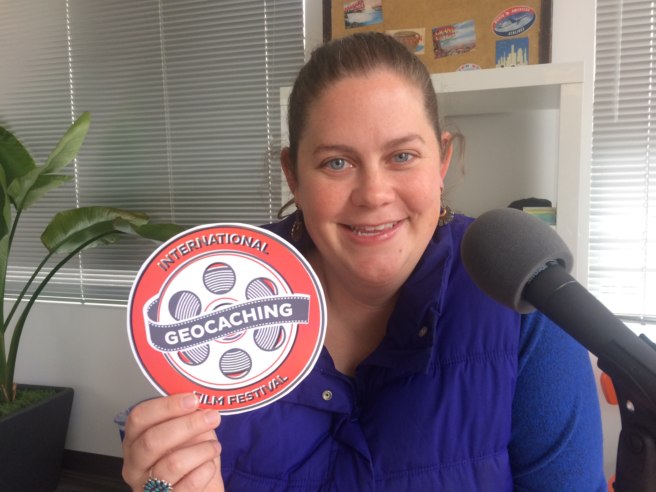
Inside Geocaching HQ Podcast Transcript (Episode 9): GIFF

[music]

Chris Ronan: Hello everybody. Guten tag, bonjour, hola. Thanks for joining us on Inside Geocaching HQ, I am Chris Ronan, username Rock Chalk, one of the staff here at HQ. On this episode we are talking about GIFF, the Geocaching International Film Festival with Erin Thompson who is the point person on GIFF for HQ. I learned some interesting things during this chat, sadly there were some terrible puns that reared their head at the end of the talk. It wasn’t a good moment, It wasn’t a good time, but we made it through, just some puns that make you groan. So if you wanna fast forward when you get to that part, I wouldn’t blame you, but up until that point it was a great talk. So without further ado, here is me and Erin chatting about GIFF.

[music]

CR: Okay. So Erin, before we get in to what you do now, let’s start with what you started doing here at HQ, you’re… ’cause a lot of people will recognize you from having visited Geocaching HQ.

Erin Thompson: Yeah, so two years ago when I started here I began in the Visitor Center. I was the Guest Experience Coordinator, and it was a super fun job. I love meeting geocachers, so all the geocachers who would come into visit headquarters, I would greet them, support them, they’d get to have a good time in the Visitor Center here at HQ. We’d talk about all the things they could do around the neighborhood, the GeoTour, all of this stuff, so it was really great to greet visitors from all over the world. And then, four months ago now, I moved over to the Community Volunteer Support Team and working specifically with translators and supporting the volunteer translators.

CR: And you’ve become a pretty hardcore cacher? But were you before? Before you…

ET: Well, compared to you…

CR: Well, but I’m just saying compared to [chuckle] rational people.

ET: Compared to rational people…

CR: Let’s not include me. [chuckle] I’m not rational. So let’s… Compared to rational people you’re pretty hardcore Geocacher. I mean you’re really into the game and…

ET: I am, yeah. I started in 2011, a friend introduced me, and very very quickly I fell in love. But originally I did often when I was traveling, I would look up neat caches in the spots where I was going. And I really didn’t have a super deep understanding of some of the different unique cache types, but I was pretty involved and I had found quite a few caches and I would consider myself very committed when I started working here. And then it just went bonkers, and I loved it, and I go geocaching all the time now. I don’t think I’m as hardcore as some but it is definitely a part of my life, yeah.

CR: Yeah, it’s hard to put that genie back in the bottle, right?

ET: Yes. Oh yeah. Yup.

[laughter]

CR: Okay, so today though, we’re talking about GIFF, Geocaching International Film Festival and your involvement with GIFF which… That began last year or was it even the year before at all?

ET: Even the year before, right after the 2015 film festival happened in November. I was asked if I wanted to help support the project going into 2016. And I said “yes, it’s such a fun promotion, I really love GIFF.” And I was very excited to be asked to help with it and it was an exciting project to take on while I was still in the Guest Experience Coordinator role and… Because I was already hearing so many stories from geocachers and thinking about the ways that those could be represented on film was really exciting and seeing the enthusiasm around the film festival really caught my attention so I started… Well now it’s almost two years being somewhat attached to the film festival. And this year I got to really step up and be the lead, before it had been coordinated by two people, generally and then this year I got to step up and lead it, so that’s been really fun.

CR: So for people who aren’t familiar with GIFF let’s give them the rundown of what exactly it is.

ET: Yeah, at Block Party in 2013 was the first… Yeah, that was the very first time the film festival happened, and it was part of Block Party here at Geocaching Headquarters. There was a call for films made by geocachers. A finalist selection of, I think of 16 films were selected and they were shown at a venue here near Geocaching HQ. And so people who came to Block Party may remember that event and attended and got to see these really fun, heartwarming videos made by geocachers. And that happened again at the Block Party in 2014. And then in 2015 it was slated to happen as part of Block Party but it rained out. The venue was outdoor, it was raining, it was very, very windy and so they had to cancel it. And I think somewhat to the benefit of geocachers around the world, a new plan was hatched to take the film reel that had already been selected for 2015 and share that globally with geocachers who wanted to create events all across the globe. And it was a huge success. From one event at headquarters with Block Party then went to event host, 400-500 event host around the world hosting this film festival weekend and getting to share those videos, the finalist videos, with thousands… Tens of thousands of geocachers around the world, and that’s where it’s come to today. We are quickly approaching the GIFF weekend of 2017. We have 17 finalists this year and so yeah… We’re really looking forward to that.

CR: Yeah, I think it’s fun to think back to 2015 and Block Party and that rain now, and how disappointed everybody was. But like you said, it really is to the benefit of the international community that we hadn’t thought before about what it’s now become. It’s kind of a happy accident that it’s become what it is now.

ET: Absolutely. Yeah, it’s really fun to see it where it is.

CR: So the people that are the finalists now, how did this process start? How many… How does a person get to that point where they are one of the finalist for this GIFF weekend?

ET: Yeah, the… GIFF is actually kind of a year-round promotion even though… I guess from the standpoint of what I’m doing here at headquarters to support that, because it’s pretty elaborate. The call for submissions for videos for filmmakers to submit their geocaching videos really goes out in early spring. And so before that, we are putting all of the new information up on the website. There’s an official Geocaching Film Festival website, and this year and the last year, we got to create a fun little video to promote submissions. Then so early spring, we are announcing this and pushing out to the social channels that it’s time to start making your videos. So that happens in early spring, but I’ll tell you that people have already told me that they are thinking about the films they wanna make for the future. So I think for filmmakers, this process is kind of year-round and it’s become something really fun to think about what they might submit for the next year. But that’s generally the schedule is in spring we put out the information, the call, we’ll often pick a theme. This year, the theme is the ‘Art of Geocaching.’ And that’s to be loosely interpreted. Geocaching can be an art in many different ways.

ET: So then we started receiving videos from filmmakers. They have to be under three minutes long. And we started accepting them through August 1st of this year, was the cut off for those films to be in. We received 50 films this year, submissions. And then here at HQ, we put together a panel of judges who are all HQ staff and we have a judging selection process during the month of August where we come down to the finalists. This year, it was 17. In the past, it’s been 16. It’s kinda fun that it’s 2017 and there are 17 finalists. It wasn’t intended, but we look for 60 minutes of content for a film reel. And we picked those final 17 in August, and then we announced that to the winners, the finalists, and also to the geocaching community in early September. And then that brought us into… Beginning of September is when event hosts… No, beginning of August event hosts could start submitting videos for November weekend of the film festival. So it kinda just rolls through the whole year, and yeah.

CR: Okay. So as the films are being judged here at HQ and are being whittled down to the finalists, what are some of the characteristics that make for a film that ends up among the finalists?

ET: Great question. So we actually have four official criteria for GIFF films that we present to filmmakers to help them think about what they might do for a film. So production quality is important. The way it looks on the screen, the quality of the video. Although we do have several finalists this year that submit and film their videos on iPhones or other mobile phone devices. So…

CR: I think I actually saw a feature film… Or I’ve seen maybe a couple of ’em that they’ve talked about how they’re filming on iPhones now. It’s the kind of thing that’s almost becoming a little more… Not necessarily common place, but certainly it’s not as much of an audity as maybe it used to be in the past.

ET: A barrier to entry, or a stretch…

CR: Right. Right.

ET: To be able to film something that would meet the quality standards that we are hoping for to show the international community. To be able to film that on something that at least a lot of people have access to. So production quality, content is really important. Is it family-friendly? Is it informative, inspiring, how…

CR: We’ve seen some really hilarious… [laughter] You kinda skip past family-friendly. [laughter] I just have to step in for a second and say we’ve seen some pretty hilarious stuff that didn’t quite unfortunately meet that one…

ET: That standard. Yeah.

CR: But it’s an important standard for our community and for our game. [chuckle]

ET: Yeah I mean, the hope is that the film festival is an event that a family could attend. I see many photos with kids attending these events, and so that’s something we do watch for, and is important in the overall game. Creativity is important. So is it a new theme that we haven’t seen before? Is it something represented in a new way that we haven’t seen? And then contribution to the global community would be the fourth one. Is it going to be relevant to a global audience? Is it something that geocachers around the globe can relate to, if that’s an emotion or a feeling or… Whatever it might be, these themes that we see in geocaching that people can relate to across the globe is something we definitely look for. Now I would say there are themes that we see a lot, that because we see them so often, they have to be done very very well in order to meet the bar. So I would say that first-to-find hunts or cache, just cache compilations of people out on a day of caching often do have… Because there are so many of them that get submitted that are that story because we love them. That is a normal day in the life geocacher activity that we all can relate to, I think most of us can. That we see that theme a lot and so the bar for that story or that storyline is often much more difficult and that’s where the creativity piece comes in. A story… A new perspective we may not have seen before often will rank a little bit higher.

CR: And so then you get to the point where you’ve got the reel and also you’re starting to look at GIFF events and that whole process. So what goes into a GIFF event? Because you also are, I think maybe you’re the decider…

[chuckle]

CR: On making sure that a GIFF event, that a submission fulfills all the various criteria. So what does that entail?

ET: Yeah. So it entails a few things, one is that, events are reviewed like, any other event would be reviewed on geocaching.com. It’s seen by a reviewer, they review it for all of the normal criteria. Now, after that there’s another step that GIFF does have as a layer, which is, event hosts have to submit a form to us and that is the form that we are reviewing. Now, it is not that difficult if the event is actually a GIFF event where the film will be shown. That’s one of the biggest pieces, is this event actually to show the finalist film videos. That should be the focus of the event, to get people together to celebrate this really fun, finalist video moment.

ET: So that’s what we’re primarily looking for when those event hosts send that form over to us. Those will get accepted if the event is on the right day. GIFF weekend is November 2nd through November 6th. So if a form comes in and there’s an event that’s outside of that window, unfortunately we won’t send them the film because then the people attending won’t get the souvenir for GIFF weekend.

ET: And so there’s just a couple things we screen for in that event process. We have 581 events currently vetted, which is the exact same number as last year, so that’s fine. And we expect a couple more stragglers might roll in over the next week. Other than that we’re looking at… There’s a few other pieces that go into it, so we’re looking at merchandise. We have some fun GIFF merchandise. That’s a project we get to work on with our creative team, getting the fun gnome stuff this year. GIFF has always been a really whimsical, fun, creative project. And so it’s fun to see the merchandise represent that. But I am most impressed by event hosts. I am seeing all of these images from all over the globe.

ET: We have events in over 50 countries this year and they’re already sending me pictures of the log books they’ve made or the voting sheets they’re gonna use and I’m just overwhelmed by how creative the geocaching community is for GIFF. I mean in general but especially for GIFF. They’re really going above and beyond, so that’s really fun to see right now.

CR: Yeah. Wasn’t there one that was like a black tie event?

ET: Yeah, I heard about one that’s a black tie event, there’s several that do all kinds of different voting. Last year there was a 3D event. So all of the geocachers brought homemade 3D glasses. They were just silly and fun to the event and so everybody had on their fun 3D glasses. Yeah, all kinds of fun ideas.

CR: Yeah, it’s always remarkable when you give an idea to the community, where they go with it is always a blast to see.

ET: Yeah, absolutely.

CR: If we go back to the films, one of the things that you and I had talked about before was the translation that goes into this right? Could you talk a little bit about that whole process with getting… Obviously these films come in different languages and then getting them translated into other languages.

ET: Yes, so one of the requirements of the submission process is that the film can be in any language but if it’s in a different language than English we do request subtitle files in English for that so that we are able to create a whole subtitle file in English. But from that point we actually transcribe all of those videos and get those uploaded so that our volunteer translators can then help to translate those into… I think we have 20 languages available this year for subtitle files for GIFF, so that those local communities all over the globe… I mean, we have Korean and Hebrew and many of the European languages available this year, which is so fun to see it. So thanks to the translators who have translated these files, it will now be available across the globe.

CR: When you talked about events, another thing I’ve seen is some of the cool voting that they do at individual events. Now HQ doesn’t have a community-wide vote on these things but we’ve seen times when individual events will vote and then even send awards to the filmmakers in other parts of the world, which is really cool.

ET: Yeah, it’s so fun. I’ve already seen several ballots that people are making for their local events. Many events I think will vote amongst the local event to pick who they think the overall audience winner should be or some events even create criteria so they might pick one… They might have three winners, one that is the overall winner or one that is the most heart felt or like the comedy award, it’s up to event hosts to decide what they want to do. The only piece that we support at Geocaching HQ I guess technically is we do a reviewer award. It’s called the ‘Signal Award’, and so we send the file of finalists out to reviewers and they get to pick their favorites and we compile those votes and then we will announce that on Tuesday, November 7th after the GIFF event.

ET: So now we do that on purpose because we don’t want to influence the local event hosts and the local communities from picking what they think will be their favorite in it. It’s amazing to see the diversity because we all… Different communities think in different ways about geocaching. So it’s fun to see them pick their video that they think is the best because it represents, I think the really wide range of styles of geocaching and what community is like. And then yes they create their own awards I’ve seen gnome trophies being sent [chuckle] to the winners. I’ve already seen a few of the awards that are ready for this year’s, that event host will be sending, so it is really fun to see how well received the videos are and also how much fun it is for the filmmakers to receive the praise from the community.

CR: Did we cover it all?

ET: I think so.

CR: I think we did, the more I think about it I think we probably should’ve filmed this, it’s about GIFF, we should have created a film reel of this interview.

ET: Yeah, it’s one of the things we like to say about GIFF around here is, it’s a little GIFFerent.

[chuckle]

CR: Oh my God! Has anybody ever said that until just now?

ET: Always.

CR: Really? I’ve never heard that.

ET: Alex and I always say that. And the winners, the filmmakers who are finalists get a free year of premium membership and we also mail them a coin, one of the GIFF coins and we like to call those ‘GIFFts’ with two Fs.

CR: Oh my gosh! Well I knew Alex was… And we should give a shout out real quick Alex and Reid…

ET: Yeah.

CR: For the work that they’ve done over the past few years, and Reid especially, it was kind of her brainchild, wasn’t it the whole GIFF thing?

ET: Yeah, and making the films, and Reid has continued to help create the trailer video for the GIFF weekends, helped create the call for submissions video, this year and last year, has done a lot of work to support it. And also I think some of the creativity and just lightheartedness of GIFF really comes from the support from Reid and Alex over the years yeah…

CR: And I knew Alex was into puns but I had no idea, the GIFFts?

ET: Yeah.

CR: GIFFerent?

ET: It’s perfect.

CR: Oh my gosh!

ET: Yeah.

CR: Oh, well that’s a good way to end this I think.

[chuckle]

CR: It can’t…

ET: Well one more, well thanks a GIFFilion.

CR: Oh my gosh! Yeah.

[chuckle]

[music]

CR: See, I warned you about those puns, it got a little rough there, didn’t it, there at the end? But we got through it. So what would you like to hear about on Inside Geocaching HQ? There is one way to let us know, email us at podcast@geocaching.com that is the address podcast@geocaching.com. Tell us what you would like us to cover, we will see if we can incorporate your ideas into an upcoming episode, we will not be doing any episodes about puns, this was the only one and it was just one of those deals where Erin slipped it in there at the end, but if I know it’s coming we don’t allow it. Alright? Sounds good? Okay I’m gonna go somewhere and try to get these puns out of my head, in the meantime from all of us at Geocaching HQ, happy caching.

Inside Geocaching HQ Podcast Transcript (Episode 8): What’s it like to be a reviewer?

[music]

Chris Ronan: Hey, everybody. Welcome to Inside Geocaching HQ, the podcast from Seattle. I am Chris Ronan, my username is Rock Chalk, I am one of the folks who works here at Geocaching HQ. And on today’s episode we have Cathy Hornback, she is an HQ staffer who is also a volunteer Geocaching reviewer. So Cathy brings some very interesting insights to her job here at HQ because she is also a reviewer. And we’ve had some folks write in to us and by the way, you can write in to us, just email podcast@geocaching.com and let us know what you’d like to hear about on our podcast. We’ve had some folks write in and say they would like to hear about geocache reviewing, and since Cathy is also a reviewer in addition to working here we thought she would be a great person to ask some questions of. So here is me and Cathy, talking about reviewing geocaches.

[music]

CR: Well, Cathy let’s just start with what do you do with Geocaching HQ? What keeps you busy everyday?

Cathy Hornback: Well, I’m part of the Community Volunteer Support team and together, we support about 400… Actually 426 at the moment, volunteers from all over the world and these would be reviewers, moderators, and translators. We also curate the guidelines and the Help Center. Personally, I spend most of my time working with the voluntary viewers and cache owners and guidelines and the EarthCaching.

CR: So you’ve been involved with Geocaching much longer than you have been a reviewer or you’ve been at HQ. So let’s start with that, how did you get involved with the game in the first place?

CH: Oh, okay. So back in 2003, I needed to get a birthday gift for my husband and I didn’t know what to get him and I remembered reading about Geocaching in the newspaper months before and thought, “Oh, you know that would be a good thing to get him for his birthday then maybe we could have fun on the occasional sunny weekend?” [laughter] But I was so freaking wrong about that. I got addicted as soon as I found my first cache and then I learned how to use the unit myself and took off on my days off when he was at work and I’ve been going ever since, and I love it just as much now as I did back in the beginning.

CR: And you two still cache together quite a bit.

CH: Yeah, on Saturdays we definitely do cache together. I’m lucky to work for a company where I can sneak out at lunch and get away with caching [chuckle] as long as I’m back reasonably fast.

CR: So we have a couple of Geocaching username personalities we’re dealing with here. Your player name?

CH: My player name’s Prying Pandora.

CR: And that is from where?

CH: That’s from the Phantom of the Opera. It comes from when Christine pulls his mask off and he’s furious and he calls her a prying Pandora. [chuckle]

CR: And then your reviewer name?

CH: My reviewer name is Rock Rabbit, which is another word for pikas and when I’m hiking in the mountains I love seeing pikas and listening to them squeak, they’re so cute.

CR: Okay, so you started playing in 2003 and when did the reviewer thing first come around?

CH: That happened in 2009. I got an email from one of the Washington state reviewers and just asked me about this and I’d just about spit my drink all over the keyboard. It’s [chuckle] usually a surprise, nobody really expects to be asked to do this. So ever since I’ve been working really hard to be worthy of that honor because it is a huge honor to be able to help the community in that way.

CR: So when they first approached you about being a reviewer, did they say, “Here’s why we’d decided to ask you about this.”?

CH: It happened because Moun10Bike retired and they needed another person to fill his shoes, not that anyone ever could, and so they came to me. I apparently was the only person on all of the list from all of reviewers in the state, so they asked me.

CR: And so for people that might… I don’t think there are many but people that might not know Moun10Bike, he is the father of the geocoin and he is a Geocaching HQ staffer, so one of our co-workers here at the office. Okay so 2003, you start playing the game. 2009, you start reviewing and then how many years until you start working here at HQ?

CH: I started working at HQ in 2010, so it was about a year and a half after I started reviewing. I had the very good fortune to be the only reviewer that worked within driving distance of headquarters [chuckle] so that was great. And headquarters works very closely with the reviewers so they knew already from my work that I could explain things to people and had a thick skin and a long fuse, all of those things are really important if you’re gonna review.

CR: Yeah, so let’s talk about that when people talk to you about reviewing, maybe people in the community, what kind of things do you tell them are important for people that might think that this is something that if the opportunity came up they might be interested in in the future? What do you look at as those qualities that are important to be a volunteer reviewer?

CH: Oh, to be a reviewer? I think important thing with the reviewer is that you need to be patient. You need to have a thick skin. You need to be able to be firm but soothing as well, and ethical. You can’t never mess with your ethics. You have to be a good teacher. You need to show that you’re active in the community because if you don’t have time for that then you’re not gonna have time to review. It takes time, it takes a fair bit of time that we tell people that it takes as much time as you give it, but once you’re doing it, you feel like you have a responsibility and it ends up being a little more time consuming.

[laughter]

CR: So if you’re talking to the version of you from 2009, are there things that you would tell that person, things that you know now that you wish you would have known then about reviewing?

CH: Not really. I loved it from the very beginning, I really wanted to be able to give back to the game that has brought so much to me personally with adventure, and fun and friends, and more than I can even say. And I think every reviewer goes into this, “Wow, this is so cool phase,” after they get their feet under ’em and then they wanna review every minute, and they will. I’ve seen this in every reviewer that we’ve brought on since me, that once they figure out what they’re doing, they go crazy and then you can take a few weeks off because they want to review everything that comes in the kill. [laughter] And then they settle down a little bit. [laughter] It’s back to work for everybody.

CR: And so in some areas, and Washington state is one of them, there are multiple people that are reviewing, it’s more of a team situation, so how does that work? Do you all split the amount of caches? Are there certain… Does one person focus on certain kinds? How do you guys decide which caches each of you will review?

CH: Well, each team in different places comes up with their own way of sharing the work. Washington, what we do is we have a long queue that we go through and as soon as someone touches a cache in the queue, it belongs to them until they give it away. And so that way, if you see someone else is already working on something, you don’t step on their toes, you don’t mess with it. And if you, for some reason, can’t finish or you’re having trouble then you can give it to one of the other reviewers and they can take over for you.

CR: And what about working together on things? I would assume that there’s a certain amount of, maybe a few aren’t quite sure about a cache, maybe you can touch base with your fellow people on the team about that?

CH: Absolutely. We all use Gmail, which has a great chat function, and yeah, that’s actually something you oughta know. If you think you’re gonna try and pull something over on your reviewer, they talk to each other, so don’t play mom against dad.

[laughter]

CR: And not just within your state right? Reviewers from around the world will often look for guidance and look for help if they’re not sure of the answer on something.

CH: Absolutely. I think even though we’re from different countries, and our cultures are different, geocachers are a lot the same, and the reviewers all seem to come up with same problems, and work with each other on how to deal with those problems, and help people. It’s never so much dealing with it as, I didn’t get my message across to this person, how can I help them better? Or how can I not get sucked into this or something? There’s always stuff with… We’re working with the public even though geocachers are the coolest people in the world, there is all different kinds. [chuckle]

CR: Sure. So is there advice that you give to cache hiders for how they can make the process go as smoothly as possible when they’re submitting the new cache?

CH: Oh, yeah. I’d love to do that. [laughter] It saves everybody work. The most important thing is to read those guidelines. We have just made them more simple and easier to do but a lot of people check that box on the cache submission form and think it’s a software agreement. And they don’t read ’em. And then they submit their cache, they buy a later bunch of guidelines, and it gets immediately kicked back. So you save time by going through those guidelines, make sure you understand them, they are much easier now, we have shortened them considerably, and each guideline links to a page in the help center that can give you more detailed information, if you don’t see what you need in the guidelines. So I would suggest going through the guidelines first with your placement, and then after you’re done before you submit it, go through ’em again and look at them against your cache, if your cache meets all of those guidelines and then go ahead and submit it.

CH: I think the other thing I wish I could get to people and catch them from is, if they’re going to do something that takes a huge amount of effort, or work, or expense, it’s better to check and make sure the thing is okay with the reviewer before you go through the work. Like, if you’re gonna go through the mother of all hikes and camp three days before you can get to the place, and then find out it’s a wilderness area and they don’t allow geocaches, I’d much rather prevent you from having to go through that if you asked first, or if you’re going to make some kind of gadget or mount something in a way that you’re doing in cement and you can’t get it out. It’s really good to figure out if you can have that spot in the first place. So I’d suggest checking more carefully if you’re gonna do something that takes a lot of work.

CR: Are there common mistakes that you see over the course of time? Are there certain things that you often have to push back on with cache hiders?

CH: Well, being in the Seattle area, we have a lot of puzzle caches, and it’s pretty saturated. So most of the time, if a new cacher thinks a spot is available, it can be too good to be true. And I actually feel kind of bad ’cause somebody will not have solved a lot of puzzles ’cause they’re hard. We have a lot of engineers that live in Seattle, and they’ll put a cache out and I’ll tell ’em it’s too near a puzzle and then they’ll move it. And then it’ll be too near a different puzzle and after a few times they get really impatient and I don’t blame them, I really feel bad, but we have to go by where those containers are whether you know where they are or not, and I cannot tell you because it will spoil that person’s puzzle.

CR: Yeah, I know we’ve had people write in many times over the years and say, “Why can’t you just say where everything is on the map?” But if we do that then that makes it… Unfortunately people would “battleship” those puzzle and multi-caches and what have you, and unfortunately, I just don’t think that there’s a perfect way to make that system work better.

CH: No, not really. That can go into the lots of effort thing though. You can run some coordinates by your reviewer. The easiest way to do that is to make a cache page for them and put the coordinates in that so the reviewer can check them faster and they can tell you before you even put your container out whether that spot’s available.

CR: Okay, so in the unlikely event that you go through the cache submission process, it doesn’t work out for whatever reason. You and the reviewer says that your cache can’t be published for some reason, there is an appeals process where you can write to Geocaching HQ and appeal a decision. How does that process work for people that aren’t familiar with it?

CH: Well, the first thing you do is go to the help center and there’s a link called “Email Us” and you click on that and it actually has a really neat system, where it steers you toward the information that you need to put down for what is your problem. So, if you’re appealing a cache, there’s a path that goes to Cache Appeals, and then we tell you what we need to know from you, and you need to write that down in there, and then we get all of those appeals in the department… Oh, well all day long as the emails come in, and we get together every morning, and go through them, and decide on an answer so that we can all be on the same page, be consistent, and then we divvy ’em up.

CR: I’ve seen some people say, “Oh, you guys always side with the reviewers in those appeals,” but the reason for that is the reviewers know the guidelines pretty darn well.

CH: Yeah. Reviewers are smart and they know what they’re talking about. They know those guidelines like the back of their hand. And if… Once in a while we have to coach one of them that’s making a mistake, but most of the time your reviewer really is right. So that’s why we support them so often.

CR: Yeah, and oftentimes I’ve seen reviewers say or sometimes they might encourage a person to write to HQ because they’re not completely sure of what… Maybe it’s a novel idea or something they haven’t seen before, they wanna learn, they wanna do it right, and so they encourage that person to write in and get our thoughts on it.

CH: Oh, for sure. Anytime there’s a new idea, we try to train them not to make that decision ’cause there could be more going on with it than they see, and they will encourage you to take it to appeals so we can decide and then we can come up with a policy for that and then they know what to do. So sometimes it’s just because they’d like to do it, but they don’t have the authority to do it, so they kick you upstairs.

CR: And besides appeals, you’re very involved in EarthCaches as well.

CH: Yes.

CR: Maybe talk about how that came about for you and what all you do with working with the Geological Society of America?

CH: Well, that came upon me ’cause I’m a geek and I think geology is really cool. [laughter] So yeah, we partner with the Geological Society of America on that, and I had already created a… Actually I’m a Platinum EarthCache Master so I know a lot.

CR: That sounds very important.

CH: It sounds more important than it really is but… [chuckle] Anyway. So, we work with them, there’s probably… There’s less than a hundred EarthCache reviewers, but we do have reviewers dedicated to that because there are a more difficult and complicated cache type to review. They are educational and they take you to a geological feature and teach you what that is, how it happened or whatever about it. And the standards are high. That’s because it’s the educational department of the Geological Society that oversees this, so they want these to be a legitimate lesson and they want you to think when you’re there. So that’s why we do the, “No, don’t ask questions, so you can just look up on the Internet, you have to get stuff that’s from there, and learn something while you’re doing it.” It’s not just a tick off the answers and get my smiley.’ But EarthCaches have more favorite points than all the other cache types put together, and the reason for that is that quality, so it’s worth it.

CR: So, it’s been what? Eight years that you’ve been reviewing? Is that eight or nine years?

CH: 2009, eight years, yeah.

CR: Yeah, right about eight years. So what do you like most about being a reviewer?

CH: I really like helping people, and I get a great deal of satisfaction with that. I like taking the time to explain things so people understand. And so, when I get someone successfully to getting their cache published and they were frustrated before, but now I’ve smoothed the way, I love that. I love that. I love helping people.

CR: And what are the… Are there any pet peeves? Is there anything about it that is…

[laughter]

CH: Well, like I said before, I get really frustrated when people don’t read the guidelines ’cause that’s so basic. I think it’s variations on guidelines. Sometimes someone will feel really passionate about something and they want to use Geocaching to promote it, and it’s a horrible disease or something tragic and sad. And we feel terrible about that, both at headquarters and as reviewers ’cause we’re sympathetic nice people. But Geocaching is a way to get away from all of that and not have to bring all the really bad things in the world into the game, it’s an escape from it. And so having to tell people that they can’t share this important passionate thing that they want to do is really hard. So that’s… I cringe every time I see those, and I think every reviewer does, nobody likes that stuff. But we are very sympathetic, we just can’t do it.

CR: Yeah, that whole slippery slope thing, it’s very difficult. I would think that you have a very unique perspective and that obviously, you’ve been a player for a long time. But being a volunteer and also working at Geocaching HQ, what do you see as the benefits of having both of those roles and kind of being able to see both of those sides of things?

CH: It helps a lot. Since I support reviewers, I wouldn’t do as good a job if I didn’t know what they go through, and the frustrations they feel, and the tools they use, and the mixed messages that they might think they get. I know how frustrating it is. I also know how happy it makes you, I know all of those things. So I really can listen to them and understand what they’re saying right away and help them with that.

CR: So if somebody is interested in volunteering for Geocache and they think that reviewing is something that they would wanna do, we do have folks that write in and ask us about that sometimes, what do you tell people?

CH: I tell them that generally the reviewer’s identified by other reviewers ’cause they know the people in their community, they know what they act like when they’re frustrated, they know how they communicate, they know if they’re out supporting their local organization, helping the community, and that’s a way to get noticed in a big way. Putting your hand up really doesn’t help you. You need to be acting the way that is reviewer like when people are not watching, when you don’t think people are watching you. So you have to know the guidelines real well and active in the community. You have to be a good cacher and a good cache owner. You have to take care of your caches and be ethical, and kind, and patient in the way you write your logs and all of that. You have to have a good general reputation with the community and you have to be able to communicate really well.

CH: So if you’re good at explaining things, and not going on and on and on ’cause people don’t have patience for that. You also need to speak English really well because HQ is in Seattle, and we do have some really awesome German speakers working for the company now but most of us speak English so we need to be able to talk to you. And when I’m looking for someone I look for somebody who’s patient, has a thick skin, is a good teacher, active in the community. The ability… You have to able to say no, some people can’t do that and that does not make a good reviewer. You have to think… All reviewers have to think of more than just you and your cache, they’re actually curating the game and helping to keep it good. And even at headquarters we do that on a global scale. So something may seem okay to you where you live but we have to think of the whole world and it doesn’t always work for the whole world, and we want the game to be successful everywhere.

CR: Well, I think we covered it.

CH: Wooh!

CR: You feel good about it?

CH: Yeah.

CR: Alright. Thank you.

CH: Cool.

[music]

CR: So, there was Cathy Hornback a.k.a. Prying Pandora, a.k.a. Rock Rabbit. We hope you enjoyed that conversation. If there’s something that you would like to hear us cover on Inside Geocaching HQ, all you have to do is email us, the address is podcast@geocaching.com, that is podcast@geocaching.com. We would love to hear your ideas for the podcast and we will see if we can cover some of your questions on a future episode. Until then from all of us at Geocaching HQ, Happy Caching!

Inside Geocaching HQ Podcast Transcript (Episode 7): Introducing Virtual Rewards

Chris Ronan: Hello everybody, welcome. It is Inside Geocaching HQ, this is our podcast, I’m Chris Ronan aka Rock Chalk. This is a special edition of the podcast, we have some big news to share today. News we hope will make you happy, news that may leave you with a few questions. We are going to try to anticipate those questions and answer a few of them in this episode. But first, the big news, and joining me for that is Cindy Potter, you may know her as Frau Potter, the Director of Community here at Geocaching HQ. She’s a return guest to the podcast, welcome Cindy.

Cindy Potter: Thank you.

[chuckle]

CR: So let’s get right to it. What is Geocaching HQ announcing today?

CP: Okay. Well, I am very, very excited to finally announce what we have to say today. It’s been secret for a while and it’s hard to keep a secret when you have a lot of visitors stopping by HQ. Today we’re launching something called Virtual Rewards. Has the word, virtual in it. Drum roll. Okay, we are launching 4,000 Virtual Rewards. These are unpublished virtual caches given as a thank you or a reward for two special groups of cachers. You can think of it as a limited release of virtual caches. So these two groups are top quality hiders. So we’re actually looking at the top 1% of quality hiders in up to 53 countries or so. And then the other group that we wanted to give a big thank you to, was the group of community volunteers. So the people that give back to the game so much, and that’s gonna be your community volunteer reviewers, the moderators for the forums, and the translators who translate the website, the apps, and the newsletter.

CP: So we really wanted a way to say thank you to… There’s so many people that give to this game obviously, and we couldn’t include all of them in this launch but we’ve been thinking for a while of how can we reward top hiders and how can we define that, which is something we’ll talk about later. But we wanted to especially reward those that put a lot of creative energy into their hides and we wanted to be able to launch some virtual caches.

CR: So for people that maybe don’t know what a virtual cache is, let’s start there, maybe you’re new to the game. Let’s talk about virtual caches, what are they exactly?

CP: Okay. So virtual caches are a cache type that do not have a physical box. So you don’t have to find a container. So you go to a location and often, you have to answer a question, or take a photo, or do a task while you’re there. It offers an opportunity, for example, for a place where you wouldn’t normally be able to put a cache. So perhaps the summit of a really cool mountain that’s got a lot of snow on it in the winter or something, so that it would be too difficult to put a physical there because it’s just gonna get too damaged but it’d be an awesome adventure to share with the community.

CR: This is a beloved cache type for a lot of people and some folks are gonna hear the headline about virtual caches and say, “Great, they’re back!”, but that’s not exactly the case, right?

CP: Right, no. Yeah, we don’t feel that we can open the flood gates for virtual caches. What we’re doing is doing a limited release of up to 4,000. And they’re still a grandfathered cache type, so you will not be able to open up the geocaching.com website right now and go to “Create a cache” and you will not see the icon there for you to choose a virtual cache. We chose these groups of people using an algorithm and only those people have the unpublished cache on their profile. So maybe you wanna take a pause and go look at your profile on the website right now to see if you’re one of those lucky people.

CR: So the community volunteers, that’s easy, we know who they are. But how did HQ decide who the top 1% of cache hiders are?

CP: Yeah, okay. So that’s gonna be a question a lot of people are gonna ask and I’ll say up-front, there’s no way to make a perfect algorithm. There are so many people that make great hides, we are not gonna be able to catch everybody in this algorithm, and we want to be able to thank all great cache hiders and we will look to future projects to be able to do that. In this particular release, we wanted to limit it to a 1% number. So we had to create something that was gonna really narrow it down, and we don’t wanna share exactly what that algorithm is because we don’t need people to try to game the system for the future, but we will say that it very heavily weights towards quality over quantity. So we’re looking mostly at the types of hiders when they put out each of their hides, they put some energy into each of them.

CR: So this is an algorithm that determines these people, there was not human involvement from opinions about whether or not somebody should get one. This was the algorithm determining it, the reviewers aren’t involved, people at HQ aren’t involved, we’re looking at a straight calculation here.

CP: That’s right, it’s a formula. So we used math and various criteria to determine who would fit into that and it’s not gonna be perfect, but it’s our attempt at coming up with the top 1%. And it’s top 1% for each of those countries, so you didn’t have to be compared against somebody from another country.

CR: Looking at virtual caches today, there are something around 4,600, almost 4,600 around the world, but they’re pretty heavily weighted in just a couple of areas and I think one of the neat things about this project is that it opens up that experience of virtual caches to other places around the world.

CP: That’s right. When we were thinking about this idea, I did a search of today’s virtual caches. And you can see, they’re very heavily concentrated in the United States and a few other countries. So it’s no wonder that for 12 years we’ve been hearing from people, “Why can’t we hide virtual caches?” “I wanna find more of these.” “It seems like a great opportunity.” We get those emails, we get those conversations in the HQ, visitors center when people come to see us. And we’ve always said, “Sorry, we can’t do that.” So this is just a limited way to return to that, but also to make it more fairly distributed worldwide and not just concentrated in a couple of countries.

CR: So the virtual cache type is beloved among many people because it is fairly rare now. There are only I think like we said, around 4600 in the whole world. But it is still a grandfathered cache type even with this new release. And I think people that have come into the game since 2005 which is when they were grandfathered, haven’t maybe heard the whole story about why that happened and then why we think this limited release will help avoid some of the problems that led to the grandfathering. So let’s just start by maybe just talking about why were they grandfathered in the first place back in 2005.

CP: Right. Okay. Well first I’ll start by saying that some of the caches people see today, they’re seeing the best examples of virtual caches. They’re seeing the ones that did get published, they’re not seeing the ones that didn’t get published. So it’s hard to judge what the challenges were, but the history from what I understand, is that at the beginning, there weren’t a lot of controls over what people could submit as a virtual cache because of course, they could be almost anywhere. So they were submitting things that were really not high quality, shall we say. The carcass in the woods is the legend I’ve heard. And then there were tennis shoes in the woods as well and every single roadside sign along a highway.

CP: So what happened then later was the “wow” factor was introduced. That the reviewers needed to review based on a very subjective criteria of whether or not this was something that the community would like. And some reviewers maybe were more lenient than others, it caused strife in the forums where people would say, “Well gosh, my reviewer wouldn’t publish my fabulous idea.” And someone else might say, “Oh, well I submitted a similar idea in this state or this country, and my reviewer published it within two seconds.” So that’s not a very healthy community when we have reviewers having to make subjective decisions and then people second-guessing their decisions. So that quickly spiraled out of control.

CP: And we didn’t see… There weren’t any easy solutions to that. However, we do feel that virtuals just like the community, we love virtuals. We love good virtuals. We thought this would be a nice opportunity to say, “Here’s some chosen people in the community. If we just narrow it down and have a limited release and everybody only gets one, then maybe they would spend that energy doing something much more interesting.” Showing people something that’s a hidden gem in their city or perhaps a cool mountain hike or a mountain vista or something that they would like to show people, instead of what would happen if we let them hide hundreds of them.

CR: So assuming that this goes well and we won’t know for a while, but assuming that this goes well, are there plans for more projects like Virtual Rewards?

CP: Oh, great question. Right now, we have no plans at all. We’ve never done anything quite like this before. So it really depends on how the community responds, what the cache owners do with this opportunity, whether or not the algorithm causes more strife in the community than we anticipated. But if things go well, maybe we’ll consider something similar in the future. But it won’t be exactly the same as this.

CR: Okay. So what happens now? How soon before we start seeing new virtual caches out in the world?

CP: Right. So Virtual Rewards were released today as unpublished caches to these 4,000 accounts. We don’t know exactly when they’re gonna get published. They could be published in a few hours. They could be published within a year. So they are being told that they have one full year to submit their cache for review. There’s no guarantee that all of these caches are gonna be published. They have to meet the guidelines. And some people frankly might not choose to not participate. They might feel that they don’t wanna have to monitor a virtual rewards page. But for those that are published, you can set up instant notifications if you’re a premium member. It’s a really helpful tool to find out when these are being published in your area. Or you can use the world wide search tool on the website and just go every few days to see if something new has shown up in your area. And so, you can be one of the first to go out there and experience these new virtual caches.

CR: Well, it’s a very exciting project. And I know you’ve been heavily involved with it and it’s been hard to keep it under lock and key for a couple of months now. But it’s very exciting and I know all of us at HQ are looking forward to seeing how the community reacts and hopefully they have a lot of fun with these.

CP: Yeah, I’m very very excited. I think that it was an interesting project to work on because we know it’s something people have wanted for so long. And we tried to find a creative solution to help fill that need but really the bigger goal was to reward those people that are the top quality hiders and also the community volunteers that give back so much to the the game.

CR: If you would like to learn more about Virtual Rewards you can check out the Geocaching blog. That is at blog.geocaching.com. We answer some more questions there and we will update the blog as more questions come in. So thanks for joining us. Happy caching!

Inside Geocaching HQ Podcast Transcript (Episode 6): New Dashboard, Project-GC and Mary Hyde

[music]

Chris Ronan: Ahoy mateys! And that is the last you will hear of my pirate voice. This is Inside Geocaching HQ. Welcome. I’m Chris Ronan, your host for the podcast. We are busy with the Lost Treasure of Mary Hyde. Hope you have been enjoying the challenges this summer. Later in the show we will hear from Audrey Kettler from the marketing department at Geocaching HQ, who will tell us how the Mary Hyde story came about. Also in this episode, Magnus from project-gc.com, a very popular geocaching website. One of our great API partners. Someday we’ll do a show where we just talk about the API program, but for now, we will chat with Magnus, who is the founder of Project GC. But first, Jayme Hewitt. Jayme works on the product team at Geocaching HQ. Right now she is working on a very visible project, the updated dashboard. That is where you see a list of your recently viewed caches, your latest logs, you link off to your souvenirs, all sorts of important stuff. And they are approaching this project in a new way, so we thought it would be interesting to have Jayme tell us all about that. Here is me and Jayme talking about the dashboard and other fun stuff.

[music]

CR: Okay, so Jayme, you’ve been here for how many years at HQ?

Jayme Hewitt: Four.

CR: And how did you start here in the first place?

JH: I started on the community and volunteer side of things and was hired as a community manager. Half that, half volunteer team. I supported the worldwide crew of community volunteers while answering some tickets in a queue, and I moved from there over to the product side of things.

CR: And you were a geocacher before you came here?

JH: I was. I started caching with my husband Ben in 2008.

CR: You started here on the community team and you’ve done a few things over the years, right? Until you are where you are now, so what kind of work have you done leading into this role that you are currently inhabitating?

JH: Yeah, so on the community side of things I answered questions from people writing in. Concerns, reported bugs, took feature requests, etcetera, etcetera from people writing in. I worked in the forums for a while. I worked with the volunteers and helped triage problems that they were having working with a volunteer team. I became User Insights Analyst when I moved over to the product team. That was a move that… It started in my head when I was on the community team, because I really wanted to report these bugs and these feature requests and these things I was hearing to people and at that point in time, we didn’t really have a great feedback loop setup.

JH: And so, I didn’t really know where to give these things to to people, and I felt horrible saying like, “Yeah, great, I’ll report your stuff.” And there was nobody to take it. I, at that point in time, said, “Hey, can we start a feedback loop? I would love to be the person to do it.” I was given the role of User Insight Analyst and my charge was to get feedback from the general community and bring it into product development meetings. That was my start on the product team. After that, I transitioned into the role of Product Manager.

CR: And so, yeah, it’s been a natural progression, I guess, to where you are now. And so what is your title now? And what is your job description? What’s your general day-to-day duties are like?

JH: My title is Product Manager. I work on the product team, but then I also work with a delivery team. A team of engineers and a UX designer to make the stuff that the product team prioritizes and says, “These are the things that we should be working on.” My two separate teams are… The product team is a team of product managers, that also have delivery teams of their own. It’s like Ben, that you’ve heard from before in this podcast, is a product manager for the mobile team. I’m a web team product manager. My delivery team works on website features and stories. That’s kind of what I do. So as a product manager we are taking bugs and feature requests and business needs and we are prioritizing them as to what the community is looking for, based on what the business needs, based on the development resources that we have available at the time, and we’re taking all those thoughts and smushing them together and saying, “Okay, what’s the highest impact thing that we should be working on right now? What’s gonna make the most impact for the users and for Geocaching HQ?” And that’s how we decide the work to do as a product team, and then that goes to each of the web delivery teams. We have three separate web delivery teams. Each of them are working on separate features, separate bugs, from each other and that’s how we make the work happen.

CR: We’ve had Nadja on the podcast, we’ve had Ben, so they are both working on different delivery teams, correct?

JH: Completely different. Yep, yep, yep. And I’m working on different delivery team than Nadia. Her team is focused on very specific different features and our team has been focused on the dashboard.

CR: Which is a great segue into why I thought it would be really interesting to have you on the podcast is that each team does things a little bit differently in terms of how you decide how to attack these different projects, and your team has, as you said, has been working on the dashboard project. Could you talk about how you guys decided to do the dashboard the way that you have? Because it has been different and it’s, I think at times, been scary for some of the community. It’s been exciting for some. And I think if people understand a little bit more behind how you all decided to do it this way, and what the benefits have been, and what maybe you’ve learned during the process, I think that’d be really helpful for folks.

JH: Yeah, sure. It started pretty organically. My dev lead that I work with, Dave, he said, “Hey. Can we try something different this time with this big project?” And I said, “Okay. What are you thinking?”

CR: And different from what? The traditional way of doing it?

JH: Correct. Different from the way we have developed things in the past which is, we’ve researched big huge chunk of research before we started a project. And then we think we know all the answers from our research, so we create it in the way that we think will help serve the general community, and then we release it. Done. Usually a few follow ups in the end. Dave wanted to try something different. He said, “Hey. Can we release something that’s kinda bare bones, and get it in people hands first to see how they use it, and listen to feedback, and what they want to do with it, and then iterate really fast.” Listen to their feedback, do a release. Listen to their feedback, do a release. We have actually been doing releases almost every day, every other day, based on feedback that we hear from people in the forums, people on our feedback tool called Hot Jar. That’s kind of a different plan than typically what we’ve been doing at HQ.

JH: At first, we were a little bit worried with releasing something really bare bones to the community, thinking like, “They’re gonna think that we released this thing and we’re done.” Because that’s what we usually do, and we were worried about that at first. And so we wanted to be really proactive in the forums and say like, “Woah, woah, woah. We’re not done. We promise you, we’re gonna listen to you. We’re gonna listen to your feedback. We’re gonna be looking at data. We’re gonna be looking at quantitative results, and qualitative results to see what people are needing, what people are missing. We’re gonna be watching how people use this.” And we truly have tried to respect the feedback and listen to the feedback and see what problems people are having so we can help try and solve those problems on the go. Not having a fully released product, but keep adding value to it as the summer goes on.

CR: What are some examples of, maybe things that people have noticed of the ways that you’ve changed or made tweaks and additions based on that feedback?

JH: Yeah. The first one was a super, super big deal within the first couple weeks we released it. But we initially elected to remove email functionality from the profile and have everything go through message center. And we found out really quickly that didn’t work for a lot of people. We have changed our minds on that and brought back email functionality for everybody through the profile and said, “Okay. That’s fine. We won’t do that.” [chuckle]

JH: Another change that we switched out after listening to feedback was the about tab on the profile. People have statistics that they really love to display there. One of our concerns initially was that not everybody has that filled out, and so it was a confusing experience for people who didn’t have anything there. And we heard really strong opinions from people who did have stuff there, that they’re really proud of their stats and, “Please. Please. Make that the default landing page for the profile,” so we did switch that back eventually too.

CR: I know somebody’s probably out there right now, they’re listening and they’re saying, “But I still want them to change this, or this, or this. And they haven’t changed it yet.” Two questions, one… The first question, if somebody sees… They still see things that they feel really need to be changed. First question, how can they make their feelings known? Second question, does there come a time when it’s done? Or how long does this process go on for?

JH: Yeah, yeah. We do have bookends. We have planned bookends in our head and on our team. We’re aware of all the changes we want to make on the page before it’s done. We’ve kind of defined what our bookends are for completion, and we’ll let everybody know when we’re finished. [chuckle] We’re not gonna stop talking in the forums. The other question was… Oh, if people have changes they still… Continue to leave feedback for us on that little green widget guy down in your… I think it’s now on the center side of that page. We read all that. We’re paying attention to if you’re loving it or hating it. We also respond in the forums. If you go to the forums, every single release, Chris writes user release notes for the forums, for the release. We follow those and we pay attention to those and we’re listening to feedback. One thing that we have been hearing that we haven’t addressed yet, is the map link. We hear a lot of that on Hot Jar, so I can address that if you want me to now.

CR: Sure.

JH: When we first began this project, there was initially supposed to be some changes in the header to bring more visibility to the map link and the search link on the play drop down of the header, which is visible on every single page of the website. One of our reasonings for removing it from the dashboard was that it felt redundant if that was in the play drop down menu. Although at that point in time, it wasn’t super easy to see ’cause the text was… It wasn’t very clear. What we’ve done is we’ve made some changes, or we will be making some changes, to the header very soon that will make it incredibly clear, and the play drop down menu map will be the very first thing you see when you do that. Search will be the very next thing you see.

JH: There’s gonna be little icons next to each of them, so they’re gonna be very clear to say like, “Oh, this is the map. I can get to the map from any page on the site. I don’t have to click to my dashboard to go to the map.” We wanted to make it even easier than taking you to your dashboard to take you to the map. We wanted you to access the map from anywhere. That change was supposed to happen at the same time or before the dashboard ever got released. We ran into a few problems where we had some shortages in developers in the company and that project fell behind. We’re almost done with it though, so you’ll be noticing some changes in the header soon that should hopefully make it easier for you to access the map.

CR: And so with the project like the dashboard you can still use the old…

JH: You can.

CR: Way of doing it for the time being?

JH: It’s opt in. Yep.

CR: And at some point. But you can switch back and forth, right? If you decide… I’ve seen some people who are worried that if they switch over, they can’t go back and it’s an easy thing to go back and forth and check it out and see how things are changing over time.

JH: Yep, yeah. Please go check it out if you haven’t seen it from May, when we first released it. There’s a lot of changes that have happened since then. We’ve reduced the white space, which was another feedback complaint we had from people.

CR: We could do a whole episode on white space, you know?

[laughter]

JH: White space. Yeah, yeah. Definitely.

[chuckle]

CR: The pros and cons of white space. Yes, we could do that.

JH: Yeah, yeah. No, we’ve tried to reduce some of that because we know that scrolling is a pain in the butt for a lot people. And we have pretty big screens here, so it’s easy for us to see a lot on our screens which we need to remember to test it out on smaller screens, and check and make sure that we don’t require too much scrolling for everybody. We’re trying to ease that a little bit.

CR: Well, I’ll let you get back to making iterations.

JH: Thanks Chris.

[laughter]

CR: Thank you.

[music]

CR: That was Jayme Hewitt from the product team at Geocaching HQ. Hope you enjoyed our talk. Earlier this year, I spent a lovely week in Sweden and Denmark, and on one of those days, I had the great pleasure of geocaching with Magnus, the founder of Project GC. He showed me around some of the great caches in his city, and we took the opportunity to record a short conversation about his website. I did not have any of our usual equipment with me, so this was recorded on my phone, in Magnus’s cache-mobile, but it was a very interesting talk. Hope you enjoy.

[music]

JH: Magnus, maybe we could start, for people that don’t understand what Project GC is, could you just talk about what it is? What the website does?

Magnus: Absolutely. It’s actually several things today but from beginning it was all about statistics more or less. It started for me as a hobby project, more or less for my own purposes, but from that it has expanded, and over the years it has built into a successful site that is used by quite a lot of geocachers. The focus from beginning was, as I mentioned, statistics, and we tried to show in geocaching in numbers, in many different ways. Who has found the most caches? Who has found the most large caches? Who has logged caches most days in a row? And stuff like that. It would build a lot on let people have goals and wants to do something else but just finding caches. Trying to, yeah, have their own goals, push them a bit. Pretty much what it started like.

CR: What was the impetus in the beginning? What made you say, “I’m gonna start with this”? Was there something in particular that brought this to life to begin with?

Magnus: Yeah. Actually, it was a request from another geocacher, which is quite fun. We wanted to know who has logged the most caches, how Sweden was doing compared to other countries and so on. And not that it’s about the numbers, not really, but some people it drives. It drives me a bit. And not typical having those finds, but I like logging different details, for example. Or I want to know how many earth caches have I logged compared to someone else, and stuff like that. It was someone else’s idea from the start and I thought it was fun. I had some spare time. I was quite interested. I started building on this. Well, today it’s really not only about statistics but on Project GC, you can find almost any statistics you want, and they are dynamically created, so you can filter them on many, many attributes.

CR: I think a lot of people hear about Project GC because they do something with challenge caches, and they see checkers out there. How did the checker idea first come about?

Magnus: Yeah. You could call it one of the latest big things at Project GC. The thing was that I saw personally so many challenges that was so hard to figure out if you could log or not. And in some cases, the description was very hard to understand but once you understood that, it was fairly easy. But in other cases, it was very hard to look at your data to know, “Have I logged a GC code that starts with six and have I logged a mystery that hadn’t been logged for years before that,” and things like that. Actually, this started as something I needed myself as well. I am very into challenge caches myself. I’ve logged quite a lot. I’m up in a four digit number. And a lot of those has required me to build small programs, to actually produce some output of proof of how I fulfill it.

Magnus: And I felt like others will need these as well, obviously. From that it scaled to that I started building some form of framework where others, other users at Project GC, could create checkers. And from this it went into a moratorium, which you probably know, where Geocaching HQ didn’t allow anymore challenges to be published for about a year. And during this year we had some discussions between Project GC and geocaching.com and it ended up with the decision to require challenge checkers in a cooperation between the two companies. And since then we have improved it a bit, opened up, and today all new challenges that are published requires a challenge checker at Project GC. And it’s an excellent thing. It’s pretty much a click or two to know if you’re qualified or not.

CR: And for people who maybe know Project GC mostly because of challenge checkers, is there anything that you would like people to know about that they can do on your website that maybe they might not know about? Any features that you think people would enjoy trying out?

Magnus: For my own purposes, or my own favorite thing, is that I use it as a planning tool. When I started geocaching seven years ago, I pretty much was aiming to cache them all. I guess it’s quite typical, but suddenly you see that there are so many geocaches and I started traveling more, which meant that I was covering grounds of 100,000 geocaches. For me it wasn’t reasonable to log them all anymore. Especially since there are quite a few published everyday. Which is fun, but what I wanted to do was I wanted to be selective. I wanted to, as I mentioned, to log different details for example.

Magnus: When I was away to New Zealand, I wanted to find all the large caches, so Project GC created a tool that we call the Virtual GPS. We like to compare it to a shopping cart, more or less. While browsing Project GC, you can go through different top lists or can compare your finds with someone else, see caches and maps. Meanwhile, every time you see a cache, you can add it into this Virtual GPS. Pretty much like you add a T-shirt into shopping cart on another site. And once you feel that you’re done, you can export that Virtual GPS into GPX file and import into your geocaching program or Garmin GPS and that is, in my opinion, one of the most powerful tools at Project GC.

[music]

CR: If you haven’t already, head over to Project GC to check out those tools that Magnus talked about. That is project-gc.com. Okay, the Lost Treasure of Mary Hyde. We are into week three of the summer geocaching promotion. I thought it’d be nice to sit down with Audrey, from HQ’s marketing team, and hear more about how we came to know of the Lost Treasure of Mary Hyde. Here we go.

[music]

CR: We welcome Audrey to the Inside Geocaching HQ podcast. Audrey, is this your first podcast ever, anywhere?

Audrey Kettler: First podcast ever.

CR: In your whole life?

AK: Anywhere in my whole life.

CR: This is a world debut.

AK: Yeah, this is a big moment for me.

CR: This is huge. Wow. I had no idea that there was that kind of a…

AK: Yeah, the pressure is on.

CR: This is great.

AK: I can’t wait.

CR: Okay, so I have a lot of questions I didn’t tell you I was gonna ask you. A lot of crazy, controversial stuff that we’re gonna be talking about.

AK: Let’s just dive in.

CR: Let’s just get into it, right? First, before we get to the controversial issues, let’s talk about what you do at Geocaching HQ. You’re on the marketing team. What kind of stuff keeps you busy everyday?

AK: Yeah, so essentially I am on the marketing team and I’ve been with HQ for about two years. Our team really likes to say that we guide and form and inspire our community.

CR: This summer we have this Mary Hyde pirates promotion. In general, the summer promotions now has been going on, I think we counted, that this is the fifth year that we’ve been having these. How far in advance does the marketing team start thinking about what a summer promotion might look like?

AK: We typically like to think about it a few months before we would announce a summer promotion, so mid-March we like to have an idea of what goes on because there is a lot of planning that goes into the process. Whether it’s from the creative team, or the developers, the assets that we need, or just some data requests that go into it. There’s a lot that goes into any souvenir moment that we have at Geocaching.

CR: These promotions, there are people from all over the company that are involved in something like this. It’s not just marketing. It’s not just another department. It really does cross throughout people all throughout the company.

AK: Yeah, absolutely. Just to even start with an idea like this we usually sit as a marketing team, we start thinking of ideas, and kind of what we want to achieve. And typically that’s just creating something fun for the community to really just get outside and go geocaching and whatever that means. We usually start by thinking of an idea, and this year for our pirate promotion, we actually thought of the idea randomly in a meeting back in December. And once we thought about it, we’re like, “We know we wanna do pirates.” And really we wanted to do it because it brings geocaching back to the basics. And geocaching in itself is the world’s largest treasure hunt, so we knew what fits that theme better than pirates? And it seems like it’s really stuck so far and people seem to like it.

AK: But when we start with an idea, we bring it together, and then right after that we usually bring it to our creative studio. These are the people who are gonna be making all of the art for a promotion like this. And right now, we have a team of two, Roxxy Goetz and Nathan Cavanagh, and we brought this idea to them, and they just ate it up. And usually when they love it, their artwork is inspired and it just really transforms and takes off. They actually thought of the whole narrative. Roxxy, our designer, actually had a pirate themed wedding, so she has just been… She’s so knowledgeable in all the pirate facts and just different terms, so she’s been a huge part of this promotion. But beyond that, we work with our developer teams, and sometimes for some of our promotions we have features that are either on geocaching.com or sometimes could be integrated with our mobile app, so we had a lot of work with some of our development teams to make sure that we had use of the Friend League, specifically for this pirate promotion.

CR: One thing I didn’t mention before we started this was that we were going to conduct the rest of the segment in our pirate voices. That won’t be a problem, will it?

AK: No.

[laughter]

CR: Are you serious? Was that really your pirate voice?

AK: Argh!

CR: Oh my gosh!

[laughter]

CR: Yeah, we’re not gonna do that.

AK: Yeah, that’s bad.

CR: For people who aren’t familiar with this summer’s promotion, it is the Lost Treasure of Mary Hyde, and what all does it entail?

AK: Yeah, so this is a four week long promotion with new challenges each week. Each week there will be a new souvenir up for grabs. Using the Friend League, you’ll see what points you need to earn, whether that’s a team challenge or an individual challenge, and once you earn the points, you will be awarded that week’s souvenir, which will be a map piece. Once you earn all four map pieces, then you will earn the coveted Mary Hyde’s Lost Treasure.

CR: You mentioned Friend League, which is one of our newer features on the website, and it’s getting a test run with this Mary Hyde promotion. What is Friend League all about?

AK: Yeah, so the Friend League is essentially a leader board that shows you and your friend’s geocaching activity. If you log a cache, attend an event, you can collect points in the form of gold coins. This new feature, like you said, is being tested through this promotion. It was created by one of our developers, Heather Wallachi, and so once we saw this new feature that she was working on, we knew it had to be integrated into our promotion and we knew the community would really love it.

CR: You have the narrative, you have this tool, Friend League, and then the team has to come up with these challenges, right? The various ways that each week people will earn points, and I would think that there’s a challenge, no pun intended, with trying to come up with something that is yes, it’s a challenge, but it’s also achievable, right? We want people to have the opportunity to earn these souvenirs.

AK: Totally. It can be really difficult for us to create a challenge that is accessible to everybody because we really want it to be easy enough so a new player learning about the game and excited about it can join in and have fun, but we also want it to be fun and engaging for our users who geocache all the time. With the leader board, a lot of the challenges, you work together as a team, but we know there’s a lot of people out there who like to geocache alone, so we definitely wanna accommodate that through this promotion. We made sure to make every challenge easy enough so you could do alone if you didn’t want to work with others, but then also easy enough if you wanted to work as a team, you could easily earn the souvenir.

CR: One of the things that’s been fun for me, and for a lot of us here at the office, is seeing how excited everybody here gets about the summer promotions, because each year we actually have a promotion internally where we divide up into teams and try to achieve these various challenges together. It’s been really cool to see that just here in the office every day.

AK: Yeah, definitely. We’ve actually split up into teams of five or six around the office, and people are just having the best time.

CR: Are you bringing your team up or down? What’s the…

AK: Oh, way up.

CR: Way up?

AK: Our average is way up. I know…

CR: That’s very specific. I like that. Just way up.

[chuckle]

AK: The good thing about being on the marketing team is that I know the point values coming up, and so the other people in the office don’t exactly know what actions are gonna be the highest point value, so I have that insider knowledge and I have been sharing it with my team, which could be seen as unfair.

CR: That seems like something a pirate would do actually.

AK: Yeah. [laughter] My name is Arr-dry.

CR: Oh my gosh! I can’t believe you didn’t bring that out earlier. That’s hilarious. No, we’re not cutting that out. That’s totally staying. [laughter] Well, I think… Is there anything else that we didn’t cover about the… This week and next week, right?

AK: Yeah, this week and next week. Hopefully everyone’s still trying to earn all four pieces of the treasure map because there will be a fun surprise if you earn them at a souvenir, so just stay tuned for that.

CR: Well, I think we’ve pretty well covered everything, and we’ve used up all of our silly pirate voices and puns and whatever else. [chuckle] Do you feel good about it?

AK: Yeah, feel as good as I can.

[chuckle]

CR: Okay. Well, Audrey thank you. Or I should say Arr-dry, thank you very much.

AK: Yeah, thank you. And we hope everyone earns those souvenirs.

[music]

CR: Have you gotten your fill of pirate voices? I know I have. Thanks to Audrey, to Magnus of Project GC, and to Jayme Hewitt from HQ’s product team for being a part of this episode. Do you have questions for us? We would love to answer them on Inside Geocaching HQ. Just email us at podcast at geocaching.com. Once again, that’s podcast at geocaching.com. We will see if we can answer your questions on the show. Thanks for listening. We will catch you next time. Until then, happy caching.