Chraxli’s mini Wonderland — Geocache of the Week

Traditional
GC75ZT5
by chraxli
Difficulty:
1
Terrain:
1
Location:
Ostschweiz Switzerland
N 47° 05.491 E 009° 29.866

Have you ever wondered what your town would look like shrunk to dollhouse scale? Cache owner, chraxli, not only had the vision, but he executed the idea in his own front yard! Paying homage to their local station in Wartou, whose sign is featured in the vignette, this Geocache of the Week in Eastern Switzerland is anything but Traditional.

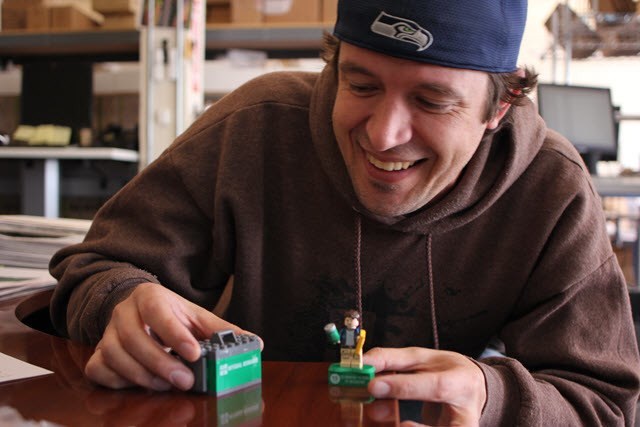
CO chraxli's station sign in Wartou makes a special miniature appearance
CO chraxli’s station sign in Wartou makes a special miniature appearance

Continue reading →

Inside Geocaching HQ Podcast Transcript (Episode 13): EarthCaches

[music]

Chris Ronan: Hello everybody. Welcome to Inside Geocaching HQ, the podcast from Geocaching HQ in Seattle. I am Chris Ronan, my username is Rock Chalk. I am one of the people that works here at HQ and I am your guide for the podcast. On this episode we are talking about EarthCaches. You might remember after the… Well, at the end of the last episode I begged and pleaded for you to write in with some suggestions for future episodes, and people came up with a number of really great topics. And we will be trying to work our way through those when we can. One of the suggestions came from the user jrandjuju, and I hope I pronounced that correctly. jrandjuju asked if we could speak about EarthCaches. Specifically asked if we could interview an EarthCache reviewer and talk about what they require and maybe what ideas are for putting an EarthCache together.

CR: So what I did is I got with one of my colleagues here at HQ, her name is Cathy Hornback. Besides being an HQ staffer, she is a reviewer here in Washington State, in the US. She does not review EarthCaches, but she is essentially the liaison between HQ and the Geological Society of America, and so she’s extremely involved in EarthCaches. And she interacts with a lot of EarthCache reviewers around the world. So she’s very aware of what they’re looking at when they review EarthCache submissions, what they look for, what the requirements are, and what makes a good EarthCache. So I thought Cathy would be a great person to talk to and hopefully get at some of the information that jrandjuju was hoping to hear about. So, here is me talking with Cathy Hornback.

[music]

[music]

CR: Well, you’re a popular podcast guest, Cathy. You were on the PodCacher recently with Sonny and Sandy. In that case talking about just reviewing in general, right?

Cathy Hornback: They wanted to know a lot about permission and how to get it, and especially if you’re a little afraid of that. And that actually ties into EarthCaching because all EarthCaches must be placed with permission, unless you can show that there’s no one that owns the land, no one that manages it or anything.

CR: So if you wanna hear more of Cathy after you listen to this, you can go listen to the PodCacher and listen about permissions. And the reason that they ask you about that, just talk a little bit first about before what we get into what you at HQ and what you do at GSA, you’re also a reviewer in the State of Washington for many years, correct? You just had your anniversary.

CH: Yeah, it’s nine years. [chuckle]

CR: Nine years.

CH: Nine, can’t believe it. It’s gone so fast.

CR: And so you’re a great person to ask about stuff about permissions, but then also today what we’re talking about with EarthCaches. Let’s start with how your role at HQ works into working with EarthCaches.

CH: Okay. Well, a lot of the stuff I do for the regular reviewers I do for the EarthCache reviewers. So I support them as a group. I help train them. I answer their questions. I work on their training material. I’m a liaison between them and the GSA, which is the Geological Society of America. I do onboarding and continual training of them in my every day work.

CR: So before we get into the weeds, let’s just start with for… And I think for most people that listen to this, they’re going to know what an EarthCache is, but for somebody that might not, what is the explanation? What is an EarthCache for somebody that might not know?

CH: Okay. An EarthCache site is a specific geological location that people can visit to learn about a unique geoscience feature or aspect of our earth. And so when people visit these EarthCaches, they can see how our planet has been shaped by geological processes, how we manage resources, and how scientists gather evidence.

CR: So for people that might just know about physical caches, maybe they know about virtuals and then they run into EarthCaches, it seems like, “Where did that come from?” And some, what is the history behind HQ and how the Geological Society of America, how they got together and came up with this cache type of EarthCaches?

CH: Oh, sure. Back in 2003 at a GSA conference, some of the GSA members suggested that the Geological Society become involved in geocaching. And so they organized a meeting with geocaching here and some land managers like the US National Park Service. Because it’s very important that if we’re gonna do this that we are respectful of the land and land management policies. Together, we all came up with some guidelines and standards and goals for this. That’s pretty much how it happened. The first EarthCache is in Australia, it’s still active. It’s in New South Wales on the beach, it has many, many different… It’s actually a multi-EarthCache ’cause it takes you to many different features all around in that area that are fascinating and they’re all slightly different. It’s a really, like geology in a bag. [chuckle] And now…

CR: So for… Oh, sorry.

CH: Oh, sorry. So that cache was published in 2004. And then within the first year there were more than 500 of them. And now there’s over 28,500 active EarthCaches right now.

CR: Wow. So from the GSA’s perspective, this is educational outreach for them, right?

CH: Exactly. I think that’s one thing that Geocachers should know about EarthCaching, is that they’re not quick smileys. The branch of the Geological Society that supports it is the educational section. And they are very focused on learning. So they don’t want a quick smiley. They want you to see the thing, understand what it is, how it came to be that way, and do something interactive at the location to help you remember it.

CR: When you look at EarthCaches today, some of those 28,000 or so that are out there, I think people might notice that some of the earlier ones, not all of them but some of them, you might just come to a road sign and it’ll say, “Look for this word on a sign,” or whatever, whereas things that are published closer to today are a little more involved. And it sounds like there was maybe a change of thinking or maybe things got a little bit more stringent right around 2013 or 14. Something like there.

CH: Yes, something like that. The guidelines for EarthCaching evolve over time just the same way the Geocaching guidelines have. And there’s stuff that they couldn’t anticipate at the beginning. And when you just go to a sign and copy a word off of it, you probably forget about that tomorrow. So they’ve tightened them up in order to make them more of a lesson, because it’s all about education, to help you remember it. So you have to do an interactive task there that you have to be looking at the spot and thinking. And that’s how you learn and remember those things.

CR: So how do HQ and the GSA work together, and how do you get involved in that?

CH: Well, I liaise between them and HQ. I do not so much on the business end but almost everything else. Just the day to day workings. And because we rely so much on volunteers to help support this for the community. It naturally works with me doing it. And I love geology, so it’s fascinating to me. So I really enjoy supporting it.

CR: So you pretty regularly are emailing back and forth with folks at the GSA. And I believe they had a big meeting here in Seattle just last year, right?

CH: Yes they did.

CR: So you had a chance to run into some of them there.

CH: Yeah, every year the Geological Society has an annual meeting that I was surprised when I finally went to it this time that it was so huge. And it gives geologists a chance to make presentations and a lot of the things that they need to do for their continuing education. And it’s an amazingly huge conference. And also very fascinating if you like geology. It was so cool. [chuckle]

CR: So you have great perspective as both somebody who has created a number of EarthCaches, and then you work with the GSA quite a bit. You are in touch with volunteer reviewers and you’re out there finding EarthCaches too. [chuckle]

CH: That’s right.

CR: So when you take all of that into account, I think you have great perspective from kind of all different sides. And I’m wondering for somebody that’s looking at creating one, just to me personally, it can seem like a very overwhelming thing to think about doing. And you’ve tried to help me at times. [chuckle] And I still kind of am like, “Oh my gosh, there’s just so much.” ‘Cause I… Of course you want it to be good. And you want it to be something that somebody learns from. What kind of tips do you give to a person when they’re thinking about doing this? When they’re thinking about creating an EarthCache, what should they know going into the process?

CH: Okay. So for one thing, you wanna try and find something that’s unique, and unique and specific to that location. So you don’t want to do just granite that you find somewhere. Especially if it isn’t even been mined from there, quarried from there. That I don’t want to know just about granite. I wanna know about that piece of granite right there, and where it came from, and why is that color? And why do the crystals have that size? And all of that specific to that one. It has to be unique. It also has to be something you can see. There’s a lot of places that would have a really good lesson if you could see it through the trees. But you can’t because you can’t see the land, how the land lays with the trees on it. So it has to be visible. And you always have to have permission. And make sure you think of your logging tasks when your on the scene. Look at the guidelines. Being prepared is the best way to succeed. So I have one I’m planning to do and I am doing all my homework ahead of time. I am trying to think of all the logging tasks that I can do and I’m preparing that ahead of time so that when I get there, I’ll know, I will check for things that have everything covered because it’s a long way from where I live and not easy to get back to. So I’m going to be very careful and my planning ahead is really gonna help me.

CR: When you look at an EarthCache, What makes a good one? I imagine you look at it as both a person that works with the GSA but also just as a geocacher. When you see an EarthCache and it’s great, what kind of characteristics does it have?

CH: Well, I like seeing something unique. I love a really good lesson that really explains to me what happened, especially when it’s not obvious. I remember when I was in Utah, I did one that was about mesas that were quite high above the land that I was walking on, and they were black on top. And so you immediately think that, “Oh, everything else is weathered away around them.” And it turns out that that used to be the ground and the black stuff on top is lava. And it held the ground there while everything else weathered away when it used to be the bottom of a valley, because the lava went through the valley. And I would never have guessed that. It was fascinating. So that kind of stuff is cool if it teaches me stuff I don’t know or I wouldn’t have guessed, and there’s a lot of them. Our world is an amazing place.

CR: When you see EarthCache listings, what are some of the common mistakes that you see, stuff that you would tell people, “Try to avoid this kind of thing.”

CH: Yeah. That’s a good question to ask ’cause I like people to be successful. For one thing, people make mistakes about trying to focus on other sciences, where we really have to be earth science, much heavily on geology. Don’t try to think of them as a substitute for a virtual. This has to be a geology lesson. You can’t just show something you think is neat and say there’s a rock there. You wanna avoid really generic information because we wanna talk about this place and what is unique about that there. So just how some things were formed that you just get off the internet isn’t really necessarily what you want. You wanna be something uniquely about that spot. Don’t copy Wikipedia. [chuckle] You’ll get caught. You have to… You can copy limited amounts of text if you attribute it, but it really needs to be done in your own words. You need to… And you should be able to do this. If you have learned enough about this feature to make an EarthCache about it, you should be able to talk about it and explain it with your own words, and make sure that you can see what it is.

CR: And be prepared for what can be a more involved review process. It’s not nearly as simple as a “basic geocache.” [chuckle]

CH: Yes. Yeah, it is… They’re a lot more work to put together, they’re a lot more work to review, but in the end, you get a really amazing thing because EarthCaches have more favorite points than all of the other cache types put together. And it’s all because of that work that you have to do to put them together to make them interesting and give people that aha moment. “Oh, wow, I didn’t know that.”

CR: Okay. So you talked about one that you like in Utah. I know that you own a number of EarthCaches. If you had to point somebody to one of yours, just one, one of your EarthCaches, which one would you tell them to go and see?

CH: Oh, dear.

CR: I’m putting you on the spot here. I didn’t tell you… I didn’t ask you this one ahead of time.

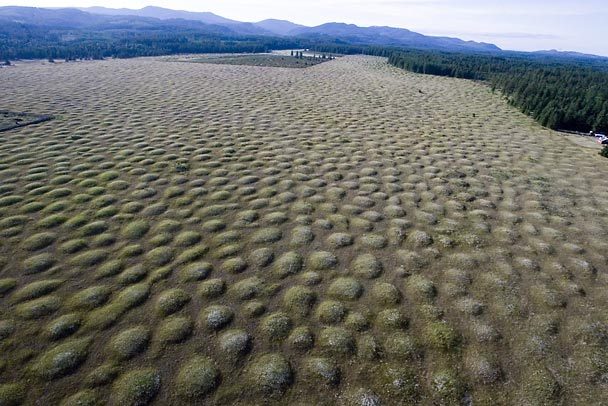
CH: I guess I’d maybe point them to Mima mounds. That’s a strange place that I don’t really teach you what’s happened because nobody has been able to figure it out. It’s Southeast of Olympia. And it’s a basically a big prairie that has goosebumps all over it. There’s just tons and tons of these mounding bits of earth stretching out as far as you can see. And we don’t know why they’re there. There’s a lot of theories, but nobody has been able to prove anything. And they’re huge. They’re like… Well, I’m not gonna give you the answer of their size [laughter] because that’s one of the questions I ask on it.

CR: Yes, it’s a very cool spot. I remember going down there. And I wanna say one of the questions… You even ask people to give their thoughts on what it might be.

[laughter]

CH: Those are fun because no one knows…

CR: I think I might have aliens, but yeah.

CR: Yeah, no one knows, so you could come up with anything. And every time I find a new explanation for how they were made, I add it to the list. [laughter] So we’ve got things like ancient gophers and Paul Bunyan did something…

CR: Sure.

CH: Yeah.

[laughter]

CR: Why not?

CH: It’s a fascinating place. I wish… It’s odd because there’s landscapes like that similarly in other parts of the world, but their conditions of geology is entirely different. So you can’t just say this one thing made this happen because they don’t have any connection to each other, so we have no idea why those are there. [chuckle]

CR: Okay. So Olympia, Washington around there, and then I guess we’ll keep an eye out for this other thing which you have in mind for a long ways from where you live.

CH: That’s gonna be in Central Washington.

CR: Oh, okay. Well, we got a clue, so we’ll keep an eye out for it.

CH: That’s not gonna narrow it down very much ’cause Washington has a huge amount of fascinating geology, especially on the eastern side of the state. So I’ll just keep you guessing.

CR: So with summer coming up here in the northern hemisphere, we can look forward to getting out, and finding some of those EarthCaches.

CH: Alright.

[music]

CR: There you have it. That was Cathy Hornback, a staffer here at Geocaching HQ. She is also a reviewer in Washington State, and she is a very avid Geocacher who owns a number of really nice EarthCaches. If you look her up, her user name is Prying Pandora. We would love to hear your ideas for upcoming episodes. We’ve got a lot of other great topics that we’re gona try to tackle in the coming weeks and months, but you can email us, podcast@geocaching.com. That’s podcast@geocaching.com. And we will do our best to see if we can take your idea and try to get it on here to the podcast. So thanks very much for downloading and listening to the podcast. From all of us at Geocaching HQ, happy caching.

Inside Geocaching HQ Podcast (Episode 12): Sean Boots

[music]

Chris Ronan: Hi everybody. Welcome to Inside Geocaching HQ. I’m Chris Ronan. My username is Rock Chalk. I am one of the 80 or so people who works at Geocaching HQ in Seattle. Thank you for downloading our podcast. This is our first episode of 2018. Hope your year’s off to a good start. Hope you were able to attend one of the Australia Day Geocaching events a few weeks ago. There’s a lot more neat stuff coming up on the Geocaching calendar as the year rolls on. And as the year continues, we would really like to hear from you about what we should cover on the podcast. What questions do you have, what topics would you like us to dive into? Please email us, the address is podcast@geocaching.com. That is podcast@geocaching com.

CR: You can pause this right now. You can go to your computer or open up your smartphone. You can send me an email podcast@geocaching.com. I’ll wait while you pause and while you send your email. And then when you’re done, come back and we will continue. Whatever your question, I will do my best to find the right person to answer it. Okay, in this episode, we will hear from one of the longest tenured employees at Geocaching HQ. Sean Boots started here way back in 2004. You are certainly aware of his work, whether you realize it or not. He has done quite a few things in 14 years here that impact how we search for geocaches and how we play the game. He’s a very interesting person, I think you’ll enjoy hearing his story. So, here is me talking with Sean Boots.

[music]

CR: Okay. So let’s just start with, what’s your title and what’s a… Just in a nutshell, what you do at HQ every day.

Sean Boots: Cool. I am the manager for the web development team, basically, that does not constitute mobile. It doesn’t constitute IT. It’s a series… A bunch of like 15 people I think is what we have now, and it’s the front end developers, it’s the middle and back end developers of the company.

CR: So it’s the people that work on the website as opposed to working on the mobile apps, is that generally speaking?

SB: Yes. Mostly it’s the web all inclusive, but also the API and all of the services under the cover. We kind of provide the business logic for the web and the mobile applications, but we also do we web stuff themselves. We also do some internal tools and we’re responsible for pager duty, and we’re the ones who, when things go wrong on the website, it’s us and IT who come to the rescue.

CR: You’ve been… So this is 14 years, is that right?

SB: I’m coming up on 14 years, August. Yeah, it’s been 14 years. It’s amazing. And we’ve gone through so many different iterations, I think this is my fourth building. We started in a little dinky building downtown Seattle. It was before Amazon had sort of taken over that whole area. There was a Whole foods, it was like a hole in the ground. And it actually was being built in front of us as we were in that building. And there was seven of us, I think, when I started. We ended up staying in that building for a couple of years. And I think there’s only like two people, other than me, three people total that are still actively working here. It’s changed a lot since then. Yeah. We moved to downtown and then we moved to this area and there are two different buildings in this area, so we’ve been there ever since.

CR: And to give some perspective, seven people then and now it’s around 75 or 80. It’s grown by about 10 times. That’s pretty amazing.

SB: It’s crazy. Yeah. I mean I have… It’s interesting because when I first started, I was very green. I was hired to basically supplement work that Jeremy was doing. I was the first developer other than him. Well, they had had a couple other people do that job, and then they had already left. And from my perspective, I was being hired to supplement Jeremy.

CR: And Jeremy being, for people that don’t know, Jeremy Irish.

SB: Yeah. Sorry. Jeremy Irish.

CR: One of the co-founders of the company.

SB: Yes. The Ray Kroc of Geocaching.

[laughter]

CR: I wonder if anybody’s ever called him that.

SB: Well, I have.

CR: Have you?

SB: I’ve done it for years. [chuckle]

CR: I could see Michael Keaton playing Jeremy in a movie.

SB: I think that’d be awesome.

CR: The founders.

SB: Yeah. They look just like each other.

[laughter]

CR: Who would play Bryan? I don’t know who would?

SB: That’s a good question.

CR: We’ll have to think that one through.

SB: Probably Robert Downey Jr.

CR: Al Pacino. Like a young Al Pacino. Oh, and I like that.

SB: Al Pacino might be a little old at this point.

CR: That’s true. Obviously, that’s why I say… I was thinking like Al Pacino in the Godfather could play Brian but…

[chuckle]

SB: Yeah. That’s it.

CR: But no, I like the Downey Jr idea. Okay, you’re doing that work, supplementing some of Jeremy’s work. Going back to then 2004, what were you doing at that time and how did Geocaching kind of come into your life? How did this opportunity come to you originally?

SB: When I joined, I think I was in the 200,000th of users or something like that. My account is… And I started right as I created my account, basically. And that we weren’t talking about millions of people, we were talking hundreds of thousands. And it was just kinda starting to blow up, and I was really green. It was my first coding job. I had worked for my father for 10 years as a warehouse manager prior to that, and I was a self taught coder who was looking to… I just wanted to get into that industry and so I tried really… I made a bunch of websites.

SB: And this is also the web is just getting started and so just trying to find contracting gigs with whoever I could find. My father’s company had a customer, I would ask them if they needed a website and then I would do it. When I finally decided that I was a good enough programmer, I decided I was going to spread my wings and I was gonna try to get a job somewhere else and I put my resume on monster.com just to sit there, I had no intention of like promoting it or actively doing anything about it, I just wanted to see what would happen if I did it. And so I put all these gigs that I’d done and I had this skill that I have now and I swear it was like within a week I get a email from Jeremy. And he’s like, “Hey it looks like you have a skill set that’s similar to what we’re looking for, can I call you?” I’m like, “Yeah, absolutely that would be kind of cool.”

[laughter]

SB: I mean he’s like, “Yes,” so he calls me literally after I sent the email back, he calls me.

CR: And did you know about Geocaching at all?

SB: I had not, no I had never heard of it. So that was actually my… That moment was my introduction to Geocaching and it was really… That was like, “Hey, this thing exists and there’s an actual job waiting that I could possibly… ” It was kind of interesting. So of course I… He asked me a few questions like wanted to know what my skillset was and it was basically like he and I did the same kind of thing and so it was like a good fit. So he invited me to come in for an interview and then of course I did the whole due diligence let me go and Geocache, and figure out what this is about. I’m gonna find my first cache and I’m gonna be prepared and so then I was able to go into the interview and we kinda just like had a couple of ad-hoc conversations about like, “So you do this technology and this technology?” and I’m like, “Yeah.” He’s like, “Okay, cool. So I hear you’re in a band.”

[laughter]

SB: Alright like just do I like you, kinda talk. And so…

CR: Right, right. Okay so you talk to Jeremy he kind of explains what he’s looking for and…

SB: Right. So he offered me the job after that conversation. Alright, this is a good fit and so went home… He calls me, “we got a position for you” and so then it was kind of like, “How do I tell my dad that I’m leaving?”

CR: Right, ’cause you’d been there what? For like 10 years you said.

SB: Yeah, 10 years.

CR: Wow.

SB: And I know and in hindsight he was like, “Why are you still here?

[laughter]

SB: “Will you just go get a job please.”

CR: So I opened up the internet Wayback machine.

SB: Oh yeah, oh this is awesome.

CR: And a look at… And maybe I’ll post this on the podcast page but if I don’t people can go and look at the Internet Wayback machine and just put in Geocaching.com and look in 2004 and so this is what the website would have looked like when you first showed up here.

SB: This is exactly what it looked like. Yeah there’s no denying, this is exactly what it looked like yeah.

CR: So what comes to your mind when you see this now?

SB: My first thought is that, “Well, we’ve come a long way.” And that despite I still have misgivings about where we are, I still wanna keep moving us forward and getting better and making us look prettier and be in a better place. But sometimes you forget like where you came from a little bit, so this is kind of exciting to see that and we’re way…

[laughter]

SB: It’s way better now yeah. So it also reminds me that I actually didn’t work on the Geocaching website in my early part of my career. Actually, the first thing I did was put a Geocaching search functionality into REI kiosks, which for me was really exciting to work with a big partner and do something kind of neat in a visible arena. And so that was really fun and exciting a good first project, but ultimately my job was to figure out with Jeremy a solution for virtual caches and location-less caches which were causing like enormous problems on the website. People were placing really terrible virtual caches and exploiting that concept and we weren’t getting very good quality and reviewers were ready to revolt.

SB: The location lists concept was a great idea, but it was implemented incorrectly because it treated basically, like geocache type locations, were basically being created in the logs. And then there was no way to log the logs and so it was a mismatch despite it being a really cool idea. And so Jeremy and I… Well it wasn’t just Jeremy and I but like the whole group at the time Nate and Bryan and all the people, you know Elias, all these… All of us were talking about what could we do? What’s a good idea, how can we fix this whole problem and ultimately the idea of Waymarking came about, which was to take these location-less caches and created their own website, so categories would become the cache and then the logs would actually be on the same level as caches and then we would actually be able to log the logs at that point. So you’d be able to log the waymarks. But anyways for many years probably five years, that was my core responsibility was to build the Waymarking site from scratch and to add features and keep it maintained and try to get it into a better bigger place.

SB: I mean Nate and I, Nate was kind of like the the product manager for that project and I was the sole developer, and we sort of hashed ideas out together and we pushed features as fast as we could. The community of location-less owners was the root of the beginnings for that site. We asked them all to create categories and we gave them this new site and they all seeded this website with all their location-less caches. Anyhow so the Waymarking was my primary job and at some point we sort of as a company made a decision that we really wanted to focus deeper on the core offering. So Geocaching was our bread-and-butter, it was the piece, it was… The place where community was continuing to develop at a great pace. Waymarking was still doing well, but not nearly at the same level as the Geocaching. And so, we sort of made a decision that we needed to put all our resources on Geocaching. And so, that’s when I started being tasked with doing things for the Geocaching site instead of the Waymarking site.

SB: And for a long time, we tried to build things in the engineering department that would work with both. Like you build one thing for Geocaching and then Waymarking could kind of piggy back off of it. But at some point, we ended up building this monolithic website that we were… It’s basically a solution of code that is… We jokingly call it Tucson. It’s just all of the Geocaching website, all of the Waymarking website, all of everything that we ever did was just put into this big place, and it got to be unwieldy and it became hard to move in any kind of pace, and we decided eventually that we should start splitting those things out into their own projects. And so, Waymarking eventually was pulled out and Geocaching was left, and that ended up being where most of the effort was going. And ever since then, we’ve been progressively getting more professional and just improving all of the performance of that site and the look of it and all that kinda thing.

CR: So as the years have progressed and you have worked your way through various positions, what are some of the things… You talked about Waymarking, some of the other stuff that… Some of the highlights for you over the time that you’ve been here?

SB: We’ve done some major… I mean, that’s been really, really great and terrible things that have happened throughout those years. I think the big… I mean, Waymarking, I would argue, is a highlight for me. I still, I’m actually proud of the work that was done with that. I actually think it’s still a viable idea, and I think it has possibility. So from my perspective, that is still a source of pride. We’ve built full search functionality under the covers. We have separated our accounts and our payment into services. We’re currently making large strides with the maps. We’ve had already made large strides with the maps compared to what had been in the beginning. Where I go is a huge experiment. That actually was the thing… That was like secret project when I was first hired. Like it’s the killer idea. We’re gonna do awesome stuff with this. And to this date, I think that that idea is an amazingly good idea, and I think it’s probably something that we’re not done with, but it’s something that we have to really think about it.

SB: And another moment of huge success for us was, when we embraced the mobile world. The iPhone came out. I kinda have a story about that, ’cause there was a guy that worked as our front desk person. He was very, very eager to get the new iPhone when it came out, when the announcement came out. It’s gonna cost $600 for phone, which seemed like insanity. And I remember myself talking with one of our developers about there’s no way I’ll pay this much for a phone. There’s just no way. I just don’t see it. Like I’ve got my Sony Walkman phone. That’s all I need.

[laughter]

SB: I mean, come one. I just plug a headset in and I got my music here. It’s pretty awesome. But anyhow, I think obviously, the iPod had already been out. But when the iPhone came out, it was like a… Obviously, life-changing… Grand change of how society works, and many of us were just kind of like rolling our eyes at it thinking it was like, “Ah. Here we go. Another thing.” But this guy, and also Jeremy, I give Jeremy… He was on it, too. But they saw it immediately and basically, immediately pivoted the company towards like, “We gotta get going on this, because pocket PCs are not cutting the master for this. We’re gonna start building a mobile app, we’re gonna start hiring API developers, we’re gonna start doing this.” And so, Jeremy, I’ve gotta give him a lot of credit. And I wasn’t in any kind of senior manager position at the time, so I honestly don’t know if it was all Jeremy or if it was… I don’t how, who is responsible for those decisions at the time, but I always attributed it to Jeremy just because like having a foresight to get on that quickly and moved out forward. That was really a good thing.

CR: You’ve mentioned API a couple of times, and for people that might… I don’t think I understood it very well at all before I came to work here just as a geocacher, I heard the term but I wasn’t a software guy, so I didn’t… So for people that might not know what API is, could you just give a brief summary, so people might have a little bit better understanding that might not know what it is.

SB: Sure. So API is… The name is Application Programming Interface. It’s basically a way to connect an application like a website or an app to underlying functionality. We would basically build this underlying business logic. How the game is played, you basically… We present this to our mobile device, and then from outside of their… In the world that that device will call the API and that’s how it has access to our data. Our website does the same thing. Internally, it’ll actually call the APIs and get the data that way. And so, the mobile and the web are sharing the same code and the same data underlying. And it actually is really nice, because when you code one thing in one place and the rules apply to both places. We also have a partner program which allows… It’s currently kind of on hold, but we have partners that we work with that are able to access our data similarly to our own devices and websites through this interface. We provide them with methods, like log a geocache, or get the geocache data, or search for the geocaches, or whatever. But whatever we can provide for them.

SB: They would be able to program their apps such that they can call into our interface, our data and use the data that… So they can have an app experience that either enhances the Geocaching. Like something that GSAK might be doing or actually, is a similar experience, like what Cachly does. So both of those are using our APIs to run their businesses or whatever. Some people, and I will mention names, like CGO, tend to use… They are not actually using our API, they’re actually scrapping our website. And a website can behave like an API, in that you can access it in a similar way and you can actually… You basically parse the data that’s on each page and try to pull it down and aggregate it in your own way. And then you can represent that data a certain way. And so, that’s considered usually, to be a kind of a rogue activity, but it’s also a way that you can access data with less security measures and… So it’s sort of a frowned upon thing. But some people do it and it’s hard to get around people doing that but it’s a big job to actually do that because the data and the underlying website constantly changes. And so you’re gonna have to play kind of a Whac-A-Mole game. With the API you’re sort of ensured that the signatures, which are the… It’s hard to explain.

SB: But the structure of the calls that you’re gonna make always remain that way. And if they change, you will get notified that we’re making that change so you would… There’s sort of a contract aspect to it, where we get to decide what this contract is, you’re going to agree to call in that form and then we can move. And you have an allotted amount of calls that you can make or you can’t go too crazy or we’ll throttle you. The idea is that we create this place where we can partner with people and then they would give us… They will work with us to try to create a premium prop value that is consistent across the boards. So the Geocaching experience for somebody who uses Cachly and somebody who uses our app, and somebody who uses GSAK, is very similar, that’s what the hope is. It isn’t always work like that in practice but that’s the goal, is to make it more close to that. When somebody like a CGO does it through scrapping the website, it’s a little bit harder to understand how they’re using it. A lot of times they end up giving away features that are for free and so things that people, premium members are paying for us to provide these services for them.

SB: It’s basically, you’re providing that… You’re making CGO be able to exist too because they’re riding on the backs of the premium members. So it’s a little bit frustrating to have that kind of a situation happen and we would love to have somebody like CGO actually use our API, so that we would be a partner as opposed to… It’s a more of a parasitical, sort of a… Not necessarily symbiotic relationship. So there’s… We don’t know how to solve that problem and we understand that a lot of our community uses CGO, so it isn’t necessarily in our interest to just shut them down but it does constantly undermine our program with other well meaning partners.

CR: So outside of your work stuff, I noticed that last year was your best year for Geocaching. You found…what did I write down here, 134 caches last year. So what got into you last year? I gotta know.

SB: Well, I will say it’s a little embarrassing that I haven’t found more caches than I actually have but that’s part of the answer is that I was moved into this job and I felt like I needed to take it seriously and so I should learn the product a little better than I had. I also was inspired by a program that we have internally, it’s called the Geo Guide program. Kind of set up a series of achievements, and goals, and incentives, and rewards to help us to have a reason to go do stuff. And so there’s things like streaks, which I got a 60 geocache streak last year which I was pretty proud of before I finally… I don’t know what it was that stopped me, but I think it was that… I was starting to run out of places around my neighborhood and I was finding myself in like supermarket parking lots at 10:30 in the night.

[laughter]

SB: I’m like, “I don’t know if this is really what I’m gonna be doing for the next six months or whatever.”

CR: Geocaching has a fantastic community, people all over the world and I know you’ve interacted with people all over the world, right? Over the course of your many years here, is that something that you’ve enjoyed, getting to meet people from different countries and getting to see how the game is played in different places?

SB: Oh for sure. I mean I’ve been fortunate enough to be able to travel several different places, I’ve gone to Austria, there was a caching festival there. It was amazing, it was beautiful area. I got to go to Munich, I was able to see Salzburg and so just that… Geocaching in those areas was just really, really crazy. It’s just so fun to see how it manifests elsewhere. This thing that we dreamt about when we were first starting this out and to see it just like it’s a pox.

[laughter]

SB: A positive pox that it goes out and spreads across the globe and then all of a sudden to actually see it. It’s so exciting to just… I don’t know, so it was really great. And so… Also I should mention that the treatment that a Geocaching employee gets when you go to a mega event it’s like… [chuckle] I sort of have a very tiny amount of experience with what the surface feeling of what it’s like to be a rock star. I’ve been in a band and we had a modicum of success but going to a Geocaching mega event as a Geocaching HQ employee is… For me, it felt more like being a rock star than being a rock star. You get put in front of 500 people to speak. It’s like, “I didn’t play for crowds like that, ever.” Here I am, put on the spot. They wanna hear what I have to say about this game that I don’t even play nearly like the way that they do. But because my experience is what it is, there’s something that people are interested in there. And I just feel honored I guess, that they treat us that kinda way.

CR: Well, I’m so glad you brought up being a rock star because that was my last question for you. I’ve gotta ask, I’ve gotta ask about the Sean Boots music career. ‘Cause it’s kinda legend around here. But we don’t hear the story as often as we should.

SB: When I was a kid, I was… My parents got me to playing piano and I got to be pretty interested in that. And I got into song writing and through my college years, I wrote a whole bunch of songs, and played with some kind of goofy cover bands, and had a little bit fun with it. But as I graduated, I ended up joining a band and we call ourselves, “The Amateur Lovers,” which is kinda hilarious because there’s now a genre on the internet that Amateur Lovers is, and you probably don’t wanna look it up. But we had no… There was no internet when we started this band. So that name was purely by accident.

CR: It’s an awesome name though.

[laughter]

SB: I know. And the funny thing is, we didn’t even start by… We were actually, “The Young Lovers,” was our original name. And we got sued by a band in Massachusetts called, “Young Love,” and they gave us a Seize and Desist letter. And so we’re like, “Ah, what are we gonna do? What are we gonna call ourselves?” And so then there’s… We had a song that was actually called, “Amateur Lover,” and so I’m like, “Well, Amateur Lover song, is like… There used to be a band that had an album called, “Living in a Box,” and they had a song called, “Living in a Box,” and their band name was, “Living in the Box.” And so was like, “Are we really gonna do this?”

[laughter]

SB: “Like we’re gonna be, The Living In The Box,” our album’s, “Amateur Lovers song, Amateur Lovers… ” Answer, No. So we took the name, we became, “Amateur Lovers.” We changed the name of the song to something called, “Grand Debut.” And then we didn’t name our album after that. But anyways, we had a little bit of a run where we played in the Seattle post-grunge scene, we played around town all the shows, we had good fortune to… We got to hook up with a couple of really talented engineer friends that got us some free time at London Bridge studio and they helped us to make a record. And they got that record put into front of some people of importance that had abilities to make things happen, and one of which was Stone Gossard of Pearl Jam. And we ended up signing with his label. And then subsequently, signing with a couple of labels in Australia and in Japan. So we had a world wide distribution of our record, one record. And we were the kind of my heyday was to be basically they send us to Australia on a tour with Ben Folds Five, which at the time was my favourite band.

CR: That would be so cool.

SB: It was the most dreamy, crazy, yeah, it was crazy. And they were… So they brought us along, we played four shows, we made a video, an all boys scout warehouse. MTV came and filmed the making of the video. I solved the Rubik’s Cube on camera, which made me really proud of myself, ’cause I didn’t think I was gonna pull it off. But…

CR: [chuckle] Oh my gosh.

SB: That was cool. But of course they didn’t use any of the footage. They only used footage of us telling the world how great Pearl Jam was. I was like, “Pearl Jam, has a new record. Let’s check out what Amateur Lovers has to say about that.” “Oh, it’s great.”

CR: I’m sure that helped Pearl Jam out a lot.

SB: Yeah, it totally did.

[laughter]

SB: But more than it helped us out. [chuckle] But…

CR: So it was just the one album?

SB: One album. There’s a video, you can find that’s an embarrassing like dated looking one. It’s called, “Rubik’s Cube.” It’s on YouTube.

CR: We’re definitely putting that on the podcast page.

SB: Oh gosh.

CR: It’ll have to be there.

SB: To be honest, I’m proud of it. I actually think the lyrics are great. I love the message in it. It’s pretty, pretty dated though. It’s literally 20 years old. I have long hair, I look kinda dorky and everybody makes fun of me at the end ’cause I get all tough guy and when I close it’s bad. It’s an era bygone, I had a clean cut-off. I quit the band when we lost our record deal and there’s a story when I was… We were touring our last tour in California. I kinda had seen the writing on the wall, and I knew that I needed to think about what was gonna be the next chapter. And so for me, it was to… It was about basically, I had a feeling that coding was kinda gonna be my thing. ‘Cause I had done that as a kid and I liked it. So I was like, “I’m gonna figure this out, I’mma learn how to do it.” And so I’m sitting in the tour van reading a visual basic, “How to,” instruction manual for pretty much the entire tour. That was how I kept myself busy and the guys in the band are like, “Why are you reading that book?” Like, “What does this mean? Are you like one foot out the door or whatever?” And I didn’t think I was at the time, but it turns out that I actually was.

SB: And so, there’s sort of like a segue right there, of me having my two worlds sort of collide and it was a clean break. I never really… I never went back. And so I haven’t done anything musical ever since, other than a couple… Actually it’s probably something to note is that some of that songs, some of the background music in some of our Geocaching videos, is actually me having done the music for that. I don’t know if you ever saw… If anybody, you can go look it up. The cachers of steel video, that underlying music is actually me, in my studio at home. It’s just instrumental music, but all the geocachers, like doing geocaching workouts, that was my thing. And then there was a, “How to,” Geocaching video also that I had done the music for… I kinda worked with Reid, our videographer. She would occasionally give me some gigs, I guess you can say, so that was a cool way to take my personal interest and kinda merge it with my work interest, it was really fun. It’s a lot of work though, I don’t know how much I’ll be doing that in the future. But it was cool to do, back in those days.

CR: Well that’s really cool. This has been really interesting. Thank you.

SB: Cool, I had a really good time, I didn’t realize I’d have so much to say. Yeah, thanks for having me.

CR: So there you have it. Sean Boots, one of the long time Geocaching HQ staffers, hope you enjoyed that. I’ve said it before, I’ll say it again, let us know what you would like to hear about on the podcast, by emailing us podcast@geocaching.com is the address, that’s podcast@geocaching.com or if you see me or one of my co-workers at a Geocaching event, please share your podcast ideas with us there. Thanks again for listening, from all of us at Geocaching HQ, happy caching.

Inside Geocaching HQ Podcast Transcript (Episode 11): The Magic of trackable promotions

[music]

Chris Ronan: Hello everyone, this is Inside Geocaching HQ, our podcast from Seattle. Thank you for listening, I’m Chris Ronan. My Geocaching user name is Rock Chalk, I am one of the 80 or so people who works at Geocaching HQ and it is my pleasure to introduce you to some of my co workers and chat about what is happening inside HQ. On this show, we are talking about trackables, trackable promotions to be precise. You may have heard of the recent Magic: The Gathering trackable promotion, or maybe you remember some of the much older promotions, such as the famous Jeep promotion. Well, today, we are going to chat about how those trackable promotions come to be. We will hear from Bryan Roth, one of Geocaching HQ’s co-founders who has worked extensively on promotions over the years. But first, Ellis Bennett and Katie DiJulio, they are the team who oversees today’s trackable promotions, including magic, which we will hear a lot about. And bonus, listen closely, because one lucky listener will get a chance to win something. Let’s get to it.

[music]

CR: Okay. We have Katie and Ellis, who work on trackable promotions, among other things here at HQ. We’ll start by just asking you guys, what your day to day work life is like here at Geocaching HQ and Katie maybe start with you.

Katie DiJulio: Hello, everybody, my name is Katie and I am the partnerships and promotions manager here at HQ. And really what that means is I connect brands to the geocaching community through innovative programs such as trackable promotions, and really we want to inspire those story worthy moments for geocachers across the world. My day to day at geocaching consist of talking with brands through emails and phone calls and really trying to develop fun partnership programs that can engage and get the community excited to be participating and interacting with brands all over the world. My favorite promotion to date was with Michelin in 2014. We collaborated with Michelin to connect trackables to electronic tire pressure gauges that were in the shape of a Michelin man. This was really fun because we got thousands of really cute photos from geocachers all across the United States, and it was all to build awareness for tire safety.

CR: Okay and Ellis, how about you?

Ellis Bennett: I support the partnerships and promotions team, I’m running trackable promotions and other partnership opportunities that come up. My day to day is pretty similar to Katie’s where we’re talking to people on the phone, we’re answering emails and getting to know brands better and figuring out cool ways that we can work together. One of my favorite parts of this job is being creative and telling brand stories through geocaching. Another role I have here is a little side project for the internal HQ green team and we support the environmental initiatives of the company, which includes the Cash In, Trash Out Program.

CR: And both of you have had other roles before the roles that you’re in now are, which have been interesting. Ellis, what did you do before you got into the business development stuff?

EB: I started at HQ in summer of 2016 on the community engagement team. What we would do is answer emails from the community and engage with them on social media, writing blog posts and other fun engaging things. I learned a ton about the game in this process, and I got to know the community really well. And then, this summer of 2017, I started on the partnerships and promotions team and kick started my role with the Magic: The Gathering launch.

CR: Which is something we will talk a lot about, I hope. People are very excited about magic so we’ll get to that. But first, Katie, your past work here at HQ, what has that been like?

KD: Yes. I started at HQ about six and a half years ago and I was on the community relations team and I was at the front desk as the guest service coordinator. I got to welcome hundreds of geocachers to our office in Fremont from all over the world, got to hear their stories first hand, introduce a lot of new players to the game and it was really a beautiful role where I got to gather more knowledge about the game and got to meet our community firsthand. I am now on the business development team. I started here in 2013 supporting the GeoTours and the partnerships and promotions team simultaneously.

CR: Okay, today we’re talking about trackable promotions. For people that aren’t familiar with what a trackable promotion is, what is it?

EB: Trackable promotions are a unique opportunity for geocachers. They get to engage with some of their favorite brands through interaction with these limited edition, branded trackables. These are things that only come out one time during the promotion period. People get really excited about them because it’s a unique experience. They allow geocachers to work together as a collective on a global level and they get to move these custom trackables from geocache to geocache and then watch their journey through an interactive map on the landing page for the promotion. As geocachers interact with these items, they then have the opportunity to upload photos and some of our promotions have run contests for these photos. Some of the prizes that people have won are cash prizes, they’ve won a cruise to Norway and round-trip tickets to around the world, which is pretty exciting, especially ’cause geocachers love traveling.

CR: Trackable promotions come in all shapes and sizes. What, from HQ standpoint, what makes a successful trackable promotion? What are you guys looking at to try to build something that will be great for HQ, great for the community and great for the game?

KD: Well, first of all, it’s really about community engagement and excitement within the community, and we can do that when we find a brand that has a direct overlap with geocaching and the community. This generates excitement, there’s usually a photo contest with prizes involved, and the other part that really makes a successful trackable promotion is when geocachers activate these trackables, when they move them, when we see lots of distance covered on the map, that’s really how we define the success and see how many hands are touching these and interacting with the trackables.

CR: There’s a list of promotion partners on the promotions webpage, you can see a number of the companies that HQ has partnered with over time, and it’s a really varied list, a lot of different kinds of companies, different sizes, different places, is there a specific size of company you guys look for or a certain industry or any specifics like that or can it be just about anybody?

KD: Yeah, you’re right, we have worked with a wide variety of different brands looking at our list of brands that we’ve partnered with. But really the short answer is anybody can partner with us, and we have worked with several different brands ranging in sizes and industries. Really it comes down to, “Is there a direct overlap with that brand and the geocaching community?” That’s how we create win-win partnerships. A great example of this is with Magic: The Gathering. Their audience and the geocaching audience has very similar interests, and that when you blend those together, you can create a really nice partnership. We have worked with really, really large brands and have produced over 24,000 trackables for campaigns. We’ve also worked with smaller tourism bureaus producing only 500 trackables just to promote their small town to geocachers.

CR: One of the questions that I’ve heard people ask over time, and its especially some of my friends in Canada who say, “Hey, you’ve got this great promotion but I can’t do it because it’s not available in Canada and there’s… ” I always know the reason for that, but I think some people out there might not know, so maybe tell me why it is that some promotions are available in some countries but some aren’t available everywhere?

KD: Oh Canada, I am sorry to the geocaching community in Canada, we would love to have a promotion for you. Really it all depends on the brand and their goals and objectives to meet their target markets. We’d love for our promotions to be on a global scale, so that the entire geocaching community can be involved, but some brands don’t have an international market and or they are trying to build and develop a market within a certain country. An example of this was with a promotion we launched this summer with the brand Hurtigruten. It’s a popular cruise line in Norway, but they don’t have a significant presence here in the United States and they wanted to develop their brand awareness. We worked with them to release trackables within the United States only this summer, and there was a photo contest they’re running alongside of it, and the winning photo got a free cruise in Norway.

CR: The most recent one is the Magic promotions? There have been a couple of waves here, and there is so much excitement around… I think in the time that I’ve been at HQ I haven’t seen as much excitement around a promotion as around Magic, and I think people would really enjoy knowing more about that. How did that thing start, how did it come to be?

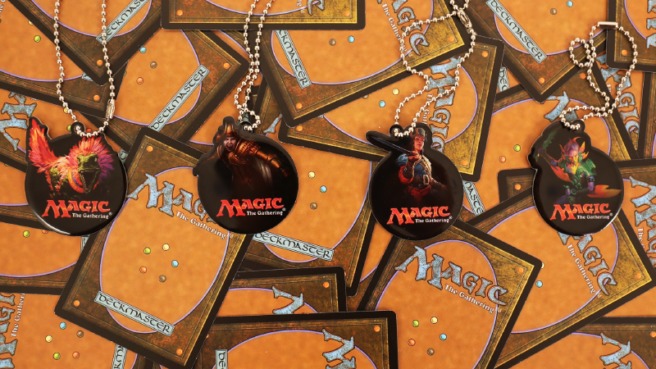
EB: The global brand manager of the popular card game Magic: The Gathering reached out to us in January of 2017. Their goal was to release a new set of cards, Ixalan, and then the Rivals of Ixalan and they wanted to do this in a fun and engaging way and thought geocaching would be a great collaboration. We worked together, and we came up with the idea of creating trackable mileage goals, this was for geocachers and Magic players to achieve together in order to earn sneak peeks of their new card set. The first launch was designed to create buzz around this whole promotion, they designed a really cool trackable with the Magic card look and then this was to get awareness out about the first deck. And then the second launch, which just came out in the end of November, is a trackable race between four different tribes so Dinosaurs, Merfolk, Vampires and Pirates, and between those they’re doing a trackable race and whoever gets the most miles wins at the end of the promotion period, and that means they get to decide which tribe stakes the claim on the city of Orazca, and that’s really exciting, you can go on geocaching.com/magic and watch the progress. There is four different colored map pins on the trackable map for you to view.

CR: The first release of those trackables happened and then there was more recently a second release of tracks. Multiple releases which is also a little bit different for the community, was that always the plan and is there going to be another one some time in the future? I’ve heard people wondering about that.

EB: That was really fun because we saw how excited people got about the first release, and they didn’t know there was going to be a second release, so that was kind of a double surprise for them.

CR: I’m not even sure I knew.

[laughter]

EB: Yeah, yeah. We kind of kept that under wraps. The first release was meant to generate buzz, they designed the trackables based on the iconic Magic card design, and then the second launch was really about the new cards and arrivals of Ixalan story. As far as a third release we aren’t going to give any more information about that, but do stay tuned because Magic or not, we will have more exciting promotions in the future.

CR: Some of the trackable promotions that HQ does produce trackables that become very desirable in the community and almost become very collectible, people wanna keep them, but that’s not the objective, that’s not the hope and the goal of these trackable promotions. We want these out in caches, we want people moving them from place to place.

KD: Yes, that’s right. The goal and purpose of these trackables is for them to be activated and placed in a cache so that they can travel and more geocachers can continue to engage with them and also have the opportunity to take photos and upload them. When geocachers request to receive one of these trackables in the mail, they’re agreeing to place this trackable in a geocache within two weeks of receiving it. Yes, we know these are really cool trackables and there’s only a limited edition and there are times when people want to hold onto that and keep it in their collection, but really that’s not the purpose of these trackable promotions. We want to see them moving and traveling from geocache to geocache.

CR: It used to be that there were a certain number of trackables and the word got out and you said sign up here, fill out this form, and once the number was over, the form closed and that was it. And it could be done in a couple of hours as I remember. But now you guys have a much better system, I think, and certainly I’ve heard a lot of good things in the community about it, that hopefully gives more people a chance to get one of these. Tell us about that.

EB: The way that we do it now is we open the web form for a certain number of days, it could be a week, it could be two weeks, it could be three days, it just depends on what the partner wants. And anyone can submit during that time period. And every single time we get more requests than we can fulfill, which is exciting, but I understand that’s frustrating for the community ’cause they won’t always win.

CR: And using Magic as an example, what are we talking about here?

EB: For the first launch we had 1,500 trackables to give away and we received almost 30,000 requests.

CR: Wow.

EB: Which is exciting, we love to see people engaging and submitting and although we can’t fulfill all of those, the nice thing is once people release them into the game and into geocaches, people who didn’t win them still have the opportunity to go find them and engage with them.

CR: ‘Cause that’s like a 1/20 chance. If you get one, congratulations. [chuckle]

EB: Yeah. It is…

CR: You beat the odds.

EB: It’s super lucky if you get one and we do see people celebrating a lot on social media, kind of bragging about it, like, “Look what I got”. And it’s for good reason ’cause they’re hard to get.

CR: I know we can’t go through every promotion that’s ever happened, as much as some people would like to hear about them, but I do wanna touch on one because we heard from a listener and her email was kind of what was the impetus for this episode. She wrote in to ask about Diary of a Wimpy Kid, which was a promotion that happened a few years ago. She was hoping that we might be able to have the author of those books onto the show which we weren’t able to do, but I at least wanted to hear what Katie has to say, since you worked on that project. And a little bit of the history of the Diary of a Wimpy Kid trackable promotion.

KD: The Diary of a Wimpy Kid was a really fun promotion in 2014, because it was the first of its kind where we worked with a children’s book author to develop a series of trackables. There were six different designs and they came… There were 2000 tags in each of those designs. And they mimicked the story line of what the book was about. Essentially the Heffleys, the family in the book, was on a road trip and their luggage kept falling off of their car. Each piece of luggage also represented a trackable. There was a pair of socks that fell off the car, you could find a socks trackable or a sunscreen trackable. And it was really fun because all of these were released into the community and people got excited if they could find multiples to match up all of them in the same series. The cool thing about these trackable promotions, although this launched in 2014, there’s stilltrackables moving today. I looked at the map today before the podcast, and I saw that a trackable from this promotion is still… Was just placed in a geocache today. The geocache was called Christmas Card Lane, which is fun because it’s around the holidays and fun to just see that even though that promotion has ended, thetrackables are continuing to travel.

CR: And if somebody has an idea for a great company, a partner for HQ on a trackable promotion, is there something that they can do to help make that happen?

EB: Yes, we do love receiving suggestions from the geocaching community for trackable promotions. If you do know of a potential partner and you think they’d be a good fit, feel free to send us an email at promotions@geocaching.com, with your ideas. If you have a contact it would help if you could introduce us to them or send us their contact info. All you Canadian geocachers out there feel free to email us.

CR: Well, this has all been great, extremely informative. Anything else we missed?

EB: Yes. We have a spoiler alert.

CR: Spoiler alert!

EB: Spoiler alert! There will be a trackable promotion launching in Spring 2018 with a fun ice cream brand. This will be a US-only promotion. But if you email us by January 1st 2018, either Ellis or Katie will get your email at promotions@geocaching.com and we will send whoever the first person to contact us with the code word “Happy promo” a special trackable in the mail.

CR: Is it gonna be a gallon of ice cream that you’re gonna send out? That wouldn’t work, no.

EB: It might melt. [chuckle]

CR: It might, it might. It might melt. Promotions@geocaching.com with the code word…

EB: “Happy promo”.

CR: “Happy promo” is the code word. Okay, spoiler alert out of the way. Anything else? Any other spoilers?

KD: No more spoilers but just one big gigantic thank you to all the geocaching community out there for your participation in our trackable promotions. Without you these trackable promotions wouldn’t be possible. Thank you for being a part of it and for submitting all those fun photos.

[music]

CR: How about that? A chance to win a special trackable to the first person who emails Ellis and Katie at the address that they mentioned. We will update our podcast page once I have confirmation that the prize is claimed. But we are not finished yet. Next up is Bryan Roth. He is one of the Geocaching HQ co-founders. And I thought it would be interesting to ask him about some of the legendary trackable promotions. One that still ranks very high in the hearts of geocachers is the Jeep promotion which dates back to 2004, and that is where we started our conversation.

[music]

CR: Yeah, let’s talk about the first one because that’s one that people definitely still remember, it had some allure within the community. The whole Jeep thing and you were saying that Jeremy was hugely involved… Jeremy Irish for people that don’t know. One of your co-founders here at HQ. That he was extremely involved in the beginning and then of course you involved as well.

Bryan Roth: Yeah, it’s true. Jeremy really drove the initial Jeep travel bug promotion that we did in 2004. I wanna say it was 2003, we got contacted by Rodale who is a big publisher, I believe they’re out of New York and at that time they did Backpacker magazine and a whole bunch of other magazines. One of their big publishingclients, or one of their big advertising clients was Jeep. And they were looking for a way to use geocaching, or leverage geocaching to create a fun and engaging promotion for Jeep. And at the time they reached out, they spoke with Jeremy, and Jeremy had the idea of creating trackables using Jeeps, Matchbox car style jeeps. And Rodale at the time was working with Jeep and Jeep was willing to give away vehicles which was really cool especially in the early days, the thought of geocachers being able to win an actual Jeep through something relating to geocaching was just a fantastic idea.

BR: And working with Rodale and the agencies that represented Jeep, we were able to get a few thousand little yellow Matchbox car Jeeps. We custom made travel bug tags that have the Jeep logo on them and had some information about the landing page being jeep.geocaching.com. And in the first year there were three ways to win a Jeep. They actually gave away three vehicles in the first year. There was a sweepstakes where anybody could just enter their information and a random drawing would be conducted and one winner would win a Jeep at the end of the year. And then we had a monthly photo contest where there was a goal of liberty or discovery or adventure, or something like that, and people had to go out and find these little Jeep travel bugs and take a picture of them in a scene that would depict liberty or adventure or whatever that goal was. And every month we would have, there was community voting, and the community could vote on which picture they thought was the best. I believe that based on the community votes, once a month they would chose the top photo and that person would win a Garmin GPS device, which was really cool.
BR: And then at the end of the year all of the top photos went to the agency that represented Jeep and they chose their favorite photo and that photo, the creator of that photo, the photographer actually won a brand new Jeep. That was the second way to win a Jeep. And the third way was essentially an essay contest, but it was using geocache logs. You had to write about your experience of finding one of these, something like that. And that one was the hardest because it required us doing so much reading to figure out which were the best logs and it’s subjective. And ultimately I don’t remember which one was chosen but that person actually won a Jeep as well. And in the subsequent years of the Jeep promotion, we went from a little yellow Jeep and we had a one year was a white Jeep and one year was a red Jeep and one year was a green Jeep. And in each of those subsequent years we did not have an essay contest. It was the photo contest. You had to find one or receive one somehow and then take pictures of a different scene and it was a similar format where the community would vote. People would win a Garmin device on the monthly contest and then for the annual contest Jeep would choose, or the agency would choose the photo and that person would win a Jeep. And then there was always the sweepstakes element, which was just a random chance to win one, because not everybody could find one.
BR: Sometimes they were collected and kept by geocachers. I think that still exists when it comes to trackable promotions, unfortunately. But it made it harder for people to find the more that they were out of circulation. And here was this sweepstakes option, where you could still get an opportunity to win a Jeep. As part of the Jeep promotions, because we were working with Rodale, they would do these full-page spreads in a variety of Rodale magazines, talking about geocaching and here’s how you can win a Jeep in this really fun Jeep travel bug promotion. I think that that in itself helped to draw a lot of attention to the game of geocaching, as well as giving geocachers and new geocachers an opportunity to actually win vehicles as part of this promotion. That was the biggest promotion that we had ever done back in the early days, and it has obviously gone on to spawn a whole lot of different trackable promotions that we’ve done over the years. A lot of people really appreciate them.
BR: I love them. I love seeing all the different trackable tags and there’s been coins done, different opportunities to win trackables by either finding them in caches or visiting some retail stores. We’ve done some promotions with Mountain Warehouse over in the UK, where you could go into a retail store and get a Mountain Warehouse trackable. We’ve done promotions with Garmin over the years, where you could go into the Blacks and Millets retail stores, also in the UK, and get some really cool Garmin coins. Back in the old days, there were five different coins that you could collect by going to these different retail stores, and that was a really fun promotion.

CR: When you think back on other trackable promotions that have happened over the course of years, are there any that come to mind for you that are particularly special?

BR: One of my favorite trackable promotions that we ever did was the Unite for Diabetes promotion. Some of you may have heard of it. There are still Unite for Diabetes trackables that are out there, traveling from cache to cache, which is super cool. The way that it got started was we got approached by a representative from Merck, who’s the big pharmaceutical company. They were working with the International Diabetes Federation, and what they were trying to do was they wanted to have the United Nations recognize an International Diabetes Day. And the goal was really to spread awareness of this disease and talk about lifestyle changes that people could make to avoid getting diabetes. Eating healthy, good exercise, things like that. We came up with this idea of doing Unite for Diabetes trackables. It was the first global trackable promotion that we were ever able to do,and using a grant from Merck, we created 20,000 Unite for Diabetes trackables. And they had this blue ring, which was the symbol of uniting for diabetes. We created a landing page that would talk about how to fight diabetes, and again, the lifestyle choices and things people could do to live a more healthy life and avoid getting diabetes.
BR: And we went out and we purchased a database of city names around the world, and we tried to clean it up a little bit so that there wasn’t anything that was maybe inappropriate for the geocaching community. And we randomly named each of these 20,000 Unite for Diabetes tags around a city in the world. They were named after a city and if you find one now, you can see it’s named after a city. And the goal for them was each trackable that you would find, the goal was to travel around, have people read about diabetes, learn about diabetes, and ultimately to reach the city for which that individual trackable was named, and then circulate within the city in perpetuity forever, ultimately helping to educate people. And what we did was… And this was the first time that we got to do this, so it was so cool. We created a form online and we said, “Hey, global geocaching community. No matter who you are or where you live, fill out this form,” and at that time, the first 20,000 people to fill out that form, we mailed them a Unite for Diabetes trackable. And we were sending these really to all these random places around the world, and that’s where each one would start.
BR: And then the goal, again, was to get to it’s namesake’s city, spreading awareness along the way. There was a photo contest that was a part of it, and I don’t think that there were any major prizes except to the extent that the best photo that was chosen by the International Diabetes Federation was presented to the United Nations. It was supposed to be on International Diabetes Day, which although we had started the promotion with a goal of not only generating awareness but creating enough awareness where the United Nations would decide to create an International Diabetes Day, really early on in the promotion of the United Nations made that decision, to create an International Diabetes Day. One of the goals of this long-return promotion was actually accomplished in the early days. I’d like to believe with some influence from the geocaching community, but realistically agree I think it was more than that. And that promotion because it was with a positive health benefit on a global scale and also because we were able to send them to people regardless of where they lived, that’s still one of my favourite trackable promotions that we’ve done to date.

CR: When you look at a trackable promotion what do you think is most important in finding something that is great for the community, for the game and for HQ as well?

BR: I think the cool think about trackable promotions is that they are a fun way to allow brands to engage with the geocaching community in a way that it doesn’t feel super commercial. Here, trackables are something that geocachers like, they’ve become an integral part of the geocaching game over so many years. And to get a Airstream trackable or a Jeep trackable or Unite for Diabetes trackable or a Garmin trackable or a Diary of the Wimpy Kid trackable, those are things that people find them fun. You get to engage with these brands in a way where it’s taking place in our playing field. This is not over advertising where you’re being forced to watch a commercial, this is something where, “Hey I found a cool GEICO trackable in a geocache. And I get to take a photo with it and maybe I can win some sort of a prize.” We know that the geocaching community is one that brands would love to reach. We’re outdoor enthusiasts, we’re technophiles, we’re normal people all over world.
BR: And what we wanna do as a company is, we don’t want the geocaching site to be one big billboard for advertising. What we really want is, we wanna be able to create win-wins, where not only does this brand benefit by getting some exposure to the geocaching community, but more importantly the community benefits, because the brand is coming in and creating these trackables and these potential prizes, that the community loves and prizes that, “Hey if we can give away a Jeep to a geocacher, that’s really cool to be able to do. Or if we can give away a Garmin device or if we can give away some other prize that the community feels is valuable, that’s really cool. But more importantly if we can create an experience where people are finding and moving these trackables and maybe learning about the harms that diabetes cause and the prevention methods for diabetes, those feel like real wins for everybody. And that’s one of the things that I love about these promotions.

CR: Talking about Jeep again, I would think in the early days with you and Jeremy and the other folks working here at HQ back then, that you could not possibly have foreseen that trackables, those Jeep trackables, are now like part of the law of the game and it’s they are like relics and if you do happen to find one… I remember finding one about a year ago out in a cache and thinking, “Oh my God, this is a huge responsibility to find the next good place for this to go.” And I spent several months and I just… No, this isn’t the right place. This isn’t the right place and finally I found a place that I thought was okay, but you guys couldn’t have been thinking that way back then. I wouldn’t think so at least.

BR: We really didn’t. At the time we were just thinking like, ” Lets create a cool promotion and that we can engage the community and give everybody something fun to do,” which is one of the fundamental goals of the company is like, ” Lets get people outside, having adventures, giving them something fun to do. Ideally making people’s lives a little bit better through geocaching.” And now, to look back and see the community honoring the history of this game and of this community, this is a shared history. This is not just this company, this is not Geocaching HQ owns this special piece of history, this belongs to every geocacher around the world. And to see somebody like you finding a Jeep and having it be a meaningful experience, that’s really the gift that keeps on giving. The fact that, “Hey we did these promotions 10 years ago, but it’s still bringing joy to the world, one cacher at a time,” as you go and find it in cache, that’s really meaningful. That’s really special.
BR: And for us to see that something like that has happened it’s just wonderful. And the truth is we wanna do more of it. We really do. And to see the Magic: The Gathering trackables that are out now and to see the excitement around that, not only do we get to see what’s happening today, I think we can trust based on experience that maybe 10 years from now, somebody is gonna find a cool Magic: The Gathering trackable and say, “Wow, this is really special. This made my day and now I have to honor this history by finding another cache to place it in, so that the next person gets some special experience.” Thats part of the beauty of this game overall. That’s part of the beauty of this community. And to see trackables and historical trackable promotions becoming a part of that, it’s just really special and I think we’re all fortunate to be a part of it.

[music]

CR: There’s everything you wanted to know about trackable promotions, but didn’t have a chance to ask. Thanks to Bryan. Thanks to Katie and Ellis. And thanks to the geocacher, Royal Roads Mama, who asked the question about Diary of a Wimpy Kid, that is what prompted this episode. If you would like to prompt an episode, do what Royal Roads Mama did. Send us an email to podcast@geocaching.com. Tell us what you want us to cover on the podcast. We will do our best to make it happen. Hope you have a wonderful holiday season. Be sure to go out and get the Last / First souvenirs for finding a geocache or attending an event on December 31st and January 1st. From me and everyone at Geocaching HQ, happy new year and happy caching.
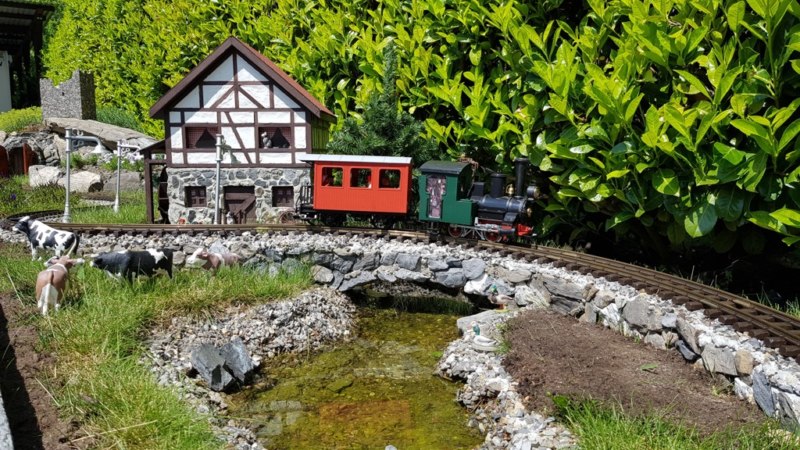
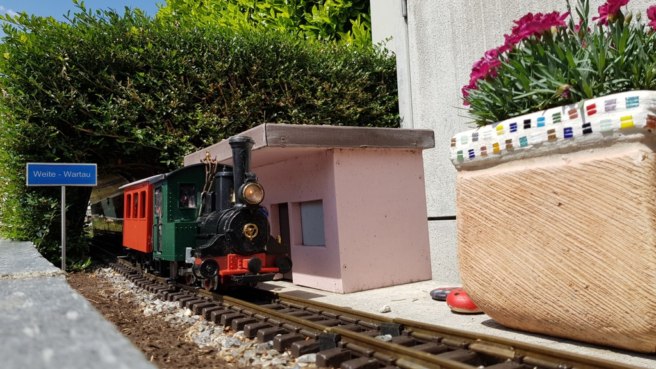
Inside Geocaching HQ Podcast Transcript (Episode 10): Shop Geocaching

Chris Ronan: Hello, everybody. Welcome to Inside Geocaching HQ, the podcast from Geocaching HQ in Seattle. I am Chris Ronan aka Rock Chalk, one of the staff here at HQ. On this episode we hear from Mark Anderson, whose geocaching username is markstafari. Mark is a long time HQ staffer who works at the Shop Geocaching warehouse here in Seattle. It is just a couple miles away from the main Geocaching HQ office. If you have ever ordered something from Shop Geocaching, then Mark and/or his colleagues were the ones who got it ready and sent it your way. He also had a hand in creating one of the products that has been especially popular over the past couple of years. We will have more on that in just a few minutes. So here’s me and Mark talking about how things work at Shop Geocaching.

[music]

CR: Well, I remember the first time that I visited the warehouse and being a geocacher. It was kind of like Charlie Bucket going into the chocolate factory on Willie Wonka. You know what I mean?

Mark Anderson: Oh, yeah [laughter]

CR: I’m like, they better check my pockets before I leave because I might just walk off with a few things. I know it’s mostly HQ people going in there. But do you ever just have a random cacher that walks through? I have to think it’d just be amazing for them.

MA: You’re not the only one to have that reaction. Definitely, we have a little bit of signage that gives us away and we also have a cache at our location if you’re in the area. But for the most part, it’s just like, we can tell oftentimes they’re searching for the cache right outside our door, which we can see their shadow, so we can maybe prepare for them to come in. If it’s nice in the summer, we often almost daily have our big bay door open. Of course, that welcomes a lot of people to just peek and in summers we’re right off the tour boats down on the waterfront. So we get quite a few visitors in the summer believe it or not for not really advertising where our warehouse is. Most of the time respectful that we don’t have maybe a ton of time. That’s the part that sometimes they wanna talk and we’re…

CR: Yeah, it’s not a visitor situation like here at HQ. 02:44″>

MA: Exactly, yeah. We try to accommodate for sure. Ironically, as most of the caching world is going into hibernation pretty soon, this is our time to shine down at the shop. Certainly the best team I’ve every worked on in 20 plus years of shipping and receiving at various places. It’s just a super unique situation and it’s a fun environment. There are a couple of us, we’re practical jokers down there a little bit, keeping it loose ’cause it is a warehouse, it’s not the most glamorous work, but we make it a fun environment.

CR: When somebody orders something from Shop Geocaching, it doesn’t go into a monster place somewhere with hundreds of people that are filling orders. There are five of you at the HQ warehouse, correct?

MA: Yeah, we’re a small operation. Yeah, just five of us, that can be lost in the mix sometimes. But again, our volume is at a place right now where we can comfortably accommodate every order placed within the last 24 hours we’ll ship the next day. We have up until noon everyday, we’ll ship every order placed before that, so it’s as real-time as we can get it. But we are not quite the scale of Amazon yet. [laughter] Hopefully some people respect that in the fact of there can be unexpected delays here and there. I primarily work with distributor orders and stuff like that, and I’ve built a really good relationship with many of them over the years.

CR: And for people that don’t know what a distributor is, we’re talking about people around the world who are reselling geocaching stuff, right?

MA: Correct, yeah.

CR: So if somebody has a shop in Washington state or in Germany, these are the distributors.

MA: Yeah, there’s a few requirements you need to meet. I think there’s a lot of operations out of basements and such, but there are a few larger ones, particularly in Europe, where I think it is the sole business, and there’s some decent size orders that head over there.

CR: One thing I’ve had people ask me is how do you guys decide what to offer on Shop Geocaching? There are some things that seem pretty obvious like cache containers and stuff like that, but there’s a lot of creativity too that I’ve noticed. You and I were talking before we started recording about the devious containers and stuff like that. So are these things that you guys at times come up with? Or is it stuff that you hear about? What’s the mix of that in determining what ends up actually being on the site available for sale?

MA: Well, it’s a little of both, I’d say. We definitely get a lot of those ideas from… I think currently we get several of those, we source those from other distributors. If other distributors have great products they’re selling, we definitely like to be a part of that as well, so things like fake pine cones and fake rocks. Actually, fake rocks I think we’ve been able to source here, but another recent one that’s been pretty popular is insects attached to nanos. That’s just sort of a fun. [chuckle] My favorite is the spider, and I’m actually finalizing one of my own that I’m gonna put out in a while that…

CR: Cool.

MA: Just another cool point, maybe another favorite point type angle. The container itself won’t be exciting, but the reveal will be the moment. Personally, I’ve only hidden a couple of them, but that’s my goal in this upcoming year is to put some creative ones out in my neighborhood ’cause there’s certainly not many creative ones. And I know that quality caches are a big thing and especially, in keeping the game healthy and getting more and more people introduced to it. You wanna find the quality cache on that first one. I’ve introduced it to people where it hasn’t been, and they’ll never cache again if they find a wet, soggy… Yeah, I don’t know. Or just your basic container. There’s the thrill of the find, but if you can add another little element of like, “Oh, oh.” Another cool one is fake chewing gum, a chewed up piece of gum that’s stuck to a nano. Those are the ones that I like the most, even though you can’t really stash much stuff in there as far as trade-ables. The kids probably don’t like em as much, but those are my personal favorites. And again, we have a lot of freedom to source and try things like that. There’s not a strict, “We’re gonna work on this type of container.” This or this. If somebody finds something or hears about something, we can usually run with it if it’s not too expensive or within reason, I guess.

CR: One of the things that I think is really cool about what you guys do is trying to make sure that the products that are offered, they have great utility to them. We were talking, for instance, before about the tree hugger product. Maybe talk about that a little bit for people that aren’t familiar with it. It’s a really cool idea, and it’s a great way to solve this problem that’s out there that people want to hide caches on trees, for instance, and unfortunately, sometimes they nail it or they drill it, which you’re not supposed to do. That’s not in line with the guidelines.

MA: Right, it’s a no, no.

CR: And now we’ve got this product that enables you to avoid that kind of a thing and hide caches in the right way, which is tree hugger.

MA: Yeah, yeah. So my manager, I think it was about a year ago, he tracked down a source that basically had this surgical tubing with a bracket, attached around a tree, and it’s not a way out there idea, but you couldn’t… Obviously, the surgical tubing will expand as the tree grows, and so that made perfect sense for attaching a cache. And that was not the intended purpose of this product out there. It’s like a livestock fence company or something like that. So they were…

CR: It’s kinda funny how many things are created, and geocachers find a way to repurpose them for caching. And definitely their intended effect is not.

MA: They were so excited though, I think and continually trying to improve their packaging, and appearance, and super cool things like that where we can promote best practice of geocaching, the rules within the game that are not always obvious and maybe newer hiders, again, may nail or screw something to a tree or something. That’s a big no, no. Things like that are not clearly marking your cache containers as a geocache, etcetera. We try to provide all those tools or as many as we can, as many as we can source. And we’re continually working on ways to promote the best practice for geocaching, and really just help improve, especially first cacher experiences. I certainly can empathize with the first cachers. When I first even joined the company, it just was so confusing to me early on. And we’re talking this was in 2008 and 2009. Yeah, it was tough for me. And even when I went out with a couple people, and it took a while for me to really grasp it and enjoy it for what it is. And I think, now, having 10 years of experience with it and the products, it’s like kind of view things differently, and you view products in different ways. There’s a lot of things that could be related to either trackable or container.

CR: One of the things that you talked about was how you and your colleagues at the shop have the freedom to try to pursue an idea and one thing that folks will know you for whether they realize it or not, because you’re involved in this very popular product, which are the buildable toy sets. And you were involved with that from the inception.

MA: Yeah, yeah. In sort of a roundabout way, yeah. We did find a first vendor that we tinkered with a trackable two-inch figure that did really well, but the vendor wasn’t… It was a secondary hobby for them. Our current vendor is just amazing with what she can do with any of these parts. She basically re-purposes these official parts, cleans and redesigns them essentially, and she can print over these actual parts, which is allowed. And we, of course, follow all legal guidelines as far as that’s concerned. We’ve been through that a little bit. And yeah, it’s turned into a nice little selection of a spread of build your own cache containers. A couple of different figures now, a male and a female figure that come with a trackable element. And we have a kitty and a dog now that attach to those buildable parts. The small things always are a good thing and you can attach em to any of these buildable brick parts that you may have at home. Your own creations make anything trackable, that’s been popular. And then the one that started it all was as far as more of a set, and really the only one that I designed [chuckle] from the beginning was the build your own ammo can container.

CR: Oh, sure. Yeah, yeah. With a little nano that went inside of it.

MA: Yeah, yeah. And so that was our first experiment with an actual buildable follow the instructions, and the final result is a container that vaguely resembles an ammo can, with the latch down and everything. So yeah, I got to come up with a prototype with my kids. I pretty much came up with the design, but they have better eyes than me as far as finding all the parts. I was digging through the big box, the big random box at home, and I think it took two or three days before I came up with a pretty cool design that locked and presented it to just the co-workers at our weekly merchandise meeting that we have. And yeah, they all dug it and it was like, “Alright, let’s get it rolling.” I didn’t know how that sourcing parts, all the same parts for selling the same set and I was just… I didn’t think it was possible but this vendor is just amazing in her sourcing and she can make it all happen.

MA: Really, the finished product looks like it’s straight out of a factory. It’s really impressive. And even all the way down to the backer art like the card, just the packaging is all custom done by her and really a nice touch on top of the cool novelty item that these buildable toy sets have turned into in an ongoing series that it’s certainly fun to… I spearhead the projects, although I don’t design them really anymore at this point. Our vendor is super creative and she knows our themes and she’ll either throw ideas at us or we will do the same and she’ll come up with something. It’s pretty amazing to see her work or see the finished product.

CR: I’ll let you get a drink there.

MA: They don’t usually let us talk this much over at the warehouse.

[laughter]

CR: You’re getting it all out. You’re gonna get it all out today.

MA: That was my little bu-dum ching.

CR: That was pretty good. Is there a most popular product at that shop? Does it vary?

MA: Oh, golly. Well, definitely, I think trackables.

CR: Just trackables in general.

MA: Trackables in general continue to be… The old travel bug still continues to be probably the biggest selling trackable. And it’s trying to keep up with just certain events around the year. Pie day was really huge. An outside vendor did a coin for that, that was just hugely popular a couple years ago, and we had no idea. It’s those trackable coin moments that we definitely keep an eye out on.

CR: Well, I could sit here and talk about products or geocaching products for hours and hours. We’re gonna have to do a part two and a part three. We’ll bring Marty and Phil and Gary and Dylan. We’ll bring everybody from the shop and we’ll just do a big round table.

MA: Are you sure? I mean. This might be… This talk is a little too hot for most years, I know.

CR: No, I think it’s awesome. God, it’s music to my ears, I love talking about it. But thank you and we’ll chat again sometime.

MA: Oh, yeah, Chris. It was a blast.

[music]

CR: That was Mark Anderson, aka markstafari from Shop Geocaching. Interesting talk, I hope you enjoyed it. So here’s my next question. What would you like to hear us talk about on Inside Geocaching HQ? You can email us, podcast at geocaching.com is the address. That is podcast at geocaching.com. Tell us what sounds interesting and we’ll see if we can work it into an upcoming episode. Thanks again to Mark for his time. Thanks to you for listening. Until next time, from all of us at Geocaching HQ, happy caching.

[music]