Geocaching is delightful because of the people who play it — adventure-seekers, makers, parents, astronauts and (sometimes) celebrities. Read their stories.
Three things can ruin any geocache. It’s true whether your geocache is a creative hide, a geocache that delivers hikers deep into the untamed wilderness or a fantastical Puzzle Cache with a big surprise twist. If your geocache is soaked through with water, the container is cracked or geocachers don’t know it’s a geocache because it’s not marked, it’s what some people call a #fail.
D2W isn’t a droid from some sci-fi movie. It’s a quick test for geocache owners. To avoid the #fail, check to make sure your geocache is D2W compliant. It should be:
Durable
Water-tight
Well-marked
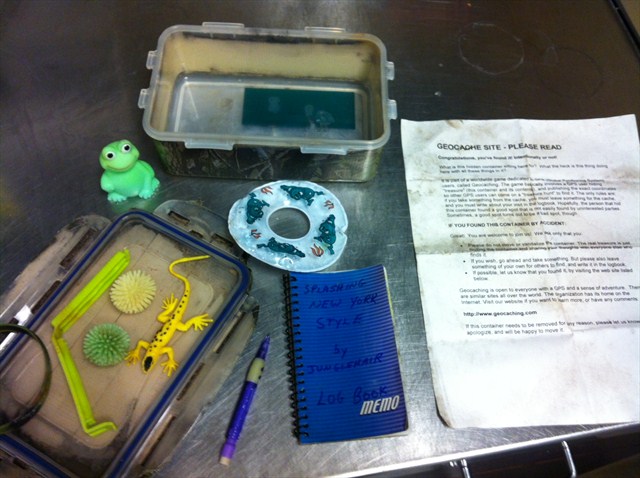
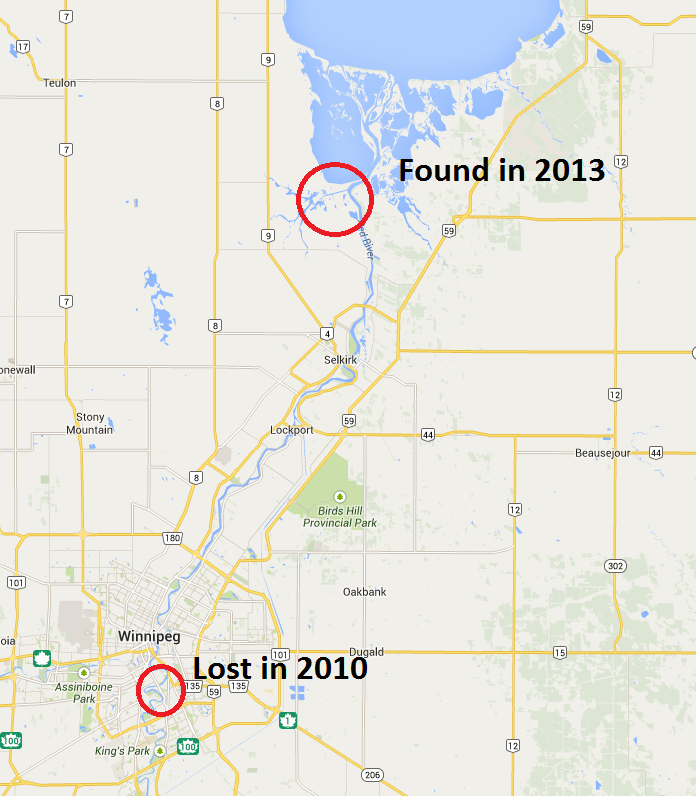
Are you interested in a seeing a geocache that fits all three criteria? Check this out. Every once in a while at Geocaching HQ we hear the success stories of D2W geocaches. Look at the Geocaching Blog post about a geocache that was lost in a flood and then found, still intact, 30 miles away and three years later. Share your advice for passing the D2W test in comments after this article.
Geocache found after 3 years after washing away in a flood
Isn’t a wet logbook the worst? Or maybe a geocache filled with water is the worst? Or a geocache that isn’t well-marked might be the worst? Or maybe even a geocache that can’t be found because it’s washed away by a flood is actually, really, the worst. Well then Sandra, aka junglehair‘s, geocache is the antidote to all those “worsts.”
She’s found more than 13,000 geocaches and hidden more than 70. She knows her geocaching stuff. Sandra’s knowledge includes using the right container for the right circumstances. They’re containers that are durable and last years. She says those containers are most importantly water-tight. None of that seemed to matter much though when a spring flood washed through Manitoba, Canada in 2010. Even though her geocache named Splashing New York Style was hidden high on the bank of a river, it was swept away. After a string of DNF (Did Not Find) logs, she replaced the geocache container.
Lost & Found
Then the years rolled by, until an email popped into Sandra’s inbox. She says, “I found out that one of my caches that was washed away in a spring flood in 2010, was found on an island about 60 km North of where it was originally hidden.” The story goes, “The cache was found by Rob Bruce, Marsh Manager at Oak Hammock Marsh while he was on a hunting trip in Netley Marsh. He had been camping on the island where the cache was found.”
Sandra says the geocache survived those three years intact and water tight. It was well marked so Rob knew the container was a geocache and he also knew how to contact the geocache owner. The geocache just bobbed along for years before finding a resting place on an Island on the south end of Lake Winnipeg.
Sandra says, “The really amazing part of this story is that the log book and other contents of this cache were still fairly dry inside! It was hidden in a Lock & Lock container (the real kind, not a dollar store knock off).”
It’s a Lost & Found lesson about quality, well-marked, water-tight containers. It’s also a lesson about luck. It helped that it ended up in the hands of a friend who geocaches, a lot. OHMIC returned the geocache, but he happens to mostly find them with more than 15,000 finds.
What are your tips, advice, techniques, tools… well you get it… for placing a durable, water-tight, well-marked geocache?
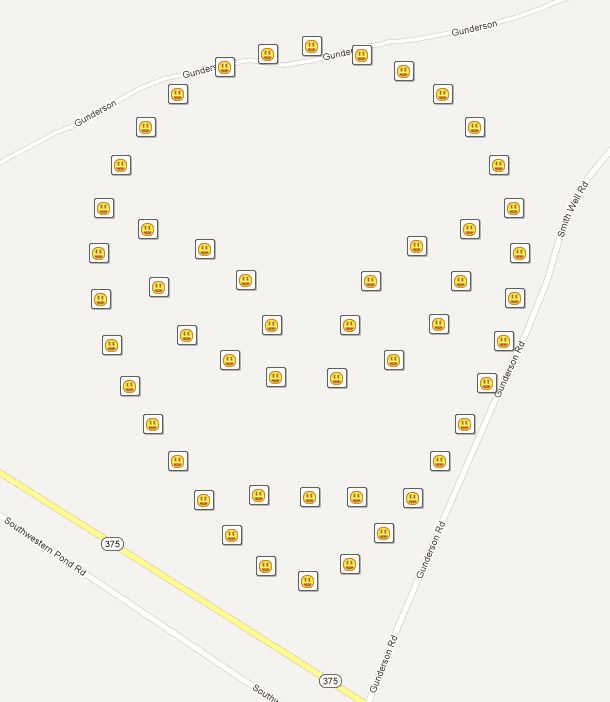
One of the best parts about geocaching is that there are plenty of ways to play. Some geocachers are all about finding creative containers, others are all about the numbers and some are all about the big picture—literally. Individually these 51 geocaches in the Nevada desert that make up this series might not be the most interesting finds, but when you put them together you get something incredible. And considering that yesterday a geocaching Travel Bug® launched into space, the shape you come up with is pretty appropriate. This isn’t the only piece of geo-art in the world. In fact, geocachers have been creating art out of geocaches for years. Other shapes include a peace sign, a UFO, people and animals.
“Having our Head Alien Geo-art series selected for Geocache of the Week is a tremendous honor. After placing the E.T. Highway Mega-Trail, we thought it would be a nice surprise for everyone who attended the kick-off event to release the Head Alien series. We coordinated with our local reviewer for the Head Alien series to be published during the E.T. Trail event. The planning, travel time to reach the area, and actual placement of the caches took several days worth of work. The series takes roughly 3 to 4 hours to walk the nearly 7 mile design.
We love to read the logs and hear about the adventures people have out there. It’s what motivates us to do more. We’d like everyone to know how much we appreciate their efforts in the continued upkeep of the E.T. Highway Mega-Trail as well as both the Head Alien and U.F.O. series. We also want to say a heartfelt Thank You to everyone for their unwavering support of all our projects and events. It’s what inspires us to continue doing what we do.”
What geocachers are saying:
“This was an awesome cache series to do at night. Thanks for the hunt.” – graylling
“The walk around the alien head was fun and well worth the smilies we got. Thanks for putting these caches out here!” – Team_JLKC
“Had a blast taking on this sweet geo-art design today on our first day caching in Nevada.” – fox-and-the-hound
If you were to create a piece of geo-art, what would it be and why? Tell us in the comments. Then check out other installments of geo-art on Pinterest.
Continue to explore some of the most engaging geocaches around the globe. Check out all the Geocaches of the Week on the Geocaching blog.
If you would like to nominate a Geocache of the Week, leave a comment below with the name of the geocache, the GC code, and why you think we should feature it.
The countdown begins. It’s t-minus 12 hours and ticking down toward liftoff of a rocket bound for space. U.S. astronaut Rick Mastracchio will pack along a Geocaching Travel Bug on his six month mission to the International Space Station. He’ll use the Geocaching game piece, which typically moves from geocache to geocache on Earth, to teach students about geography and science.
Join Geocaching HQ from this Google Hangout at 6:45pm and 8:00pm Seattle time tonight to connect and celebrate Geocaching in Space with the global geocaching community. Then turn to NASA TV to watch the rocket launch live. The launch is scheduled for 8:14pm Seattle time (PST). Convert to your time zone here.
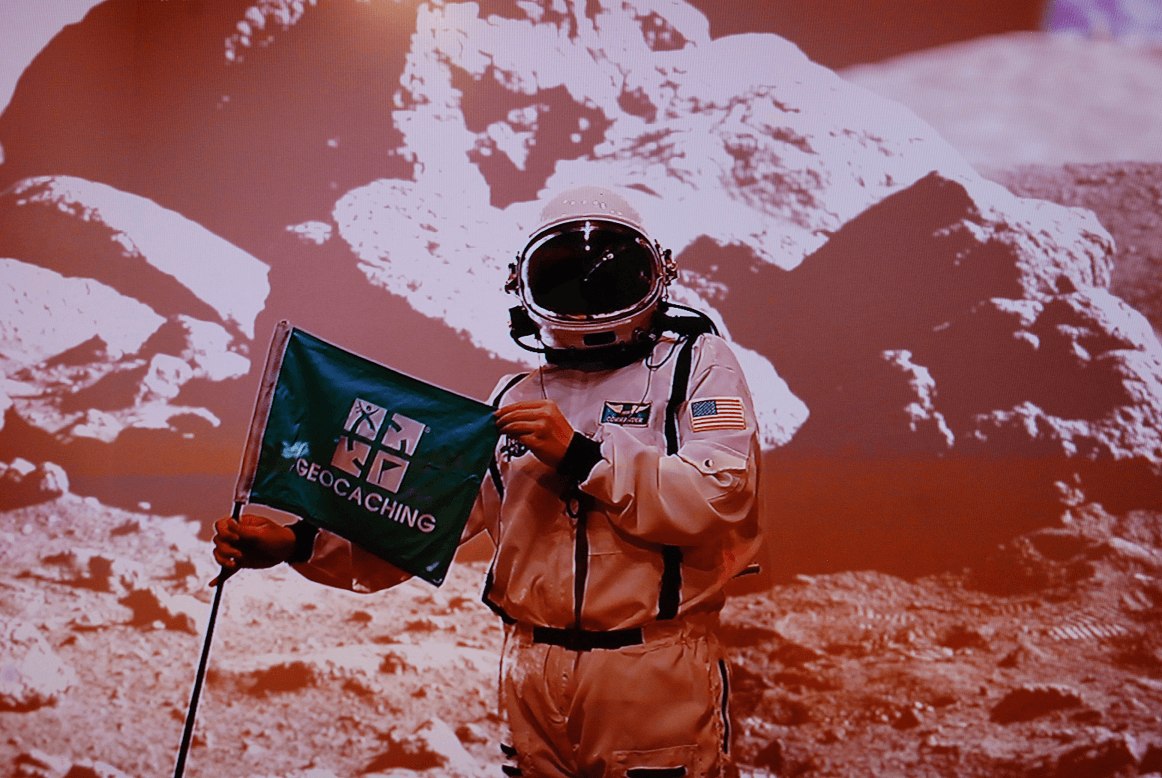
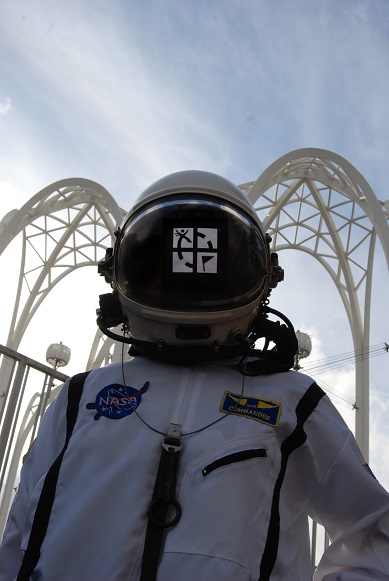
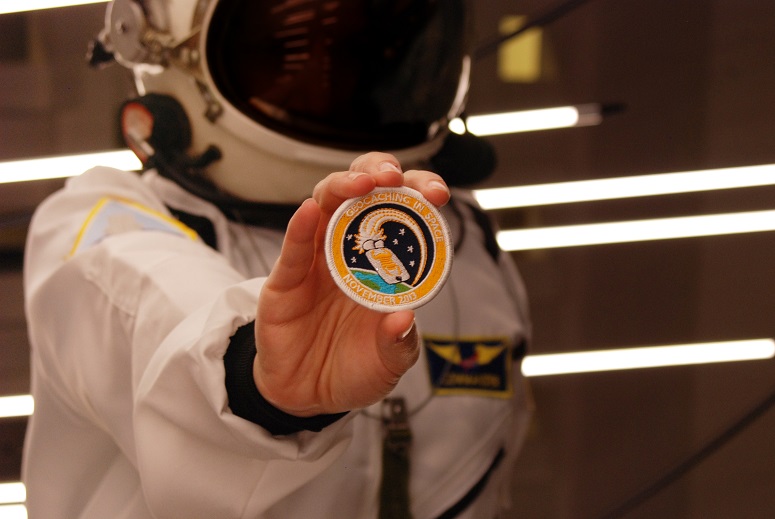
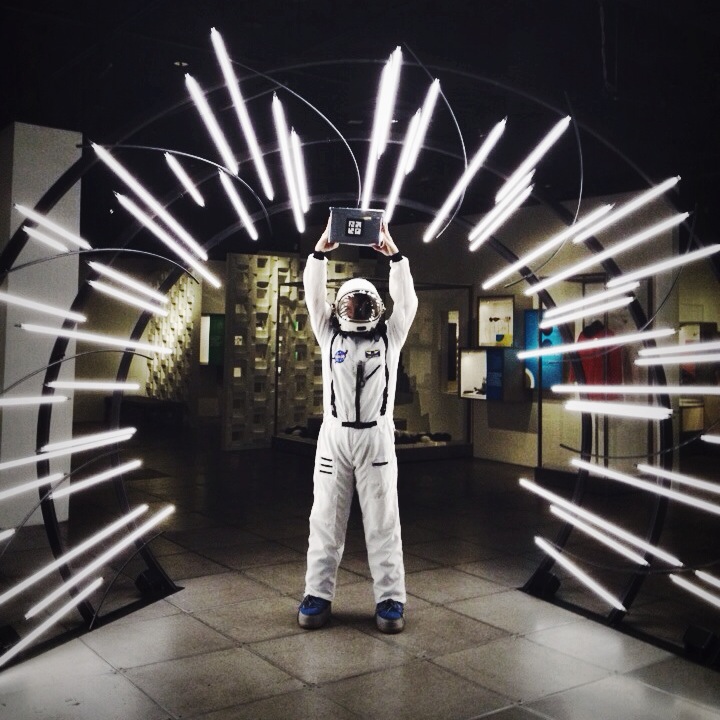
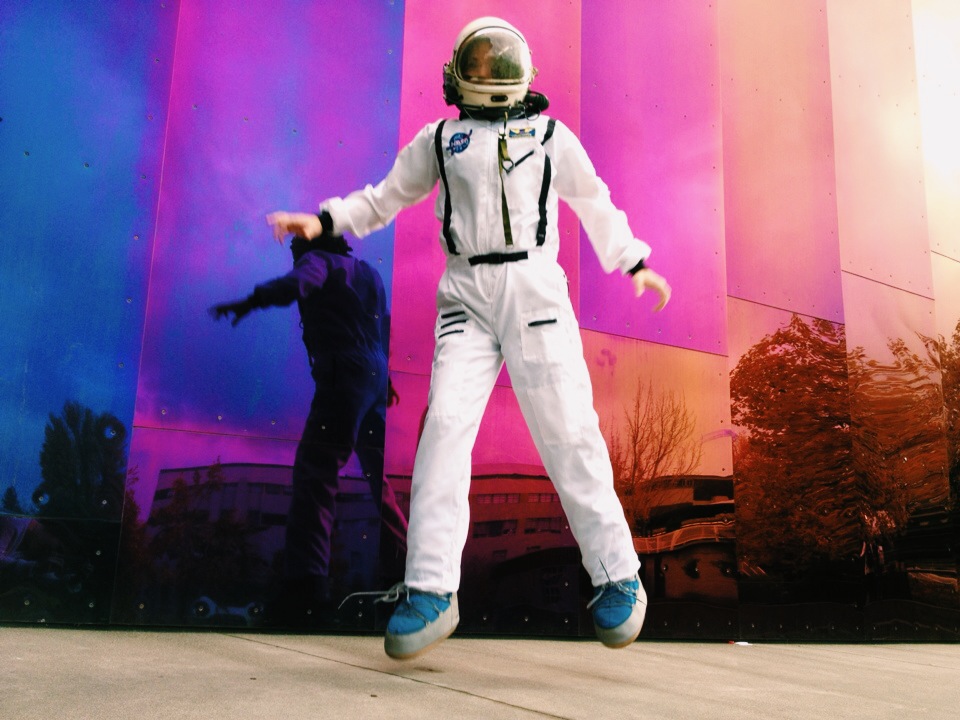
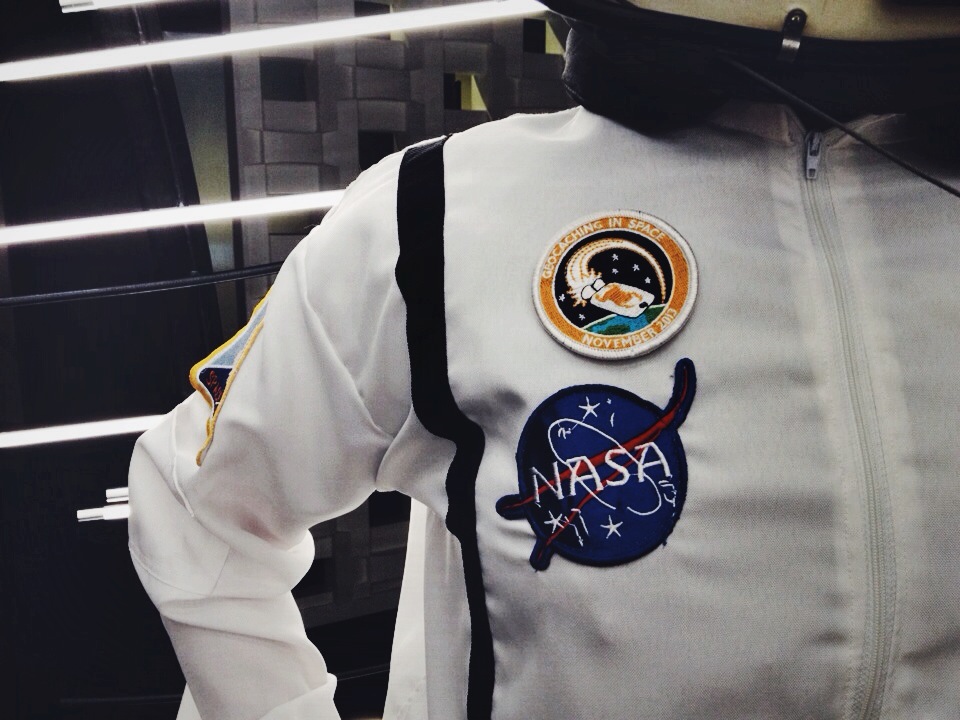
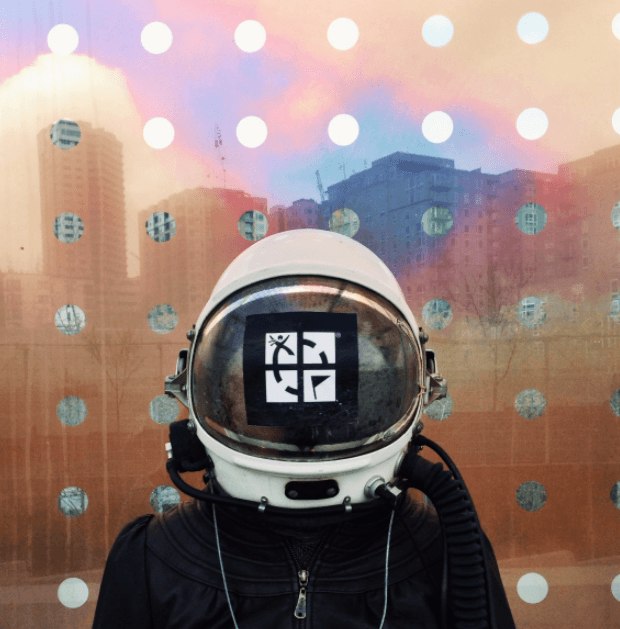
Enjoy this look at Geocaching in Space in pictures as envisioned by the Geocaching HQ staff. Spread the word about Geocaching in Space by sharing your favorite picture through social media and tagging #SpaceCaching. Follow all the #SpaceCaching tags at Tagboard.com/SpaceCaching.
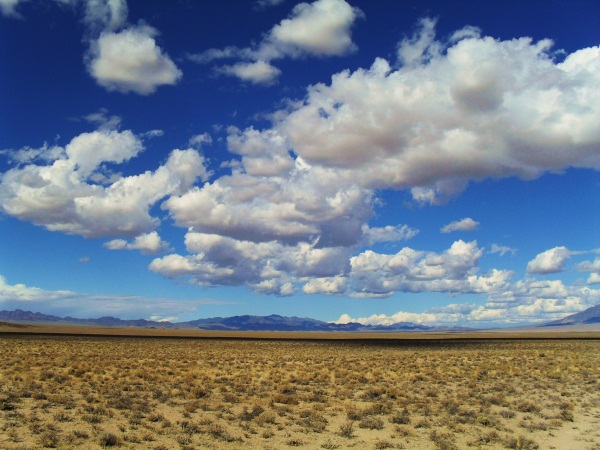
Imagine: The midnight darkness of the desert is lit only by a pale moon. You’re driving down a dirt road in the middle of nowhere Nevada. You see the wink of a meteorite falling to Earth. It’s slower than any you’ve seen before, it’s greenish in hue. The trajectory of the fast moving light shows it landing in the area you’ve been told doesn’t officially exist even though you pretty much know for a fact it does. You feel validated when your friends agrees with you that this might not be a meteorite. In fact, it very well could be aliens. Yes. Aliens.
This would seem weird under normal circumstances. This doesn’t fall under normal circumstances though. This is geocaching. Specifically, this is the ET Highway.
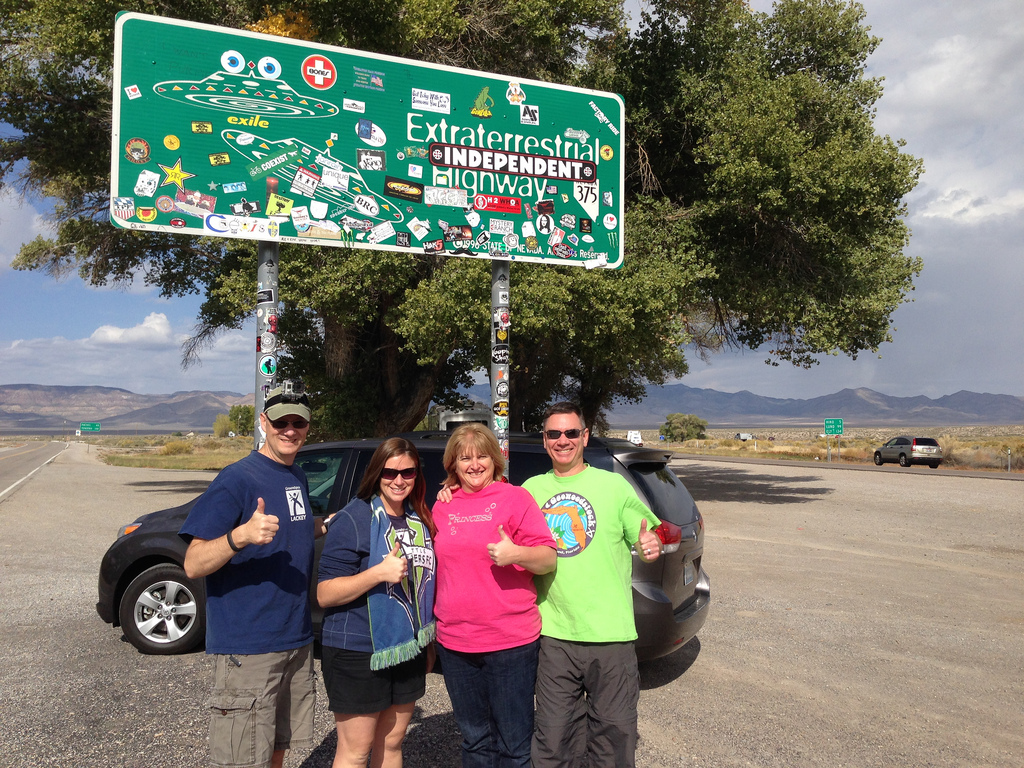
Annie Love with Moun10Bike, Princess Trouble, dsvaughn, Joe of JoenSue
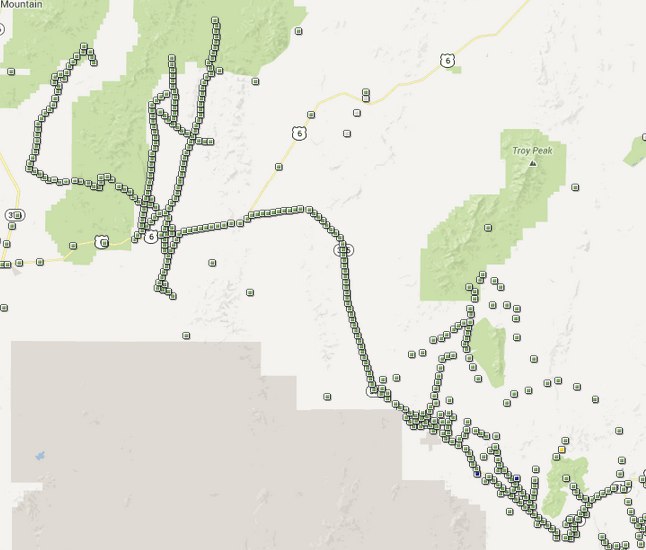
Bordering the place that doesn’t exist (Area 51), this geocaching power trail is not for everyone. It’s the ultimate in power caching. Film canister after film canister at 6,000-7,000 feet in elevation, this trail leads you through some spectacular country. Originally 2000 geocaches, recently expanded to 2400, this is one of the largest power trails on Earth. Traveling through this part of the world makes you feel like it’s impossible not to ‘believe.’
Knowing that Geocoinfest 2013 was going to be in Las Vegas, I immediately thought ‘I should do the ET Highway.’ Over the nine years I’ve been geocaching, I’ve only found just under 1200 caches. It’s definitely not about the numbers to me. For me, it’s the experience I have geocaching. That’s what appealed to me about doing the ET Highway.
Before I could make my own plans, I received an email from Princess Trouble (one of the hosts of Geocoinfest). After a few more emails, a team was formed. My colleague Moun10Bike, Princess Trouble, dsvaughn, Joe of JoenSue and I had plans to leave bright and early after Geocoinfest.
Blazing through rugged Nevada backcountry with our minivan and Jeep, we found the 2400 caches over four days. In our quickest hour of geocaching, we found 116 geocaches. Being in the company of cows, jack rabbits, coyotes, wild horses and fun geocachers made for a truly amazing adventure.
Some tips for folks thinking of doing the ET Highway:
-Plan to bring at least 50 film canisters with logs (for cache maintenance along the way)
-We had two stamps with us and these were both nearly dead by the end, so three might be best
-Figure out a plan in advance for getting gas or hauling gas with you so you don’t get stranded
-Cell phones don’t work on most of the trail, so be prepared with plenty of food, water, flashlights, clothing layers and make sure you have a spare tire in your car
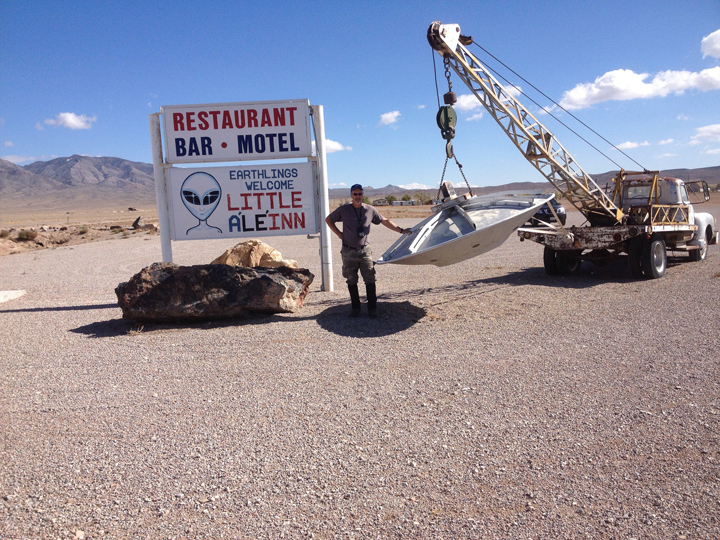
-Allow for extra time to find the other really interesting geocaches, visit the Little A ‘Le’ Inn, and check out the ghost town of Belmont along the way
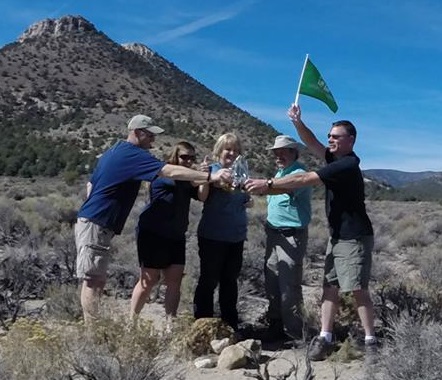
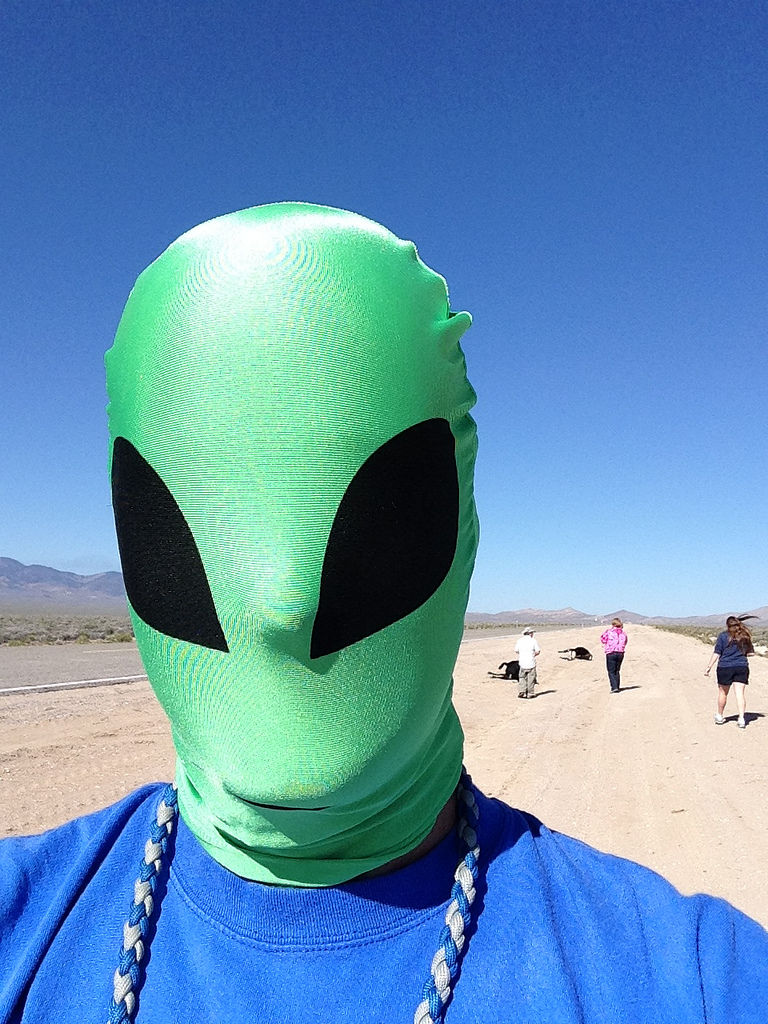
Geocache Finds on the E.T. HighwayGroup ShotView of the E.T. HighwayAn Alien “selfie”