Geocaching is delightful because of the people who play it — adventure-seekers, makers, parents, astronauts and (sometimes) celebrities. Read their stories.
Editor’s note: the Travel Bug® aboard the International Space Station returned to earth in early 2011. The Travel Bug can now be viewed (and logged!) at Geocaching HQ in Seattle, Washington, USA.
Richard Garriott is a man on a mission. The active geocacher holds two extreme records in the world of geocaching. He’s placed the highest and the deepest caches. One cache is on the International Space Station, the other in an ocean trench off of Europe. Hear why he’s spent millions to push the treasure hunt to the edge.
See all the Lost & Found videos, from an 88 year old geocacher to how Geocaching.com got it’s start, here.
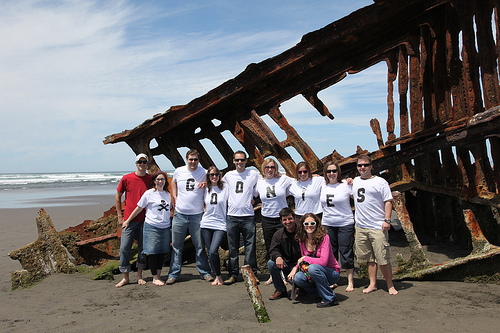
Lackeys Nate the Great (second from left) and Powpea (far right) attending a geocaching event near Chicago
Groundspeak’s Lost and Found tour is in full swing, with Groundspeak Lackeys attending geocaching events spread throughout the world. Earlier this month Lackey Powpea and I had the opportunity to visit the Second City for the first annual Chicagoland Cache-apalooza. The local geocaching organization, GONIL, hosted a fantastic event including 74 new geocaches placed and published over the weekend.
Before the festivities began, however, we attended a CITO event at the Lucas Berg Nature Preserve in Worth, IL. Here is a little speck of green space in the heart of a metro area whose stated purpose is as a repository for toxic soil dredged from a nearby canal. In short: it’s a dump.
Rather, it was a dump, until some geocachers caught wind of it. Thirty years of indifference and careless wind surfboard disposal (yes, really) provided geocachers the opportunity to put some of their hard-won bush-beating skills to good use. What it lacks in geocaches, it more than makes up for in potential.
No discarded BMX tire or mangled can of Fanta dared escape the eagle-eyed crew. I know at least one local resident would agree the place is much more inviting as a result.
Signal watching the CITO
However, it’s easy to see that altruism of the sort witnessed by this Lackey is not wholly selfless. Sure, getting filthy and comparing sticker-bush abrasions are their own rewards, but by demonstrating responsible stewardship of the land essential to our pastime we act as emissaries for the game. Geocachers sent a clear message to the land manager and community that geocaching is something to be welcomed and encouraged.
Worth Our Support!
What can you do in your community to spread this message?
The future of Lucas Berg Nature Preserve is still uncertain, but geocachers in the Chicago area are making an investment they hope will pay dividends down the road. At the very least, it’s a labor of love not lost on the critters in the little marshy plot of land just off SW HWY 7 and W 111th in Worth, IL.
In: New life to a neglected park and potential geocaching playground
Out: Tires, busted glass, soda cans, 3/4 of a wind surfboard (no sign of the surfer!)
Meet the man behind one of the most engaging evolutions in geocaching… the geocoin. Jon Stanley, alias Moun10bike, is now a Lackey. But almost ten years ago he forged his way as a pioneer in geocaching. Go along with Jon as he retraces his steps in placing the first geocoin.
See all the Lost & Found videos, from a geocache in space to an 88 year old geocacher, here.
You won't be lost in the woods anymore (we hope). New GPS satellites are expected to increase accuracy.
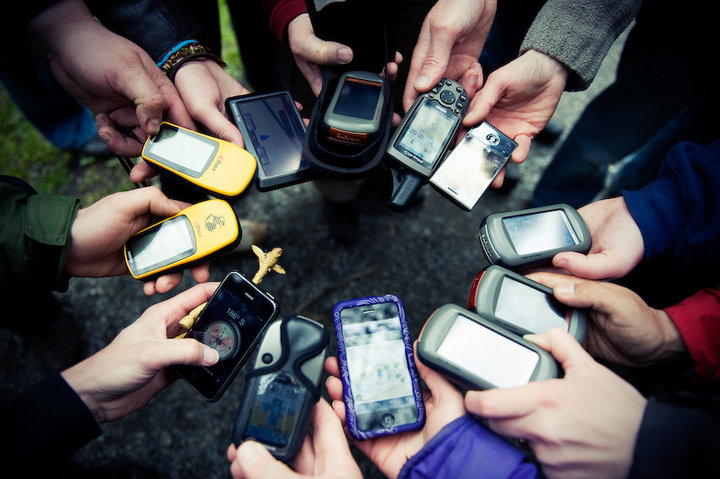
The U.S. is upgrading its constellation of GPS satellites. They’ll be replaced in an effort to greatly improve accuracy. Good news for geocachers. The replacement satellites are expected to sharpen the accuracy of your GPS device from about 20 feet to just an arm’s length. They’re also touted as being more reliable – meaning you won’t lose the signal as often.
Hopefully, this means fewer Did Not Finds (DNFs) on the horizon. But it’ll take a while to reach the horizon. The first generation of satellites will reportedly be swapped out one for one over the next decade.
The launch of the first of the next generation of GPS satellites has been scrubbed three times due to weather or technical glitches. The fourth time proved to be a charm. The rocket carrying the satellite lifted off Thursday, May 27th from Cape Canaveral, Florida.
The satellites’ software will be upgradable while they are in space and also continue to broadcast an atomic clock, keeping time to a billionth of a second.
Besides guiding travelers to destinations, ambulance crews to emergencies and owners to lost dogs, how else do we use GPS each day?
Pirate Pete’s Plunder GC172T8 was named Cache of the Month by the Wisconsin Geocaching Association. It’s our Geocache of the Week. The puzzle cache captures the imagination of children and families with a compelling and fun story about tracking down pirate’s treasure.
This week’s geocache was chosen from entries submitted via Twitter. Follow us on Twitter and submit your favorite cache for consideration as Geocache of the Week.