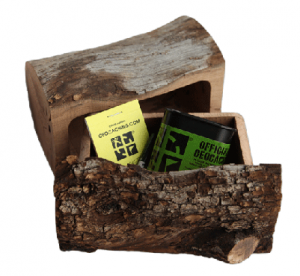
Check out five creative geocaches in just 30 seconds. Click on the video below. See what your next geocache find might look like. Learn new ideas when hiding your next geocache. Share the video when your friends ask, “What am I looking for when I geocache?”
Most of the cache containers in the video are available through Shop Geocaching. Which number geocache did you like best?
The geocaches in the video were placed either for demonstrative purposes or used with cache owner permission. Interested in seeing more creative geocaches? Check out this Geocaching.com Presents video.
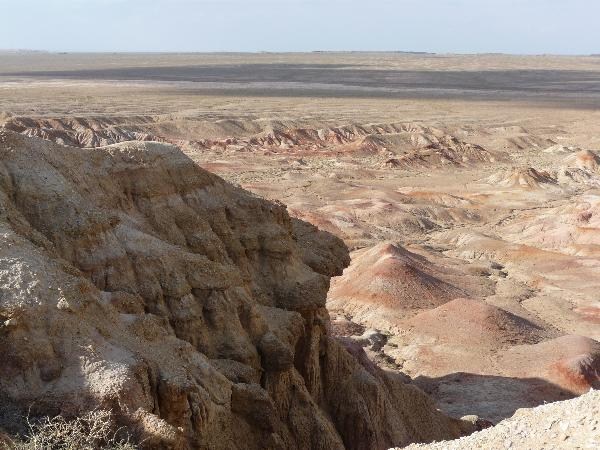
There are few locations on earth where the nearest geocache is more than one hundred kilometers away. You’re looking at one of those rare locations.
Tsaagan Subarga (GC1DPJV) is cradled in the heart of the Gobi Desert. It’s reachable by reliable vehicle or on the back of a camel or horse. The cache is named after the striking location. It’s known for the red, pink, yellow, and white stripes in the rock formations.
Wild Boy hid the cache in 2008 and has arranged for a local cache guardian to perform maintenance when he’s not in Mongolia. The difficulty 1, terrain 1.5 cache still has fewer than ten finds.
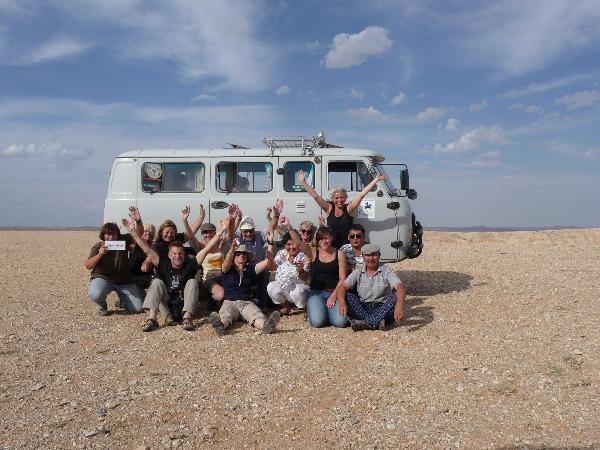
Four geocachers discovered the cache in 2011. One writes, ” I found it with my tour group on our 6th day in the Gobi desert. Our cook and driver were impressed to find this in the desert!! The cache is still in good shape and there’s a lot of places in the logbook.”
FTF on "Tsaagna Subarga"
Looks like there’s room for your name on the Tsagaan Subarga logbook. Have you ever claimed a smiley for a geocache in the desert before?
Continue to explore some of the most engaging geocaches around the globe. Check out all the Geocaches of the Week on the Latitude 47 blog or view the Bookmark List on Geocaching.com.
If you’ d like to nominate a Geocache of the Week, send an email with your name, comments, the name of the geocache, and the GC code to pr@groundspeak.com.
Geocachers kulhal and otco recently embarked on a journey to locate the last cache in a vanishing series. The duo traveled half way around the world to claim a “found it” on the final active cache in the Project A.P.E. cache series. To many geocachers, the Project A.P.E. caches ring a nostalgic bell.
The A.P.E. cache series was established in May of 2001. The promotion was for the film Planet of the Apes. Thirteen different A.P.E. caches, each with props from the movie and a story that tied into the movie, were hidden all over the world. Those who found the caches received a unique icon.
All that is left of the highly sought series is a single, active cache hidden deep in the tropical jungles of Brazil. Mission 4: Southern Bowl is now the last obtainable A.P.E. cache. The remainder of the geocaches in the series have been archived. The final cache has been logged less than 40 times.
Project A.P.E. Cache Icon
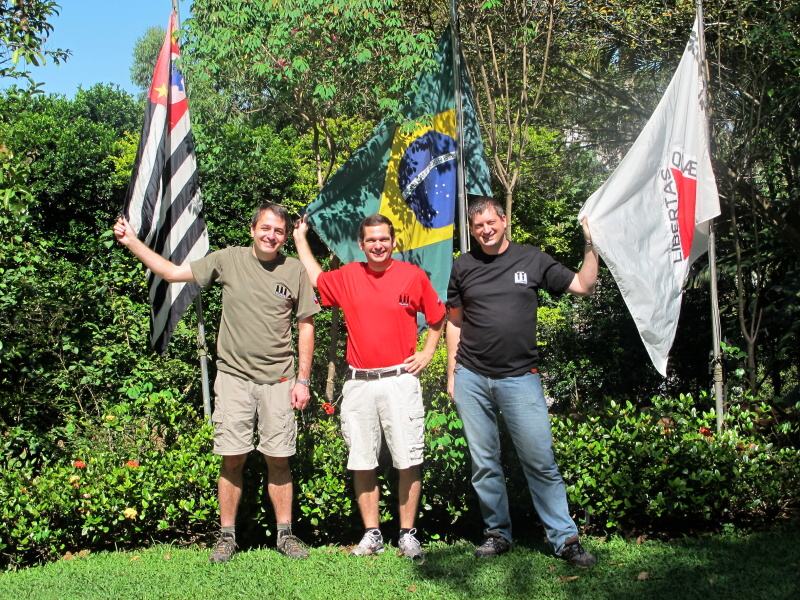
kulhal and otco met up with Brazilian cacher, gsilberbestlife, when they arrived. According to kulhal, the excitement of discovering the last of the vanishing series only heightened the caching crew’s sense of adventure.
Early one morning, otco, gsilberbestlife, and kulhal piled into their rental car and drove 300 km outside of Sao Paulo, Brazil. They arrived at Intervales State Park, the supposed location of the lone standing A.P.E. cache. Along the way, the cachers were surprised to find that many locals were unaware of the park’s existence. This further motivated them to discover the rarely visited cache.
According to kulhal, experiencing the beauty of the park was just as much of an adventure as discovering the cache, “I equally appreciated the fact that the cache brought me to a place that I would have never visited otherwise. I experienced a wonderful part of the world and saw nature so different from what I know from home.”
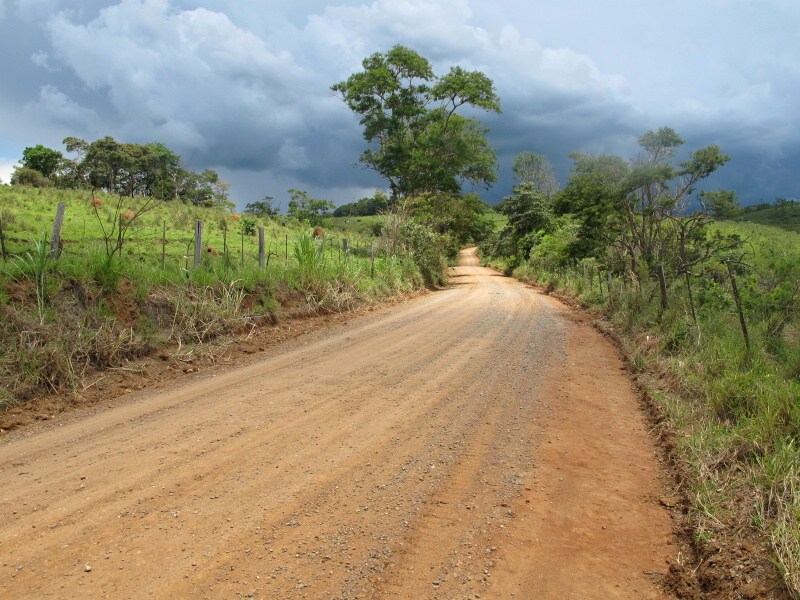
The roads through Intervales
Using a sketchy GPS signal to navigate windy, unmarked dirt roads, the cachers were able to drive within 100 meters of the cache. Now only a few minor obstacles stood between the cachers and the final A.P.E. cache. Wild animals, jungle-like terrain, and a lack of a trail map couldn’t stop these cachers.
Otco, gsilberbestlife, and kulhal discovered the cache successfully, noting that, “The beauty of this cache is something else.” Kulhal stated, “I had a feeling that I was touching a piece of geocaching history and for that it was a special moment.”
It’s a special moment geocachers may continue to share. There have been more logs in the past 2 years than in the nine years after the cache was placed. And because this is the final A.P.E. cache, it is likely that an increasing number of geocachers will be traveling to Brazil. Located in a new exotic setting, the Mission 4: Southern Bowl is an opportunity for geocachers to discover a significant cache.
Waterfall in Intervales State Park
The story doesn’t end here. For more information on kulhal, otco, and gsilberbestlife’s adventure, check out their Czech language blog.
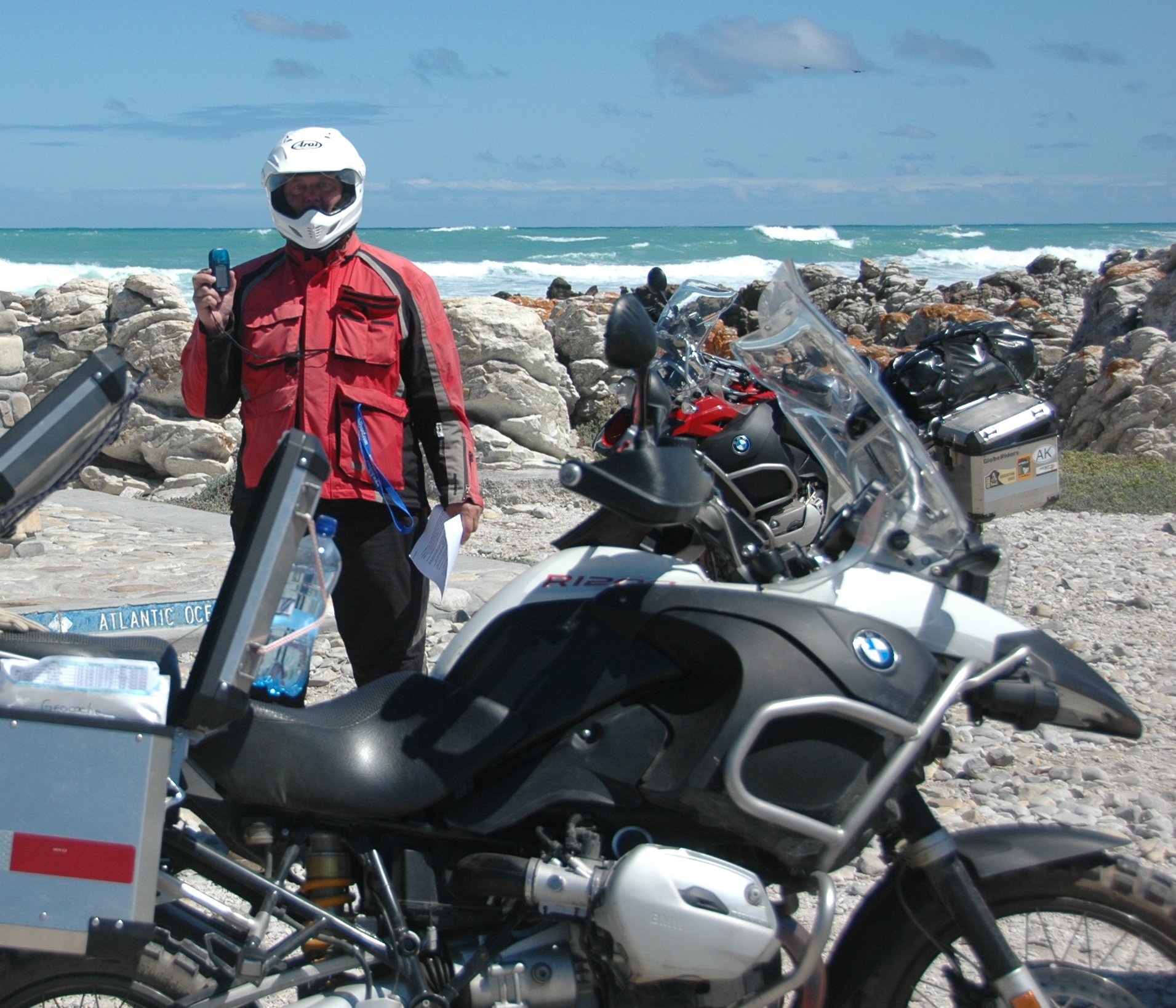
Jeff geocaching along the Atlantic ocean in Africa
The purr of his motorcycle engine, the crunch of a long-neglected gravel road, his GPS device flickering a reading ever closer to a remote geocache; geocacher Jeff Hower, ADVTraveler, lives for these moments. He’s combined his love for adventure motorcycling with the GPS-powered treasure hunt of geocaching.
Jeff says his motorcycling journeys preceded the creation of geocaching by about three decades, “I started riding dirt bikes back in the 1970s. Trips into the mountains in Colorado, deserts in the west and Baja, and in 1988 a trip deep into the Copper Canyon region of Mexico pretty much set my urge to travel to other regions. Back then there was no GPS or geocaching. It was all travel using maps and compass.”
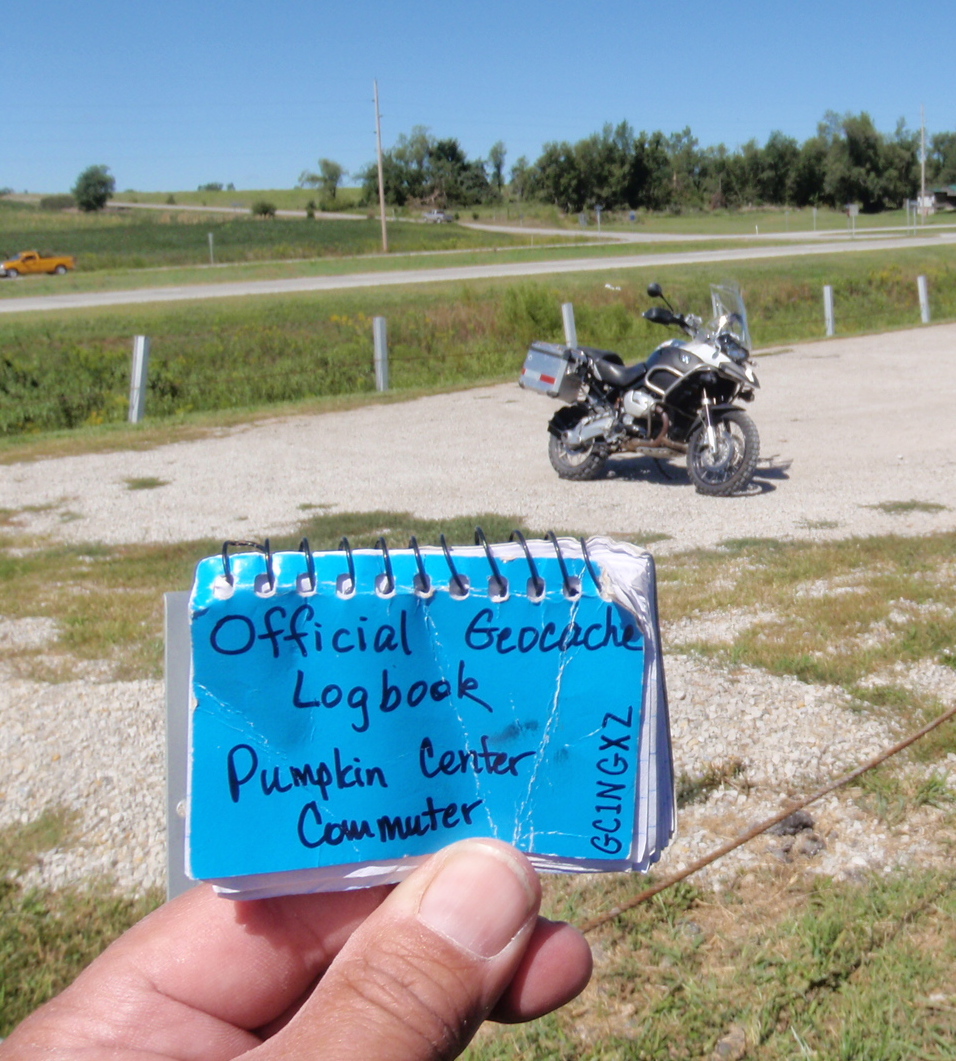
His little brother introduced Jeff to geocaching in 2005, but it wasn’t until Jeff retired four years later that the hunt for geocaches kicked into high gear. He says, “For me, geocaching and motorcycling are a natural pair. Riding the bike is fun in itself, but geocaching gives you a destination and purpose. The motorcycle allows you to quickly pull up and get to areas that sometimes are not accessible by other means. Geocaching also is an incentive to get off the beaten path and explore areas that you would never experience.”
Geocaching by motorcycle in North America
Jeff has taken his love of exploration to different continents. He’s traveled from his home in Missouri, USA to the southern tips of South America and Africa. He geocached along the way, finding new vistas and unimaginable new locations. But Jeff hasn’t geocached without DNF (did not find) regrets for caches that eluded him – especially one particular geocache in Africa.
Jeff geocaching in Africa
He says, “One of my disappointing DNFs was in Swaziland. The cache was hidden somewhere on the bank of a small river with the notes cautioning to watch out for crocodiles. I never did find a cache in that country.”
If you’re tempted to climb on a motorcycle and start a geocaching adventure, Jeff has some advice. “My advice to someone caching via motorcycle is “Be Careful.” Don’t focus on the GPS. Get a good idea about where you are going and how to get there while you are stopped. Beyond that it’s just an awesome reason to go riding and exploring.” He adds, “I’m still in awe at the creative methods people come up with to hide caches.”
Jeff says one the best part of motorcycle geocaching is when you step of the bike, “…whenever you stop, people will stop and talk to you. There is always someone interested in where you’re from and where you’re going.” And with geocaching you’ll always have stories.
TNT : Donjons & Mountains (GCJPN4) earns its difficulty 5, terrain 5 rating. It also earns a “wow” from the geocaching community. The Multi-Cache has tallied more than 90 Favorite Points so far.
Geocachers spend a day tracking down clues throughout rural Belgium and France. The clues help crack the codes on the cache page.
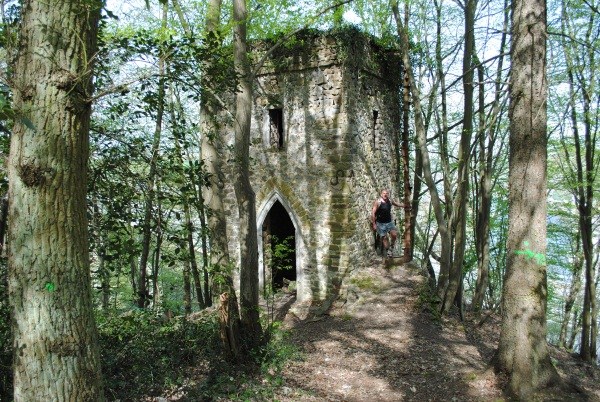
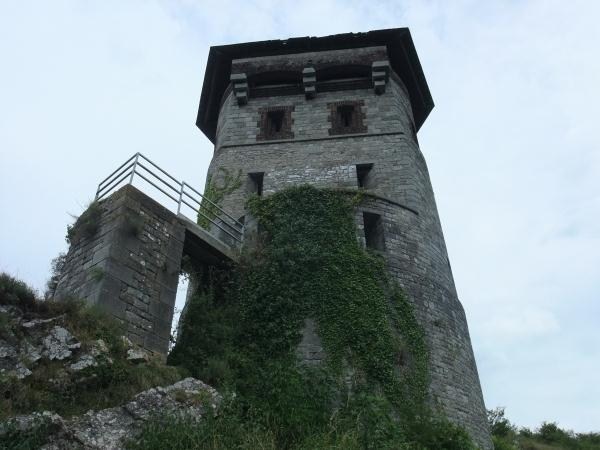
Once geocachers find the answers they discover coordinates for the final cache. Through it all gecoachers follow their GPS to encounter donjons (fortified towers) seemingly sprouting in the deep forest. They finally finish on a “mountain.”
Cachemier created the cache in 2004. He crafted a comprehensive cache page that’s worth eyeballing. It lays out all the information a geocachers needs in a clear and playful way.
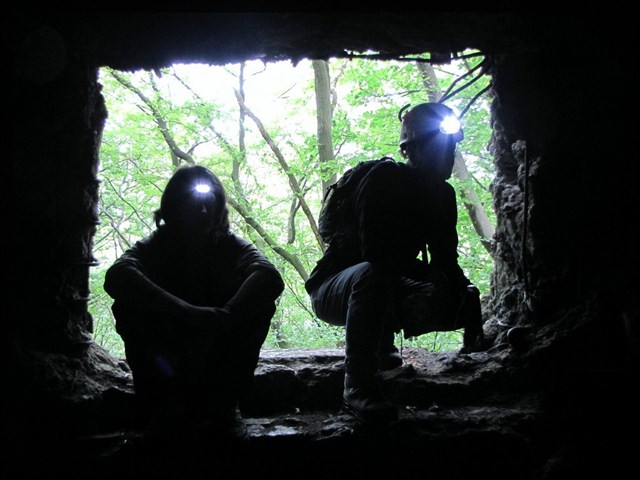
On the cache huntDonjon
The cache page is also clear with a warning. It reads, “If you are afraid or unsure of: heights,depths, darkness, small spaces, various wildlife like spiders, snakes, birds, bats, getting dirty, wet, cold, scratched by briers, bruised, tired, hungry and thirsty — then you should seriously reconsider going on this geocache hunt. One or more of the above elements WILL happen to you on this hunt. However, if you like adventurous hikes and you thrive for the challenge and don’t mind a bit of discomfort then this is the Belgian Geocache hunt for you! If you do decide to take on this challenge, your experience will be one you will remember!”
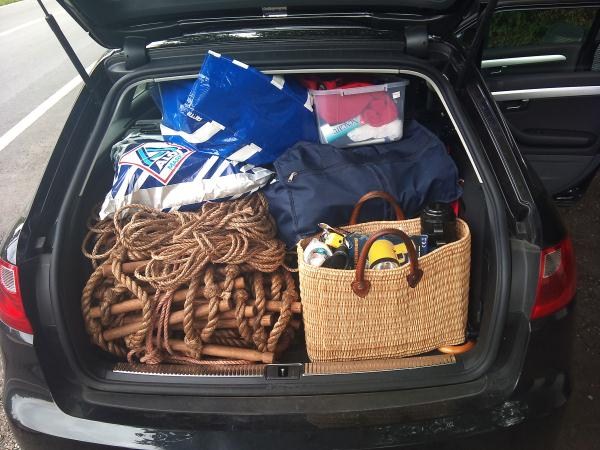
Car packed to attempt "Donjons & Mountains"
The cache page also lists the items you’ll need to complete the cache which includes dozens of items like a climbing harness, safety rope and carabiners.
News of Donjons & Mountains is spreading from geocacher to geocacher. It’s already on 37 Bookmark Lists.
One geocacher who logged a smiley on Donjons writes, “A while ago, I had a long interesting conversation with a geocacher from Belgium. He highly recommended this cache. Reading the listing, the logs – I decided, yes this cache has to go on my To-Do-List. We really enjoyed our TNT: Donjons & Mountains Trip. Thanks for this adventure and greetings from Germany.”
Continue to explore of some of the most engaging geocaches around the globe. Explore all the Geocaches of the Week on the Latitude 47 blog or view the Bookmark List on Geocaching.com. If you’ d like to nominate a Geocache of the Week, send an email with your name, comments, the name of the geocache, and the GC code to pr@groundspeak.com.