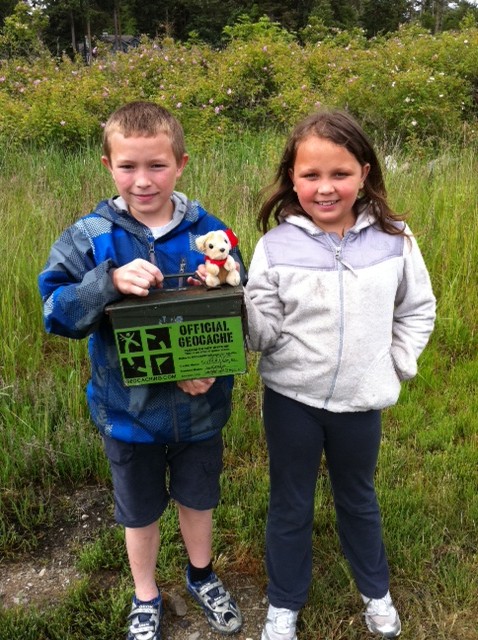
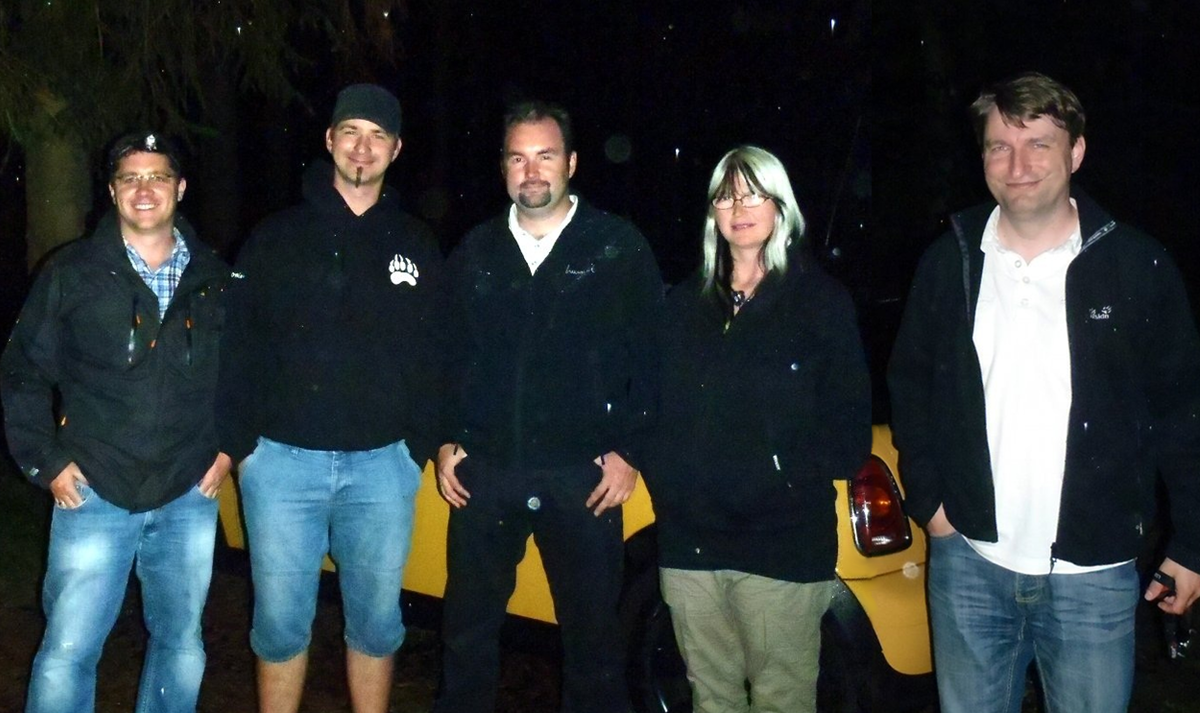
A few of the Groundspeak Lackeys went geocaching this weekend. We went on a long hike to a geocache in the mountains that hadn’t been found for nearly a year. It was in a beautiful spot and the snap closure geocache container was in perfect condition on the outside, but inside was a different story. It contained two empty chewing tobacco containers, a jolly rancher, a pack of ibuprofen, a few miscellaneous pills, a business card and a few other small things.
The “other small things” were things you would expect to find in a geocache – a fun key-chain, a small mirror and a plastic horse. But when we retrieved the key-chain, we found that it was covered with blue goo. The culprit was the Jolly Rancher, which had melted and escaped its wrapper. Although a Jolly Rancher may seem like a fun thing to place in a cache, food and other scented items do not make good SWAG. They can mess up the inside of the cache container or attract animals.
The tobacco containers and pills were not great cache contents either. Geocaching is a family-friendly activity and the items you place in a cache should reflect that. If you were a 6-year-old geocacher, would you want a pack of ibuprofen in exchange for your toy? Consider what type of SWAG makes sense for an audience of all ages. Please remember, the item that you place in a cache should be of equal or greater value than the item that you are taking.
Fun items to trade include small toys, patches, pins, or an item that symbolizes who you are (a signature item).
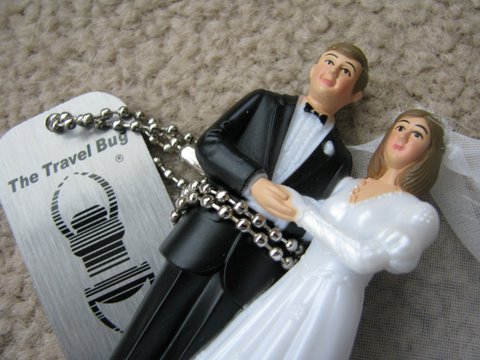
Winning Caption: She's only marrying him for the cache!!! – TNTcarroll
Share your genius for witty captions in the 26th installment of our Geocaching.com Caption Contest. You could earn a barely coveted prize. What caption would you write? “We’re saving thousands on our around-the-world honeymoon this way!” You can craft a better caption.
Barely Coveted Prize
Submit your caption by clicking on “Comments” below. Please include your geocaching username in all entries. Then, explore the captions other geocachers have posted.
Click on the image to see the winner of the 25th Geocaching.com Caption Contest
You can even influence the voting process. “Like” the caption that you think should win. If you think your caption should win, convince your fellow geocachers, your friends and family to “like” your caption. Lackeys vote from the top finalists to decide the winner of the contest.
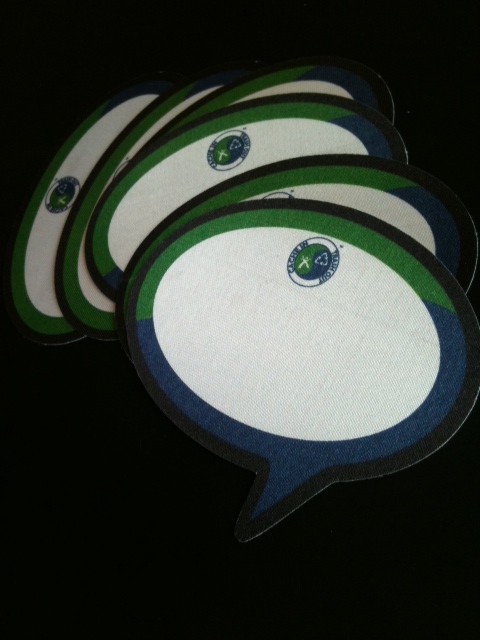
The winner receives a barely coveted prize from Groundspeak Headquarters. This contest the barely coveted prize is six Cache In Trash Out caption stickers.
26 Lackeys voted to award the winner of the 25th Geocaching.com Caption Contest a barely coveted prize. Click on the image at right to discover the winning caption from the 24th Geocaching.com Caption Contest.
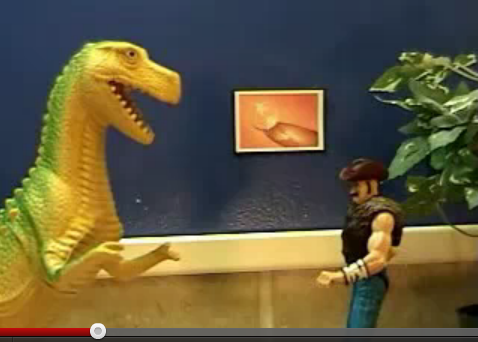
Screenshot from "CSI:Winnipeg - SPLASH!" video clue
A sandbox in Canada holds a mystery waiting to be unraveled. The Puzzle Cache, “CSI:Winnipeg – SPLASH!” (GC1269F) challenges geocachers to take a step into the unpredictable world of a dinosaur detective. Geocachers must watch a video to gather all the clues needed to find the geocache.
There are less than 30 words in the cache description. It simply states, “A crime has been committed. Can you solve it? Visit this link to see the clue to finding the cache. No lizards were harmed in the making of this movie.”
The movie runs seven minutes. It time well worth the investment for those who logged a smiley on the cache. One log reads, “This one definitely gets added to my favorites list. Thanks for the very clever cache.”
Screenshot from "CSI:Winnipeg - SPLASH!" video clue
Continue your exploration of some of the most engaging geocaches from around the world. Explore all the Geocaches of the Week on the Latitude 47 blog or view the Bookmark List on Geocaching.com.
Teachers for all grade levels have begun to use the location-based treasure hunting adventure of geocaching as a teaching tool. Teachers say students learning through geocaching enjoy benefits far beyond learning outside of a classroom setting; geocaching makes learning more enjoyable and creates unforgettable learning opportunities for students.
Ellis Reyes, a fifth grade teacher at West Mercer Elementary in Washington, USA, has been using geocaching in the classroom for the past two years. He integrates the activity into several subjects.
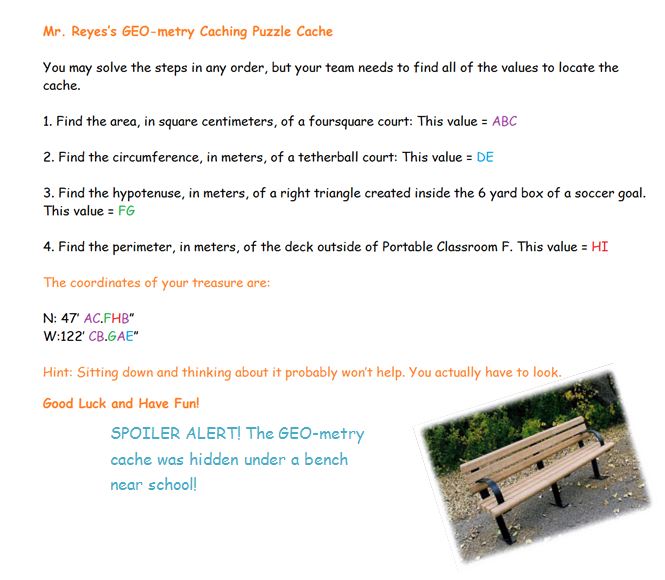
Ellis hides different types of geocaches for his students to find on campus and in nearby local parks. One of his favorite ways to utilize geocaching involves using multi-step puzzle caches to teach math. Ellis calls this “GEO-metry Caching.”
A lesson involving geocaching in Ellis’s classroom tasks students to use several sets of skills, especially problem solving and advanced math skills.
Ellis says the students are excited to explore geocaching in school, “The kids love using geocaching to learn. It’s about solving puzzles and creative thinking, and getting out of the classroom, what’s better than that?”
With other subjects, such as language arts, Trackables come in handy for Ellis’ class. The students drop their own Trackables in geocaches close to school. They then follow each Trackable’s movements as a class. Ellis has each student create a background story for their personal Trackable. When the Trackable makes a stop, Ellis has his students add more to the story. Soon, the students develop a narrative about the Trackables journey.
Students develop the required skills in the curriculum and learn critical thinking and spatial concepts with the combination of geocaching and additional lesson planning.
A "GEO-metry" lesson plan from Ellis Reyes
Fourth grade teacher Eva La Mar has had a portion of her classes dedicated to teaching geocaching for the past eight years. At Riverbend Elementary in Oregon, USA, Eva teaches the various tools students need to go geocaching, including directional knowledge, the concepts of latitude and longitude and how GPS signals work.
“I love the sport, the exercise, the thinking that is involved. Seeing students motivated and connecting with learning is what education is all about. This is real-life learning.”
Eva also incorporates geocaching into other fourth grade studies. Geology being a fourth grade topic, EarthCaches fit perfectly into her lesson plan. Through EarthCaching and other variations of geocaching, studying the Oregon Trail becomes very real to students. The geocaches students find as a class show the many stops along the trail, helping them understand the concept of “trail-blazing.” Eva’s students love geocaching so much, she says, that most of them have turned geocaching into a family affair. This last year, Eva held a geocaching field trip that both students and parents attended.
Use of geocaching as a teaching tool has become very popular. There are already books and webpages dedicated to geocaching and education, making it easy for teachers to integrate geocaching into their classrooms.
Groundspeak is actively working on a project to create easier ways for all teachers to use geocaching in their classrooms and to share their experiences and work with other educators. There’s even a geocaching guidebook for teachers.
Watch this video of students learning through geocaching:
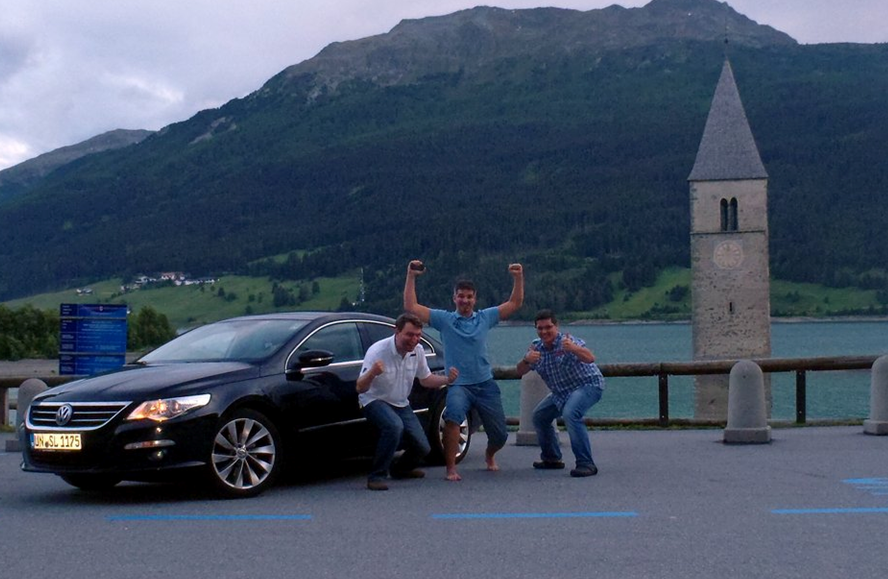
Norman Roth (Norman.R), Dominik Weiss (Zweisamkite) Max Welteken (myGe0cache)
Planning is what Max Welteken (myGe0cache) does for a living. He’s a delivery manager at a software development company in Europe. Max also gets bored doing things in what he calls a “normal or easy way.”
An idea that was neither boring nor easy struck Max recently. He wanted to log geocaches in ten countries in less and 24 hours.
Max says, “I saw the 10/24 attempt as a big project (which it was) where a lot of planning in advance was required. I spent almost a full week on fine planning the optimal route through all the 10 different countries.”
But Max knew the adventure needed co-conspirators. Max contacted two geocaching buddies, Norman Roth (Norman.R) and Dominik Weiss (Zweisamkite).
Once the team was set, Max finished his planning. He says, “I contacted all owners before we started to find out if there were any problems with the caches that might delay us on the trip. In the very beginning, we didn’t even know for sure if our goal was feasible at all, but after some iterations of planning with the Groundspeak beta map we came to the conclusion, that it´s possible to do the drive in approx. 16 hrs. PLUS the time we would need to find the caches.”
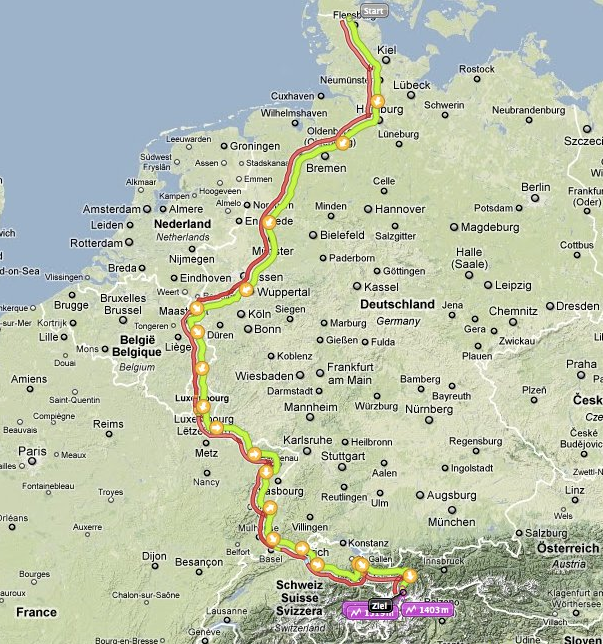
Max's route to find geocaches in 10 countries in less than 24 hours
But Max wanted to ensure the cache run didn’t sacrifice beautiful scenery for the sake of speed. The group even planned to take three vacation days to ensure the optimal time to beat traffic on their epic journey.
Max says, “What was important for us from the beginning was that we didn’t want to spend all this time and money only to see some “drive by” caches on the highways but nice and even scenic places. That made planning even more complex because we reviewed every single cache before we built it into our travel-route.”
Contacting the cache owners paid off. Some cache owners met the team along the way. Cache ownerBuck_DK actually helped launch the caching adventure a few hours before the caching run began. “The friendly owners of the first cache in Denmark invited us to meet them some hours before midnight. We had dinner.”
The team of three geocachers ended up logging more than 25 caches in ten countries (Denmark, Germany, Netherlands, Belgium, Luxemburg, France, Switzerland, Liechtenstein, Austria and Italy). However the trip did not take them 24 hours. They finished the cache run in just 21 hours. Max writes, “Looking back everything worked out perfect, during the almost 30hrs drive nonstop we only had 30min of traffic jam in the city center of Zürich.”
Max (MyGe0cache) - Dominik (Zweisamkite) - Benny (Buck_DK) and owner of GC2F78F - Benny´s wife Liselottea (Liselottea) - Norman (Norman.R)
Max has four pieces advice for those considering challenging themselves. He says:
1) You’ll need, “Some crazy minds (like myself 😉 to even consider doing something like this in the first place”
2) “Plan everything once, twice and once again! Print out everything even if you take notebooks/phones/GPS with you.”
3) “Go with at least with three people on a trip like this, as you will have to drive NON-Stop for more than a day. You will have to be able to sleep in the car no matter how uncomfortable it is.”
4) “Take good friends with you, not just anybody you know. After some hours the enthusiasm changes into a bad mood when everyone is exhausted and tired. During these hours you need to be a team of friends that restores the motivation again so everyone is partying once you reach the final cache.”
 A few of the Groundspeak Lackeys went geocaching this weekend. We went on a long hike to a geocache in the mountains that hadn’t been found for nearly a year. It was in a beautiful spot and the snap closure geocache container was in perfect condition on the outside, but inside was a different story. It contained two empty chewing tobacco containers, a jolly rancher, a pack of ibuprofen, a few miscellaneous pills, a business card and a few other small things.