Journey to the belly of the A.P.E.

Back in 2001, long before I knew anything about geocaching, a promotions staffer at 20th Century Fox emailed Geocaching.com. The studio was interested in pairing geocaching with promotional efforts for its upcoming science fiction film, Planet of the Apes. Fifteen years later, the results of that promotion led me to visit South America for the first time. (More on that in a minute.)

Jeremy Irish, Geocaching HQ’s co-founder and CEO, worked closely with Fox to develop what came to be known as Project A.P.E. (Short for Alternative Primate Evolution, a storyline that Fox created for the promotion.)

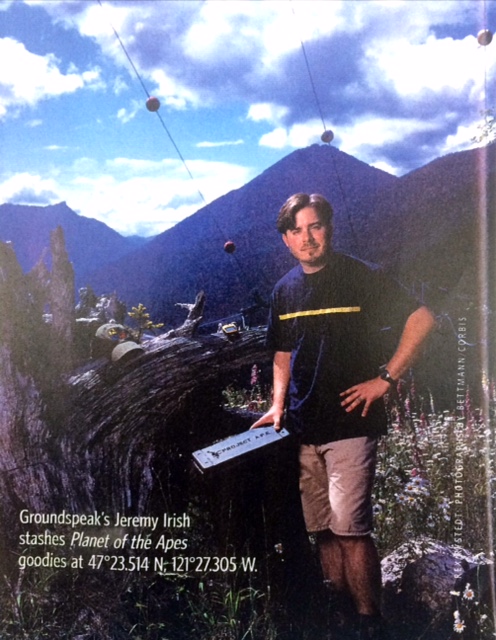
Jeremy assisted in hiding the now-archived Mission 9: Tunnel of Light. (Photo from the Aug/Sept 2001 issue of Business 2.0)

At the time, geocaching was a relatively unknown game. The first cache was placed less than a year earlier, and only around 450 caches were listed on Geocaching.com. “It was a very exciting project,” Jeremy says today. “The website was still in its infancy, so it was pretty cool that a major movie studio wanted to partner with us. Project A.P.E. did a lot to inform the general public about geocaching.”

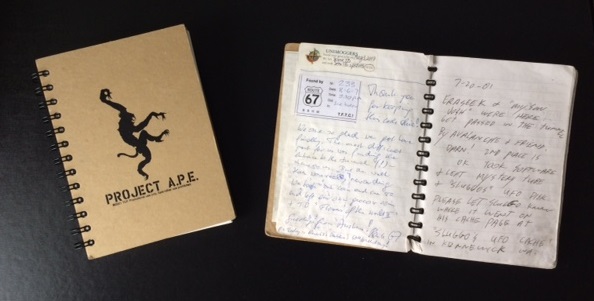
An unused A.P.E. cache logbook (left) and the original logbook from Mission 9: Tunnel of Light (GC1169)

Jeremy and Fox staffers worked with local cachers to place containers in the USA (New York, Maryland, Oregon, Washington, Illinois, California, Georgia), the United Kingdom, Australia, Brazil and Japan. Each week, clues were released to give hints to each A.P.E. cache location. The clues became more detailed until the complete coordinates were finally revealed. Once the location was known, it was a race to be FTF and get dibs on whatever movie props might be inside the cache.

Vanity Fair article from 2001

The first A.P.E. cache was published May 24, 2001. It was followed by 13 more listings, with the final cache location revealed August 10, 2001.

Some of the A.P.E. caches were archived within weeks of publication. Others lived on for many years. Today, only one remains: Mission 4: Southern Bowl.

This cache likely owes its longevity to a remote location. Brazil’s Intervales State Park is a 3-4 hour drive from São Paulo, the nearest metropolitan area. The park is renowned for fantastic birding, caves, waterfalls and other natural wonders. Suffice it to say, the A.P.E. cache is only one of many interesting things to see!

My long-planned pilgrimage was helped by a caching friend who lives in Brazil and also happens to be a Community Volunteer Moderator. Rui graciously agreed to meet me in São Paulo and join the voyage to Intervales, even though he had already been there twice! Not only does he know the area well, but he also speaks the language (Portuguese).

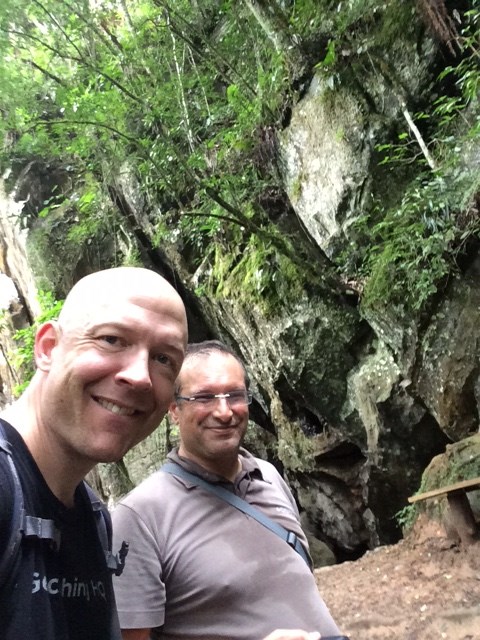
Rui and I at Intervales State Park

Upon arriving, we visited with park manager Junior (aka JRintervales). Junior maintained the A.P.E. cache for many years on behalf of its original owner, the legendary JoGPS, who sadly passed away last year. Junior recently adopted the cache listing and is a wealth of information for those planning to visit Intervales.

We chose to stay at one of the park’s lodges. There is also a dining hall / restaurant on the grounds which serves three meals each day. Add those amenities to dozens of caches around the park, and you have a recipe for a fun caching weekend.


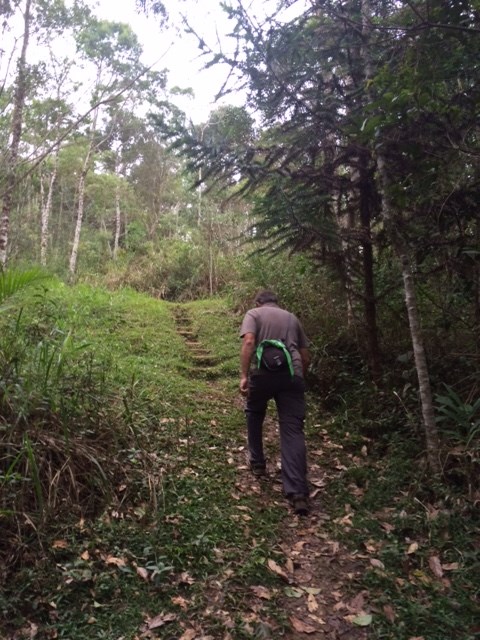
Hiking inside Intervales State Park

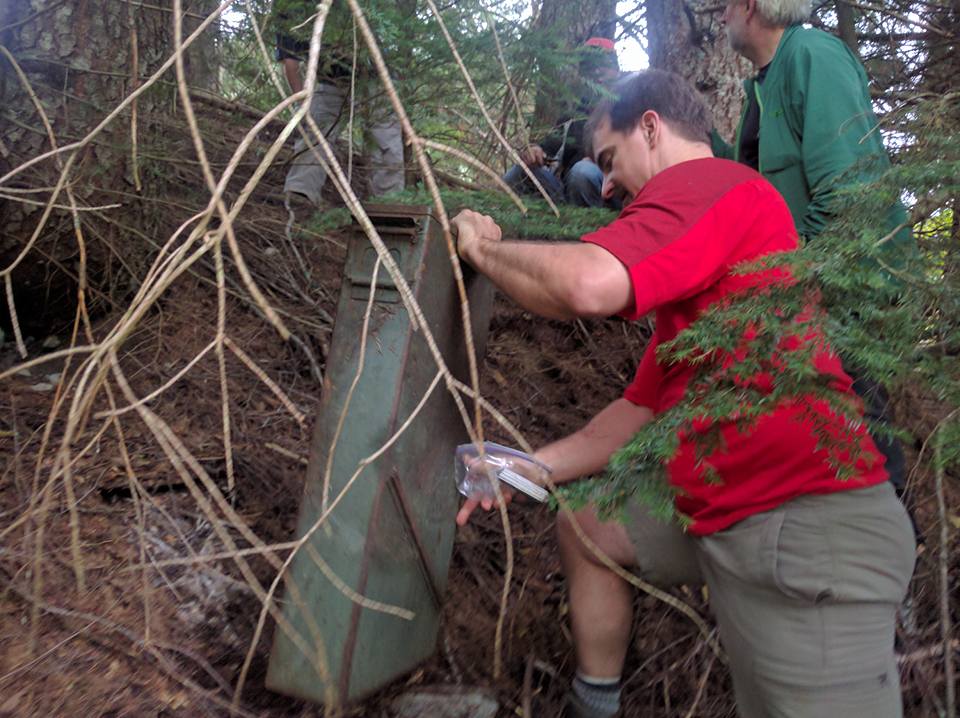
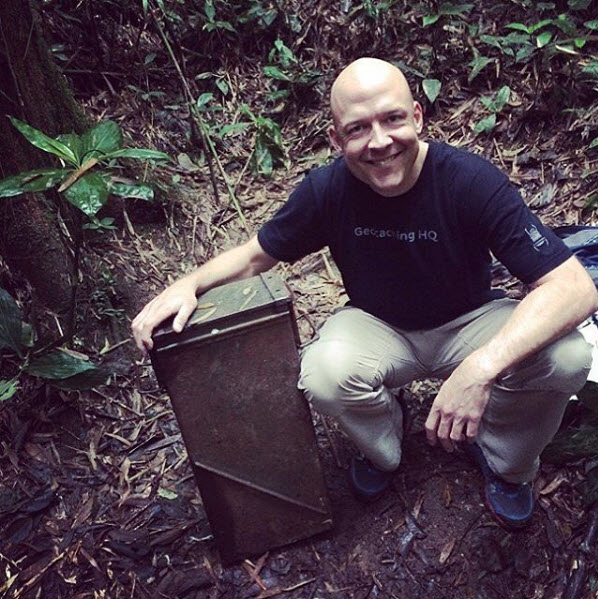
And so after 18 hours of air and car travel, we found ourselves on the trail to one of the biggest items on my geocaching bucket list. Only one problem: I had loaded the cache into my GPS, but the GPS didn’t recognize the A.P.E. cache icon. So, the cache wouldn’t show up on my GPS map! Thankfully, Rui knew the trails well enough to lead us to the general area of the cache. And, as you can see from the photo, the cache is big enough to be pretty easy to spot once you’re close. After inking the log, we snapped the requisite celebratory photos before continuing on to a full day of caching around the park.

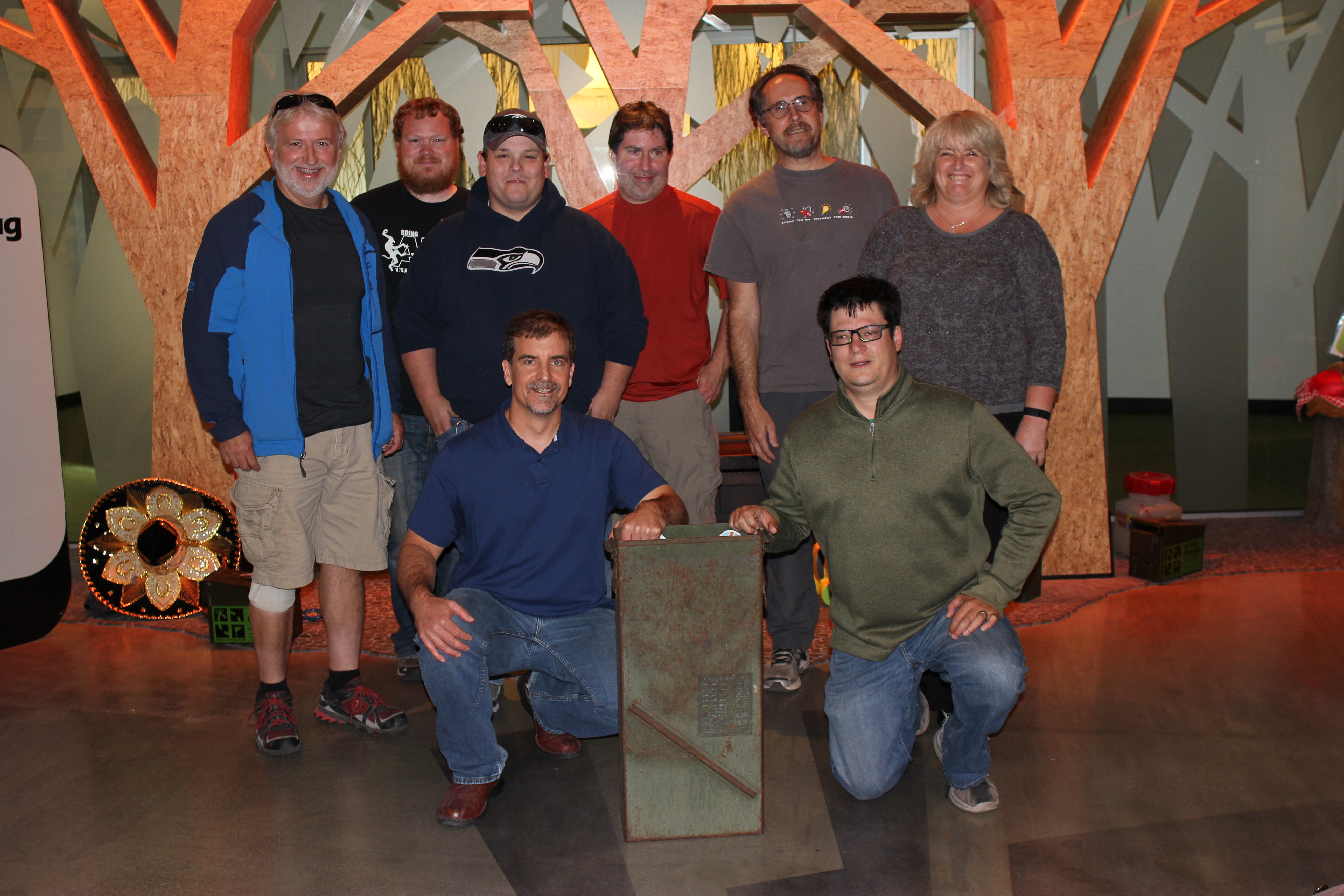
Me and the last remaining A.P.E. cache

We were back in São Paulo the next day, and I returned to Seattle the following night. Quite a whirlwind tour!

I think we’d all agree that geocaching takes us to places we might never have visited if not for the game. Isn’t it amazing to think that a 15-year-old promotion would lead me and so many others to a beautifully remote area of Brazil that we may not have experienced otherwise?

Have you found an A.P.E. cache? If not, is Brazil beckoning you?

Geocaching with the Smithsonian

The mailman recently delivered a nice surprise to me: a beautiful trackable geocoin from the Smithsonian National Museum of Natural History (NMNH) GeoTour. I completed the GeoTour last year, and in the process earned a digital badge for my Geocaching.com profile. Little did I know that the NMNH was working on a geocoin that would eventually take a place of honor in my collection.

National Museum of Natural History Geocoin

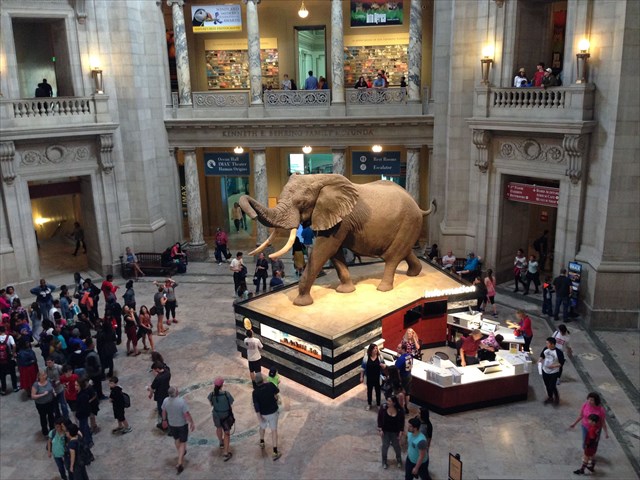
The National Museum of Natural History is a truly spectacular place. Located on the National Mall in Washington, D.C., it’s the most visited natural history museum in the world. The NMNH GeoTour debuted in 2013 with several Mystery caches, a Traditional cache and three EarthCaches.

Inside the National Museum of Natural History

All but one of the caches’ posted coordinates are at the museum, with one outlier located about a two-hour drive north, in Pennsylvania’s Michaux State Forest. (The NMNH also owns a Letterbox Hybrid with posted coords on the museum grounds. It is not an official part of the GeoTour.)

Get up close with nature during the GeoTour

My wife and I started the GeoTour during a trip to D.C. in November 2013, when we were able to stamp our passport for all but two of the caches. I was back in that part of the country for the GeoWoodstock Mega-Event last year, and jumped at the opportunity to complete the tour and earn my digital badge. The NMNH GeoTour is a really fun way to enjoy the museum from a new perspective, and to continue exploring outside the Smithsonian walls. I had visited the NMNH a time or two in the past, but this GeoTour encouraged me to dig into subjects that had escaped my attention on previous trips. Plus, it led me to a few beautiful sites outside of D.C.

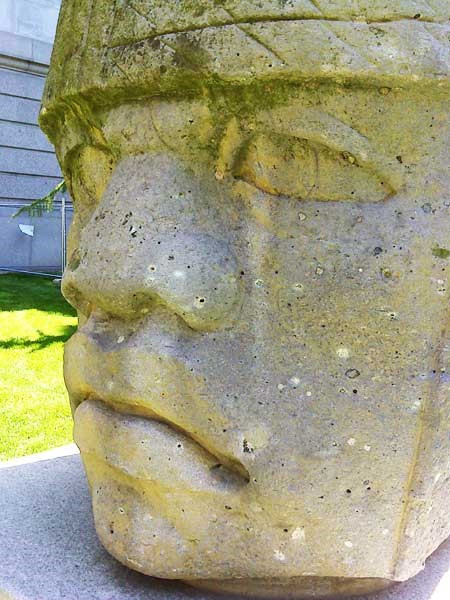
See colossal things while caching!

So how can you qualify for a digital badge and one of these super-cool geocoins? The requirements are listed on all of the NMNH’s GeoTour cache pages. If you’re looking for a way to enhance your next visit to the U.S. capital, I highly recommend making this GeoTour part of your trip!

Return of Challenge Caches

Today we’re happy to announce the end of the moratorium on challenge cache submissions. Effective immediately, new challenge caches may be submitted in accordance with the updated guidelines.

Challenge caches encourage people to set and achieve fun goals. There’s no doubt that they’re a beloved part of the game for many geocachers. However, challenge caches represent a major exception to a basic guideline: For physical caches all logging requirements beyond finding the cache and signing the log are considered additional logging requirements (ALRs) and must be optional. Geocaching HQ has long exempted challenge caches from this guideline because they can bring so many positives to the game.

With that exception comes an expectation that the negatives won’t outweigh the positives. Unfortunately, a number of negative factors led to the moratorium going into effect last year, including:

Subjectivity often results in a difficult review process. Reviewers are volunteers who give their time to support the geocaching community. With most cache submissions, it’s usually pretty clear to reviewers whether a geocache is publishable. But challenge caches are different. Many reviewers cite the sometimes contentious process of reviewing challenge caches as the least fun thing about reviewing. Since each reviewer examines hundreds or thousands of cache submissions each year, we (HQ and the community) owe it to them to make the process as enjoyable as possible!

High percentage of appeals to Geocaching HQ. Cache owners can appeal a reviewer’s decision to HQ if a cache submission is deemed unpublishable. We found that more than 50 percent of appeals related to challenge caches prior to the moratorium. That’s despite the fact that less than one percent of cache submissions were challenge caches. It was another sign that the challenge cache system wasn’t working.

Logging requirements are often misunderstood. Some challenge caches are very simple for cachers to understand. However, more and more we found people were submitting challenges with very long lists of logging requirements. In some cases, a single challenge cache listing totaled multiple pages when printed. Appeals for such caches often resulted in the kind of back and forth that can make the process very difficult.

These were among some of the known drawbacks to challenge caches. A big goal of the moratorium was to gain an even deeper understanding about what the community and volunteer reviewers liked and didn’t like about challenges. We also wanted to hear your suggestions for how to improve challenge caches. Hundreds of geocachers took part in our User Insights Forum. Nearly 20,000 of you also completed our survey on challenge caches. With all of that data in hand, we set about building a framework that we hope will allow challenges to continue and thrive.

What’s Changing?

Challenge checkers. Perhaps the biggest change is that all future challenge caches must include a web-based challenge checker. We began looking at this idea after it was suggested by many community members during the User Insights Forum. We then found that a high percentage of survey respondents favored the idea. Checkers will make it much easier for caches to know whether they qualify for a challenge.

Since Project-GC is already very experienced in hosting challenge checkers, it made perfect sense to work with them to officially integrate checkers into new challenge caches. Read more about challenge checkers in our Help Center. (We want to thank Magnus and his colleagues at Project-GC for their partnership in this process!)

Guideline changes. We’ve updated both the format and some content in the Challenge Cache Guidelines. Here are some of the more important updates:

CO is required to have qualified for the challenge. This change was heavily supported in the community survey. In the past, some COs submitted crazy challenges for which even they could not hope to qualify.

Time-limited challenges are not permitted. For example, “Find 500 caches in a month” or “Find 10 different icons in a day.” The aim here is at least two-fold. First, these challenges encouraged people to hurry to find caches in a short time period. That’s something a majority of survey respondents said they didn’t like about challenge caches. And it’s not something we wish to encourage. Second, we’ve seen a lot of people creating Events and/or CITOs only to add an icon to the area for “Busy Day” challenges. That’s not at all the spirit for which those activities are intended.

Streak challenges limited to 365 days. Ask an experienced cacher, “What did you like most about your caching streak?” and the common answer is, “The day it ended!” Finding caches every day for a long period often makes caching feel like a chore. But we didn’t want to restrict them completely, so we’re setting a maximum streak length for challenges.

No challenges based on Waymarking, Benchmarking or Trackable logs, or specifying Lab Cache finds. The community survey results showed low approval ratings for challenges involving these things. While many geocachers do enjoy Waymarking and Benchmarking, these activities aren’t geocaching. Challenges involving trackables can lead to mass logging and other behaviors that aren’t ideal for TBs.

We are not permitting Lab Cache challenges because Lab Caches are temporary, are generally only available to those who attend Mega- or Giga-Events, are not associated with Found It logs, and are not completely integrated into Geocaching.com stats. However, since they are included in user profile stats for Total Finds, Longest Streak, and Finds for Each Day of the Year grid, we are making an exception to permit Lab Caches to be used as qualifiers for challenges related only to those metrics.

Challenges cannot be based on these listing elements: cache titles, cache owner names, GC Codes, or listing text. This would include such challenges as “Find a cache for every letter of the alphabet” or “Find caches with the Periodic Table symbol in the GC code.” They generally reward database management, rather than geocaching achievement. More importantly, they often lead people to place caches whose titles start with a certain letter or contain a specific word, only to help people qualify for challenges.

What’s Not Changing (for now)

The idea of a challenge cache icon or attribute earned significant support from the community. We agree there are a lot of good reasons to implement one. However, we want to confirm that the new framework will reduce the problems which led to the moratorium. It wouldn’t make sense to engineer a new icon or attribute only to lose it if challenge caches don’t work out. We’re going to give it a year or so, and then re-evaluate the situation. If we find that things are going well, then we will strongly consider adding a new icon or attribute for challenge caches.

What’s Next?

We love how challenge caches encourage people to set fun goals and expand their caching horizons. There’s no question we want these caches to thrive for years to come. We have high hopes that this new framework for challenge caches will reduce some of the pre-moratorium difficulties for reviewers and the community.

But challenge cache owners are integral to the success of this framework. It’s important that they work within these guidelines in order to reduce the burden that reviewers felt prior to the moratorium. If after a period of evaluation we find that a lot of the pre-moratorium issues are still causing problems, then we’ll know that this new framework isn’t the answer. We don’t have a backup plan. The only remaining option would be to not permit challenge caches as they currently exist.

But we’re hopeful the community won’t let it come to that. Through your participation in our User Insights Forum and survey, geocachers and community volunteer reviewers have eagerly participated in a comprehensive process that has resulted in what we believe is solid framework. We’re happy to know that challenge caches will continue to inspire people around the world to achieve exciting geocaching goals!

Read more:

Challenge Cache Guidelines

Learn about Challenge Checkers

Challenge Cache Subjectivity

Shamrock Cafe — Geocache of the Week

Traditional
GCP8FN
by saso_362, saso792 & Hunter
Difficulty: 
1.5
Terrain: 
2
Location: 
Kansas, United States
N 39° 06.111 W 096° 22.340

Why is this Geocache of the Week:

Thousands of people criss-cross America’s heartland on Interstate 70 each day. However, only a rare few are aware of a highly-rated Kansas cafe. It’s located just a mile or so from the highway. But you won’t find this hot spot in any travel guide. It’s certainly not Michelin-rated. Nevertheless, it hosts a geocache that’s earned a favorite point from nearly 50 percent of those who’ve found it!

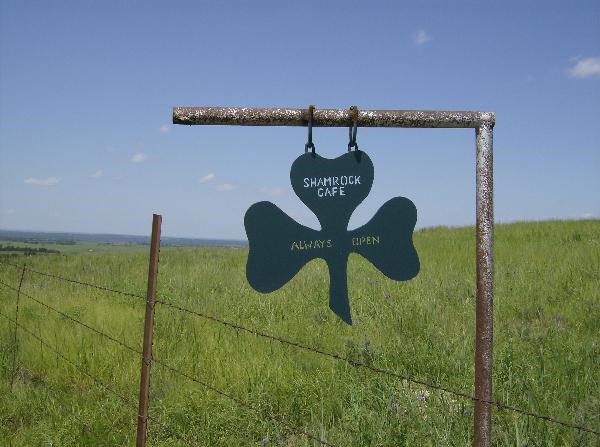
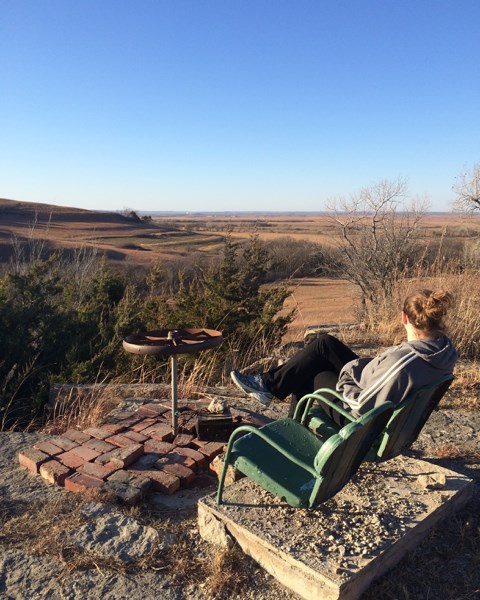
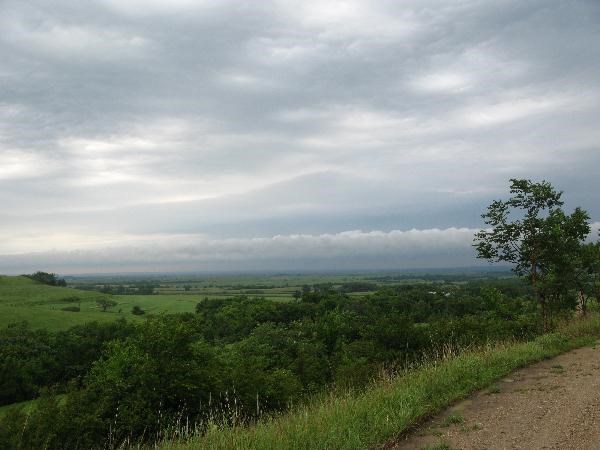
Shamrock Cafe is nestled among the renowned Flint Hills, the world’s largest remaining continuous area of tallgrass prairie. From here, you can see a beautiful sunset, or watch thunderstorms roll across the prairie. But come early, because seating is limited!

What the Cache Owner, saso_362, has to say:

Can you share a bit of history about the cache?
“I stumbled onto this spot while taking back roads to a virtual cache located a few miles north of here. As soon as I found the location, I knew it was just perfect for a cache. Quiet, remote, quirky and an awesome view. The property is owned by a local ranch – Shamrock Farms. They are aware of the cache and have been very supportive.”

When is the best time to visit?
“Sunset is best. But anytime is good, unless the Kansas weather is acting up.”

What do you hope people take away from this geocache?
“I just hope they take a minute to enjoy the view from the “Cafe.” This is one of those caches that make you realize it isn’t always about the numbers.”

Photos:

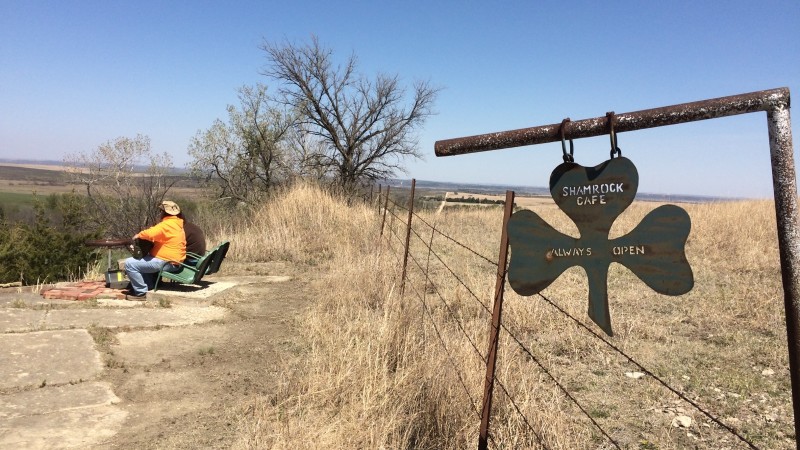
Yep, the Cafe is open 24/7.
Kansas' tallgrass prairie.
Kansas’ tallgrass prairie.
Uh oh, the weather is acting up!
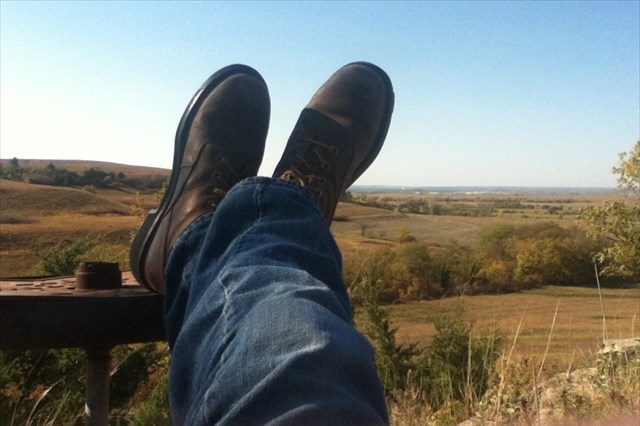
Kick back and enjoy the scenery.
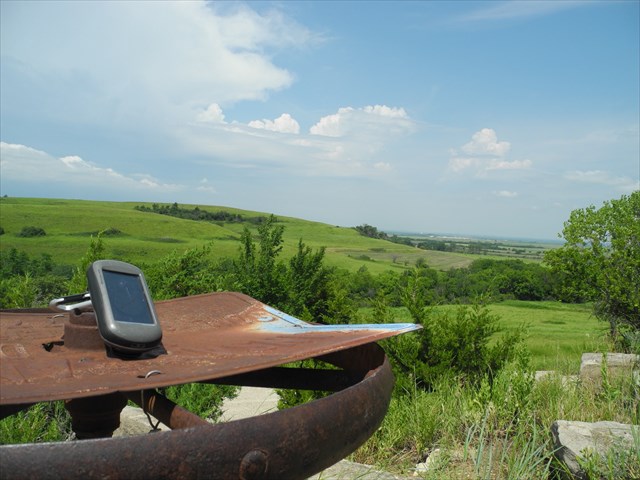
Enjoy the view of the Flint Hills.
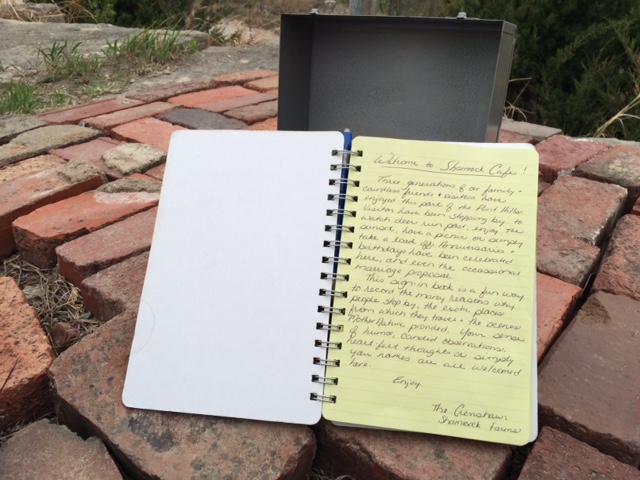
A welcome from the land owner.
IMG_5706
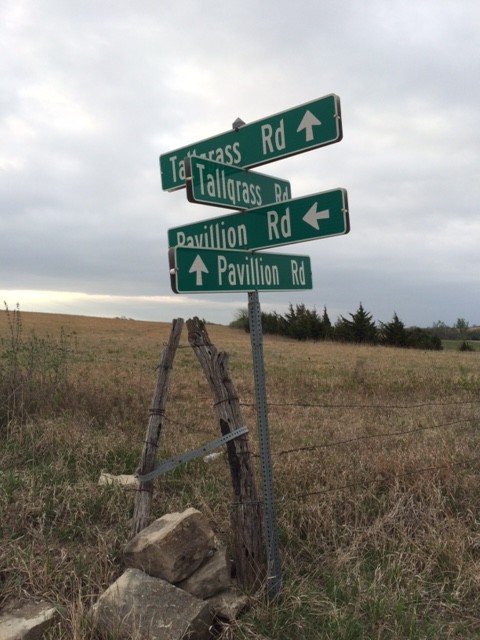
You can’t miss it. Just go to the intersection of Tallgrass, Tallgrass, Pavillion and Pavillion.
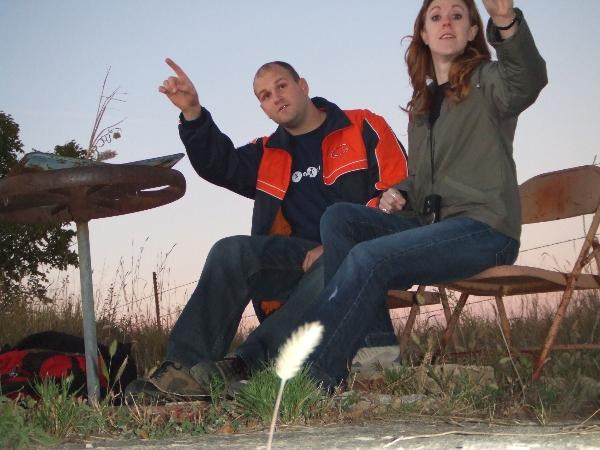
Flagging down a waiter might be difficult!

Continue to explore some of the most amazing geocaches around the world.
Check out all of the Geocaches of the Week on the Geocaching blog. If you would like to nominate a Geocache of the Week, fill out this form.


Geocaching HQ Announces Historic Expansion of Search

Geocaching is all about having fun. So naturally, we love April Fools.

Last Friday, April 1st, we introduced a new feature called Galaxy Search, a tool to start planning your greatest geocaching adventure yet — in space. (Boy, do we wish this feature were real…maybe one day!)

Screen Shot 2016-04-01 at 9.18.39 AM

Our favorite astronaut Rick Mastracchio even played along by “hiding” his first-ever geocache, also in space.

Screen Shot 2016-04-04 at 11.33.03 AM

In addition to Astronaut Mastracchio’s geocache, 65 other geocaches were “hidden” in space, forming some stellar geo-art.

Screen Shot 2016-04-04 at 11.49.48 AM

[April 4,2016] Note: All ‘Found It’ logs on the space geocaches are now notes and associated souvenirs will be removed. The caches were archived, but you can still view them on this Bookmark List.

Introducing Galaxy Search

Buoyed by the knowledge that someone has found every geocache on Earth, Geocaching HQ has taken the next logical step to keep pace with the game’s growth. With today’s website release and introduction of Galaxy Search, players can now search for geocaches in space.

This historic development is nearly eight years in the making. The HQ team first began investigating the possibility of an all-encompassing Search tool when Richard Garriott (Username: LordBritish) placed his International Space Station geocache in 2008. Astronaut Rick Mastracchio (Username: AstroRM) was FTF on that cache in 2013. Shortly thereafter, Mastracchio informed Geocaching HQ of his desire to place another space cache during his time in orbit. At that point, it became clear that work on Galaxy Search must begin immediately.

Upon completing and implementing Galaxy Search, our developers made a stunning discovery. Search results yielded not only the International Space Station geocache and Astronaut Mastracchio’s new geocache, but also a previously unknown geo-art collection of more than 60 cache listings! These amazing geocaches were placed by such luminaries as James T. Kirk, Luke Skywalker, Ziggy Stardust and others.

We’re thrilled to now share these far-out geocaches with the community. Simply visit the Geocaching.com Search and check out the latest featured search.

Alternatively, players can download the public Bookmark List of space geocaches. With the recent addition of Offline Lists to the Geocaching® app, players can easily save these new caches to mobile devices, making it easier than ever to go geocaching in space!