Skydivers, Fireworks, and Kangaroos – An Australian Mega-Event

Editor’s note: Groundspeak Lackeys are traveling thousands of miles from H.Q. throughout the year to share smiles, shake hands, and make geocaching memories at nearly twenty Mega-Events worldwide. Jen Sonstelie, aka powpea, and Nate Irish, aka OpinioNate, attended the Australian Mega-Event OZ MEGA ALBURY WODONGA (GC2Q4JF). Jen has been a Lackey since 2009 and works as the Director of Marketing. This is Jen’s account of her trip.

By Jen Sonstelie (powpea)

Nate and Jen in Australia

At the end of March, my husband Nate (OpinioNate – also a Lackey) and I flew to Melbourne, Australia, the first stop on our way to the OZ MEGA ALBURY WODONGA.

We had a few days to see the sights before driving to the Mega-Event, which was about 4 hours north of Melbourne in the twin cities of Albury-Wodonga. After picking up our registration packet, we met the farmers 5, some of the event organizers. We then sat down to peruse through all the info. 35 temporary caches (a mix of virtuals and containers) had been set up in interesting locations around Albury-Wodonga for the duration of the Mega. We decided to discover the area through the caches, assuming we’d meet people along the way.

Now here’s the really embarrassing part. When we left the U.S., Nate and I both thought the other person packed the GPS device. Fortunately, a vendor at the Mega was selling devices, so we invested in a new one. We plugged in the coordinates for the temporary caches, loaded up a Pocket Query of permanent caches in the area, and headed out on our first adventure.

City welcomes geocachers

My favorite cache that day, The ol’ stock route #2, took us to a wooden pedestrian and biking bridge over the Murray River. It was a beautiful location and the hide was really creative. We were the first team to arrive at the location, but four more teams were assisting with the search by the time the cache was found.

After dinner, we headed to the Mega-Event entertainment area, where a stage and a gigantic blow-up screen were set up. Greg, the President of the Mega organizing committee, had asked Nate and me to cut the opening ribbon, but he said there was an opening night surprise that needed to happen first. Nate and I speculated as to what this might be, hoping that we would not be subjected to a pie-in-the-face or forced to sing on stage. Fortunately, we were safe, but another geocacher (whose name had been drawn the night before) was at that moment on a plane, preparing to tandem skydive into the event.

OZ MEGA Flash Mob

Greg announced this to the crowd and we all looked skyward for the plane. Our necks craned, we followed its light back and forth across the night sky for several minutes. The skydivers left the plane and the crowd moved over to the landing field, which was illuminated with headlights and colored flares. And then we waited, and waited, and waited, but the skydivers didn’t appear.

Lazy Harry, that night’s entertainer, returned to the stage as we waited for news of our missing skydiving geocacher and her tandem partner. Eventually the call came to tell us that they were fine and on their way to the event. When they arrived, the geocacher shared her story onstage. Apparently they had not been able to spot the landing site from the air, so they had landed in a nearby field.  They hiked for 2 km, climbed over a barbed-wire fence and came upon a pub, which fortunately happened to be open (it was Good Friday, so a lot of places were closed). Given that all turned out well in the end, I thought this made an even greater opening event.
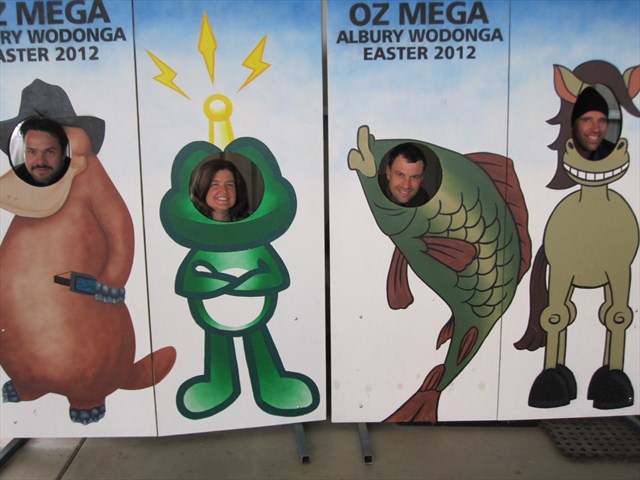
All sorts attended OZ MEGA

The evening closed with a fireworks display off a replica of the Sydney Harbor Bridge.

The next morning, we drove to the Mega grounds to meet Dicksontwo, a geocaching team we had met the night before, for coffee. Before we met up with them, Nate decided that he needed to buy a hat. While perusing the booth, he noticed the nametag of the woman next to us (hippihiiri) and saw that she was from Finland. We talked to her for a time about her travels and met up with Dicksontwo as we spoke.

It turns out that the coffee vendor was at another event that day, so Dicksontwo invited all of us (Nate, hippihiiri, and me) to go geocaching with them. They were finishing off the 35 temporary caches, but we stopped for plenty of permanent caches along the way. One cache, Wiradjuri, took up nearly an hour of our time because of a few mistakes on our part (driving somewhere we should have walked, ending up on the wrong side of a river). The less-than-straightforward adventure made us all the more determined to find the cache, which, of course, we did.

MEGA Fireworks

Our other favorite cache of the day involved a visit to the Splitters Creek Winery. We had lunch in the shade at this incredibly gorgeous location—with vineyards, a lake, and parrots flying overhead. On our way back to the Mega, we saw a mob of kangaroos. Although Dicksontwo were none too fond of kangaroos (like most Australians), they were kind enough to pull over to let the three non-locals in the car watch the kangaroos with immense fascination.

MEGA Entertainment

The Saturday evening entertainment was an ABBA cover band called BABBA. Ever since seeing Mamma Mia on Broadway, I’ve had a minor obsession with ABBA. After seeing BABBA, I’ve decided that ABBA cover bands should be a staple at geocaching events. Post-show, we said goodbye to our new geocaching friends. I hope that we’ll have a chance to see them again at other events around the world. Or maybe at the next  Australian Mega, since Nate and I are ready to move there.

 

Geocaching.com Presents: A Brief History of Geocaching

[vsw id=”Mlq1KT3_sfk” source=”youtube” width=”425″ height=”344″ autoplay=”no”]

Watch the Geocaching.com Presents video “A Brief History of Geocaching” to see how geocaching began.

Civilian GPS device become 10 times more accurate on May 2, 2000 - when "Selective Availability" was turned off
Civilian GPS devices become 10 times more accurate on May 2, 2000 - when "Selective Availability" was turned off

The history of geocaching stretches back to a single container placed in the hills of Oregon, USA. The date was May 3, 2000.  The idea was radical. Treasure hunters would be guided by signals from orbiting satellites. The first geocache was found within days. It sparked a global movement to get off the couch and get outside.

The hobby has spread around the world. There are now more than 1.7 million geocaches and more than five million people call themselves geocachers. Join our ranks by exploring Geocaching.com.


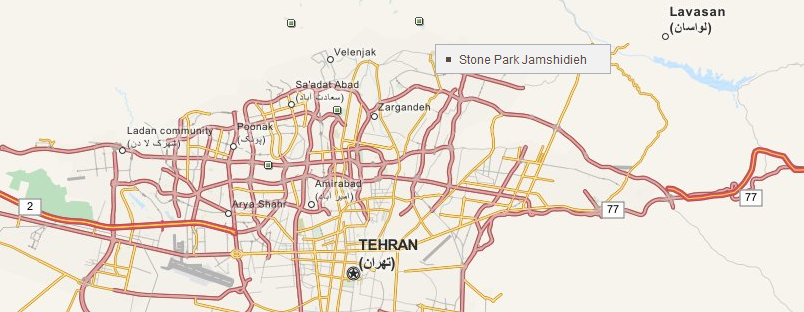
Stone Park Jamshidieh GC2QDY1 GEOCACHE OF THE WEEK – April 30, 2012

View of Tehran from near the cache location

Stone Park Jamshidieh (GC2QDY1) is one of only 32  active geocaches in all of Iran. The country boasts the combined size of the western U.S. states of California, Oregon , Washington, Idaho, Arizona, and Nevada . With just over 30 geocaches in the entire country, that’s only one geocache for about every 50,000 square kilometers (31,000 square miles).

The geocache “Stone Park Jamshidieh” helps make up in quality what Iran lacks  in geocache quantity. The geocache delivers adventurers to a location of deep importance. The stone park was once a private garden. It’s now a public park with restaurants, a zoo, and a small lake. But the payoff for many comes when they look  down on the city below. The view shimmers at night with countless city lights.

Karolos hid the cache just over a year ago. He writes, “The stone park Jamshidieh, situated in the north of Teheran is one of the most beautiful parks in Tehran. From a small lake inside the park you can easily walk up a stairway to the summit up to 2100 m.” The summit offers the view over the city.

Geocachers near the cache

Geocachers logged the first find on the geocache four days after it was published. They used the treasure hunting experience to introduce others to geocaching, “Together with two Iranian cache newcomers — Leila and Said — we started our first caching tour in Iran. Fortunately, the traffic was not bad. The cache itself was well hidden but not too difficult. Thus, we managed our first FTF.”

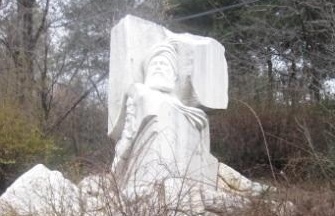
A sculpture at Stone Park

Continue to explore some of the most engaging geocaches around the globe. Check out all the Geocaches of the Week on the Latitude 47 blog or view the Bookmark List on Geocaching.com.

If you’ d like to nominate a Geocache of the Week, send an email with your name, comments, the name of the geocache, and the GC code to pr@groundspeak.com.


Geocaching on a National Level (for a Grade)

Jim Bishop, jcacher15

Talking about geocaching doesn’t often result in a whirlwind trip and a chance for national recognition, unless perhaps you’re Jim Bishop. Jim is known in the geocaching world as jcacher15. He’s a High School student in Washington State, USA.

Jim won competitions with a presentation on geocaching at the local and state levels to compete this weekend in a national DECA competition. DECA is a student organization for emerging leaders in business, marketing, finance, and hospitality. Jim will travel hundreds of miles to stand in front of judges and talk about a business plan for Geocaching.com.

Jim’s knows his topic well. He’s accumulated more than 3500 finds across three countries since he started geocaching in 2009.

He says, “I first learned about geocaching when I saw a TV advertisement for the GPS Adventures Maze exhibit at the Pacific Science Center [in Seattle, Washington] in early 2009.  A few months later I was surfing the web and ended up on Geocaching.com.  I got a membership and my first GPS device and was instantly hooked.”

Other geocaching experiences helped Jim choose his topic for the DECA presentation, including one of the more memorable trips of this life, ” I went with a few geocaching friends up to Canada for the weekend to do a 200 cache trail. It was a great weekend, we hiked many miles through the forests and hills of British Columbia and slept in a cabin each night.  The trip was like nothing I had ever done before.”

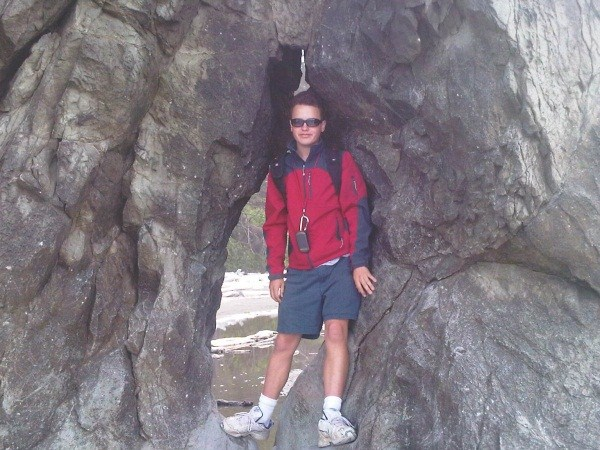
Jim geocaching

Jim not only had to talk about geocaching to make it to DECA Nationals, he has to write about it. Jim developed a 30-page Geocaching.com customer loyalty plan. Presenting his plan for geocaching at DECA nationals requires Jim to step into a business setting. He says, “I will be discussing the implementation of a new customer loyalty plan addressing a situation related to the geocaching membership program.  The presentation is 15 minutes and takes place in an office type environment.  The presenter sits on one side of a table across from one or more judges.”

Whether Jim wins first place or not, he’ll will walk away with a powerful experience. He says, ” I hope to learn how to present effectively as well as how to make good business decisions.  I also hope that this competition will help prepare me for the business world after I finish college.”

Leave Jim a message below to wish him good luck this weekend talking about geocaching for a grade.


New ‘Submit a Cache Listing’ Wizard

Banner from "Submit a New Cache Listing" Wizard

The new “Submit a Cache Listing” page walks geocachers through an easy six-step process to list a geocache. Creating a cache listing has never been more streamlined or easier to understand. You’re able to focus on what’s important – submitting a well-crafted cache listing.

The “Submit a New Cache Listing” process is now easier than ever before. An online tool or wizard walks you through each step. The steps flow from “Cache Basics” to “Location,” then “Additional Waypoints,” “Description,” “Container & Ratings,” and finish with “Submit Cache.” There are fundamental steps that cannot be skipped – such as a name for the cache and coordinates for the location – as well as optional steps. There are helpful tips and information throughout the process.

Before beginning the process you should read the Geocache Listing Requirements and Guidelines. Knowing the guidelines helps ensure submitting a new cache goes smoothly.

Here are some quick notes on the new process –

  • Attaching and editing images will need to be completed after a cache page is created.
  • Editing a completed cache page – published or unpublished – will revert to the old form for now.
  • At the end of the new process, you will have the option to save your work and come back to it OR preview it and then submit the cache listing.
  • The development process included months of testing with the volunteer reviewer team, to whom we are grateful for their input and feedback.

We want to hear your feedback about the Submit a New Cache Listing wizard. Leave a message below.

Click here for additional release notes.