Geocaching is delightful because of the people who play it — adventure-seekers, makers, parents, astronauts and (sometimes) celebrities. Read their stories.
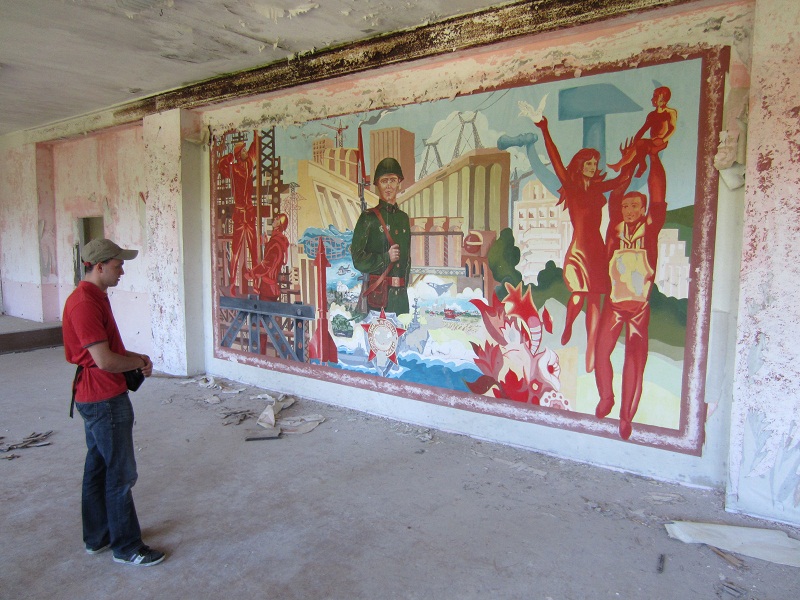
“Stadt im Wald” (GC17K3A) is a “Lost Place Cache.” The Multi-Cache takes geocachers through a rotting relic of the Cold War. The nine stages of the cache lead adventurers into an abandoned and decayed Soviet military base. This “lost place” in Eastern Germany is the size of a small city. The military installation has been largely forgotten since the fall of communism. The geocache was placed with landowner permission.
"Stadt im Wald"
Geocachers are warned to take extreme safety precautions. They’re warned to be especially careful of broken glass and hidden holes in the ground. Geocachers are also reminded to respect the site and cause no further damage.
“Stadt im Walk” is a difficulty 3.5, terrain 3.5 cache. Hornesia placed the cache in 2007. It has accumulated more than 230 Geocaching.com Favorite Points.
This Geocache of the Week comes straight from two Lackeys traveling in Europe. They recorded local German geocachers as they completed the cache on June 2. The Geocaching.com video team is on location exploring some of the most exciting geocaching Germany and the Czech Republic have to offer. The videos will eventually be shown on Geocaching.com and YouTube.
Oh the places Groundspeak hamsters will go - Groundspeak videographer Reid shooting video in a secret location at "Stadt im Wald"
Continue your exploration of some of the most engaging geocaches from around the world. Explore all the Geocaches of the Week on our blog or view the Bookmark List on Geocaching.com.
Editor’s note: Susan Kelley, Calvertcachers, has volunteered countless hours organizing geotrails in multiple states. A geotrail offers geocachers a variety of hides linked by a central themeor topic. There is often a prize for completing all or part of a geotrail.
This article shares Susan’s experience and her advice on creating a geotrail. She’s been part of a months-long effort to launch the Capt. John Smith geotrail. The Capt. John Smith geotrail challenge begins on June 4th.
Geocaching.com: How did the idea for the Capt John Smith geotrail begin?
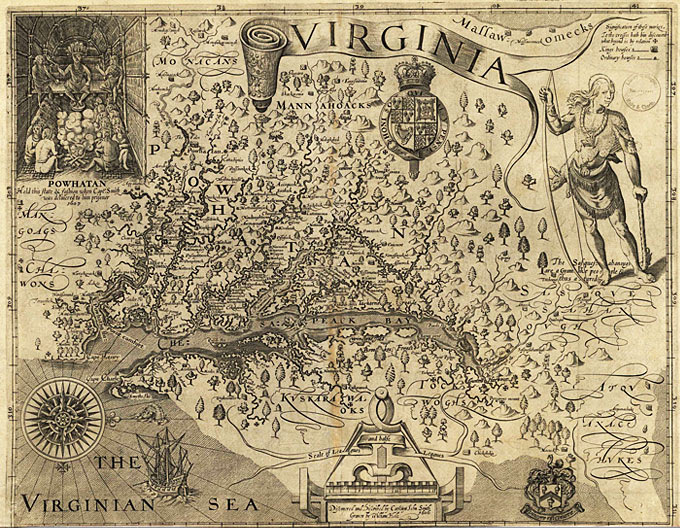
Susan: With the success of the Star-Spangled Banner Geotrail, The National Park Service (NPS) and Chesapeake Conservancy wanted to do something special to commemorate the adventures and explorations of Capt. John Smith. A Geocaching project was a perfect fit since Capt. John Smith was the first person to map the Chesapeake region beginning in 1607. His detailed map was published in 1612 and remained in active use for seven decades. Considering the primitive tools he had to use, the geographical accuracy is amazing. I would guess that Capt. John Smith would have loved geocaching!
Geocaching.com: What’s involved in organizing a geotrail? How many people, maintenance, time, etc?
Susan: Lots of work! In all seriousness, I have helped to coordinate four major trail projects, the first being the Maryland Municipal League Geotrail which was the first statewide geotrail in the United States. This trail launched with over 70 caches throughout Maryland. This was followed up with the M-NCPPC Park Ranger Challenge, the Star-Spangled Banner (SSB) Geotrail, and launching June 4th, the Captain John Smith (CJS) Geotrail. Both the SSB and CJS have caches in several states so it does take a great amount of coordination and hours of work. However, these trails would not have been possible without the help of many volunteer geocachers.
Capt. John Smith's Original Map
The best aspect of geotrails is that it affords us the opportunity to partner with park, town, tourism, and government officials. This has been a win-win for everyone involved and as they have learned more about geocaching, the more they have welcomed geocaching into their park or community. With these trails, we have partnered a local geocacher with a facility. The cacher would schedule a time to meet with the facility staff, give them an introduction lesson on how to geocache, and show them how to log-on and create a Geocaching.com account. The cacher would help them select an appropriate location for their trail hide, place the cache and send us the hide details for the cache page. Once the trails have launched, staff have loved meeting the many geocachers visiting their site. The facilities/parks now get excited when they see a cacher going for their hide. Some will even help the cacher if they cannot locate the cache.
Geocaching.com: Describe the scope of the Capt. John Smith geotrail to us, what’s involved for the geocacher, when does it begin?
Susan: The Captain John Smith Geotrail is set to launch on June 4, 2011. This date was selected by the NPS to coincide with National Trails Day. We are kicking-off the CJS trail with a special event GC2F414 at the National Colonial Farm – Accokeek Foundation. The event will feature booths, exhibits and demonstrations from the Maryland Geocaching Society, Northern Virginia Geocaching Organization, Magellan, and many of the parks, museums, and historic sites along the CJS trail! Cachers will also have the opportunity to pick-up a copy of the passport and a list of CJS hides. We will have lots of nice door prizes including a GPS unit donated by Magellan!
Capt. John Smith geocoin
The trail will have over 40 caches within Maryland, Delaware and Virginia. The trail will focus on five rivers; the Susquehanna, Potomac, Nanticoke, Rappahannock, and James (including the Chickahominy branch). The trail will work off of a passport system. Cachers will be required to find, log and post a pic at 15 CJS caches to earn a beautiful trackable CJS geocoin.
The National Park Service and Chesapeake Conservancy have gone the extra mile by preparing a history write-up for every cache location. Each cache page will include a special history piece to give cachers an idea of what they will discover at the cache site. The history surrounding Capt. John Smith’s explorations is amazing! I am learning more and more each day with preparing the cache pages and I’m confident that folks will enjoy the trail.
Geocaching.com: Why a geotrail? What does this format offer beyond having a themed geocache or a Multi-cache?
Susan: Geotrails offer cachers an experience that is linked by a central themeor topic with a variety of hides. Cachers can pick and choose which caches along the trail are best suited for them or of their interest. A little something for everyone! Plus, there is a reward at the end. We know how geocachers love challenges, so the trails offer cachers a fun opportunity.
Geocaching.com: What are folks reaction when they complete a geotrail and what sort of feedback do you hear?
Capt. John Smith geocoin (reverse)
Susan: With both the MML and SSB trails, the response from geocachers has been overwhelmingly positive. All of these projects required us to partner with park staff and/or government officials, so the hides are quality and each offer a little something special. No matter if it is a nice hike with a scenic view, or a multi/puzzle cache at a museum with fascinating exhibits and displays, the response has been great! Log-on to Geocaching.com and read some of the logs from the Star-Spangled Banner Geotrail caches.
Geocaching.com: What is your advice if people would like to create a geotrail in their neck of the woods?
Susan: Talk with cachers or geocaching groups within your region to gauge interest and willingness to assist. A trail will take the time and efforts of many. If you have an idea, schedule a time to meet with your local tourism, parks or government staff and share your thoughts and the positive outcome a geocache trail will have for your community. Do your research and go prepared to the meeting with handouts, a presentation and stats from other geocache projects. Place a temporary cache and take them outside to find a cache! A trail should have a related theme or topic and if the funding is available, a reward for the geocacher for completing the trail. There are great resources on the Geocaching.com site and most trail coordinators are willing to share information. Reach out to others when doing your research.
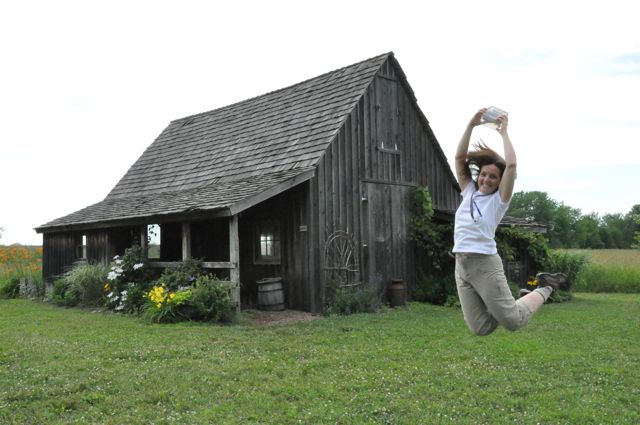
WINNING CAPTION: "Photographic evidence of Rapture Caching!" – Snoogans Geocacher
Exercise your caption writing wit and wisdom in the 24th installment of our Geocaching.com Caption Contest. You could earn a barely coveted prize! What caption would you write? “Cache contains: Travel Bug®, rubber ball, and anti-gravity!” You can do better!
Barely coveted prize
Submit your caption by clicking on “Comments” below. Please include your geocaching username in all entries. Then, explore the captions that other geocachers have crafted.
You can influence the voting. “Like” the caption that you think should win. If you think your caption should win, convince your fellow geocachers to “like” your caption. Lackeys and fans of the Geocaching.com Facebook Page vote to decide the winner of the contest.
Click on the image to discover the winner of the previous caption contest
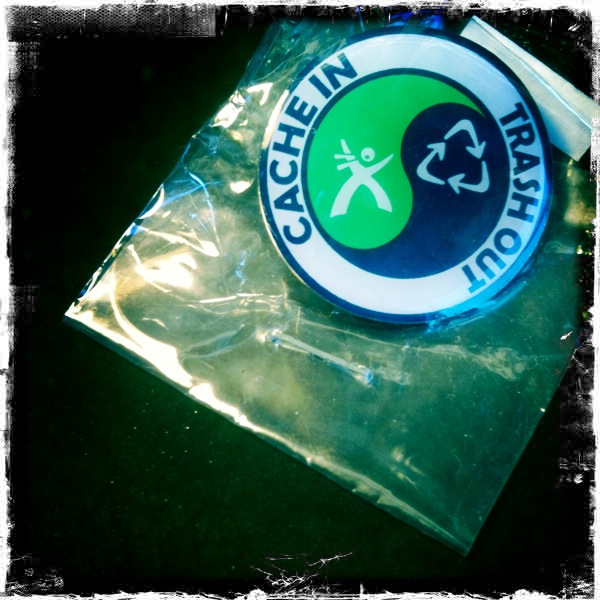
The winner receives a barely coveted prize from Groundspeak Headquarters. This contest the barely coveted prize is a Cache In Trash Out pin.
27 Lackeys and more than 450 Geocaching.com Facebook users voted to award the winner of the 23rd Geocaching.com Caption Contest a barely coveted prize. Click on the image at right to discover the winning caption from the previous Geocaching.com Caption Contest.
My mother always tells me my life should be a book. I have simultaneously some of the best and worst luck.
This past weekend at ASP GeoBash 6 was a perfect example.
Just before I arrived at Allegany State Park in Western New York, I’d landed myself in the emergency room for a tandem bicycling accident. Nothing was broken, but my left arm turned an awkward shade of yellow and purple. Somehow, though, the good always outweighs the bad.
ASP Geobash was my first Mega-Event outside of Groundspeak’s Lost & Found Celebration, and I had the time of my life. Arriving on late Thursday to a wet and drizzly park, I unpacked my sleeping back at my cabin and snuggled up to the delightful sounds of wilderness and silence.
The ASP Committee members welcomed me on Friday and dismissed my offers to help. They had it all under control, so instead I colored in the sign to the shop next door to make it more visible, signed the “log”, otherwise known as a sheet, and waited for someone to arrive to go geocaching.
Allegany State Park
Before I knew it, lady luck struck. One of PaRacers’ caches had just been published in the park. Wii Two had a jeep, their Geocaching.com iPhone app, and were ready to go. “Can I ride with you?” I asked.
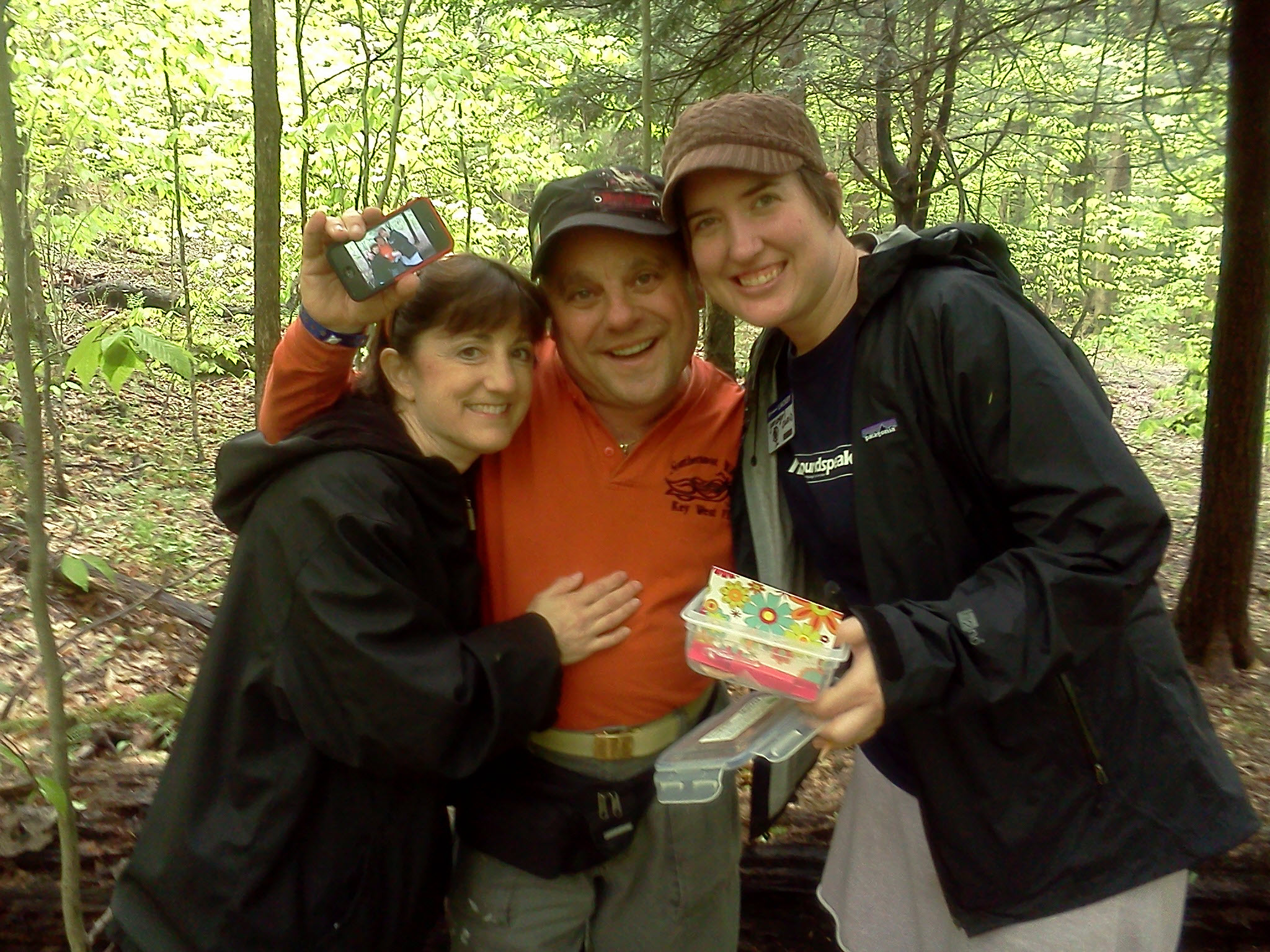
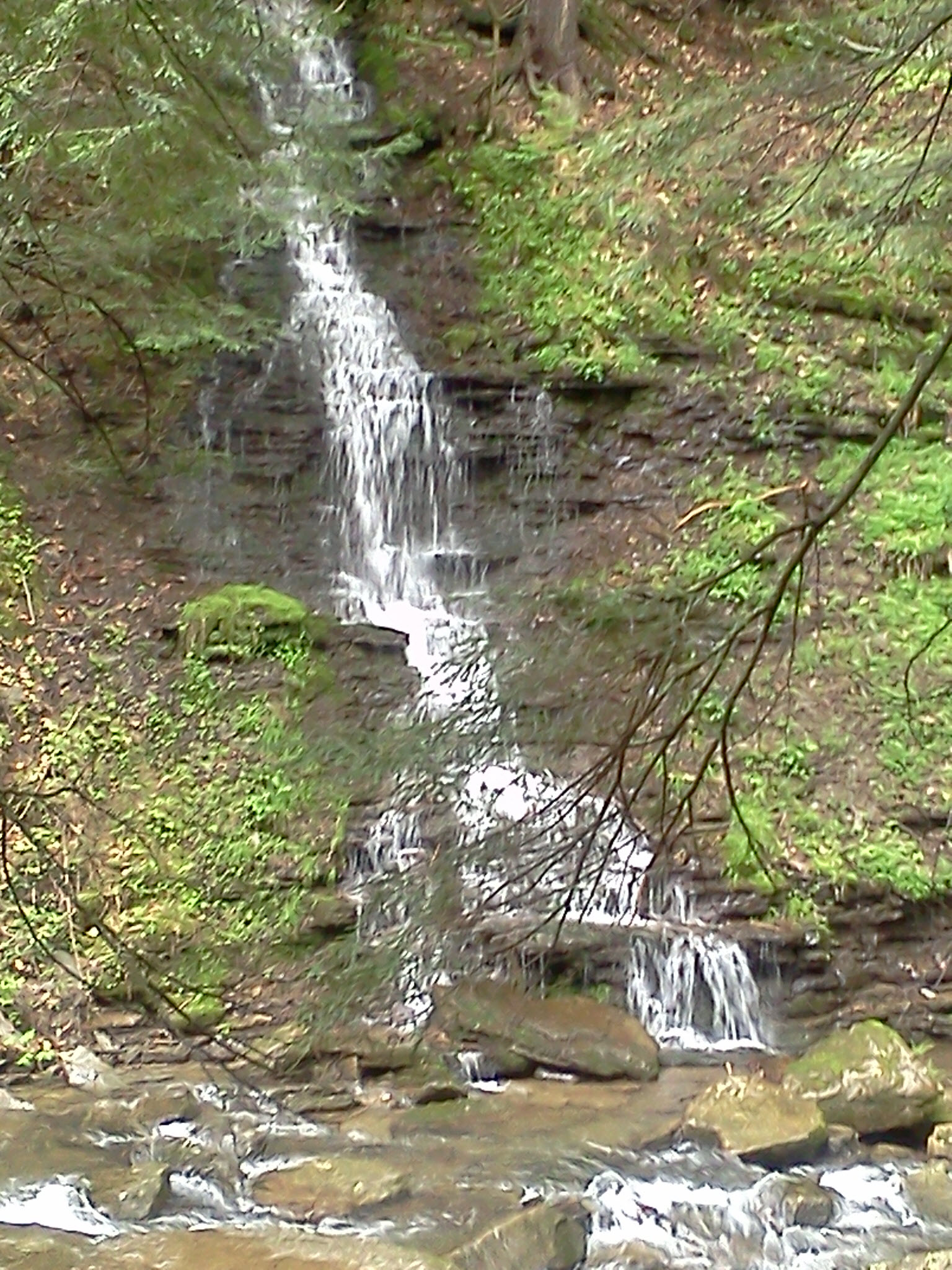
The Jeep was crowded, but we were fortunate to have a local newspaper photographer nearby who wanted to get some shots of cachers in action. The pictures were going to be used to publicize the event in that Saturday’s paper. I hopped in with her, and we dashed off together to the beautiful bridal falls at I’m Falling for You, with no one else in sight.
I was tempted to stand and gawk at the falls, as the rain had made them even more awe-inspiring, but we had a job to do. With our smartphones in hand, we headed toward the coordinates. Looking around in the woods, I went to the first place I would have hidden a geocache—and there it was! A shiny, untouched lock and lock with a crisp logbook inside.
The day continued without a hitch. I met up with f0t0m0m (Jim, you’ll have to ask him the story behind the caching handle) for some caching after sharing a nice lunch conversation. Together we went on my first ever numbers run, dashing around Bradford, PA. We chased after the 101 Dalmatians series and other caches well into the night, when I found my first night cache, too. After following the little reflective dots back into the woods to find 101 Damations #74, I was impressed by the accuracy and ease of the cache. I had always assumed night caches were extremely complicated, but the cache owner wants you to have fun and find this one—worth a Favorite Point from me.
Al aka Dreadnaught
Day two was the biggest day of the event. Most of the 1,000 plus attendees arrived to sunshine and summer heat after over a week straight of rain. I ran into a group of laid back Canadians and their geo-kids that were about to head out on an adventure. But this day was not to be a numbers grab. Dressed in shorts and my Chaco hiking sandals, the Canadians laughed at me as we hiked through tall grass in the woods for find after find after find. Checking my numbers, I realized I was coming up on 100, and davetecsgirl was coming up on 2,500. “We should do it together!” she said.
gonzogrrl's 100th find and davetecsgirl's 2,500th find
With bggy leading the way, the whole gang headed out to Thunder Rocks II for one of the most amazing EarthCaches I have ever seen. The big, ancient Paleozoic rocks at the EarthCache are native bedrock that was deposited 325 million years ago. We stayed and played around, having fun guessing what the rock formations looked like, marveling at the trees that managed to grow up in the tiniest cracks between the rocks and watching as DAVTEC climbed to the top of the tallest one. If the gnats had not been attacking us at warp speed, I imagine we could have spent hours there, basking in the magnificent natural wonder.
I walked away from ASP GeoBash 6 with new friends, new finds, and some great experiences geocaching. If that isn’t lucky, I don’t know what is.
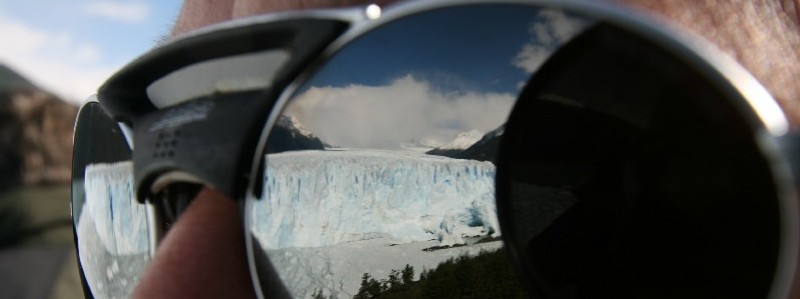
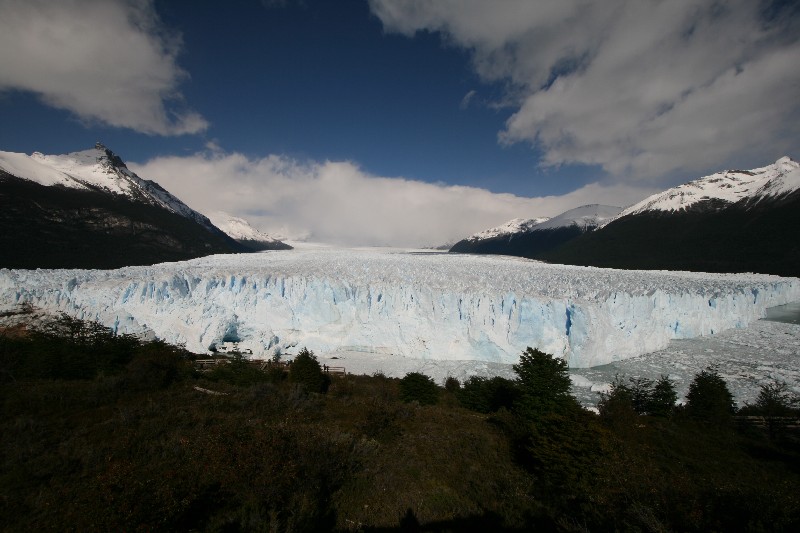
The search for the EarthCache “Glaciar Perito Moreno – Patagonia” (GC1JPHG) brings geocachers to a natural wonder of South America. The Southern Patagonian Ice Field represents the world’s third largest reserve of fresh water. To claim a smiley on this EarthCache adventurers must email the answers to two questions and a picture to the cache owner. Geocachers will only be able to find the answer to the questions if they’ve arrived at the coordinates on the cache page.
Glaciar Perito Moreno - Patagonia
Dutzig created the difficulty 2.5, terrain 2.5 cache in 2008. So far, nearly 80 geocachers have logged a “Found it.”
The cache page details the powerful potential of the “Perito Moreno Glacier.” Dutzig writes: “The Perito Moreno Glacier is one of only three Patagonian glaciers that are not retreating. Periodically the glacier advances over the L-shaped “Lago Argentino” (“Argentine Lake”) forming a natural dam which separates the two halves of the lake when it reaches the opposite shore. With no escape route, the water-level on the Brazo Rico side of the lake can rise by up to 30 meters above the level of the main lake. The enormous pressure produced by this mass of waters finally breaks the ice barrier holding it back, in a spectacular rupture event.” The last rupture of the glacier was documented in July of 2008.
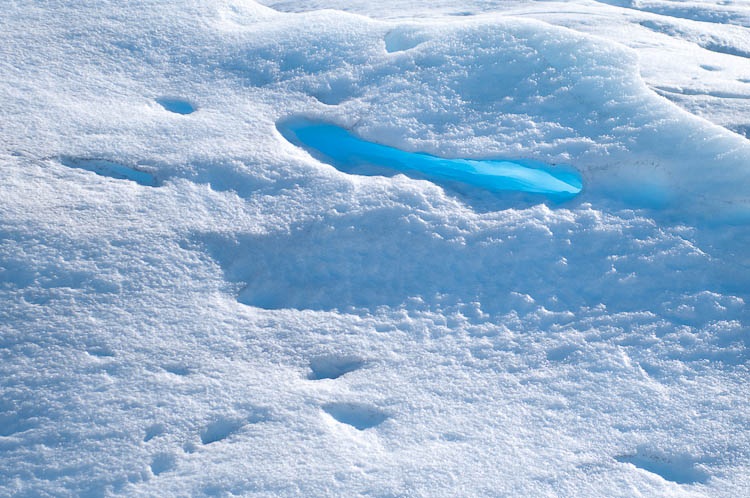
View inside the glacier
Continue your exploration of some of the most engaging geocaches from around the world. Explore all the Geocaches of the Week on our blog or view the Bookmark List on Geocaching.com.