1,000 geocachers volunteered to be part of the first ever major study of geocaching and its effect on health. The 14-month Texas A&M study called Geocaching for Exercise and Activity Research (GEAR) launched in January of 2013. The first set of results from the study were presented on November 5 at the annual meeting of the American Public Health Association in Boston.
Each of the participants were given devices to track their movement and a logbook to record their level of geocaching intensity. The first results showed the effects of regular geocaching. Researcher Whitney says, “The GEAR study has identified an association between geocaching and improved health.”
Another researcher, Garney, goes on to say, “GEAR participants who report geocaching once a week or more are more likely to meet national guidelines for physical activity and are more likely to report good or very good health status compared to those who geocache less frequently.” In addition, research showed that geocachers reported fewer days of poor physical and mental health compared to state level data.
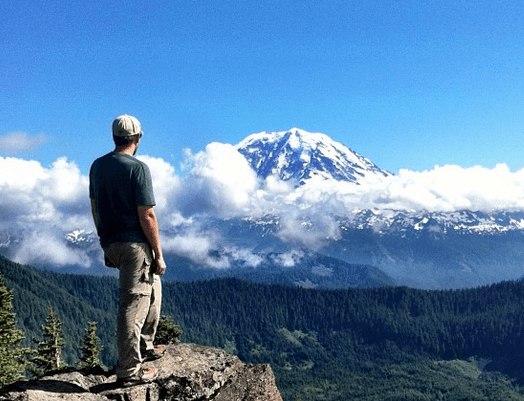
Follow Geocaching on Instagram for more epic and inspirational geocaching pics http://instagram.com/gogeocaching
These findings are still preliminary, but nevertheless we’re excited about them. The study concludes in early 2014 and final data will be analyzed and presented later that year.
The health benefits of geocaching are often the subject of emails to Geocaching HQ. Have you lost weight geocaching or sharpened your mental skills? Share your stories about improving your health through geocaching in the comments below.
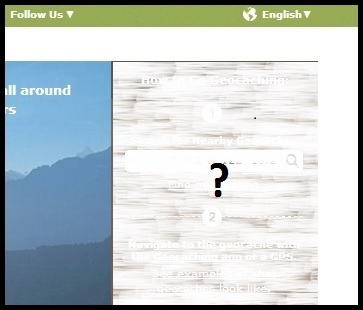
Where can you find this mysterious tool that lets you search for geocaches in no time?
Stop! Don’t look any further – search here! Sometimes it takes a hint to find something that is right there in front of you. It’s the search box on the Geocaching.com homepage.
If you’ve geocached for any length of time, say 60 seconds, this question has run through your mind, “Is it even here?” You’ve checked the fence. You’ve checked under the bench. It’s not hanging from a branch on the tree. It’s not even close to your knee. It’s not there… And then you hear a whisper, “Or is it?” That haunting question is often a geocacher’s biggest fear. Here are a few tips to help increase your chances of knowing the answer.
Start by re-reading the title. It’s often another hint to the location.
Check recent logs on the geocache page. Find out if the geocache has been found in the last few days or weeks. What do the logs say? There might be a hint that helps direct you to the geocache location.
Check the terrain and difficulty ratings. If it’s a terrain 1 and you’re looking on a hillside, go back to the sidewalk.
Speaking of hints, geocaches often offer a real hint. Check that.
Still stuck? Try looking at any photos. Clues might be hiding in the pictures others uploaded to the geocache page. Still unable to find the geocache? Don’t worry, you’re not out of options yet.
You’re a social person. You’ve got friends. Maybe one of your friends has found the geocache that’s giving you issues. Try the old “Phone a Friend” or “PAF” as it’s known in geocaching circles.
Finding the geocache might be a waiting game. Some geocaches are easier to find in the spring or fall.
If all else fails, be sure to log your Did Not Find (or DNF). That lets others know they’re looking for a tough-to-find geocache.
And sometimes they’re just really, really well hidden. For example, check out this geocache with 247 DNF’s and 1 Find. Share your tricks for finding well-hidden geocaches below in comments or on the Geocaching Facebook page.
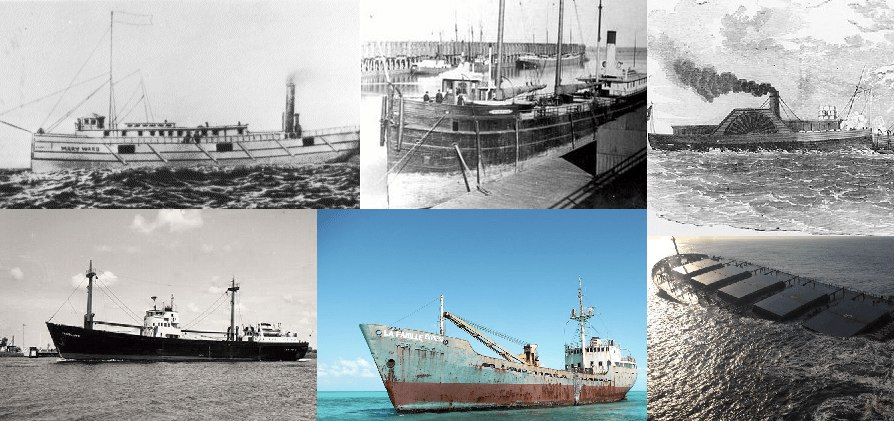
The gurgling waters of the Credit River in Ontario, Canada tell a story of seafaring disaster. Nearly every 1/10th of a mile those floating the lazy waterway unlock the story of a shipwreck. That’s if they know the secret. The stories of more than 140 shipwrecks are recorded in geocache after geocache.
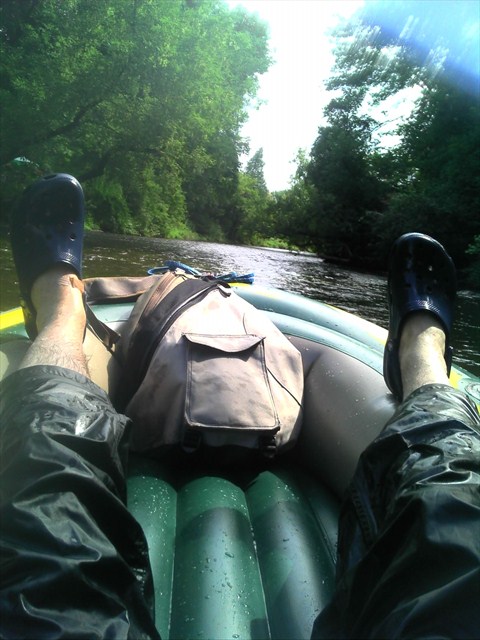
Tubing the Credit River
Keith Watson (username Keith Watson) and a crew of more than a dozen geocaching friends hid the geocaches. But their original intent was a walking tour, not floating the river in a tube or canoe. Keith says, “At the beginning of the summer a few of us decided to start placing caches along a local river. The plan was to walk down the river placing caches and others would have to walk down the river as well to find them. After walking down the first section we decided that walking down a river sucked and we would use tubes to do the next section. After using tubes to do the next section was a blast and we decided that was the best way to do it.”
The team used technology and old tales from the sea to make the string of geocaches more inviting. It’s an age-old recipe for geocaches: history + discovery + adventure. Check out this interactive map of the Credit River – Shipwreck Series the team created to help people navigate to river and unlock seven seas of history.
The Shipwreck series went live over the summer. It started small, Keith says, “Cachers are going out in groups floating down the Credit River having fun. I have taken my son a few times and he loves it.” Testimonials and videos started turning up, like, “This was probably one of the best caching days I have ever had, and I can’t wait to do more.” And, “You’ve created a unique caching experience that I really don’t think can be found anywhere!” And, “Thanks to all of the COs s[cache owners] for placing this fun-filled series of caches.”Keith says he and the other geocache owners were blown away, “The extent of the series has surpassed in size and popularity far beyond what we thought it would be.”
If you’re in Ontario during months warm enough to float a river, you too, can enjoy a river float with a side of history, that didn’t float.
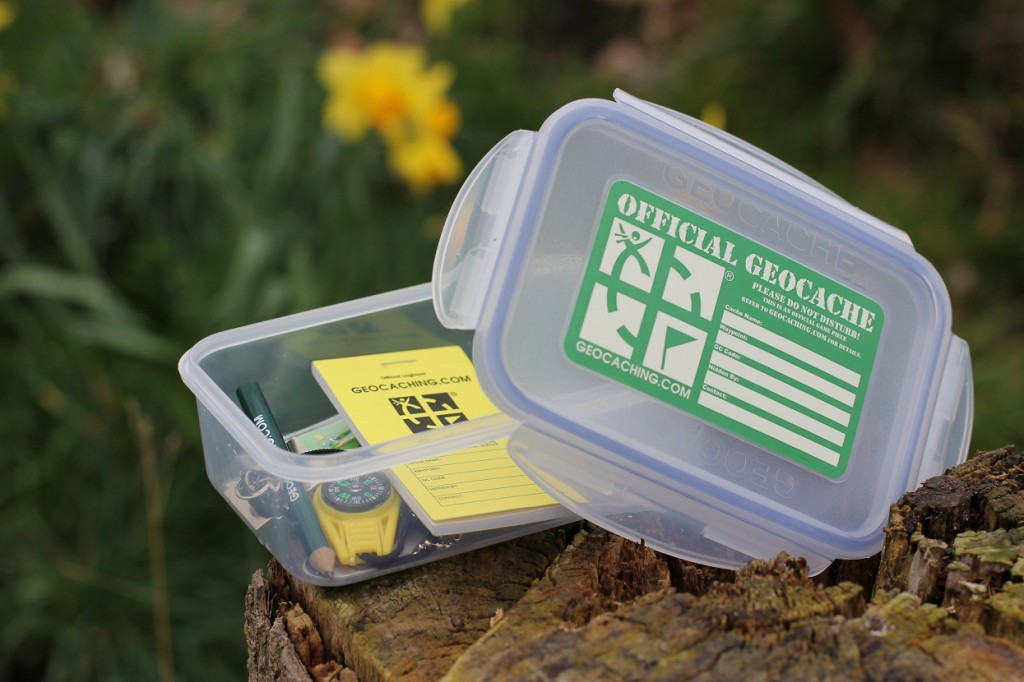
Use a well marked. clear container whenever possible
Here are two words geocachers crave hearing when their geocache is published, “Found it.” And then there are two words all geocachers would prefer never to hear when talking about a geocache hide, “suspicious device.”
In an age of increased concern, geocachers must be increasingly diligent to follow the rules while hiding a geocache. Make sure to read and follow the Geocaching Listing Requirements/Guidelines. Also make sure to use common sense, and always keep in mind how your geocache container or the location of your container may be perceived by people who are not familiar with the game.
We asked law enforcement professionals and a bomb disposal tech with the U.S. Army to offer advice to geocachers. It’s easy to ensure your logs say “Found it” and your geocache hide never alarms authorities.
Here’s their advice.
Question: What are the do’s for geocachers when hiding containers?
Sgt. Kent Byrd answers this question. Sgt. Byrd has been featured in Geocaching videos, and is a Explosive Ordinance Disposal expert with the U.S. Army currently deployed to South Korea. He’s an avid geocacher with the username, JrBYRDMAN162.
Get permission: Sgt. Byrd says, “If you hide the container near a public building, make sure that you obtain permission from the business /property owner.”
Take pictures: “Also, try to give pictures of the geocache to the business/property owner. That way if the geocache gets called in, the owner has the option and ability to present those pictures to the personnel investigating/dealing with the geocache.”
Mark it clearly: The “Official Geocache” stickers are a huge help. Also, if the size of the geocache allows, write your phone number on the geocache itself in large numbers. This will give a law enforcement another option to deal with the geocache.
Be PROACTIVE: Talk to your local law enforcement entities. Offer to do a short workshop on geocaching. Get them involved. All it takes is getting one Bomb Disposal Technician involved in the game and they will start to solve the problem in your area for you, because of their personal love for the game.
Question: What’s your one piece of advice for geocachers?
Karin Fechner with the Austrian Polizei answers this question. Her unit, like many police departments, utilizes a complimentary Premium Membership to help them identify geocaches.
Karen says, “Always carry an id-card, passport or other document to be able to show it in case of a control. Show the navigation item or mobile-app you use in case of a control. We already had cases, when suspects claimed being geocachers but actually weren´t. So it is always a good advice to show your equipment to the officer in case of a control. There are still a lot of law enforcement-officers who don´t know geocaching – of course there are also a lot of geocaching police-officers – but be prepared to explain what geocaching means and what you are actually looking for.”
Question: What shouldn’t geocachers do?
Josh Nelson answers this question. He’s with the Department of Natural Resources at Wasatch Mountain State Park in Utah.
Josh says, “If you are geocaching in a State Park (Specifically speaking for Utah, but with my experience it’s universal) and are confronted by a park employee or law enforcement, don’t try to give some story of “I saw a cool bug” or the likes. These stories are great for other muggles, but just make you look suspicious to Rangers. Just tell them you are Geocaching, often they know the program and may even enjoy hanging out with you until you make the find.”
Question: What are the don’ts when hiding a geocache container?
According to Sgt. Byrd, “DO NOT put caution words on the outside of containers such as CAUTION, WARNING, DANGER, BEWARE, DO NOT OPEN, etc., regardless of what follows such words.”
Sgt. Byrd says, “Do remember, that some departments do have Standard Operating Procedure’s that require them to deal with all packages of a certain dimension in a destructive manner. Nano-caches, micro, and mini, caches are not only less likely to be spotted by a muggle, but are not of great concern to Bomb Squads… Use the common 9-volt battery as a reference. If it is smaller than a 9-volt battery, it is much LESS likely to be destroyed. Use clear containers whenever possible.”
Sgt. Byrd reminds geocachers that law enforcement are doing their jobs and their best to protect the communities they serve, whether it’s in Austria, a State Park in the U.S. or military serving abroad.
If you’re a Law Enforcement representative or Parks Personnel we offer a complimentary and ongoing Premium Membership for the purpose of monitoring geocaching activity in your jurisdiction. Learn more here at the Law Enforcement & Parks Professional resource page. Simply create a free basic account on Geocaching.com, choose a username that reflects your organization, and email us at geocaching.com/help for your upgrade.