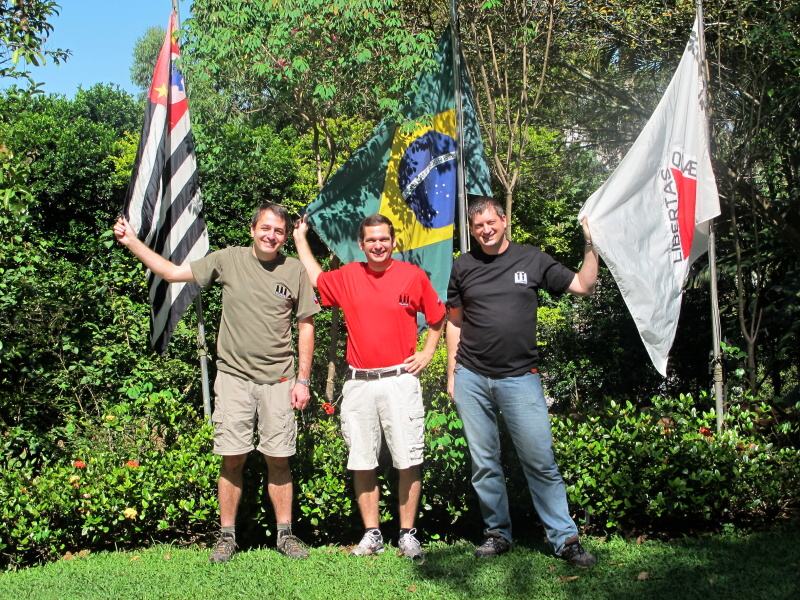
More than 70,000 geocachers from around the world celebrated Leap Day by stepping outside for a GPS-powered treasure hunt. Their motivation was an opportunity that comes once every four years — going geocaching on February 29. They joined friends and family to explore the world around them, exercise, and earn a digital reward. The Leap Day goal was ambitious. Geocachers rallied to double the number of accounts – 36,696 – that logged geocaches last Leap Day in 2008.
Here are the latest numbers:
Current Accounts w/Logged Caches: 83,516!
GOAL: 73,392
Updated: 2:30 pm PST – March 7, 2012
Share Your Leap Day
Share your geocaching Leap Day pictures and video on the official Geocaching.com Facebook page. The best video and pictures may be chosen to appear in a Geocaching.com video. Subscribe to the Geocaching.com YouTube to be one of the first to see the video when it’s released later this week.
See a Leap Day geocaching adventure – watch the new video below
Warren Rieutort-Louis, rieuwa, in North Korea at the "Monument to Party Foundation"
A geocacher named Warren Rieutort-Louis, rieuwa, stepped foot where few Westerners ever walk. GPS devices and cell phones are not allowed. Geocaching doesn’t exist there.
Warren says, “It’s obviously a destination that is off the beaten path and travel is heavily regulated but it was a once in a lifetime opportunity. Fewer than 1500 Western tourists visit it every year.”
Warren’s journey to North Korea was arranged through a tour company based in China. The voyage began with Warren emptying his pockets of items which rarely strayed from his side. There were no cell phones or GPS devices permitted on tourists in North Korea.
But Warren wanted to keep a piece of something that has helped guide his personal exploration over the past four years. He brought along a Geocaching.com Travel Bug. He named the Travel Bug, “Asia Explorer.”
It was a momentous gesture. Geocaching.com Travel Bugs have spent more time in space, than in North Korea.
A Travel Bug is a trackable tag that you attach to an item. This allows you to track your item on Geocaching.com. The Travel Bug is moved from geocache to geocache around the world. You can follow its adventures online.
Warren says, “I knew beforehand that there were no geocaches in North Korea, but I still wanted to take a Travel Bug with me as a symbolic item.”
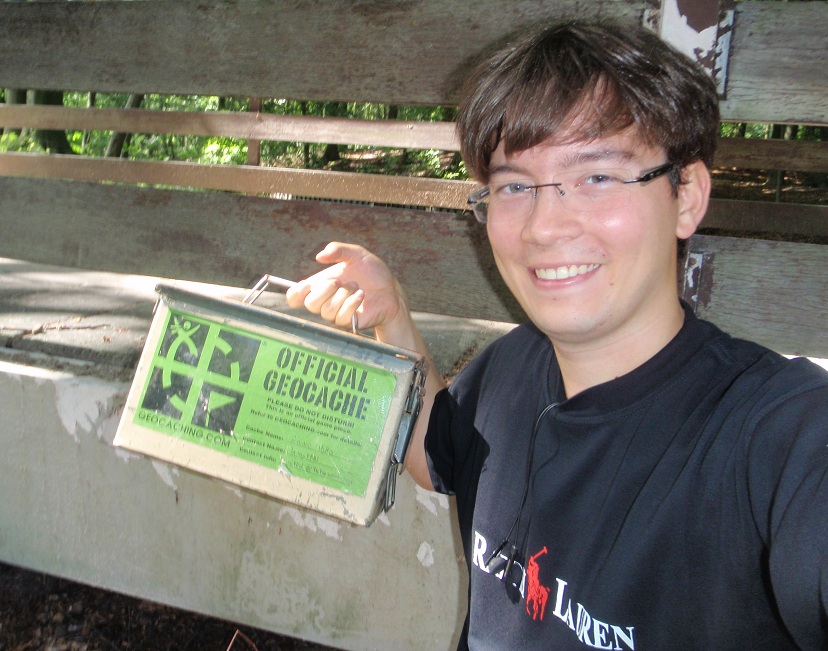
Warren geocaching with his sisters
A friend introduced Warren to the real-world treasure hunt of geocaching in 2008. He says, “[My friend] only found a few geocaches, but when he told me about it, I instantly knew I would love it. Wherever I am, I try to grab a few caches, whether it’s here at home in the US where I’m currently a graduate student in electrical engineering at Princeton, or in my ‘real’ homes, the Netherlands or southern Portugal, or in my travels.”
Warren decided to explore one of the least traveled countries in the world with his family in summer of 2011. Their private tour took the geocachers to remote North Korean villages. The Travel Bug could not be placed in a geocache and wait for another geocacher to move it along, but Warren says the Travel Bug may have helped crossed cultural barriers.
He says, “The day I took the picture with the Travel Bug in front of the ‘Monument to Party Foundation’ in the capital Pyongyang, I noticed a look of surprise from the guide who toured with us for two weeks. She was my age. I explained to her the concept of geocaching, and she found it absolutely fascinating. She couldn’t believe that people would carry these from cache to cache around the world.”
Travel Bug, looking over the Taedong river
He says the rest of his travels through North Korea offered, “…an informal opportunity to develop closer bonds with the population, and to discover awe-inspiring cultural, natural and architectural richness of the country. Overall we discovered a warm people, infinitely curious about the world outside.”
He says while the Travel Bug didn’t log any kilometers, it now carries a rich experience in a rarely traveled country. “It’s a unique glimpse into a society that we would find hard to understand its existence… without witnessing it.”
Warren says his other Travel Bugs have traveled the world. “I love traveling, so how could I not love Travel Bugs? I have five around the world at the moment, including my North Korea one, having traveled a total of over 40,000 kilometers.”
Warren geocaching
He hopes his “Asia Explorer” Travel Bug will make a return trip north of the 38th parallel. He says, “And who knows, maybe one day the Travel Bug will be able to head to North Korea… I am sure there will be a day when we will be able to introduce wonderful things like geocaching to our North Korean friends, whilst they share with us their cultural richness.”
A few months ago, Google announced a change to its Maps API licensing structure that requires third-party websites with over 25,000 map loads per day to pay for use of the API. (Visit Google for more details on their pricing structure.) According to Google the new limits should affect only around .35% of maps consumers. Geocaching.com averages about 2,000,000 map loads per day, placing us firmly within that small percentage of affected consumers.
After discussing available options, we made the difficult decision to reduce our reliance on Google Maps and take steps to better integrate Leaflet and OpenStreetMap. This decision was based, in large part, on our ability to bear the very significant cost of licensing Google maps given our high rate of consumption. It was also based on the advantage we gain in many ways using new tools that allow us to grow our technology and the service we provide.
OpenStreetMap Benefits – Enter the Rainbows
and Unicorns
Creative Commons, Community Driven, Constantly Updated
OpenStreetMap is freely and publicly editable in a similar way as Wikipedia. Anyone can change or add to the maps and thousands of people worldwide contribute on a regular basis. As a result, the maps are constantly improving, and as a community we can grow the map database while we geocache.
What happens when a large number of passionate people pull in the same direction? Well, geocaching, for one. Our passionate community grew this hobby from one geocache to more than 1.6 million.
OSM Maps are Good
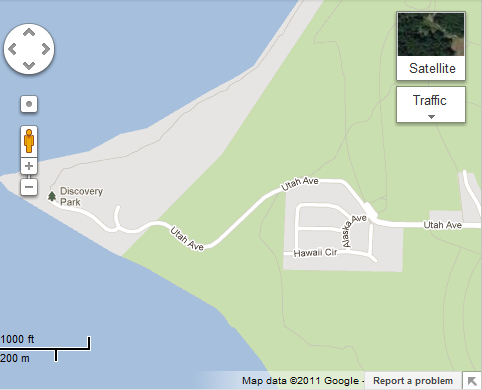
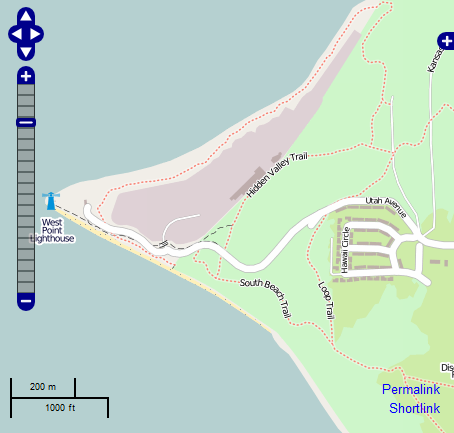
While OpenStreetMap is known widely in Europe, much of the rest of the world is unfamiliar with the mapping software. OSM maps accurately represent location, not only at the street level but also at the level of buildings and infrastructure. Even walking paths in many parks are included. Here is one comparison showing the level of detail provided.
Google Map of Discovery ParkOpenStreetMap of Discovery Park
*Note the dotted-line trails depicted in the OpenStreetMap example. These are hiking trails contributed by Open Street Maps users and are refined on a continuous basis.
New features
Leaflet, the lightweight JavaScript library for tile-based interactive maps, is replacing our current Google implementation. It provides us with more flexibility to offer features that previously had not been possible. Including:
Support for tablets like the iPad and other mobile devices
Display of only the caches in a Pocket Query instead of all caches at once
Faster tooltips, at any zoom level
We also intend to build out our own tile server in the future which will speed up the loading of map tiles enormously.
Moving Forward
We remain committed to providing great mapping resources to our customers and believe that both the global geocaching community and our website benefit from this change. With ongoing innovation and new technologies being developed every day, geocaching will continue to evolve.
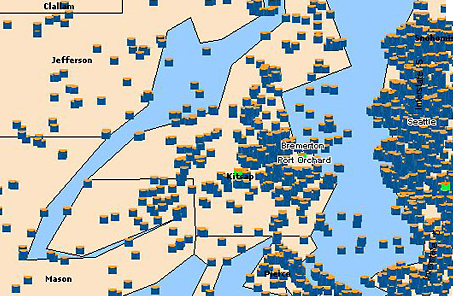
We have certainly come along way. Here is a glimpse of our old maps (circa 2005):
Geocachers kulhal and otco recently embarked on a journey to locate the last cache in a vanishing series. The duo traveled half way around the world to claim a “found it” on the final active cache in the Project A.P.E. cache series. To many geocachers, the Project A.P.E. caches ring a nostalgic bell.
The A.P.E. cache series was established in May of 2001. The promotion was for the film Planet of the Apes. Thirteen different A.P.E. caches, each with props from the movie and a story that tied into the movie, were hidden all over the world. Those who found the caches received a unique icon.
All that is left of the highly sought series is a single, active cache hidden deep in the tropical jungles of Brazil. Mission 4: Southern Bowl is now the last obtainable A.P.E. cache. The remainder of the geocaches in the series have been archived. The final cache has been logged less than 40 times.
Project A.P.E. Cache Icon
kulhal and otco met up with Brazilian cacher, gsilberbestlife, when they arrived. According to kulhal, the excitement of discovering the last of the vanishing series only heightened the caching crew’s sense of adventure.
Early one morning, otco, gsilberbestlife, and kulhal piled into their rental car and drove 300 km outside of Sao Paulo, Brazil. They arrived at Intervales State Park, the supposed location of the lone standing A.P.E. cache. Along the way, the cachers were surprised to find that many locals were unaware of the park’s existence. This further motivated them to discover the rarely visited cache.
According to kulhal, experiencing the beauty of the park was just as much of an adventure as discovering the cache, “I equally appreciated the fact that the cache brought me to a place that I would have never visited otherwise. I experienced a wonderful part of the world and saw nature so different from what I know from home.”
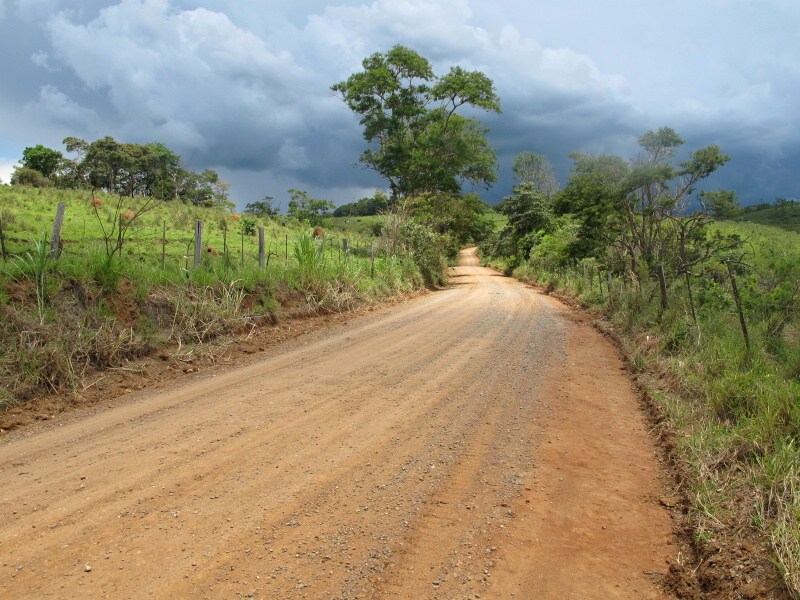
The roads through Intervales
Using a sketchy GPS signal to navigate windy, unmarked dirt roads, the cachers were able to drive within 100 meters of the cache. Now only a few minor obstacles stood between the cachers and the final A.P.E. cache. Wild animals, jungle-like terrain, and a lack of a trail map couldn’t stop these cachers.
Otco, gsilberbestlife, and kulhal discovered the cache successfully, noting that, “The beauty of this cache is something else.” Kulhal stated, “I had a feeling that I was touching a piece of geocaching history and for that it was a special moment.”
It’s a special moment geocachers may continue to share. There have been more logs in the past 2 years than in the nine years after the cache was placed. And because this is the final A.P.E. cache, it is likely that an increasing number of geocachers will be traveling to Brazil. Located in a new exotic setting, the Mission 4: Southern Bowl is an opportunity for geocachers to discover a significant cache.
Waterfall in Intervales State Park
The story doesn’t end here. For more information on kulhal, otco, and gsilberbestlife’s adventure, check out their Czech language blog.
Geocaching.com is excited to be teaming up with the action-packed experience of Tomb Raider. Crystal Dynamics™, a Square Enix™ studio produces the video game series. The worldwide phenomenon launched in the mid-1990’s and has since been portrayed in Hollywood blockbusters.
Geocaching.com is a natural fit to join forces with the video game featuring world explorer Lara Croft™. A new campaign of treasure-hunting adventure will preview the upcoming release of Tomb Raider.
Through a variety of initiatives this year, Crystal Dynamics and Geocaching.com will create a series of unique location-based adventures. The experiences embody the spirit of Tomb Raider and Lara Croft’s drive to discover new adventures and locations.
“Many of us have been playing Tomb Raider since the first game launched in 1996, and we are excited that Geocaching.com is partnering with Crystal Dynamics on this project” said Jeremy Irish, CEO of Groundspeak, the company the runs Geocaching.com. “Tomb Raider is all about exploration and discovery. It inspires the adventurer in all of us, much like geocaching does, and we are excited about the opportunities that this project presents for both geocachers and Tomb Raider fans worldwide.”
To develop these adventures, Crystal Dynamics will be tapping into both the traditional Geocaching.com treasure hunting format and Geocaching.com’s latest photo-based adventure project Geocaching Challenges. More details about future activities are not being released just yet. Subscribe to this blog for the latest updates in the coming months.
 More than 70,000 geocachers from around the world celebrated Leap Day by stepping outside for a GPS-powered treasure hunt. Their motivation was an opportunity that comes once every four years — going geocaching on February 29. They joined friends and family to explore the world around them, exercise, and earn a digital reward. The Leap Day goal was ambitious. Geocachers rallied to double the number of accounts – 36,696 – that logged geocaches last Leap Day in 2008.