Geocaching is more than an adventure that takes you to new locations. It’s a growing record of specific locations. Currently geocachers can navigate to more than 2 million active geocaches around the globe. Every time you find a geocache it’s like making an entry into the diary of a specific location. You record the weather, the view, who joined the adventure, even what animals you encounter (hopefully safe, fluffy, friendly animals). Here’s a look at a recent Geocaching Forums post that asked a simple question… “Does anyone know of any other caches that have been in the same spot, same container over 10 years?”
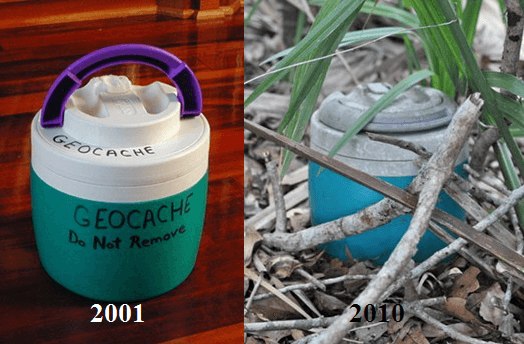
New York State geocache hidden in 2002, still active with original container
Some geocaches like”da dog ‘yaks‘ were hidden in 2001. Geocachers have captured images of floating the Juniper Creek in Ocala National Forest for 12 years. They’ve even cataloged wildlife, flowers, and the water level. The geocache owner says the veteran geocache, “… is coming up on 12 years, survived the hurricane flooding, because the tree it was tucked up against fell on it.” Although the container on that geocache was changed after the flood, the original log book remains.
There are thousands of active geocaches that are more than ten years old, but there numbers are fading and their geocache containers are (often for good reason) replaced. Hiding and maintaining a geocache is a labor or love that has its rewards.
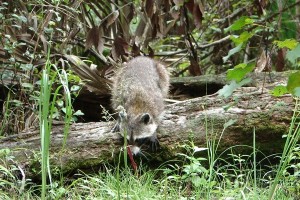
Racoon at “da dog ‘yaks” geocache.
One geocacher posting in the forum said it perfectly, “WOW, [geocache owners] thank you for doing everything you do for the sport of geocaching, and keeping these older caches active.”
For more details check out the Geocaching Forums. What’s the oldest geocache you’ve ever logged? Did it have its original container?
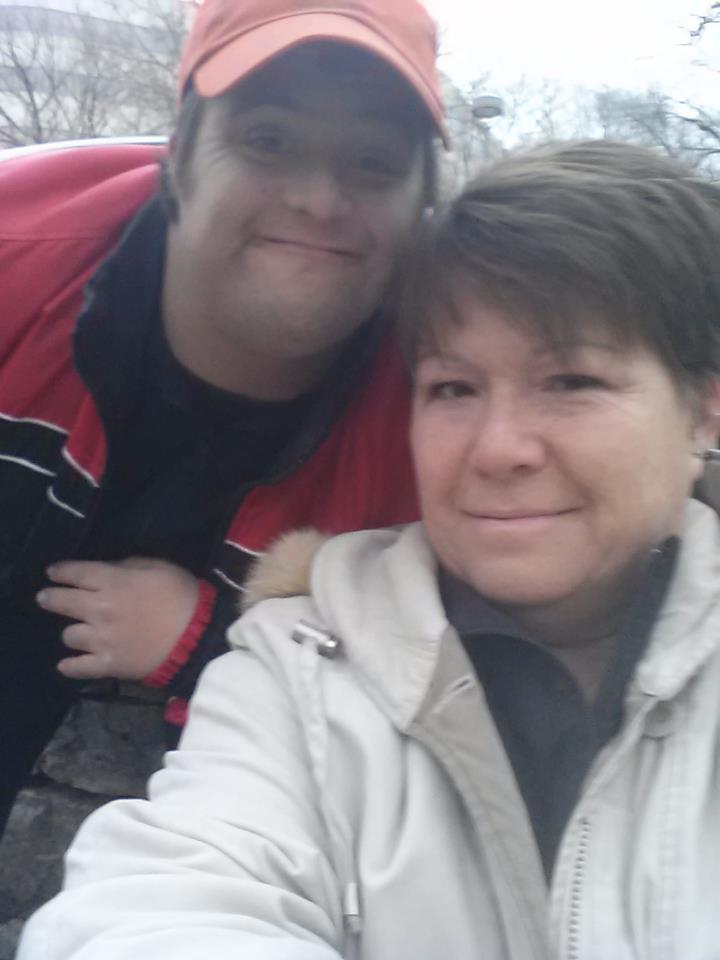
The post on the Geocaching Facebook page started with “My 28 yr old son (who has Down Syndrome) is my best geo-buddy!” The post from Peggy Caton, PeGC56, instantly struck the heart of geocaching buddies sharing an adventure. They search for ‘hidden-treasure’ only find the real treasure right next to them the whole way.
Peggy answers a few questions about geocaching, and about her best bud and son Brian who goes by the geocaching name CoolGuy84.
How did you discover geocaching?
I discovered it when a couple of my Facebook friends posted about going geocaching last summer. I Googled it instead of asking! I originally didn’t even think to include Brian (CoolGuy84’s real name—and BTW he made up his own geo-name), my younger son and his gf had heard of it before and had been wanting to try it, so the 3 of us set out one evening and only found 2 of the 5 we looked for, but were hooked none the less.
What attracted you to geocaching as a mother and son activity?
We live in a small Missouri town (suburb of KC) and were surprised to find so many geocaches in Raytown—Brian eventually joined us for a few adventures as the others of us got the hang of caching. My other son and his girlfriend lost the fever somewhat between work and life, but Brian was hooked. Its kind of a long story, but in the previous year and a half my family had quite a few losses. We had evolved into sad depressed lumps. Once we discovered geocaching suddenly we were out almost everyday. We went hiking on the trails; we ran up and down hills; climbed rocks and got fresh air and sunshine! I know it sounds sappy but it was kind of a miracle in our lives.
What’s your advice about geocaching to others with family members who have Down Syndrome?
Brian searching for a geocache
The only advice I have is to not hesitate to include them! Depending on their age there are a variety of ways they can participate. Younger kids can just enjoy the family time and the exercise and fresh air (and eventually become experts). Kids with Down Syndrome tend to be very sedate in nature and would be happy sitting; but then tend to be overweight also. There’s all kinds of therapeutic benefits too—it’s a gross motor activity, fine motor activity (getting to the containers; opening containers; digging through the swag and picking out what you want), it’s a cognitive activity—putting the pieces of the puzzle together to locate the cache. And it also has all the same benefits for them as with typical kids—learning about nature (we saw 2 deer in the woods closeup last weekend and Brian was in awe); traveling, learning geography, history (we’ve done several mystery caches that have taught both of us some interesting history facts). With older kids/adults like Brian it gives them quite a sense of accomplishment, pride and self-confidence. He is SO excited about all of them whether they are quick Park and Grab geocaches (P&Gs) (which he does love and doesn’t usually need my help at all) or if we’re hiking through the woods. Most of all its just plain fun for everyone and can help build a close family bond and hobby.
You describe “CoolGuy84” as a freak for geocaching. What excites him so much about the activity?
He just gets excited when he figures out where the caches are; he actually does better than me at actually finding the containers. I can read the maps/GPS like a champ and I can drive us there, but I find that he doesn’t have preconceived ideas about what a container should look like or where it should be hidden so he just looks everywhere! Even if I say “ehhh no its probably not there, I don’t know how they could hide one there” then BAM he has it found. He’s always so proud of himself and takes ALL the credit for finding it. Here is our caching chant: ME: “I drive the car, I read the map, you find the cache!! What do we call that?” BRIAN: “ TEAMWORK!!!”
————————
A special thanks to Peggy for sharing the story from all of us at Geocaching HQ. Leave a comment for Peggy and Brian below.
Reward Favorite Points to the geocaches that make you cheer with joy!
Your pulse-quickens. Your jaw drops. And you think, “No way!” It’s the “Aha!” reward of finding a geocache that’s a unique container, cleverly hidden or reveals an amazing location. Maybe it’s even all three of those elements rolled into one geocache.
Now you have nearly two million active geocaches to choose from for your adventure. You can celebrate the best of those geocaches by rewarding that geocache a shiny new Favorite Point.
Some geocaches have tallied hundreds of Favorite Points, some have even earned more than a thousand Favorite Points. And your Favorite Point matters.
A Favorite Point is a blue ribbon award that makes a geocache owner’s day. Favorite Points are your way of saying Thank You to the geocacher who hid and maintains the geocache. It’s also a way to let other geocachers know that geocache is well worth the journey.
Here’s the story of how Favorite Points work. Premium Members earn one Favorite Point for every ten geocaches they find. They can reward their points to any geocache where they logged, “Found it.” Basic Members who upgrade to Premium Membership receive Favorite Points accordingly to their past finds.
Searching by Favorite Points also offers a big time-saving advantage, since you won’t have to sort through page after page of search results to find the best geocaches in an area. The one-click solution is an easy way to instantly see which geocaches leave your fellow geocachers in awe.
You can help out new geocache hiders. Add a comment below and tell us what makes a geocache worthy of a Favorite Point?
In the hide and seek adventure of geocaching sometimes people find more than just geocaches. They find companionship, camaraderie and even love. Valentine’s Day is celebrated this week, and more than a few couples will show their love by sharing the adventure of geocaching. Couples combine their passion for exploration out on the geocaching trail. Sometimes these love stories lead to marriage proposals. You guessed it – those marriage proposals often involve an engagement ring in a geocache.
Geocaching HQ has compiled a series of Geocaching Love story videos from around the world. Couples from the United States, Germany and the Czech Republic share their stories. See how geocaching helps couples grow closer as they search for adventure. Happy Valentine’s Day from Geocaching HQ.
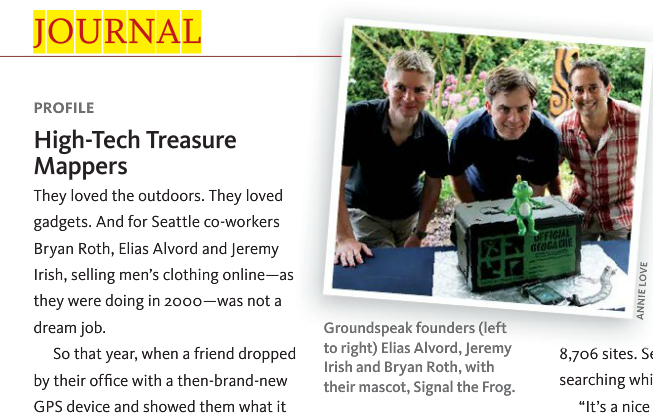
Geocachers grab headlines around the world as Ambassadors of Adventure, Everyday Explorers or just those people doing that new outdoor tech thing. While geocaching is not new to us, more and more people are seeing geocaching in the news and in TV shows.
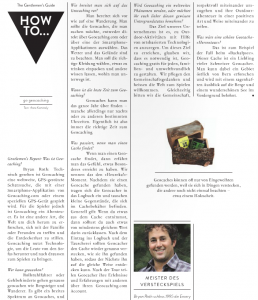
Geocaching Co-Founder Bryan Roth speaks to the Swiss Magazine The Gentlemen’s Club. (click to read p33)
You’re part of an emerging hobby that gets people outside and into adventure. Geocachers are a global band of tech-guided explorers some five million strong. Sometimes the geocaching adventure is just around the corner, other times the hunt delivers geocachers to the top of a mountain. But people always love to hear about the geocaching journey, especially in the media.
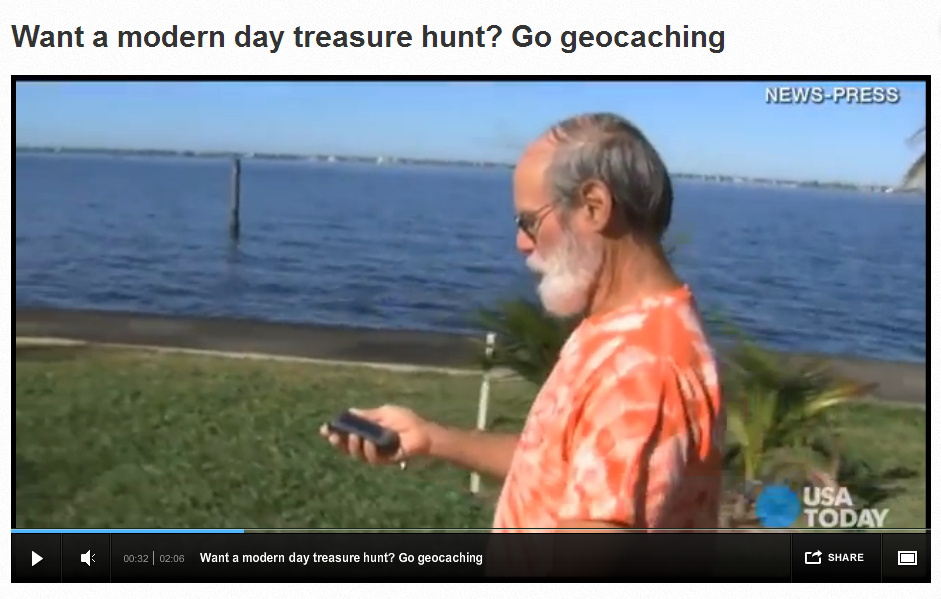
In the past weeks and months, geocaching has appeared in publications around the globe. Geocaching was featured as a tool to see and experience the world in a new way in the USAToday video, “Want a modern day treasure hunt? Go geocaching.” Geocaching Co-Founder Bryan Roth helped Swiss readers of the magazine The Gentleman’s Guide (p.33) learn more about the addictive hobby. A police officer, who’s also a geocacher, used the Geocaching app to help find a lost hiker. The story made national news in the United States. Even airline passengers are reading about geocaching in the Alaska Airlines Magazine.
USAToday video of Geocaching (click to watch)
Geocaching delivers something most technologies cannot – and it’s worth writing about. Geocaching takes people outside to connect with each other. Every time you sign a log book or replace a geocache where you just found it, you’re adding to the story of that location. You connect to a community with each geocache you find. You also care for the environment along the way. It’s a newspaper article or television story that never gets old.
You can continue reading too. You can always find geocaching in the news through this link.



 In the hide and seek adventure of geocaching sometimes people find more than just geocaches. They find companionship, camaraderie and even love. Valentine’s Day is celebrated this week, and more than a few couples will show their love by sharing the adventure of geocaching. Couples combine their passion for exploration out on the geocaching trail. Sometimes these love stories lead to marriage proposals. You guessed it – those marriage proposals often involve an engagement ring in a geocache.