Supersize My Geocache – The Biggest of BIG Caches

Ahhhhhh. Every geocacher knows the satisfaction of spotting that ammo can, prying the lid open, and climbing inside.

Wait. What?
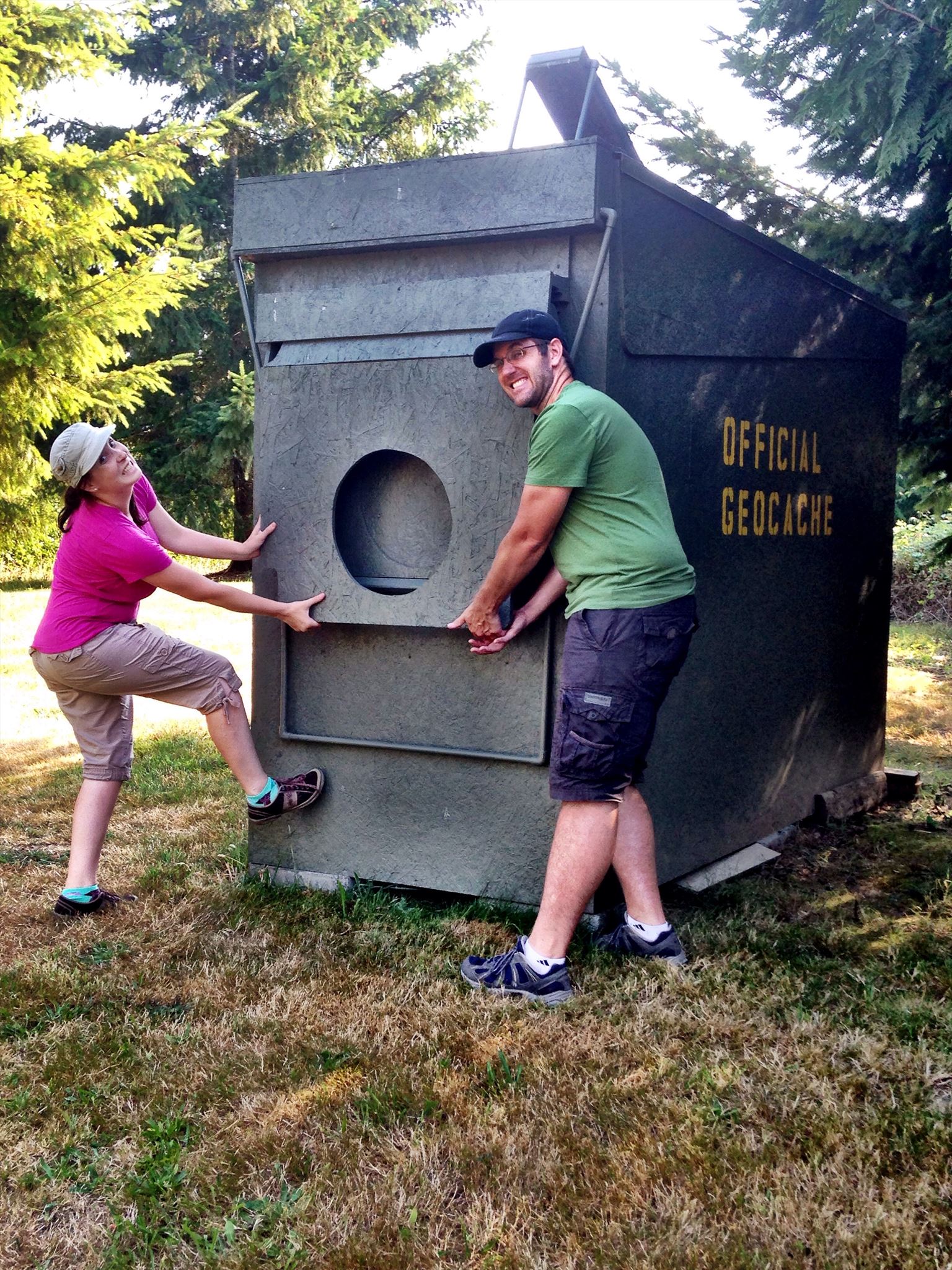
Big Ammo Can B&J
Geocaching team benandjayme at GC4RPG8.

That’s right, folks. This geocache in Washington state, also known as GC4RPG8, is totally real, totally not photoshopped, and totally cool. And it isn’t going to be lost anytime soon.

Big—and we mean BIG—geocaches are a whole new type of geocaching fun, for a few very big reasons.

1. The element of surprise

A good geocache container has the finder saying, “WOAH.” A great geocache container has the finder saying “WOAH” and then mass-texting all the other geocachers she knows a photo of it. Creative geocaches don’t always have to be sneaky small, tricky to open, or intricately built. Sometimes they just need to be really, really big.

2. No trackables left behind. 

Ever pick up a trackable that’s just too big for any other geocaches? Those days are over, my friend, once you find a Big Cache. Big geocaches don’t discriminate by size—though you may still have a hard time parking your trackable car.

3. Sign your name, write a novel.

No need to squeeze your ‘caching name into a strip of paper smaller than your finger…with the logbooks in Big Caches, you won’t be mincing your words. Anybody have War and Peace memorized?

4. Photo opportunities like no other.

A picture is worth a thousand words. Here are seven thousand words.
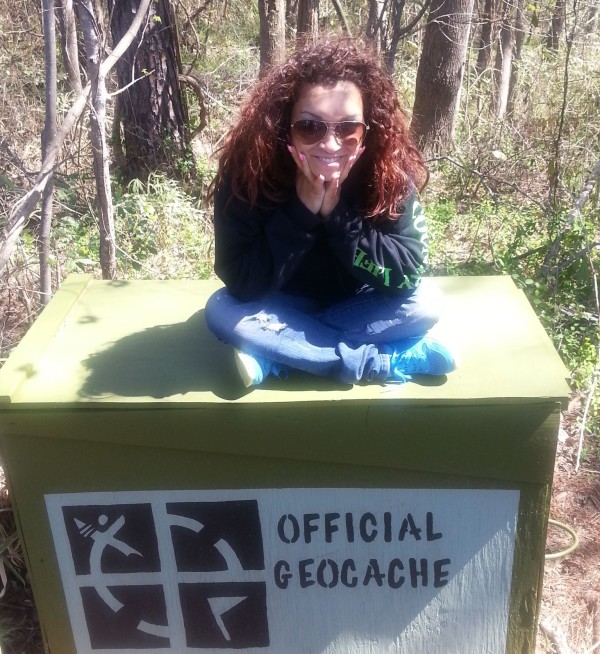
  • Just taking a break on GC3F3CW.
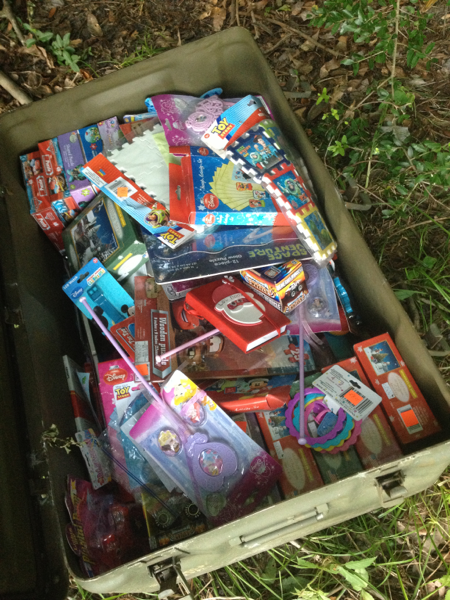
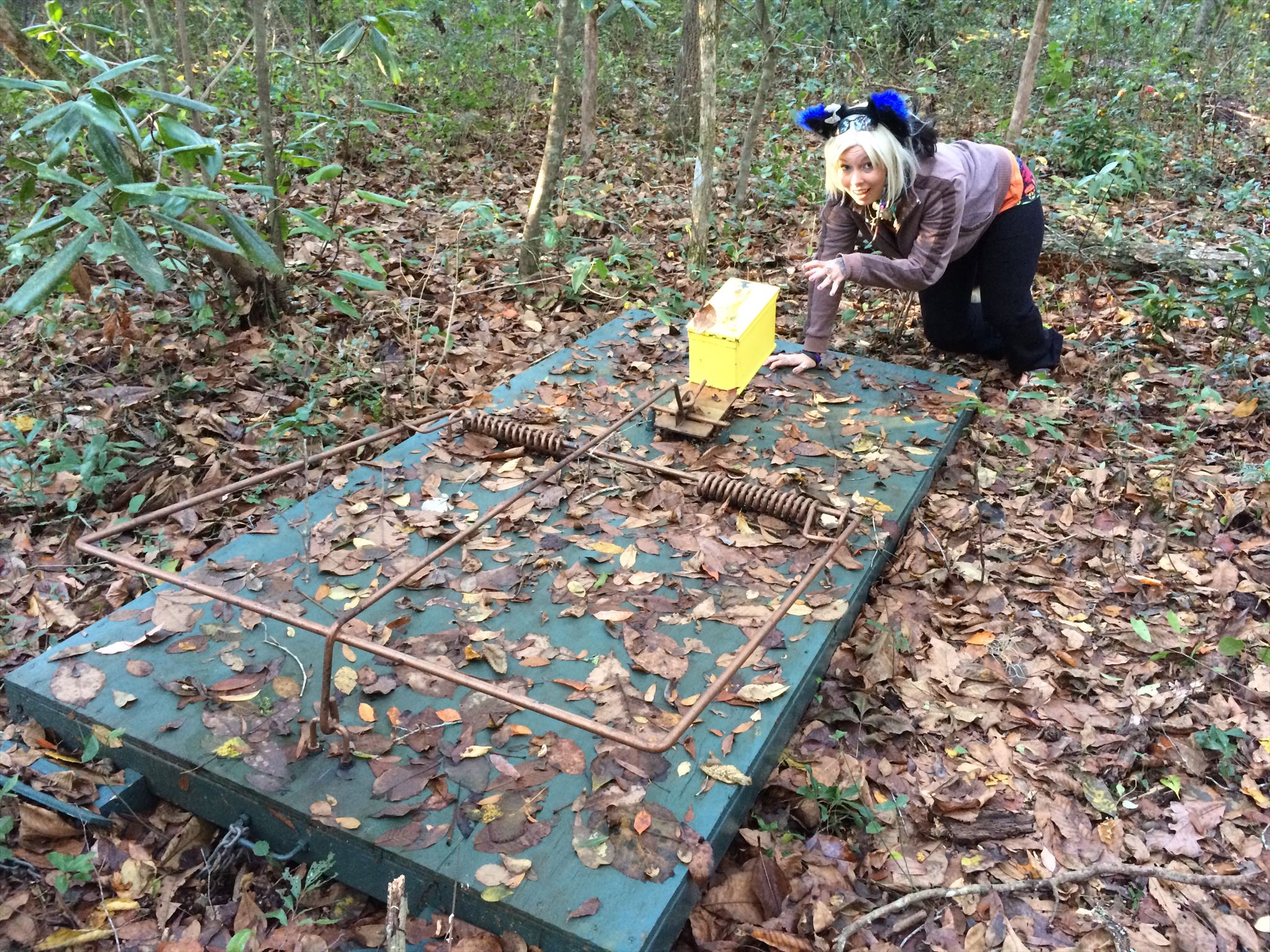
  • GC1DC55, or "Rat Trap"
  • GCXCEX, or "Bridge Boutique", in Ontario.
  • Typical "Where is it?!" moment at GC15RQB.
  • "Haksulandia", or GC16QCH, in Finland.
  • A cache the whole family can fit in! GC2Y8Q8.


GC1DC55, or "Rat Trap"
GC1DC55, or “Rat Trap”
9c619059-c555-43ee-8704-978867166bf7
GC38N61 is swag-tastic!


Sometimes, it’s not The geocache itself that’s big, but the structure that’s been built around the cache. We applaud those makers whose creativity knows no bounds, who moonlight as engineers, carpenters, and blacksmiths.
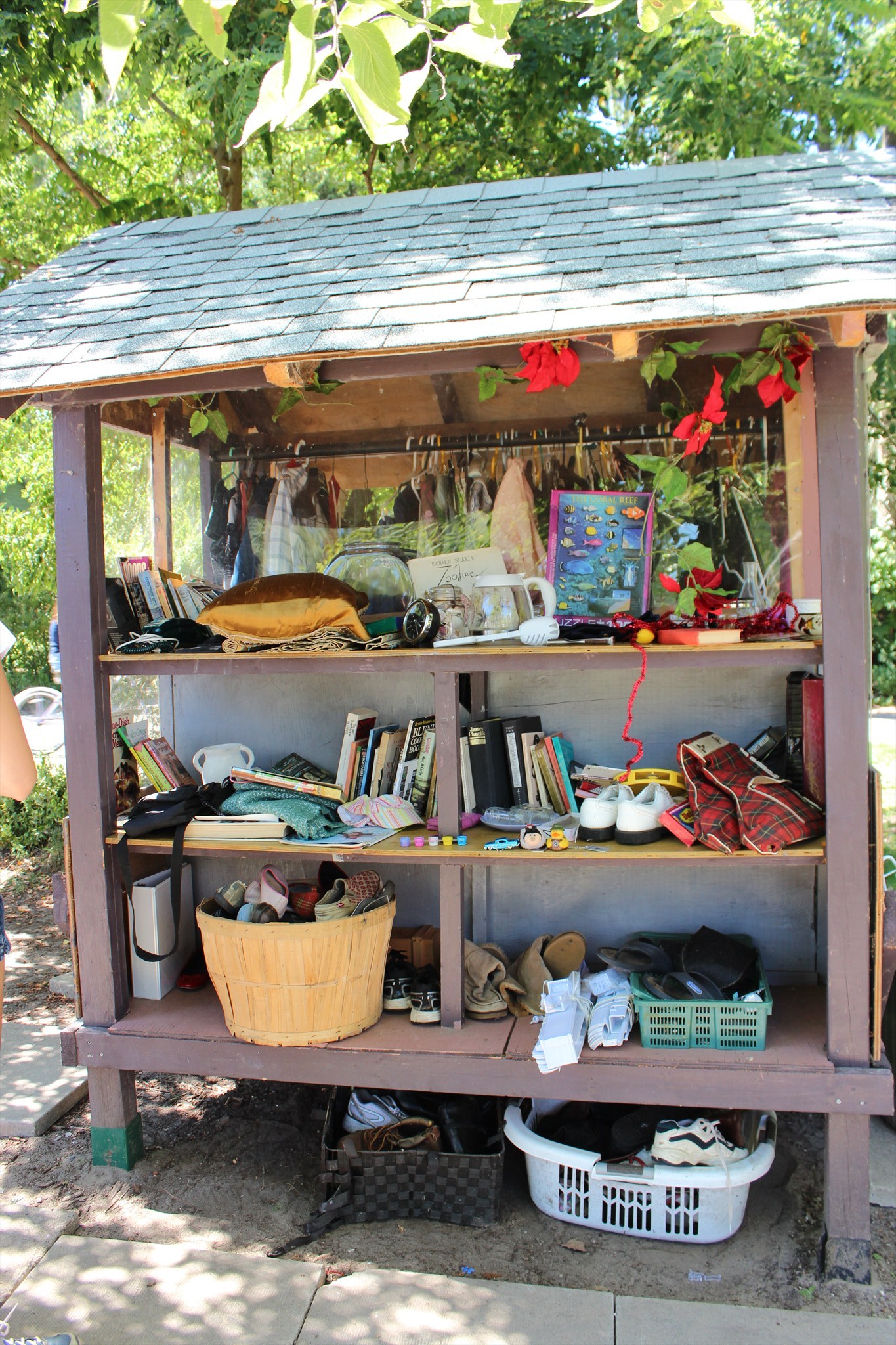
GCXCEX, or "Bridge Boutique", in Ontario.
GCXCEX, or “Bridge Boutique”, in Ontario.

What’s the draw for a cache owner to make a Big Cache? Well, geocachers will often come from far and wide in order to find a Big Cache, often with oversized trackables and buckets of swag. A Big Cache done well can draw a range of visitors dropping favorite points left and right.

Then there’s the logbook, which, since there’s no restriction to its size in a big cache, can be a lot of fun to sign.
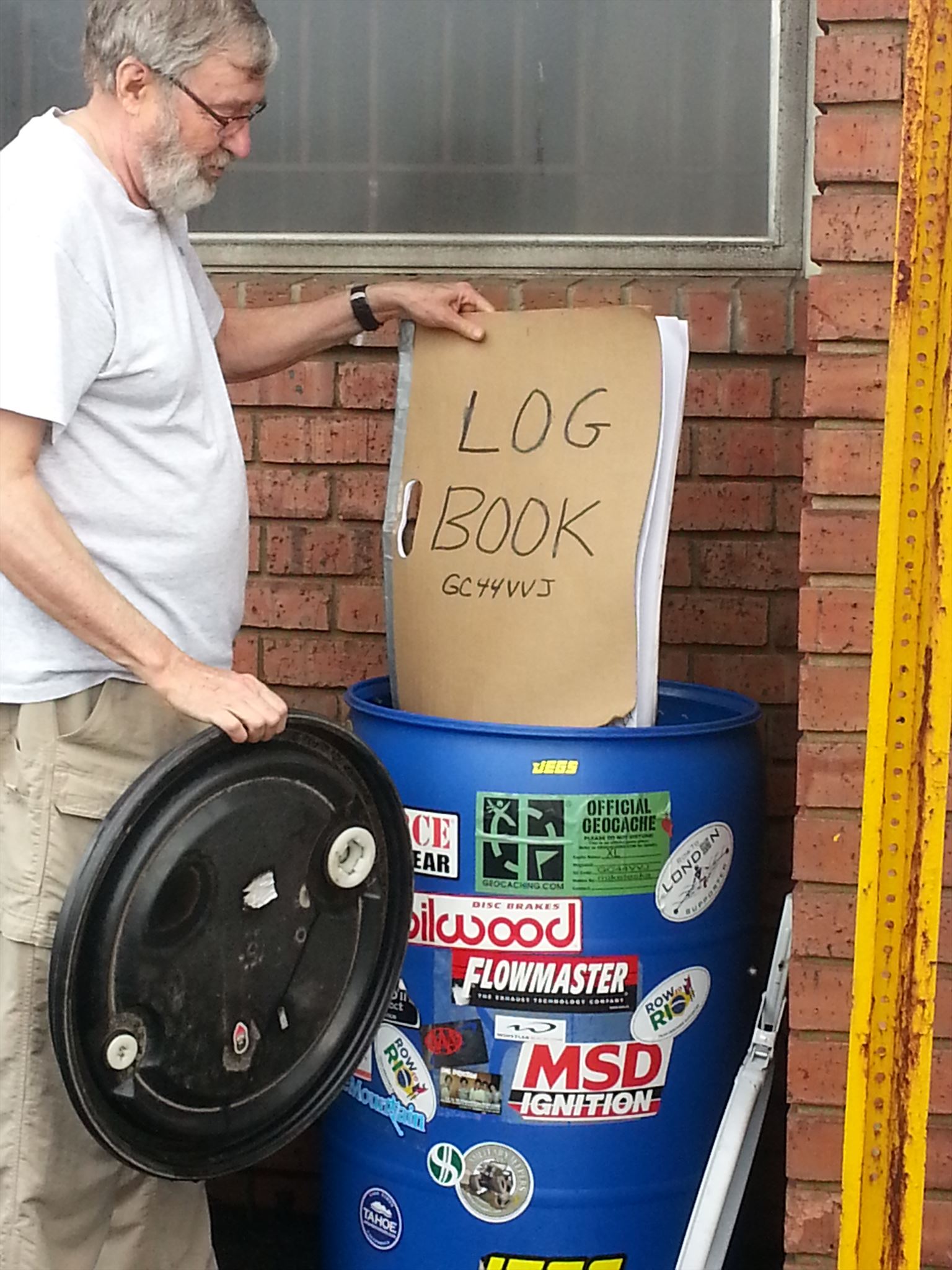
The logbook is in here somewhere...
The logbook is in here somewhere…

There’s something about walking up to a big geocache, and knowing that nobody in the world but a geocacher really knows what it is. Take this featured Geocache of the Week: to a muggle (non-geocacher) walking by, this is merely a beautifully constructed forest restroom.

The geocacher sees it as the final in a truly awesome multi-cache. Because that’s exactly what it is.
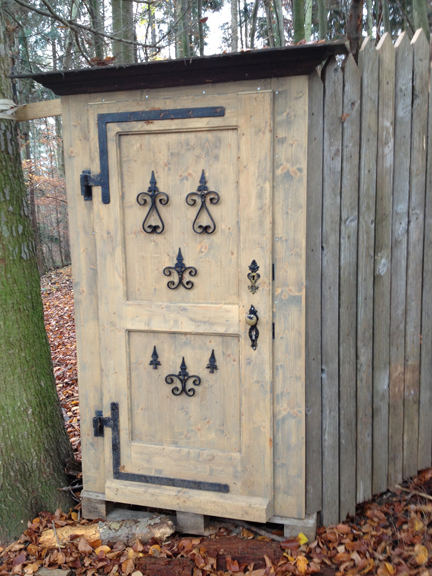
Das Vergessene Portal

It’s easy to find geocaches near you using the new Advanced Search. Premium Members can filter by size to suss out large geocaches near their home coordinates. Check back soon to see some really BIG trackables!

Share the BIGGEST Big Cache you’ve ever found, and the words you used to describe it to friends?



Send in Your Films for GIFF 2015

GIFF banner

Get your cameras rolling—the Geocaching International Film Festival is back for its third and final year. Over the past two years, geocachers have sent in films telling stories of adventure, love, FTFs, DNFs and things we can’t even begin to describe. So what’s next? That’s up to you. Help us send off GIFF with a bang by submitting the most creative video ever.

Submit your film by July 1 for the chance to have it screen at the final GIFF in Seattle, WA on August 14. Learn more about submitting a film here.

Not a filmmaker? Learn more about GIFF and log your Will Attend here.

(Hier kannst Du den Artikel auf Deutsch lesen)

Scheinwerfer! Kamera! Und bitte! Mach Dich bereit für GIFF 2015

MailerImage_04142014_GIFFAnnouncement_vFINAL_Blog


Reicht Eure Filme für GIFF 2015 ein!

Werft Eure Kameras an, denn das Geocaching-International-Film-Festival ist zum dritten und letzten Mal zurück. Während der letzten beiden Jahre haben Geocacher Beiträge eingereicht, die sich um Abenteuer- und Liebesgeschichten, FTFs, DNFs und Dinge drehten, die wir nicht einmal in Worte fassen könnten. Also, was kommt als nächstes? Das liegt ganz bei Euch! Helft mit, GIFF mit einem wahren Feuerwerk zu verabschieden, indem Ihr die kreativsten Videos aller Zeiten einreicht.

Reiche Deinen Film bis zum 1. Juli ein und sichere Dir damit die Chance auf einen Preisgewinn und die Vorführung bei GIFF-Events auf der ganzen Welt. Hier gibt es weitere Informationen zum Einreichen eines Beitrags.


Geocache with view

Itchy, Scratchy, & Rashy – Bad Things Come in Threes…

They say bad things come in threes. Poison ivy, poison sumac, and poison oak are three of the evilest plants out there. At least 50 percent of people who come into contact with these plants are allergic to them and will develop an itchy rash which can last as long as three weeks.

The best way to prevent a rash is to avoid poisonous plants all together. But if you are determined to get that D5/T5, then you need to know how to protect yourself. Avid geocacher (and dedicated nurse) Kelley Piekarek* put together these safety tips so all outdoor enthusiasts can keep themselves safe during geocaching’s busy season.

Prevention:
The best way to avoid the rash is to avoid the plant. The best way to avoid the plant is to know what they look like and where they grow.

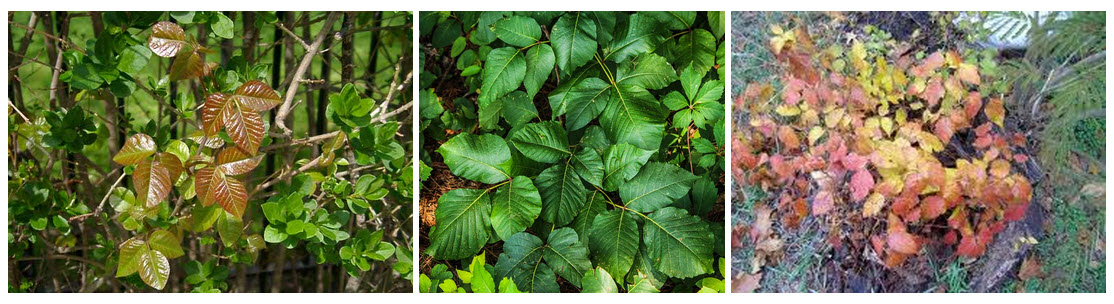
Poison Ivy is reddish in spring, green in summer, and yellow/orange/red in autumn

Poison ivy is reddish in spring, green in summer, and yellow/orange/red in autumn

Poison ivy:
Found throughout Canada and the United States except for parts of the West Coast. Can grow as a hairy vine or small shrub trailing along the ground or climbing on low plants, trees, and poles. Each leaf has three glossy leaflets with smooth or toothed edges. Leaves are reddish in spring, green in summer, and yellow, orange, or red in the fall. Found in woody areas, thickets, and moist places.

Poison sumac is orange in spring, green in summer, and yellow/orange/red in autumn. Often, the leaves have spots that look like blotches of black paint.

Poison sumac:
Grows as a tall shrub or small tree in bogs or swamps in Northeast, Midwest, and parts of Southeastern North America. Each leaf has clusters of seven to 13 smooth-edged leaflets. Leaves are orange in spring, green in summer, and yellow, orange, or red in the fall. Often, the leaves have spots that look like blotches of black paint. May have yellow-greenish flowers and whitish-green fruits that hang in loose clusters.


Poison Oak leaves tend to be glossy, and the plant grows upright. May have yellow-white berries.
Poison oak leaves tend to be glossy, and the plant grows upright. May have yellow-white berries.

Poison oak:
Grows as a low shrub in the eastern and southern North America, and in tall clumps or long vines on the Pacific Coast. Poison oak usually has a cluster of three broad leaves, though it can have up to seven. The leaves tend to be glossy, and the plant grows upright. Western poison oak has lobed leaflets like an oak tree, while eastern poison oak is more like a glossy version of poison ivy. May have yellow-white berries.

shoesProtection:

  • Keep your skin covered to avoid contact with these plants
  • Wear a long-sleeved shirt, long pants, gloves, and closed shoes if you’re in an area where these plants may be lurking
  • Tie the bottoms of your pants legs or tuck them into your boots
  • Wear gloves when bushwhacking
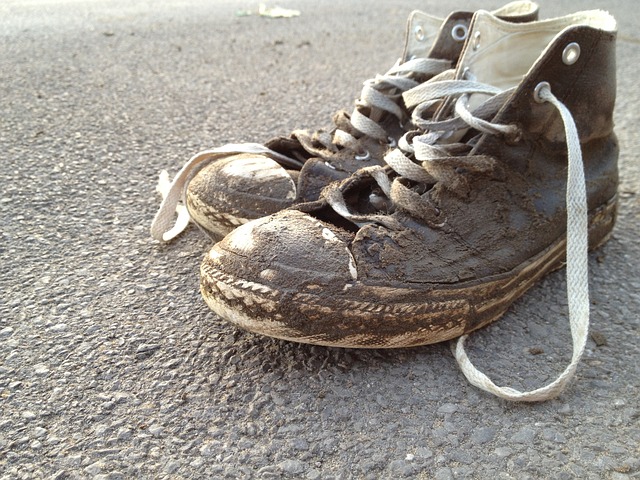
  • It’s a good idea to keep a pair of shoes dedicated for geocaching that can be kept outdoors

OOPS!  I’ve touched it, now what?
The chemical that causes the rash is called urushiol and it will stick to your skin when you touch or brush against any part of the plant. It will also contaminate your clothes, ‘caching gear and your geo-dog, too! Remember, you can’t spread the rash to other people, but you can get the rash all over again if you touch contaminated items you haven’t washed.

  • If you know your skin has come in contact with the plants, wash with soap and water immediately
  • If water is not available, wipe down the area with rubbing alcohol
  • Wash your clothes with hot soapy water
  • Hose down your boots, geocache bag, leash, and anything else you took on your hike
  • Wash your geo-dog well with soapy water and wear gloves while you do this (she can’t get the rash, but you can get it from her)
Some dogs like baths as much as they like geocaching!


Help! I have the rash!
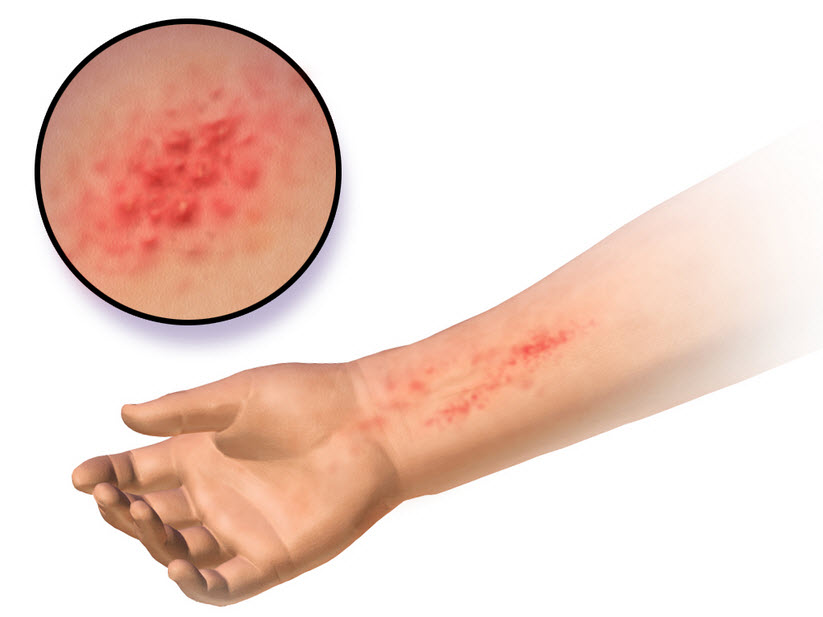
The rash often looks like a straight line because of the way the plant brushes against the skin. But if you come into contact with a piece of clothing or pet fur that has urushiol on it, the rash may spread out. The rash usually develops 12 to 48 hours after exposure and typically lasts two or three weeks. To treat the rash at home:

  • Do not scratch, as scratching can cause an infection
  • Leave blisters alone—if blisters open, do not remove the overlying skin since the skin can protect the raw wound underneath and prevent infection
  • Consider applying calamine lotion or hydrocortisone cream
  • Consider taking antihistamine pills (with your doctor’s approval)
Rash caused by poison ivy - and this is one of the "nicer' images
Rash caused by poison ivy – and this is one of the “nicer’ images


If you have any of the following symptoms, you need to go to the Emergency Room. Like, right now:

  • You have trouble breathing or swallowing
  • The rash covers most of your body
  • You experience swelling, especially if an eyelid swells shut
  • Much of your skin itches, or nothing seems to ease the itch
  • You develop a fever greater than 100 F (37.8 C)
  • The rash doesn’t get better within a few weeks

Stay safe out there my friends, and cache on! How do you stay safe while enjoying your favorite hobby?

*If the name Kelley Piekarek sounds familiar, it may be from this story that made national geocaching news in February of this year. Woof! 

Do you like lakes? — plitvice lakes (GC1FNKR) — Geocache of the Week

Geocache_of_the_Week_vFINAL_122314

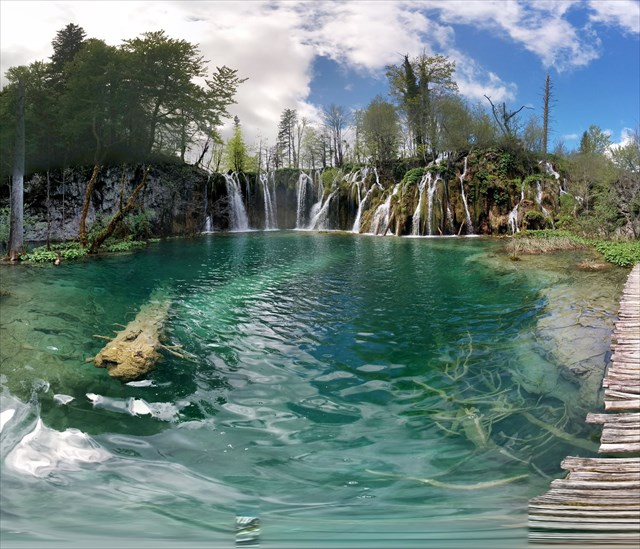
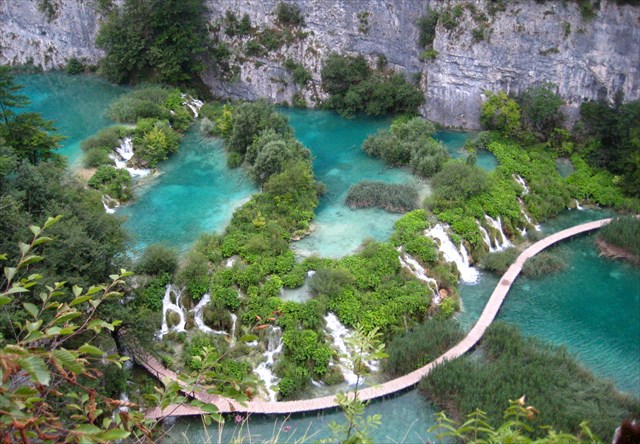
Absolutely gorgeous! Photo by geocacher Brainburned

Geocache Name:

plitvice lakes (GC1FNKR)

Difficulty/Terrain Rating:

2/1.5

Why this is the Geocache of the Week:

Beautiful places like these don’t form overnight. It takes thousands of years of geologic processes for beauty to evolve out of rocks and water. While photos may enable you to appreciate the vibrant colors and incredible scenery, an EarthCache like this one gives you an appreciation for the processes behind the beauty by teaching you about the sequences that took place to form it.

What geocachers have to say:

“We had tour around beautiful lakes. Whole day we walked around the park. Lots of pictures were taken and beutiful places were seen. Thanks for the earth.” – Legsa^

“Its so beautiful there and the sun was shining the whole day! We had a very nice time here! TFTC” – Schesn

“Daily trip together with DieterRoland from Drvar – Bihac – Plitvice Lakes. Perfect weather, visiting historical sites, beautiful landscape and an impressive scenery here in the National park. TFTC!” – Steveeeee


Photos:

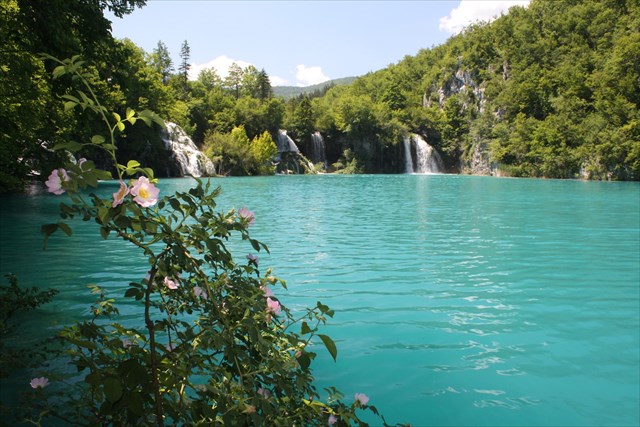
This view is ok, I guess. Photo by geocacher rum.burak
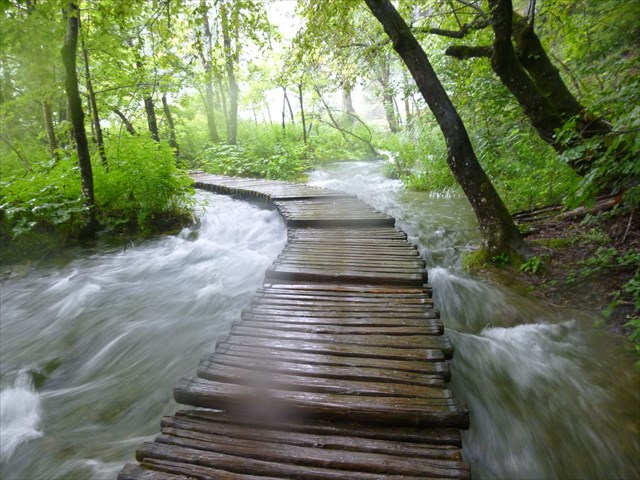
One of the pathways through the lakes. Photo by geocacher zansquare
The lakes and waterfalls. Photo by geocacher Suikerbossies

What was the last thing you learned from an EarthCache? Tell your story and post photos in the comments.

Continue to explore some of the most engaging geocaches around the globe. Check out all the Geocaches of the Week on the Geocaching blog. If you would like to nominate a Geocache of the Week, just fill out this form. Thanks!