Advice to Geocache Hiders from Law Enforcement

Use a well marked container
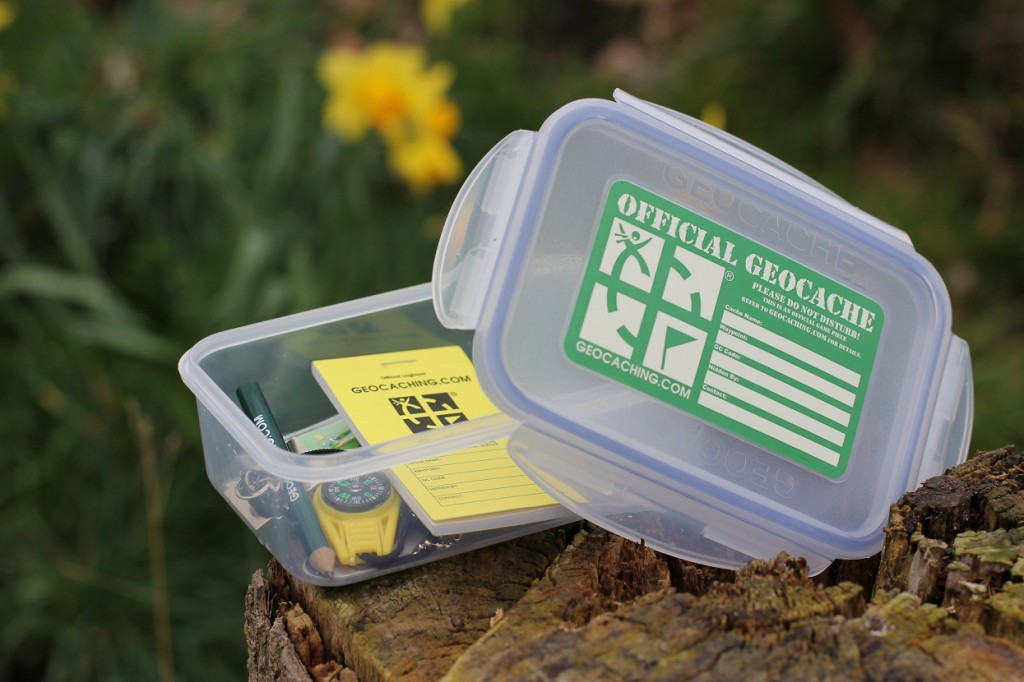
Use a well marked. clear container whenever possible

Here are two words geocachers crave hearing when their geocache is published, “Found it.” And then there are two words all geocachers would prefer never to hear when talking about a geocache hide, “suspicious device.”

In an age of increased concern, geocachers must be increasingly diligent to follow the rules while hiding a geocache. Make sure to read and follow the Geocaching Listing Requirements/Guidelines. Also make sure to use common sense, and always keep in mind how your geocache container or the location of your container may be perceived by people who are not familiar with the game.

We asked law enforcement professionals and a bomb disposal tech with the U.S. Army to offer advice to geocachers. It’s easy to ensure your logs say “Found it” and your geocache hide never alarms authorities.

Here’s their advice.

Question: What are the do’s for geocachers when hiding containers?

Sgt. Kent Byrd answers this question. Sgt. Byrd has been featured in Geocaching videos, and is a Explosive Ordinance Disposal expert with the U.S. Army currently deployed to South Korea. He’s an avid geocacher with the username, JrBYRDMAN162

Get permission: Sgt. Byrd says, “If you hide the container near a public building, make sure that you obtain permission from the business /property owner.”

Take pictures: “Also, try to give pictures of the geocache to the business/property owner. That way if the geocache gets called in, the owner has the option and ability to present those pictures to the personnel investigating/dealing with the geocache.”

Mark it clearly: The “Official Geocache” stickers are a huge help. Also, if the size of the geocache allows, write your phone number on the geocache itself in large numbers. This will give a law enforcement another option to deal with the geocache.

Be PROACTIVE: Talk to your local law enforcement entities. Offer to do a short workshop on geocaching. Get them involved. All it takes is getting one Bomb Disposal Technician involved in the game and they will start to solve the problem in your area for you, because of their personal love for the game.

Question: What’s your one piece of advice for geocachers?

Karin Fechner with the Austrian Polizei answers this question. Her unit, like many police departments, utilizes a complimentary Premium Membership to help them identify geocaches. 

Karen says, “Always carry an id-card, passport or other document to be able to show it in case of a control. Show the navigation item or mobile-app you use in case of a control. We already had cases, when suspects claimed being geocachers but actually weren´t.  So it is always a good advice to show your equipment to the officer in case of a control. There are still a lot of law enforcement-officers who don´t know geocaching – of course there are also a lot of geocaching police-officers – but be prepared to explain what geocaching means and what you are actually looking for.”

Question: What shouldn’t geocachers do?

Josh Nelson answers this question. He’s with the Department of Natural Resources at Wasatch Mountain State Park in Utah. 

Josh says, “If you are geocaching in a State Park (Specifically speaking for Utah, but with my experience it’s universal) and are confronted by a park employee or law enforcement, don’t try to give some story of “I saw a cool bug” or the likes. These stories are great for other muggles, but just make you look suspicious to Rangers. Just tell them you are Geocaching, often they know the program and may even enjoy hanging out with you until you make the find.”

Question: What are the don’ts when hiding a geocache container?

According to Sgt. Byrd, “DO NOT put caution words on the outside of containers such as CAUTION, WARNING, DANGER, BEWARE, DO NOT OPEN, etc., regardless of what follows such words.”

Sgt. Byrd says, “Do remember, that some departments do have Standard Operating Procedure’s that require them to deal with all packages of a certain dimension in a destructive manner. Nano-caches, micro, and mini, caches are not only less likely to be spotted by a muggle, but are not of great concern to Bomb Squads… Use the common 9-volt battery as a reference. If it is smaller than a 9-volt battery, it is much LESS likely to be destroyed.  Use clear containers whenever possible.”

Sgt. Byrd reminds geocachers that law enforcement are doing their jobs and their best to protect the communities they serve, whether it’s in Austria, a State Park in the U.S. or military serving abroad.

If you’re a Law Enforcement representative or Parks Personnel we offer a complimentary and ongoing Premium Membership for the purpose of monitoring geocaching activity in your jurisdiction. Learn more here at the Law Enforcement & Parks Professional resource page. Simply create a free basic account on Geocaching.com, choose a username that reflects your organization, and email us at geocaching.com/help for your upgrade.
A Beginner’s Guide to Geocaching in 3 Steps

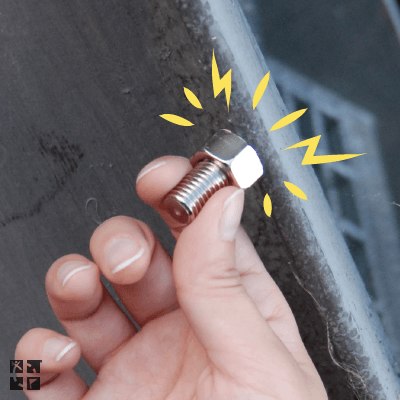
A double-whammy, a magnetic and camouflaged
A double-whammy: a magnetic and camouflaged geocache

Geocaching Back to Basics

Geocaching is actually pretty basic when you write it out—someone hides a geocache and challenges anyone to try to find it. Whether you’re new or a geocaching veteran, it’s good to renew some of the other basics. It makes geocaching an adventure worth sharing.

1)      Warm up: Brush up on your geocaching knowledge with the new What is Geocaching? video. Be a pal and share it with your fellow geocachers to start them on the right path.

2)      Finding basics: This is a big one, ready? Magnets exist. We even know how they work. Geocache hiders love to use magnets to secure a geocache under or on a metal object. They have also mastered all sorts of camouflage. See the image in the newsletter? It’s a double-whammy: a magnetic geocache that looks like a bolt. It’s easy to learn even more tips and tricks from friendly geocaching veterans, just attend a local Geocaching Event.

3)      Logging basics: BYOP. It means Bring Your Own Pen. When you finally track down the geocache, sign it with your username, the date and, if there’s room, some details about your adventure. Then, log your experience online or through the Geocaching App, maybe add a photo and BOOM—you’ve earned a smiley for your Geocaching profile.

There’s more to know and more to uncover (even for the experts). Stumped on something? Have a question about what TOTT* means? Chime in here in comments or on the Geocaching Facebook page for answers and advice.

*Tool of the Trade

Geocaching Block Party Video and GIFF Winners Revealed

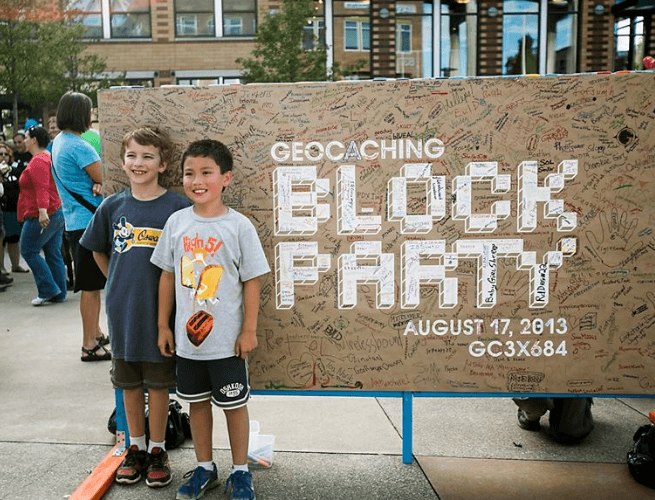
Adventurers from around the globe joined Geocaching HQ staff on August 17, 2013 to celebrate International Geocaching Day.  It’s tempting to measure the Geocaching Block Party 2013 in attendance (more than 3,000) or by the number of countries represented by geocachers (more than 12), but we preferred to look up from shaking hands and swapping stories and just measure the Geocaching Block Party in smiles—and there was plenty to smile about. Geocachers soaked up the creative geocaches, clever wordplay and tricky clues of a newly launched Geocaching HQ GeoTour. Geocaching HQ also debuted a new geocache type, Lab Caches, and asked geocachers to help test the new style of geocaching (potentially coming to a Mega-Event near you). Plus, did we mention getting to meet 3,000 other geocachers from around the world?

Check out the new Geocaching Block Party 2013 video to experience the thrill of the event. Make no mistake, we want to see you in the next video. Put it on your calendar, make your travel plans and log your ‘Will Attend’ for the Geocaching Block Party 2014 on August 16, 2014. Keep scrolling down for the winners of the Geocaching International Film Festival (GIFF) and more pictures from the Geocaching Block Party.

[youtube=http://youtu.be/6vSB496S-4U]

Click the image to see more than 450 pictures from The Geocaching Block Party 2013

The Geocaching Block Party didn’t stop when the sun went down. Geocachers rallied for the first annual Geocaching International Film Festival (GIFF). Annnnnnnnnnd the winners are…  GIFF coins

Most Adventurous Film
The Story Behind the Log – By: FredericBrot

Most Instructional Film
Geocaching Norway – By: Woodneyepatch

Best Cinematography
Galaxycache – By: aak7

Audience Award
My Geocaching Addiction – By: Mayberryman & Drjbroke

Most Inspirational Film
The Best Days of Our Lives – By: FrederikHast

Most Creative/Experimental Film
My Geocaching Addiction – By: Mayberryman & Drjbroke

Congratulations to each of the winners and all of the entries. Each finalist received a 1-year Geocaching Premium membership. Each award winner received a 5-year Geocaching Premium membership, a personalized (and super cool) trophy and a GIFF Geocoin. Want to see the finalists? There are two ways: attend a Mega-Event that will be screening them or view them online in Spring 2014. Mega-Event hosts should contact Geocaching HQ to request a DVD to screen at their event.

The view from the waaay back at GIFF


Master the 5 Ways to “Log Your Visit”

Navigating the “Log Your Visit” Options

WeeklyMailer_082613_Logs_vFINAL_blog


The latest evolution of the Geocaching.com geocache details page serves up a new big button labeled “Log your visit.” And with big buttons comes big responsibility. With one click, you’ll uncover 5 different log types. Here’s a quick field-guide to help you navigate to the best option.Leaving the correct log type is all part of the geocaching experience. If you aren’t sure if you should leave a DNF or a Needs Maintenance, or you need help deciding if you should use the powerful Needs Archived option, try just leaving a note. Geocachers who have that geocache on their watchlist will see your note and will most likely be happy to help you out.


  • Found it – It’s a well-earned smiley when you choose this option. You’ve found the geocache and physically signed the log sheet. Now begin the over-sharing. What was your adventure like? Did you meet new people? Did you see a turtle? We want to know. Tell that story, upload a picture, thank the geocache owner, and you’re in business.
  • Didn’t find it (aka: DNF) – We all have these days. This is a really important option. It alerts other geocachers that this geocache might be more difficult than first thought or might not even be there. If you leave a detailed note they’ll know the whole story, like if there’s evidence of a critter making off with the geocache or too many muggles in the area to make the find. A DNF is a badge of honor and it’s easy to go back and          turn a DNF into a “Found it.”
  • Write note – “There’s serious road construction leading to the geocache.” That’s a perfect example of a nice note. It’s not a “Found it” or a “Did not find,” it’s a way to ‘note’ify (yeah, we did that) other geocachers of conditions that affect finding the geocache, like “a new bee hive is in the area, bee* careful.” (*yeah – we did that too)
  • Needs Maintenance – The logbook is full, the geocache is cracked, or the camouflage is a little tattered—these are all good reasons to log your “Found it” then, log a separate “Needs Maintenance.” The geocache owner will appreciate your help and geocachers will appreciate the insight.
  • Needs Archived – Whew, well, this is the big one. Take a deep breath and count to 10, maybe even count to 100. This is a rarely used logging option and there’s more math involved. Use this option if the geocache has many DNF’s and “Needs Maintenance” logs without a “Found it” log.

Log Type Bonus Round! There are 2 more log types for Event Caches. An Event Cache allows you to meet your local geocaching community, swap stories, trade tips and plan geocaching outings.

  • Will Attend – It’s our version of RSVP’ing. This lets the event organizer know you’re planning on adding your wit, charm and presence to the event.
  • Attended – This is the “Found it” for events. You earn a smiley and an opportunity to leave a log with a great big ol’ ‘Thank You’ for the event organizers, as well as stories from the event.

Final Week to Vote as Rand McNally and Geocaching Team Up for Best of the Road 2013

rand mcnally logo


It’s that time of year again for Rand McNally’s search for the best small towns across America! The annual Best of the Road program seeks America’s favorite towns with populations under 150,000 in multiple categories, including Most Beautiful, Most Fun, Friendliest, Best for Food and Most Patriotic. And, new this year, in association with Geocaching.com and the Rand McNally Foris Outdoor GPS, Best of the Road is searching for the Best Town for Geocaching.  Help us during our campaign to find the towns with the best travel experiences and visit bestoftheroad.com to vote!