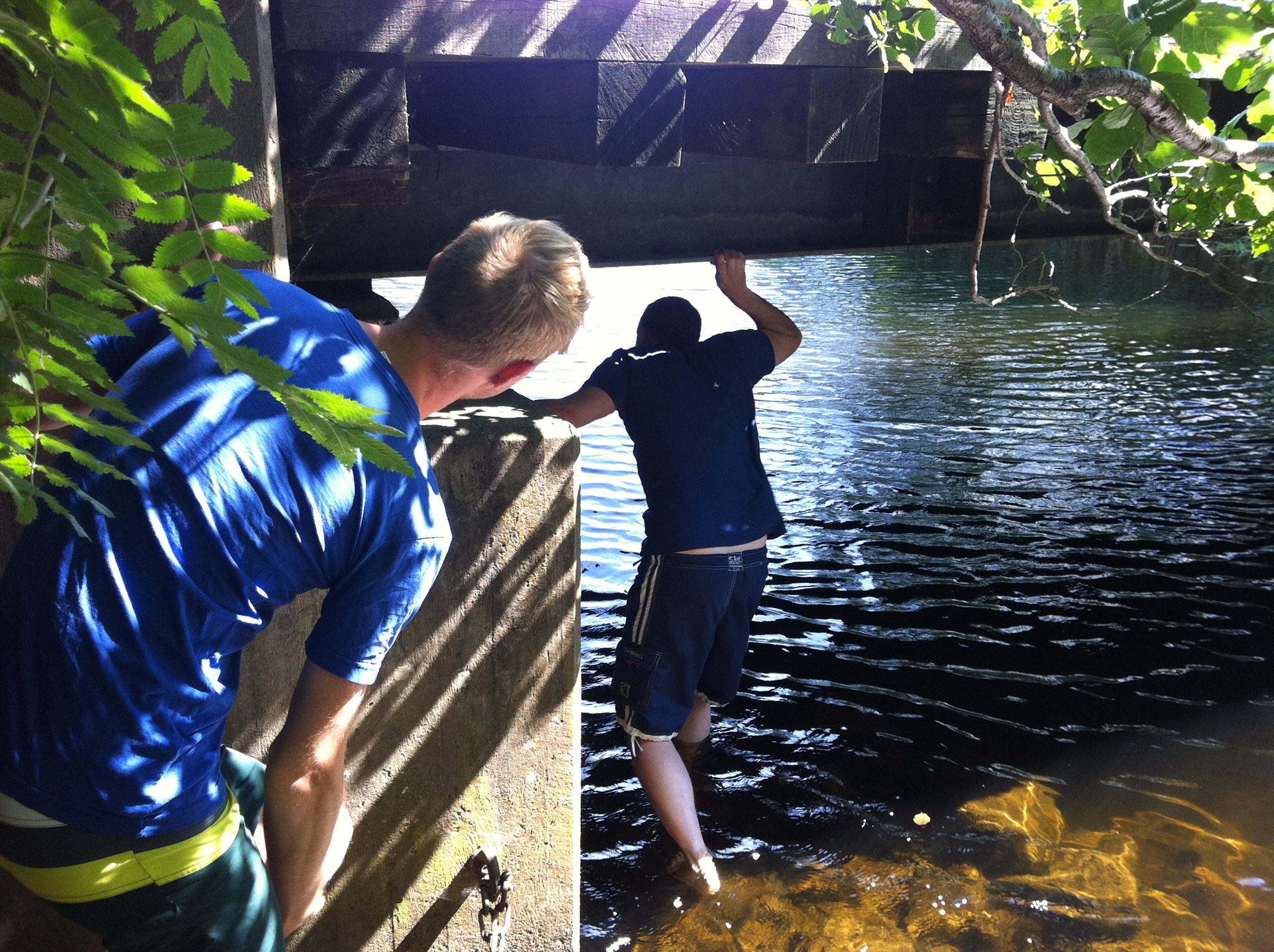
Did you see that out-of-this-world geocache or maybe you’ve heard whispers of it in geocaching lore? It’s the geocache with King Arthur’s sword in a stone, that geocache placed at the scene of a Hollywood train wreck, or maybe it’s even a birdhouse that houses no birds or something else that’s magical, ingenious and never-before-seen in the history of the geocaching galaxy. Yeah, wow. So you’ve heard of it?
A quality hide inspires and invites other geocachers to flex their geocaching creativity. There are ways for you to find the best of the best and ways to get inspired to create amazing geocaches. Use Favorite Points to find the geocaches that made your fellow adventurers’ jaws drop when they found it and follow the Geocache of the Week on our blog. Check out the Geocacher of the Month to see innovators in the geocaching world. Many of these all-stars have geocaches that have hundreds or even thousands of Favorite Points. The Geocaching YouTube channel offers a whole video series dedicated to Creative Geocaches.
There’s one stop you should make before locking yourself in the garage to craft the perfect geocache hide. Check out Advice to Geocache Hiders from Law Enforcement. Then you’ll be ready! Join us on the Geocaching Facebook page to talk creative geocaches and show off your geocaching wonders to the world.
Geocaching goes hand-in-hand with snapping a few shots of the wildlife and your adventure along the way. And sometimes combining two passions like photography and geocaching pays off. Check out some of the early winners in Minelab’s Ultimate Geocaching Hunt photo contest. Seven geocachers have already won the photo of the month award, including WherzaWiggTherzaWay and JonesPosse.
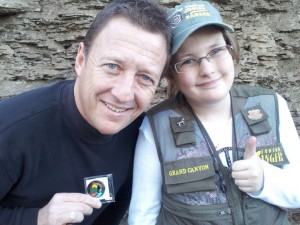
PoteauPets won the February Minelab photo contest for their sweet father-daughter portrait under the caption of “Love is in the air for this father/daughter pair.” PoteauPets enjoy geocaching as a family, and usually find caches in rural areas near where they live. “We truly LOVE geocaching and the time we spend together ‘on the hunt’ as a family,” said Dana of PoteauPets. “My husband likes the ‘evil hides’ while on the other hand, my daughter and I enjoy the cemetery caches. Our daughter loves to keep up with the trackables.”
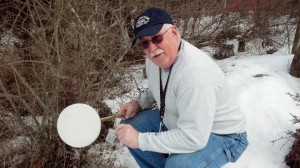
The Adventurers in Michigan won the March contest with their snowy photo of the Minelab geocoin and a metal detector. “Winning the contest for that month was a complete surprise,” said David of the Adventurers. David and his girlfriend/best friend enjoy discovering trackables and going geocaching everywhere and in all seasons. Another winner, Gary of JonesPosse, came away with a pocketed vest. He wore it to Geowoodstock XI and during a three-day hike along the Appalachian Trail for his 6,000th find.
Adventurers – March winner
There are still nearly three months left to enter the monthly photo contests and earn a chance to win a trip to Mexico. For more information on Minelab’s Ultimate Geocaching Hunt, visit the Minelab Geocaching page. When you’re ready to enter, go to the Minelab Facebook Photo Contest page.
Monthly prizes include a $400 Minelab coupon, a Minelab hat & vest, and all monthly winners will still be eligible for the grand prize: a Mexican cruise for two!
The Minelab “Ultimate Geocaching Hunt” photo contest is solely sponsored by Minelab, Inc., a subsidiary of Codan, LTD. NO PURCHASE NECESSARY. Open to legal residents of the fifty (50) United States and Canada who are 18 years and older at time of entry. Entry period for the contest commences at 12:01 a.m. (CST) on November 13, 2012 and expires at 11:59 PM (CST) on November 13, 2013. Void where prohibited. For details and restrictions, see the Official Contest Rules.
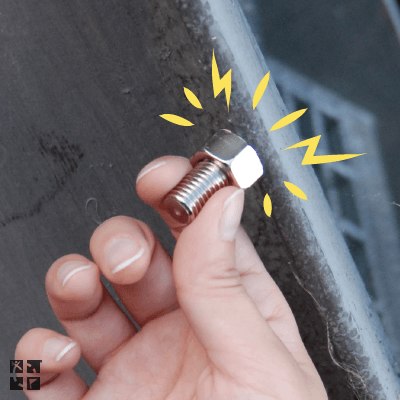
A double-whammy: a magnetic and camouflaged geocache
Geocaching Back to Basics
Geocaching is actually pretty basic when you write it out—someone hides a geocache and challenges anyone to try to find it. Whether you’re new or a geocaching veteran, it’s good to renew some of the other basics. It makes geocaching an adventure worth sharing.
1) Warm up: Brush up on your geocaching knowledge with the new What is Geocaching? video. Be a pal and share it with your fellow geocachers to start them on the right path.
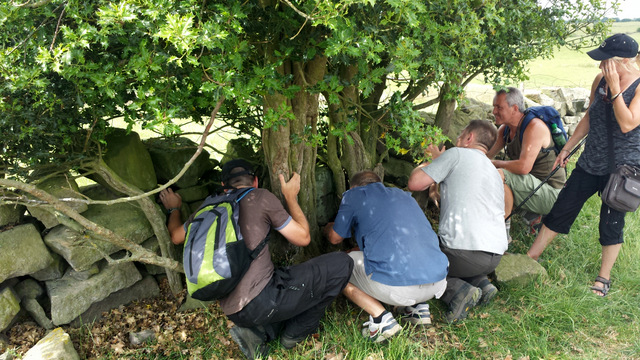
2) Finding basics: This is a big one, ready? Magnets exist. We even know how they work. Geocache hiders love to use magnets to secure a geocache under or on a metal object. They have also mastered all sorts of camouflage. See the image in the newsletter? It’s a double-whammy: a magnetic geocache that looks like a bolt. It’s easy to learn even more tips and tricks from friendly geocaching veterans, just attend a local Geocaching Event.
3) Logging basics: BYOP. It means Bring Your Own Pen. When you finally track down the geocache, sign it with your username, the date and, if there’s room, some details about your adventure. Then, log your experience online or through the Geocaching App, maybe add a photo and BOOM—you’ve earned a smiley for your Geocaching profile.
There’s more to know and more to uncover (even for the experts). Stumped on something? Have a question about what TOTT* means? Chime in here in comments or on the Geocaching Facebook page for answers and advice.
After an adventure like this, how could you not be hooked on geocaching?
Boy meets girl. Boy falls for girl. Girl forgets about boy. Boy asks girl on yet another ‘first’ date. Multiply this by 50 and you get the plot of the Adam Sandler and Drew Barrymore chick flick sensation 50 First Dates. Sometimes – between stumbling across a less-than-spectacular geocache and landing a poorly-timed DNF – getting your friends and family to share your love of geocaching can also take 50 first dates.
Or at least it used to. We’ve asked the geocaching community for their best advice on how to turn 50 first dates into geocaching love-at-first-sight.
The first step is simple: Let us help you tell a friend! Because geocaching can at times be tough to explain (it’s…uh… finding tupperware in the woods?), we’ve created a tool that removes the awkward and allows you to send a message to all your friends explaining the game and inviting them to join you on your next adventure. Tell A Friend About Geocaching lays the groundwork to make your first geocaching outing together a success.
From here, the key is to plan well so that you know your friend’s first experience will be a great one! Geocachers (like you!) reported high success rates using the following strategies:
1. Go to one of your favorite geocaches. This guarantees the “wow” factor and removes the risk of having a frustrating DNF experience.
2.Start off your trip by watching a few inspiring geocaching videos. Geocaching isn’t always easy to explain in words. Videos, like those on the GoGeocaching YouTube Channel, can help set the stage for your adventure.
More friends means more fun! Increase your find count with the help of your friends. Sometimes it takes a village to find a geocache.
3. Combine geocaching with another fun activity. Casually guide your friends on a mind-blowing treasure hunt during your work lunch break or after a dinner party. Hint: Secretly plan out this adventure in advance so you know it will be a good one, but act like it’s no big deal (e.g. “What this? I do stuff like this all the time. Just comes with the hobby”).
4. Start ’em young. Kids take very little convincing….and their parents will naturally follow along.
5. Attend a geocaching event! What better way to introduce your friends to geocaching than to show them how awesome other geocachers are. You can check out the new Events & Groups tab on the Geocaching Facebook page to find an event near you.
Now that you have all these tips and tricks up your sleeve, we have one final (not-so-secret) secret for you. The timing is right! 31 Days of Geocaching kicks off in just 5 days. This is a golden opportunity to get your friends and family out geocaching…so get on it!
Did these strategies help you get others out geocaching? Do you have any pointers that we missed? Tell us in the comments below.
Thousands of Travel Bugs are in motion right now. They’re powered by geocachers, bounding from geocache to geocache. Travel Bugs travel in pockets, backpacks, purses and snuggle up in suitcases for long distance voyages. Sometimes though, their travels stop cold. They get stuck in couch cushions, lost in the kitchen junk drawer or simply (and sadly) forgotten.
Here are 3 tips to help Travel Bugs do what they do best: travel. First, if you find a Travel Bug® or any trackable in a geocache, you are not required to trade anything for it. But if you take it, follow some common sense trackable etiquette. It all starts by entering the tracking code here.
• Log that you have retrieved the Travel Bug or trackable from the geocache as soon as you’re able. By logging that you’ve retrieved it, the Travel Bug owner, geocache owner and all those looking for Travel Bugs will know that this one is on the move.
• Check the Travel Bug’s goal by going to its page. It’s as easy as typing in the tracking code. Then you can find out if it’s headed to beaches around the world, mountain tops in Austria or somewhere else. The idea is to place the Travel Bug in a geocache that will move it closer to its goal.
• Drop the trackable in the next geocache and log that you have done so. If you need to keep the trackable for more than two weeks, please email the owner to let them know that their trackable is taking a short rest, but will be on the road again soon.
Geocachers who follow the 3 keys to Travel Bug etiquette help create the beautiful global choreography that unfolds in this Travel Bug® Travels video.
 Did you see that out-of-this-world geocache or maybe you’ve heard whispers of it in geocaching lore? It’s the geocache with King Arthur’s sword in a stone, that geocache placed at the scene of a Hollywood train wreck, or maybe it’s even a birdhouse that houses no birds or something else that’s magical, ingenious and never-before-seen in the history of the geocaching galaxy. Yeah, wow. So you’ve heard of it?