The new “Submit a Cache Listing” page walks geocachers through an easy six-step process to list a geocache. Creating a cache listing has never been more streamlined or easier to understand. You’re able to focus on what’s important – submitting a well-crafted cache listing.
The “Submit a New Cache Listing” process is now easier than ever before. An online tool or wizard walks you through each step. The steps flow from “Cache Basics” to “Location,” then “Additional Waypoints,” “Description,” “Container & Ratings,” and finish with “Submit Cache.” There are fundamental steps that cannot be skipped – such as a name for the cache and coordinates for the location – as well as optional steps. There are helpful tips and information throughout the process.
The treasure-hunting adventure of geocaching is finding its way into more community events, adventure games, and even school competitions.
Malibu Creek State Park in California, USA is combining geocaching with mountain biking, trail running, and rock climbing for its first ever “Malibu Adventure Games.” The event is a community effort to raise the funds needed to help keep Malibu Creek State Park protected and open for the public.
Daniel Weissauer with Malibu Adventure Games says geocaching is a perfect fit to showcase all the park has to offer, “We were interested in creating an exciting scavenger hunt for the Malibu Adventure Games using a format anybody could participate in, something combining technology and nature. Racking our heads together, we’d all heard of geocaching from word-of-mouth experiences and knew it’d be perfect”
He adds, “The Geocache Hunt is designed to highlight the beauty of the park.”
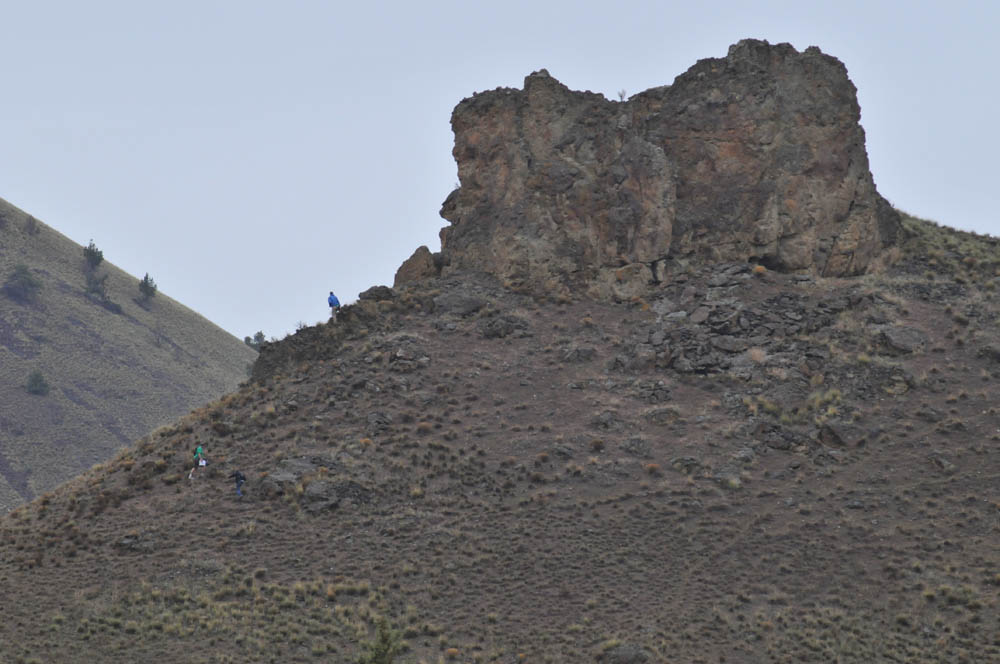
Others events, like the Wild Canyon Games in Oregon, USA use a geocaching course to challenge athletes. Geocachers are timed. Teams have five hours to hike, run, and scramble over rocks to accumulate geocaches worth the most points. 350 geocaches are hidden across 169 square miles of wilderness. The geocaches further from the start are worth more points.
Some schools are seeing the academic potential of geocaching. High School science students in Illinois are judged on their geocaching skills. The JV Science Team from New Trier Township High School outside of Chicago just placed first in the state in a geocaching competition.
Geocaching at the 2011 Wild Canyon Games
Geocaching is trial event in the Illinois Science Olympiad. Teams are given a GPS device and allowed 30 minutes to follow a sequence of waypoints to a location. At each way point the students must answer a question related to geocaching or earth science. A couple sample questions are, “What does hitchhiker mean in [geocaching] slang?” or “Who is considered the “Father of Geology?”
Weissauer with the Malibu Adventure Games says awareness of geocaching is gaining ground. He says it was an easy decision to make geocaching part of the Malibu Creek State Park event, “We included geocaching because
of its huge popularity, the unique location and history of the park, and the amount of families coming out. We believe the Geocaching Hunt will grow over the next few years as word gets out.”
If you find yourself in Malibu, California this weekend, space is still available to register for the event.
This April 1st begins a new day in your geocaching life. Unlock new geocaching moves that will dramatically increase your find count, give you a leg up on FTFs, and have you signing more TFTCs. From the makers of the (not very) popular Geocaching.com Hamster videos, watch Cachers of Steel: Cachin’s the Fashion.
Discover the all-new fitness craze that’s inspired by the world’s favorite outdoor hobby. You’ll learn new tricks of the trade with Cachers of Steel that include Ammo Can Deadlifts and Muggle Ducking, even watch an exclusive interview with Signal! This workout is guaranteed to have you FTFing, TFTCing, using your TOTTs like a pro—you’ll never forget to BYOP again!
Sometimes geocaching offers much more than a treasure hunting adventure at the intersection of a certain of latitude and longitude. The Long Beach Public Library Foundation in California, USA is tapping into the power of geocaching to encourage kids and adults to crack open the pages of a library book.
Geocaching is now part of an annual event called, “Long Beach Reads One Book.” The book selected this year is Zorro by Isabel Allende. Di LaPlume with the foundation says, “For the first time ever, we are adding geocaching to the lineup [of activities for the event]. For March, we’ve hidden a series of six Zorro-related caches in Long Beach. They are what I would describe as “mini” Multi-Caches. Each cache has its own theme that is related to the story of Zorro.” All the geocache descriptions are in English and Spanish. One of the Zorro-themed geocaches even leads geocachers into a library.
Zorro cache containerZorro library cache
LaPlume says the Library Foundation hopes the Zorro-themed geocaches promote literacy, encourage people to get outside, learn more about the book, and have fun.
Geocachers are given some incentive to find more than just one of the caches. LaPlume says, “During the month of March, anybody who finds all six caches can enter to win a special Zorro prize.”
So far the caches have been logged dozens of times. Geocachers in the Long Beach, California area still have until the end of March to discover all the caches and earn an additional prize. But the real prize might be that snapping open a geocache leads to more people opening books.
Warren Rieutort-Louis, rieuwa, in North Korea at the "Monument to Party Foundation"
A geocacher named Warren Rieutort-Louis, rieuwa, stepped foot where few Westerners ever walk. GPS devices and cell phones are not allowed. Geocaching doesn’t exist there.
Warren says, “It’s obviously a destination that is off the beaten path and travel is heavily regulated but it was a once in a lifetime opportunity. Fewer than 1500 Western tourists visit it every year.”
Warren’s journey to North Korea was arranged through a tour company based in China. The voyage began with Warren emptying his pockets of items which rarely strayed from his side. There were no cell phones or GPS devices permitted on tourists in North Korea.
But Warren wanted to keep a piece of something that has helped guide his personal exploration over the past four years. He brought along a Geocaching.com Travel Bug. He named the Travel Bug, “Asia Explorer.”
It was a momentous gesture. Geocaching.com Travel Bugs have spent more time in space, than in North Korea.
A Travel Bug is a trackable tag that you attach to an item. This allows you to track your item on Geocaching.com. The Travel Bug is moved from geocache to geocache around the world. You can follow its adventures online.
Warren says, “I knew beforehand that there were no geocaches in North Korea, but I still wanted to take a Travel Bug with me as a symbolic item.”
Warren geocaching with his sisters
A friend introduced Warren to the real-world treasure hunt of geocaching in 2008. He says, “[My friend] only found a few geocaches, but when he told me about it, I instantly knew I would love it. Wherever I am, I try to grab a few caches, whether it’s here at home in the US where I’m currently a graduate student in electrical engineering at Princeton, or in my ‘real’ homes, the Netherlands or southern Portugal, or in my travels.”
Warren decided to explore one of the least traveled countries in the world with his family in summer of 2011. Their private tour took the geocachers to remote North Korean villages. The Travel Bug could not be placed in a geocache and wait for another geocacher to move it along, but Warren says the Travel Bug may have helped crossed cultural barriers.
He says, “The day I took the picture with the Travel Bug in front of the ‘Monument to Party Foundation’ in the capital Pyongyang, I noticed a look of surprise from the guide who toured with us for two weeks. She was my age. I explained to her the concept of geocaching, and she found it absolutely fascinating. She couldn’t believe that people would carry these from cache to cache around the world.”
Travel Bug, looking over the Taedong river
He says the rest of his travels through North Korea offered, “…an informal opportunity to develop closer bonds with the population, and to discover awe-inspiring cultural, natural and architectural richness of the country. Overall we discovered a warm people, infinitely curious about the world outside.”
He says while the Travel Bug didn’t log any kilometers, it now carries a rich experience in a rarely traveled country. “It’s a unique glimpse into a society that we would find hard to understand its existence… without witnessing it.”
Warren says his other Travel Bugs have traveled the world. “I love traveling, so how could I not love Travel Bugs? I have five around the world at the moment, including my North Korea one, having traveled a total of over 40,000 kilometers.”
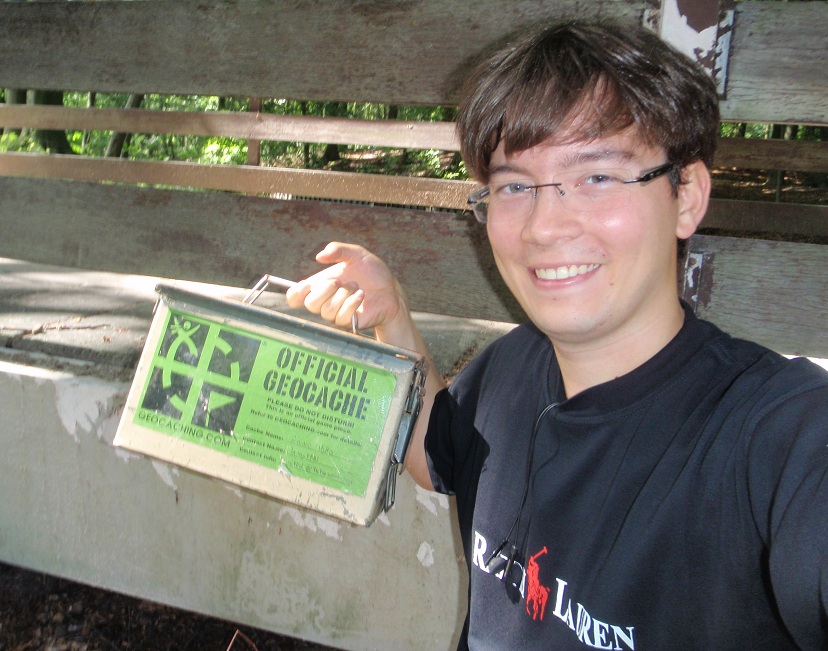
Warren geocaching
He hopes his “Asia Explorer” Travel Bug will make a return trip north of the 38th parallel. He says, “And who knows, maybe one day the Travel Bug will be able to head to North Korea… I am sure there will be a day when we will be able to introduce wonderful things like geocaching to our North Korean friends, whilst they share with us their cultural richness.”