A recent study by Geocaching HQ’s Data Team found actual DNF rates on geocaches were 3-5 times higher than what was reported in online logs. (See this blog post to read more.) In the new episode of our Inside Geocaching HQ podcast, hear more about the study and how logging your DNFs can lead to a healthier gameboard.
You can listen to the episode via this page, or on Apple Podcasts, Google Podcasts, or Spotify. If you use an aggregator to subscribe to podcasts, you can access the RSS feed here.
Guest blog written by avid geocacher (and dedicated nurse) Kelley Piekarek*.
A Floridian geocacher was reaching for a cache when she felt something bite her arm. Thinking nothing of it, she signed the log, replaced the cache, and moved on. Shortly thereafter her arm became red, swollen, and felt hot to the touch. The area surrounding the bite began to form what appeared to be an infection; her arm became very painful and she was running a high fever.
She went to the emergency room where it was confirmed that she had been bitten by a brown recluse spider. The area was surgically cleaned, she was put on antibiotics, and is now on the road to a full recovery.
Most spiders are absolutely harmless to humans. Of the 4,000+ species of spiders found in North America, only two are dangerous to humans—the brown recluse and the black widow.
Geocachers are fortunate to enjoy the wonders of nature. But as we all know, nature can be a bit scary sometimes. If you are informed and aware of your environment, you can avoid spiders bites and know what action to take if you’re bitten.
Brown Recluse
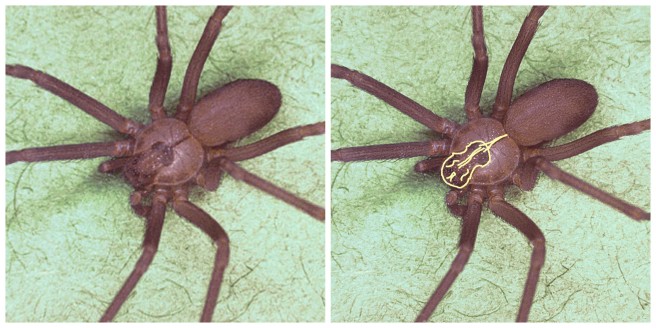
The brown recluse can be identified by the violin-shaped spot behind its eyes.
The brown recluse is ¼ to ½ inch long, and can be identified by the violin-shaped spot behind its eyes. They are native to North America and live predominantly in the Midwestern United States.
Black Widow
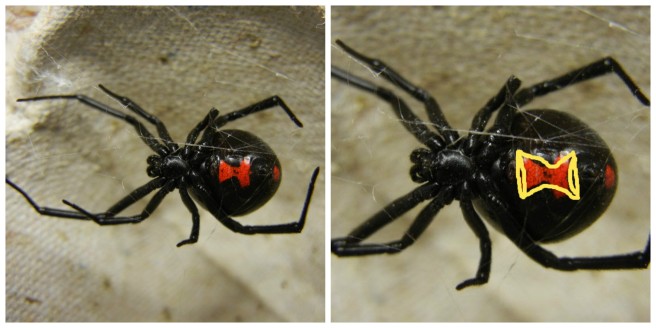
The black widow can be identified by a red, yellow, or white hourglass shape on their lower abdomen.
The black widow can be identified by a red, yellow, or white hourglass shape on their lower abdomen. There are many species of widow spiders found worldwide, but the North American variety is about ½ inch long.
Black Widow Distribution
Where do spiders like to hide?
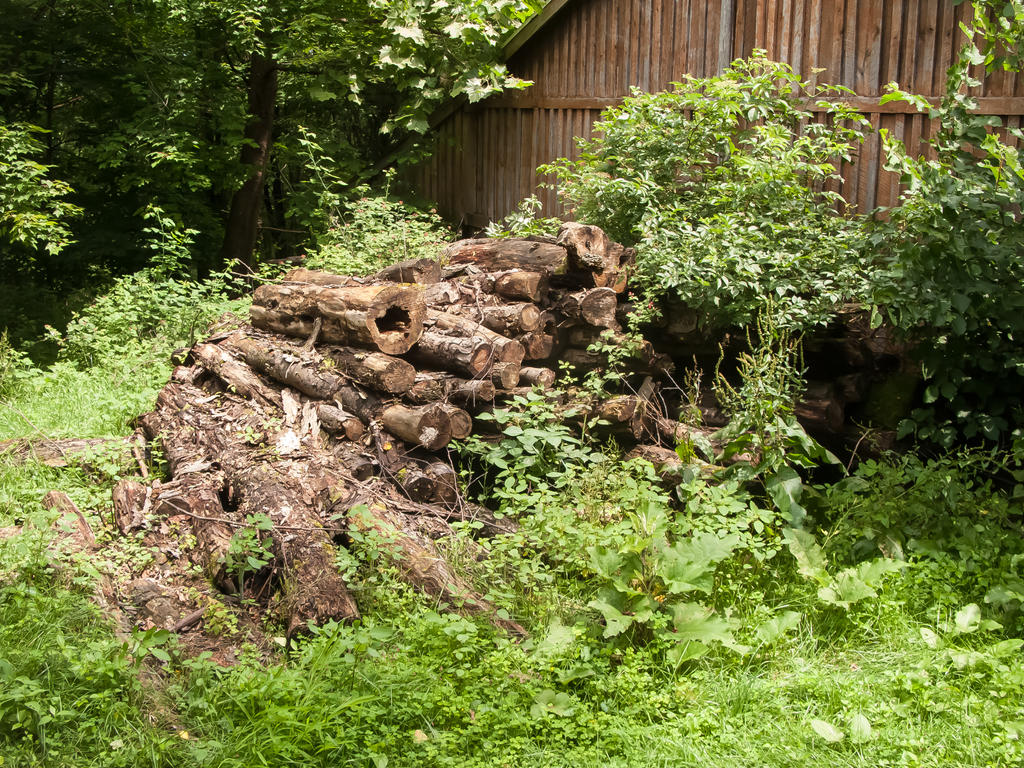
Spiders like to hide in wood piles
Both spiders are found in similar locations. Inside, they prefer to hide in small, dark locations such as closets, cellars, garages, vents, stored boxes, and within the cracks and corners of walls. Outside they prefer to live like a geocache—underneath rocks, in wood piles, and inside hollow tree trunks.
What do spider bites look and feel like?
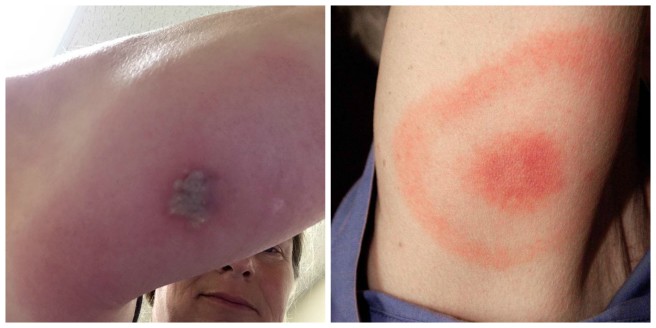
The bites from brown recluse (left) and black widow spiders (right)
The bite of the brown recluse is usually painless and goes unnoticed, but it may feel like a bee sting or there may be a burning sensation. Symptoms usually develop in 2-8 hours starting with a small white blister at the site of the bite.
Many bites will cause a small red mark that will heal without problems or scarring. However redness, blistering, an open sore, and a black area may develop and take months to fully heal. Other symptoms include severe pain at the site of the bite, severe itching, nausea, vomiting, fever, and/or muscle pain.
The bite of the black widow is similar to the brown recluse, and initially may look like two tiny Dracula fang marks. It feels like a pinprick, but also may not be felt at all. There may be slight swelling, redness and a spot that forms a target shape. Fifteen to sixty minutes later a dull muscle pain will spread from the bite area to the entire body. If the bite is on the upper body, the pain will be in the chest. If the bite is in the lower body, the pain will be in the abdomen.
What to do if you’ve been bit
Seek medical help if you think you’ve been bit by a brown recluse or black widow spider
Most spiders bites are non-venomous and require no specific treatment, but if you suspect you have been bitten by a brown recluse or black widow:
Seek medical attention right away
Remain calm to keep your circulation relaxed
Apply a cold pack to the area to relieve swelling and discomfort
Do not apply a tourniquet
If possible, bring the spider with you to the doctor’s office or ER for identification
How to avoid spiders
You’ve probably heard that spiders are more afraid of you than you are of them and that’s true. They’d prefer to avoid contact with humans all together, but they will defend their space. If you live in an area where co-existing with brown recluse and black widow spiders are part of the landscape, take some precautions:
Outdoors
Watch for spider webs, which are the most obvious signs a spider is nearby
Wear gloves and long-sleeved shirts, long pants, and sturdy shoes
Move rocks and debris with a stick when looking for your cache to protect your hands
At Home:
Keep your home clean and clutter free
Bits of food can attract bugs which will in turn attract spiders, so vacuum and wipe down surfaces often
Store your things in sealed plastic storage boxes or plastic bags with the edges taped shut
When unpacking stored items, shake items out thoroughly before use
Keep the sides of your home free of plants and debris
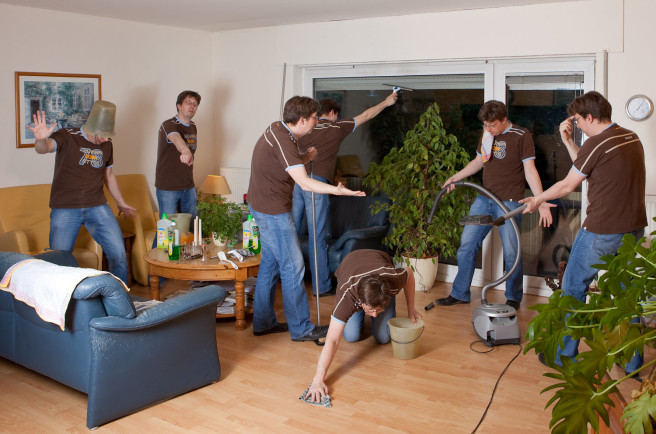
Keep your house clean and clutter free to avoid spiders
Stay safe out there, my friends. Be prepared and know what to do should a spider bite you, and keep on cachin’!
How do you stay safe while enjoying your favorite hobby?
*If the name Kelley Piekarek sounds familiar, it may be from this story that made national geocaching news in February 2015.
They say bad things come in threes. Poison ivy, poison sumac, and poison oak are three of the evilest plants out there. At least 50 percent of people who come into contact with these plants are allergic to them and will develop an itchy rash which can last as long as three weeks.
The best way to prevent a rash is to avoid poisonous plants all together. But if you are determined to get that D5/T5, then you need to know how to protect yourself. Avid geocacher (and dedicated nurse) Kelley Piekarek* put together these safety tips so all outdoor enthusiasts can keep themselves safe during geocaching’s busy season.
Prevention: The best way to avoid the rash is to avoid the plant. The best way to avoid the plant is to know what they look like and where they grow.
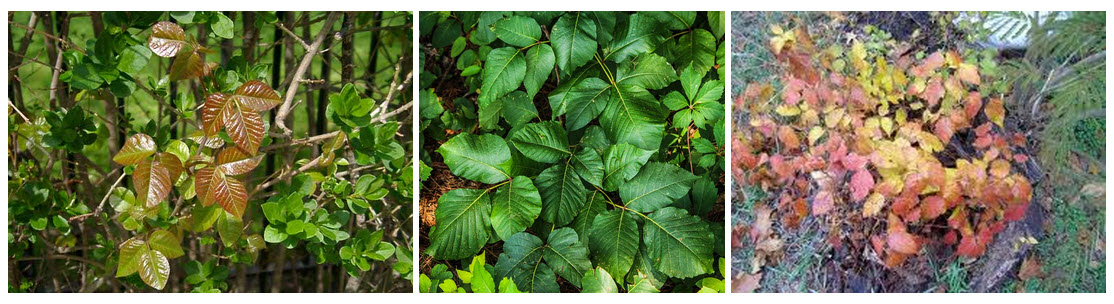
Poison ivy is reddish in spring, green in summer, and yellow/orange/red in autumn
Poison ivy:
Found throughout Canada and the United States except for parts of the West Coast. Can grow as a hairy vine or small shrub trailing along the ground or climbing on low plants, trees, and poles. Each leaf has three glossy leaflets with smooth or toothed edges. Leaves are reddish in spring, green in summer, and yellow, orange, or red in the fall. Found in woody areas, thickets, and moist places.
Poison sumac is orange in spring, green in summer, and yellow/orange/red in autumn. Often, the leaves have spots that look like blotches of black paint.
Poison sumac: Grows as a tall shrub or small tree in bogs or swamps in Northeast, Midwest, and parts of Southeastern North America. Each leaf has clusters of seven to 13 smooth-edged leaflets. Leaves are orange in spring, green in summer, and yellow, orange, or red in the fall. Often, the leaves have spots that look like blotches of black paint. May have yellow-greenish flowers and whitish-green fruits that hang in loose clusters.
Poison oak leaves tend to be glossy, and the plant grows upright. May have yellow-white berries.
Poison oak:
Grows as a low shrub in the eastern and southern North America, and in tall clumps or long vines on the Pacific Coast. Poison oak usually has a cluster of three broad leaves, though it can have up to seven. The leaves tend to be glossy, and the plant grows upright. Western poison oak has lobed leaflets like an oak tree, while eastern poison oak is more like a glossy version of poison ivy. May have yellow-white berries.
Protection:
Keep your skin covered to avoid contact with these plants
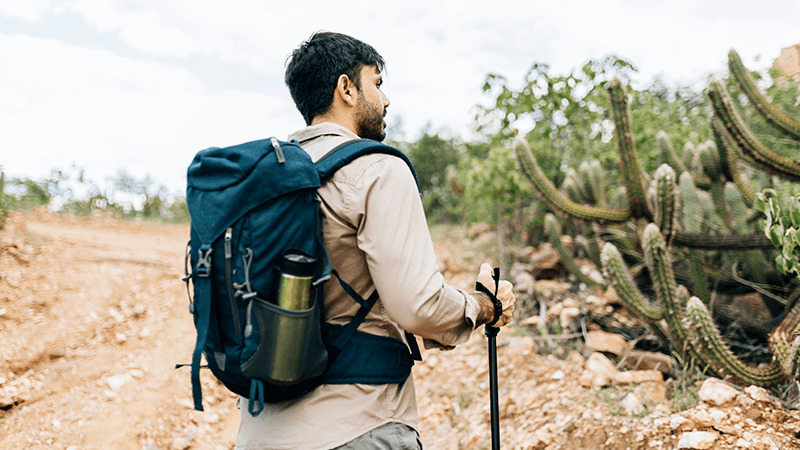
Wear a long-sleeved shirt, long pants, gloves, and closed shoes if you’re in an area where these plants may be lurking
Tie the bottoms of your pants legs or tuck them into your boots
Wear gloves when bushwhacking
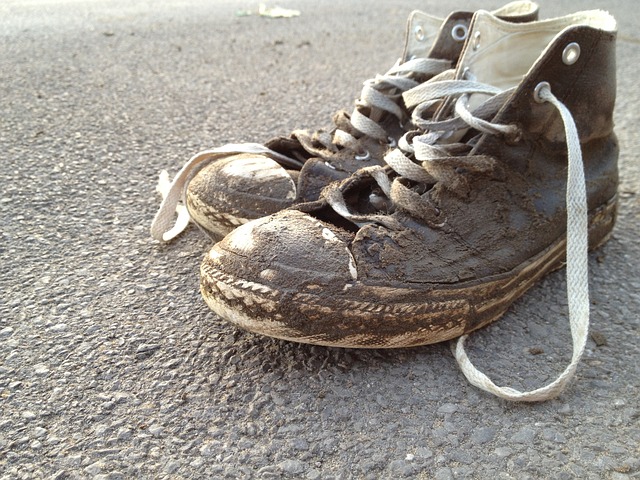
It’s a good idea to keep a pair of shoes dedicated for geocaching that can be kept outdoors
OOPS! I’ve touched it, now what? The chemical that causes the rash is called urushiol and it will stick to your skin when you touch or brush against any part of the plant. It will also contaminate your clothes, ‘caching gear and your geo-dog, too! Remember, you can’t spread the rash to other people, but you can get the rash all over again if you touch contaminated items you haven’t washed.
If you know your skin has come in contact with the plants, wash with soap and water immediately
If water is not available, wipe down the area with rubbing alcohol
Wash your clothes with hot soapy water
Hose down your boots, geocache bag, leash, and anything else you took on your hike
Wash your geo-dog well with soapy water and wear gloves while you do this (she can’t get the rash, but you can get it from her)
Some dogs like baths as much as they like geocaching!
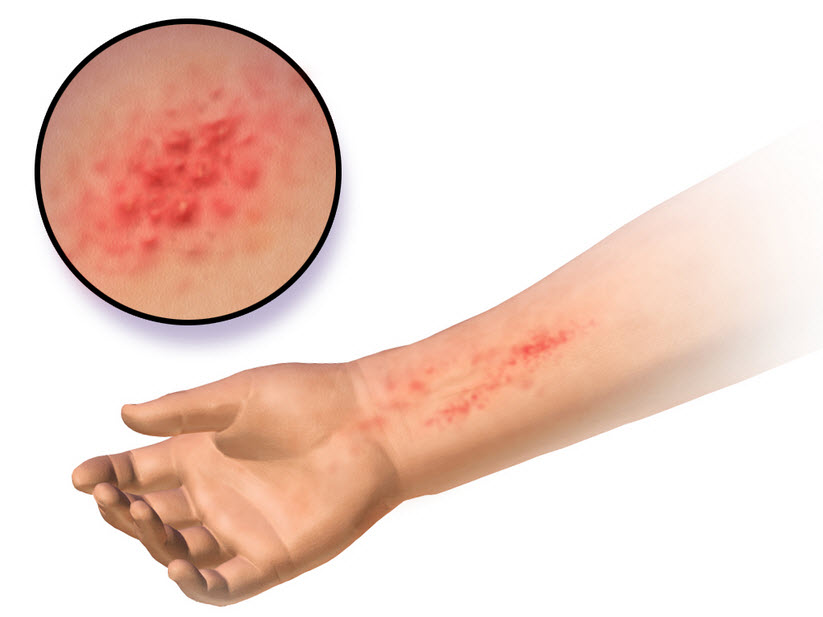
Help! I have the rash! The rash often looks like a straight line because of the way the plant brushes against the skin. But if you come into contact with a piece of clothing or pet fur that has urushiol on it, the rash may spread out. The rash usually develops 12 to 48 hours after exposure and typically lasts two or three weeks. To treat the rash at home:
Do not scratch, as scratching can cause an infection
Leave blisters alone—if blisters open, do not remove the overlying skin since the skin can protect the raw wound underneath and prevent infection
Consider applying calamine lotion or hydrocortisone cream
Consider taking antihistamine pills (with your doctor’s approval)
Rash caused by poison ivy – and this is one of the “nicer’ images
If you have any of the following symptoms, you need to go to the Emergency Room. Like, right now:
You have trouble breathing or swallowing
The rash covers most of your body
You experience swelling, especially if an eyelid swells shut
Much of your skin itches, or nothing seems to ease the itch
You develop a fever greater than 100 F (37.8 C)
The rash doesn’t get better within a few weeks
Stay safe out there my friends, and cache on! How do you stay safe while enjoying your favorite hobby?
*If the name Kelley Piekarek sounds familiar, it may be from this story that made national geocaching news in February of this year. Woof!







 Protection: