El año pasado, invitamos a la comunidad de geocaching a una conversación sobre la calidad de los cachés. Como dijimos entonces, HQ ha tomado medidas en los últimos años enfocadas a mejorar la calidad de los cachés, porque creemos que es muy importante para la continua vitalidad del juego.
Author: Chris
Hopelessly addicted cacher and Geocaching HQ's public relations manager.
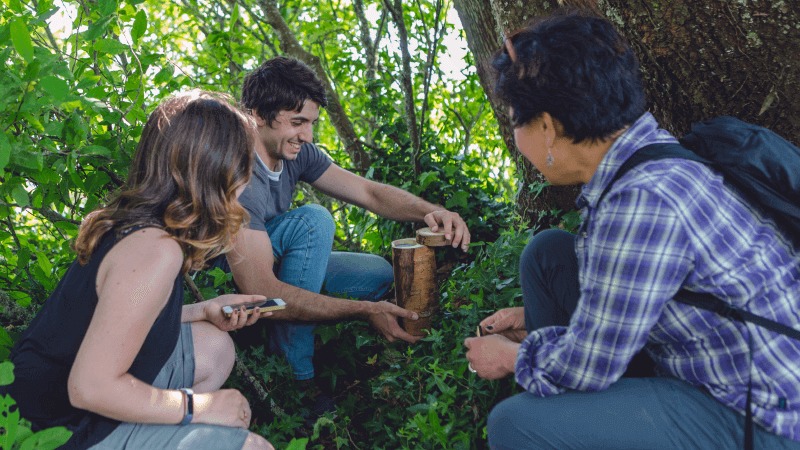
Les résultats de l’enquête 2018 sur la qualité des caches
L’année dernière, nous avons invité la communauté géocaching à discuter de la qualité des caches. Comme nous l’avons dit, le HQ a progressé dans les dernières années pour mettre en avant la qualité des caches, parce que nous pensons que c’est très important pour la vitalité constante du jeu.
Inside Geocaching HQ Podcast Transcript (Episode 23): Cache Carnival, AR caches
[music]
00:13 Chris Ronan: Hello, everybody. Welcome to another edition of Inside Geocaching HQ. I am Chris Ronan, aka Rock Chalk, from Geocaching HQ in Seattle. Thanks for tuning in, as it were. Hopefully you’ve had a chance to find an AR cache in recent months. AR, standing for Augmented Reality. Nicole from the Community Volunteer Support team is here to give us an update on the AR cache experiment, which recently ended after nine months. But before we get to that, did you participate in Cache Carnival? It’s always fun to hear how a campaign like that is created. So we’ve got Annika from the marketing team to explain how Cache Carnival came to be. Here is me and Annika, talking Carnival.
[music]
01:06 CR: Well, Annika, you’ve been on our podcast before, but it’s been, it turns out two years.
01:11 Annika: I know.
01:11 CR: And it was unforgettable when you were on the podcast. But for people that may have forgotten, or maybe they weren’t listening yet, could we talk about what your role is here at HQ and what kind of things you do day-to-day?
01:22 Annika: Yes, and it might actually has changed, I think two years ago, I just moved to the Marketing Team, so I’m on the marketing team as a Senior Marketing Manager and working for the international side of things, specifically Germany and France, to get more targeted communication to those markets. And then also, I was helping to get Cache Carnival out to the people this spring.
01:51 CR: And that’s what we wanted to talk about here. So let’s talk about Cache Carnival. How does that idea first start, and how does your team start thinking through what something like Cache Carnival can look like eventually? ‘Cause obviously you don’t know right at the start, this is gonna be Cache Carnival and here’s how it’s gonna work. But in the very beginning, what are you guys thinking about and how do you eventually make your way to what becomes Cache Carnival?
02:18 Annika: It starts off a little more boring, [chuckle] in that the company sets goals for the year. And we always, as our team always has the goal to get people out geocaching, that is a given for anything we do public facing, but then there was also a specific goal this year to focus on cache quality. So we thought, how do we do that, how do we incorporate both engagement and cache quality? And so we thought carnival, and I can’t tell you exactly how that happened. We talk a lot about it, how we can do it technically behind the scene. What do we have? What possibilities do we have technically to make that happen? And then we talk about it a lot, and then somebody has kind of a visual to it, and that it was carnival, because carnival really is very similar to cache creation, if you think about it. It’s people that have a passion, that spend their time creating something for others to enjoy. It’s all over the world, comes in all colors and shapes and floats. And so we thought that was very fitting to the theme.
03:31 CR: How many teams at HQ are working on something like this? ‘Cause from what I understand, it really crosses throughout the company and involves a lot of people.
03:41 Annika: It involves a lot of people, yeah. Usually on the marketing team, we create the time tables for it and we project manage it, but then we couldn’t do it with help of so many others. That is the creative team that creates all the creative assets, all the images, the souvenirs, everything you see that as part of the campaign. And then we have the community team that helps us with the social engagement, Facebook, Twitter, responds to all the questions that come up during… And then we also have the tech teams that help us implement certain technical things. This time, it was, can we make it happen that if a cache owner gets awarded a favorite point that they get points on the leaderboard or how do we get different stages of favorite points of what are different points on the leaderboard as well. So these things had to be implemented, then getting a page for it to follow your success in mobile, the Mobile Team was involved, that was a whole another thing. We have UX involved, product design, that makes sure that the way it’s presented, people understand and can interact with it well. And then this time too, because of cache quality, we also had the team that… The CVS team, involved, they are, you know?
05:09 CR: Community Volunteer Support.
05:11 Annika: Oh my God.
05:12 CR: You used to work on the team.
05:12 Annika: I used to be on that team. [chuckle]
05:14 CR: It’s so far in your rearview mirror that you can’t even remember.
05:18 Annika: I was like… I can’t look back. [chuckle]
05:20 CR: You have forgotten us completely and now you’re just CVS, is that a pharmaceutical store or is that a team that I worked on?
05:26 Annika: I was just thinking very long receipts. I need toothpaste. [chuckle] Oh my goodness.
05:34 CR: Community Volunteer Support team, yes, CVS.
05:36 Annika: Yes, that team that I was just… As always…
05:40 CR: Unforgettable.
05:41 Annika: Unforgettable.
05:42 CR: Your time on that team, yes.
05:44 Annika: God, yep.
05:45 CR: We won’t let them listen to this part.
05:48 Annika: That’s gonna be cut out, right?
05:49 CR: Of course, it will.
05:51 Annika: Yeah, they were also involved, quite strongly, especially with the creation celebration element of the whole thing.
06:00 CR: So how do you guys come up with a point structure for these engagement campaigns? It’s certainly one of the most talked about in the community and I know you’re very thoughtful about it. And you talked a little bit about some of the… You’re trying to get cache quality, you’re trying to get people out, but at the same time, I know you also wanna try to create something that appeals to a very wide range of geocachers.
06:23 Annika: Yeah. And that’s always the difficulty in it, because we do want as many people as possible to have that moment of delight and feeling like they accomplished something, but we also don’t wanna make it that easy that people that are caching more frequently generally, that they feel there’s no challenge in it. So yeah, that’s how we try to do it, with the point structure, we just looked at how many caches do you have to find to get one souvenir, two souvenirs and so on. And then also taking into consideration, some areas have a lot of caches with a high number of favorite points, so then it’s easier but others don’t. So to make it still possible for anybody, even if it might take more, to earn all the souvenirs that they want to. Yeah, we wanna make sure of that. But in the end, we have to make a decision and it can’t be perfect for everybody because it’s just too many people involved.
07:26 CR: It must be interesting to watch the feedback that you see on social media and forums and emails, and so forth.
07:33 Annika: Yeah.
07:34 CR: What kind of feedback has your team seen about Cache Carnival?
07:38 Annika: I gotta say very positive feedback. I think people really immediately understood the thought behind Cache Carnival as being quality-focused, and getting people to experience the best caches and also highlighting those cache owners that placed them for the community. Yeah, and I think there was a lot of delight around that and I think people really liked the intent of this campaign.
08:05 CR: I’m sure people are already thinking ahead even though Cache Carnival is still happening, or depending on when we run this, it may be a couple days old, but people are already thinking ahead, and I’m sure your team is too. Are there other possible engagement campaigns down the road?
08:23 Annika: No, never again. [chuckle]
08:25 CR: Any big scoops that we can give people, or do we just have to say that… I know your team is always thinking about this kind of stuff and trying to figure out where you can plug something in to get people out.
08:38 Annika: Well, yes. We are definitely working hard on the next big thing coming in the summer, but we’ve seen over the last few times how much fun the community had with those teaser campaigns, so I’m definitely not gonna spill the beans today.
08:54 CR: Darn.
[laughter]
08:56 CR: Thought I could get you. Alright.
08:57 Annika: But yeah, if everything goes to plan, I think we’re gonna come up with something new and something quite exciting.
09:05 CR: Okay. Well hopefully we will hear about that later in the year and we won’t have to wait another two years to have you back on again.
09:12 Annika: Oh, I won’t go anywhere. [chuckle] Sorry.
[music]
09:23 CR: That was Annika from HQ’s Marketing Team. Now shifting gears to another recent project, the AR Experiment. AR as in augmented reality, to learn more about how that experiment went and what’s next. We brought in Nicole from the Community Volunteer Support Team. That’s right, Annika’s former team, the team whose name she could not remember. Here is me and Nicole talking AR. Well, Nicole I thought you had been on the podcast before.
09:55 Nicole: No Chris, I was, but you didn’t publish it.
09:58 CR: That’s what you tell me. You say, we recorded. I know we recorded an interview but apparently it was either so good…
10:04 Nicole: So bad.
10:05 CR: I think it may have just been so good that I didn’t think the community was ready for it, but apparently something came up. You ended up on the cutting room floor, it never published. So, I’m sure I asked you this the last time that we talked, but since it wasn’t heard, let’s ask again. What is your role here at HQ? What kind of stuff do you do here?
10:28 Nicole: Okay. So I work on the Community Volunteer Support team, and mostly I’m helping support the reviewers, so the volunteers that help publish the caches on our website. And we also do the appeals process, so if during a review, there’s an impasse where the cache owner and the reviewer don’t come to an agreement, then either the reviewer or the cache owner writes to us and we can help interpret the guidelines and give guidance how to move forward. And so connected to the guidelines, our team also does things like projects like the virtual rewards or the AR caches.
11:17 CR: And the AR caches are what we’re talking about today. That was a project that you were very involved with. Augmented reality caches. What was the goal for this experiment? And maybe just talk about the process in general, how long was the experiment, what were some of the parameters and what was HQ hoping to see during the course of this time period?
11:38 Nicole: So the experiment ran from June 2018 to March 2019, so it just ended last month. And the set up was that during this period of time, cache owners were allowed to submit a mystery cache that would require the finder to download and use an augmented reality app to find the cache. And then augmented reality app is an app that would allow you to… When you look at the world through the phone’s camera, see an overlay that augments the reality that you see with your naked eye. And those caches all had to be named AR underscore, so they’re easy to find. And there were three allowed apps that CVS could use in their design. In June, we started with a very soft launch, this was the first time we did anything, an experiment like this. And throughout the whole process, we collect a lot of data. There’s a survey that’s linked from every cache page that finders or creators could fill out. And the hope was to see how the community would use augmented reality in the cache design, how will this new technology help cache creators to be more creative and bringing new elements to the game.
12:55 CR: And just to be clear, these caches are mostly still out there and they are grandfathered. And people could, today, still go out and find an AR cache, possibly in their community.
13:05 Nicole: That is correct. At the beginning of the experiment, we weren’t sure how it would go with the third party apps that we were allowing, but at the end of the experiment, we didn’t have any concerns at that point. So they’re all grandfathered, they’re all out there. You can go find them, just go on geocaching.com and search for caches that start with AR underscore and see if there’s anything near you.
13:28 CR: Okay. So let’s talk about how the period went, how did the experiment go? What were some of the takeaways that HQ had from this time?
13:37 Nicole: There were over 600 caches published in 35 countries, so it was a pretty widespread. And almost 10,000 founded logs were posted on AR caches.
13:47 CR: And one thing you had mentioned to me beforehand, was the length of the logs on these AR caches was quite a bit longer than maybe you were expecting it to be.
13:57 Nicole: Yeah, that was something that was very surprising. Among all the stats that we are monitoring was the average length of AR cache logs, and about halfway through the average log length was 191 words, that’s the average. So a lot of the AR caches… A lot of the finders of AR caches had these epic journeys where they went with their friends on a road trip and went to the next state to get the closest AR cache, because they were so excited. And I have a watch on a couple of the AR caches, and it’s always really fun, still really fun to see all the logs rolling and the stories that people… The adventures that people had or still having.
14:39 CR: So you talked about there was a survey that people could fill out when they found and logged in AR cache. What kind of feedback were people giving? Was it more about just the process of using the extra app or was it about the journey or was it a mix of all that stuff?
15:00 Nicole: It was a mix of all of that. So, those who did participate in the feedback, left overwhelmingly positive feedback. Of course, there’s always also critical feedback, but the survey showed that between 70 and 80% of the geocachers who participated really, really enjoyed the AR cache experience, and they liked the creativity that the COs were able to demonstrate with the AR apps, the new element that AR caches brought to the game. And just unique experiences that they had. And some of the other feedback we got was about the new technology. It still has its challenges like little box or also big box, [chuckle] and sometimes the AR apps didn’t work quite as expected, or they would crash, which of course is very frustrating. But surprisingly, a lot of the positive feedback was still from players who had issues with the apps and they still had a good overall experience.
15:57 CR: So what are the next steps on something like this? Obviously, you have a lot of feedback to go through and a lot of things to consider, but from your standpoint, what are kind of the next steps on the horizon with possibility of AR?
16:09 Nicole: So we encourage everyone to go out and find AR caches. The survey is still live so you can still participate and we are still monitoring the submissions. And yeah, this is not the end. I can’t say anything more at this point, but definitely stay tuned.
16:24 CR: I know I asked you before in the conversation that nobody ever heard, that not only you’re from Germany, but you speak, it seems like a new language, every month. Is it still just five? Just five?
16:35 Nicole: It’s five.
16:36 CR: Just five. I say just five. Go through them for me, I love hearing them.
16:43 Nicole: I’ll just tell the history of how I got to know these languages. I was born in Germany. My dad is German, so I learned German growing up, but my mother’s Russian, so I learned Russian growing up as well because I spent the summers in Russia with my family there. And then when I started school in Germany, you get to pick a language in fifth grade and another one in seventh grade. So I picked English and French, and I wasn’t really good at it. [chuckle] So my parents were like, “Okay, let’s send you to France, let’s send you to England to live in host families for like a month or two. And that worked really well, so they did that twice. I went to England when I was 15 and to France when I was 16, I believe. And that’s where I learned English and French. And then when I had to decide what to study in university, I was really inspired by Chinese, because my host family in France was actually half-Chinese, half-Vietnamese, and so, I picked Sinology and learned Mandarin.
17:39 CR: Wow, so five. That’s so impressive. And so whenever we have… You talked about being on the appeals team. If we have a ticket that’s in Mandarin, obviously, you’re gonna get it. Most likely. Russian is a pretty good…
17:53 Nicole: Please, if you speak Mandarin, write to us in Chinese. I would love that.
17:56 CR: Yeah, I don’t think you’ve got any use of it, have you?
17:58 Nicole: There were a couple of spam calls in Chinese that we got.
[laughter]
18:05 CR: Spam calls. I love it. Well, I think we’re gonna keep this episode and we are gonna let people listen to it this time and if… I don’t know, we’ll just keep letting you hang and maybe eventually you’ll stop saying yes to these interviews with me, but thank you very much. I think people will love hearing about AR. And I think I joined most people in looking forward to seeing what’s next with it.
18:29 Nicole: As do I. Thank you, Chris.
[music]
18:34 CR: So there you have it. Nicole from the Community Volunteer Support Team. We also heard from Annika of HQ’s Marketing Team. Thanks to both of them. If there’s something you’d like us to cover on the podcast, please send us an email. The address is podcast@geocaching.com, that’s podcast@geocaching.com. In the meantime, from me and all of my fellow lackeys at Geocaching HQ, happy caching.
Inside Geocaching HQ Podcast Transcript (Episode 22): Adventure Lab, New Search Map
[music]
00:13 Chris Ronan: Hi everybody, welcome to Inside Geocaching HQ. I am Chris Ronan, username Rock Chalk, one of the lackeys here at Geocaching HQ in Seattle. Thank you for listening to our podcast. Today, we will hear from Brendan Walsh, who is overseeing the new Search Map Project. Brendan was on here a few months ago to describe that project and to sound the bell that the existing search map would be retired some time in the future. That time is nearly here, and he will have more about that. But first, Bryan Roth, HQ’s President and co-founder here to chat about the new Adventure Lab app. It also sounds like Bryan has been working out a possible new radio voice. So here we are talking Adventure Lab.
[music]
01:07 Bryan: Welcome to the Geocaching Podcast. Geocachers, get ready, ’cause here we go.
01:15 CR: Bang, you nailed it.
01:16 Bryan: Boom. Great. Boom!
01:19 CR: Boom. Well, Bryan, you are now a member of the Five-Timers Club on the Inside Geocaching HQ Podcast. You are a five-time guest on the podcast.
01:35 Bryan: That is pretty incredible, Chris. I am honored to be here once again, for the fifth time, apparently.
01:41 CR: For the fifth time.
01:42 Bryan: That’s pretty awesome.
01:43 CR: And it does come with a prize. I didn’t tell you this before, I didn’t want to get your… I wanted to get your authentic reaction to this prize.
01:48 Bryan: I’m authentically excited already. I don’t even know what the prize is.
01:52 CR: You get a gift card.
01:54 Bryan: Yes!
01:55 CR: You do, that I found in a cache last week. To a regional burger restaurant…
02:01 Bryan: Okay.
02:02 CR: It has $0.91 on it.
02:04 Bryan: Really?
02:04 CR: Yes.
02:05 Bryan: Alright.
02:05 CR: You get it.
02:06 Bryan: What is the regional burger company?
02:08 CR: Can we mention it? They haven’t paid for that. They haven’t paid for advertising on here.
02:12 Bryan: Oh. Well, this is a non-commercial podcast.
02:14 CR: Burgerville.
02:15 Bryan: Burgerville?
02:16 CR: I was down in the Portland area, where they have Burgervilles, they don’t even have them here in Seattle, so you’re gonna have to drive to Portland or Vancouver, somewhere like that, to use your $0.91 gift card, which I’m sure you’ll do because it’s a prize and you’re proud of it.
02:29 Bryan: Well, for the geocacher who put the $0.91 gift card to Burgerville, in the cache, I just wanna say thank you. I can’t wait to test it out and have a few french fries or something like that.
02:41 CR: And I’m sure you can do a lot with that. So we are talking about Adventure Lab, which you and I and Nate Irish, at the time back in December, I think it was, we talked about it a little bit on the podcast then but at that point, it was a very soft launch, there weren’t any new adventures out there, but now here we are, it’s April and we have worked with geocaching organizations, and we have given individuals an opportunity to put some new adventures out there. And so now this seems like a good opportunity to talk more about this project. So for people that aren’t familiar with it, how do you describe the Adventure Lab app?
03:20 Bryan: Adventure Lab is really an extension of geocaching that allows for geocache creators and experienced creators to build new types of experiences and adventures to entertain and delight the geocaching community.
03:35 CR: And what are some of the features of the Adventure Lab app that you’re most excited about?
03:41 Bryan: So, as you mentioned earlier, a lot has changed since we did the last podcast in December. We launched the Adventure Lab app on iOS and Android in March, at the end of March, so just a few days ago, we retired the responsive web player, and the goal going forward is really to leverage these new apps in their current form and as we’re going to enhance them in the future, to allow people to create, share and play more dynamic multimedia experiences with the community. One of the things that we’ve done upon release of the app was we said, “Alright, we wanna begin testing this and what’s the best way to test it? Let’s put it in the hands of the geocaching community.” So working with a number of teams at Geocaching HQ, we created a program where cache creators who have attained certain levels of cache quality and favorite points and placed caches and activity and stuff like that, could opt-in on a web page and say, “I would like to be considered to build one of these experiences as a test.”
04:50 Bryan: We also reached out to about somewhere between 40 and 50 geocaching orgs all around the world, and we said, “Hey we’d love to give you a credit for the Adventure Lab builder, so that you can create an experience.” And the near-term goal is really to get as many of these quality experiences into the app and available for the community to play with, as we can over the next few months. From the group of many, many geocachers who opted in, we chose 250 and we reached out to them and we gave them a credit and we gave them the instructional manuals and sort of did a little bit of hand-holding for certain individuals, and did the same thing for the geocaching orgs. And what’s exciting is that if you look at the directory in the app now, there are, I believe over 100 experiences that are available to be played and they’re geographically distributed.
05:47 Bryan: So at least at this point, there may not be one near every geocacher. In all likelihood there isn’t one near most geocachers but again, this was really just the beginning of the test. So we’re getting some really cool experiences. There’s adventures in South Africa, there’s a Martin Luther King adventure in Atlanta, there is a Robin Hood adventure in Nottingham. We still have things like the Antietam Battlefield Adventure. There are history tours. There’s a Van Gogh tour in the Netherlands, and so from all of us at Geocaching HQ, we’re really excited to see how the creators have taken this platform and created these fun experiences. And so what we’re doing from here is we’re paying attention, we’re looking at the feedback in the app. We are listening to the creators and answering their questions and working with them to make adjustments to the building platform. We are making adjustments to the player, both for scalability and minor adjustments that will support better game play.
06:56 Bryan: We’re taking a lot of notes. And we are looking at the next list of features that we wanna add to the app. We’re going to be doing some discoveries, some user testing and some more research and this testing phase is really a big part of that, to learn how is the community using this app, both on the playing side, on the creating side and on the sharing side, and then making determinations and stack ranking the features and the requests from the community, and ultimately trying to deliver a better platform as we go forward.
07:27 CR: A few of the new features of the app are location validation and linear game play. Could you talk a little bit about what those mean to players?
07:35 Bryan: Sure, well, first of all, the retirement of the web player, I would think everybody understands is a pretty significant change to the way that lab caches have been played. One of the challenges that we had with the responsive web player was that creators would put a lot of time into building a location-based experience for people to come and play. And what was happening was, they would release this experience and the find codes were being shared online or in Facebook groups or whatever, and people were logging the experiences from all over saying, “I completed this, I got the find code, I have completed this full lab cache.” And so when they looked at the leaderboard, they were seeing at the top of the leaderboard groups of people who they knew did not come to play their experience. And it really detracted from the way that creators were feeling about the game.
08:32 Bryan: So one of the things that we were asked for is, please stop this, it’s been called cheating, it’s been called couch logging. Call it what you will. But the ultimate goal as a location-based entertainment company is we want people to actually get off of their couches, leave their televisions and game machines behind and go outside and go to these locations and play this. So we said, “Alright what can we do to ensure or at least do our best to ensure that people are actually visiting the locations in order to get the find code, and that people can’t just share the find codes online and get credit for completing an experience that they didn’t actually complete?”
09:14 Bryan: So we added location validation and it is a feature that when you are creating an adventure lab experience, the creator can define the radius. And there are some choices. So you can do 10 kilometers, 100 kilometers, and there may be other options going forward, but the goal is for the creator to say, hey, at the very least I want the player to be within 10 kilometers, if they’re gonna say they have the find code. And so, while somebody could stand, if they get the find code and it’s been shared with them, could they couch log it from nine kilometers away? Sure they could, but they can’t really couch log it from the other side of the planet. And so that’s something where we’re really trying to cut down on it.
10:02 Bryan: Another aspect of that is we found people who have found work-arounds. You can spoof location on an applications. There are other ways. It’s like a better mousetrap and a better mouse. There are ways to complete these experiences, still without going to the precise location. And so one of the things we’ve done is we’ve sent an email to some of the top couch loggers and we’ve said, “Hey we wanna reset expectations. While maybe we haven’t been completely clear in the past, we wanna be completely clear now that our expectation is that you go to the location in order to obtain the find code and only then can you log it. And if you don’t do that, there will be some consequences.”
10:44 Bryan: So we sent that email out to quite a few people, and the word spread and after a little bit of time, we are noticing that the couch logging has decreased drastically. There are still some folks who are doing it, and so they’re about to get a second email, probably some time after this podcast airs, but the second email is gonna say, “Hey, we set expectations with you the first time. We don’t want you doing what you’re doing. If it continues, there are potential repercussions. And if you wanna ask what the repercussions could be, right now, we have some ideas, one of the ideas is, we might delete all of your lab cache finds.” That would kinda take away the incentive for couch logging lab caches. The truth is, it’s not something we wanna do. We’re not really interested in discipline, but at the same time, we’re very interested in making sure, that somebody who creates an adventure lab experience actually gets the kind of results from the community that they’re expecting. And we wanna see that this platform is played with in a fair manner. So, location validation is part of the new applications. It’s one of the reasons that we retired the web-player.
11:54 Bryan: Another new feature is linear game play. And this is something that we got feedback from creators over the past few years, saying, “Hey, right now, if I create an experience, anybody can go to any of the locations and log it in whatever order they want and while that’s fine for some experiences, if I wanna create a story-driven adventure for example, and lead people through a story, I need to make sure that they get chapter 1 before they get Chapter 2, 3, 4, and so on.” And so by adding the ability for a creator to designate the order in which the lab caches are completed, it allows for more robust storytelling, which is just another use case for this platform that we wanna make available to creators.
12:40 CR: There have been some concerns raised by people who are GPS users or people with maybe data issues, things of that nature, concerns that they are not able to take part in some of these experiences, now that the web player has been retired and GPX downloads are not available, what would you say to folks like that?
13:00 Bryan: Well, we removed GPX downloads for one particular reason, basically in adding linear game play, the requirement of linear game play is that you go and you find the first location and once you get the find code, then you unlock the second location and so on. The problem with providing GPX downloads is, we would essentially be providing all of the coordinates and that would take away from the ability of a creator to create an experience that takes people to a series of locations in a particular order.
13:32 Bryan: So it’s a problem that we have right now. I think that there are things that we might be able to do in order to provide coordinates that people can put into a GPS unit, if they wanna navigate to particular locations that is something that we are going to be looking at as we go forward, but in rolling out the mobile applications and retiring the responsive web player, we really had to make a choice and that choice in this case was to remove GPX downloads at least for this period of time, until we have a better solution.
14:04 CR: So if somebody wants to try this out, they go to the App Store, they download it and then they look and see what’s in their area or if there is something in their area.
14:13 Bryan: That’s correct. If you wanna try it out now download the Adventure Lab app, it’s available in iTunes store, and it’s available in the Google Play Store, you can download it. And one of the first things you’ll see after you log in with your Geocaching account, or create a new account, you will see a directory, right now it’s sorted by the distance from you. We have some ideas about adding search functionality and a map view and things like that in the future. For right now, we’re gonna show you the closest one to you hopefully, it’s close enough for you to go out and give it a try. If it’s not, then you may have to wait a little while. And our plan is to open up other opportunities for creators to create more experiences. And so the long-term plan is to have an adventure at every location and that’s something that we talk about all the time at Geocaching HQ. It’s gonna take us a while to get there. And this is iterative development, so we are going to release features, we are going to test them, we’re gonna gather feedback, and we’re gonna respond to that feedback and try and build a better platform, day-by-day.
15:16 CR: Great, well, thank you, Bryan, and enjoy that gift card and your five-timer status.
15:23 Bryan: I can’t wait. I’m looking forward to the sixth time. Everybody out there in geocaching land, happy geocaching to all of you, cheers.
[music]
15:38 CR: And if you would like to know more about Adventure Lab, there is an FAQ on the geocaching blog. Or just download the app and try it out. Another important project, these days is the new search map. Brendan Walsh is a senior product manager at Geocaching HQ with some important information about that project. Here is me and Brendan.
16:01 CR: Well, Brendan welcome back to Inside Geocaching HQ. You were here back in December, on episode 18 talking about the Geocaching search map and at the time, and I’m quoting myself, if people wanna go back and look at the transcript it’s online, I said, “And not to freak people out, but there will be a day somewhere down the road where this project that you’re working on, will become the Geocaching search map.” And we are approaching that time and so we thought it would be good to come back on here again talk about where your team is at, again remind people of what this project is and what the steps are so that everybody’s aware, because not everybody likes change, but change can be a good thing and there’s some fun changes coming, if you hadn’t seen them yet. So let’s just start with this project, an overview of what it is and where your team is at with it right now.
16:53 Brendan: Sounds great thanks for having me back on, Chris. Yeah, as you noted, in December, I came on and we talked about the changes that Team one is working on for the geocaching map and search functionality as part of the map. For those out there that read forums I’ve been posting, the updates, and we’ve been kind of updating, a couple of updates a month on a two-week cadence or so, and we’re getting to the point, as you mentioned, where we’re looking at actually making some more significant changes, in other words retiring that old search map and really encouraging more and more of our geocachers out there, to take advantage of the new search map technologies, we’ve built. So, as there are a lot of steps and we wanna make this as easy on the community as possible, and we also wanna give them some time to make themselves at ease with this new situation. So we do have some steps and if you’d like, I could take the community through those steps now.
17:54 CR: Sure, and just to reiterate something we talked about back in December was people have been able to opt in to this new map and some people were forcibly opted-in. I don’t know what the exact term is for that, but they were, whether they were given a choice or not, they were opted-in, then they could opt back-out. But whichever way you’ve gotten here, there has been an opportunity now for a few months, for people to see what this new map is, and what we’re heading to now, is a time when that option won’t be there anymore. It’s going to be the new search map. And so if you haven’t tried it out yet or if you haven’t been forced to try it out yet, now is the time you still have some time to do that. And so… Yeah.
18:37 Brendan: That’s a great point and to follow up on that, we are gonna pretty soon opting, as we say more and more geocachers into the new map experience in larger and larger chunks. So something like 50,000 or so at a time to get us to that 100% of opt-in rate. So yeah, this is gonna be a change for some folks and through this development process, we’ve tried to check in with the community as we do updates and kinda get a sense of how does this feel for you along the way? And one thing we’ve noted is that there are two really, two key ways to go look for caches when you’re in a planning stage. And one is like to search, literally put in a location and see what geocaches are around there, that location…
19:28 CR: Use filters and all that stuff.
19:29 Brendan: Call up filters, get it… Hone your search down to a tight little area, both location and attribute-wise, for instance, not attributes in the way we think about them here at Geocaching but filters and sorting and distance can all be tied together to create like, “Okay, this is the area I wanna go and these are the caches I wanna go get.” Now, that’s what we would call searching. But there’s also the idea of browsing. The idea of, “I’m not really sure exactly the area or the filters I’m interested in, but I just wanna kinda pan the map around, zoom in and zoom out on an area may be close to where I live to, or where I’m traveling to is probably a more common use case, when you don’t know the area really well. In that case you’re browsing. And we, internally call that the browse map.
20:19 Brendan: So one thing we heard from the community, and we’re kinda gonna make this change is that if you can envision our new map experience, I’m sure you’ve checked it out a couple of times, Chris, we are going to add, for lack of a better term, a link on that new search map which will take you directly to the browse map. The browse map looks a lot like the old search map, right? So this is where this gets a little confusing to actually explain this to people.
20:48 CR: Easier to show it than it is to talk about it on a podcast.
20:51 Brendan: It’s true, but I’m gonna try my best here. So where we’re really going is we wanna get to a place where all search traffic goes to the new search map. So you’re searching for something, if you’re mapping caches after you’ve searched for something, that’s gonna go to the new search map. If you’re on the header of our website and you click from the play menu, View map, that’s gonna go to the new search map. But from that new search map, you’ll be able to go back to your beloved browse experience as well. It’s gonna be a little different than what you have now. We’re gonna continue to listen to you and see if we can make edits along the way, but that’s kind of where the direction we’re taking it and that’s coming soon. Kinda looking at probably end of month timing, is targeting for something like that. And like I said, we’ll be posting all these details with screenshots in our forums to explain this change. So how I’m enunciating it here isn’t really clear, hopefully this forum post will be. We’re excited to hear what you think about it, and we’re gonna take it from there.
22:01 CR: And there will also be, I think, a link to maybe the forum release notes or something like that from one of the newsletters that you get as well. So we’re trying to get the word out about this, not just here on the podcast, but in as many places as we can.
22:13 Brendan: That’s really a good point. I’ll be working with our marketing team to help them just kind of craft the newsletter, the portion of the newsletter that speaks to this. And we’ll also be linking back to the forum posts, as you noted. So folks out there can really… If you’re confused about what I’m saying here, like I said, you can check out the post and that should be clear.
22:34 CR: Yeah, so for me the most important takeaway… Again as somebody… I said this back in December, I am one of those people that you have to pry a product from my cold, dead hands before I wanna let go of it. So I’ve tried out the new map and I go back and forth, but I think for me, the most important thing as a user is that, okay, I’ve had a lot of warning. Brendan gave me a heads-up back in December and even before then, it’s now April. He’s giving me another heads up, the time is really coming down here. And if I haven’t tried it yet, or if I haven’t gotten really comfortable with it yet, I’ve got a couple more weeks and then it’s time to jump off the diving board.
23:17 Brendan: It is. We’re all gonna jump together, and I think it’s gonna be an adjustment, initially for some and we’re prepared to be in the front lines and listen to those customers that may have… We may have disrupted their workflow, where I’m hoping to be there to help them identify a new workflow that hopefully is equally as pleasing to them. But yeah, this is something we’ve been gearing up to, as you know, since… Well, before even December it was always kind of the plan was to replace the search map, so to speak, with this new search experience, based on the latest technology. It’s pretty robust, it’s just the beginning. So yeah, like you said, we’ll all be jumping together soon.
24:00 CR: Well, I know you’ve had an opportunity to use the search map extensively recently. You were in Arizona, you did a bunch of caching with some other lackeys down there.
24:09 Brendan: Yeah, that’s a really… Thanks for bringing that up. So I joined HQ back in May, I’m a product manager and although I do have a geography degree, I wasn’t the most active geocacher. I’d been really focused on the actual day-to-day of working on the maps and search experience here at HQ. And I had this great opportunity through a group here at HQ of folks that just wanted to get out and spend a weekend caching in good weather, get away from Seattle for a little bit. We have… In a group, we’re calling Traveling Lackeys and they’re about eight of us that flew down just after work on Friday night to Arizona. It was wonderful. 80 degrees. I was with expert-level geocachers who took me under their wing and just had an amazing experience.
24:58 CR: You found the oldest cache, I think, didn’t you, in Arizona?
25:00 Brendan: Oldest cache in Arizona.
25:01 CR: Yeah, nice.
25:02 Brendan: Wonderful. We all got a little sun burned, which we were happy to do. And then also, one of the lackeys who joined us set up an event at a big brewery in Tempe, so got an opportunity to meet geocachers in the Arizona area, came out and had a lot of great conversations. Had some beers, had some food, it was a good weekend.
25:23 CR: Very cool.
25:23 Brendan: So yeah, it’ll be one of my challenges to the team of lackeys here with is, “Let’s pay attention to our mapping experience and our search experience, and use it as a real life use case and take feedback and bring it back to the team as well.” So always learning.
25:39 Bryan: I don’t think I’ve ever met anybody with a geography degree.
25:43 Brendan: Funny that you should mention that. I remember my senior year in college, and our advisor, bringing in an agent from the FBI to talk to us and coincidentally or surprisingly, they had said that there are more geography degrees in the FBI than any one undergraduate degree.
26:02 CR: Wow, I clearly don’t know enough about what goes into a geography degree.
26:08 Brendan: We weren’t prepared to go to the FBI. Let me tell you.
[laughter]
26:12 CR: And then the other thing we didn’t… If we ever have a music podcast, you’re our guy, right?
26:17 Brendan: I’d love to do… Oh that…
26:18 CR: If we have a Geocaching HQ music podcast, you’re the guy. Tell us about your music.
26:23 Brendan: Sure, I don’t wanna pitch my label here, so I’ll leave the name out of it. But as a, just a way to stay connected to the music world and community, it’s a passion of mine, I started a record label with a friend. It’s really just a labor of love, we haven’t taken any profits. We have three bands on the label right now, and they’re just scrappy young bands who wanna have their stuff on vinyl. So we’re literally making records. It’s super fun, an old man like me gets to stay connected to the young kids who are making music and it’s kind of a win-win for both of us.
27:00 CR: That’s really cool, so we need a… We should get a podcast theme song some day. We’ll get one of your bands to…
[laughter]
27:05 Brendan: That would be great. Sign them up.
27:06 CR: To work with us on a podcast theme song. Well this has been great. And I hope that if people haven’t tried out the new search map, this is the impetus for them to jump in there because the time is coming. We got to get in there and get after it.
27:22 Brendan: I agree, I encourage everyone to jump in and as Chris says, the time is coming, the time is almost here. So please, please check it out and always send your feedback my way, that’d be great.
[music]
27:38 CR: For more on that project, go to the release notes section of the Geocaching forums. We will have a link to that section on the podcast page. If there is something you would like to hear about on the podcast, drop us an email at podcast@geocaching.com. That is podcast@geocaching.com. Until next time from all of us at Geocaching HQ, happy caching.
Inside Geocaching HQ Podcast Transcript (Episode 21): Careers at Geocaching HQ
[music]
00:13 Chris Ronan: Hi everybody, welcome to inside Geocaching HQ, from our office in Seattle. I am Chris Ronan, one of the lackeys here at HQ. My user name is Rock Chalk. Thank you for listening. This is an episode I have looked forward to doing for quite some time. We are talking with Eileen from the Human Resources department. When I meet other geocachers, some of the most common questions I get are, what’s it like to work at HQ, and/or how do I get a job at HQ? And I certainly remember what it was like for me before I came to work here. I was a serious geocacher and thought it would just be awesome to get a job at HQ. And so, I would scour the Internet for job information. I remember, for instance, reading about Geocaching HQ in Outside Magazine’s Best Places To Work edition, but there really wasn’t much more available at that time besides the careers page on geocaching.com, which is by the way much more robust today than it was five or so years ago when I was refreshing it every day hoping that a new job would come open that would be a good fit for me.
01:25 CR: So I hope this episode will be a good resource for people. And as we were beginning our conversation, Eileen got word that she had just earned an HR certification that she had been working on, so congratulations to her on that. When you hear us vaguely referring to an acronym that is what that’s all about. So, I wanted to explain that a little bit. Eileen is great, I know you will enjoy getting to know her. So here is me and Eileen talking HR.
[music]
02:00 CR: When would you like me to start?
02:00 Eileen: How about I’ll do one to three, but you don’t go on three, you go one, two, three, go.
02:06 CR: You’re gonna say go?
02:07 Eileen: Yeah, I’m gonna say, one, two, three, and then you’re like the silent four.
02:10 CR: And then start?
02:11 Eileen: Yeah.
02:11 CR: Okay.
02:11 Eileen: Okay.
02:12 CR: Okay.
02:12 Eileen: Alright, so I’m gonna say one, two, three.
02:16 CR: Oh, I thought you were just practicing.
[laughter]
02:19 CR: Is this really?
[laughter]
02:20 Eileen: Yes, we’re live.
02:21 CR: Okay, we’re really doing this now?
02:22 Eileen: Yes.
02:22 CR: Okay, go.
02:23 Eileen: Okay, I’m gonna count… Counting one, two, three. [laughter]
02:28 CR: And now, I’m nervous.
[laughter]
02:30 Eileen: See, this is what happens, now that I’m an official HR person, I have it in my head that everything needs to be so like…
02:41 CR: By the book?
02:42 Eileen: Yeah.
02:42 CR: Sure.
02:43 Eileen: Alright.
02:43 CR: So was everything you did before you got the acronym like, is it illegitimate now?
02:48 Eileen: Yeah, yeah.
02:49 CR: All the hires you made, you have to go and review everything.
02:50 Eileen: Yeah, I was Maverick, I was doing my own thing, I was going rogue, and now I’m real, yeah.
02:58 CR: Okay, okay. Well, Eileen thank you for sitting down with us and talking HR here on the podcast. A lot of people who I meet in the community know that I’m from Kansas City. And so, one of the things that I love about you is you have this weird fascination with Kansas City. And I didn’t tell you I was gonna ask you about this, but I have to because I’m so fascinated with it. So, you’ve never been to Kansas City?
03:25 Eileen: Never ever, not even once.
03:27 CR: Not even once. I just think it’s hilarious, it’s Santa Cali Gon Days.
[laughter]
03:30 Eileen: Yes.
03:32 CR: The first week I met you here and you heard I was from Kansas City, you asked me about Santa-Cali-Gon Days.
03:38 Eileen: Yup, yup, yup.
03:39 CR: Which is for everybody listening to this, a 100% of the listeners who don’t know what Santa-Cali-Gon Days is, it’s a festival. I think it’s in September, I’ve never actually been to. I’m from Kansas City, but I’ve never actually been to this festival. It’s actually one of the suburbs… It’s an independence, which is one of the suburbs. And so, first week that you’re here, you asked me about Santa-Cali-Gon Days.
04:05 Eileen: I did.
04:07 CR: And you’ve never been to that either?
04:08 Eileen: No. I’ve a wish list of things I like to do in Kansas City, like, I’d love to go to Santa-Cali-Gon Days. I’d like to hit up Waldo, the different bars there. I’d like to go to Lake of the Ozarks. I will say…
04:19 CR: That’s a drive. That’s not like next door, that’s like a three-hour drive, just so you know.
04:22 Eileen: That’s okay, that’s okay.
04:22 CR: I just don’t wanna disappoint you if you get there and you’re thinking you’re gonna drive 15 minutes from downtown and go to the Ozarks, it’s like a three-hour.
04:30 Eileen: Okay, that’s good to know. I will say that I claim KCMO versus Kansas.
04:36 CR: Okay, that’s fine.
04:38 Eileen: But you know, I appreciate both.
04:39 CR: It’s fine for some people.
[laughter]
04:41 Eileen: Hopefully that’s not a polarizing statement and the listeners just stop now. But yeah, I don’t know where this fascination came from, but I tend to pick up just weird hobbies here and there. Like, I love magic, like illusions, magic tricks, I love watching just random YouTube videos. And I think it helps me relate to people on a deeper level, and I think having more well-rounded areas of interest, I think helps me relate to people here at Geocaching more too, ’cause we’re so quirky here and everyone here is encouraged to bring forth their authentic self, and I don’t want anyone here to feel like they can’t talk about a certain talent or hobby that they have because they’re afraid that…
05:21 CR: Or festival.
05:22 Eileen: Or festival, or weird fascination with Kansas.
05:23 CR: Or Midwestern festival, you want everybody to be able to feel comfortable talking about Santa-Cali-Gon Days, and I appreciated that.
05:28 Eileen: Exactly, Exactly. Awesome.
05:31 CR: Personally, I did. So, that’s good.
05:35 Eileen: It’s one of those things where, whether you were into Santa-Cali-Gon Days or not, I would have brought it up any way, ’cause that’s how much I just love talking about Kansas City, it’s very strange.
05:44 CR: Okay, so now that we’ve got that out of the way, I really felt like I needed to address that. So what is your title here at HQ?
05:52 Eileen: Sure. So my title here is HR Generalist, it’s not as intuitive as other job titles here, but basically I just generally do everything in HR. Here at HQ, we have less than 80 people here all on site, so we play a lot of different roles here. So my role is a really healthy hybrid mix of recruiting, payroll administration, employee engagement, employee recognition, benefits administration, onboarding, all of that, all rolled into one. So I get to work with a lot of different people, all the different departments, I get to work on something different every day and it’s really fulfilling and rewarding.
06:31 CR: Well, this is an episode that I’ve wanted to do for a long time, because I was a cacher before I came to work here. I was really into it, and once I heard that there was a website and a place where people actually did this, I thought, “Oh my gosh, that would be amazing to actually work there.” And then I spent a long time trying to get a job here and I applied many times, and I would have loved to have had a resource, to be able to hear from someone who worked there. And so, that’s why I really wanted to have this conversation. Let’s talk about the different departments here, because there are a wide range of jobs at Geocaching HQ. So what kind of jobs are open from time to time here?
07:14 Eileen: It depends on who’s leaving or what business units need resources. Right now, we have a lot of product manager and product designer roles open. It’s not always because people are leaving, it’s not always a backfield situation. It’s really as we’re looking into each year hitting our company goals or objectives and we realize that the teams just need more help or more resources, we’re adding people on to the team, so it really just depends. We don’t have a lot of people leaving. Our turnover rate is about five years, which is double the average for our industry in our location. But yeah, we have software developer openings, marketing openings, product openings, we have an HR opening right now. We’re looking for a Guest Experience Coordinator, that really will create this wonderful experience for our visitors that come into our visitor center. So really all across the board at any given time in a year, depending on our business needs we’ll have an opening for the departments.
08:09 CR: So let’s say you see a job that you’re interested in on the job board, or you hear about it somehow, how does the process work from there? Are there any tips you can give people for applying for jobs here? Or things that they should be thinking about, is there, considering filling out that application and send in their resume in?
08:25 Eileen: Yeah. When we have open positions they’re very competitive, we get a lot of really good candidates, in the hundreds, depending on the role. Because people are really excited about our product, they’re really excited about the company in general. We’re famous for having this world-class company culture here and really good work-life balance, and just like the best people, most interesting, complex, quirky, smart people that you can ever work with. So we get a lot of candidates. And so, for the recruiter to sift through and source those resumes, it really helps to have a cover letter, especially if you’re a geocacher and you include your Geocaching username and you already have a leg up because you know our product so intimately. Geocaching is a game, there’s a little bit of a learning curve there, and that actually is part of the reason why we have such a strong onboarding here, it’s for people to learn about what geocaching is, and we can go into that, if you like. So it’s a very competitive process. Some tips is a cover letter that’s personal and really just shows your interest in the rule, interest in the company.
09:32 Eileen: And then also, it does help if you’re a geocacher. And we’ve actually had candidates come in for their interview and they were very technically qualified, but they actually hadn’t found a cache before coming. And even though we do give them prompts, and we do encourage them to find a cache. And it was part of the conversation amongst other things that were maybe a growth area for them, like not finding a cache, it’s a little bit of a mark against them, I guess. Because we do consider ourselves here at HQ to be geocachers. We wanna know the product, we wanna be able to relate to the users, and be able to speak to the game and be ambassadors of the game. So it’s really important for people here to be geocachers.
10:15 CR: I don’t know, it’s hard. And I’m sure you get to hear this from people or you see so many resumes that people obviously take it really seriously. They want it to be right and the people are trying to think of ways to stand out, but it’s not as easy as it…
10:26 Eileen: Right.
10:27 CR: It’s not as easy as it seems. And I’ll bet it’s pretty fascinating, some of the ways that you’ve seen people try to stand out from the crowd, as they’re playing for jobs.
10:35 Eileen: Yeah. Yeah, it’s hard, because I think the hiring process and the finding employment process, it’s not a one-size-fits-all approach. And it’s even more difficult when you take into account that HQ, Geocaching HQ, we’re not like other companies. You’ll never see someone walking around a suit here, unless they’re going to a board meeting or something.
10:58 CR: Well, we did have…
11:00 Eileen: Oh, that’s right.
11:01 CR: What do we call that day? We called it…
11:03 Eileen: We had Corporate Day, yeah.
11:04 CR: We had Corporate Day.
11:04 Eileen: Which is such an endearing thing that we do every year. Because we like to laugh at ourselves, we have something called Corporate Day every year, where people dress up in suits, in pant suits, and pencil skirts, and basically, it’s just the opposite of who we are. People here wear jeans and t-shirt, a hoodie, some hiking boots or something. And so, when you take into account that we are that type of company, it’s hard for the candidate to really assess, like, “Oh, how creative should I be with this resume?” The recruiting philosophy here is that we look at candidates on a holistic level. And so, we don’t look for just one particular thing, or even three particular things, and we realize that the resume is just one component of the candidate as a whole, just the same way that we look at employees here. We accept and embrace their whole selves here, not just the good parts, right?
11:55 Eileen: So let’s say that we do get a really creative resume, that’s really informal, or not the standard and one that would maybe get rejected at an enterprise company, or a super corporate company. We would think that that is just one part of the whole picture of this candidate, and we would probably be delighted that they took that innovative approach to the hiring process. So it’s something that we definitely appreciate.
12:22 CR: When we talked before, one thing that you had mentioned was that there are no trick questions here.
12:26 Eileen: Yeah.
12:26 CR: As you’re going through the process, can you talk a little bit about more about what that means exactly?
12:31 Eileen: Yeah. I don’t like trick questions. And it’s not something that we prep the interviewers here with. Because one of our core values is authenticity, and I feel like trick questions, to me, they’re equated with… There’s only one answer or there is no right answer, and it’s almost like you’re setting up the candidate to fail, and that’s not what we’re trying to do. We respect all of our candidates. We are so humbled that people will want to work here and they would spend half their day visiting here, if they have an on-site interview or something. And so, it’s really just to show respect to the candidate process, and the candidate as a human, someone that’s looking for a job. We’ve all been there. It’s hard, it can be demoralizing.
13:09 Eileen: So the more respect that we can show and the more authentic that we can be, so that we can provide to them an accurate picture of who we are and what we stand for, and how we operate here. It’s really important to not have things like trick questions or to make a candidate wonder where they stand, ’cause really, at the heart of it all, we have empathy for our players, we have empathy for the community, we have empathy for our candidates, our outside vendors, our fellow employees. So it really is just a part of who we are.
13:40 CR: So if you do get hired here at HQ, you don’t just come in on the first day nose to the grindstone. There’s what we call the onboarding process, which has really expanded since I started. I think it’s really great the way that it works. Can you talk about that process a little bit?
13:57 Eileen: So our onboarding process is about two weeks long. Normally what people are used to is on their first day, they maybe get their computer, they have meeting with their team, they get lunch and then, yeah, they just kinda hit the ground running with their day-to-day. While that’s a fine approach for some, we really wanna make sure that new hires get a really good understanding of the game as a product, who we are as a company with our core values and our competencies, and also feel really embedded and integrated to the team itself. So for those two weeks, they’re almost not really doing their day-to-day work at all. What they’re doing is, we’re setting up geocaching excursions for them, so they can learn the game if they haven’t already, and really fall in love with the game. They’re learning about our community and the different types of events that we have and the different forums and different channels in which the community really relates to each other. And then the new hire gets to meet with the different departments here, so that they understand how their role connects to the larger company and the objectives. The intention of the onboarding really is to get the new hire integrated into not just the company, but to really fall in love with the game as well and the community.
15:07 CR: Geocaching HQ tends to win a lot of different awards from places like Thinking Outside Magazine and different publications and outlets who recognize this company for being one of those “best places” to work. I know back when I was trying to get a job here, that the first time I really understood that there was a place like this was when I saw it in a magazine like that. And what are some of the things that those magazines tend to point out, some of the neat things about working here, and some of the things that we’re proud of?
15:41 Eileen: What those magazine articles and those publications show is our great benefits and our great perks. For example, we have unlimited lift tickets that employees can get reimbursements for. We also have two hours of geocaching a month that’s fully paid and usually people do that with teams. And then we have just great medical, dental, vision benefits that are very comprehensive. We offer FSA, we offer short-term and long-term disability, 401K and matching. So we have all those kind of basic benefits down. But what those magazines don’t encapsulate is… So last year, I went through a really hard time, my dog passed away and so I took some time off of work and it was the hardest point in my life, thus far. And my team was fully supportive of me taking the time off that I needed. There’s some self-consciousness there, like, “Okay,” not everyone’s a dog person, so they might not understand I just need this time, but I never felt any of that. My team was fully supportive, texting me every day, making sure I was okay. Letting me know that they can hold down the fort while I’m gone.
16:45 Eileen: I came back, I think, a week later and my desk was just full of cards and flowers and cakes and notes of just encouragement, and people sharing their own stories of grief. And it’s like, how do you…
17:01 CR: How do you put that in a magazine?
17:01 Eileen: How do you capture that in a publication, right?
17:03 CR: Right.
17:03 Eileen: And the thing is that story is, it’s so common here, it’s not just me. And I think Bryan would be embarrassed if anyone knew that… Well, not embarrassed, I’m just gonna share it. I came back and there was a note on my desk and he had… Bryan, our CEO, co-founder, President, he had planted a tree in my dog’s name.
17:25 CR: Oh, wow.
17:26 Eileen: And again, that is not an uncommon thing for him to do. And so, and that story is, it’s very special to me, but it’s also a story that a lot of people here have also experienced. And so, to me, like that’s the secret sauce, people here really, really care about each other. And we understand that we’re a business, but at the end of the day, we like each other as people and we are accountable for the culture that we’ve created here, and our friendships and working relationships. We take pride in that and I think that is what the magazines can’t quite capture. It’s this intangible thing. There are no words. It’s one of those things where every week I’m finding something that I love about this place, and it’s almost hard to believe. Like I have friends that almost don’t believe me when I talk about how great it is to work here.
18:16 CR: That’s really cool. So, there’s that neat stuff, and then for instance, there’s learning and development opportunity. We have a person who kinda…
18:25 Eileen: Yeah.
18:25 CR: That’s a big part of her job is to help people if they wanna pursue those kinds of learning opportunities, developing opportunities, she helps them do that. Which is really neat from a professional standpoint.
18:37 Eileen: Yes. We are a small company, we are again a little under 80 people, we’re all in-house, and we’re also a flat… We have a flat structure here, which is great, but one of the other sides of that is that, there aren’t a lot of opportunities to necessarily get rapid title progression, if that’s something that someone’s looking for. But what we can provide is this unrelenting path to growth and constant professional development, and even sometimes personal development, because people here are so passionate about their jobs. And so, we have our own in-house Learning and Development Manager, that really curates the content for people to grow in their career, but it doesn’t always have to be necessarily tied to your specific job. For example, I’m an HR, but maybe I wanna learn how to code. Like, I can talk to her about it, and she’ll be like, “Okay, well, we have this online resource. Let me get you into a beginner’s coding class.” Even if it’s just for fun, we understand that, again, we’re a small team, we play a lot of different roles, wear a lot of different hats and the more well-rounded we are in our skills, knowledge, and abilities and experience, it just makes a stronger team.
19:44 CR: So if people are interested in jobs at HQ, they go to geocaching.com/…
19:49 Eileen: /careers.
19:49 CR: /Careers.
19:51 Eileen: Yes. We also list our jobs on Glassdoor and LinkedIn, all those standard job sites.
19:58 CR: Well, I’m gonna go and check it out right now.
[laughter]
20:01 CR: See if there’s something…
20:01 Eileen: We have lots of openings, we’d be happy to have you join the company, Chris, in any capacity.
20:05 CR: Thank you. Well, thank you. I appreciate, though let us not speak too soon. I gotta take a look at those openings and see if there’s something that I might be better at than this.
[laughter]
20:18 Eileen: I think you got it down pretty well.
20:19 CR: Okay. Well, thank you very much Eileen and I think people will enjoy hearing this.
20:23 Eileen: Well, thanks for having me, I’m happy to be here.
[music]
20:27 CR: That was Eileen from the Human Resources department at Geocaching HQ. If you would like to learn more about working here and what jobs are available here, go to the careers page, at geocaching.com, there are several openings at the moment. And maybe you are the right person for one of them. If you have an idea for the podcast, send an email to podcast@geocaching.com, we always appreciate hearing your feedback. Until next time, from all of us at Geocaching HQ, happy caching.
[music]