Geocaching is delightful because of the people who play it — adventure-seekers, makers, parents, astronauts and (sometimes) celebrities. Read their stories.
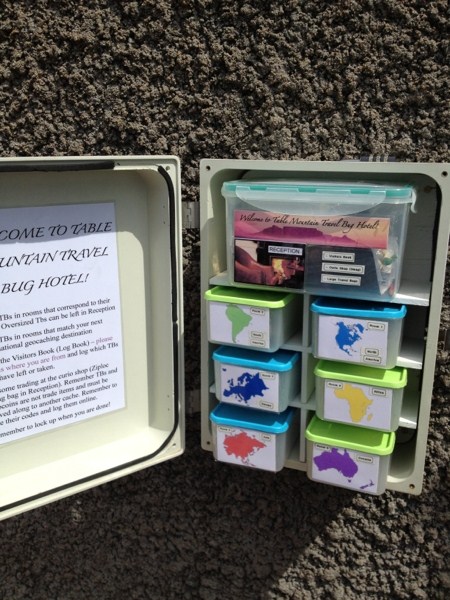
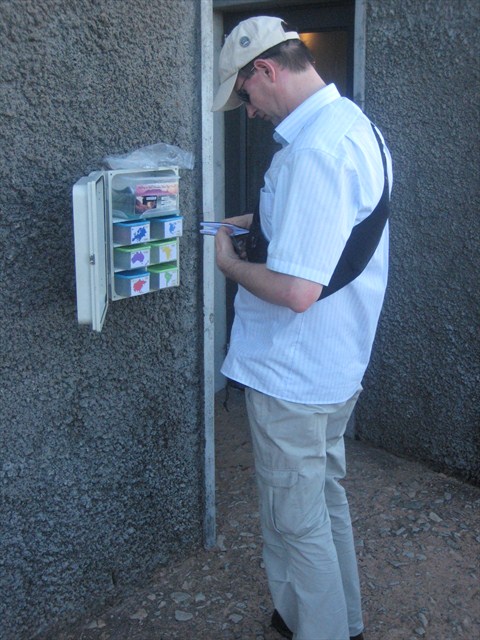
Trackable Week highlights a Travel Bug® haven where TBs check-in and check-out with ease. You can find an outstanding example of one of these locations in South Africa. The Travel Bug Hotel is sure to take your geocaching adventures to new heights. Table Mountain Travel Bug Hotel (GC31WXR) in Cape Town is the cache to log, drop off, and retrieve Travel Bugs from all over the world.
You might even see a local
Located on top of the city’s iconic mountain, the difficulty 1, terrain 1 traditional cache is quite the attraction. Geocachers can hike up the mountain or take a cable car to get to the hidden treasure. Not only is this a safe and secure cache that requires a code to be opened, it also comes with an incredible view.
Visited by millions of tourists each year, this ancient mountain has also attracted nearly 250 geocachers to summit for a chance to look for the cache. Treasure hunters from 33 different countries awarded this creative and well-organized treasure 55 Favorite Points in just one year.
Checking in
The cache page provides fun facts about the location, but the logs and pictures submitted by geocachers describe incredible experiences.
CapeDoc was inspired to create a cache on Table Mountain when he visited this area not too long ago. He says, “I noticed the amazing international blend of people on the top of the mountain. It struck me that it would be a great place for a Travel Bug hotel. The cache fits my philosophy: good listing + interesting hide + awesome location = great cache.”
Geocachers who logged this cache agree. One cacher writes, “A very nice TB hotel with lots of travelers waiting to be taken to their respective destinations. With this being such a popular tourist destination, I’m sure this one will become one of the most visited caches in SA. TFTC!”
Continue to explore some of the most engaging geocaches around the globe. Check out all the Geocaches of the Week on the Latitude 47 blog or view the Bookmark List on Geocaching.com.
If you would like to nominate a Geocache of the Week, send an email with your name, comments, the name of the geocache, and the GC code to pr@groundspeak.com.
This is your chance to share your favorite Trackable stories. Trackables have completed missions to travel the globe, find famous landmarks and compete in Travel Bug races.
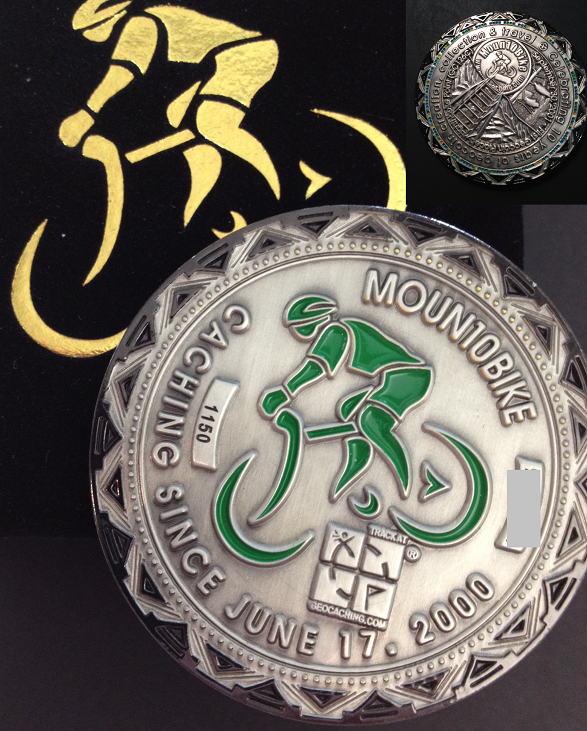
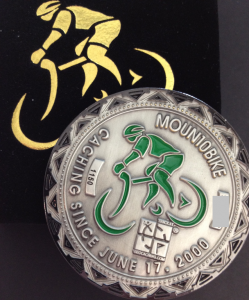
The three stories with the most likes at the end of the week of September 23rd, 2012 will all be entered to win a rare and coveted geocoin. The winner will receive the latest Moun10bike geocoin.
Enter your best Trackable story for a chance to win this geocoin
Submit your Trackable story by clicking on “Comments” below. Please include your Geocaching.com username in all entries. Then, explore the Trackable stories other geocachers have posted.
One entry per geocacher. “Like” the caption that you think should win. Geocaching.com Lackeys will vote from the top finalists to decide the winner of the Moun10bike geocoin.
Das ist Deine Chance, Deine favorisierte Trackable-Story mit anderen zu teilen. Die Trackables haben Ihre Missionen abgeschlossen wie: um die Welt reisen, berühmte Wahrzeichen zu finden und in Travel Bug Rennen zu konkurieren.
Die drei Geschichten mit den meisten “Gefällt mir”-Einträgen bis zum 23. September 2012, nehmen an der Verlosung einer seltenen und begehrten Geocoin teil. Der Gewinner erhält die neueste Moun10Bike Geocoin.
Reiche Deine Trackable-Story durch Klicken auf “Kommentare” weiter unten ein. Bitte gib Deinen Benutzernamen auf Geocaching.com bei allen Einträgen an. Danach entdecke Trackable-Geschichten welche andere Geocacher gepostet haben.
Es zählt nur ein Eintrag pro Geocacher. Drücke “Gefällt mir”, wenn Du der Meinung bist diese Geschichte sollte gewinnen. Die Geocaching.com Lackeys werden dann, aus den Finalisten, den Gewinner der Moun10Bike Geocoin auswählen.
ADDITIONAL TRACKABLE STORIES:
Zusätzliche Trackable Geschichten:
Check out the Travel Bug that’s traveled far enough to circle the globe 8 times… and is still moving (and moving, and moving…)
Schau Dir den Travel Bug an, der so weit gereist ist, um den Globus 8 Mal zu umrunden… und er ist immer noch unterwegs (und bewegt sich und bewegt sich…)
Trackable Week highlights a new story Monday through Sunday this week about creative ways to experience Trackables. Geocaching.com Trackables allow people to tag and track an item from location to location. Trackables typically come in three varieties, Geocoins, Travel Bugs® or Promotional Trackables like the “Find the Gecko,” Geico campaign. (Watch a video on Travel Bugs)
See the bottom of this article for a place a share your Trackable stories, links to other Trackable stories and a limited time special offer for 10% or more on individual orders of Travel Bugs through Shop Geocaching and our International Retailers.
Die Trackable–Woche präsentiert eine neue Geschichte jeweils von Montag bis Sonntag in dieser Woche um mehr über Trackables zu erfahren. Geocaching.com Trackables erlauben Leuten, einen Gegenstand zu markieren und diesen von Ort zu Ort zu verfolgen. Trackables kommen typischerweise in drei Varianten daher, Geocoins, Travel Bugs® oder Werbe–Trackables wie beispielsweise “Find the Gecko“, einer Kampagne von Geico. (Schau Dir ein Video über Travel Bugs an)
Am Ende dieses Artikels findest Du Platz um Deine eigenen Trackable–Geschichten zu teilen, Links zu anderen Trackable–Storys zu setzen und Du findest ein Sonderangebot für einen begrenzten Zeitraum. Spare 10% oder mehr auf deine Bestellung von Travel Bugs im Shop von Geocaching.com und bei unseren internationalen Einzelhändlern.
Steve’s Geo-Backpack
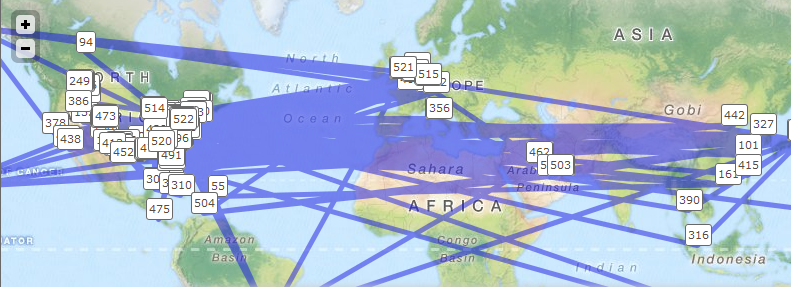
Steve’s geo-backpack Travel Bug has logged its way across the globe. [Der Travel Bug Steves Geo-Rucksack hat seinen Weg über den Globus abgebildet.]
One active Travel Bug has surpassed all others in its distance traveled.
This is the story of the most–well–traveled active TB in the world, Steve‘s geo–backpack, and its owner, Steve Kenny (clrtolnd). With 1.6 million miles, and counting, Steve‘s geo–backpack has experienced some serious traveling. Steve has the advantage of being an airline pilot who has many opportunities to see the world.
“Geocaching is perfect for pilots because during our travels, we have time to ourselves on our layovers.” The name clrtolnd stands for “clear to land,” a positive message for airline pilots, and an excellent sign for Travel Bugs that are eager to land more miles.
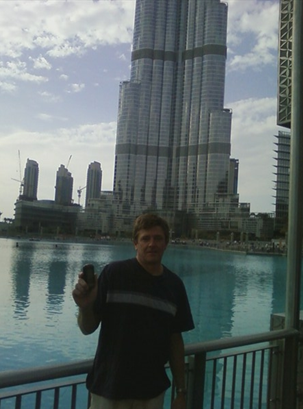
clrtolnd at Burj Kalifa, Dubai, one of his many worldly travels. [Clrtolnd beim Burj Kalifa, Dubai, auf einer seiner zahlreichen weltweiten Reisen.]Steve uses the technique of “dipping” his TB to track his personal mileage. This means that he logs the Travel Bug at a geocache, but then keeps it in his possession rather than leaving it inside of the cache container. Dipping can be done on Geocaching.com by logging a cache and selecting the “Dropped off Any Trackables?” option, under which the option of “Visited” can be selected. By selecting “Visited,” the TB remains in the geocacher‘s inventory and is considered “dipped.” The term “personal traveler” refers to Travel Bugs like Steve‘s geo–backpack that are used for tracking the mileage between geocaches. Alternatively, some geocachers will dip a Travel Bug just before handing it off to another person.
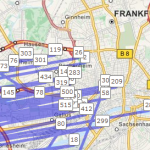
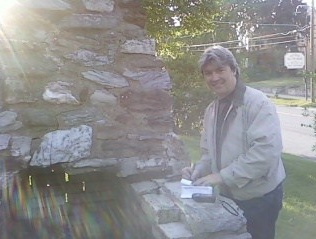
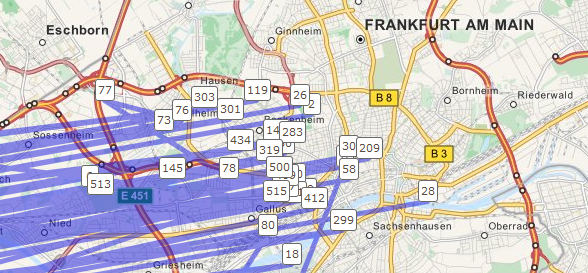
Steve first discovered geocaching in August 2006, when he and his colleagues were on a flight layover in Frankfurt, Germany. While waiting, the flight captain introduced clrtolnd to the hobby of geocaching. That day, they successfully found three traditional geocaches and one multicache — Steve has been an avid geocacher ever since. He has even converted his brother, Flyingbug, into a geocaching enthusiast. “We both have but hundreds of miles on our shoes as well as the thousands of miles in the air. He is my favorite caching buddy,” admits Steve.
A few months into geocaching, Steve purchased some coins and a Travel Bug in order to track how many miles he traveled in a given month. He clipped the TB to his small backpack (hence the name Steve‘s geo–backpack) and set off for adventure.
Steve does not dip his TB in every cache that he finds, but he generally dips it in one cache per outing. Sometimes he misses out on logging miles, if he forgets to dip it between trips to the same region, “If I find a cache in Dubai, fly home, and my next find is in Kuwait, I failed to log more than 13,000 miles. That happens multiple times each year, but I attempt to find at least one cache each time that I have more than 12 hours on the ground.”
With so many miles under his TB‘s belt, Steve has many geocaching stories to share. He fondly recalls a time that he made a UAL Family Travel Bug out of a McDonald‘s 747 toy–airplane and left it on Victoria Peak in Hong Kong, “The first geocacher to pick it up was an Air New Zealand 747 pilot!”
clrtolnd’s photo of his brother, Flyingbug at a find in West Virginia [Clrtolnd’s Foto von seinem Bruder, Flyingbug bei einem Fund in West Virginia]Steve and his geo–backpack Travel Bug have no plans to slow down. “I can‘t imagine retiring my geo–backpack. I take it almost everywhere that I carry my geo–essentials.” Steve’s geo–kit includes all of the geocaching necessities, except for pliers or a sharp object – even pilots aren‘t allowed to bring those on flights.
Eine aktiver Travel Bug übertrifft alle anderen in der zurückgelegten Entfernung.
Das ist die Geschichte des am weitesten gereisten aktiven TB in der Welt, Steves Geo–Rucksack und seines Eigentümers, Steve Kenny (clrtolnd). Mit (bis jetzt) 1,6 Millionen Meilen hat Steves Geo–Rucksack viel Erfahrung im Reisen. Steve hat den Vorteil, dass er Pilot bei einer Fluggesellschaft ist und somit viele Möglichkeiten hat, die Welt zu sehen.
“Geocaching ist perfekt für Piloten, da wir während unserer Reisen Zeit für Zwischenstopps haben.” Der Name clrtolnd steht für “Bereit zur Landung“, eine positive Nachricht für Piloten und ein erstklassiges Zeichen für Travel Bugs um eifrig mehr Meilen zu sammeln.
Steve nutzt für seinen TB die Technik des “Eintauchens” um seine persönliche Reisemeilen zu protokollieren. Dies bedeutet, er loggt den Besuch eines Geocaches mit seinem Travel Bug, lässt diesen jedoch in seinem Besitz, anstatt Ihn in den Geocache abzulegen. Seinen TB “eintauchen” lassen, kann man auch auf Geocaching.com wenn man einen Cache besucht. Man wählt unter dem Reiter “Trackables abgelegt?”, die Option ‘Besucht‘ aus, durch diese Auswahl bleibt der TB im Bestand des Geocachers. Der Begriff “persönliche Traveler” bezieht sich auf Travel Bugs wie Steves Geo–Rucksack, sie dienen der Nachverfolgung des Kilometerstand zwischen den besuchten Geocaches. Alternativ loggen auch einige Geocacher einen Travel Bug als “Besucht” ein, bevor Sie diesen an eine andere Person übergeben.
UAL Family Travel Bug, one of clrtolnd’s Travel Bugs.
Steve entdeckte Geocaching im August 2006, als er und seine Kollegen einen Zwischenaufenthalt in Frankfurt, Deutschland hatten. Während der Wartezeit, erklärte der Flugkapitän clrtolnd das Hobby Geocaching. An dem Tag fanden Sie gemeinsam drei Traditional– und einen Multi–Cache — seit dem wurde aus Steve ein begeisterter Geocacher. Er hat sogar aus seinem Bruder, Flyingbug, in einen Geocaching–Enthusiasten verwandelt. “Wir haben beide Hunderte von Meilen zu Fuß sowie Tausende von Meilen in der Luft zurückgelegt. Er ist mein bester Caching–Kumpel” gesteht Steve.
Nach ein paar Monate im Hobby Geocaching kaufte Steve ein paar Geocoins und einen Travel Bug um zu verfolgen, wie viele Meilen er in einem bestimmten Monat gereist ist. Er brachte den TB an seinen kleinen Rucksack (daher der Name Steves Geo–Rucksack) an und das Abenteuer begann.
Steve loggt seinen TB nicht bei jedem Cache den er findet ein, aber er loggt mit Ihm im Allgemeinen einem Cache pro Ausflug. Manchmal verpasst er das Loggen oder er vergisst es, vor allem bei Reisen in der gleichen Region. “Wenn ich einen Cache in Dubai finde, nach Hause fliege und meine nächster Fund ist in Kuwait, dann verpasse ich in etwa 13.000 Meilen. Das geschieht jedes Jahr mehrere Male, aber ich versuche zu mindestens jedes Mal einen Cache zu suchen, wenn ich für mehr als 12 Stunden auf dem Boden bin.”
Mit so vielen zurückgelegten Meilen seines TBs kann Steve viele Geocaching–Geschichten erzählen. Er erinnert sich liebevoll daran, wie er einen UAL–Familien–Travel Bug mit einem McDonald‘s 747 Spielzeug–Flugzeug erstellte und ihn im Victoria Peak in Hongkong ablegte. “Der erste Geocacher, welcher den Travel Bug aufnahm, war ein Air New Zealand 747 Pilot!”
Steve’s geo-backpack Travel Bug has logged its way across the globe. [Der Travel Bug Steves Geo-Rucksack hat seinen Weg über den Globus abgebildet.]Steve und sein Travel Bug der “Geo–Rucksack” haben keine Pläne kürzer zu treten. “Ich kann mir nicht vorstellen, meinen Geo–Rucksack in den Ruhestand zu schicken. Ich nehme Ihn fast überall mit hin, er enthält all mein Geo–Equipment.” Steves Geo–Kit enthält alles was er für das Geocaching benötigt, mit Ausnahme einer Zange oder einem scharfen Objekt – auch Piloten dürfen dies nicht auf Flügen mitnehmen.
ADDITIONAL TRACKABLE STORIES:
Zusätzliche Trackable Geschichten:
Share your Trackable stories for a chance to win this rare and coveted Moun10bike Trackable.
Share your Trackable stories for a chance to win a rare and coveted Moun10bike Trackable.
Editor’s Note: The content in this article were first presented by Stuart West and Marcia Keener of the National Park Service during the 1st International EarthCache Mega-Event in Maine, USA on 2 September 2012.
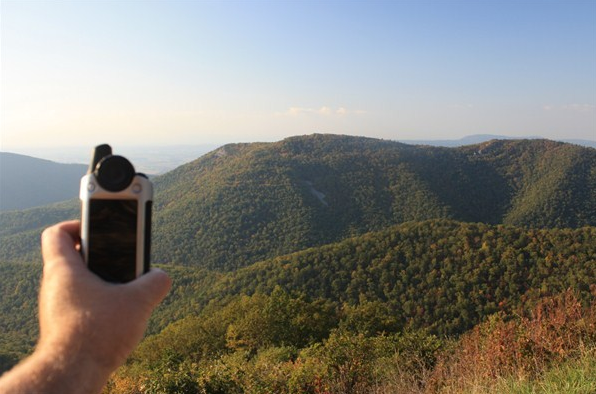
The Lowly Worm EarthCache can be discovered in Shenandoah National Park
By Stuart West and Marcia Keener of the National Park Service, Edited by Jenn Seva
Are you interested in developing EarthCaches on lands managed by the National Park Service (NPS)? Our friends at the NPS provided pointers so that more EarthCaches might be permitted. Remember that geocaches are prohibited on these lands until they are permitted. You must ask for permission first. There is no guarantee a request to place a cache will be fulfilled. But odds are good. To date, close to 75 EarthCaches have been permitted on NPS managed lands!
Basics
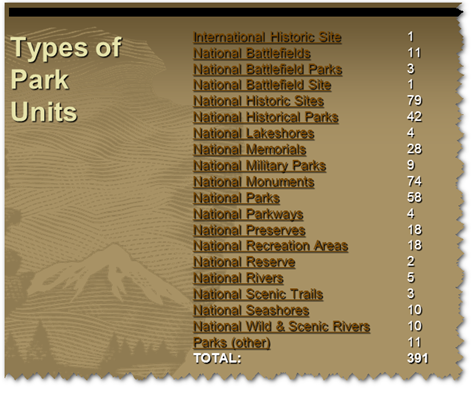
The NPS was created in 1916. Those of you doing the math will realize that 2016 will represent quite the milestone! Today, there are nearly 400 units, like parks and scenic trails, within the NPS. Although we commonly call them all national parks, only 58 have that official designation. The complete list details all NPS units. There are national monuments, national seashores, national rivers, national historic sites, and the list goes on. For simplification, we will call all NPS units “national parks” in this article.
Why is this NPS designation important? Because that gives you an idea of the purpose of a park and a clue as to whether or not geocaching might be permitted. Why was a particular national park established? Do you understand its history? What must managers do to protect it? What are the interpretive or education plans? How might you help carry out their mission?
National parks are managed to a high standard, but do differ on types of activities that are allowed. The likelihood of getting a geocache placed in a national battlefield park is much less likely than a national recreation area (NRA). National battlefield parks may not even permit kite flying or Frisbee throwing because those activities are deemed inappropriate over the gravesites and hallowed grounds of those who have died for our freedoms. Conversely, geocaching may be deemed appropriate for some areas in a national recreation area. Always keep basics like the park’s mission in mind when thinking of proposing a geocache.
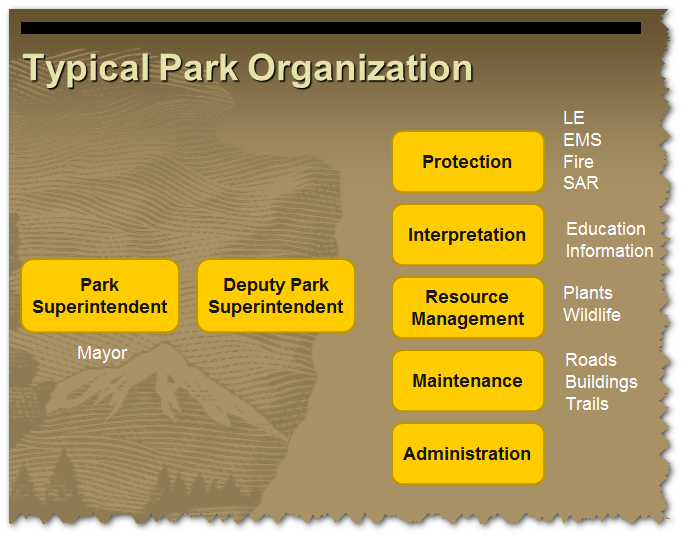
National parks are run much like cities. Both have a police force, fire department, and rescue squad. They both have roads to repair and they both have educators, buildings to maintain, and trash to manage. Detroit is managed differently than Los Angeles, and LA is not managed exactly like New York, Atlanta or New Orleans. No two parks are managed exactly the same way. Cities and parks face a variety of unique challenges based upon climate, topography, government infrastructure, job opportunities, and available funding. Consider that a city exists in a particular area for specific reason. A national park is set aside to protect a specific natural or cultural resource.
So, you have an idea for an EarthCache in a nearby national park.
The following tips will likely save you a lot of time and effort.
First task is to find out who will be your contact in the park before you put too much time into scoping out a possible cache location or creating text.
In some parks, your point of contact will be the Chief Ranger, the person who is responsible for managing law enforcement in the park.
It may be the Chief of Interpretation, responsible for education and information.
The Chief of Resource Management may be your contact especially when plants and wildlife health are of concern.
It is usually one of these three chiefs that will be your point of contact. In smaller parks some chiefs may manage multiple disciplines, making your search easier.
In some parks, the duty of managing Geocaches may fall to the Special Park Uses Coordinator (people often have numerous duties or roles in parks), especially if that park requires a permit for placing a cache.
Everyone in the park reports to the park superintendent or manager.
Set up an in-person appointment with that person if possible.
Be patient. If park staff are unfamiliar with geocaching or are new to this request, it may not be clear who will handle cache requests – and approval will always be interdisciplinary. In other words, although there may be one “lead,” several people may need to be consulted to get permission.
Be informative. Many people do not have experience with EarthCaches. Some have had or heard about negative experiences with geocaches so they may or may not want to learn more. Perhaps you can demonstrate or teach the activity to park staff.
Be flexible. Provide the coordinates you plan on using. Better yet, walk to your proposed location. You may get good feedback and answer questions in the field. Park staff will consider safety, resource damage, and possible theft of archeological or natural resources.
Be informed about the park’s purpose. Explain how your proposed cache, especially an EarthCache, might support the mission and help draw and teach visitors about the park’s resources, or that park’s story about our Nation’s heritage.
Next Steps
Determine whether you need a Special Use Permit by discussing the proposal and applying for one if necessary.
When proposing an EarthCache, remind managers that EarthCaches were developed in partnership between the Geological Society of America, the NPS and Geocaching.com.
Always be mindful of other responsibilities that park staff have. Give them ample time to review your proposal. Gentle reminders might be appropriate if many weeks have gone by.
Remember that managers have the full right to approve or deny the application, have final say over content, and can insist that a cache be removed if there is a problem.
After you get park permission, submit your plans to Geocaching.com. Your EarthCache description must be reviewed by the park staff prior to final submission.
Federal Regulations That Affect Traditional Geocaches
EarthCaches focus on geoscience feature of our Earth and so do not need a container like traditional geocaches do. National parks enforce the regulations listed within Title 36 Code of Federal Regulations (36 CFR) when caches use physical containers. This is in violation of established regulations until permission is granted by the park superintendent and written within the Superintendent’s Compendium, the document of park-specific regulations. Two sections of 36 CFR are typically used to enforce park prohibitions against physical geocaches. A third regulation, 36 CFR §2.1 Preservation of natural, cultural, and archeological resources, has also been cited in cases where geocachers disturb the environment to conceal their caches. The two most common violations cited are violation of a park closure and abandoned property:
36 CFR §1.5 Closures and Public Use Limits … based upon a determination that such action is necessary for the … protection of environmental or scenic values, protection of natural or cultural resources … , or the avoidance of conflict among visitor use activity, the superintendent may: (2) … Impose conditions or restrictions on a use or activity.
36 CFR §2.2 (a) Property: The following are prohibited: (2) Leaving property unattended for longer than 24 hours except in locations where longer time periods have been designated or in accordance with conditions established by the superintendent.
Again, permission from park managers is required before any geocache can be placed on national park lands. Caches using physical components may be best in developed areas or requested near visitor centers.
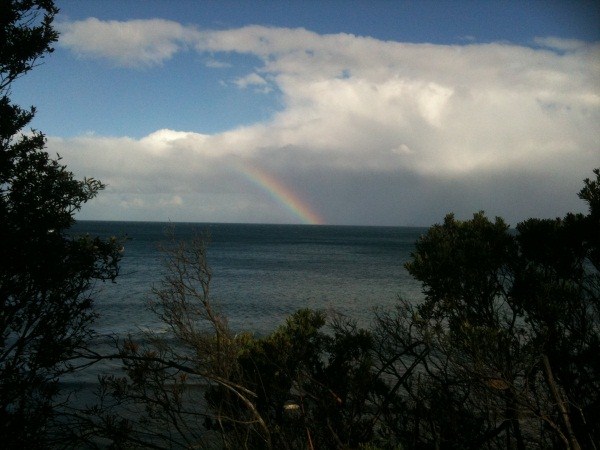
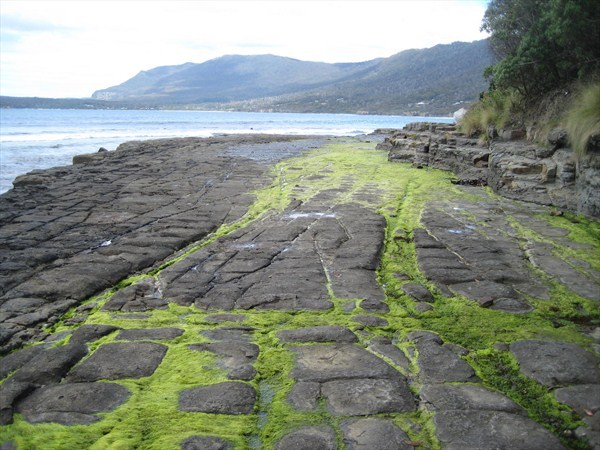
Chasing rainbows might just lead you to one of the most popular geocaches in Tasmania. Tessellated Pavement (GCT7VH) delivers cachers to a geological phenomenon. The rock along the beach has fractured into tile shapes. Snuva hid a geocache near this location in 2006.
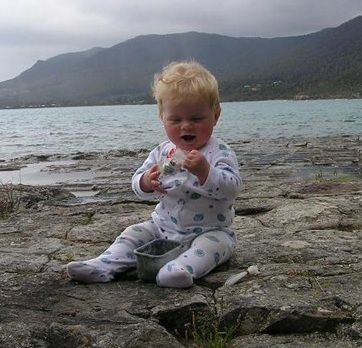
A young geocacher explores the cache container
The difficulty 1.5, terrain 1.5 traditional cache rests in an area rich with natural beauty and creative names for natural formations, “… less than 10 minute return walk will take you to this natural pavement. Although this pavement doesn’t have a cafe, some of the names of rock formations will definitely have you thinking geologists think about food an awful lot!”
Names for other nearby geological sites include “The Devil’s Kitchen” and “Tasman’s Arch.” Geocachers can also explore the Earthcache “Walking on Nature’s tiles pavement” at the location.
More than 200 geocachers have logged a smiley on the cache. One cache who logged “Tessellated Pavement” writes, “Truly amazing what nature can do! The kids were so taken by this place they even took photos of the information boards so the can do a project on the pavement.” Another geocacher says, “What a simply amazing natural phenomenon. Looks like something man made. Nature even built in steps. And the view… Simply WOW. TFTC.”
View of the Tessellated Pavement
Continue to explore some of the most engaging geocaches around the globe. Check out all the Geocaches of the Week on the Latitude 47 blog or view the Bookmark List on Geocaching.com.
If you would like to nominate a Geocache of the Week, send an email with your name, comments, the name of the geocache, and the GC code to pr@groundspeak.com