The Virtual Cache titled, “Captain Jacques Yves Cousteau” (GCJ9YK) takes divers forty feet below the surface of the Pacific Ocean. At this location you’ll discover a plaque honoring Caption Jacques Yves Cousteau.
This difficulty 4, terrain 5 Virtual Cache delivers geocachers to what’s reported to be one of the most popular dive sites on the West Coast of North America. The dive site is located off Catalina Island, California. According to the cache page, you must use SCUBA gear to reach the cache and dive with a partner.
They say, “We enjoy placing caches that have some sort of history to them and are fun to find. GCJ9YK is a fine example of that. When we placed the cache in 2004, there were very few underwater caches and we thought it would be fun to see how many geocachers were divers. Turns out there are a lot! Thanks for bringing attention to the great legend who gave us a vision and the key to the silent world.”
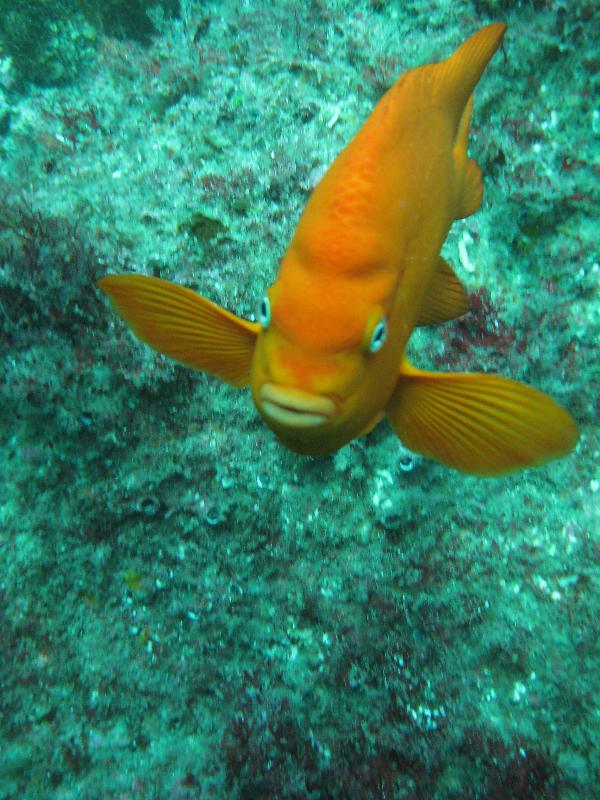
PezCachers asks three questions before you’re able to claim the cache. Beside answering to those questions at this Virtual Cache, you’ll also discover much more: wrecks, drop-offs and come face to face with countless colorful fish.
EDITOR’S NOTE: Virtual Caches are no longer available for creation on Geocaching.com. These types of caches are now considered waymarks on Waymarking.com.
Editor’s Note: Kiet and Jill Callies (kietc) along with their daughter visited Groundspeak HQ on June 18th, 2010. It was their 1001st straight day of geocaching. The journey began on September 22, 2007 and ended that day at HQ. Kiet authored this guest blog. This is his story. These are his words. Here’s what you can learn from a team that completed a geocaching streak of 1001 days.
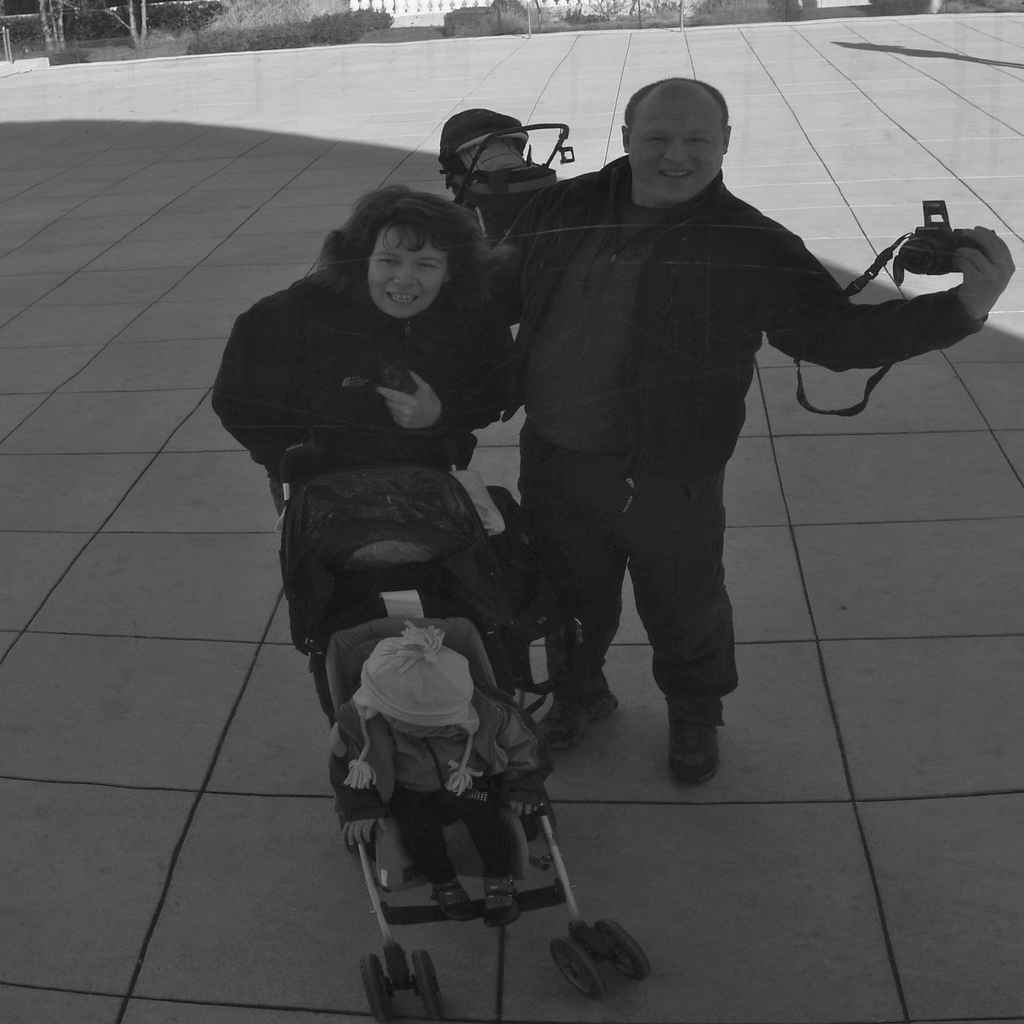
Kiet and Jill Callies with daughter McKenzie. Geocaching username "keitc"
When we started our streak on September 22, 2007, it was a reboot of a previous 41-day streak, broken by work commitments, which just whetted our whistles for the big one. No other commitments would interrupt our next streak until June 18, 2010 – a thousand and one days later. In that time, if stringing our finds together like a necklace of pearls, we traveled nearly 60,000 miles and made finds in 15 states.
The original streak probably began as a pacesetter for reaching a milestone by the year’s end. The big streak was to prove we could go all the way. We started setting the goal of 100 days, then a year and, if a year, why not a thousand days. Then, again, why not be literary, like A Thousand and One Arabian Nights, A Thousand and One Geocaching Days.
I almost carried the whole load alone. However, this was never meant to be a loner’s endeavor. My wife and daughter stepped in my place a couple of times. Once, during one of life’s frustrating moments of defeatism when I decided to give up on everything and pick a fight with the world, my wife, unable to witness the regret I would face in the after-moment, took my daughter and made a find to keep the streak alive.
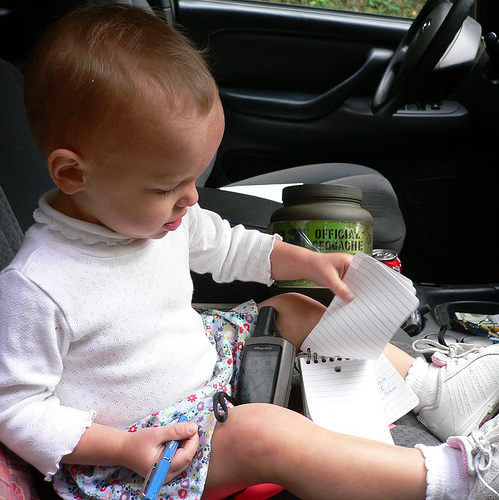
The next generation of geocacher, McKenzie Callies.
Now, to maintain such a streak, the quality of some caches suffers. Though we have seen and discovered some amazing things in the course of our adventures, both obvious and hidden, we often had to settle for some mundane finds – a film canister tucked under a lamp post cover or inside a guard rail, which can be demotivating when these are the majority of your finds. Then I stumbled upon the Danboard and Stormtroopers 365 photo projects and was inspired.
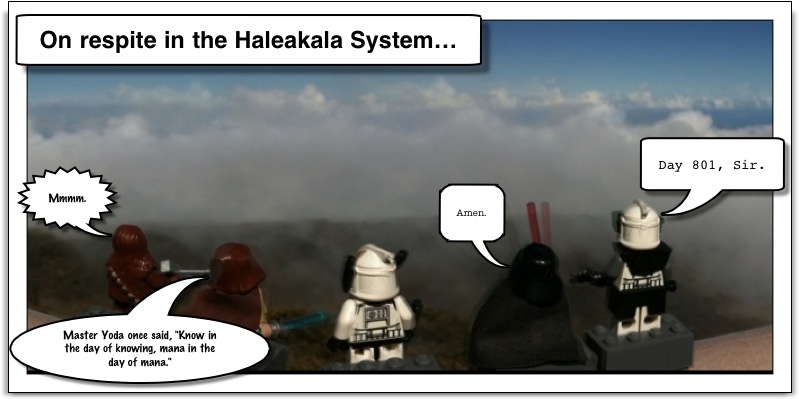
One of the things we enjoy about geocaching is the context of location. There is a reason why someone chose a particular location and decided to share it with others. Now you can argue whether the location is worth sharing, but you cannot deny that it now has context, a story. I decided to lay another narrative on top, and my medium was Legos and Star Wars.
Legos are small and portable, perfect for travel, and like in Star Wars, we as geocachers use technology to get us close to the truth, the cache, and then use the mystical, or our geo-senses, to actually find it. Over-thinking it? Probably. I grew up under the strong influence of the original trilogy, and besides that, Star Wars is just so cool. On Day 779, I introduced the Star Wars Lego storyline and have managed a few chuckles here and there.
Click the picture to view Kiet Callies Flickr page
Now that the streak is over, and I have had time to digest it all, I will tell you that I did experience withdrawal and guilt the next day, June 19th. What’s next? In celebration of geocaching’s 10-year anniversary, to find a cache placed in each month of geocaching’s existence. Isn’t setting goals fun?
Haven’t you always dreamed of a bulging hippocampus? Another question at this point, might be: what’s a hippocampus?
The hippocampus is the portion of the brain believed to store maps of our surroundings. It allows us to navigate around this crazy mixed-up world. It’s your inner GPS. If you’re going to the grocery store, your parents’ house or the place by that Thai restaurant your friend told you about? Yeah, your hippocampus gets you there.
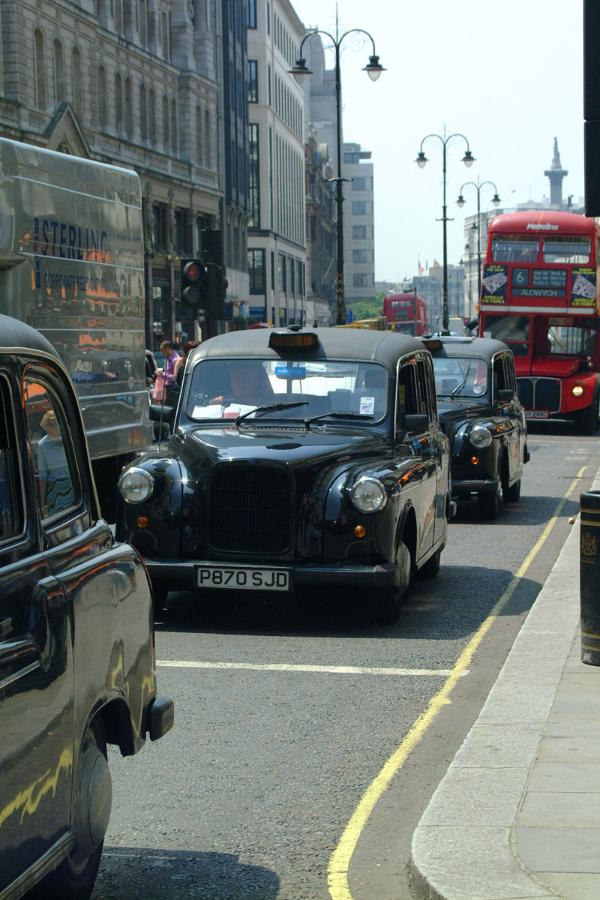
A famous study into the inner wiring of London taxi drivers’ brains discovered something, well, unexpected. The late 1990’s research found the drivers hippocampi were much larger than normal, non-taxi-driver, hippocampi.
Taxi drivers navigating with their hippocampus.
The more the taxi drivers navigated the complex web of London streets, blind alleys and winding lanes, the larger their hippocampi grew.
The oyster-sized and colored portion of our mind also plays a role in long-term memory. And I believe geocaching flexes your hippocampus.
Now there’s no study for what’s next (yet), but geocaching must be an amazing work out for your hippocampus. You’re continuously navigating and building maps of your surroundings. You’re challenging your ability to move from A to B. Finding a geocache pumps up your awareness of your location. The concept sounds fairly simple.
But some fear we rely on our GPS devices and mapping sites far too much.
Last year a Los Angeles woman, Lauren Rosenberg, was struck by a car while crossing a highway in Utah. In May, she filed a lawsuit against Google. According to The Washington Post, Rosenberg’s lawyer claims Google Maps provided walking directions that sent Rosenberg into harm’s way. She ended up on a busy road with no sidewalks. She followed the directions sent to her Blackberry – which Rosenberg claims did not come with a warning about missing sidewalks.
She got hit by a car. She accumulated massive medical bills. She sued. There was clearly a loss of “situational awareness.”
So, which is it? Do we rely on maps and GPS devices too much? Or does the act of geocaching and navigating help grow the awareness of our surroundings?
VOTE in the Geocaching.com Poll in the sidebar to your right.
Just in time for the beginning of the best weather to travel north, is our Geocache of the Week GC5803. The geocache titled, “As North As It Gets!” takes you up to N. 82 degrees.
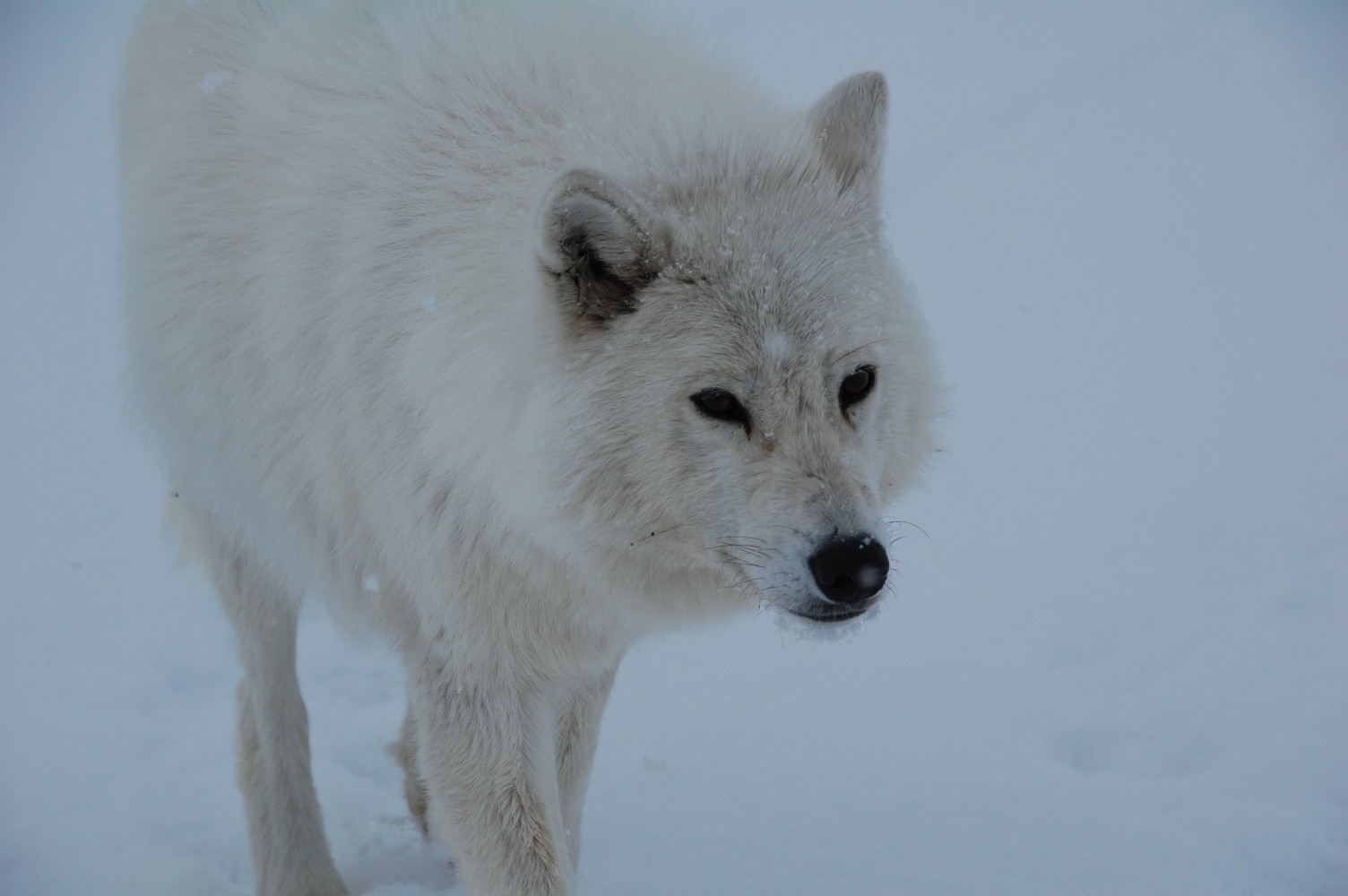
Besides the wolf above, cachers who’ve logged GC5803 say you’ll also be walking among foxes, lemmings and even polar bears. The cache is just outside what’s reported to be the northernmost permanently inhabited place on earth: Alert, Canada. The Canadian Air Force staffs a station there. Temperatures in Alert average about -30 degrees Celsius most of the year.
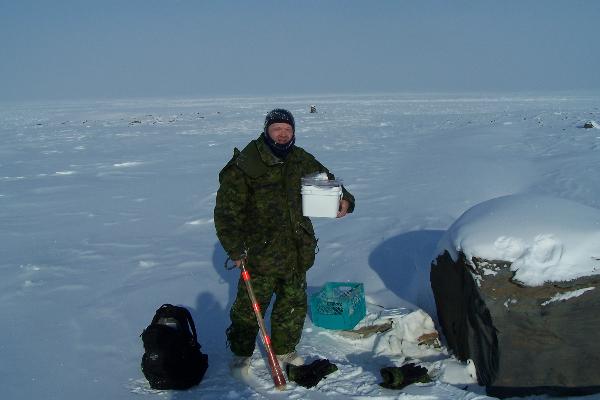
Geocacher finding GC5803. At last report, the cache thankfully contained gloves and hand warmers.
Now is the perfect opportunity to plan your northern caching adventure. July is typically the warmest month. The snow melts to reveal a rocky terrain of jagged shale. Temperatures average a scorching six degrees Celsius (42 Fahrenheit). You could be among the nearly two dozen geocachers to earn a smiley for logging this cache and take away memories of a rarely visited northern landscape.
View from near the GC5803
What to explore more geocaching adventures? Take a look at all the Geocaches of the Week here.
Geocaching squares off again the battle of the bulge. Geocacher Martin Pedersen is on a diet. Martin is determined to lose 100 pounds by the end of the year. He’s using geocaching to shed the weight. His aim is to find 1000 geocaches and walk 2500 kilometers. Root him on by posting a comment and sharing your geocaching weight lose stories here on our blog. You can also track his progress and send well wishes his way on his must-read family website, http://familynavigation.com
 The Virtual Cache titled, “Captain Jacques Yves Cousteau” (GCJ9YK) takes divers forty feet below the surface of the Pacific Ocean. At this location you’ll discover a plaque honoring Caption Jacques Yves Cousteau.