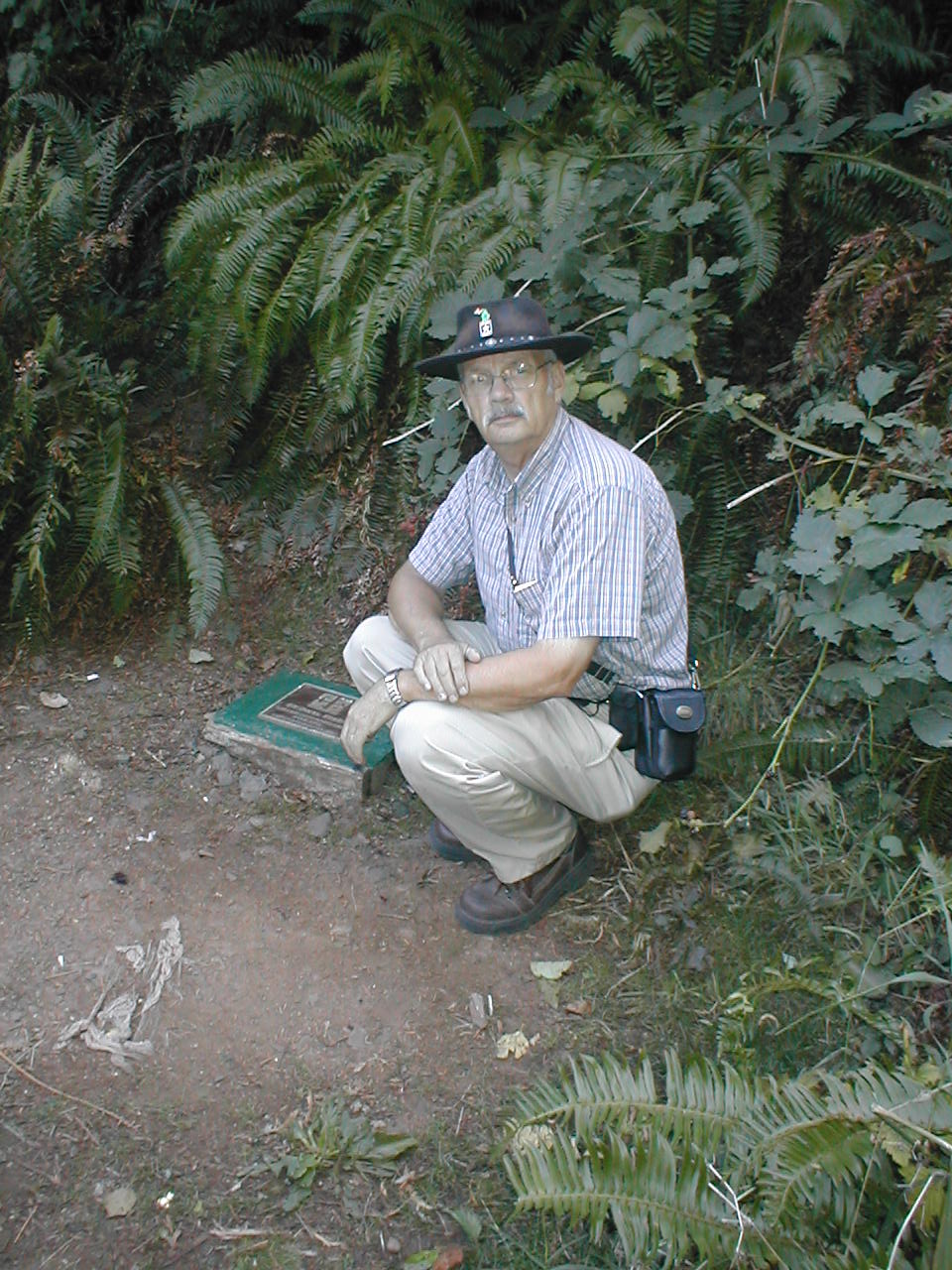
Geocaching pioneer and video game designer Richard Garriott, aka Lord British, pushes the envelope again with the creation of the Mystery Cache Necropolis of Britannia Manor III (GC2B034).
A resident at Necropolis of Britannia Manor III
The journey leads geocachers through what Lord British describes as eight chapters on “The Guardian’s Quest.”
Part of the graveyard at Necropolis of Britannia Manor III
The first seven chapters are waypoints or benchmarks. The chapters are a twisted maze of cryptic clues and mind-bending puzzles. Solving each chapter provides a clues to find and unlock the geocache at the end of the final chapter.
The treasure hunters that reach the final chapter will find a geocache with all too realistic professional movie props and haunted house techniques. It took months to plan and build.
Garriott holds the record for the highest and lowest geocaches in existence. Garriott rode aboard a Russian rocket to place a geocache aboard the International Space Station (GC1BE91) in 2008. He also placed a geocache, Rainbow Hydrothermal Vents (GCG822), 2300 meters below the surface of the ocean far off the coast of Portugal in 2002. You can view a Lost & Found video about Lord British’s highest and lowest geocaches.
Lost & Found videos explore the fascinating adventure geocaching. View more than a dozen stories, including one about an Army Sgt. who credits geocaching with helping keep him safe.
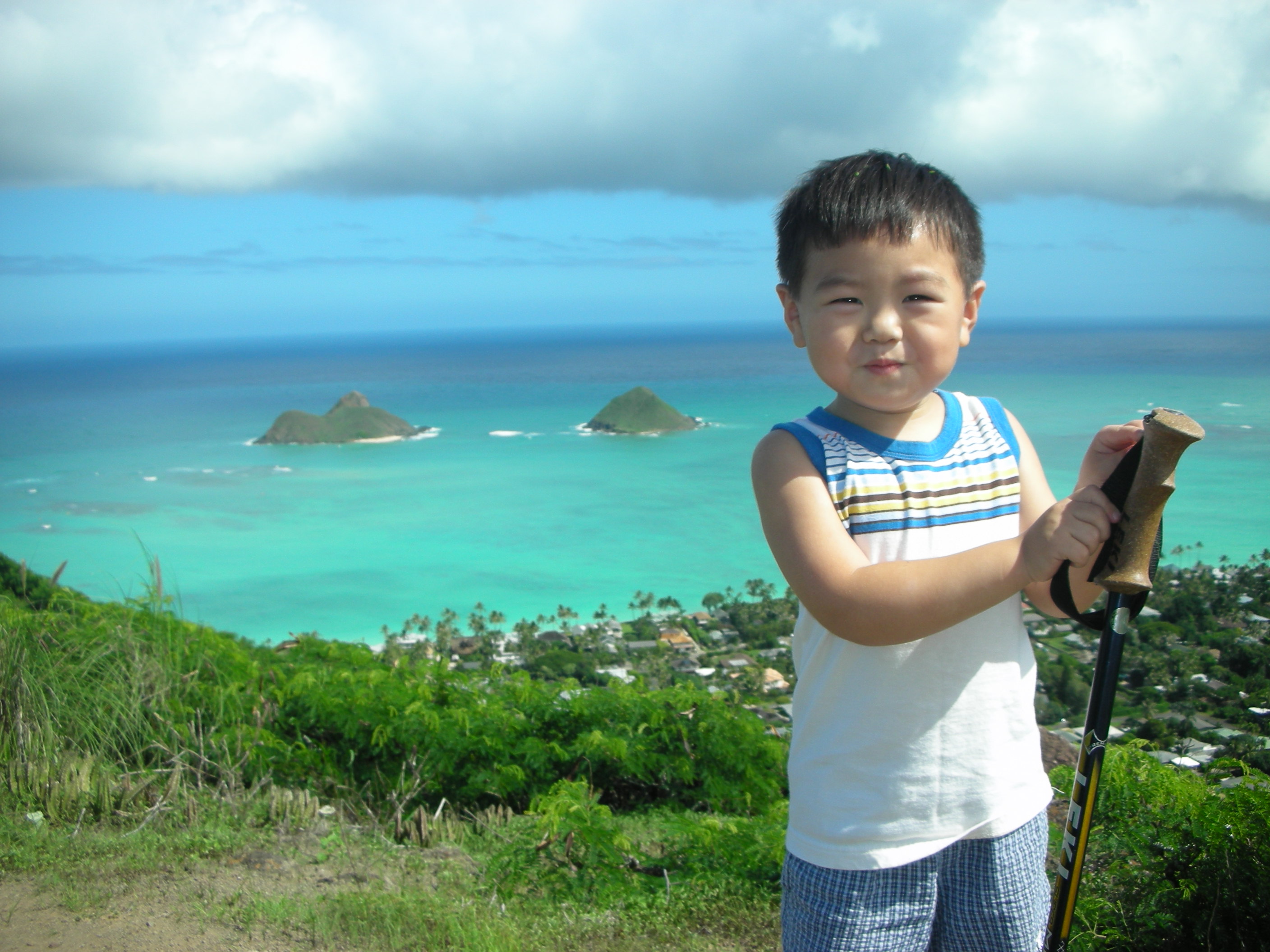
A photo from geocacher Troy Tomita (t-prime), geocaching with his son in Hawaii
Take a moment to think back into the Kodachrome snapshot memories of your childhood. There’s something there. It’s clutched in your hand in the split-second flashes of family and friends and bursting sounds of laughter. It’s the one item that helped define your childhood. For me, it’s a brightly illustrated children’s book. My mother read the book to me as a toddler. Not long after, I’d read the book to her over and over and over. The yellowed price tag on the book must have read less than a dollar.
A wonder of the world is that there’s often little relationship between what something costs and its value.
The book was priceless to me, not because of its retail value, but because of the experiences that the book nurtured and bonds it cemented reading after reading after reading. In your childhood memories, most likely, there’s a snapshot of a similar item. Whether it was a worn doll or a battered soccer ball or a small half-broken toy, it brought more happiness than the price could ever suggest.
Odds are, if you’re a geocacher, your fingers curl around an equally powerful item now.
The New York Times just published an article about the relationship between happiness and spending. The lessons we’ve pulled from the economic ruin of the recession taught us that more money doesn’t necessarily mean more happiness. According to the article, one major finding of recent research is that spending money on experiences, rather than objects, provides longer lasting happiness than just buying stuff like a couch.
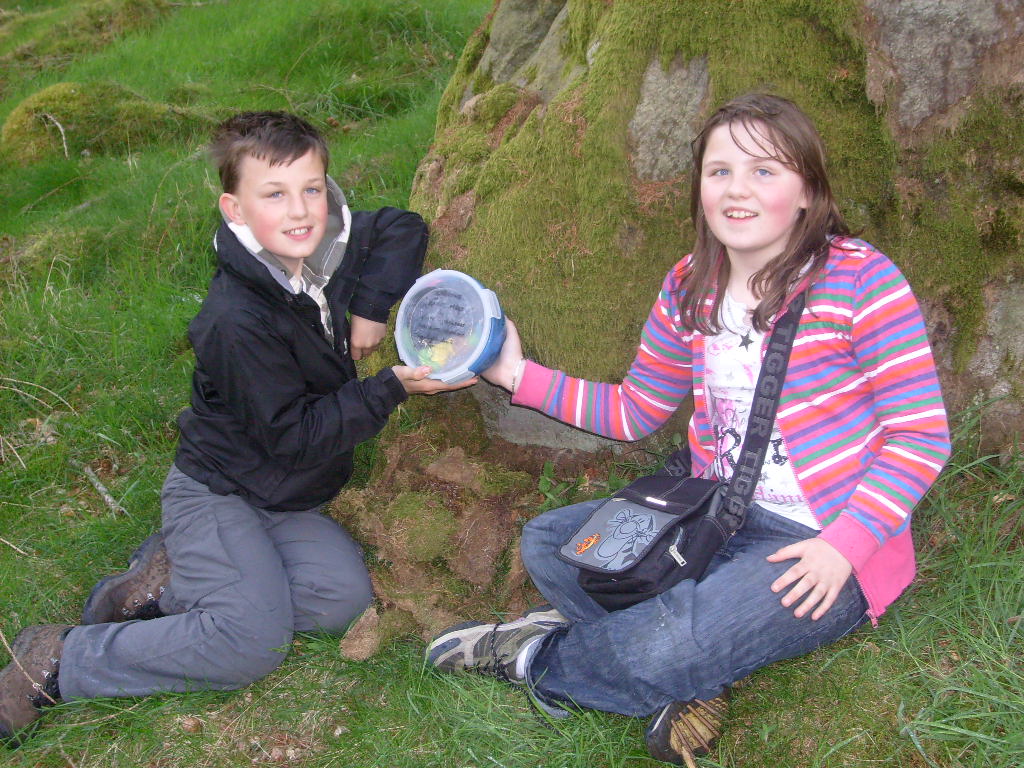
Picture taken by geocacher, Kevin Smith (follieus), with his kids in Scotland
Experiences may, in fact, triple your happiness. You anticipate an experience, live it and then remember it. The value grows over time as you reminisce. A couch’s value only declines.
Geocaching offers a life time of experience growing closer with friends and family and requires only a GPS device and a willingness to explore. There are countless stories among the four to five million geocachers around the world about the value that geocaching adds to their lives.
Geocacher Martin Pedersen has lost nearly 30 pounds and now hikes with his three kids more often. Bruce Alexander began geocaching three years ago, when he was 85. He now geocaches with his son and granddaughter. Thousands of geocachers visited Seattle one weekend in July to attend GeoWoodstock VIII and Groundspeak’s Lost & Found Celebration, where they shared their own stories about finding a little more happiness by following a GPS device to a geocache.
Thinking back to your childhood provides clarity about value. Now, think about the future. Do you choose to “have” or to “do.” Few of us get to choose both. Holding that GPS receiver in your hand might just mean holding years of memories that you haven’t made yet. If you choose to “do” you could end up finding more than geocaches, but more happiness, at the end of your treasure hunt.
Geocachers Opa&PK recently sent a letter to Groundspeak Headquarters titled, “Opa’s Rules of Thumb for Caching.” The rules embody lessons learned over years of geocaching. The team has been geocaching since 2003 and has found more than 2000 caches.
Opa taught geocaching classes with another geocacher, Lynn from “QuantumFarms.” The experience helped Opa develop the rules you’re about to read.
Opa says, “I do think they could be used as a teaching tool for ‘newbies.’ Even though tongue-in-cheek, every one has a practical application as well.”
Here’s ten of the rules that they discovered on the geocaching trail:
1- No matter how much advance research you do, the cache will be on the other side.
2- Any references to water/swamps/mosquitoes/tics in a cache’s description or log entries should be believed.
3- Always take the official bushwhacking distance and multiply by 3.62.
Opa, packing spare batteries, at the Original Cache
4- Waterproof footwear isn’t waterproof — unless the water is already inside.
5- You are allergic to some form of plant life; you just don’t know which one yet.
6- Always carry spare batteries, always.
7- If something looks out of place for the locale, it could be the cache.
8- If something looks absolutely authentic for the locale, it could be the cache.
9- Sometimes you have to just trust the instruments; at other times go with your experience and instinct. The trick is figuring out which approach to use for THIS cache.
10- Excessive coffee drinking does not go well with caching.
There are many more rules out there. Post a comment. What rules of thumb would you add?
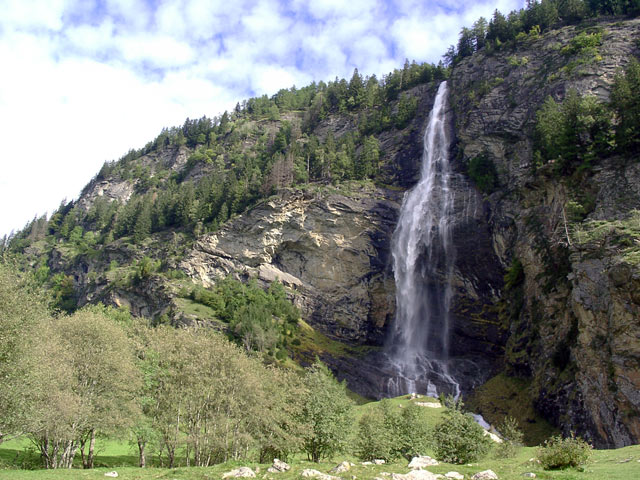
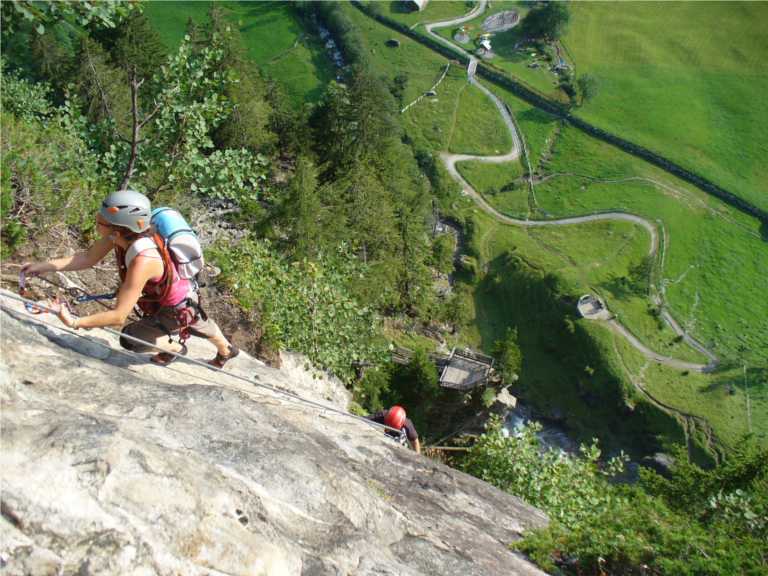
“Water coming down, Cacher climbing up” (GCQYK6) might define a terrain 5 geocache. Terrain is rated from 1 (most accessible) to 5 (most difficult). The fixed-rope route is designed for advanced climbers only. According to the cache owner, the route is said to be the most challenging climb in the southern Austrian state of Carinthia. A helmet, climbing shoes and other pieces of specialized equipment are a must.
The view from the route of GCQYK6
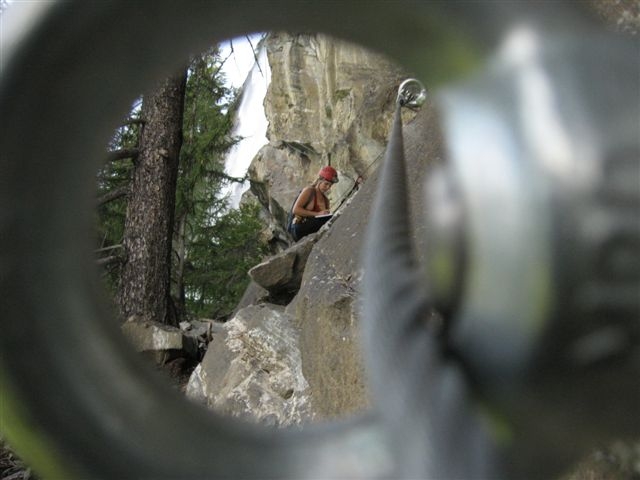
Geocachers ascend the vertical face of a sheer rock cliff to reach the geocache. The pictures below tell the heart-racing story and the majestic visual pay-off along the way. The trek takes geocachers about two and half hours to complete.
Along the route of GCQYK6
The Multi-Cache tasks geocachers to reach three waypoints before unlocking the code for the coordinates where the physical cache is located.
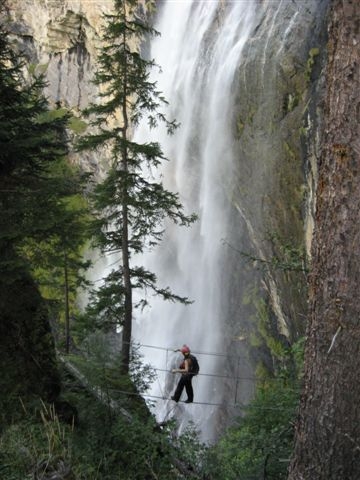
The route also treats geocachers to a rope bridge that dangles climbers over a deep gorge.
Waypoint along the route of GCQYK6
Paraszczak and Jurko hid the cache in 2005. Geocachers who’ve logged the find call it one of the absolute highlights of their caching careers. But only ten brave geocachers have logged smileys to date.
GCQYK6 is one of the oldest terrain 5 caches in Austria. When it was placed, there were fewer than ten terrain 5’s in the country. Now, there more than 250 Terrain 5 geocaches in Austria.
There are now more than 1.1 million geocachers in the world. But only a fraction ever become Geocaches of the Week. Explore the all the Geocaches of the Week here.
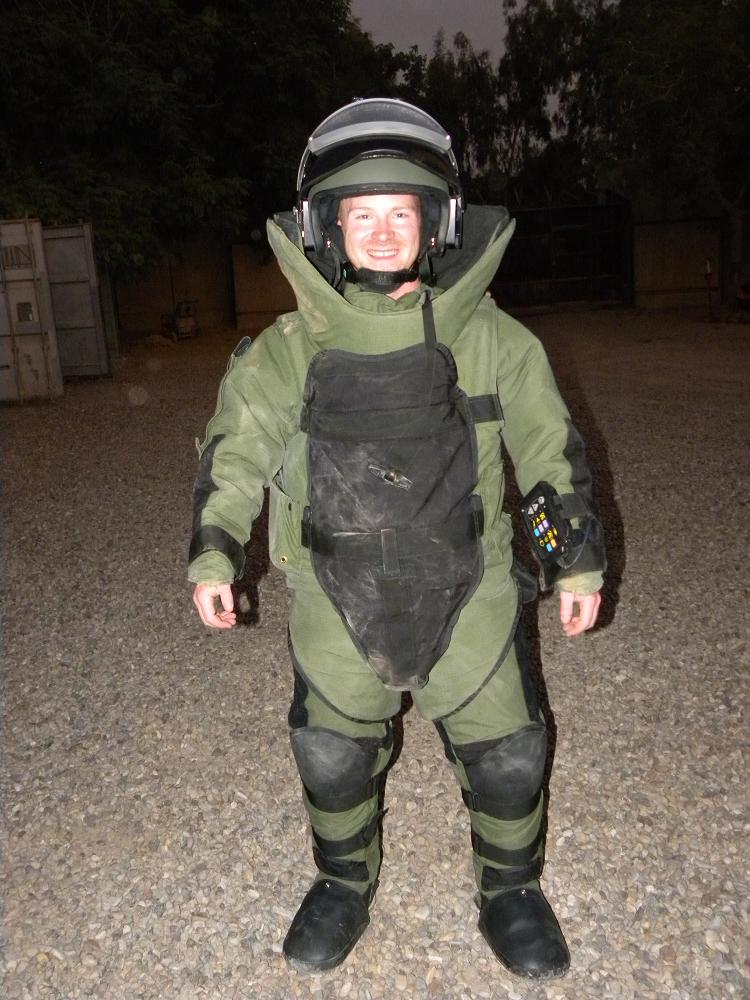
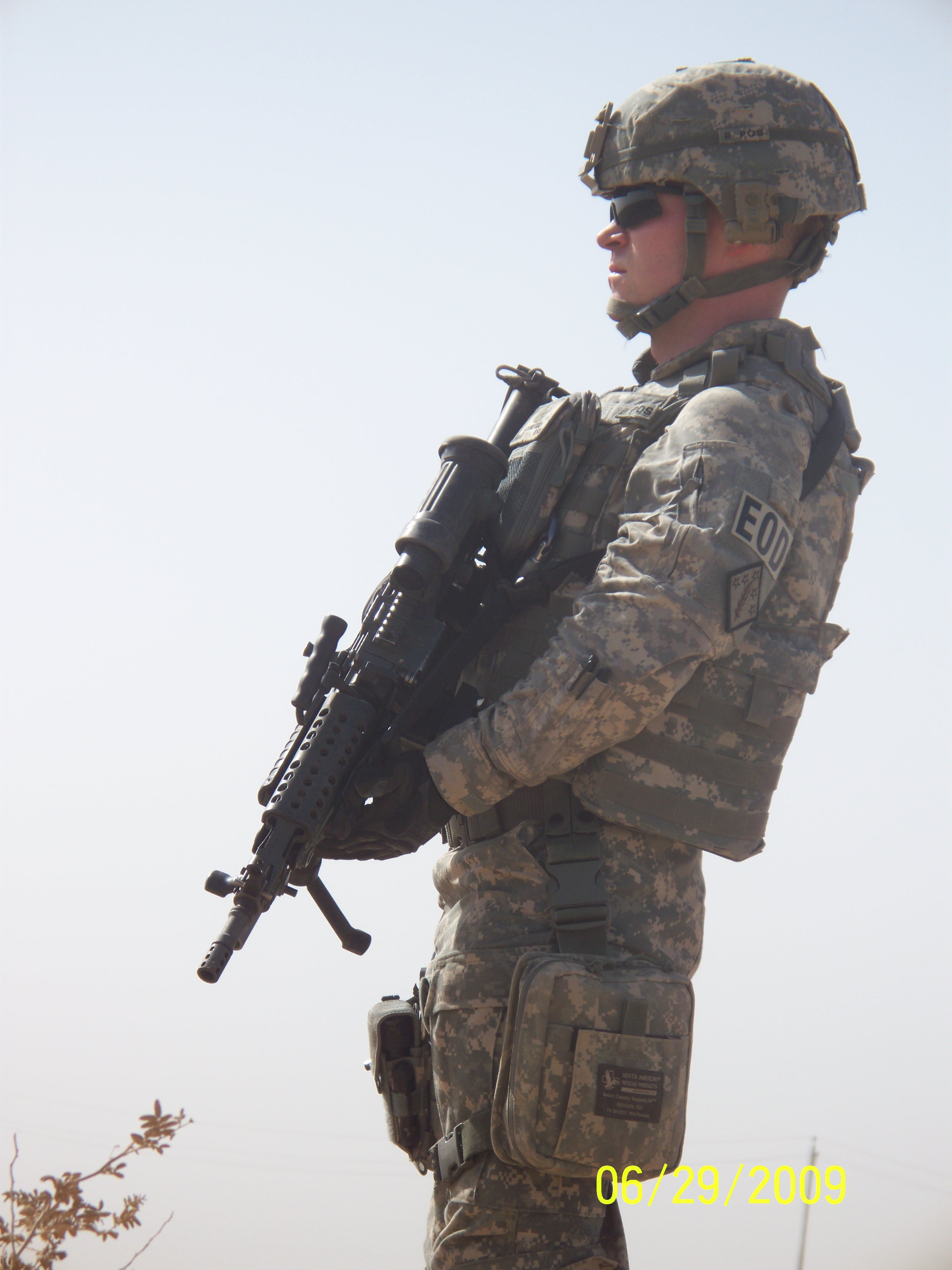
Sgt. Kent "Doc" Byrd in IraqSgt. Kent "Doc" Byrd in Iraq
Kent “Doc” Byrd is known as JrByrdMan162 in the geocaching world. In the United States Army he’s know as Sergeant Byrd.
He’s a member of an Explosive Ordinance Disposal unit. He defused bombs, including improvised explosive devices (IEDs) as part of the Army bomb squad. He just returned from a one year tour of duty in Iraq.
Sgt. Byrd has been geocaching since 2005. He says the skills that geocaching instills — situational awareness, an eye for the unusual and quick detective work — help keep him safe when he’s finding and defusing bombs. Sgt. Byrd believes that other members of the bomb disposal community can learn to sharpen their awareness and stay safer through geocaching.
See his story above. Click here to watch more Lost & Found videos highlighting unique geocachers and the worldwide adventure of geocaching.