Inside Geocaching HQ transcript (episode 47): 20 years of geocaching with HQ co-founders Jeremy Irish and Bryan Roth

(link to podcast)

[music]

0:00:14.4 Chris Ronan: Hello everybody, this is Inside Geocaching HQ from Seattle. I am Chris Ronan, Rock Chalk is my Geocaching user name. Thank you for downloading our podcast. This episode is a good one, I so enjoyed the conversation that you are about to hear with Jeremy Irish and Bryan Roth, who along with Elias Alvord are the co-founders of Geocaching HQ. Bryan is HQ’s President, Jeremy is the Senior Vice President, and the guy who launched geocaching.com. This year, of course, is the 20th anniversary of Geocaching, it was a challenging year to say the least for everyone, but we hope that you might get a smile from listening to these two guys share some fun stories from the past 20 years and look ahead to the future of our great game. So here they are, Jeremy Irish, and Bryan Roth.

[music]

0:01:14.0 CR: Alright. Well, this is very exciting. This is the first time we’ve had Bryan and Jeremy on the HQ podcast. And of course, the reason the 20th anniversary of Geocaching this year, which unfortunately, as we all know, the year has been messy, and some of the celebrations that we had hoped for have not happened, but we’re hoping that they will happen in the future. But still it is an opportunity to look back at what has happened over these past 20 years and to think about what will come in the future, and so I appreciate both of you guys doing this. Jeremy, you and I have talked before on the podcast just about how you launched the website and then just in very general terms about how you got together with working at the same company like you did with Bryan and Elias. But I’m just one thing I’ve kind of wondered about over time is, why did you reach out to them specifically?

0:02:08.1 Jeremy Irish: Well, at the time, the three of us were working really closely together at Savvy Shopper, and I got to know Elias and Bryan really well. I started out as their client, or they were my client or the company I was working for. So I just had a really strong relationship with the two of them. And I think a lot of businesses that get started, it really comes down to knowing and trusting the people that you start the company with, and that’s how they become successful, because they pick up on the places where you don’t have that capability. So it was like, I realized at that time that Elias had a really strong networking background, a really smart person I could bounce technical questions and ideas and stuff like that with, and he had the technical chops to be able to put together a system that would even support geocaching. ‘Cause the first time I was running the site, it was in my spare bedroom in Bellevue, so with very low bandwidth. And I was like, “How do I take this site that was just slashdotted and put it on a better computer and get that out on to the internet, so it won’t break?”

0:03:17.8 JI: And that’s some stuff that I just had no idea how to do. And then on Bryan’s side, he was done, he had the legal chops, which is awesome, the operations chops, things that I really didn’t understand, or just things that weren’t in my wheelhouse of experience, he was able to take on that stuff. And I’m also not necessarily a people person, and Bryan definitely is. So there was that social part of it too, that really enamored me to have Bryan join up and start this company, which really was initially just running a hobby site, so there wasn’t really a lot of strategery going on to figure out how we’re gonna run a company, and you know what this thing is going to be. There was no business plan put together for the company, it was really just, “Hey, I’m kind of scared. This is getting a little bit bigger than I expected it to be, and I really need help. And you guys are awesome, so would you like to join? I know it’s kind of a dumb idea, that’s kind of what people are thinking.” And they’re like, “What is this silly idea? This won’t… ” I’m like, “I don’t even know it’s not really about making money, it’s just about creating something fun. Would you like to be involved in with this?”

0:04:33.7 JI: And initially it was a smaller project and there was a lot of light touches that would happen while I was programming the site, but as the company and as the game started getting bigger and bigger, you could see those challenges coming out at us and to have those two strong partners involved in it really rounded us out and made it so I honestly continued doing it because it’s a lot of work when you’re working on this hobby site and the excitement that you get from people going out and finding geocaches and getting active in it, and then that community being built, there’s a lot of excitement around it, but there’s also a lot of low points where you’re just like, “Why am I doing this? I’m spending all my weekends working on this and my evenings, and I also have to do another job.” And I know that there’s a lot of great feeling around the game itself, but it takes a toll on your social life and your personal life, and to have two partners who are saying like, “Hey, it’s worth it. How can I help?”

0:05:39.1 JI: And them pitching in and working through it made it what it is today. So I always joke like, I wanna quit every so often, and then Bryan and Elias will talk me off the ledge. Not so much today, but in the early days, there’s a lot of moments where you’re just like, “I’m done.” And they’re like,” No, no, no, just chill, it’s just like a bad day.” So that’s kind of why it started that way, and I think I’ve learned over time that companies that are very successful have more than two partners, and I think that really has to do with tie-breaking, there’s always… If there’s two people that are not connecting on a topic or something, there’s always a tie-breaker, there’s always a Switzerland that can come in and help that conversation and turn that conversation to a positive way.

0:06:28.0 CR: I don’t know what the exact stats are, but I can’t imagine that a whole lot of partnerships last 20 or more years for a variety of reasons, just the business maybe doesn’t go the right way, but then also personalities not meshing together the way that you would like. How has it worked with you guys to keep this going for this long and to still have this strong partnership after such a long amount of time?

0:06:52.5 Bryan Roth: From my perspective, I think that it’s sort of fluctuated over the years. There were times where the three of us wouldn’t exactly get along on a specific topic, but there was always this underlying sense of mutual respect. Like I’ve always said when Jeremy approached me, when Jeremy and Elias approached me and asked me to join, help them start this company to support a hobby, I just remember it wasn’t so much about what we were going to be doing, I was just excited to work with the two of them because I knew who they were, we were already friends, we had worked together for a while, I knew what some of their strengths were, and personality-wise, we already clicked, and so it felt like this opportunity to start something cool with friends. And as Jeremy mentioned, it didn’t feel like there was a whole lot of potential. It was like, “Oh, here’s this hobby, it’s after recreation and technology, two things that we’re all kind of passionate about, and we’re friends, and between the three of us, we can each do different things, so we could probably do the basics to get this thing up and running. Like what do you say?” And I was like, “Oh cool, I’m gonna get to work with my friends and I have this little side project and we’ll see what it becomes.” Here we are 20 years later.

0:08:08.9 BR: And a question like, “How did we make it?” I think foundationally, the fact that we were friends, the fact that we had respect for each other and everybody sort of brought a different set of talents to the company and to into the partnership, really went a long way. And so two things that I would say is, one, if it was, if the question that we faced related to a topic where there were some expertise, I think that we were really good about deferring to the resident expert on that topic. And the second thing is, I always knew that if Jeremy and Elias agreed on something and I found myself at odds with that, I really needed to reconsider my opinion because I had a lot of faith in what the two of them thought and how they looked at things. And so we could always have good conversations where I was able to bring like, “Hey, here’s how I’m thinking about it.” And if they would say, “Well, here’s another way to think about it, and by the way, we’re both aligned on this.” Or, “Here’s three different ways to think about it.” There was always this sense of, “Well, let’s try and figure it out together,” as opposed to, “Well, you have to do it this way because I said so.” That was never really the thing.

0:09:22.3 BR: And so one of the other things is, especially in the early days when we were all working for the same company, that company Savvy Shopper went out of business, then we all went to work for a promotional marketing company, which was Sunrise, but we would meet in the mornings pretty frequently at 6:00 AM before work, and we would go out wakeboarding or water skiing or whatever the three of us. And so we would start the day by playing together and we would water ski or wake board for a little while, and then we’d just sit and float in the boat and just kinda talk about like, “Hey, what’s going on today? What are the challenges? How are things going?” I think it allowed us to really build a strong relationship in the early days based on friendship and business that has allowed us to kind of navigate both the common and rough waters that we’ve seen over the years.

0:10:16.7 JI: Yeah, I think we’ve been fortunate that we haven’t seen a lot of adversity in the company either. We always have had a back-up plan in the early days, so it was more like all the interesting things that came at us were a less big challenging like doom and gloom kind of things, and more just really super weird problems.

0:10:38.5 BR: Opportunities.

0:10:38.7 JI: Yeah, they became opportunities, but when the National Park Service found a geocache on the property and they’re telling us they banned it in all national parks, we were like, “Okay, well, here’s a challenge, but it’s a surmountable challenge.” It’s not like none of the particular challenges were like the doom and gloom type of challenges, and they’re always interesting. So I think we always had an interesting problem to address. And for me, that makes me happy for some reason. I like, I used to have a fire bucket, for example, on my desk for a long time with pens and stuff, ’cause I was always feeling like that we were doing fire drills. And there was a moment where I decided to retire that fire can, because I felt like we were at the point now where we were beyond doing the fire drills, but sometimes I’d still miss the fire drill, they just kept you on your toes.

0:11:34.4 BR: I think a number of the challenges that we had in the early days, like the one Jeremy described with the national parks, really related to the fact that here was this totally new hobby and people didn’t know what to make of it. So when it came to the national parks, they’re like, “Oh, people are leaving things in the park over a period of 24 hours, that’s against our rules, we need to shut it down.” And in a similar sense, when we first went to get business insurance, for the most part nobody would insure us because they said, “We don’t understand what you’re doing, what kind of liability does this present, etcetera.” And we’d explain to them, “Here’s all the work that we’ve done to present the company in the right way,” but it took sort of a very special partnership with an insurance agent that we met who went out and did a really good job of kind of explaining what it was that we were doing so that we could actually get our first policy.

0:12:31.4 BR: But we dealt with that along the way in different forms, and I think it’s interesting to be here 20 years later when if something happens in a park, we’ll often hear from somebody, and they’ll say, “Oh, we know what geocaching is. It looks like this person didn’t follow your guidelines, and the cache looks like something dangerous. Can you please do a better job of explaining to people that, what’s appropriate and what’s not appropriate?” Versus where it was 15, 18 years ago, where it’s like, “Hey, we had to close off the street because somebody placed a cache that looked inappropriate, and we’re gonna have to shut you guys down.” And I was like, “Wait a second. That’s not exactly what’s happening.” So I think there were a variety of things like that over the years that we had to deal with fires. I remember that fire bucket. It’s funny. As you mentioned that it’s something I haven’t thought about in years, but I do remember.

0:13:28.5 CR: Isn’t it amazing too, given that early adversity with the national park system, but now there’s a Find Your Park’s Geo Tour with geocaches at national parks all over the US.

0:13:40.8 JI: Oh, yeah, I went geocaching at Rockwood Park in Oregon outside… Oh, I think it’s outside Portland. And it was just really cool to be able to go on this hike and seeing geocaches that were placed by the local parks, and in a relationship with the local geocachers to do to cache and trash out of them at that park. So it’s like all these little decisions that we made in the early days to try to make this game family-friendly and open and available and not secret, that was really important to us to have that vision, and that created a lot of challenges in that we had to work with a lot of different parks and a lot of landowners and stuff like that. So we took the hard route and really the long-term vision of it as opposed to making it some secret society game that’s violating a lot of rules and laws to play the game. And I think as a result of that, we see the results of that effort. Parks that encourage geocaches, they even place their own and they host the geocachers. And as a result, those caches are better maintained, they’re in better places, and they’re just more enjoyable overall.

0:14:56.0 CR: Along those lines, hindsight being 20/20 now you can… Sometimes business owners can look back and say, “Here are moments where we made a very important decision. Maybe we didn’t know it at the time, but in retrospect, this was really important.” You’ve mentioned a couple of things just there, but are there other things that come to mind for either of you where you look back and you realize either for the game or for the business, this was a fork in the road, or this was a very important thing where in retrospect, that was a really good decision that we made that led us down a better path?

0:15:33.1 JI: Well, I’ll say the accidental one was the reviewers, the volunteers that are involved with geocaching. Initially, the reason why I asked the first volunteer to help was because I was just overwhelmed with reviewing geocaches. I didn’t really have any forethought as to what volunteering for geocaching would look like. Today, now there’s a community of volunteers around the world that review caches. They know their local laws. They give a lot of good positive scrutiny to the geocaches that are placed. And at the time, we could have gone in a direction where we reviewed them all internally or created some kind of rule system or an AI algorithm or something like that, that decides whether or not these are okay or rely on the community to report them. Deciding to have folks and trusting them with the ability to go in and edit any geocache, that was a big deal, and entrusting in the community that you’ve never actually met in real life to be active in that. I think that was a big one. As a result, now we have this community of volunteers around the world that make this geocaching game better.

0:16:48.1 BR: I think another example would be, in the early days, we started to see people who were suggesting either in the forms or elsewhere, like, “Hey, when you go out geocaching, bring a trash bag and pick up the cans along the way.” And when we heard that, we said, Oh, wow, this is a really good idea.” And so many of the good ideas have come from the community, of course, and paying attention to what they’re doing. But we said, “How can we come up with a program to encourage this?” And the beginning of Cache In and Trash Out and having an international Cache In Trash Out Day, those were early decisions that just felt like, “Oh, this makes sense. Sure, if we encourage people to pick up trash while they’re geocaching, then we’ll have a positive impact on the game board and the world.” And if you consider now so many years later, with thousands of Cache In Trash Out events and people going out and just making this part of their geocaching routine, the environmental impact that this global community has had as a result of us sort of just adopting something that we thought was cool because the community was doing it, that’s like the pebble in the pond kind of thing, where it’s seemingly insignificant, but over time has become really significant. And now it’s something that the community celebrates. There’s a couple of times a year where we’re encouraging events. And it’s just one of those smaller ideas that has become really impactful in a positive way.

0:18:20.8 CR: Well, on the flip side of things, in 20 years, a few mistakes will be made here and there. Jeremy, you always had the “make better mistakes tomorrow” mantra. I think there was even a sign in your office to that effect. I don’t know how specific you wanna get, but are there things where you look back and you think, “Wow, I cannot believe we did that.”

0:18:41.0 JI: Well, I’d say personally, I get bored easily. When new releases come out, I’m ready for the next one. So even before anybody sees like a new feature or something like that, I’m ready to go and do something else. Personally, I spend time focusing on other location-based game ideas, but we would spend some resources on that and it just wouldn’t pan out because geocaching just had such a gravitational pull to the company, and there are so many things that we can do to make it better that it just kept pulling me back to geocaching. So I think that was part of it, like I get distracted. I can get distracted easily. I have a T-shirt that says squirrel on it, ’cause it’s like the movie Up with the dog. It’s like, “Squirrel!” So I’m always looking on to something else, so my distractions can sometimes have the better of me. That’s one part of it. There are geocaching types in the past that we tried out and they just didn’t work because they would kind of overtake the website. I think a lot of times those mistakes would lead to other ideas within the game that would be positive.

0:19:45.9 JI: So for example, I love Wherigo, and I would say Wherigo is one of those things that never really took off, but it’s on this runway where it never has to. People can continue to use Wherigo, but Wherigo was something that I had grand visions of that didn’t quite come to pass. And a lot of it was the difficulty of making these cartridges and games and stuff like that, but what it’s led to is the Adventures Project, which is kind of a low-fly version of Wherigo, where it’s more about the content than it is about the feature set. And I think as we continue to build for Adventures, it gets more Wherigo-like. So I think it was like a vision that was way ahead of its time. It still has potential today, which excites me. And the idea of using other types of technology to get people outside is always something that is back of mind for me, and that’s the thing that I think geocaching does a great job of, is using tech, which normally brings you inside and encourages you to go outdoors and find something physical.

0:20:49.6 BR: Yeah, I think to be fair, if we look back, there’s a lot of things that could be characterized as mistakes, but it could also be characterized as learning opportunities. There’s no 20-year-old company that hasn’t made mistakes, and I think that we’ve had our fair share of decisions that we made with the information that we had on hand, that when more information was gathered, we realized, “Oh, that wasn’t the best path.” And so we’ve shut down some projects. We’ve built some things that we actually didn’t even bring to market, but all in all, we’ve learned from those. And I think that it really helps to inform how we act today. It’s like the phrase, “We stand on the shoulders of giants.” We kind of stand on the shoulders of those decisions that we’ve made in the past, right or wrong, and even some of the right ones turned out to subsequently be not an ideal situation or add additional complexities that we weren’t necessarily prepared to deal with.

0:21:50.8 BR: By and large, Jeremy talks about it, squirrel, and sort of the propensity to be excited about different things, I don’t think it could fairly be characterized as a mistake or a disadvantage. In fact, that’s how we come up with a lot of the great ideas, and you have to make mistakes in order to learn, in order to progress. And so I look back and I think if we’re being fair with ourselves, there hasn’t been one really big mistake that we’re like, “Oh man, we never should have done that.” There have been things that we’ve done where it’s like, “Alright, well, we probably shouldn’t have spent that money on that project, but we needed to try to sort of learn what we needed to learn from that project.” And so given where we are today and the opportunities that we have ahead of us as a company and again in the community, it’s been this sort of organic development of as a group, as a founders group with Jeremy, Elias and myself, and then as a company, it’s really just trying to continually move the game, company and community forward by making the best possible decisions that are aligned with our values, which are getting people off of their couches, getting them outside, giving them fun things to do.

0:23:08.4 BR: And I think as long as we look at the opportunities through the lens of a solid set of values and what we’re trying to accomplish, the odds are, we’re still aiming in the right path. We’re not gonna track directly on where we’re supposed to be. We’re tacking back and forth and learning the lessons along the way. And I think we’re fortunate in the fact that we haven’t made a “big mistake” that has drastically affected the community or the game or the company. And hopefully we can keep tacking in the right direction and not get too far off course. But to be fair, having Jeremy and Elias involved, having a really good senior leadership team and all of the lackeys at HQ, I think everybody understands what’s at stake. And so there’s so much thought and care that goes into the decision-making and trying to get things right that I don’t think we really expose ourselves to a lot of risk of making a massive mistake. Not that it’s impossible, but we’re really doing our best to make sure that it’s highly improbable.

0:24:16.5 JI: I’ll give you a good funny mistake though. In the early days, we decided to do an anniversary calendar, and we spent… We got a design firm, and we did these amazing photos for the 12 months. We even did one which took all the different photos that were on the geocaching site and made a geocaching logo as with the smaller images.

0:24:39.8 BR: Like a photo mosaic.

0:24:40.5 JI: Like a mosaic, yeah, but it was all really tiny images with the right color, so it would make it look like the geocaching logo, and we… I think we had 20,000 calendars or something. It was a ridiculous amount of calendars, and we could not get rid of these calendars. We had so many of them, and at the time, buying that many calendars was a big financial deal. So I don’t know. We probably still have calendars around today, but we were starting to give them away with… When people would buy something on the shop site, we would just throw a couple of calendars in the box just to get rid of them ’cause those things are time-limited. [chuckle] So they could be collectors items now, but they were like a lot of time. We also had antenna balls. We had those forever, and then people started manufacturing vehicles without antennas. So yeah, we have a ton of those, but they’re cute.

0:25:31.5 BR: I have one of those calendars left that was saved by my mother-in-law, and she’s like, “Oh, do you still need this?” I’m like, “I haven’t seen one of these in 10 years or whatever.” And then those antenna balls were really cool. There were the signal heads, but yeah, then cars without antennas. Thankfully small mistakes or whatever you wanna call them.

0:25:52.5 JI: Yeah, I’d say signal was probably my favorite, not mistake, success. It was just just a funny idea that now we have mascot costumes in multiple countries now to travel around when we have events.

0:26:06.1 CR: And I think probably on our last conversation, you and I, Jeremy, talked about signal, or maybe we didn’t. I’d have to go back and look, but maybe just briefly, since you mentioned it, for people that might not be familiar how Signal came to be.

0:26:22.8 JI: We tried to find a mascot for the game, and we wanted to find a mascot that… Usually when you create a mascot, it’s kind of the product with a face. So we didn’t wanna do a GPS device ’cause I realized that at some point… Even then, we knew that GPS technology would be like a clock, so it would be in everything. So you wouldn’t really be buying a GPS. You would just have a device that has GPS functionality in it. We came up with the idea of using a frog because it’s kind of… It’s nation-wide. It’s international, so there’s frogs everywhere around the world. It means nature, and then we stuck a antenna on its head to represent the technology side. So Signal basically knows where he is and where he can go, but he doesn’t really understand the technology. So we always… We had rules like he doesn’t talk, he only points. He doesn’t use a device, he’ll gesture at a GPS device, but he won’t use the GPS device ’cause he has a GPS, just silly things like that. We created these arbitrary rules that I think are still followed today.

0:27:30.1 CR: I was gonna say, I learned a few new things just now. [chuckle]

0:27:33.7 BR: And now we go to international mega events, and there’s full groups of Signals dressed in all different costumes. And people have them attached to their backpacks and trackables, and it’s really phenomenal what… That small decision in the early days has become this kind of sub-culture within the global community. It’s both fascinating and just super cool.

0:28:00.6 JI: Yeah, the character itself was based on an initial T-shirt design that one of our first hires, Coco, designed for us. Originally, Signal was just a head with an antenna. I was gonna use it in another… Talk about squirrel projects, but I was gonna use it in another project that showed you presence. So I hired somebody in Eastern Europe to design little icons, and it was just a little frog head with an antenna on it. And then she took the antenna head and turned it into Signal, which then turned into the character. And then she was the designer for the Signal character for quite a while before the company took it on.

0:28:41.5 BR: In the first image of Signal’s head, we had on… I think there were two lunch boxes, and they used to be worn in Elias’s basement where we had our first office. I wonder if he still has it.

0:28:56.4 JI: It was a product called Ground Control that never really went anywhere, but that’s where the original Signal came from. That was gonna be the icon for it.

0:29:04.9 CR: Oh, there needs to be a Signal lunch box, I think. I see a new product for the shop. I wonder if you guys could talk about how the company and especially the founders have tried to balance the needs of the company and the game and the community. Bryan, you and I have talked in the past, I think, on the podcast about Geocaching HQ as a company, and it needs to be profitable in order to do the things that it wants to do for the game and for the community. But gosh, there’s I’m sure a million decisions that you all have had to make over the course of 20 years to try to balance those needs. And I’m wondering what your philosophy has been, the three of you, and if that philosophy has evolved over the years that you’ve worked together.

0:29:52.2 BR: I mean, it feels like we always started out with… When Jeremy built the first version of the website, the game was in existence in a slightly different form, the great American GPS Stash hunt. And so I think we’ve always approached it like, we don’t own the game of geocaching, just like nobody owns the game of baseball or football. Instead, we get to participate in this global community. We have a specific role. The community volunteers have a specific role. Cache hiders, moderators, cache finders, coin manufacturers, vendors, everybody sort of participates in different ways, and we’ve always felt like we earned the right to be the global headquarters for the game through dedicated service to the community, by giving the community the right features, by showing respect for the game, by not trying to take advantage of it and really just by contributing. And so we’ve always felt like it is in the interest of the global community and the game to have a company that has resources to go and build enhancements on the game and provide support and provide teams that could be responsive to questions from new users or landowners or law enforcement.

0:31:11.9 BR: And so we always knew that we had to generate revenue, and in the really early days, the three of us were working for free. We weren’t getting paid anything for a number of years while we were doing this. And I remember there was a time where Jeremy came to us, and he’s like, “Look, I’m spending all my nights and weekends on this project. We either need to try and sell it to somebody or we need to try and find a way to make money so that I don’t have to do this other job and so that I can focus on this exclusively.” And that was really… We had to go beyond just T-shirts, and that was when we came up with the concept of a premium membership, charter membership in the early day, which was, “Hey, community. Here’s what we’re trying to do. If you can help support us, well, then we’re gonna give you access to advanced features and functionality, none of which are actually built yet, but we’re going to build them. And it’s going to enable us to continue to support the game and enhance the game.”

0:32:09.5 BR: And that sort of bargain between us and the community has lasted now for 20 years where there are people around the world who choose to pay us $30 a year or €30 a year, and we take that money and we’ve got 85 employees in the Seattle area, engineers and community engagement and marketing and finance and all that, a company whose primary goal is to support the community that effectively supports us, and I think that that’s something that’s been consistent for all of these years. And it seems to have worked out. It’s worked out well for us as a company. I think the ability to do this as a job is a dream job. I can’t imagine doing anything that’s more fun and more exciting than supporting this global community and trying to get people outside, because we know that being in nature is good for people. It’s good for the world. So we feel like we’re doing this good mission. It is our occupation, so this is something that helps me pay for food and pay for my home and things like that, and so on a personal level it works, on a company level it works. And I think that the global community gets the benefit of all of the work that we’re doing to try and make for a better game and a stronger community and just support everybody out there and getting outside and having a better life.

0:33:37.6 JI: Yeah, I think a strong company makes for a strong game. And without getting revenue, we can’t hire employees and compete with companies and hire developers if we didn’t have the money to do that. You look at it, if this was a non-profit, I think you’d see a lot less features, a lot less effort in the business. That’s just how I think it would end up for profit. Like the NFL, if you were to look at them, for football, it’d be a different kind of football game. I remember at the beginning of geocaching, when I was… Before I came up with like, “Hey, we need to make money on this because I’m spending all of my personal time working on it, and it’s kind of taking over my whole life. I need help, and the only way to do that is to hire,” I looked at ways to raise money, and one was a donation concept. So at the time you could click a button and donate money to the site, nothing like there are today. But nobody would click on it. I think everybody thought that everybody else was supporting the game. And there needed to be a way to make that happen.

0:34:42.2 JI: And a membership made the most sense. Advertising didn’t. We learned even today with the recent… What’s the documentary that came out? Social Climber?

0:34:54.7 S?: Social Climber, yeah.

0:34:56.5 JI: They talk about if you’re trying to support the experience on advertising, then your content that you’re selling is your customers. And I didn’t really think that that would be the best for the game to try to motivate us to sell our customers to other people. It made more sense to say, “This is an adventure we’re all involved in. So there should be an Adventures Club of people that are supporting it. As that membership increases, then the funds increase, and that’ll allow us to create more and more functionalities.” So as more people play and the game gets more complicated, there are complicated solutions to complicated problems, and you need to have funds to do that. You need to have a strong company that can exist and can continue to exist to support that growing population of geocachers. Initially it was just like, “Oh my goodness, we need money because I can’t do this anymore on my own, we need to hire people or get to a reasonable lifestyle.”

0:35:58.8 JI: To now, we have a strong business that’s self-healing, that have people in the company that love the game that are paid adequately. And considering that we haven’t been greedy as business owners, put that money back into the company and build that business and that’s what we did for a very long time. We didn’t even change our salary for the longest time until basically our accountant said, “You have to because you need to be taxed more.” [chuckle] “Really? Okay, well, I guess we need to start paying ourselves more.” But we wanted to take that and put it back into the company and hire people. And for the longest time, we had people at the company that were paid much higher than we were because we wanted to have the top talent to be able to make the right features and content to make this game better.

0:36:45.8 CR: I wonder if you guys could share any of your favorite memories of your time with the community over the last 20 years. I was thinking, Jeremy, you said earlier on that you don’t consider yourself a people person, and yet you have attended so many mega events and probably maybe become more of it, or challenged yourself to be more of a people person over the years. And then Bryan, I’ve seen you at all of the events that we’ve attended together over the years, and clearly you love that aspect of it. But for both of you, could you talk about that part of your role at HQ? Because I don’t imagine it was something that you could have imagined when this whole thing first started, that you would have these opportunities to engage with people from all over the world through your job.

0:37:33.0 BR: I’ll say that I think Jeremy has become much more of a people person over the years as a result of geocaching, whether he feels sort of forced into it or has come to embrace it. But you’re right, for me, it’s really one of the coolest aspects of not just the job, but being a part of the community. And I think anybody who is a part of the geocaching community who has attended an event and interacted with other community members comes to realize just how special the people are. The game is the game, but when you combine it with this global community of sort of welcoming, friendly people who wanna talk to you, who wanna share their hobby with you, whether you’re brand new or whether you’re truly engaged, you kinda realize how special it is. So for me, I love to go to events.

0:38:25.9 BR: I love to get to talk to people and find out, how did they learn about the game? What do they take from the game? What do they enjoy about it? What do they wanna see from us? What kind of ideas do they have? But just, we’ve built so many friendships over the years that not just us from HQ building friendships, but look around at the geocachers. This group has become sort of worldly and interconnected. A geocacher in New York can have friends in Spain and Switzerland and France and Germany, and it’s not just like colleagues but true friends where we care about each other. And these days when we can’t see each other, we’re interacting on social media and asking, “How’s your family? What are you doing? Have you found any cool caches?” And so it’s truly created this community from what was just about nothing to begin with. And it’s not just any community, it’s a special community because it crosses political, social, religious, it crosses all those lines and brings everybody together specifically in the spirit of this game, and I think it’s an honor for us to be a part of it.

0:39:36.4 BR: Some of my favorite memories would be everything from the first event that we had at our Ninth and Lenora office, where we got some geocaching cookies, and we invited the local community and people came in. And it was kind of our first non-elitist basement office, and we had, I don’t know, 40 or 50 geocachers just stop by and we got to meet them and like, “Hey, here’s our little HQ.” And I think there were eight or nine of us in the whole company, all the way up to… I know Jeremy and I attended the Prague Giga where they launched the European Maze exhibit, and there were thousands and thousands of people there. And just to look around and see all these people smiling and getting out and interacting and playing, it was really special to see this is what… Not just us, but the whole community has co-created over so many years. Those things for me helped me to understand just the importance of what not only we’ve done, but the community has done, and what has been created that brings so much benefit to so many people all over the world.

0:40:44.9 JI: Now that you’ve heard from the extrovert, [laughter] we’ll talk about the introvert. Originally, I just built it and then we started the company. I built it in a bedroom, so I was not interacting with anybody. And I always expected the game to be something where you would just sort of see people in the logs, and you’d start seeing those local logs and maybe exchanging emails and stuff like that. So I never really thought that at the beginning that there would be events, and there would be communities that would come together in real space and do these events. So two things I like about it. One is, as an introvert, it’s really hard to strike up a conversation, but the conversation has already been started when you go to a geocaching event, so it’s pretty easy to have a conversation. The other side of that is when you go to an event with 1,000 people, even 100 people, and they all wanna talk to you, it’s really hard. It’s kind of like, if you’ve ever been married, you go to a wedding, or you’re part of that wedding, it’s kind of a whirlwind of discussions and you kind of at the end of the day, you’re exhausted because you get to talk with so many people, and it’s not a negative or a positive thing, it’s just how it is.

0:41:57.1 JI: And you have lots of positive conversations and great experiences doing that, but it can be pretty tiring to go through there, especially for an introvert it’s a draining experience. But I am grateful for the opportunity to be able to go and meet with all of these people, and it’s a reassuring and heartwarming thing to see all these people that play the game and appreciate it. And I don’t… I have the humility to understand that I’m not the direct reason why, ’cause it’s so many people involved with geocaching that makes this thing work. There’s the people that place the geocaches and the creative geocaches I could never do, to the type of people that maintain these geocaches, and the people that volunteer to review geocaches, and then the people that build all the software for it. There’s all these people that make this game work. What I prefer actually is to be anonymous in going to a geocaching event. I think the first 15 minutes to 30 minutes when I go to a geocaching event, I don’t say anything. I just kinda walk around.

0:42:57.4 JI: I go and sign up, but then at some point I put my name down or somebody asks where I’m from or something, and then the cat’s out of the bag and it becomes a different experience. But I’ve had the best experiences, especially individual experiences with geocachers around the world. And I’m so grateful to have the opportunity to have the opportunity to be able to travel to these events and then meet people from different cultures and backgrounds, and be able to see places I’ve never experienced before. Just some highlights, I went to Copenhagen, one of my first trips, and met with a retired police officer detective that drove me around the city and showed me all the interesting spots. I’ve been to Germany multiple times, going to different lost places.

0:43:40.8 JI: I’ve been in old, abandoned World War II tunnels with geocachers, and they all know the best places to go. So I feel like I’ve gotten a highlight reel of geocaching around the world. Geocaches in Finland that are electronic, and there’s so many electronics geocachers, like one where you open it and the Christmas tree lights turn on on an entire tree, things like that, that just blow my mind. And the fact that I get the opportunity to be the person that gets taken on some of those trips is so rewarding. I can deal with giving out tags at a Geocaching event to 1,000 people. That’s totally worth it to me, but I do like the individual experiences that I have with individual people, and those are the ones I experience one-on-one or with small groups.

0:44:29.6 CR: When you think about the future, maybe the next 20 years of geocaching, both the game and the company, what comes to mind for both of you?

0:44:41.7 BR: If we look back 20 years ago and you had asked us that question, I don’t think that we could have predicted where we are today and sort of what has been built and the impact and the ecosystem, and basically what the community has come to represent and the game has come to represent. I think, likewise, 20 years from now is a really, really long time. And so coming up with any sort of specifics, Jeremy might have some really creative ideas, but for me, it comes down to really almost like big kind of principles. As a company, I don’t think that our mission will change. I think inspiring and enabling adventure, exploration, and community, I think is really core to who we are as a company and what we’re trying to do, as well as who we are collectively as a community. I think that we can expect technology to continue changing as it always does, and as a company we’re not planning to stand still. We are planning to take advantage of new technology as it comes, and when it makes sense to do so, to extend and enhance the game of geocaching and what it means to people around the world. And I think the third thing is, we recognize that geocaching is good for people, to the extent that we can keep focused on getting people outside and inspiring them to do it in new and different ways, I think that’s what you could expect to see 20 years from now in some form, but the specifics I’ll… I can’t begin to speculate, but maybe Jeremy’s got some ideas.

0:46:19.9 JI: Well, the goal of the company is to have an adventure at every location, so it’s one of those lofty goals that you can continue to strive for til the end of time. You might not necessarily have an adventure at every location, so you’ll always have something to look forward to. Also, just considering that when we started the company, I was 28. Now I’m gonna be 48, so I don’t know if I’m 68 years old, what that’s gonna look like. But I think the important thing is we’ve set the company in the direction and we’ve been very serious about not changing that direction. Now our goal is to get people to go outside using technology, create adventure. We want people to move more today than ever. People are on their phones and they’re into their social media and the Oculus now and other VR applications where people are putting on and closing off the world and creating these other adventures in these alternate realities. And although I do actually enjoy it personally, to be able to do that kind of escapism, it’s not what humans are meant to do all the time, so as much as I like the book Ready Player One and the movie, I don’t really wanna get into this VR environment where we all live in single wide trailers stacked on top of each other.

0:47:41.1 JI: That’s what I want to continue to strive for, is see what kind of technologies are out there that’s available that we can use as a part of our tool chest to allow people to create engaging outdoor adventures and get people moving and active in the real world. And what we’ve seen with this pandemic is that it is healthy to get outside. As it’s been getting colder and people are starting to move indoors, we’re now seeing that the pandemic… People are getting sicker. That just shows how important the outside is and how encouraging people to be active and outdoors, it just makes for a better life. I just remember that first time I went geocaching and I had moved out to the Pacific Northwest, and I was basically on a mountain that had been completely cut down by timber. And all the timber was gone, so it was mostly stumps, and I would not have seen that environment and kind of have a more appreciation for the outdoors by seeing that and being exposed to that. And I think that’ll continue to be an issue moving forward, is making sure that we have a healthy world. And by doing that, we need to experience that world and not have our heads down in our phones and not have VR helmet on and escape that reality and appreciate what’s outside, ’cause there’s nothing that can substitute a walk in the woods.

0:49:01.4 BR: Yeah, I’ll credit Jeremy with the phrase, but we want people to be exposed. We wanna enable people and inspire them to be exposed to actual reality as opposed to virtual reality.

0:49:15.8 JI: IRL, in real life.

[music]

0:49:19.2 BR: How about that? Jeremy Irish and Bryan Roth, two of the co-founders of Geocaching HQ. I look forward to picking up our conversation in person at the 20th anniversary celebration. Do you have something that you would like to have us cover on the podcast in the new year? Send an email. Podcast@geocaching.com is the address. We always appreciate when you share your ideas, and we wanna wish you all the very best in 2021. I know I speak for all of my fellow HQ lackeys when I say we deeply appreciate your support this year. It is truly wonderful to see how Geocaching has played such an uplifting role in so many of our lives, especially during these past several months. Have a safe new year from me and everyone at Geocaching HQ, happy caching.
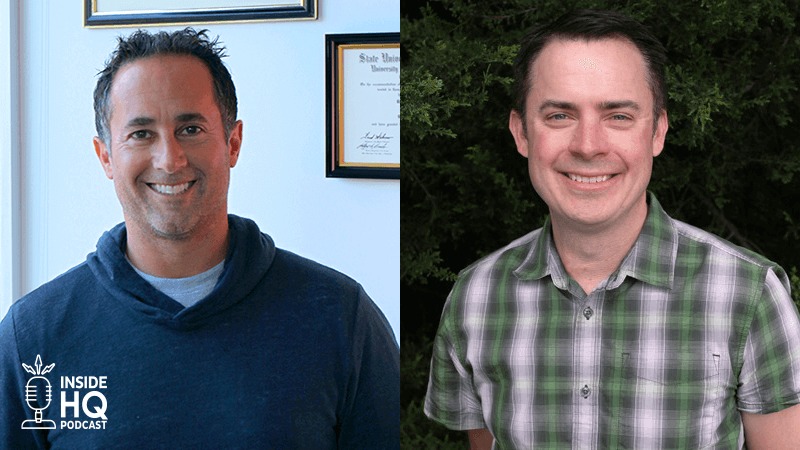

Episode 47: 20 years of geocaching with HQ co-founders Jeremy Irish and Bryan Roth

Besides being the 20th anniversary of geocaching, 2020 also marks 20 years of the partnership between Geocaching HQ’s three co-founders. In this Inside HQ podcast, Jeremy Irish and Bryan Roth share stories from HQ’s early days, talk about what makes the game and community so special, and look ahead to the future.

You can listen to the episode via this page, or on Apple Podcasts, Google Podcasts, Spotify, or Stitcher. If you use an aggregator to subscribe to podcasts, you can access the RSS feed here.

A full transcript is available here.

Inside Geocaching HQ Podcast
Episode 47: 20 years of geocaching with HQ co-founders Jeremy Irish and Bryan Roth
Loading
/

Inside Geocaching HQ Transcript (Episode 33): Bryan Roth

[music]

00:12 Chris: Greetings, geocachers. Welcome to Inside Geocaching HQ, the podcast from Geocaching HQ in Seattle. I am Chris aka Rock Chalk, and today we get to catch up with Bryan Roth, who is the president and co-founder here at HQ. We covered a variety of topics, including 2020 celebration plans. Privacy was also something we touched on. By now. You have surely heard about GDPR which is a regulation in EU law on data protection and privacy. You’re about to hear a lot about CCPA which is the California Consumer Privacy Act. Those laws will continue to have an impact on our website and apps. And besides being our company president, Bryan is also an attorney, so he can speak to the importance of this subject. But don’t worry, we also talk about fun stuff too. So without further ado, here is me and Bryan Roth.

[music]

01:17 Chris: Okay, you ready?

01:18 Bryan Roth: I am ready.

01:19 Chris: Okay. Well, Bryan, It’s been a while since we’ve chatted. I was trying to think how long… I should have looked if I was prepared and I’m not, if I was preparing I would’ve looked. It’s been several months since you’ve since you’ve been on here and we’ve had a chance to catch up and I thought, being… It’s kinda the end of the year, getting towards a big 2020 coming up. We could touch on a number of things. And I know you, you’re always busy, you’ve traveled a little bit this year. Most recently you were at Going Caching correct?

01:49 BR: I sure was. What a fantastic event that is. I have to say it was certainly one of the highlights of my geocaching experience career, whatever you wanna call it. That is a phenomenal event. For those of you out there in geocaching land who are interested in looking at a really, really fun event, certainly consider Going Caching. I know me and a bunch of lackeys that attended had such a fantastic time. Yeah, it was a great trip.

02:16 Chris: And speaking of big events, next year the Geocaching 20th anniversary celebration here in Seattle and planning continues for that. And I know you are involved in that planning and in those meetings, there’s a lot of folks here at HQ that are. What would you like to tell people about what’s in store for next year?

02:37 BR: Well, next year we are planning a number of things, one of which as you mentioned is the 2020 celebration here in Seattle, we’ve got the Seattle Center rented out. I think that there’s gonna be quite a few adventure labs. There’s gonna be discussions, there’ll be stage presentations, there’s gonna be really good food and a beer garden. Obviously a lot of geocaching taking place throughout the city and then we’re expecting quite a few people. So for those of you who haven’t made plans yet come on out to Seattle and visit us. We’re not quite sure how many to expect in early January we’ll be releasing a registration site, where people can register for the event, formally, let us know how many people will be coming. I think they’ll be opportunities to pre-order some of the merchandise, that we’re gonna have available at the event, and then it should be a really fun time. We can’t wait.

03:28 BR: The event is on Saturday, August 15th for those of you who don’t know, and then the following day will be the Going Ape event sponsored by the WSGA and then one week later is Geo Woodstock, in Canada which should be a whole lot of fun. So it’s gonna be an action packed couple of weeks in the Pacific Northwest. So again for those of you who haven’t booked your plans get your hotels and travel book, and we’ll look forward to seeing you here in Seattle.

03:55 Chris: As we’re planning this 2020 celebration of… I’m kind of wondering how it compares to your memories of 2010, that 10th anniversary, because there’s a little bit about the 10th anniversary that is carrying over in some ways. We’ve taken the Lost and Found event that’s going to become community celebration events. People have a chance to get that icon again, but this feels like it’s a lot bigger. Certainly, the Seattle Center having an event right at the Space Needle, that people are so familiar with around the world, feels like an even bigger thing then probably was happening 10 years ago.

04:32 BR: I think you’re absolutely right. It’s funny when I look back to… It’s probably around 10 years ago, at this time, maybe a little bit earlier, we were talking about the lost and found event and the concept was in 10 years, there have been so many story worthy moments that have taken place throughout the community, how can we surface those stories, how can we share those again and kind of celebrate all of the joy that geocaching has brought to the lives of millions of people around the world. And now we’ve got 10 more years of that to add to it, and it’s another 10 years of stories, it’s another 10 years of amazing events that have taken place and Seto work that has been done by the community to clean up spaces and creating and sharing that has been done by cache owners and participants and people finding out about the game and getting out with their family, and their kids or their grandparents.

05:30 BR: And there’s all these story-worthy moments that have been created worldwide, and here’s an opportunity for us to once again celebrate that as a global community. And as you mentioned, we’re gonna be coming together in Seattle as one segment of the community, but in the grand scheme of things, if we get 10,000 people here, for example, that’s a pretty small segment of the overall community. And so what we’re looking to do is find opportunities for the global community to participate in this celebration in their local areas and share the stories and talk about what it is that they love about the game and what they’ve learned from the game and how it’s changed their lives in a positive way. And so here we are, 20 years later, and it does feel bigger in the Lost and Found event. The first one we did, we didn’t know how many people to expect, I don’t think there were… I don’t think that there were gigas back then.

06:26 Chris: Nope.

06:28 BR: And so, we hadn’t had more than a few thousand people at an event, I believe, at that time. So we said, “Okay we’re gonna have maybe 1000, a couple of thousand people show up”. So we kind of rented out the area just next to our office and we closed down the street, and we worked with the city of Seattle and an event planner and we said, “Okay let’s see who shows up”. And we had this really fun event and obviously we decided to do it again for another five years and then we took a break, and now, it’s maybe there’s some pent-up excitement. I know there certainly is here, there’s a number of lackeys who did not get to participate. Who just haven’t been here for 10 years. In fact, there’s very few lackeys who have been here for 10 years, those of us who have know that this is something really to look forward to and now that we get to do it again another 10 years later, we knew it was gonna be bigger. There’s more people playing the game. There’s more awareness of geocaching globally. There’s more people who understand that this is something worth visiting, and so maybe we get 5,000 people, maybe we get 10,000 people, maybe we get more than that, but what we really wanted to do is make sure that we could accommodate that amount of people.

07:41 BR: So we went in and we created quite a bigger budget, and we said “This is a gift that we wanna give to the community in terms of this event and a really fun time” So we rented out the Seattle Center, which is one of the primary tourist attractions in all of Seattle, there’s a number of very big festivals that take place there and there’s gonna be opportunities for vendors and plenty of geocaching and as I said, adventure labs, presentations, some special guests will be there. I’m not gonna give that away just yet. I would agree with you that there is much more excitement this year than there was 10 years ago, but only because now we know what to expect in a way that we never knew what to expect, before.

08:27 Chris: There will be a lot of looking back here in the next several months and celebrating the past but also a lot of new things to talk about, and one of the things that I wanted to ask you about, get an update on, is the adventure lab app. Certainly adventures are much more visible than it just… More and more visible as time goes on, as people create more and more of them, they’re showing up more on the map. So people are talking about them more. I was at a Mega down in Australia and that was a very popular topic was the adventure lab app. And I’m just curious how you’re feeling about it right now, it’s been a while since you and I have chatted about it. A lot of new features have been added but I know there’s a lot more to come and so maybe we just talk about the state of it and what your feelings are and what you see for it in the near future.

09:16 BR: Sure, well I know I speak for just about everybody here at headquarters when I say that there’s a lot of excitement around the adventure Lab application and platform in general. For those of you who don’t know, we built adventure lab as an extension of core geocaching. We looked at the tools that we have for traditional caches and multi-stage caches, and event caches, and earth caches. And we said, How can we give the creative geocachers out there opportunities and a tool set to create something that is more robust than just traditional geocaching? So how can we add elements like multi-media like triggers allow people to create both linear and non-linear experiences and adventures for people to enjoy? And so, since January, when we launched the adventure lab app… Well, I’ll take a step back. Prior to January, adventures or let’s say lab caches, were really only available at mega events and giga events, and for a period of years, we gave the lab cache program to event organizers, the big event organizers and we said, “Hey, if you’re gonna have guests for the weekend or for a series of days, here’s a tool set that will allow you to create essentially temporary geocaching experiences where people can earn finds by participating but you don’t have to maintain them for three months or six months, as individual caches”.

10:49 BR: Traditional guidelines, some of the traditional guidelines don’t necessarily apply, things like proximity, so that we wanted to make it easy for event organizers to engage the community. Since January with the launch of the adventure labs application, we have given credits for creating an adventure lab experience to a few thousand geocachers and what we wanna do is we wanna see what they build with them. And there have been, as of today, I think that there are 800 or so adventures that have been created worldwide. Our goal is to get more of them, we wanna make them more accessible to people so that when you download the adventure lab app, and you open it, you don’t have to travel 100 miles or 500 miles to go try one. Ideally, they’re much more accessible in a way that they haven’t been in the past. One of the things that we recognized that we needed to add to the platform was a way for the people who participate in these experiences to be able to provide feedback to the creators.

11:50 BR: So very recently, I think within the last month, we added an activity log. So essentially, if you complete an adventure lab experience, you can go and write a log for that and the person that created it can see what you think. It’s a way of providing feedback, like geocache logs. We’ve also added prior to that, a rating system where if you complete it, you can rate it on a one to five star basis, and then we’ll show in the experience, in sort of the detail page for the experience, this has been found or completed 35 times and it’s got a four-and-a-half star rating and so, the goal is to get to a point where when there are many more adventure lab experiences available, people will be able to decide for themselves which ones they wanna do based on the ratings and the reviews that they can read which, kind of ties it more closely to geocaching in a way that… We’ve had favorite points, we’ve had cache logs, things like that, in geocaching historically. So when you go and you look at a map that’s full of geocaches you can make a better decision of which ones you wanna go find.

12:56 BR: Similarly, we see a day with adventure labs where the game board is much more populated with these types of experiences and we wanna give players the same type of tools to go and make good decisions on what types of experiences they wanna participate in, and then they could provide feedback subsequent to that, so that other people will be better informed when they’re making their choices.

13:20 Chris: When I was at the Mega and people were talking about the adventure lab app, there were various questions about feature ideas and, for instance, searching for adventure labs, that wanting to have a more robust search functionality. And other things as well. Is it fair to say that it is still in the early development stages? There’s still a long ways to go. It’s a very nice app and it is… Use it, it’s very polished, but at the same time, I know, from talking to other lackeys and folks involved in the project, that there’s a lot that they would like to do still. And I’m just wondering, is there a way to even put a percentage on it, to say, “Okay, we wanna get to 100% and now we’re at such and such percent”, or as just to even generally describe where it is in its development?

14:10 BR: Sure. I would say generally speaking, we’re just getting started, we really are just getting started, we just hired another person for the adventures team within the last, I think six weeks or so, he just started. And we’ve got a team that is dedicated solely and exclusively to building this platform, enhancing it, making it better. So for those of you who have suggestions, please send them our way. It is still rough around the edges. There are still plenty of features that we want to add to the application. I don’t wanna spoil anything, but the team is constantly working on improving it. Fixing bugs is just one part of it, but we are doing discovery and research into what are the features that are gonna make it better. Not just better for players but better for creators. What additional aspects can we add to the platform that will allow creators to express their creativity in even better ways or take an idea that maybe the platform won’t support today, but it might support tomorrow.

15:19 BR: So yeah, we’re just getting started. In terms of overall percent, I would say we’re in the single digits. And as a company, this is something that we’re investing in, we believe in the project, we believe that it has the capacity to help us achieve the mission that we have as a company which is to inspire and enable adventure, exploration, and community, by getting people off of their couches, away from their televisions, outside, playing in the real world. And so for those of you who have ideas about creating this type of experience, one of the things I can tell you is that in 2020, we will be opening up additional opportunities for people to create adventure lab experiences. In doing so, we will be opening up more opportunities for people to play these types of experiences. We believe that it helps to add to the ecosystem that geocaching presents. And so for those of you who have friends or family or relatives who haven’t tried this yet, show them the app. Let them know about it. And ideally, in the coming months and certainly in the coming years, there will be more of these experiences, that are accessible to people everywhere, around the world.

16:30 Chris: You had mentioned adventure lab being an extension of geocaching, of core Geocaching. And a question that I’ve heard a number of times, is, what are the plans or the expectations about integrating adventure Lab with, for instance, the Geocaching app, if you’re out looking for caches in a mega event and you don’t wanna miss labs or… I say labs [chuckle], adventures Lab… Whatever, or vice versa, if you’re out on an adventure journey. And you don’t wanna miss Geocaches. I don’t know how far we’re into things, but what are the thoughts on that? Is there a hope of making that kind of integration sometime in the future?

17:12 BR: I think it’s better than a hope, there is a goal of creating a better integrated experience. So yes, at some point in the future, we foresee a time where if you are looking at the map of geocaches in the Geocaching app, and ideally even in some of the API partner apps, like the cachelies of the world, you will be able to see an adventure lab point on the map and you’ll be able to click on it and it will switch over, if assuming you’re interested in playing it, it will switch over to the adventure lab app, where you can play. And I think that the opportunity to present geo-caches within the adventure lab app, is something else that we’re considering. At the same time, We really wanna be thoughtful about how we do this, we want this to be a constantly improving experience for the geocaching community, so we’re not just gonna go in, add dots on the map for the sake of adding dots, we wanna do it in such a way where it’s going to resonate positively with the players and the creators, so that it’s a better experience. So it’s not just adding dots on a map, it’s how do we add dots on a map, in the best way possible that is something we’re actively thinking about.

18:24 BR: We have a fully built-out product team that we’ve added a number of people over the last year. Product managers and product designers who are gonna help us build better products and part of building better products is taking a platform, like adventure lab and taking a platform like core geocaching and finding the best way to integrate them. So, that’s coming soon. I can’t tell you what soon means but I would say certainly at some point in 2020, and you will continue to see improvements in this platform, we will continue to see improvements in this platform because as a company, we are dedicated to making that happen.

19:00 Chris: And we talk a lot here, obviously, about how geocachers are using adventure lab, but it’s not just for geocachers, right? There are other audiences that will hopefully be using this app over time.

19:14 BR: Absolutely. One of the things we wanna do with adventure lab is experiments. We see a lot of potential for the use of the adventure Lab application in arenas like education. So, I believe we’ve talked about this in the past, but when you look at core geocaching, if I’m an educator and I wanna create a, say, a multi-stage Geocaching experience to teach a history lesson to my students on school grounds, that’s really hard to do because if I place a multi-stage cache on school grounds, I’m gonna have random geocachers showing up on school grounds, which is just not… It’s not appropriate, it’s not okay for an educational environment. I think parents of students would be rightfully concerned about something like that. So one of the aspects of the Adventure Lab platform that I think allows us to address this type of use case is the fact that we can now create a private adventure experience. So we can give a teacher, for example, an adventure lab credit for a private experience and say “Go create your history lesson. Let’s not confine your students to their desks as they’re learning, let’s get them up, let’s get them outside, moving around as they learn history or math or science”.

20:35 BR: And in doing so, again, I think it helps us get people outside. If we can… We talk all the time about getting geocachers off of their couches and away from their televisions and out into the real world having these experiences. But wouldn’t it be cool if we could take it a step further and get students out of their classrooms? Out of their desk chairs? Out of what some might see as a pretty boring sterile environment, and out onto school grounds, on a sunny day, or even not a sunny day ’cause as geocachers, we know there’s no bad weather, only bad gear, but get students out of their chairs. And if we can help do that, well, then I think it helps us as a Geocaching community and ecosystem. It’s another step in changing the world in a positive way. So that’s an example. Another example of a use case would be universities, so one of the… We’re currently working with a number of universities across the country and around the world to run some experiments with the adventure Lab application, so we’re saying “Oh they’re doing tours of the university, maybe there’s a historical tour of the university, maybe there’s a story-driven adventure that a university or a college, or some type of school wants to use to create an experience for their students”. Well, here you go.

21:58 BR: It’s another educational experience, but maybe it’s not a lesson that’s being provided, and maybe it’s an orientation experience, so that students can get to better know the campus of the new university as new students. Another use case where we’ve done some experiments is there are some companies out there who will do events for their employees. This one company in particular who I can’t name they do a trip to Hawaii, which sounds really nice for their employees every year.

22:29 Chris: Yes, it just sound really nice. That does…

22:30 BR: I know it’s a good idea.

22:33 Chris: I’m pretty sure there’s not a downside to that.

(laughter)

22:37 BR: Sadly, I don’t think we’re doing that any time soon. So this company wanted to create a fun experience for their employees on one of the islands in Hawaii so we said, “Hey here’s an adventure lab credit. Go build an experience, go build this pseudo-treasure hunt” and this company doesn’t want other people showing up during their company event. They want their company to be able to enjoy it. So this was another opportunity to leverage the private aspect of the adventure Lab application to enable them to do something that they simply couldn’t do with core geocaching. Many of them have become interested in core geocaching as a result of being exposed to geocaching through adventure lab, so we think that there’s an opportunity for people who are introduced to adventures to become interested in geocaching as a result of having a great experience outside with this platform and this ecosystem.

23:32 Chris: Well, one of the things you mentioned there was the private feature of adventure lab, and that segues nicely into another thing I wanted to ask you about, which is increasingly popular topic and that is privacy, it’s something that’s come up a few times related to geocaching products. Most recently, I think, was when we removed the audit feature from premium member only caches, but there have been a number of other things that have been impacted by various privacy laws, for instance, the GDPR in Europe, and the upcoming law in California that’s getting a lot of news. And I just wanted to touch base with you about this. You’re an attorney and you’re very involved in these decisions that are made here at HQ about how these new laws will impact or products and they will continue to be impacted, correct? This is a big subject and it’s not going away any time soon.

24:29 BR: It’s very true, it’s not going away, with both GDPR and CCPA, which effectively comes online in January in California, what we’re seeing is a basically a global push, in governance towards holding companies accountable for treating the privacy of their customers in the right way. And as a company, this is something that we’ve always been focused on, we wanna be a good company. The relationship that we have with the global geocaching community is the most important relationship that we have, and so we’ve always focused on trying to treat our customers well. I think that there’s a lot of companies out there who have played a little bit more loosely with their customers’ privacy and I think what we’re seeing is a crackdown on that type of behavior and so there’s some very specific laws and regulations being created around what qualifies as private data for users and how that data needs to be presented, how it needs to be preserved, how it needs to be honored and used. And so one of the things that we are focused on is we wanna be in compliance, we play by the rules, we wanna follow the law.

25:52 BR: And I can tell you that in the last year and a half, we have spent a tremendous amount of money and a tremendous amount of time working with consultants and working on our systems, and trying to bring everything that we do into compliance with these very specific regulations. What we’re seeing in California, with the CCPA is a very deliberate interpretation of what data privacy means and how user data needs to be treated. California is normally a leader in setting regulations and I know that there’s other states throughout the United States that are focused on developing their own regulations, some of which will be based on California’s regulations, and some of them will be new to everybody. And so as a relatively small company here in Seattle, I can tell you, it’s a lot of work to try and interpret what all of these regulations mean with respect to the way that we do business. And so, as geocachers, as members of the community, you will be seeing changes. You will be seeing changes on our site and I think the ultimate goal is that we wanna honor the expectations of our customers in terms of how their data is treated, and so there will be changes on the website. There have been changes already there will be more changes like many corporations and ideally all corporations out there taking people’s privacy seriously is something that has to be done.

27:20 BR: One of the things that just came out in the news this week, Tim Cook, the CEO of Apple said that products should be designed with consumer privacy in mind from the start, it shouldn’t be bolted on after. And I agree with that, it’s privacy by design and I think with everything that we do, we should be contemplating how we treat our customers in the best possible way. And privacy is an aspect of that. At the same time, we’ve been doing this for 19 years now, and so we do have to go back and we have to look at everything that we’ve done historically and say, “Does this meet the expectations of our customers? Does this meet the expectations of the EU? Does this meet the expectations of California and every other state who’s gonna bring one of these policies online?” That is a lot of work. Fortunately, we have some really talented folks here at HQ that are focused on it, both from an engineering side and a design side and a legal side. But what I can tell you is, we’re focused on it, it’s something we take very seriously, and there’s more to come.

28:28 BR: This is a rapidly changing area of the law. I believe that it will continue to change and as individual customers, I think we’re the beneficiaries of these types of policies because we’ve all read the news and we’ve seen cases where as individual consumers, our privacy is not taken seriously, our location is sold, our data is sold to the highest bidder, and as customers, that doesn’t feel right. We don’t wanna be in that position, we wanna take good care of our customers and the governments of the world wanna see companies do more to take care of their customers. So again you’ll see some changes, you’ll see some improvements in that area. You’re going to read more about these laws. And I think that in the coming months and years, you will see more in terms of enforcement from those government agencies going after the companies that either by choice or by omission, are not complying with these rules and regulations, so you will see us as a company making all efforts to be in compliance.

29:35 Chris: And from what I’ve seen, those enforcements can be very severe. There’s some pretty serious fines and things like that, if you’re not in compliance.

29:43 BR: Very severe absolutely. And to get hit with those kind of fines, at the end of the day, that just impacts our ability to do the kind of projects that we wanna work on, and it’s not that we don’t wanna work on these, we have to work on these, but there’s a lot of other stuff that you get hit with a fine, that’s money that can be applied to a team that’s working on Adventure labs, or a team that’s building the next feature of our mobile app for core geocaching to deliver a better experience to our customers. So it’s really about finding the right balance and it’s something that again, we take very seriously and we are focused on it going forward.

30:19 Chris: Well, we don’t wanna end on that. So let’s talk in general about… I just feel like there’s an excitement around here about things that are happening. There’s a lot of teams working on a number of very exciting things. And besides the 2020 celebration excitement, I think there is going to be a lot to celebrate in terms of new features and new functionality and things like that and I think you’re probably sensing the same thing.

30:47 BR: Absolutely. I think what I can tell you, as a global community, what I can tell everybody is that they’re about 85 lackeys here, who are really excited about the next evolution of geocaching. We have seen changes in technology, and we’ve seen changes in gameplay. As a company, we are dedicated to making this game better, making it more engaging, getting people outside, giving them more fun things to do. There’s a lot of excitement around here about the list of opportunities that we have to do that. There are features, there’s functionality, there are applications, there are enhancements, that are on our roadmap, both near-term and long-term that we believe will be great for the game, great for the community, great for the volunteers, and our plan is to deliver those. Like no other time in the history of this company, I believe that we have a fantastic team here. They are geocachers like the geocachers in the community, they’re excited about this game, they’re looking forward to giving more as a company, and it’s going to happen. And it started a long time ago, and it’s gonna continue as we go forward and I’m just excited to hear the feedback.

32:03 BR: So for those of you out there who have ideas or suggestions of what you wanna see from us, or how we can do a better job, please let us know, we take it really seriously. We’ve got a long list of things that we know will make this game better, but we also know that the best ideas can come from everywhere. And that includes coming from you out there in geocaching land, so please send them our way and we will do our best to keep moving forward.

(music)

32:32 Chris: So there you have it. Bryan Roth, President and Co-Founder here at Geocaching HQ. Folks, thanks for listening to our podcast in 2019. If there is something you would like to hear us talk about in 2020, please send us an email to podcast@geocaching.com, we always appreciate hearing from you. From me, and from all of my fellow lackeys, happy new year and happy caching.

(music)

Inside Geocaching HQ Transcript (Episode 32): Community Celebration Events and the 2020 Locationless Cache

(music)

00:13 Chris: Hello everybody, this is Inside Geocaching HQ, where we talk about what’s happening inside Geocaching HQ, in Seattle. I am Chris, my Geocaching user name is Rock Chalk. And today, kind of a special edition of the podcast, we are talking about two recent announcements for community celebration events and the location-less cache that will be available to find in 2020. Cindy Potter knows a lot about these things, she is the Director of Community at HQ, and we chatted about the details of these projects. So here we go.

(music)

01:02 Chris: Okay, Cindy is here. And we are talking about a couple of big 2020 projects, different stuff that we’re getting ready for this big anniversary in 2020, the 20th anniversary of Geocaching and the first of those projects to talk about is community celebration events and this is something that kind of harkens back to the tenth anniversary of Geocaching, those what were called Lost and Found events and for people who weren’t around for those, and I wasn’t around for those, what were those about? 

01:34 Cindy: Right, yeah, I just missed it too. I started in 2011. Yeah, so the lost and found events were to celebrate our 10 years of geocaching and those were special events all over the world, and I think that was around 362, if I remember correctly.

01:50 Chris: Around.

01:51 Cindy: Around, it was an opportunity for people to celebrate all over the world, the 10 years.

01:58 Chris: And that was the only opportunity to get that there was an icon for it of course…

02:02 Cindy: That’s right.

02:03 Chris: And so a pretty limited number of people were able to get that. And so where did the idea for… It’s obviously not the same thing but for kind of sort of bringing that kind of an idea back, where did that start? 

02:16 Cindy: Well, I was looking at my notes, and it was actually about a year and a half ago, we started talking about it in the office, and I think it was just that feeling that we all have… That it’s this argh feeling like, “argh, this is an icon that I don’t have, and I know that the community feels like it’s more fun to be able to still find things. And so we started talking about, “Well we knew we were gonna do the HQ celebration here.” And I think that we started to think… Well, that’s not right to only have something at HQ, we’ll wanna do something worldwide anyway. And then we started talking about, “Well what’s this lost and found thing, what’s the history on that?”

02:58 Cindy: And so, you dig into it, just more and you realize, “Wow, that was an icon we used once, literally for four days.” So we started talking to some engineers about how hard would it be if we decided to rebrand these and bring them back with a different kind of look, so that we felt that they could be used as a celebration event more frequently than just once. And it turned out it wasn’t a ton of work, it certainly was work. But so we decided to re-brand both of those icons, the celebration event that HQ had used and then the lost and found events.

03:34 Chris: And so we have this opt-in page now, where people can go and apply to host one of these community celebration events in 2020, and there is a little bit of criteria in order to be able to qualify to host one of these.

03:48 Cindy: Right, well, this is the 20th birthday year. And we still wanted it to be special, we wanted to not just open it up so that we could end up having the same cache owners doing multiple events, but we wanted to have it be more special. And so we have a fairly small criteria. It’s not that hard to qualify as long as you’ve gone to a few events, and that you’ve been recently active as a geocacher. And then we’ll make sure that there’s some geographic distribution so that they are all around the world and each of these events is also supposed to be at least two hours long.

04:26 Cindy: We didn’t really want flash mob style events, we wanted people to spend a bit more time celebrating together, so… Yeah, so we created an opt-in page that had worked fairly successfully with the adventure lab and virtual reward 2.0 where people can more consciously decide, “Yeah, this is something I’m excited about.” And then it’s a little bit of a surprise when they get them.

04:52 Chris: And so, the opt-in page is open now, people can apply before June 3rd of next year, but the earlier you apply, the more opportunities, you have right to maybe have your name drawn because we’re gonna start doing these drawings when? 

05:07 Cindy: Right, yeah, January 3rd, is the first set that will be given out so that you make a fair point, you know, don’t just sit on it and apply it yeah June 3rd, it would be better to, if you think you wanna do it, go ahead and apply now because we’ll be pulling from those names. And someone had asked, I think in social media like it does it matter… We’ll still be pulling from the same pool every month. That’s not like you’ve lost your opportunity if you applied in December, you’ll still get an opportunity. If you didn’t get it in January, then you might get it in February, every month all the way through till October.

05:44 Cindy: And part of the reason we’re spreading it out there that way I know it makes it a little challenging for the community ’cause they don’t know if they’re gonna earn one but we wanted it to spread it out so that everybody isn’t all choosing the same dates at the same time, and they’re frustrated. The community volunteer reviewers would be frustrated all seeing things piling up in this way. They can look on a map and see, “Oh, there’s already events in my area, on these certain dates, so I’m gonna choose a different date for mine,” so we hope it will help to spread things out a little bit more.

06:00 Chris: And winners have to host those events between May 2nd 2020 and December 31st, 2020, of course, May 2nd, a significant date.

06:00 Cindy: That’s right, that was a significant date in geocaching, The Blue Switch Day. Yeah, we chose that date specifically because we knew we would be giving things out in January, and that would give people a bit of time for planning. You’re also allowed to submit these up to six months in advance normally you can only do events, three months in advance for regular events. The other thing I wanna point out is you don’t really have to wait for one of these if you wanna celebrate geocaching you could do a regular event and then start thinking about a date and planning for that, and then if you do get one of these, you could choose this icon instead but it doesn’t mean you can’t celebrate geocaching.

07:06 Chris: Well, I think it’s gonna be really interesting to see what people come up with, I guess, I’m thinking about gift events and how creative people have gotten with those over the past few years.

07:15 Cindy: Yeah.

07:16 Chris: And I think it’s gonna be pretty cool to see what people come up with for these… What should be really special celebrations.

07:24 Cindy: Yeah, we did help a little bit with some fun art that’s linked to from the guidelines page actually right now, so people can see it, there’s a party hat that we created that people can cut out and get some of that, I don’t know what you call it, the elastic string or whatever to put it on your heads, and take photos together, and then there’s another graphic of signal with a balloon I believe and those could be used to bake your cake or whatever. I know people who do really creative things. And of course for birthday parties, they’re gonna do creative things anyway. So we provide a few artwork ideas.

08:00 Chris: And there’s a lot more information in the blog post if people go to geocaching.com/blog, and then there’s… Including there’s a link to see a list of those community celebration events once they start being published.

08:14 Cindy: Yeah, once they start being published and I would suspect that will be fairly soon after July. I’m sorry, not July, January, fairly soon after January.

08:23 Chris: The other big recent announcement, the location-less cache that will be available to find in 2020. And that is, again, for somebody like myself who I started playing in 2011 that was well after location-less caches went away. So this is a brand new thing. Where did this idea germinate from? 

08:45 Cindy: Yeah, good question. I actually looked that up recently and found out it was a community member that had I believe written into us because I wrote the text down in my document and they basically said, “Hey what if HQ owned location-less cache, then you could be in control of how it’s done. And actually, I think they had the idea of we could have two different ones and cycle them around and then about a month later, I met somebody else from British Colombia in the Visitor Center and that person said, “Hey I have an idea to pitch to you.” It turns out it was basically the same idea and in this case, he said, “How about signal the frog, the mascot, is the location-less cache?” And I said, “I’m gonna write that idea down. That’s a good idea.”

09:31 Cindy: So that was, gosh, summer of 2018, so about a year and a half ago. And so it takes a while for these things to germinate. And then it seemed like with the 20th year as I started to talk to people about the idea we liked it for nostalgia reasons. So kind of looking back on 20 years and what used to be more a part of Geocaching, it’s now of course become way marking, but it started in geocaching so this is kind of a way to celebrate its beginning.

10:02 Chris: Yeah, and for people that don’t understand what a location-less cache was back when they were part of geocaching.com essentially you would… A cache listing would give you instructions for finding something somewhere in the world and taking a picture of it and saying where you found it. And I think the example we use in the blog post is a draw bridge, find a draw bridge, take a picture of it with its… In the up position and give the coordinates of where you found it. And that doesn’t really fit in with geocaching necessarily, because you don’t use a GPS to go and find something like that. You tell other people what the coordinates are.

10:44 Chris: So it’s almost a little bit the opposite of what most geo-caches are. So there are reasons why they went away. But again, as you mentioned, it’s a fun way to just pay tribute to the past of the game and kind of enjoy some of that nostalgia.

11:01 Cindy: Right. Yeah, there was fun categories like murals across America. So you’re finding different murals on the sides of buildings, and yeah, you had to post your latitude and longitude. And part of what I understand part of the struggle was that the cache owner was supposed to determine whether or not the next person that logged, whether they were logging something that somebody had already found. So that becomes after 2000 logs that’s pretty tough that you’re trying to determine that. And from what I understand, that’s managed more readily with way marking. And so, there are categories. I was just looking today we have up to almost a million way marks on waymarking.com. So, location-less caches basically became way marks, and so people are maybe location-less cache that we’re doing this upcoming year might get people excited about this idea, then they can go check it out on way marking.

11:56 Chris: So the way this will work is, during 2020, you need to find signal the frog, the official mascot which is generally at mega events, or the official 2020 signal the frog banner which again is most often at mega and giga events. And we have a link to a list of events from the blog post where you can keep an eye on signals travel information, but the idea is that you would find signal at one of these events, take a photo with signal, and then post that with your log. There won’t be any of the latitude and longitude fields that from days gone by that isn’t gonna be a part of this, although you could put that information in your cache log if you wanted to.

12:44 Cindy: Right you could add it as text, but you won’t have specific fields for it like we used to.

12:49 Chris: Yeah, so again, a lot of people have of course met signal over the years. But this will be another incentive to do that this year, 2020 I should say.

12:55 Cindy: That’s right, and it’s important to say where you’re not supposed to be posting pictures of yourself from previous megas. These signals will be unique to 2020, so the banner is a unique banner that’s only used for mega events in 2020, and then the signal mascot is gonna have a special pin that it’s going to have on that’s gonna be wearing just for a location-less so that should be hopefully visible in your pictures.

13:28 Chris: And so again, you can go to the blog and there will be a direct link to that location-less cache page or you can search for this great GC code which you’re responsible for.

13:38 Cindy: Yes, GC8 frog, F-R-O-G.

13:42 Chris: Yeah, that’s fantastic. It’s an easy to remember one and that will… That page will be where you go to log, once it’s open for logging, we’re gonna open it up once signal the official mascot and/or the banner make their first appearances of 2020 and at that point, people can get in there and give it a try and you can only log it once. So no matter how many… You might go out and see signal hopefully lots of times in 2020, but just the one…

14:10 Cindy: Right just one time. And also only for the year 2020 we’re not planning to bring back location-less caches. This is really just a nod to the past but people that are excited about location-less like I said, we have waymarking.com but we’re not intending to have this be some secret re-launch of location-less it’s… We recognize this isn’t… This launch is not doing it authentically the way it used to be because you’re not required to do the latitude or longitude. So instead, we’re thinking someone can post their picture and say, “I saw it at the Hamburg mega event or wherever they actually saw signal, so it’s… Or they can put the latitude and longitude in the text but it’s really more just for nostalgia and history and not quite as authentic as it would need to be if we were truly bringing it back.

15:04 Chris: Right and another point I know we talked a lot about was a concern that obviously signal doesn’t go everywhere in the world, and that’s a little bit of a bummer that some people are gonna have to work harder than other people to be able to be part of this, but we’re hoping that by originally, we were thinking it might not only be able to be the signal, the frog mascot which is even more limited, but hopefully with the banner which will appear at more events, it will give more people an opportunity but acknowledging that it’s going to be more difficult for some people.

15:38 Cindy: Right, but you can think of it like geocaching in general that you can’t find every type of geo-cache in every country or every continent. We tried to come up with an idea that we thought was fairly inclusive, but it’s also meant to be fun, and it’s a good opportunity to gather people together and to give people… Maybe they haven’t gone to mega events in a few years, and it gives them further incentive to gather with friends again.

16:06 Chris: Well, between these things and I know we’re both involved in some of the planning for the HQ celebration event here in Seattle, there’s a lot of fun stuff coming down the pike.

16:17 Cindy: There’s a lot in coming down the pike next year. That’s very true, we’re gonna be very busy.

(music)
16:27 Chris: That was Cindy Potter Director of Community at Geocaching HQ. If you would like to learn more about community celebration events or the signal, the frog location-less cache, the geocaching blog is where you wanna be. You will find articles about both projects there. And as always, if you have an idea for the podcast, drop us a line at podcast@geocaching.com. Thanks for listening, from me and from all of my fellow Lackeys at Geocaching HQ. Happy caching.

Visit Geocaching HQ

Geocaching and traveling are natural partners, and every year cachers from around the world combine these pursuits when they travel to Seattle to visit Geocaching HQ. 

Whether you are new to geocaching or you are about to log your 20,000th find, there’s a little something for everyone at HQ. The HQ Visitor Center is home to the famous HQ geocache, a live map showing recently logged caches around the globe, our rare trackable collection, the HQ photo booth, and the HQ shop.

Continue reading →