[music]
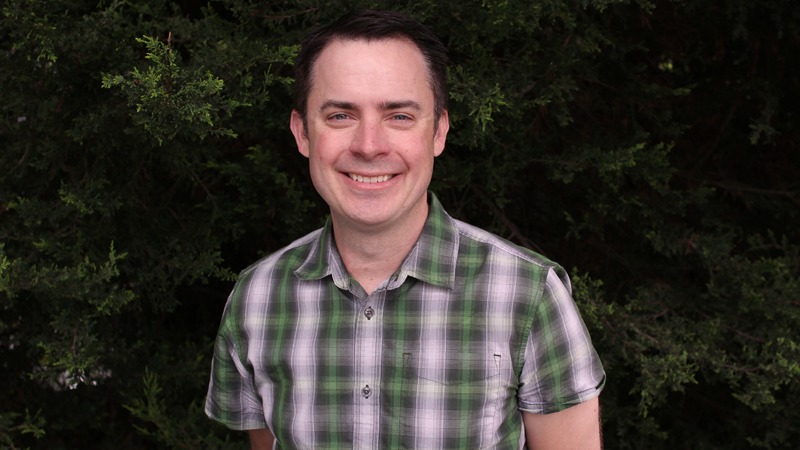
00:12 Chris Ronan: Hi there! This is Inside Geocaching HQ. I am Chris Ronan, geocaching username Rock Chalk. Hope you’re in the right place, but even if you’re not, stick around, sit right back, and you’ll hear a tale. A tale of the beginnings of geocaching.com. Jeremy Irish joins me for a conversation. Jeremy is one of Geocaching HQ’s co-founders, currently a senior vice president here. He started geocaching.com, so he’s kind of a big deal. He has a lot of great stories, and you’ll hear many of them today. I’ve looked forward to having him on our podcast for a long time, and he really delivered. I hope you enjoy this talk as much as I did. This is me and Jeremy Irish talking, what else, geocaching.
[music]
01:04 CR: Well, Jeremy, thank you for doing this. You’ve never struck me as somebody who’s a look-back kind of a guy, you’re look forward kind of a guy, aren’t you?
01:10 Jeremy Irish: That’s pretty true, yeah.
01:12 CR: You don’t really… You don’t really seem to revel in talking about the glory days and all that stuff.
01:15 JI: I get bored really quickly.
01:17 CR: You get bored. [laughter] So we appreciate you humoring us and talking a little bit about stuff here as we’ve got this big anniversary coming up next year, 20 years since the website started, since geocaching started. When you think back to 20 years ago today, it’d be 1999, you were still a little ways off from hearing about this game. What kind of stuff were you doing back then?
01:41 JI: Oh geez, let me see. Well, I was originally from the East Coast, so I grew up in Virginia. I was working for General Electric; actually, I was a webmaster when that was a term. And I was on the East Coast, and I was really just bored of being on the East Coast, and I’d lived there my whole life, and I always said it was like one of those flavor ices, once you suck all the… All the really sweetness out of it, then all you’re left with is a little bit like an ice cube.
02:05 CR: Yeah, right.
02:07 JI: I was really thinking about where I wanted to go next. And I had joined the Air Force, and I traveled to South Korea, and then I actually did my training in California, and went down to Texas. So I ended up back in Maryland, just close to my home, and really got that travel lust, so decided to go out to the Pacific Northwest. And I was a webmaster for GE, so I was basically one of the first web developers out there, so I was trying to figure the thing out. And I was looking online for tech jobs… And this was in ’98. And I found out that Microsoft was out in the Pacific Northwest, out in Seattle, and I got a job offer to come out, so that fall of ’98 I came out to Bellevue, where Microsoft is, and I started working for them as a contractor. So that’s what I was doing originally.
03:00 JI: I did that for a year. I was building internal websites and doing work for them, and it was coming up on one year of my contract, and at that point they give you a couple of months off before you can do contract with Microsoft again. So there was a company that wanted to do some contracting work for the same company I was working for, and I started working at Savvy Shopper, and Savvy Shopper was online… They called it Bricks to Mortar. No, Bricks to Clicks was what they called it. So it was basically taking on a physical store and then putting it online where that was kind of new and fancy. So I worked on the e-commerce platform shopping cart application for this men’s online retailer, and that’s where I met Bryan and Elias, so we were all working for this company together. So that was the beginning of the three of us meeting and working together as co-workers instead of as entrepreneurs or partners in that. And we were working for an entrepreneur, so it was our first experience working together, which allowed us to have a really strong relationship before we started geocaching.
04:08 CR: So May 3rd, 2000, Dave Ulmer hides the first stash, as it was called then. Mike Teague is the first person to find it. People are hiding stashes and posting the coordinates online. Mike Teague is documenting them on his personal home page, and some time around July 2000 you stumble on that home page. What was it that piqued your interest about what you were seeing?
04:33 JI: At Savvy Shopper, we had moved to a new location, and we had a lot… I had 20 employees, something like that, I don’t exactly know how many. But we had this warehouse, and one of the guys who worked at the company, he brought in a Garmin eTrex, it was one of those yellow eTrex units, into the office and he was showing it around. And I knew about GPS before, but I thought about it in car navigation stuff, so I didn’t know a lot about the technology. And when I saw this handheld, it was… I don’t know, two AA batteries and you could walk around with this thing. And I went outside with it, ’cause I’m still a gadget geek, so I went outside and I turned it on. And the original eTrexes, and you can probably see the pictures online, they would show this little guy, and he’s this little pixelated guy, and there were, I think, four satellites up above him that were digital. And every time you connected to a satellite there was this little lightning symbol that went to each one of them. And then once you connected to three of them, then you could start getting your location.
05:31 JI: And there were no maps, it was just this screen, this blank screen. When you connected to it and you were walking around, the little guy started walking too, and you would notice that it would draw a track behind you. And I was like, this is like a video game, there’s this… It’s like Tron in a way, or Snake, one of the original games. I was like, well, there must be games related to GPS, because this looks like a game. So I did some searching online, and I came across the Great American GPS Stash Hunt, and the newsgroup as well that was talking about it, and realized there was this game that had just started.
06:12 JI: So I ended up on, I think… I forget the website, I think it maybe was Matt Stum, he was the one who coined the name geocaching. And saw that there were a bunch of caches listed. Mike Teague’s website actually was the first one I went to. And I saw that there was like a couple, maybe one or two in the state of Washington, I don’t recall exactly. But there was one and I was able to plot it by going to RAI and looking at a topographic map, ’cause I knew it was in Washington State, but I had no idea where it was. I immediately went out and then I bought my own GPS that weekend. I went to a marine supply store since I don’t even think RAI had it.
06:46 JI: I bought one of these things, it was like 115 bucks, so it was a big purchase, but I was excited. I was like, “I’m gonna find this container. This is really cool.” So I went and I looked at the topographic maps and kinda got a general idea of where this area was, but I didn’t have much more information, other than this map and my GPS. So I basically put the GPS on. It gave me a distance and direction and I just started driving.
07:08 JI: So I went with another co-worker of mine and my puppy. I had a beagle puppy. So I was like, “I’m gonna take my puppy out for a walk.” So he and I and the puppy went down and drove along this old logging trail, ended up at this… We just parked on the side of the road and then just started hiking and we found a trail that led us up through… It was kind of a deforested area. So there’s a lot of logging in the Pacific Northwest. So I was in this area that they do logging. So it was like a lot of stumps and following up the trail, and I realized a few things. I didn’t have any water with me, so I wasn’t prepared. I didn’t have water for me. I didn’t have snacks. I didn’t backpack. I just… We just started walking like it was no big deal.
07:51 CR: Like you’re playing a video game.
07:51 JI: Like I was playing a video game, yeah. I didn’t think about it. I was just following the arrow, and just like, “Okay, let’s do this.” So, we’re hiking up. Of course, my friend, he was a former army, he actually had an IV in his backpack, so he was prepared. I was totally not prepared.
08:05 CR: Wow.
08:05 JI: But he still didn’t have water, but he had a water filtration system. So there was a point like along the trail where we don’t have any water and we have to find some old murky swamp that we have to get some water out of just so we can continue on, because we’re all totally unprepared for this, but over-prepared in one way and under-prepared in the other. So, it was really hilarious. There was bugs and I… In the Pacific Northwest, I’m not used to seeing a lot of bugs, like in East Coast all the time. So I didn’t have any bug spray either. So it was miserable. The whole experience was miserable getting to the top of this mountain.
08:37 JI: But once we got to the top, and there was this just a stumpy area, and I noticed that we were getting close, within 20 feet, looked around and I found this container. And it had a notebook in it. It a had a disposable camera. It had a Sunny Delight drink in it, which… This is one of the reasons why we have no food in caches because you don’t put a Sunny Delight drink. I know that it’s not really orange juice, but it’s not really drinkable after it’s been out there for that long.
09:06 JI: So yeah, so I was so excited about it and all those problems that I had along the way and that we had getting there, didn’t really matter ’cause we found this thing that somebody had posted online in these coordinates and all we did was follow the coordinates to this location. So, I was pretty elated and from then on, and I’ve heard this quote before, but it’s not an adventure until something goes wrong. That’s kind of how it was. So it became a story, and at the time it was miserable and stuff, but that excitement of finding it, called the eureka moment that you get when you find it. I was like, “I need to find more of these. I got my fix. I need to do this again.”
09:43 JI: So as we’re coming back down the mountain and at this point I think I’m carrying my puppy, ’cause the puppy’s exhausted. I get to the car. I get to my Saturn, which of course I’m driving a Saturn on logging trails, so don’t do that either. I get in the car and I’m like, “Well, I want this to be something bigger than just a few. What can I do to make this thing more accessible and people are more prepared, and I can explain this better and there needs to be a community around this. And how am I gonna do this? I wanna do this, I wanna support it.” so driving…
10:15 CR: You were thinking that then?
10:17 JI: Well, yeah, ’cause I was like, “Well, if we can get a lot of people to do this then there will be more for me to do, ’cause I can’t hide them and find them.” It’s like I don’t… I need some serious memory loss to do that. So I need a community of people to go out there and place these things so I can place them. So, it was really like selfish reasons, originally, for creating this was, “Hey, if I help with this, then I’ll be able to do this more often.” So coming back, I was like, “Well, I have dev skills. I have some web skills. So what if I could create a website to do this?” So, I looked around to see if is anybody else doing this? And people were more just placing them, posting them to the news group. Mike Teague was documenting those locations, some people was writing bits of code they could put it in a postal code or something like that and it would return like a list or you put your coordinates in and it’ll sort by distance, so you can at least know which ones are near you, that sort of thing.
11:11 JI: So, I kinda took about a lot of those ideas, and I had to learn about great circle calculations to figure out how to do a distance calculation between two points on the planet and how do I code that? How do I create a database for this? All these things, which got me excited because it sort of touched on my interest in technology, but also really encouraged me to go outside, which is something that I hadn’t done since I was in the Boy Scouts, when I was more of a kid. When I became an adult it was more a sedentary existence where I was traveling from the office to home and home to the office. Being a video game, I’d say addict, I also played lots of video games. So it was more like video game indoors.
11:53 JI: So my thought was, “Well, this touches… This will get me healthy. This will hit my tech interest here and my gadget… My interest for gadgets. So, why don’t combine those two?” And then maybe other people will do that too, and they’ll get excited and they’ll place these things. So it was like the symbiotic relationship that I wanted to have with other people in doing this.
12:14 JI: So, eventually I built something that made sense, it worked. And actually just one tidbit is I was looking for something that would relate to technology and nature, and I found… I was on the Ansel Adams website and the Ansel Adams website had a lot of really good black and white photography ’cause that’s what Adam, what he’s known about. So I thought, well, I’ll just basically copy Ansel Adams’ [chuckle] website in some ways. So a lot of that initial website was based on that website, and using some color versus black and white imagery, and trying to put some pictures of the outdoors to get people excited about it and stuff like that.
12:56 JI: So I built this website, and I reached out to Mike Teague and said, “Hey, I’ve got this website. Can you give me some feedback?” And he gave me a little feedback, and some back and forth, and I continued to build the website. And then I think it was September… Was it first?
13:12 CR: Second.
13:12 JI: Second, okay, it was September 2nd of 2000, his website went down for maintenance or something. His provider, his ISP shut down his site. And people were like, “Well, I wanna go and find out where these geocaches are,” and they weren’t geocaches, but the stashes. And Mike Teague said, “Well, go over to geocaching.com. Jeremy’s been working on this. You can go there and check it out.” So that’s really where we consider the first launch of geocaching. It had been up before then, but at that time it was all hand-entered for me, people would email me locations and information, and then I would put them in the database. So the earliest geocaches don’t even have usernames associated with the caches.
13:56 JI: But at the time of the launch, there were 75 caches that I documented and entered into the system, and then over time those people… As we created accounts and that sort of thing, people would adopt those. But some people who just left the activity don’t, so sometimes you’ll see some and they’re associated with one of my old accounts because could never find the owner for those.
14:15 CR: And it’s not long before word really gets out about this. Slashdot did something in September 2000, then you mentioned New York Times article, which I believe was in October, and then CNN did something in December. Was that an exciting time? Was it overwhelming? Was it a mix of the two?
14:33 JI: Well, at that time, I had just created the website on my own, and I’d been working on it, and I was actually running it out of my bedroom. So I had, I think, an ISDN connection or something like that, a low internet connection. So it wasn’t in a server room, and it wasn’t… It didn’t have any capacity at all. So when you get slashdotted, when it was a thing, it brought the server to its knees, and nobody could interact with it, so it shut it down. We got slashdotted, so that was scary. And then I was starting to get some inquiries like, “Oh, I saw this Slashdot article or Slashdot post. I’d like to write an article about this, New York Times, and don’t let anybody scoop me. I want to talk about this, I wanna be the first whatever,” I’m like, “Well, you are the New York Times, so yeah, of course.” So that was crazy.
15:21 JI: And then CNN picked up on the New York Times, and over the course of… I think it was the holidays, they would just repeatedly play me awkwardly walking on the beach, [chuckle] talking about geocaching. And they picked the beach, I think, ’cause maybe pirates, I’m not really sure.
15:37 CR: Oh, we gotta find that. I need to find that clip.
15:38 JI: Yeah, but you can’t really… You can’t be cool when you’re walking in the sand, it just doesn’t… [laughter]
15:43 CR: No, no.
15:44 JI: It doesn’t work that way. So yeah, so I was like… That was weird ’cause I’d never done any kind of interviews with that and… Like that, and I didn’t know where it was going, but I knew that I didn’t wanna do this alone, so at that point I reached out to Bryan and Elias and said, “Hey, you guys are… You fill the areas that I can’t do.” Elias was really… A lot of the back-end work that keeps the site running, or that kept the site running back then, I was the designer and developer, and then Bryan really had a lot of business acumen. And being a lawyer doesn’t help either. It does help, sorry.
[laughter]
16:24 JI: That’s my subconscious talking about lawyers but…
16:26 CR: We won’t let Bryan hear that part.
16:27 JI: No, no, he’s heard all the lawyer jokes, so… [chuckle]
16:30 CR: No doubt, no doubt.
16:30 JI: So it’s fine. And having somebody with a lot of business experience. And so the three of us really worked well together, and I said, “Well, it’s great,” ’cause having three is really great for running a business because there’s always a tie-breaker. Either you all agree, or one person disagrees, or two people disagrees, but there’s always gonna be a decision that gets made. So I didn’t realize at the time, I just thought these are two people that really… I really respect, and I’ve worked with them, and I understand them, and they’re excited for this, but they don’t know where it’s going either. It’s gonna be this side project that we’ll work on. It’ll be fun, but we’re not gonna spend… I even remember writing an email to them at one point… I was thinking it was 2001, and saying, “I don’t think this thing will ever make money, so we need to figure out a way for it to support itself. Because if it can’t support itself, I can’t spend all of my nonworking time working on this.” I’m kind of getting ahead, but that was… Having two partners was definitely key to being successful in this.
17:32 CR: The company has around 75 employees now, but it didn’t… Just as you alluded to, it didn’t just take off like a rocket, right?
17:38 JI: No. [chuckle]
17:39 CR: It was five years, for instance, before Bryan became a full-time employee. During the early days, as you said, it was you and all of you guys, doing this as you were doing your regular jobs, and then as time went on you were able to devote your focus to geocaching. But it wasn’t like that right off the bat.
17:58 JI: No, no, it… So yeah, after the… We were selling Travel Bugs, I think, in 2001, and we were selling t-shirts. So originally we started the company by using shared server space and selling t-shirts. We were working with this company that basically acquired the assets and us. And they were a… They do imprinting, they do silk screening, and embroidery, and that sort of thing. So I was building e-commerce sites for them, and that was my full-time job for… I think it was two or three years that I was doing that. And my side gig was doing geocaching, and that was more of a passion project ’cause I really didn’t… I didn’t know what to do with it. I didn’t know if it was gonna be sustainable on its own. So yeah, we sold 144 t-shirts originally, that was our original geocaching logo, which is definitely more complex than today’s logo. That ended up keeping the server costs and buying more shirts. So we keep… With that profit we get more shirts and then we buy more shirts, and…
19:00 JI: In 2001, we came up with this idea… I came up with this idea for Travel Bugs and that would help fund as well. I remember just sitting and watching TV, and then just peeling stickers of activation codes and tracking codes and we were completely disorganized with it, so I’d have to find the tracking number of the Travel Bug on this list, and then stick it on the envelope, and then ship them out. So we’re all doing this by hand. So any of the ones you see, there’re literally imprinted or numerical, those are like the original Travel Bugs that were out there that we had. And we had to figure out how to source it, who’s gonna print Travel Bugs.
19:36 CR: When Nate was on the show a while back, we had a fun conversation with him and Bryan about the big machine you guys had, the…
19:43 JI: Oh yeah, it would go…
[vocalization]
19:44 CR: It shook the building and… [laughter]
19:46 JI: Yeah, I know, yeah, that was for the Jeep promotion originally, ’cause we were trying to do alphanumeric codes ’cause the original numeric codes were easily breakable and for this we wanted to have something a little bit harder. So we had to figure out how to program this thing, which used to print or stamp dog tags. So it was a dog tag stamper. Yeah, and that thing… [chuckle] It was so loud, yeah, so we all had to wear headphones or just deal with it. But that was all part of it…
20:14 CR: Right.
20:14 JI: The experience.
20:15 CR: The game of geocaching is unique for a lot of reasons, and I think one of the most important is that the community invented the game. The community creates the content. And for that reason, you and Bryan and Elias and this company have always had a unique relationship with the community. Could you talk about that a bit?
20:36 JI: Obviously, starting this thing out, I realized that I needed to have a bunch of people that will participate in this thing so I could participate in it as well. So… And I hadn’t run communities before, so this is all new to me. But creating the forum, that was one of the first… Well, actually, the mailing list, we had a geocaching mailing list that we started with first and that was just like… In this community, I need to encourage people to do this. And people… And I remember the first person in California to place a cache was like, “Well if I place one of these things, will anybody actually find it?” We had this… We kept saying, “If you hide it, they will come. We just say, “If you hide it they will come.” People will hide it and they say, “Oh wow, somebody logged my cache and I got an email,” and you’re like, “Yep, alright well, thank you.”
21:18 CR: Tell your friends. [chuckle]
21:18 JI: And tell your friends, yeah, literally, tell your friends. Key things I was thinking about when the geocaching activity started, one of them was… ‘Cause there was some counter-culture, “Let’s go to abandoned buildings and take pictures,” kind of thing, “let’s go trespass.” And people would… And I think there’s still websites out there that do that. It’s like, “Oh hey, I went into Disney property, I went to this old ride and I snuck in, I took all these photos,” and they uploaded it, and then it’s basically encouraging people to go and… The pictures are great, but encouraging people to go trespassing in these locations, I was like, “Well we can’t be committing crimes. We need to be above board. This needs to be a public website. We need to work with people if people are trespassing or littering or they’re doing something that they’re not supposed to do.”
22:01 JI: And then the other big thing was family-friendly was important. And being family-friendly meant that if I ever had kids, and now I have three, and I go to a geocache, I’m not going to expect something that I shouldn’t or go to a place that I wouldn’t wanna bring my kids. Keep that above board. And then the third one, commercialization.
22:22 JI: Okay, so no solicitation. And over the years, this has been a controversial one. There’s always exceptions to the rule, and that’s why we always call them guidelines instead of rules, because there has to be some allowances to creativity. But we didn’t want people to be actively using these to get you to go and buy ice cream or put coupons in them, or create little contests and stuff like that unless if we manage it in some way that is better for the community. And we’ve experimented with ideas in doing promotions over the years and the end result is like any kind of activity that we incorporate or advertise and incorporate into the game. It’s something that enhances the game, it doesn’t detract from it. So that was probably the three core pillars, I guess, that we had considered originally when starting the website.
23:08 CR: You briefly mentioned it earlier, but maybe talk a little bit more about Travel Bugs because that’s become such a big part of the game and it’s something that you came up with. What was the impetus for that?
23:19 JI: Well, originally, I would go to geocaches and people would put objects in Ziploc bags and they would have a piece of paper in it and it would say, “Hey, if you found this, send me an email, let me know that you found it and where you found it.” And this is… And some of them are like, “And this is from such-and-such a location, I’m trying to get to this location.” So that was happening naturally. People were just wanting to put them in caches and just see where they went. So it was like putting a message in a bottle, and then seeing where it floats to based on people moving it. Also, at the same time, there was an activity called Where’s George. And Where’s George is when you take… Every dollar bill has its own serial numbers, so you would enter the serial number of a bill into this website, and then you could write a message like when you found it, and then they would spend the bill, and then they would write or stamp a Where’s George stamp on there to say, “Go to wheresgeorge.com and enter in this code and tell me where it’s been.”
24:16 JI: I was like, “Well I can combine the idea that here, somebody has a goal with this object that they put in a cash container with this idea where you take a serial number, a unique identifier, and then you can go to a website and find out where it’s been. If you combine those two, and then somehow integrate it to the game, and then charge for the tags, this would be a funding opportunity for us to get more functionality, maybe hire some people, maybe not do this as my side gig anymore, so I can focus on this more.”
24:43 JI: So that’s basically the idea, how it got started originally, just finding how to source it and get the first ones printed and that sort of thing. That took some… A little bit of time, but that was the idea. And then, of course, you’re bitten by the Travel Bug, the idea that this thing is vicariously moving… You are vicariously living through the bugs that are moving around. Hopefully, people post photos of them and you’ll get emails about these adventures these little bugs go on. So that was the basic idea.
25:10 CR: I could spend all day asking you about lots of other projects, but are there things that… Moments that are top of mind for you? I mean when… And the rare times that you do think back, because I know you like to look forward, but if you are just reminiscing, are there certain projects that come to mind or certain moments in the history that are particularly memorable for you?
25:31 JI: So I think the Jeep one was really cool just because I love Jeeps, and I finally bought a Jeep after all these years in 2014, I think, or something like that. I finally bought a Jeep. This promotion really hit just some buttons for me, the happy buttons. The idea of finding out there are brands that really integrate with the game. The fact that we had these little diecast metal Jeeps that… Just fun things like, how do we print them, and how do we get them out to the world so people can move them around? Do we ship them? I remember packaging them were fun ’cause we’d get… We just had shipments of these little diecast metal Jeeps that would arrive and I think it was the yellow Jeep originally, which then we did locationless caches around and one of them was the find yellow jeep. So it was kind of a fun mix of the two projects. And then releasing them out, and then seeing the photography that people would submit, because there was a sweepstakes, but there was also a photography… There was an essay and a photography portion of it, and then people would choose like the best pictures; somebody won a Jeep at the end of the promotion, which is pretty awesome, along with the sweepstakes and that sort of thing.
26:35 JI: So that was cool, just because it combined Jeep, this amazing brand experience with geocaching. Never thought I had the opportunity to do something like that. And then just the promotion itself was very unique and seeing the creative user content that people are creating out there with the photography, or even like geocaches. So that’s the Jeep promotion. The things that have stood out to me over the years is traveling. The first time I was able to travel, I was flown to Denmark to speak at an event and I’d never done that before. So I got to go to Copenhagen, and then met up with the folks that had sponsored me to come out, drove on a Segway; it was the first time I was on a Segway, and then got to see Copenhagen, got to fly to a new… Or was it… Yeah, fly to a new country.
27:27 JI: And then I went to Aarhus and met now our first employee’s husband in Aarhus, Denmark and that was where I did my speaking event. So just being able to travel outside the United States and have my experience, first experience talking about geocaching. And then just all the events I’ve gone to; to GeoWoodstock where I used to get in line and serve, what was it, Caesar salad; I did that like a couple of years. It was fun just to be in line to be able to… It’s hard to meet 500 geocachers in an event. So the best way to do that is serve them food, ’cause everybody’s coming to the same location. [chuckle] So it was like, “Hey, here’s some Caesar salad. Nice to meet you.”
[laughter]
28:06 JI: And then we don’t have a lot of time, so move along, and then we’ll talk to the next person because you’re limited with your time. So there’s… I went down to Austin, Texas for South by Southwest and Richard Garriott has a geocache there where you end up at a tower that he created, really cool. You end up walking along this trail with all of this like Halloween-themed stuff along the way after solving all these puzzles, and even meeting Richard Garriott, which as a videogame geek guy, grew up with Ultima series of games. So I played all the Ultima single player games as the avatar to the Ultima online experience. So meetings like… So, childhood hero, also now, tourist astronaut, really cool.
28:49 CR: Yeah, very cool. Yeah.
28:50 JI: Got to meet some really cool people. They don’t have to be celebrities, [chuckle] like meet geocachers that are gadget cachers that create these amazing experiences. I could go on on all the really cool experiences that I’ve done because of this game.
29:06 CR: So there was a lot of excitement fairly recently, it’s been a couple of years, but about the return of the… There was the APE cache that was found in Washington and now there’s two active APE caches. And you actually were… You hid that Washington, you and John Stanley, right, were the ones that actually hid it. How about that promotion? That was something that is part of geocaching lore and people love talking about the APE cache and I just kinda wonder when you think back to working with 20th Century Fox on that whole thing.
29:32 JI: It was interesting at the time. It’s outlived the movie. Nobody watches the movie after they go and find one of these geocaches. They basically approached us and said, “We wanna do something with you for this movie coming out,” and they had this concept of this alternate history of evolution where there’s these apes that have been evolved, just like man has been evolved and there’s this evidence out there. So there’s this organization that’s going to release this proof. So each location, they basically asked, “How do we do this?” It was a collaborative experience. So coming up with the idea where we get excitement around Project APE with the entire world, but at the same time, there’s only 12, and then I think 13 locations that you could place them, that a lot of people are not gonna be able to play this game. So how are you gonna live vicariously through the people who are finding it? How do you get that excitement around it and try to mitigate some of the disappointment?
30:31 JI: So we picked all the locations and we found local geocachers that would place it for us. I had that all coordinated. And then there’s so much trust in there, too. This is like if I’m sending a prop from the movie in this big container to somebody I’ve never met and that person actually placed the container and didn’t take the prop from the movie, that’s pretty impressive. So it’s like this absolute trust that happened. We had very trustworthy amazing geocachers that worked on it. And then this idea that throughout the week, we would sort of slowly reduce the radius of where the geocache is so they could find it. That was a lot of fun, just trying to schedule that even personally, like sending out a message so people are ready for this thing. And then I think it was every Friday, releasing it, and then seeing how quickly people would find it.
31:17 JI: I used to say that we could get a geocacher to somewhere faster than the US government could. [laughter] ‘Cause you’d just post a coordinate of a new geocache and send out an instant email that says, “Hey everybody, there’s a geocache there, go find it,” and it would be found within less than an hour.
31:32 CR: That’s true.
31:32 JI: It would be found anywhere in the world, more or less. So anyway, that was really exciting. And geocaches were found within an hour. Once people found out it was in Washington State or something, people are waiting for that message to go out, where multiple people would show up at the same time. And nobody ever fought over a geocache as far as I knew. But just the fact that it lived on beyond the promotion and has become legendary, and the fact that now there’s the trifecta that you can find the three geocaches in the Pacific Northwest and a lot of people will travel here, and then the interest in going to Brazil to find a geocache that’s out there, and the fact that that thing still exists today is pretty impressive.
32:16 CR: Yeah, I mean I never would’ve… I don’t know if I ever would have gone to Brazil if it wasn’t for that cache.
[chuckle]
32:21 JI: So yeah, it’s awesome that this has created that. I wanted to feel like Indiana Jones every time I found a geocache. But you literally can go to Brazil and find a geocache now and it feels like that kind of adventure. So, yeah, and then the fact that I think it was really well introduced back into the game, getting that geocache back to make that trifecta happen, having that community involvement for it. Honestly, in the past, I would have shut down those geocaches if I hadn’t… At that time, I used to have regrets not shutting them down because they were such a pain. People would constantly wanna have the old geocaches returned to those locations with a new container and we had to create rules around it and it was frustrating because I wanted to capture the original experience, but replacing the container just wasn’t… It didn’t seem right to me. So, being the bad guy often throughout the game has not been the most comfortable part of the experience, but I think it’s helped the game.
33:24 CR: A couple of years ago, after many years as the company president, you shifted gears, you moved into a senior VP role, what made you wanna do that?
33:32 JI: Yeah, it’s been about two years now. I had a lot of life changes and realized… I joke when I was… I became 42, that’s the answer to life, the universe and everything, if you know Douglas Adams books. So that was my year of living uncomfortably, is how I themed it. And I just got to thinking about what’s important and how much energy and time that I put into the game. And I love all the energy and time I put in the game, but really, I think as a result, a lot of my personal side suffered.
34:04 JI: So I kinda went through some changes there and I was still president and working through it and that sort of thing. But there was a point where I thought, “Well, my passion, it is about… Passion is building something.” And you’re right, I’m more of a forward thinker. I like to break things because I think breaking things make things change over time and you can’t just do the same thing. So, I came to the realization that I wanted to do something else. I wanted to do something within the company, but I didn’t wanna manage the company. I think I manage okay, but I’m better at building product and coming up with new ideas and it was keeping me from doing that.
34:42 JI: So it’s been over two years now. Bryan, Elias and I talked and I thought, “Well, I think the best thing to do is me to step down, and then look at other concepts around geocaching and location-based games in general. So why don’t I take this time and focus on figuring out new ideas, playing around with those ideas, and if those ideas take off and there’s some spark of… Something fits within the game, then we’ll go for it.”
[music]
35:12 CR: So there you have it, Jeremy Irish. I learned a lot during that talk. I heard several fun stories that I had not heard before, hope you did, too. If you have an idea for our podcast, something you’d like to hear us talk about, you can send an email to podcast@geocaching.com. That is podcast@geocaching.com. We would love to hear your ideas. Hard to top this talk with Jeremy, but we will try. So, hey, thanks for downloading our podcast. Please tell your friends. And from all of us at Geocaching HQ, happy caching.