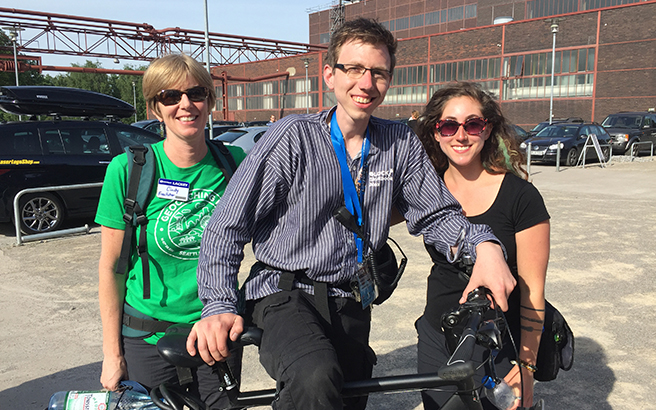
Jedes Jahr können ein paar glückliche Mitarbeiter des Geocaching-Hauptquartiers an einem Mega- oder Giga-Event teilnehmen. Bri Suffety und Cindy Potter waren kürzlich in Essen und haben das Giga-Event “Project Glück Auf 2016” (GC55555) besucht. Bri (Sassy Bandit) ist Frontend-Entwickler und Cindy (Frau Potter) ist Community-Direktor. Les weiter, was Bri über den Besuch schreibt.
Author: Guest Writer
Guest writer for Geocaching.com's blog
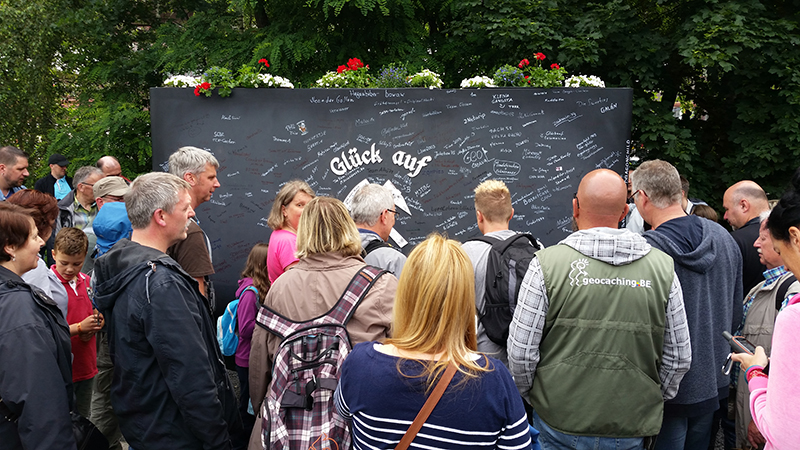
Project Glück Auf — The Good Luck Event
Editor’s note: Each year, a few lucky Geocaching HQ staff are able to attend a Mega-Event or Giga-Event. Bri Suffety and Cindy Potter recently traveled to Essen, Germany to attend this year’s Giga-Event. Bri (Sassy Bandit) is a Front End Developer and Cindy (Frau Potter) is the Director of Community. Here is Bri’s story of this visit.
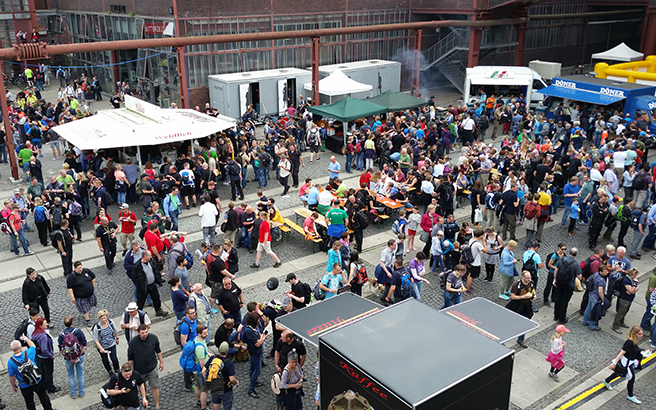
Amidst the world’s most geocache-dense region is an old coal factory that had once been threatened with demolition. Mine shafts shoot skyward, brick buildings dot the land and sidewalks curve around the grounds the same way rail tracks used to. It all makes for an incredibly unique setting for 10,000 geocachers to gather for the 2016 Project Glück Auf Giga-Event.
The name – Glück Auf – is an expression used by miners. It was used to say “good luck” to miners to find coal, but also to come back safely from the mine.
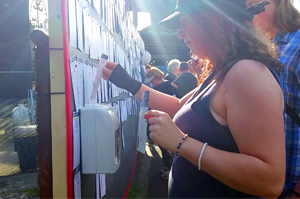
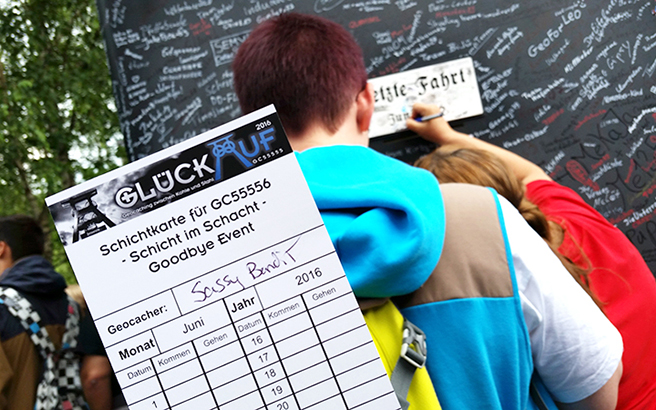
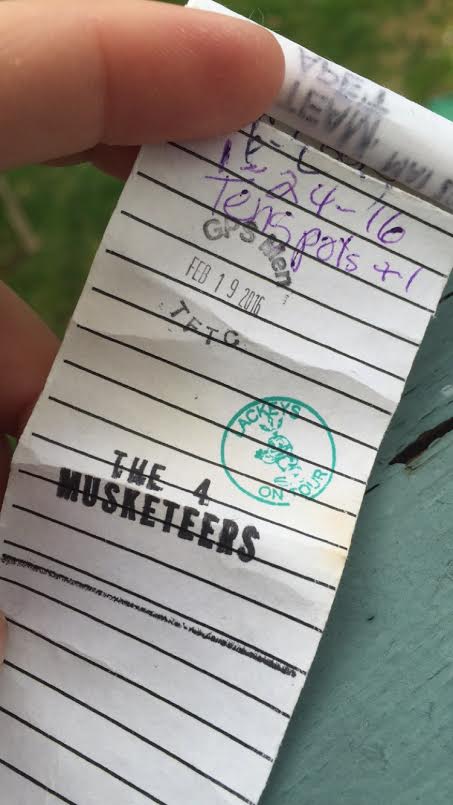
The Glück Auf weekend kicked off with registration, lab caches and a Meet&Greet Event that featured live music and a logbook that had cachers “clock-in” with a time card. I don’t know if I’ve ever had so much fun signing a logbook.
The main event was held on Saturday and had a scheduled start time of 10 AM; although, you wouldn’t know by the number of people who were already gathering at 8 o’clock. There were crowds of people everywhere you went, but I was pleased to find it never felt crowded. The organizers made good use of the space and were able to spread out the various activities while still having everything easily accessible on foot.
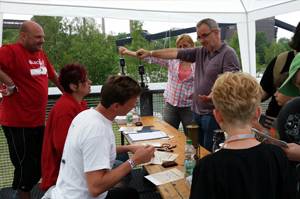
The activities furthest from the center of the event were the lab caches and games. I welcomed this as the perfect opportunity to go exploring. One of the games I stopped at challenged geocachers to see how long they could hold a safety lamp with their arm extended. Not only were you trying to outlast the other people in your group but you were also trying to beat the best time of the day. When I played, the time to beat for an adult was over 10 minutes. I made it about half that before my shaking arm could take no more.
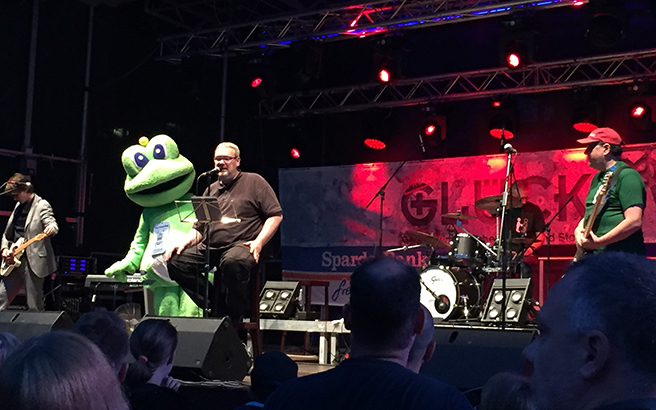
I was surprised at how many people remained at the event site on Saturday. I had expected an ebb and flow as people came and went. However, there was a lively energy that lasted throughout the day. Picnic tables became the hub for meals and reuniting with friends, the coffee cart and ice cream trucks had a revolving line and the vendor building was bustling with happy shoppers. Even as the light started to fade and the geocaching band, Dosenfischer, started to play, there were still many faces settled in around the stage.

Sunday morning brought the Schicht im Schacht (That’s It) Goodbye Event and clouds that threatened rain. Fortunately, our collective luck held out and scattered sprinkles were all that fell.
As the event wrapped up and hugs started to be doled out, I felt both grateful for the opportunity to attend Project Glück Auf and a little sad that it was time to say goodbye to geocaching friends old and new.
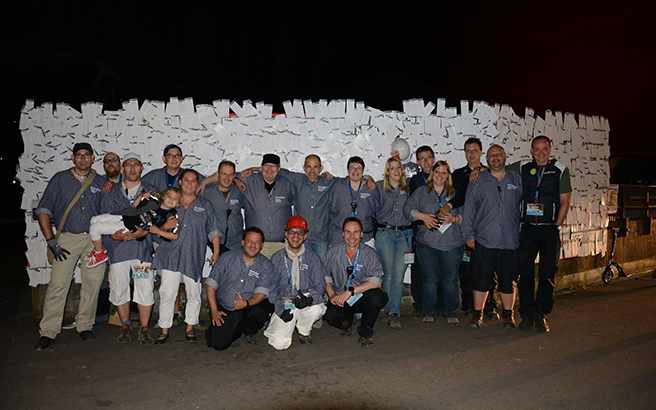
A huge thank you to the Orga-Team for your dedication in creating a memorable, well organized, incredibly fun event that inspired people from around the world to gather in a single location and celebrate the game of geocaching. You deserve a huge round of applause. Glück auf!


This Week’s HCue Lesson: Put a Lid On It!
We all know what happens when a geocacher puts the logsheet in the base of a micro or nano container, right? They explode. Metaphorically of course. We try in vain to fish them out with small objects as they cram in further causing people to then smash them on hard surfaces. No one wants this in their lives. For the sake of geocachers everywhere, put those tiny logsheets where they belong: in the lid.
The latest HCue video makes this tip easy to remember.
And for those moments when you need to tightly roll the smallest nano or micro logsheets with ease, check out The Ultimate Log Roller in the Geocaching Shop.

HCue: How To Make a Cammo Can
What you’ll need:
- Ammo can – Buy online or at an army surplus store
- Flat camo spray paint – Green, black, and brown
- Foliage – Ferns, cedar, and weeds all work well (avoid plants with too much surface area like leaves)
- Scotch Tape
- Newspaper
- Geocaching stencil – Optional… but awesome
Instructions:
- CLEAN – Wash off any dirt on the surface of the ammo can so that the paint will hold.
- PAINT GREEN – Cover any lettering or other coloring with green spray paint.
- ARRANGE FOLIAGE – Apply looped scotch tape to back of foliage and arrange it facing the same direction on one side of the can for a natural effect.
- PAINT ALTERNATE COLORS – Painting lightly, make three wide diagonal stripes with black spray paint, then apply two brown stripes in between. Quickly lift off the foliage and let it dry.
- REPEAT STEPS 3 & 4 ON ALL SIDES – Since you are painting lightly, you should be able to paint in an order that allows sides to dry as you go.
- LABEL – To make your Cammo Can official, add a Geocaching Logo Stencil to the front.
- HIDE – You know what to do from here. And if you don’t, go here.
Do you have a geocaching tip that would make a great HCue video? Share your idea(s) in the comments below!

Geocaching adventures in Las Vegas
By Jen Pearce, Geocaching HQ Employee
Have you been to Seattle, home of Geocaching HQ, in the winter time? It rains here — a LOT and we just had our wettest winter on record. Many Seattleites try to visit sunnier climates during this season, and the employees at HQ are no different. So where to?
Factoring in our limited time (a weekend), our shared interest (geocaching), and our greatest desire (to see the sun), we decided to go to Las Vegas, Nevada!
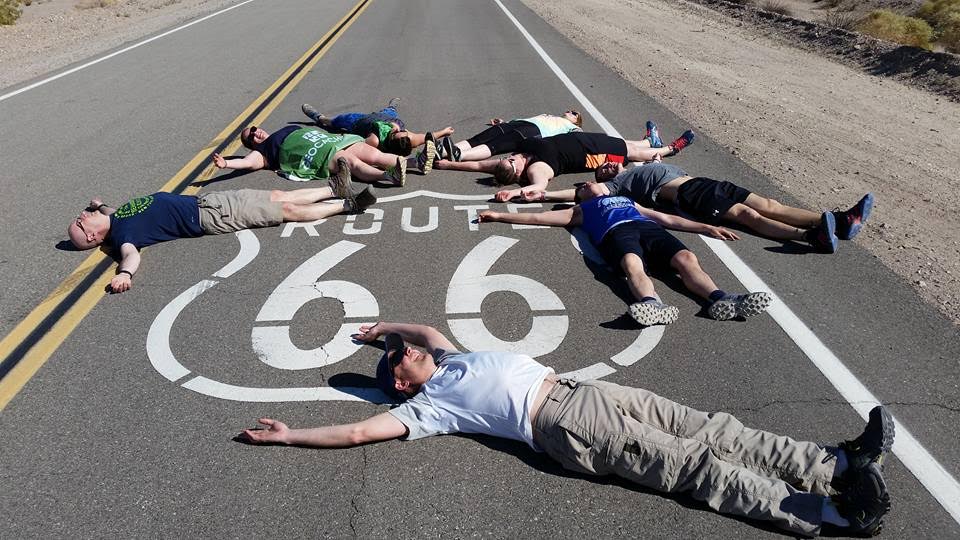
Our first stop was Route 66, a historic highway that runs from Chicago, IL to Santa Monica, CA. The highway fell out of use in the 80s when the Interstate Highway System was created, leaving behind ample, rarely-disturbed space for geocaches.
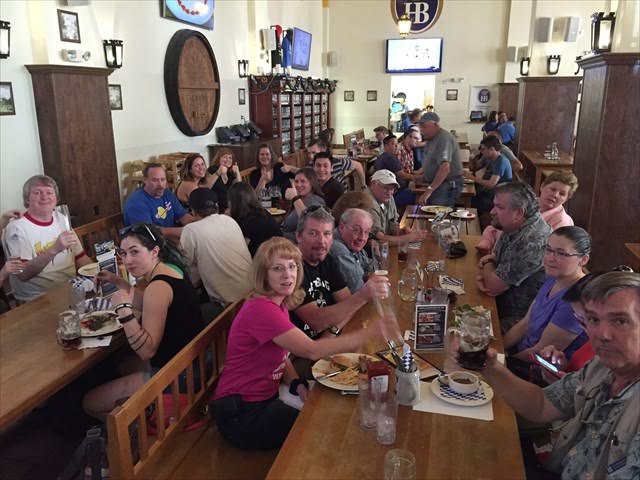
Our next stop was Hofbräuhaus Beer Hall for GC6BJG6, an Event Cache to meet up with local and visiting geocachers in Las Vegas.
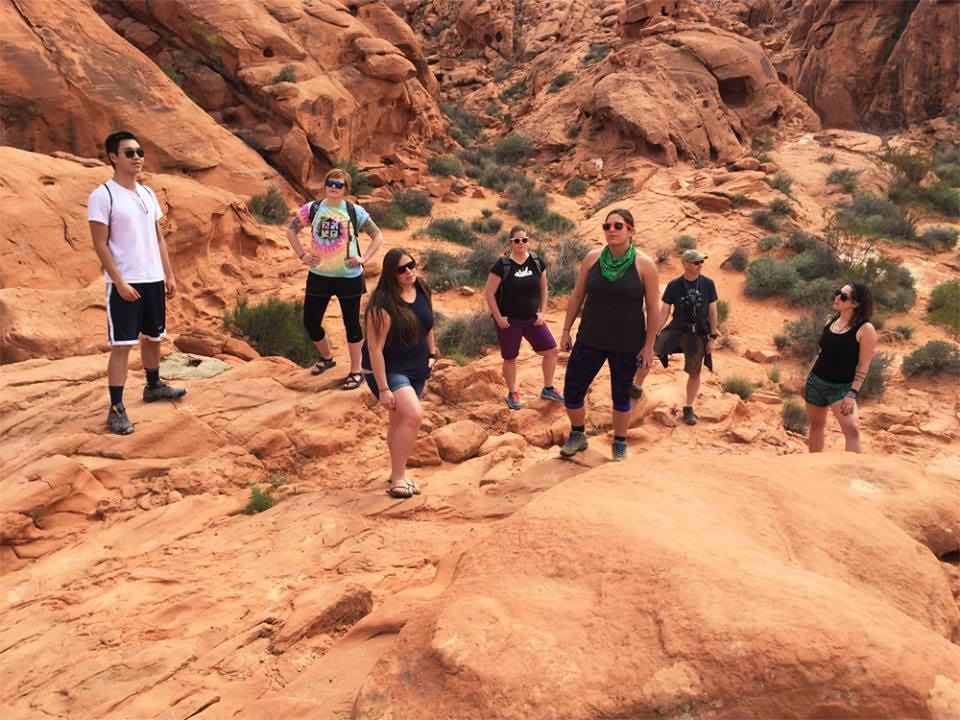
Our last stop was the Valley of Fire, Nevada’s oldest and largest state park.
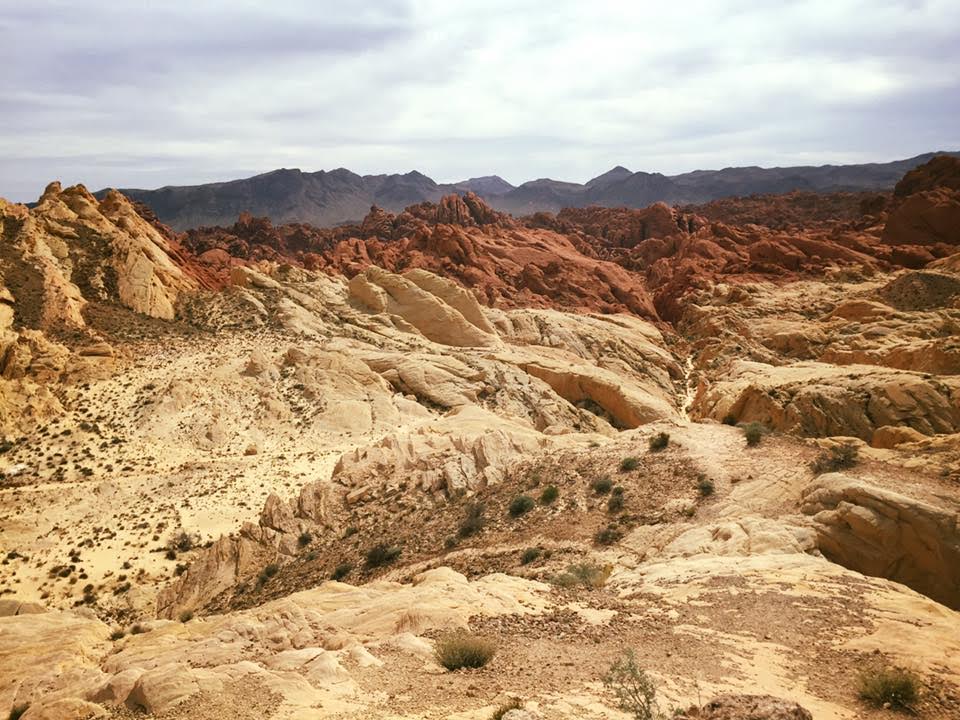
The park is home to petroglyphs, gorgeous red sandstone ranges, EarthCaches, and the final resting place of Captain Kirk from the movie Star Trek: Generations.
The peak seen in the movie is called Silica Dome, which also happens to host GC4Z3F6: an EarthCache by Landondena. There is an “easy” way to reach the dome and a “hard” way — we took the hard way.
Other notable EarthCaches (and a Virtual!) we found within the park: GC1PPNP, GC1PPNG, GCH723 (limited time meant leaving the park before we found all of the caches).

The next time you venture through Nevada, keep an eye out for the Lackeys on Tour stamp in the local logs.
Until next time…