The Olympic Geocacher

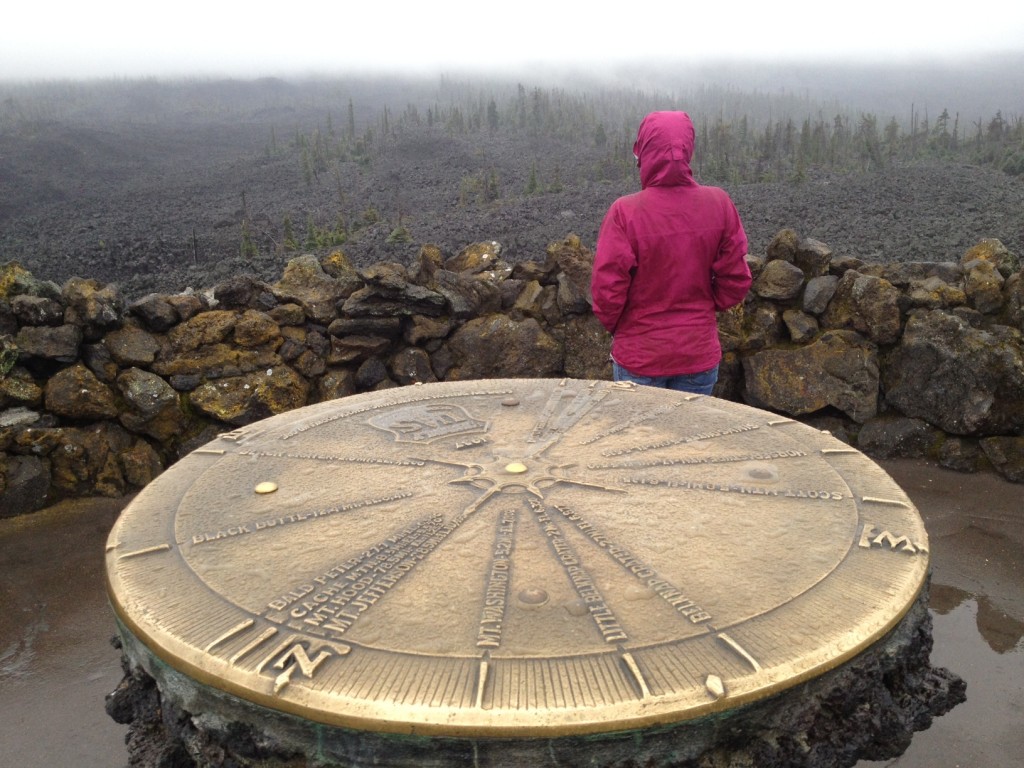
Dee Wright Observatory on the Eugene, Cascades, Coast GeoTour (geocache nearby)

Traits like stamina, speed and a competitive spirit transform average geocachers into superstars. For one geocacher, those same traits made him pretty darn good at something else, being an Olympic runner. Ian Dobson qualified and ran as a U.S. Olympian in the 2008 Beijing Summer Olympics.
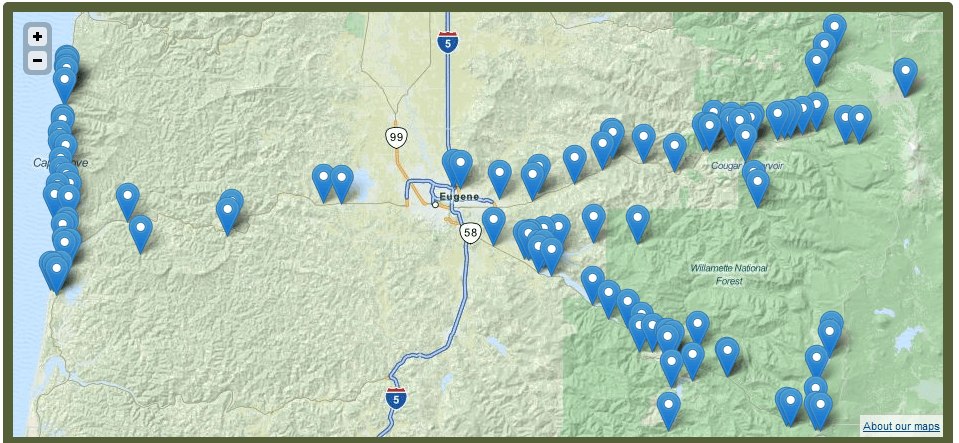
map

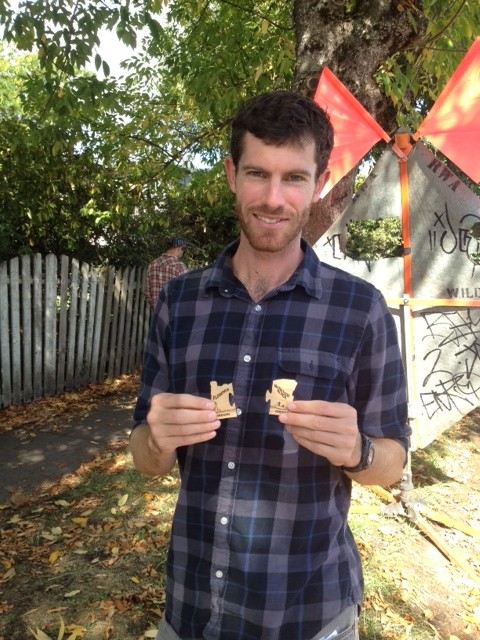
Ian Dobson - Olympian, Geocacher
Ian Dobson – Olympian, Geocacher

Now imagine a stretch of freshly published geocaches dotting the rugged landscape of the Central Oregon. There are more than 30 geocaches hiding from the dark summit of a volcanic mountain to the lush green of fern covered gorges. This is no geocaching power trail. Each geocache is part of the custom Eugene Cascades and Coast GeoTour. And each geocache delivers adventures to a unique location, often deep into the tall evergreens.

Ian Dobson trains in Eugene. It’s a runner’s paradise with the hallowed echoes of Olympic legends in each footstep. And thanks to the expanding GeoTour it’s a geocacher’s paradise too.

But what to do though if you’re an Olympic runner and a geocacher? How about finish the first leg of the Eugene, Cascades and Coast GeoTour in just two days? Sure.

That’s exactly what Ian and a team of geocachers did. Ian says the GeoTour was a great chance to explore, “I don’t think there’s anyone who lives here, whose been to all those places.”

The team logged more than 30 geocaches from the McKenzie spoke of the GeoTour in two days. Ian says that geocaching offers a good variety of locations and terrains, and the Eugene Cascades and Coast GeoTour offers not just mountains, but also beaches. The team headed to the Oregon coast and the Florence leg of the tour and kept up their pace. They finished that part of the GeoTour in just one day.  The final geocaches were found in the dark, as the team finished at 10pm.

Do you see the puzzle piece Ian is holding in the picture? If geocachers accumulate enough find codes from each leg of the GeoTour they earn the free trackable puzzle pieces. The team will likely be busy again. Another spoke of the GeoTour, through rolling country south of Eugene.

As we have established: you are a superstar too. Do you plan to challenge yourself with a GeoTour, or do you have a geocaching workout routine? Let us know in the comments below!
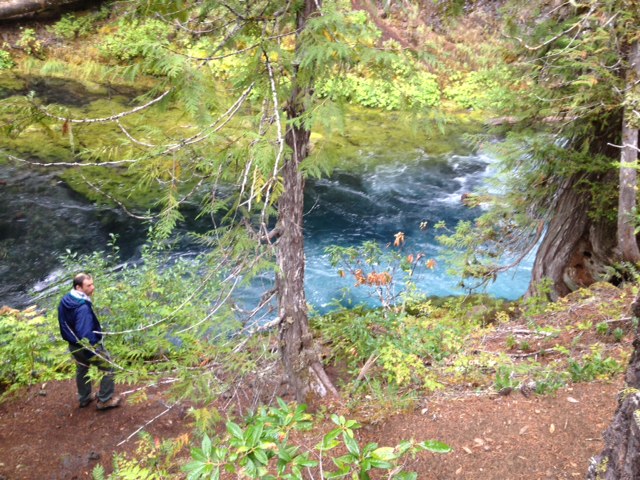
Near the "Blue Pool" on the McKenzie spoke of the Eugene, Cascades and Coast GeoTour
Near the “Blue Pool” on the McKenzie spoke of the Eugene, Cascades and Coast GeoTour

The First Geocaching First-to-Find in Space

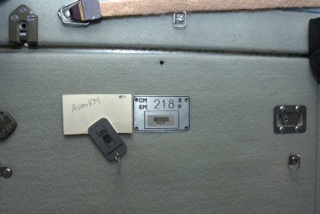
rick in space with Travel Bug
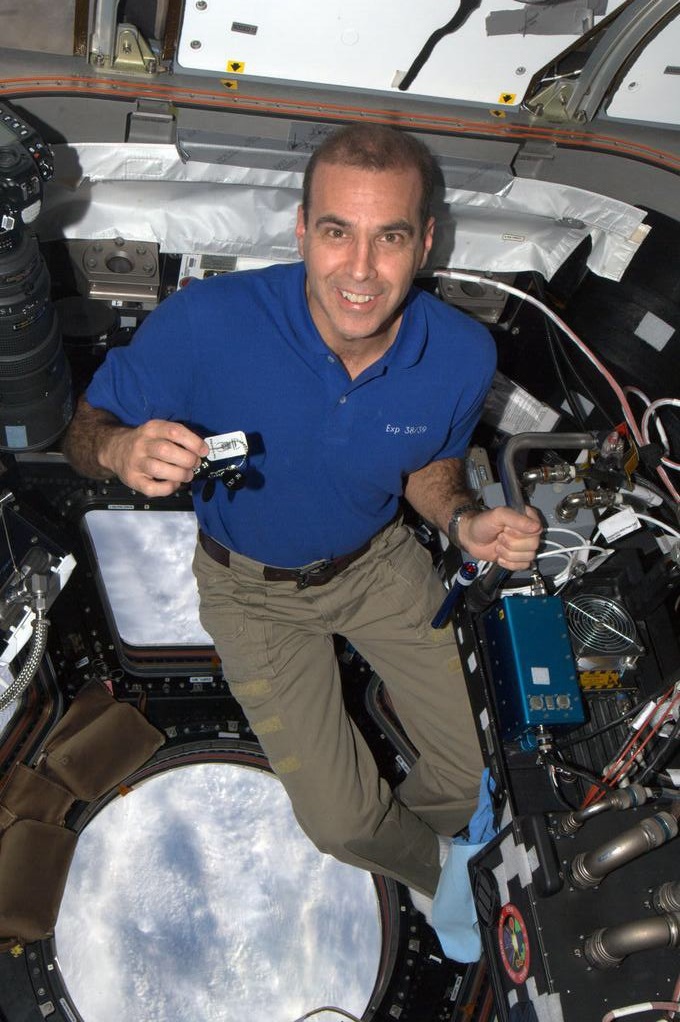
Rick Mastracchio with the International Space Station Travel Bug

An American astronaut Rick Mastracchio (AstroRM) enters the Geocaching history books. He logged the First-to-Find (FTF) on one of the most exclusive geocaches in existence. It’s a geocache hidden five years ago aboard the International Space Station. The geocache has orbited 260 miles above the Earth since geocaching pioneer and video game designer Richard Garriott created the geocache in 2008.

Signed logbook on the International Space Station geocache

Astronaut Rick Mastracchio’s FTF log reads, “The geo space bug (TB5JJN1) has made it to the Russian Service Module, panel 218. He traveled from Waterbury, CT to Houston, TX to Cologne, Germany to Moscow, Star City Russia, to Baikonur Kazakhstan where it launched on a Russian Soyuz Rocket to the International Space Station. He has traveled around the space station and will continue to do so for the next 6 months. When he is not traveling he will be staying with me in my very small crew quarters. He hangs/floats on my wall and waits for more adventures while I do research and perform experiments here on ISS. Thanks for getting this little guy started Cizzors. Every journey starts with the first step and you took the first step of this one. Rick.”

Mastracchio thanked fellow Connecticut geocacher Robert Cizauskas (Cizzors) who first introduced the idea of geocaching to the astronaut. More than 26,000 geocachers at nearly 1,200 events around the world celebrated Geocaching in Space during Mastracchio’s launch into orbit.

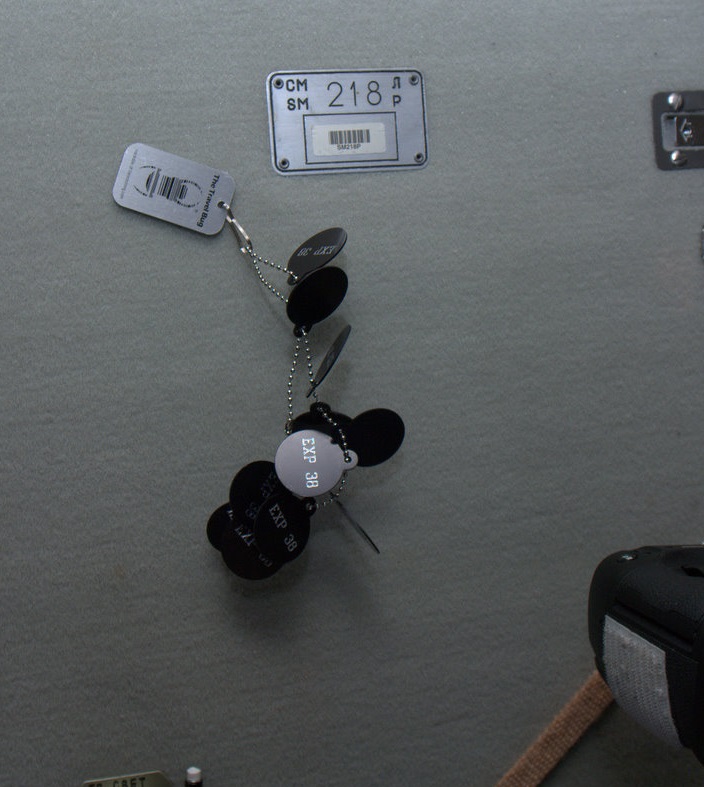
The Travel Bug with Mission 38 hitchhikers to be delivered to schools back on Earth
The Travel Bug with hitchhikers to be delivered to schools back on Earth

The Travel Bug is riding along with Mastracchio on an educational mission. He’ll use the Travel Bug as a tool to teach kids back on Earth about geography and science.

The Travel Bug  is scheduled to return to Earth when Mastracchio finishes his six-month mission aboard the International Space Station.

The previous Travel Bug Richard Garriott carried to the space station remained on-board the ISS for three years. It accumulated more than 350 million miles as it orbited the Earth. That Travel Bug returned to Earth by one of the last U.S. Shuttle missions to visit the International Space Station.

Watch the video of Richard Garriott’s mission to space. Leave your best wishes for Rick Mastracchio below in comments.

Geocaching Quick Quiz: Name that Lingo

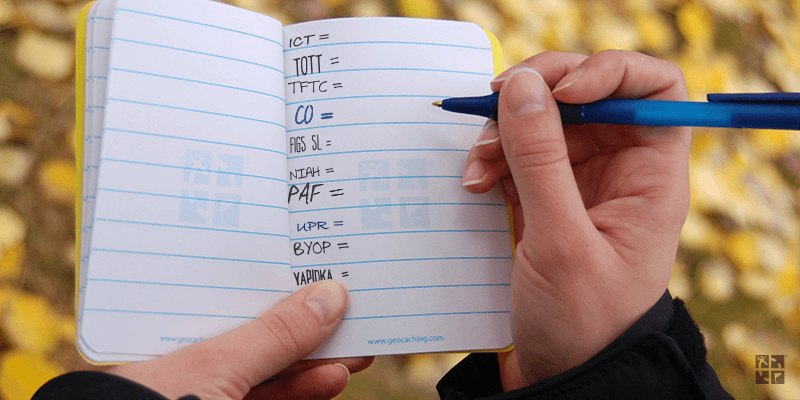
Sometimes reading geocache logs can be as tricky as deciphering top secret super spy codes. Check the geocaching acronyms in the log book below. Can you decrypt this geocaching lingo?

GC_Acronyms_Quiz_vFINAL_Q

To reveal the answers…

Just.

Scroll.

Down.


You’re.

Almost.

There.

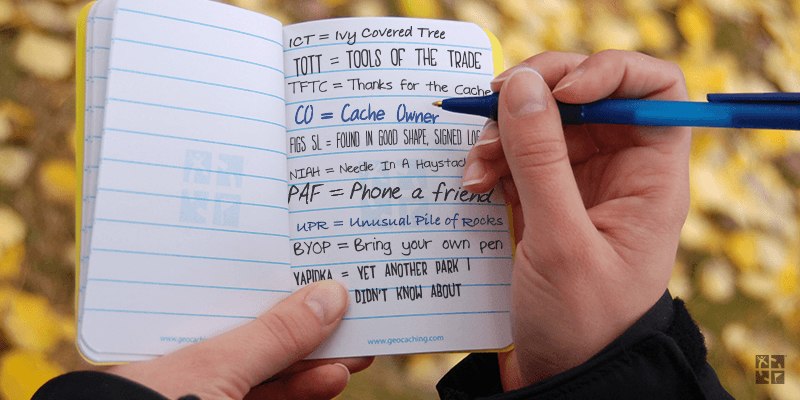
The answers revealed! Are you a geocaching super spy?

GC_Acronyms_Quiz_vFINAL_A


These are just a few of the gazillions of geocaching acronyms out there. Have you come across lingo not listed in this log book? Tell us about it in the comments below.

Geocacher vs. Zombie – Who wins?

GeoZombieRun1
Brains! Brains!

Editor’s Note: No geocachers were hurt in the making of this story. Based upon true geocaching events that occurred on the Washington-Canadian border on October 26, 2013.

Guest Blog Post By Jayme Hewitt (Username: benandjayme)

GeoZombieRun2
Permits are important – even when hunting zombies!

I awoke with an uneasy feeling in my stomach on the morning of October 26th. The fog sat heavy in the fields and echoed the thoughts  running through my head. Is this the end? Does the zombie apocalypse start today? Rumors spread far and wide about zombies invading the west coast, even as far north as the Canadian border.

With no time left to ponder humanity, we threw some supplies in the car and headed out the door. There was a job to be done and we heard that some geocachers were gathering nearby to make a plan. We met up with some friends in Lynden, WA at the Zombie Safe Zone and received our Zombie Hunting Permits.

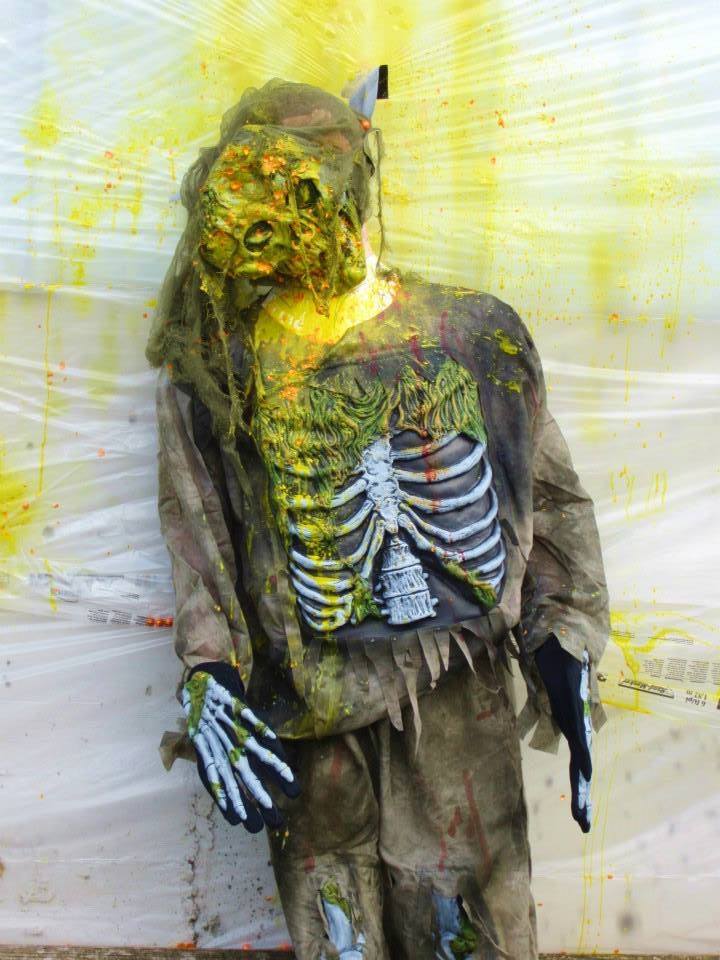
We began our hunt at the Zombie Paintball Shooting Gallery, honing our skills.

GeoZombieRun3
Take that, practice zombie target!

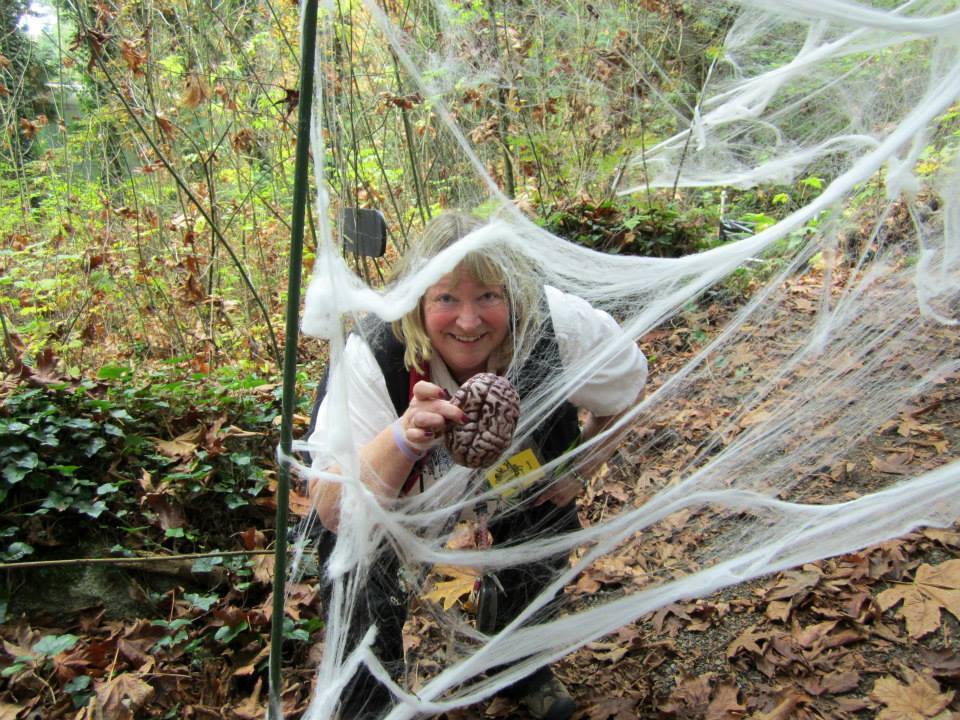
We then carried brains with us through the forest to disguise ourselves with the smell of the dead. The zombies had set up tricky obstacles to slow us down, but we all made it through.

GeoZombieRun4
“I not only use all the brains I have, but also all those I can borrow.” -Zombie

After a long day of finding survival clues and dodging the un-dead along scenic logging roads, beautiful harbor spits, and many, MANY places in between (more than 124 miles driven!), we decided that it was going to be incredibly cost prohibitive to continue the hunt. We put our heads together and came up with a new strategy…one that had never been tried before. We decided to make some new friends.

GeoZombieRun5
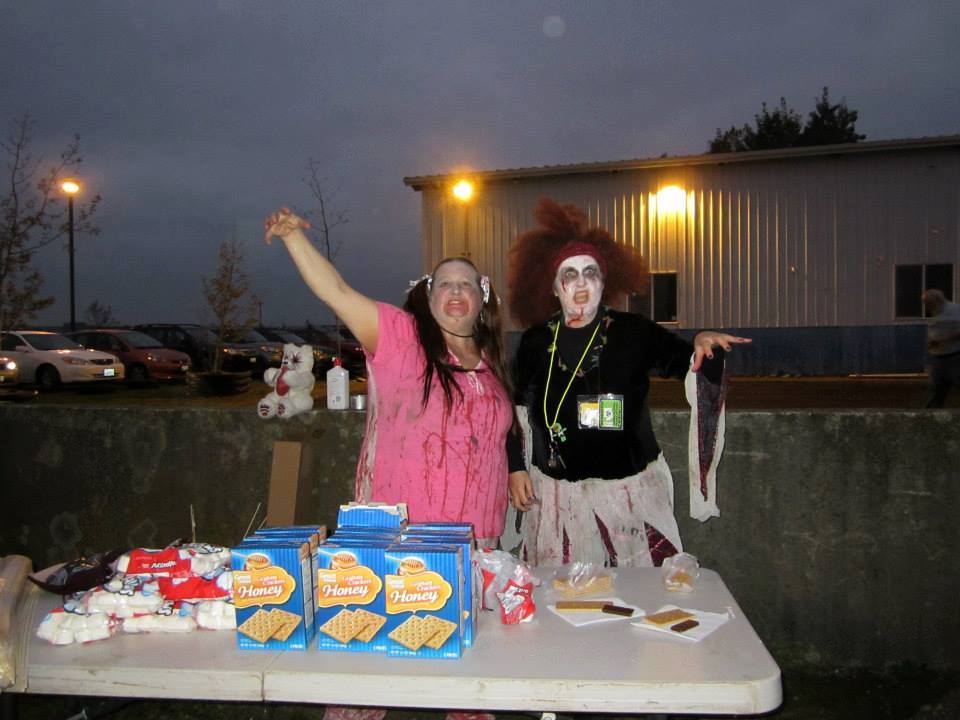
Zombies like s’mores too!

Hindsight is truly 20/20, but  in the end we were so glad that we decided to give the un-dead the benefit of the doubt. Those s’mores were delicious.

How to survive a Zombie Apocalypse, er, I mean geocaching event:

  • BYOP (Bring your own pen). With zombies on your heels, you can’t afford to waste time frantically searching for a pen. A stamp works too!
  • Don’t be afraid to say hi.  A geocaching event is a great place to make new friends. Bonus: That new friend may even save your brains from a zombie.
  • Find a carpool buddy. Zombies (and geocaches) can cover great distances. Team up, save gas, and increase your odds of survival.

The GeoZombie Run 2013 (GC497DT ) was a blast! Thanks for all the hard work in organizing this event, Half-Canadian and Scooter the Wonder Dog!


zombie-hunter-geocoin_500
You never know when you might run into a Zombie (especially if you visit Geocaching HQ). It’s time to gear up with the Special Edition Zombie Hunter Geocoin. 


Does Your Geocache Pass the D2W Test?

WeeklyMailer_111113_QualityGeocacheContainers_vFINAL_Blog

Three things can ruin any geocache. It’s true whether your geocache is a creative hide, a geocache that delivers hikers deep into the untamed wilderness or a fantastical Puzzle Cache with a big surprise twist. If your geocache is soaked through with water, the container is cracked or geocachers don’t know it’s a geocache because it’s not marked, it’s what some people call a #fail.

D2W isn’t a droid from some sci-fi movie. It’s a quick test for geocache owners. To avoid the #fail, check to make sure your geocache is D2W compliant. It should be:


  • Durable
  • Water-tight
  • Well-marked

Are you interested in a seeing a geocache that fits all three criteria? Check this out. Every once in a while at Geocaching HQ we hear the success stories of D2W geocaches. Look at the Geocaching Blog post about a geocache that was lost in a flood and then found, still intact, 30 miles away and three years later. Share your advice for passing the D2W test in comments after this article.