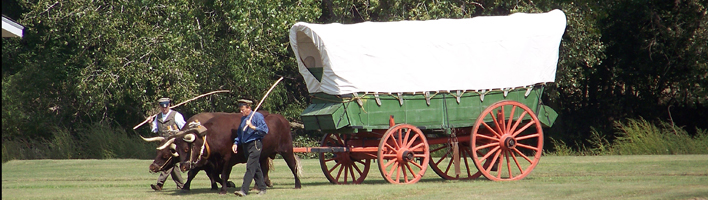
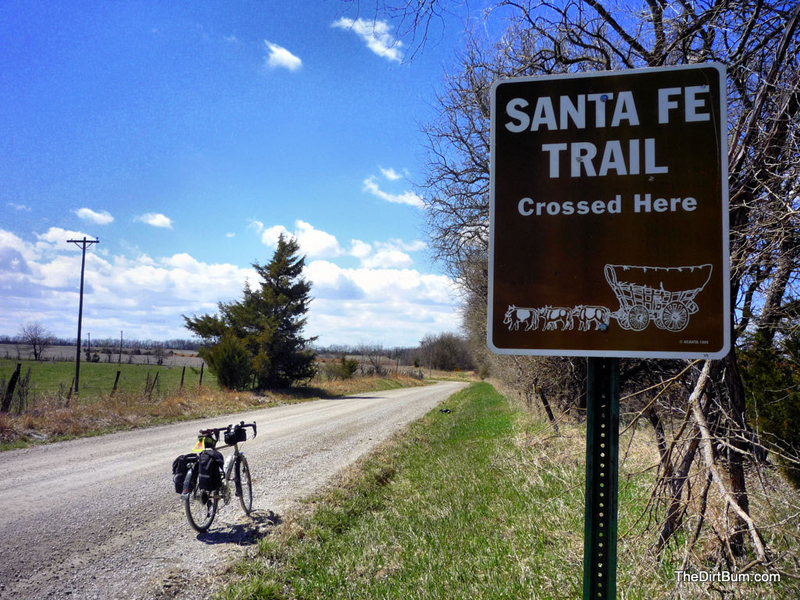
The Santa Fe National Historic Trail GeoTourprovides adventurers with the opportunity to visit and learn about one of our nation’s most iconic trails. This GeoTour consists of 73 geocaches placed at historic sites along the 900 mile-long Santa Fe Trail. With each stop, you will have the opportunity to learn about the people, places and events associated with the trail that helped shape the future of the United States. You will get to experience much of thetrail just as the early travelers did.
Geocachers who visit at least 50 of the 73 sites are eligible to receive the Santa Fe National Historic Trail Challenge Coin. To participate, visit the website, and follow the instructions to print out and complete the passport.
The first geocacher to complete the Passport said, “…thank you for your hard work in putting this together and for taking us on such a fun and interesting tour of the Santa Fe Trail.. .” Other log comments include: “We had no idea all of this was here . . . certainly enjoying the series. They are all very nicely done with lots of neat swag and they have taken us to places we would not have gone otherwise!”
The Fizzy Grid, Jasmer, and 365-Day Challenge. No, these aren’t a bubbly drink, a southern gentleman, and the answer to a 1st-grade math problem. They’re statistic goals for the seasoned geocacher! But what exactly are they? Read more to find out.
Imagine walking through a crowd of passionate adventurers and hearing “Travel Bug,” “First to Find” and even a proud, “I love geocaching, a lot, I mean, a lot.” That place exists and August is high time to explore your Mega-Event destiny. A Mega-Event is one of the ultimate gatherings for geocachers. Mega-Events bring together 500 or more geocachers in one location to celebrate our desire for exploration and discovery.
Hey, look at this bookmark list. That’s a list of Mega-Events around the world. Take your pick. You’ll even notice a world’s first. Project MUNICH2014 is the world’s first Giga-Event, an event with more than 5,000 geocachers.
If you’re stateside in August, visit Geocaching HQ in Seattle for the Geocaching Block Party. You’ll meet the team behind Geocaching. From the designers on the website, to the community team to our app developers, we’ll all be at the Geocaching Block Party hoping to meet you.
Events like the Geocaching Block Party and Project MUNICH2014 take place on August 16 for a reason: it’s International Geocaching Day. Whether you’re attending one of the many events that day or just out geocaching on August 16, you will earn a special souvenir for your geocaching profile. And you can remember joining the global geocaching community in a day of caching with this new International Geocaching Day Geocoin. Now, stop reading, and starting planning your Mega-Event adventure!
Get ready for the 2014 Geocaching International Film Festival!
This year at the Geocaching International Film Festival we received 60 entries from over 15 different countries. After the team of Geocaching HQ judges carefully reviewed each entry, we are excited to announce the 16 finalists that will be screened at the second annual GIFF on August 15 in Seattle!
Congratulations to:
Geocaching in Canada
TheBarnSwallows
Toronto, Canada
First to Find – The Woodland Hunt
CarboKnightLuke
United Kingdom
La Búsqueda (The Search)
nitesco
Ciales, Puerto Rico
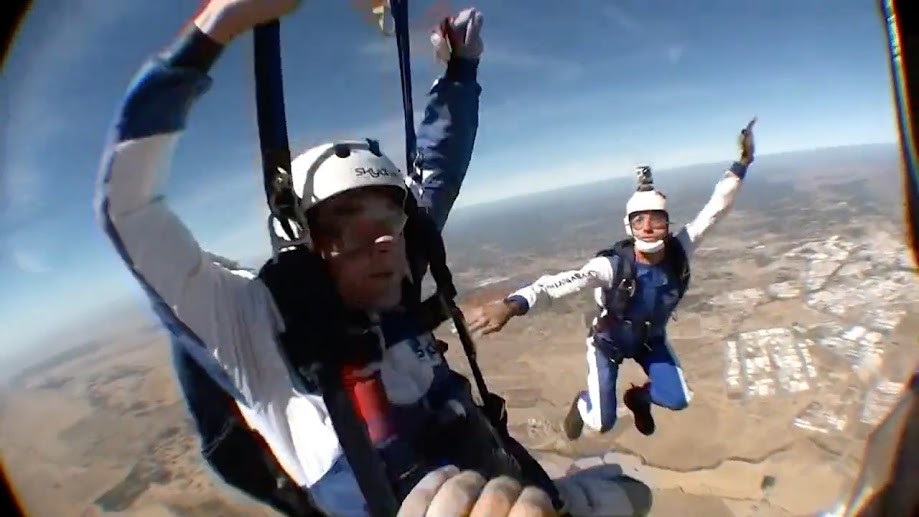
C9 H13 NO3 (Adrenaline)
Peter!
Portugal
Love Geocaching
Chiliconsushi
Lille, France
Geocaching Therapy
L’Avanguardia Team
Milan, Italy
Cacheheart
MudMen_GER
Luenen, Germany
GeoDouble
Owen15
Toronto, Canada
The Two Mountains
HurricaneJuan
Miami, Florida, USA
The Deadliest Cache
TheHunting Yoshi
Akershus, Norway
The Lonely Cacher
eldiablo11811
Bronx, New York, USA
The Ubercache
Duck Muscle
New York, New York, USA
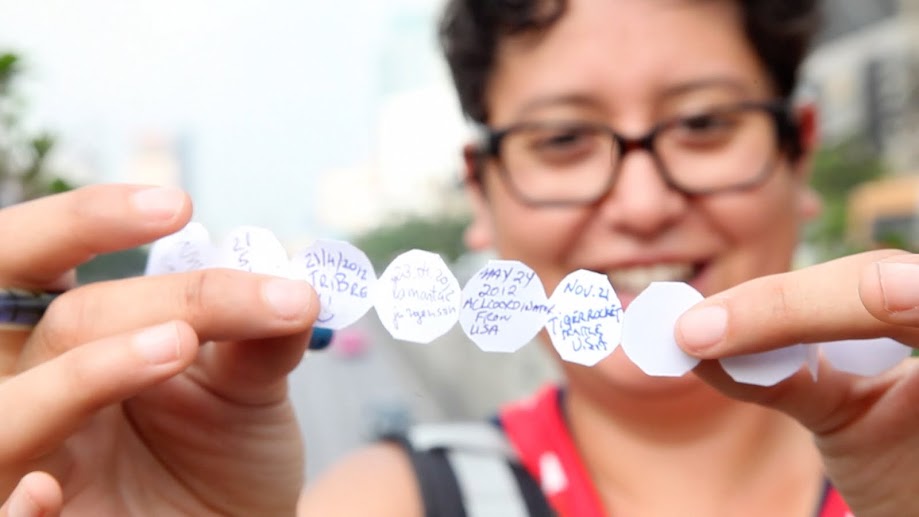
How to Geocache in Thailand
RazMcCaz
Bangkok, Thailand
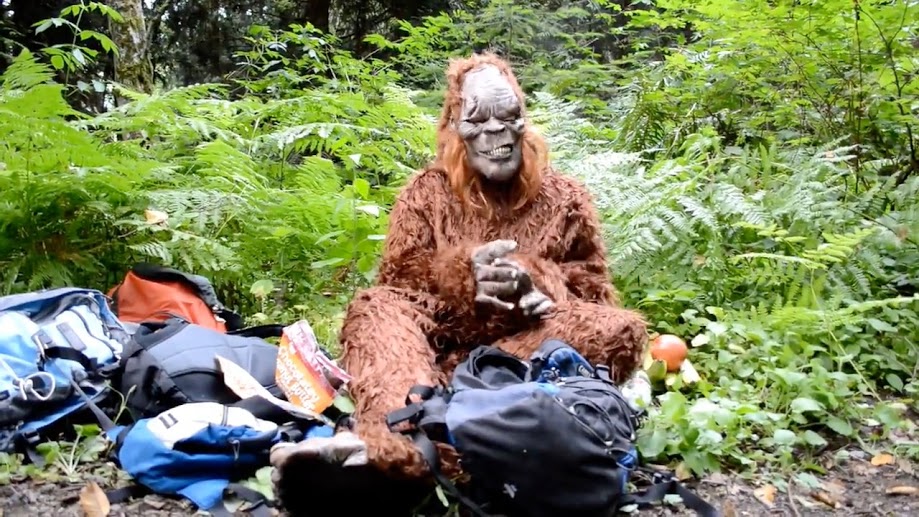
Geocaching with Sasquatch
Frisky Biscuits
Seattle, Washington, USA
Remember the Fallen
mrbrimm
Folsom, California, USA
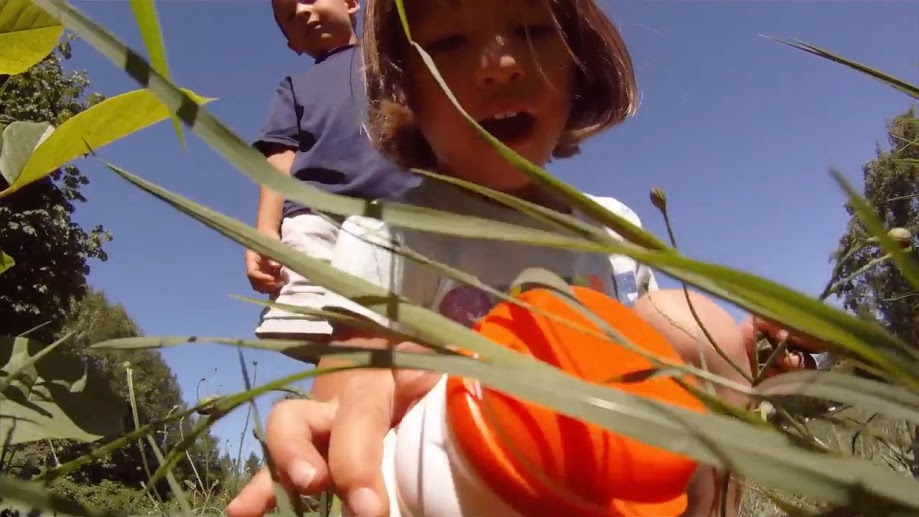
Spend a Little Time With You
HurricaneBrain
Albany, Oregon, USA
These films will screen at Gas Works Park in Seattle, WA from 8-10pm (psst… this is the night before the Geocaching Block Party). Log your Will Attend here!
After the screening we will announce the winners for the following awards:
Most Creative
Funniest Film
Most Adventurous
Most Inspirational
Best Cinematography
Audience Award (to be determined via text vote at the event!)
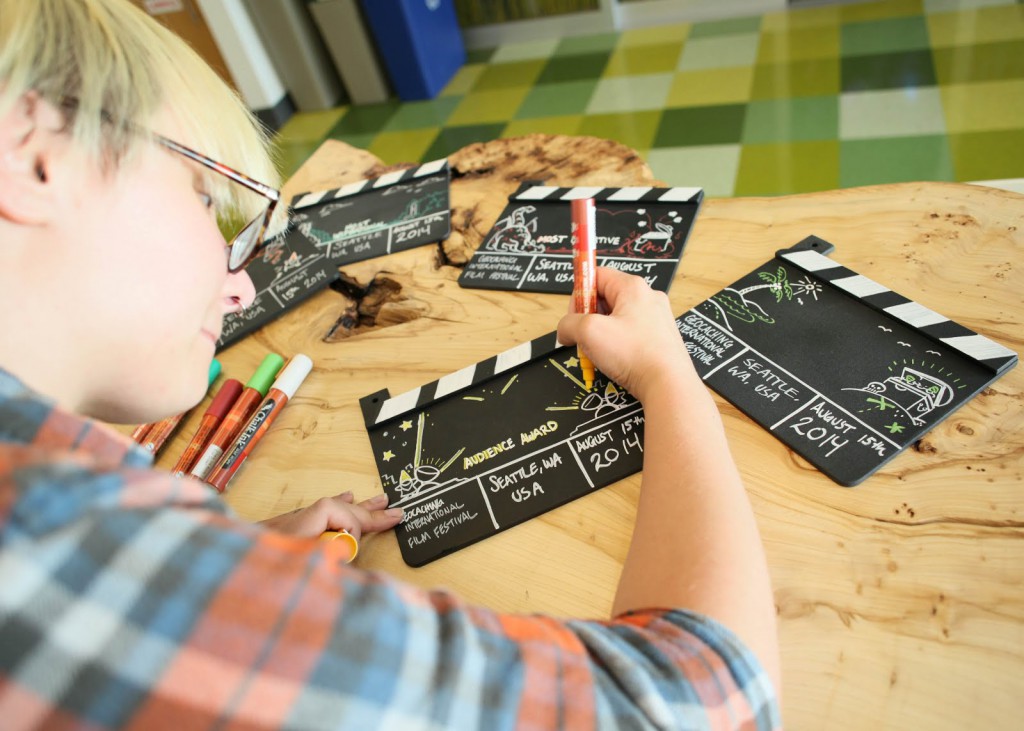
And, hey look! Here is one of our graphic designers, Roxxy, working on the awards now!
Geocaching HQ Designer Roxxy working on the awards.
So grab that picnic blanket and meet us at Gas Works Park on August 15th where you’ll find new friends, ice cream, and incredible geocaching films!
Check out these stills from some of the finalists:
How to Geocache in Thailand by RazMcCazC9 H13 NO3 (Adrenaline) by Peter!Spend a Little Time with You by HurricaneBrainGeocaching with Sasquatch by Frisky Biscuits
And one last thing:
We wanted to give a shoutout to everyone who submitted films this year! The judging was incredibly hard and we were impressed with the amount of amazing work we saw. Thanks again for submitting your films and we hope to see more from you next year.