Est-ce que vous réalisez que le géocaching a fêté ses 20 ans cette semaine ?
Nous non plus ! Le géocaching a fait un sacré bout de chemin depuis que la première géocache a été placée le 3 mai 2000. Voici quelques faits amusants ainsi qu’une chronologie de l’histoire des 20 dernières années du géocaching :
- 2 mai 2000 : ou comme les géocacheurs l’appellent, le Blue Switch Day – Jour du Bouton Bleu. C’est en fait le jour où le gouvernement américain a retiré l’accessibilité sélective sur les récepteurs GPS civils, améliorant ainsi la précision de la technologie GPS par dix.
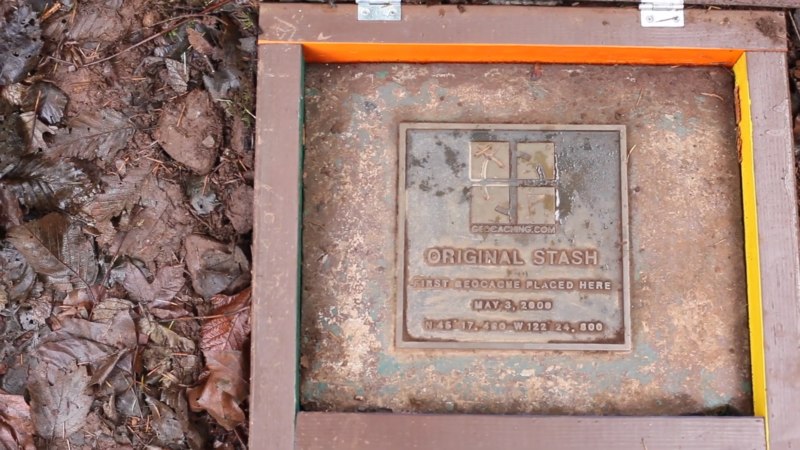
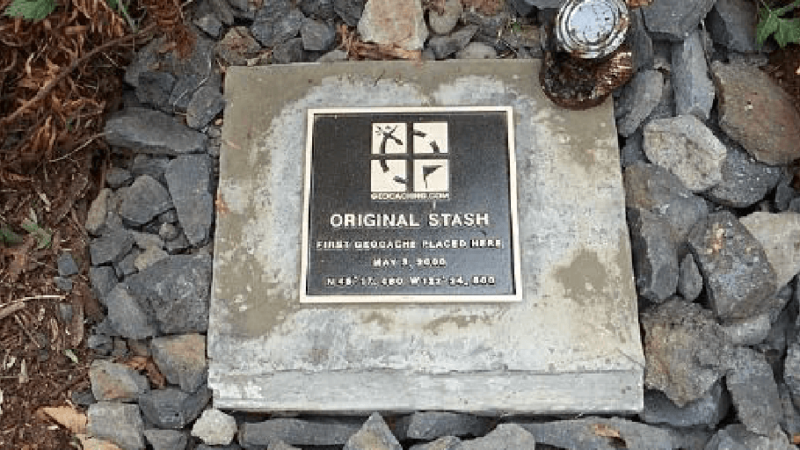
- 3 mai 2000 : la première “géocache” est placée. Cela dit, la première géocache ne portait pas du tout le nom de géocache, mais une “planque GPS.” Bien que la géocache originale n’est plus en place, il y a une plaque en lieu et place ainsi qu’un contenant physique avec un logbook que les visiteurs peuvent signer. Visionnez la vidéo des Lackeys visitant la plaque !
- 2 septembre 2000 : Lancement de Geocaching.com. Le site dénombre 75 géocaches dans le monde entier.
- 30 août 2001 : le premier Travel Bug® est lancé par le co-fondateur de Geocaching.com, Jeremy. TB1 est un canard en plastique appelé “Deadly Duck: Envy.“
- 30 septembre 2001 : Moun10Bike place le deuxième géocoin dans une cache près du détroit de Deception Pass, dans le Washington. Il a gardé le premier géocoin dans sa collection personnelle.
- 27 mai 2006 : le premier Mega-Event est GeoWoodstock 4 (GCRRC6), au Texas.
- 31 décembre 2007 : Geocaching.com atteint 500 000 caches actives.
- 8 mars 2010 : Geocaching.com atteint 1 million de géocaches actives !
- 4 juillet 2010 : le premier souvenir est créé et décerné lors du Mega-Event Geowoodstock VIII.
- 26 février 2013 : 2 millions de géocaches actives sont référencées sur Geocaching.com à travers le monde ! Voir l’infographie.
- 13 septembre 2013 : le premier Travel Bug atteint l’espace dans la Station Spatiale Internationale.
- 17 août 2013 : le premier GIFF event a lieu lors de la Geocaching Block Party (GC3X684).
- 16 août 2014 : le premier Giga-Event est Project MUNICH2014 (GC4K089) en Allemagne
- 18 avril 2017 : le Géocaching atteint les 3 millions de géocaches actives dans le monde ! Voir l’infographie.
- 3 mai 2020 : il y a actuellement 3,1 millions de caches référéncées sur Geocaching.com et elles sont dissimulées dans presque tous les pays du monde !
- 3 mai 2025 : la première géocache est placée sur mars pour commémorer le 25ème anniversaire du géocaching.
Bon ok, ce n’est probablement pas vrai — mais pourquoi pas ! Comment pensez-vous que le géocaching va évoluer dans les 5, 15, 25 prochaines années ? Partagez vos idées dans les commentaires ci-dessous !