The World Wide Web of Spiders

Guest blog written by avid geocacher (and dedicated nurse) Kelley Piekarek*. 

A Floridian geocacher was reaching for a cache when she felt something bite her arm. Thinking nothing of it, she signed the log, replaced the cache, and moved on. Shortly thereafter her arm became red, swollen, and felt hot to the touch. The area surrounding the bite began to form what appeared to be an infection; her arm became very painful and she was running a high fever.

She went to the emergency room where it was confirmed that she had been bitten by a brown recluse spider. The area was surgically cleaned, she was put on antibiotics, and is now on the road to a full recovery.

Most spiders are absolutely harmless to humans. Of the 4,000+ species of spiders found in North America, only two are dangerous to humans—the brown recluse and the black widow

Geocachers are fortunate to enjoy the wonders of nature. But as we all know, nature can be a bit scary sometimes. If you are informed and aware of your environment, you can avoid spiders bites and know what action to take if you’re bitten.

Brown Recluse
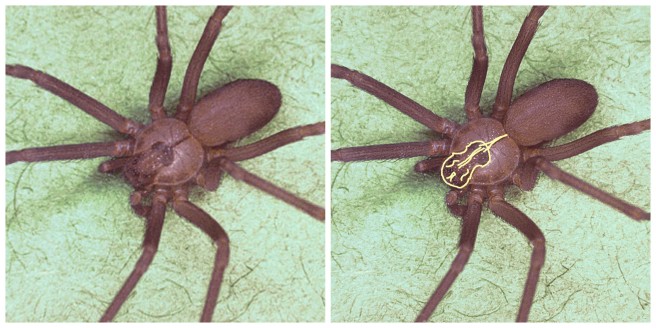
The brown recluse can be identified by the violin-shaped spot behind its eyes.

The brown recluse is ¼ to ½ inch long, and can be identified by the violin-shaped spot behind its eyes. They are native to North America and live predominantly in the Midwestern United States. 

Brown Recluse Map


Black Widow

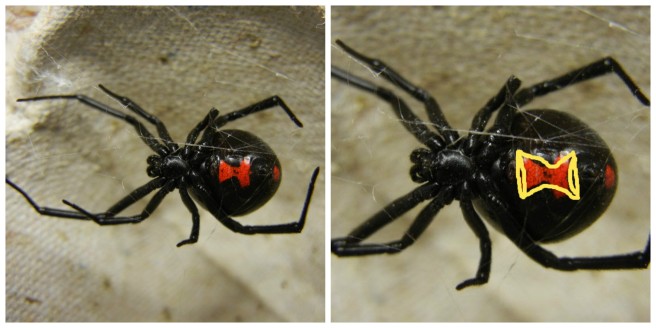
The black widow can be identified by a red, yellow, or white hourglass shape on their lower abdomen.

The black widow can be identified by a red, yellow, or white hourglass shape on their lower abdomen. There are many species of widow spiders found worldwide, but the North American variety is about ½ inch long.

Black Widow Distribution


Where do spiders like to hide?

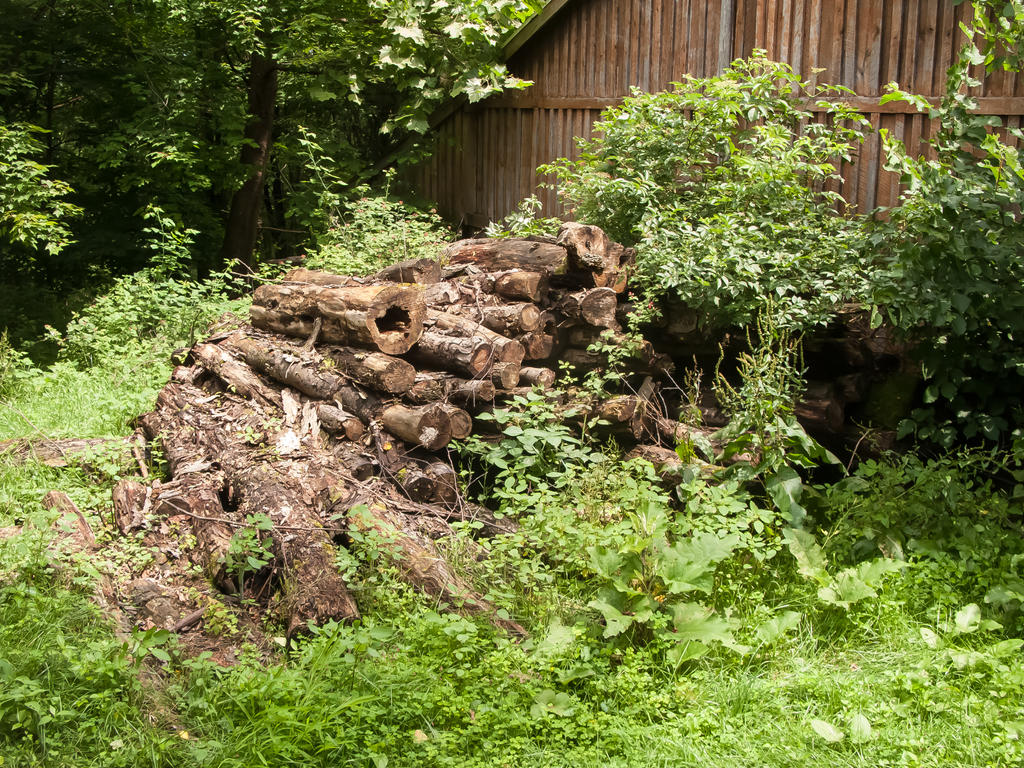
Spiders like to hide in wood piles

Spiders like to hide in wood piles

Both spiders are found in similar locations. Inside, they prefer to hide in small, dark locations such as closets, cellars, garages, vents, stored boxes, and within the cracks and corners of walls. Outside they prefer to live like a geocache—underneath rocks, in wood piles, and inside hollow tree trunks.


What do spider bites look and feel like?
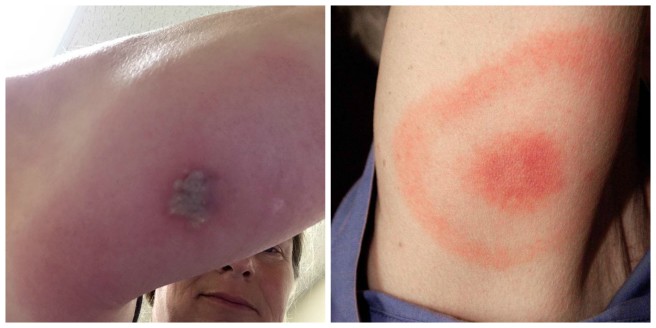
The bites from brown recluse (left) and black widow spiders (right)

The bite of the brown recluse is usually painless and goes unnoticed, but it may feel like a bee sting or there may be a burning sensation. Symptoms usually develop in 2-8 hours starting with a small white blister at the site of the bite.

Many bites will cause a small red mark that will heal without problems or scarring. However redness, blistering, an open sore, and a black area may develop and take months to fully heal. Other symptoms include severe pain at the site of the bite, severe itching, nausea, vomiting, fever, and/or muscle pain.

The bite of the black widow is similar to the brown recluse, and initially may look like two tiny Dracula fang marks. It feels like a pinprick, but also may not be felt at all. There may be slight swelling, redness and a spot that forms a target shape. Fifteen to sixty minutes later a dull muscle pain will spread from the bite area to the entire body. If the bite is on the upper body, the pain will be in the chest. If the bite is in the lower body, the pain will be in the abdomen.


What to do if you’ve been bit

Seek medical help if you think you've been bit by a brown recluse or black widow spider
Seek medical help if you think you’ve been bit by a brown recluse or black widow spider

Most spiders bites are non-venomous and require no specific treatment, but if you suspect you have been bitten by a brown recluse or black widow:

  • Seek medical attention right away
  • Remain calm to keep your circulation relaxed
  • Apply a cold pack to the area to relieve swelling and discomfort
  • Do not apply a tourniquet
  • If possible, bring the spider with you to the doctor’s office or ER for identification


How to avoid spiders

You’ve probably heard that spiders are more afraid of you than you are of them and that’s true. They’d prefer to avoid contact with humans all together, but they will defend their space. If you live in an area where co-existing with brown recluse and black widow spiders are part of the landscape, take some precautions:

Outdoors

  • Watch for spider webs, which are the most obvious signs a spider is nearby
  • Wear gloves and long-sleeved shirts, long pants, and sturdy shoes
  • Move rocks and debris with a stick when looking for your cache to protect your hands

At Home:

  • Keep your home clean and clutter free
  • Bits of food can attract bugs which will in turn attract spiders, so vacuum and wipe down surfaces often
  • Store your things in sealed plastic storage boxes or plastic bags with the edges taped shut
  • When unpacking stored items, shake items out thoroughly before use
  • Keep the sides of your home free of plants and debris
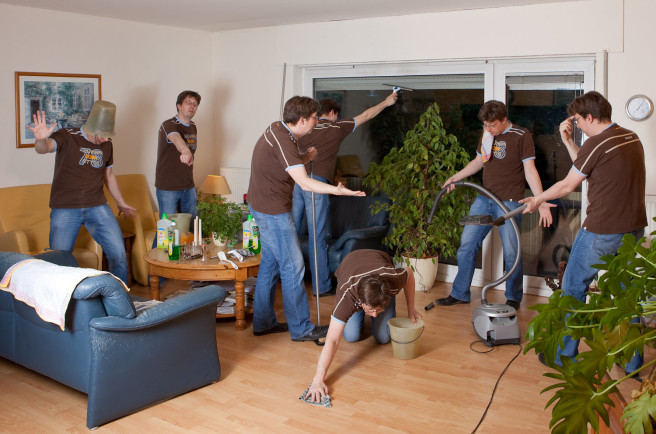
Keep your house clean and clutter free to avoid spiders

Stay safe out there, my friends. Be prepared and know what to do should a spider bite you, and keep on cachin’! 

How do you stay safe while enjoying your favorite hobby?


*If the name Kelley Piekarek sounds familiar, it may be from this story that made national geocaching news in February 2015.
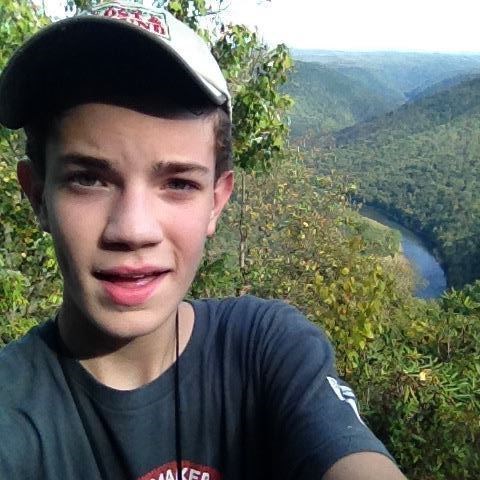
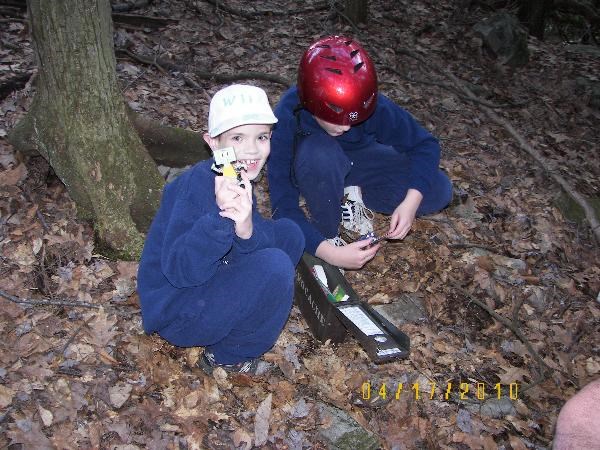
Advantages (and disadvantages) of being a geo-teen

Guest blog written by Mark Webb, aka Troopbiz

Geocaching in September, 2015
Troopbiz Geocaching in September, 2015

                                                                                                                                       
Introduction

My name is Mark Webb. I’m fourteen years old, live in West Virginia, USA, geocache as Troopbiz, and have over 1,800 finds. I love geocaching because I get to explore new places around my hometown that I’ve never been to and it allows me to get outside and explore nature. 
 

Getting Into Geocaching                                                                                                     

The early days of geocaching

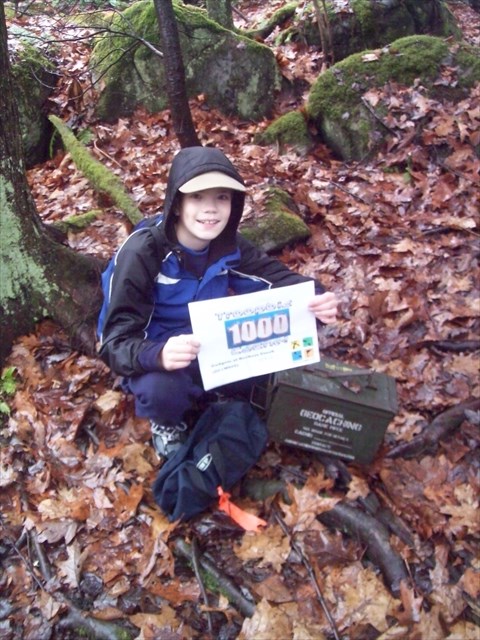
I first started geocaching on July 1, 2009 at the age of 8. My Mom came across a link to Geocaching.com while looking at the local parks and recreation site, and it snowballed from there.  I found my first geocache, Black and Gold (GCRET0) two days later. I was hooked. What started out as a family activity to get outside and explore new areas, turned into a new loved obsession. Within that first year, I found over 100 and was eager to find 100 more. Three years later, I found my 1,000th geocache, Gadgets at Deckers Creek. (GC1M90Y).

1000


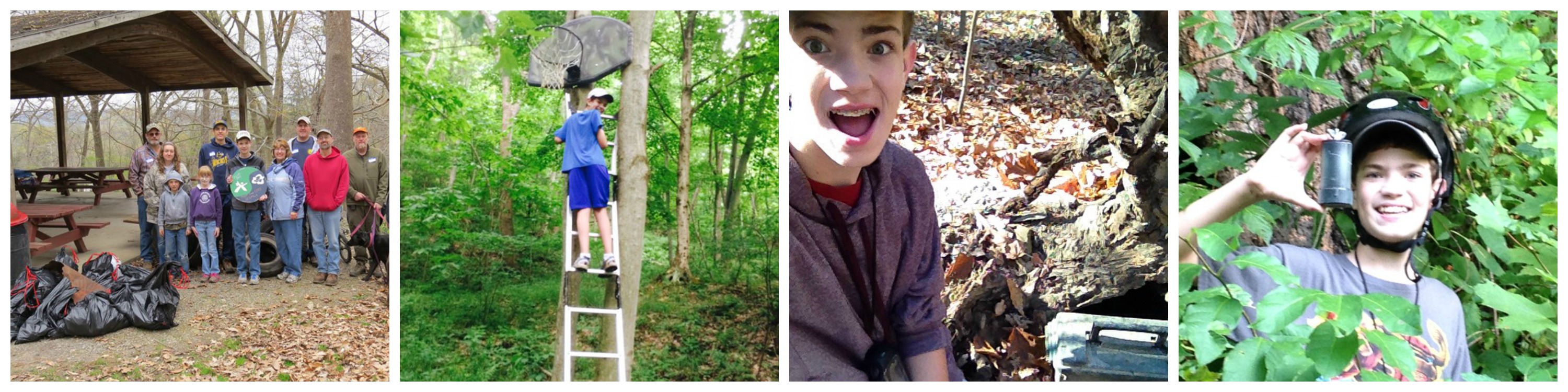
Shortly thereafter, I joined the Boy Scouts and quickly earned the Geocaching merit badge. I have educated many Boy Scout troops as well as a 4-H club in my community about geocaching by going caching with them around a local park.


Quality Over Quantity

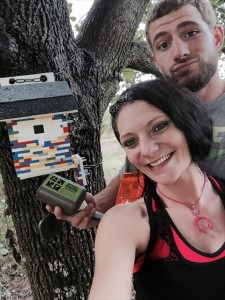
Troopbiz's geocache, Brick By Brick (GC5JB1H), is built completely out of LEGOs!
Geocachers find Troopbiz’s cache, Brick By Brick (GC5JB1H), built completely out of LEGOs!

Although it can be fun to get wrapped up in the numbers, what really matters in the find behind the numbers. What makes geocaching fun is when someone puts a lot of thought and planning into a geocache.


Therefore, I like to do the same with my hides. My first geocache, Up, Down, & Up Again! (GC29NWE) currently has 242 finds and 51 favorite points. I hid a cache called Brick By Brick (GC5JB1H) made completely out of LEGOs. I also have a Puzzle Cache called Cars Cache (GC5AK6Y) based off the movie Cars. I enjoy Puzzle Caches the most because they offer an initial thrill of solving the puzzle, then another after you find the cache. I have also made friends with several other creative geocache hiders in my area such as arealwhit and killlerbee, and we go caching together on a regular basis.


It’s Not Always Easy Being Young

Being a young geocacher does have its advantages, like thinking differently when looking for a cache or climbing a hill with ease. But there are several disadvantages. The hardest thing about being a young geocacher is not having my driver’s license yet. My family and friends assist me on most of my caching adventures. It takes a lot of planning (and convincing), but they usually let me grab “just one more” cache.

CITOs, T5 tree cache,
Hosting CITOs, earning T5s, cachin’, and getting the FTF – all in a day’s work for Mark


It is also very difficult to complete challenges like the
Fizzy Grid or the 365/Every Day Challenge with family members who don’t have the same drive as me.  Another disadvantage of being a young geocacher is not understanding older references. Many Puzzle Caches in my area revolve around older movies, tv shows, and songs. Although I don’t always understand what references a geocache is making, Google usually does!


The Future of Geocaching

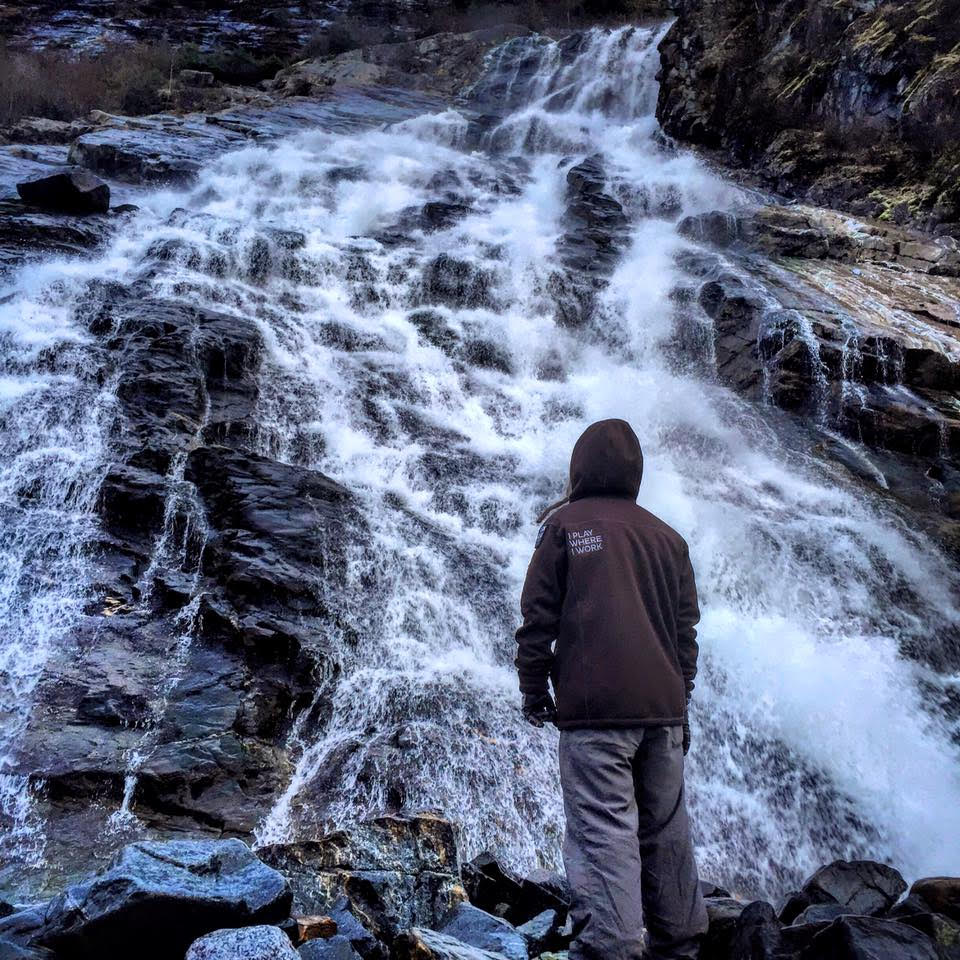
Troopbiz Grotto falls
What adventures await us in 2016?


I’m excited to see what the future of geocaching has in store for 2016. One huge accomplishment I would like to achieve is making my 2,000th find. I would also like to continue working on my Fizzy and Every Day grids. Although I don’t think I will complete them any time soon, every block filled is another step closer.

I’m also looking forward to events in 2016, such as attending my 5th Midwest Geobash. In general, I would like to see more teens get into geocaching as it is a good way to get away from reality and explore new areas in your hometown. I can’t wait to see what the new year holds and what geocaching adventures await!


We love meeting members of the geocaching community that inspire us. Have you ever geocached with someone from a different generation, and learned a thing or two? If you’re a younger geocacher, what tricks of the trade have you learned from more “mature” geocachers? Tell us in the comments below!

Geocaching along El Camino de Santiago, Spain

By Jenn Seva

Geocaching Along El Camino de Santiago, Spain

Have you ever wanted to go on a pilgrimage?

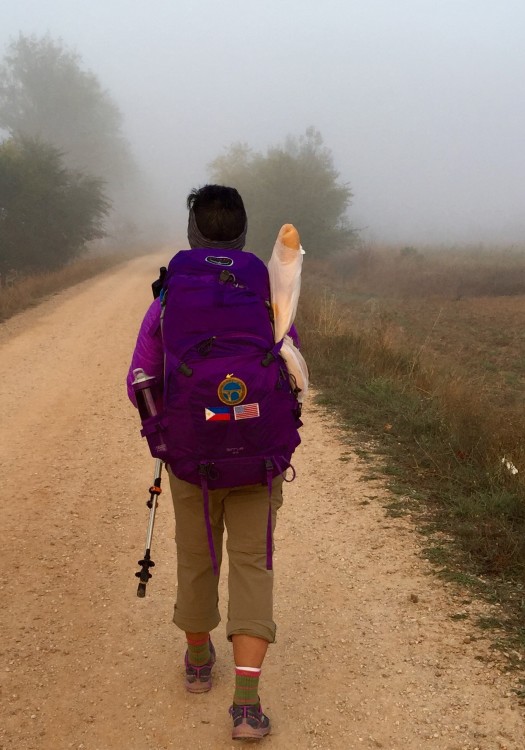
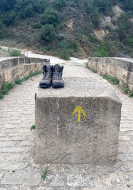
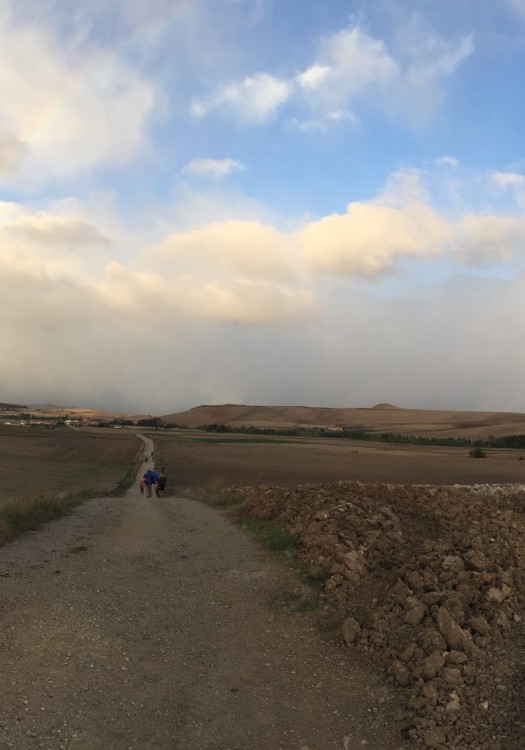
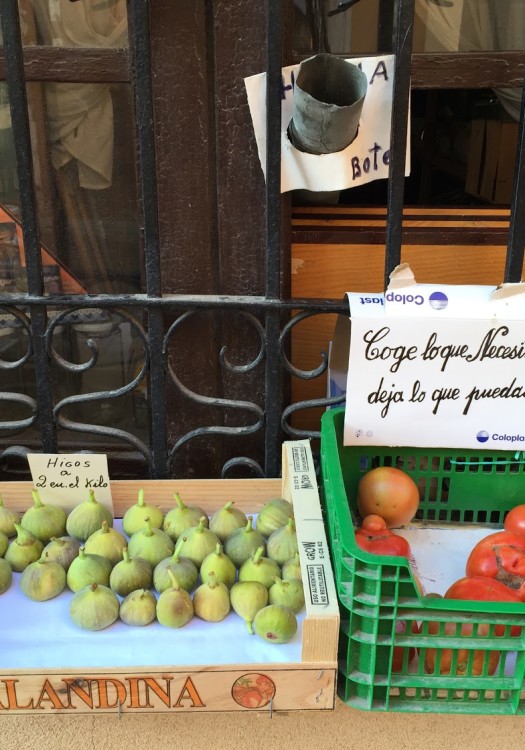
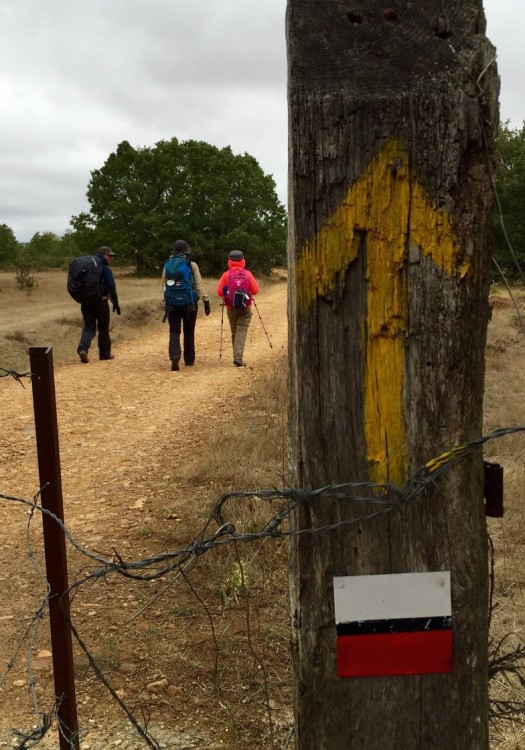
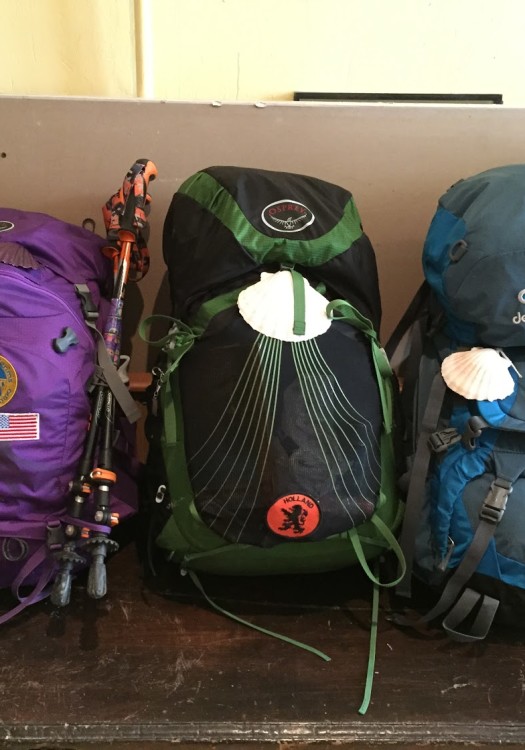
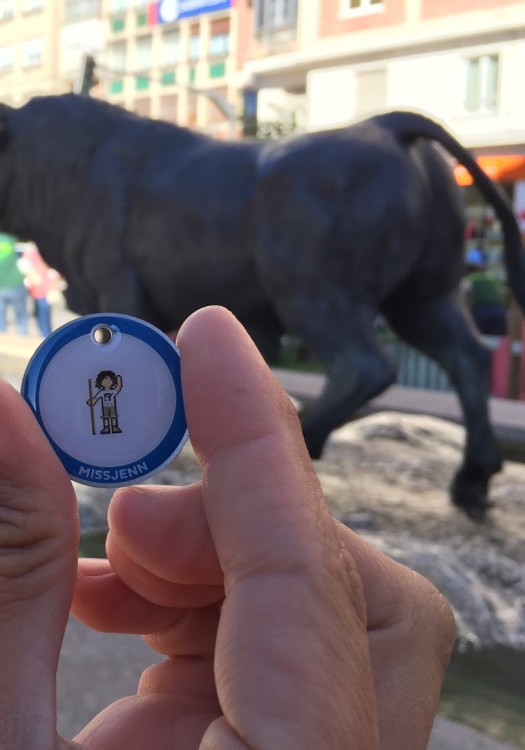
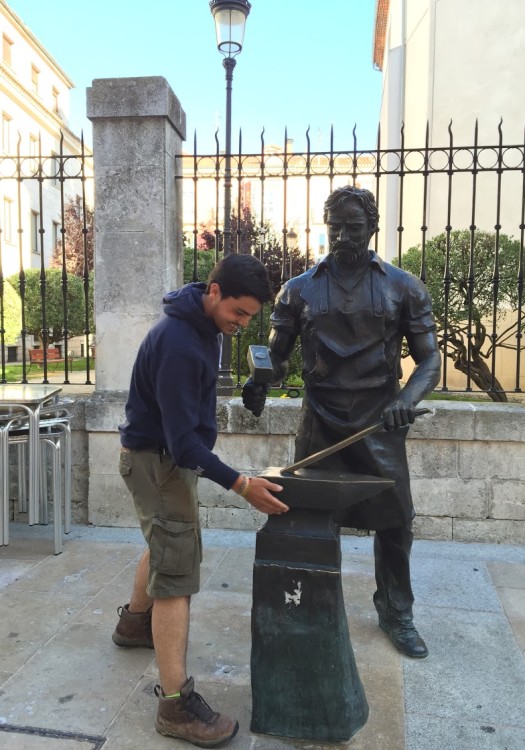
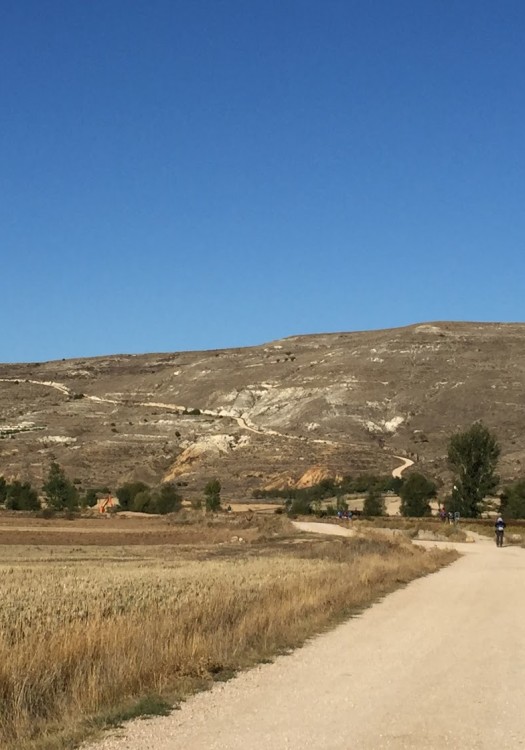
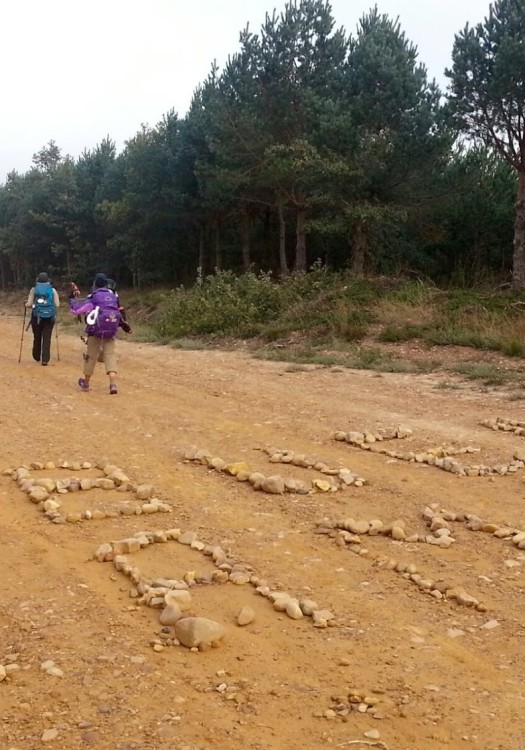
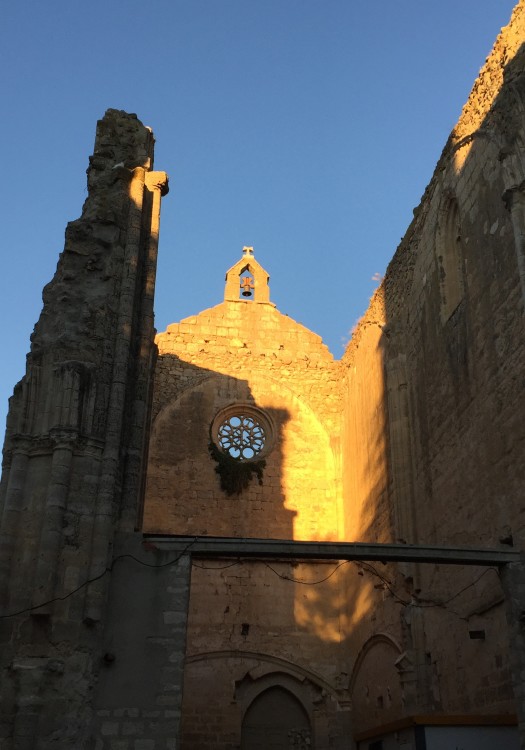
Just as summer turned into autumn, I was fortunate enough to walk across Spain. Literally. Those 1,043 km took me over 3 mountains, flat through 7 days of the exquisite meseta (plateau), and across more than a thousand years of Spanish Catholic history. Those kilometers also brought me conveniently near several remarkable geocaches. And bonus: two new country souvenirs! This pilgrimage is called El Camino de Santiago.

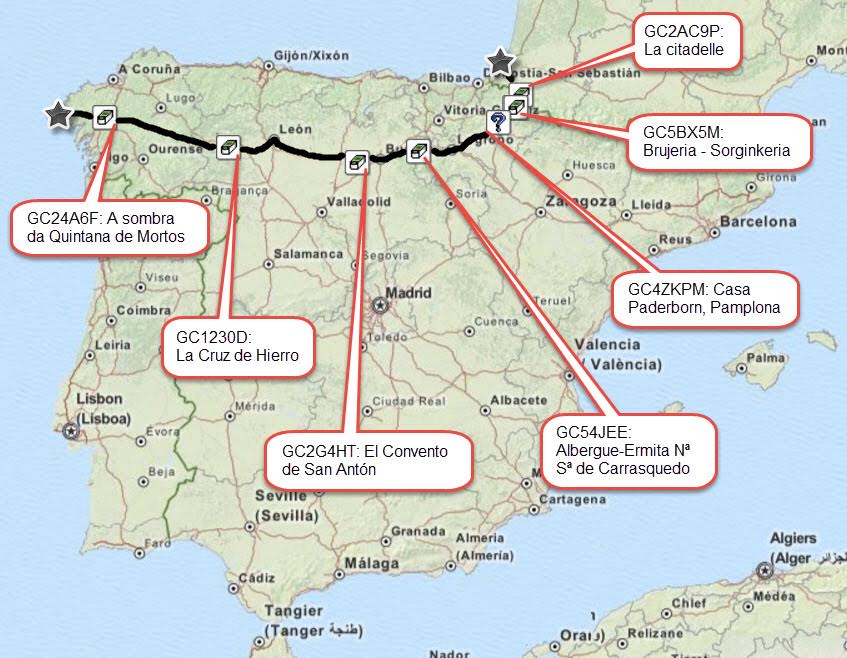
I began my 38-day walk in the misty French town of Saint-Jean-Pied-de-Port, nestled in the foothills of the Pyrenees. Although I had gotten a late start that morning, I still walked against the pilgrim traffic towards the cache at La citadelle to earn my France souvenir: magnifique! Later that day, I walked from France into Spain, over the Pyrenees.

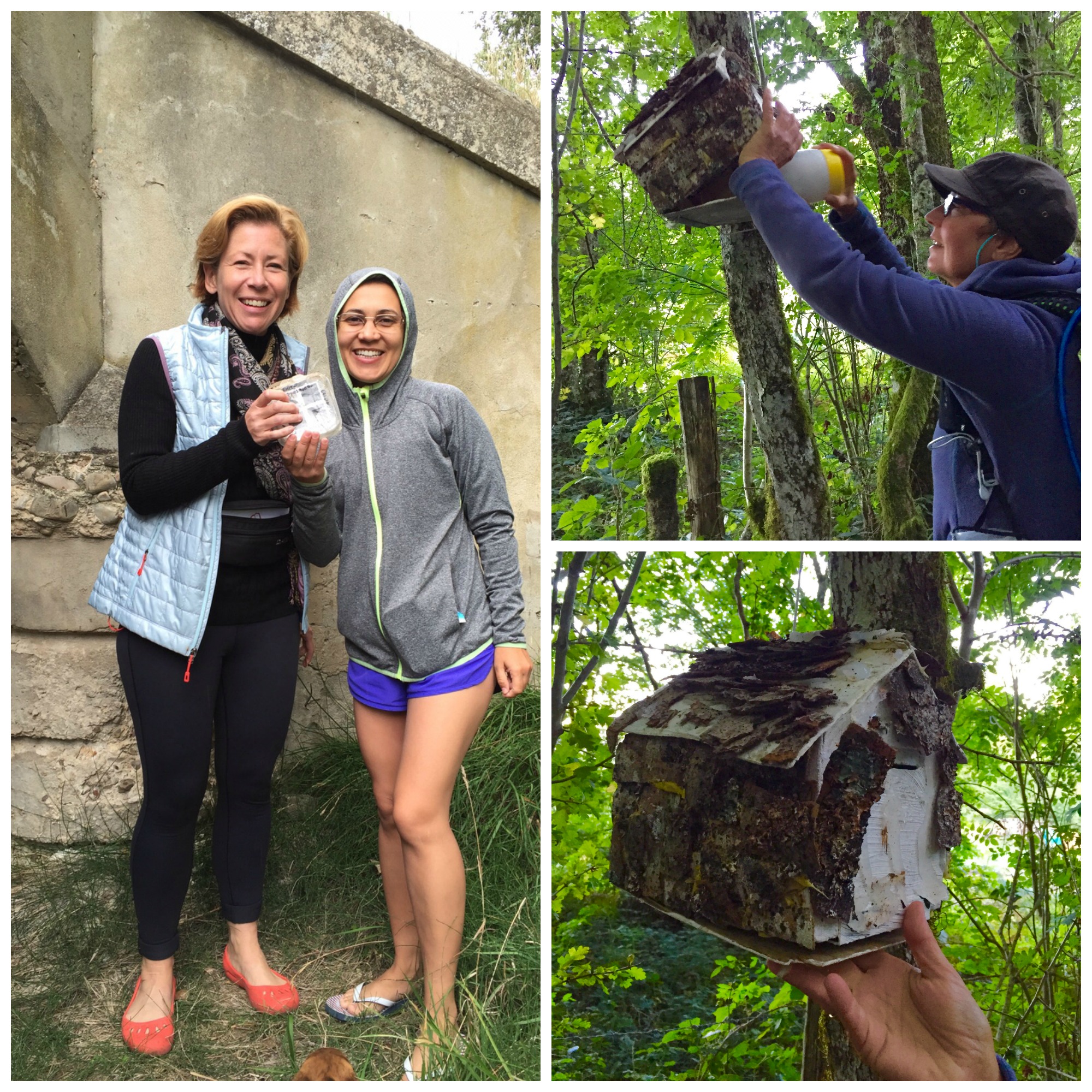
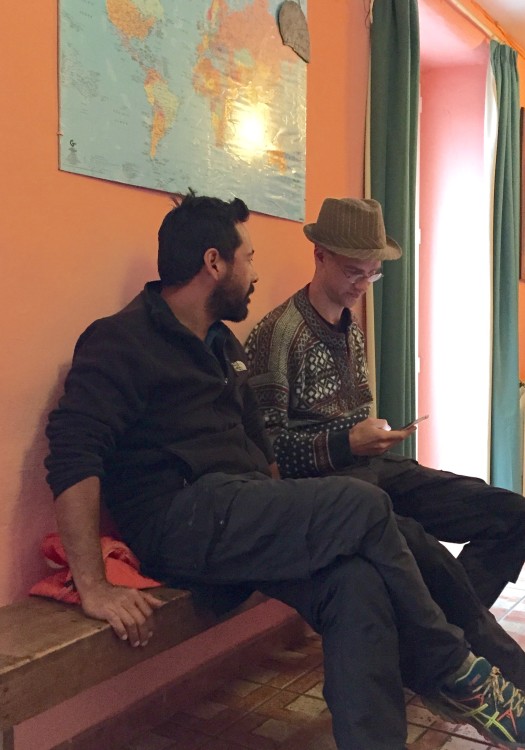
Clockwise from left: Karin and Milene find a cache together, Amber finds her 1st geocache.
Clockwise from left: Karin and Milene find a cache together. Amber finds her 1st geocache.

On the second day, my new friend Amber asked me what this game is all about. The best way to explain geocaching is to show it, of course! At first, we DNF’d at Caminante No Hay Camino… which is ironic given what that cache title means. We found success at Brujeria – Sorginkeriamaravilloso! – and only because this Dutch woman also speaks Spanish and helped me understand that the hint (pío, pío) is about birds: something not immediately obvious to a non-native Spanish speaker like me. Amber’s first find had a very creative container, and we secured that additional country souvenir.

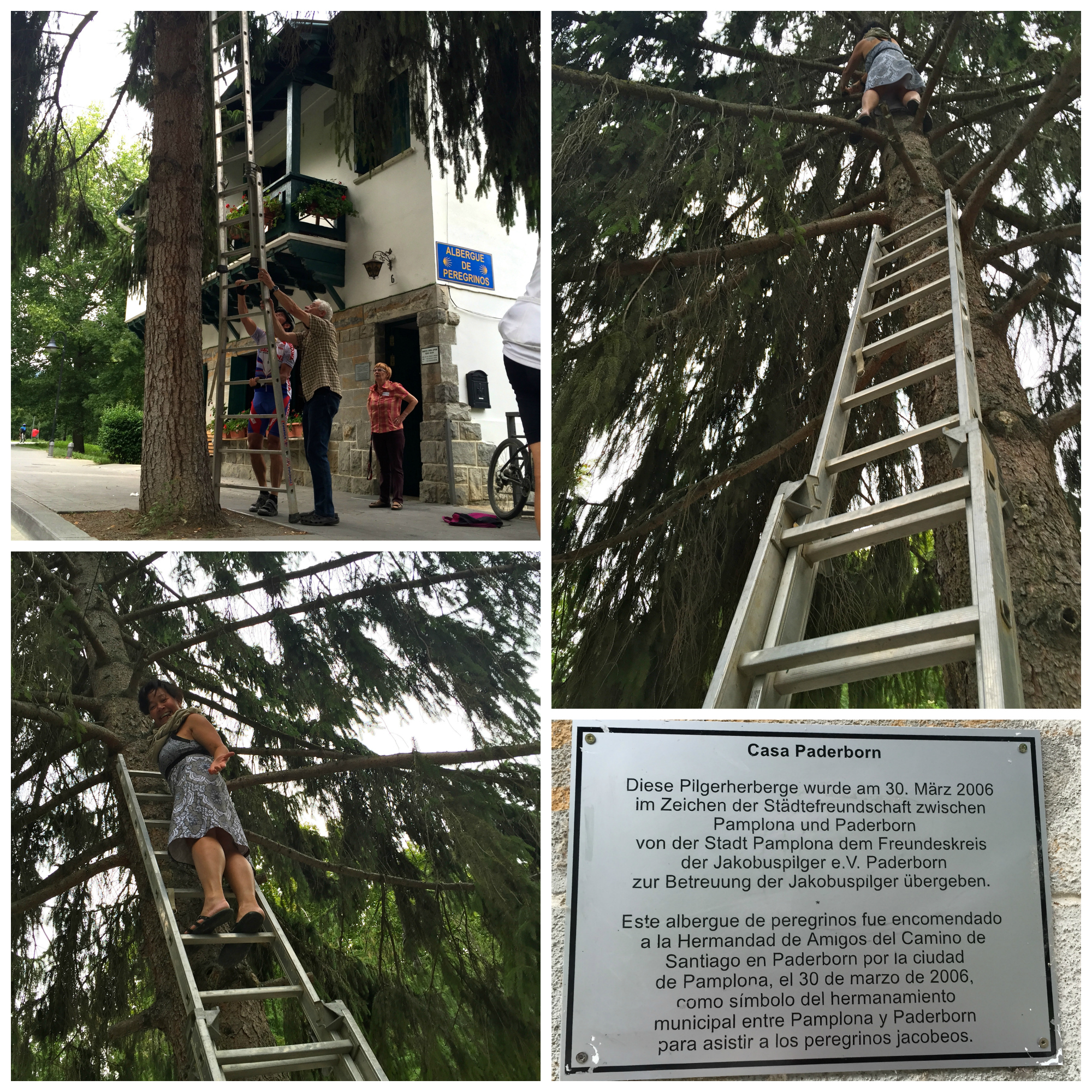
Walking farther west, we stumbled upon a German-style T5 experience at Casa Paderborn, Pamplona: märchenhaft! I estimated the cache height to be some 21 feet or so off the ground, well beyond the 14-foot ladder I borrowed (a ’14-foot ladder’ is probably called something different in a place where they don’t measure things in feet.) My pilgrim friends and 10 cyclists who happened to be resting below the tree did not understand what was happening. Even I was pretty amazed that WAY UP THERE is where my day went, in a dress, no less. They asked me from the ground: ¿Qué encontraste en el contenidor? What did I find in that container? Adventure and a great story to tell, that’s what.

The Casa Paderborn, Pamplona cache brought me additional joy because I had helped to develop the Paderborner Land GeoTour in Germany. This pilgrim hostel and this geocache both represent a sisterhood between the city where I was and a city that hosts a GeoTour! My worlds were coming together in delightful, mathematically unlikely ways.

Camino2
German-style T5 experience at Casa Paderborn, Pamplona.

By the time I got to La Cruz de Hierro, I was in my 4th week of walking. One of the most significant and powerful moments along the pilgrimage route, I had every intention of finding this geocache as a personal milestone. As it turned out, the significance and power of the moment itself caused me to forget about all about geocaching; instead my thoughts went to so many other far-off places. I recorded that as a memorable DNF since I had intended to find it and once within a few meters of the cache, I simply forgot to look. Has that ever happened to you?

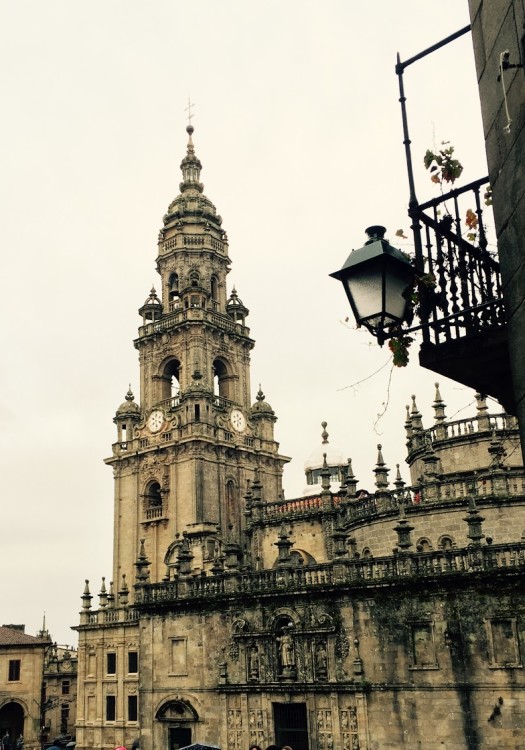
Right outside the cathedral at Santiago de Compostela is a shadowy geocache called A sombra da Quintana de Mortos. Finding it at night when the lights are on makes for the best experience: architectural factors at the location combine, creating the magical illusion of a pilgrim forever tethered to the cathedral walls. It’s quite an improbable combination: the bumps on the cathedral walls were built independently of the simple pillar that creates the shadow. Further, the electric lights were added hundreds of years later. This is not something included in a typical guidebook. This is something I found only because of geocaching.

Camino3
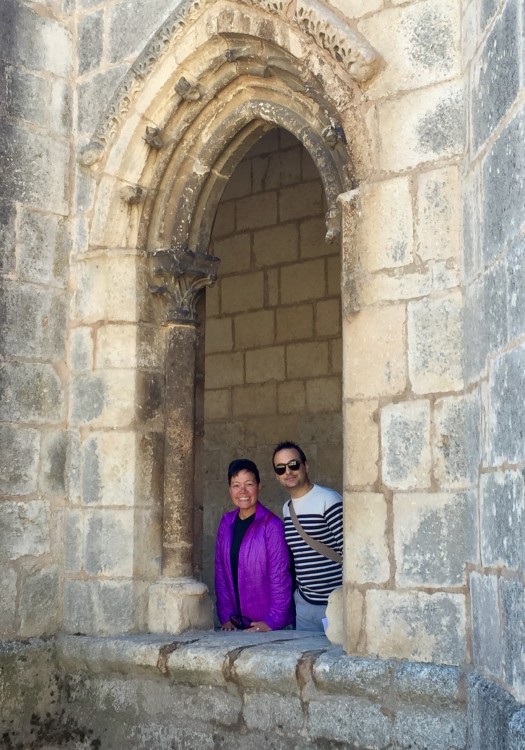
Clockwise from left: Sombra with Hans photo by Suzanne, MissJenn walking to the Cruz de Ferro, Walking the Camino, At the finish.

Signing each of those geocache logs reminded me how geocachers have more than just geocaching in common. My stories intertwined with other pilgrims’ narratives as they each made their way one step at a time towards the city of Santiago de Compostela just like I did, but differently than I did. For example, the logs show that Dauby had started in Prague while I started walking just over Spain’s border with France. I read that the Canadian 3 Bearss were pawing through caches, always just a few days ahead of me. I actually met Maltese superprizz in person in Burgos (at a cache owned by my friend and Community Volunteer Stitch81) and we must have had very different paces since we didn’t run into one another again. Stitch81 himself had walked his own Camino many years ago, and he gave me sound advice and helped me with critical provisions.

It will take me ages to process all my many stories about this awe-inspiring, multi-faceted experience called El Camino de Santiago. At least I have now told you about some of the caches that helped make it an even better adventure.

What is the longest distance you have walked while geocaching?

Geocaching with Love in Alaska

Written by Annie Love, a Geocaching HQ Employee

This article was originally published in the Portuguese “GeoMagazine.”

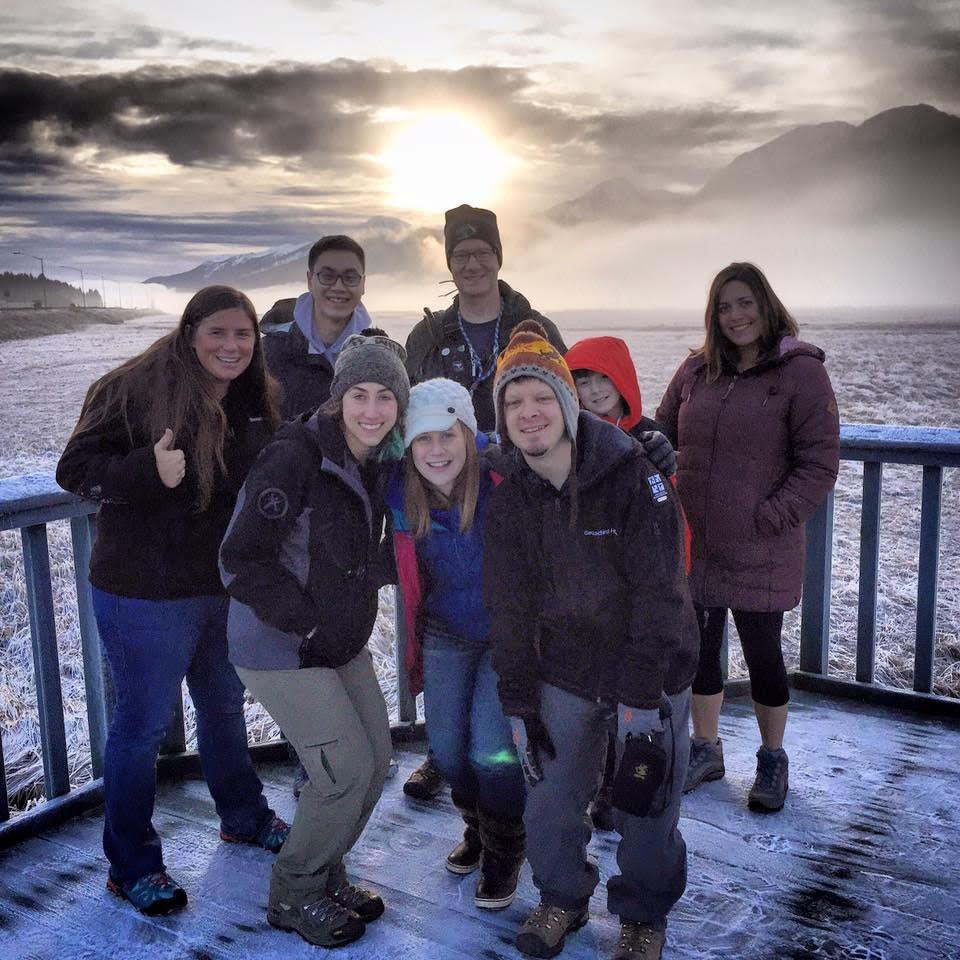
Not many people would choose to visit Alaska in December. But that didn’t stop a group of nine Geocaching HQ Lackeys and friends from spending 24 hours visiting the capital city of Juneau. I feel fortunate to work with such amazing people who don’t think twice about spending their own money and giving up their weekend for a fun geocaching adventure.

Cute group

With a cheap flight and our sense of adventure, we took off early on a Saturday morning for a 24-hour geocaching journey. The only way to reach Juneau is by plane or boat, as there are no roads that lead to this isolated part of Southern Alaska. Our plane descended into Juneau at sunrise treating us to a spectacular view of seemingly endless white capped mountains.

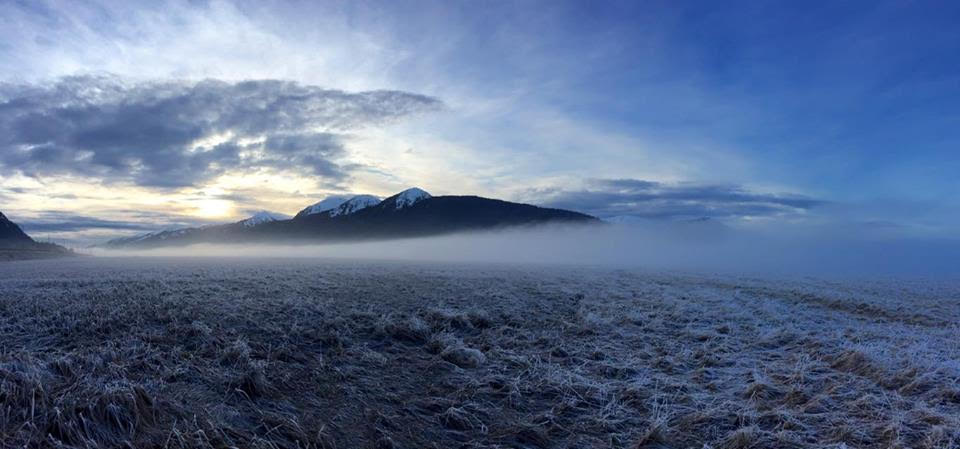
Moody Mountain

Upon arrival we picked up our two SUVs and took off on our adventure. Within minutes we were stopping at our first geocache. The setting: a lifting fog on a beautiful wildlife refuge surrounded by mountains. We couldn’t have asked for a better introduction to Alaska. After a tasty breakfast, we set off for one of Juneau’s top tourist attractions: Mendenhall Glacier (a 13 mile long river of ice). This place is unreal. If you ever get a chance to travel to Alaska it’s well worth the visit. It’s also a great place to log several EarthCaches and learn about the interesting geology and history of the area.

Posing like a band cover

Local geocacher Avroair (Mark Clemens) was hosting an event at the Visitor’s Center to celebrate his accomplishment of finding caches in all 50 states. Our group of nine met up with a handful of local geocachers and enjoyed talking about our hobby while taking in the amazing view of the glacier.

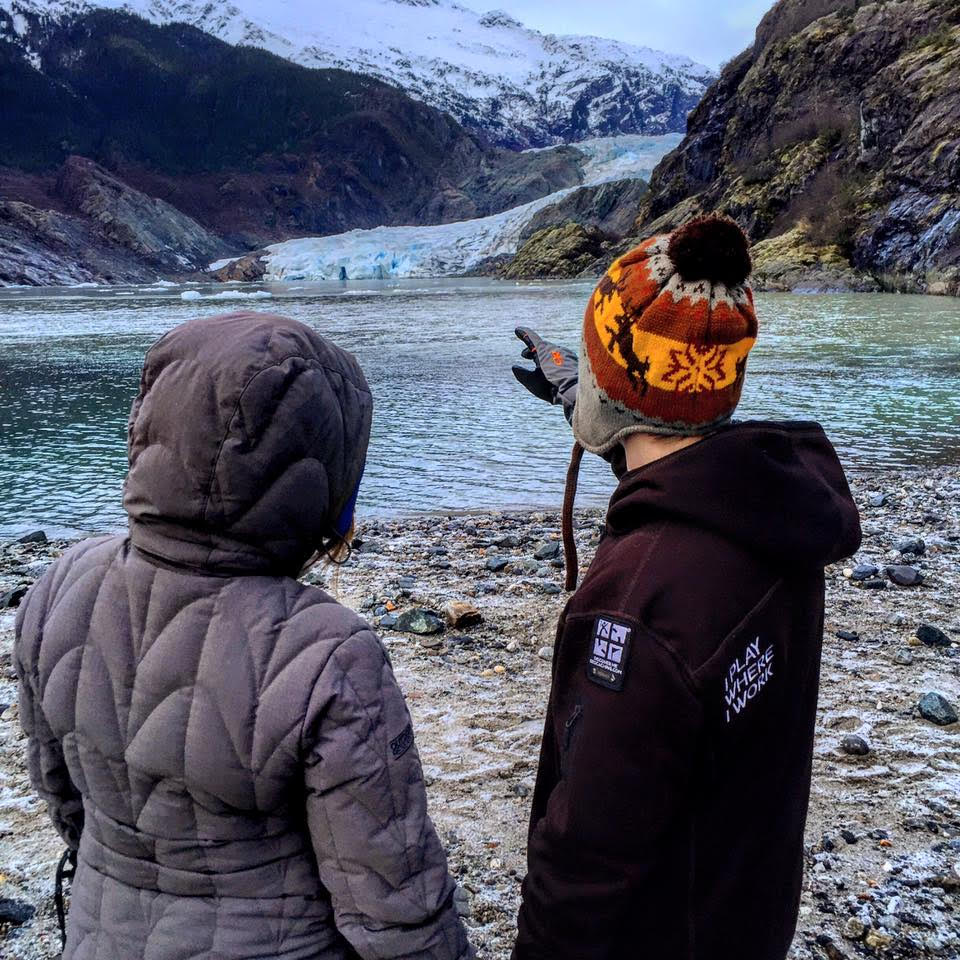
Pointing

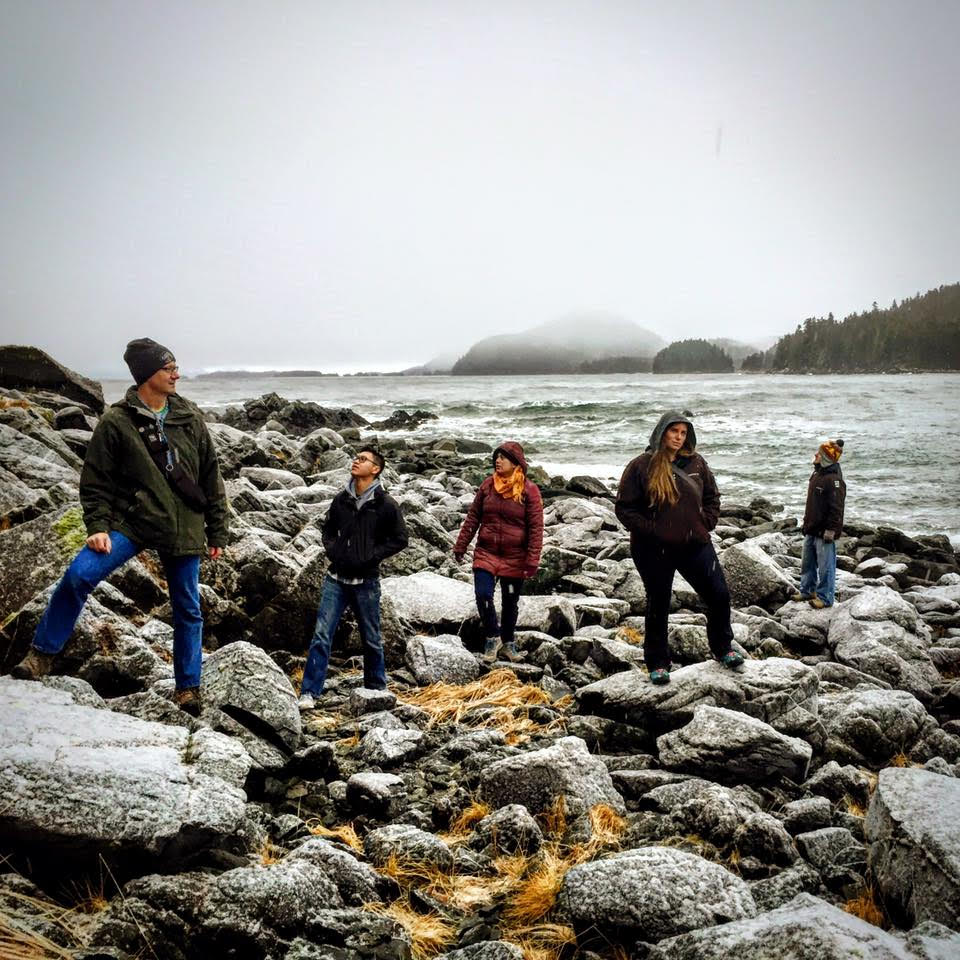
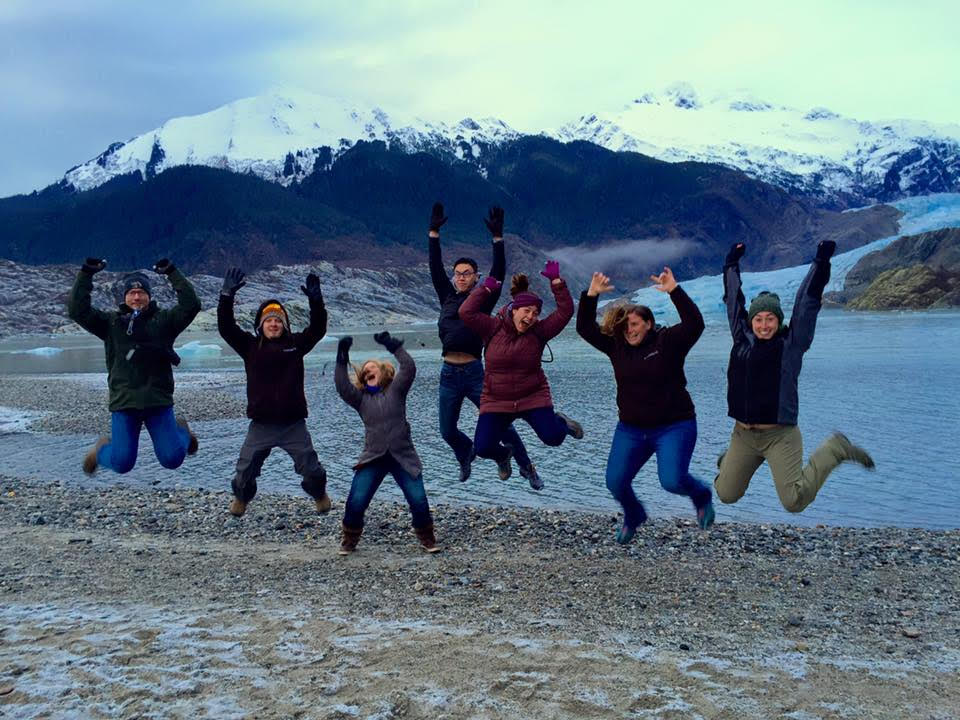
We then took off on the one-mile nature walk to Nugget Falls – an impressive nearly 400-foot tall waterfall. We posed for some silly pictures in front of the glacier.

Waterfall

Lucky for us, one of the local geocachers is a long time employee at Alaskan Brewing Co. We got our own behind-the-scenes tour of the brewery while sampling the local beer. Naturally, there was a geocache in front of the brewery that we had to find before starting our tour.

Arms out

Our very long day ended with a dinner event with even more local geocachers. Since it was a nice small group, we were able to have some great conversations and really learn a lot about the area and the local geocaches. We barely scratched the surface of the great geocaching Juneau has to offer and I was inspired to return someday – hopefully next time in the warmer summer months!

Group jumping

See Annie Love’s Geocaching journey atop Mt. Fuji. Where do you want to take a Geocaching journey?

Join the hunt to discover lost treasures from The Revenant

Does travel to extreme locations, facing the unknown, and surviving harsh winter wilderness sound like you? Join the hunt to discover lost treasures from The Revenant.

This winter, in association with Geocaching HQ, Twentieth Century Fox Filmed Entertainment has hidden a series of twenty limited edition movie props — as Trackables! Launching in select cities across the United States, Mexico, Europe, and Australia, the movie props will travel from location to location as geocachers log their finds and place them in a new geocache to continue the artifact’s journey. Share your find via social media by posting a photo using #TheRevenant. Check out more details on the Fox Movies page (scroll to the middle). 

The authentic movie props range from leather bags to ceramic pots to ropes.

About the movie: Inspired by true events, The Revenant is an immersive and visceral cinematic experience capturing one man’s epic adventure of survival and the extraordinary power of the human spirit. In an expedition of the uncharted American wilderness, legendary explorer Hugh Glass (Leonardo DiCaprio) is brutally attacked by a bear and left for dead by members of his own hunting team. In a quest to survive, Glass endures unimaginable grief as well as the betrayal of his confidant John Fitzgerald (Tom Hardy). Guided by sheer will and the love of his family, Glass must navigate a vicious winter in a relentless pursuit to live and find redemption. The Revenant is directed and co-written by renowned filmmaker, Academy Award winner Alejandro G. Iñárritu (Birdman, Babel).

There are even several geocaches out there (predating this movie) about Hugh Glass, including “Legendary Hunters – Hugh Glass” in Pennsylvania and “Old West #9 Hugh Glass” in Utah.


We can’t wait to see the adventures unfold as these Trackables travel to incredible places and continue to be discovered! Do you see your favorite movie prop trackable in this trailer?

[vsw id=”LoebZZ8K5N0″ source=”youtube” width=”560″ height=”315″ autoplay=”no”]