Some of the best geocaches are found off the beaten path.
Like this one…
On the path to Table Mountain (GCN5VD). Photo by Love.
…and this one….
In the Valley of Fire State Park (GC3AQRC). Photo by Love.
…and definitely this one.
Summiting Mt. Rainier (GCPZBX). Photo by Love.
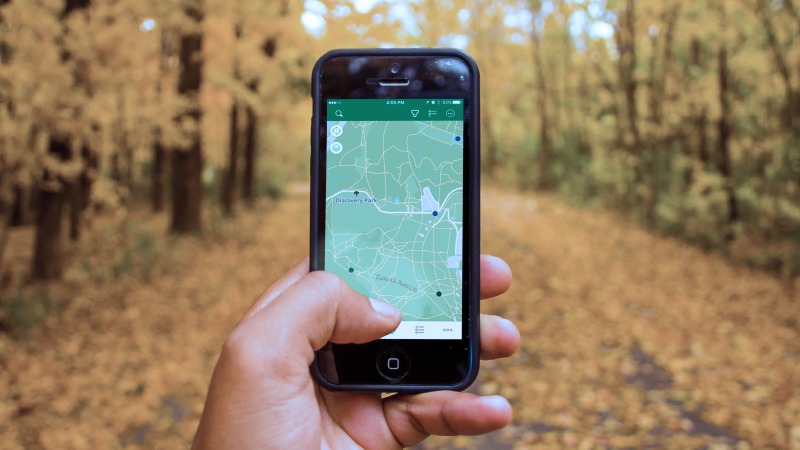
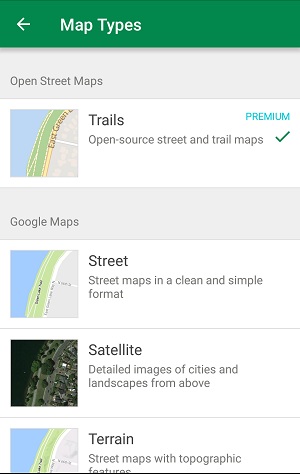
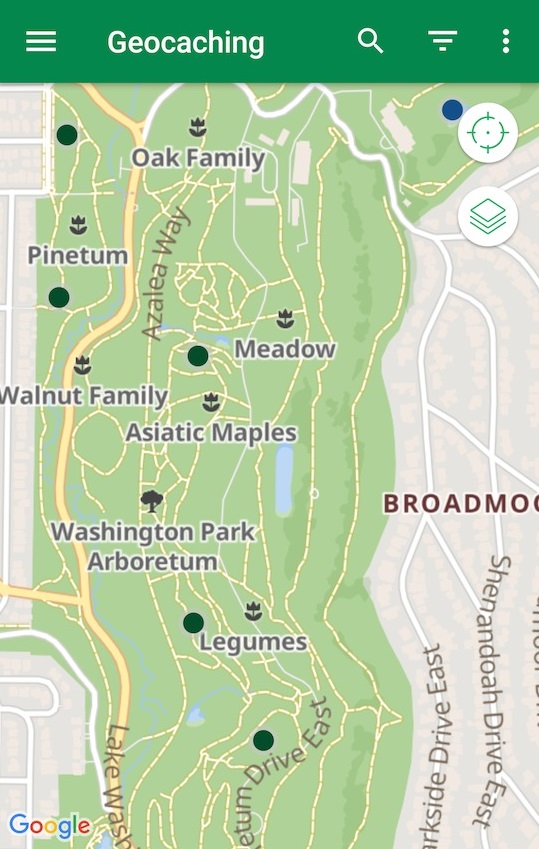
With our latest Geocaching® app update, we added the Trails map type to help you find these hard-to-reach geocaches and to find the caches hidden right in your neighborhood park. This feature uses open-source maps to show trails in cities, parks, and wild spaces.
EarthCaches provide an opportunity to learn a geological lesson and visit awe-inspiring geological locations. Visitors can see how our planet has been shaped by geological processes, how we manage its resources and how scientists gather evidence. Typically, to log an EarthCache, you will have to provide answers to questions by observing the geological location.
Thankfully, there is a group of dedicated EarthCache Reviewers who help facilitate this program so that geocachers can enjoy EarthCaches all over the world. Instead of reading a lesson in a book, they see and learn about geological features with their own eyes.
Who are EarthCache Reviewers?
They are community volunteers with scientific backgrounds that work with EarthCache cache owners to develop the best submissions possible. Learn about their story and what they love so much about EarthCaches.
GeoawareCA, Sandra
Sandra has been an EarthCache Reviewer since 2009, making her the longest standing active EarthCache Reviewer. GeoawareCA has a degree in Environmental Science with a focus on physical geography.
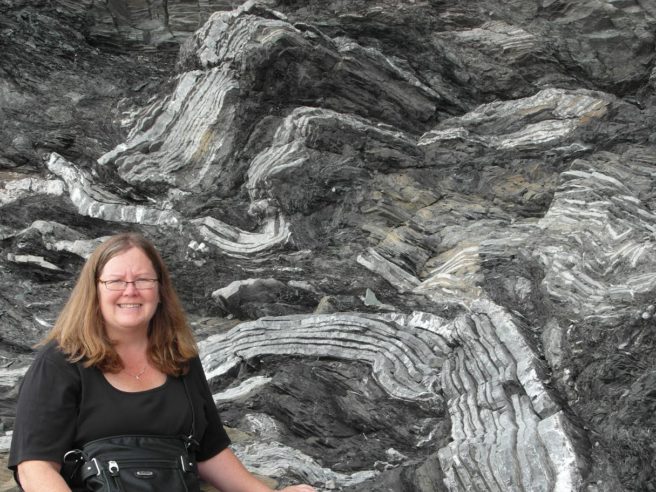
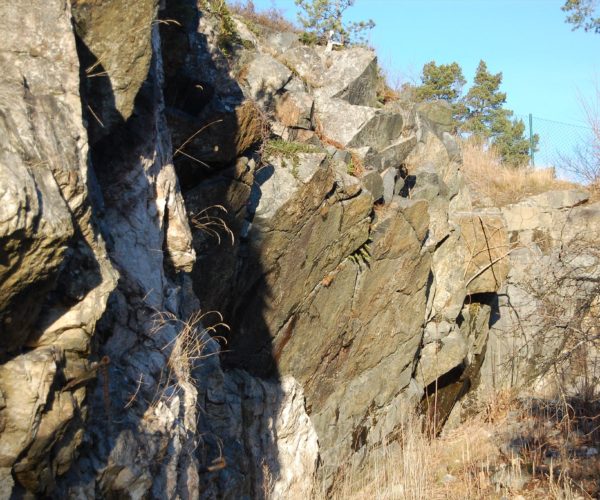
Mélange at Lobster Head Cove in Gros Morne National Park (GC5B7G0)
What is your favorite EarthCache?
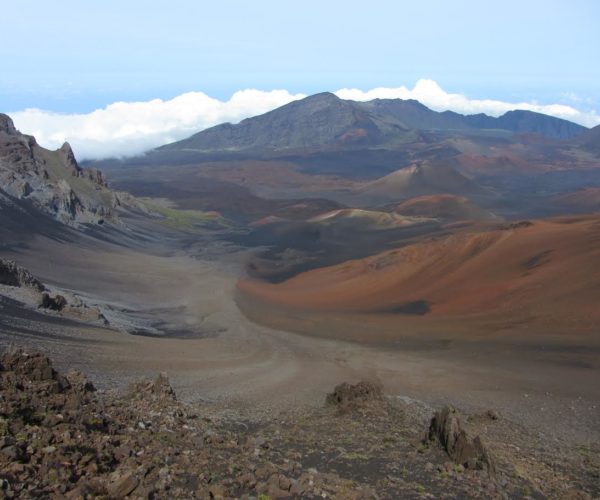
If I had to pick one as my favorite, I’d have to say Pu’u’ula’ula (Red Hill) Haleakala Volcano Summit (GC18Z99) in Hawaii for its stunning beauty.
Tell us one cool fact we may not know about the Earth.
Contrary to what you may have been taught in school, diamonds do not form from coal. In fact, most diamonds that have been dated are much older than plant life on earth (the source of coal).
Any cool stories to share?
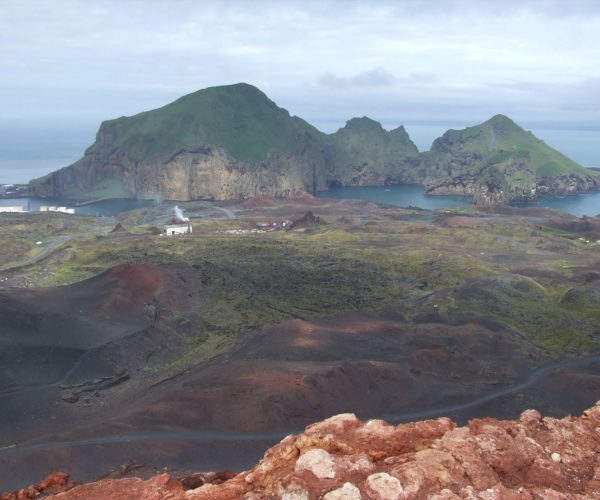
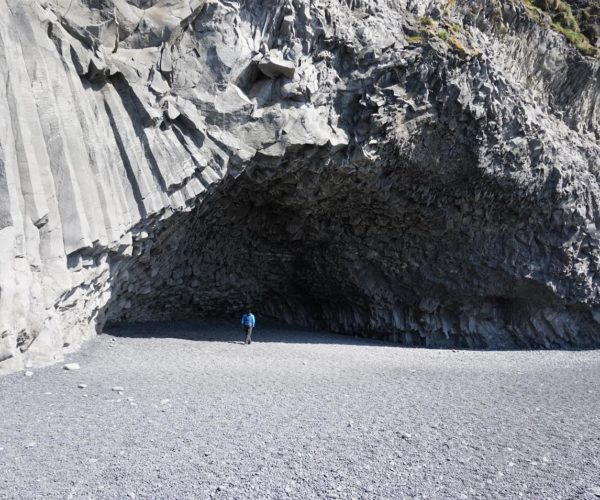
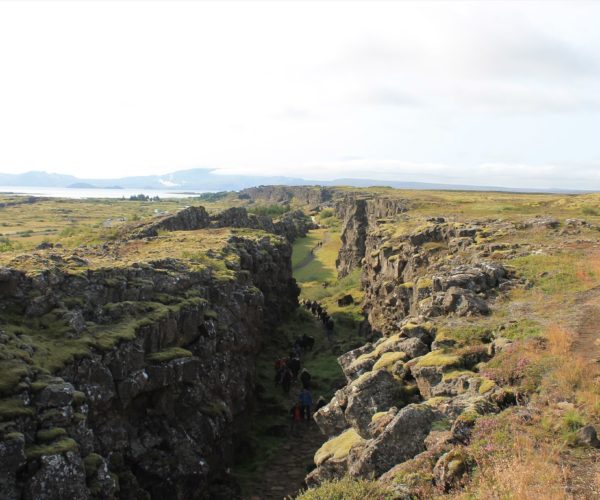
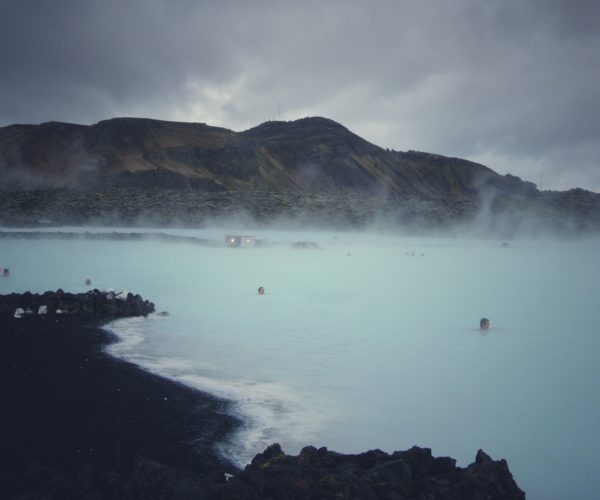
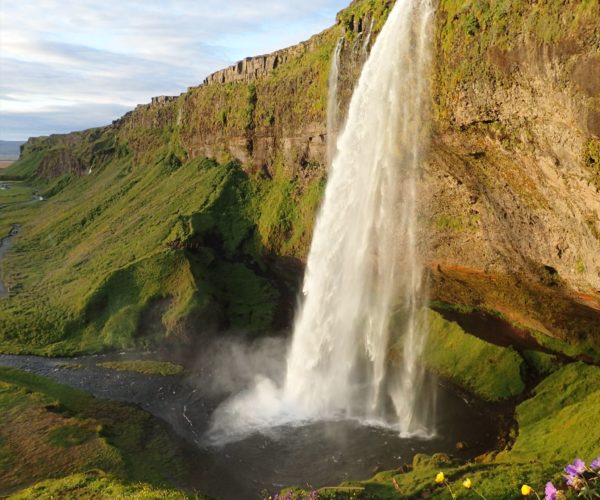
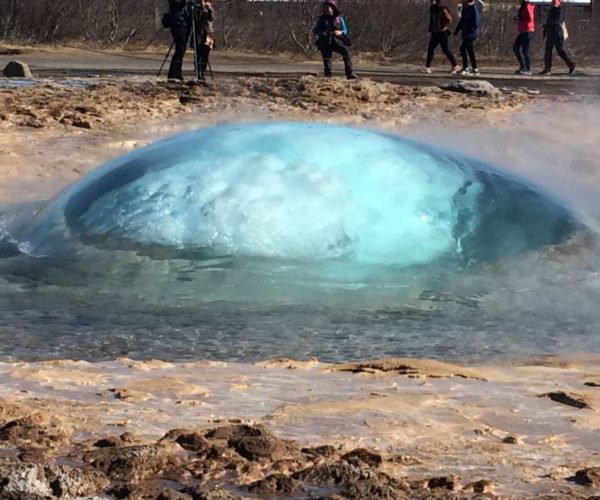
We recently travelled to Iceland and found many incredible EarthCaches there. We climbed to the top of the Eldfell volcano which last erupted in 1973 and warmed our hands by the heat rising out of the fumaroles (GC2EVVH); we visited a couple of locations where you could walk between the continental plates for Europe and North America (GC1Z45X and GC2DK2E); we visited geysir from which the English word geyser is derived (GC1G4XZ); we saw caves carved into columnar basalt and walked along a black sand beach (GC514W0); we swam in geothermally heated pools (GC25643); and we saw many beautiful waterfalls including one we could walk behind (GC2B1TJ). Truly a dream vacation for anyone interested in geology.
Mats is a naturally curious Swede that has been hooked on EarthCaches since the first one he found. His interest in science and especially earth science make him an awesome EarthCache Reviewer with the most logged EarthCaches in Sweden!
Tell us one cool fact we may not know about the Earth.
Earth has an equatorial bulge at 42km. This means when standing on the equator at sea level you are 21km higher than when standing on either pole. As a result of this, the summit of Chimborazo, a mountain in Ecuador, is the place where you are closest to space, still standing on Earth! This is also the point on earth farthest away from the Earth’s core.
Any cool stories to share?
My brother and I used to take EarthCache weekends once or twice a year when we drove around Sweden and logged as many EarthCaches as we could. 30+ EarthCaches is our record for a weekend.
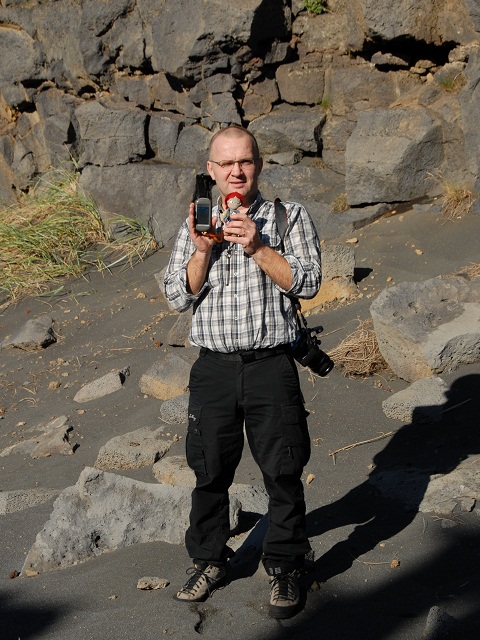
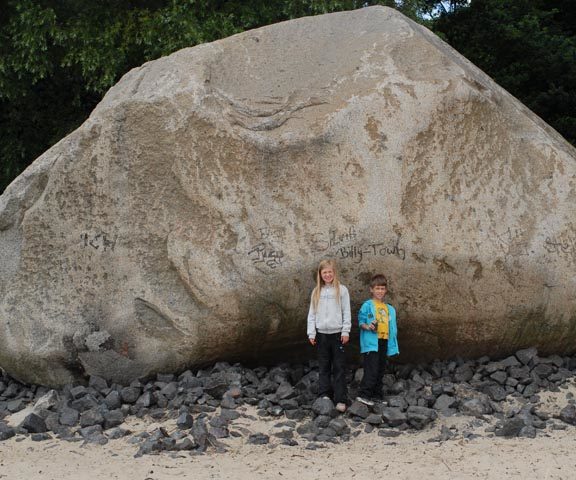
Der Alte Schwede—GC1M15Z
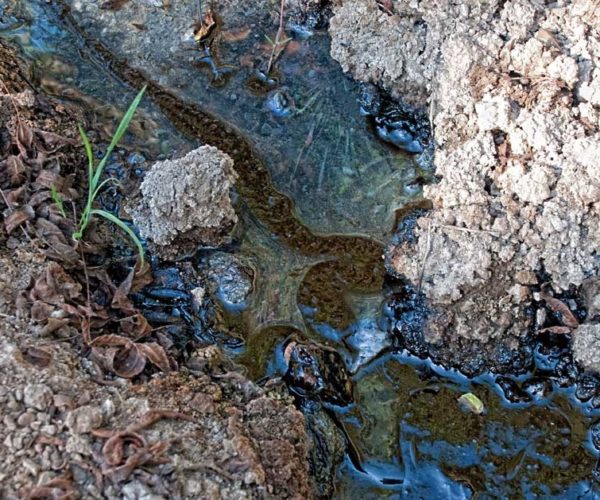
West Sulphur Mountain Oil Spring—GC1A5E2
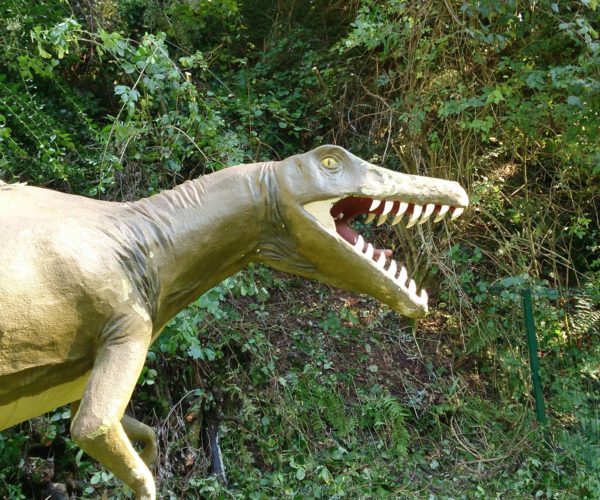
Dinosaurier-Spuren Barkhausen—GC18P1C
The Greatest Little Mine in the World—GC1W9TC
GeoawareUSA4, Mike
Mike is an Alaskan with a degree in Chemical Engineering and strong interest in geology and earth science.He still vividly remembers walking backwards in time more than one billion years during his first hike to the bottom of the Grand Canyon when he was 10 years old. In 2010, he joined the Community Volunteer team as the Reviewer for Alaska and now as an EarthCache Reviewer.
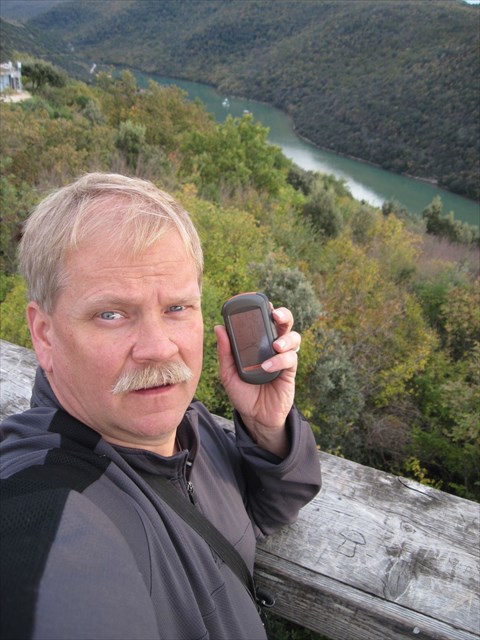
Mike in action
What is your favorite EarthCache?
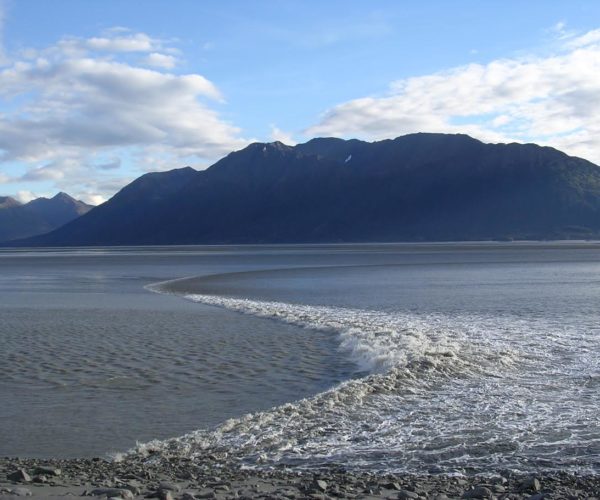
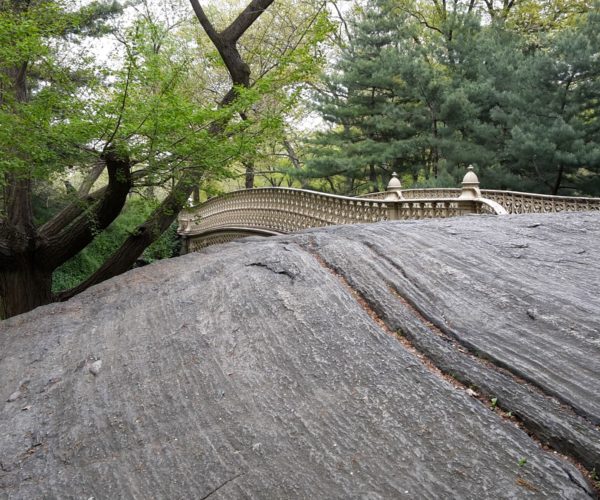
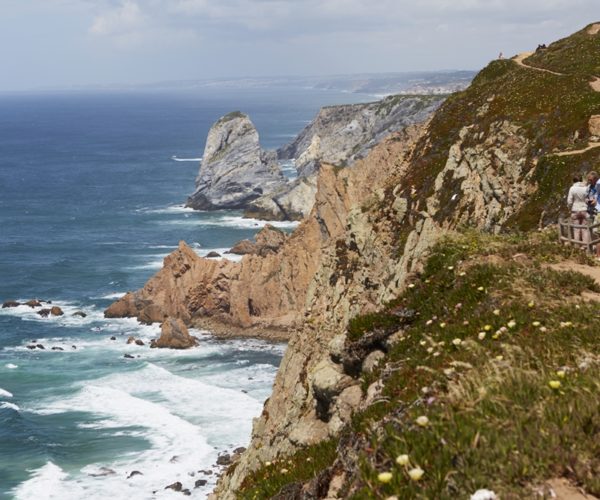
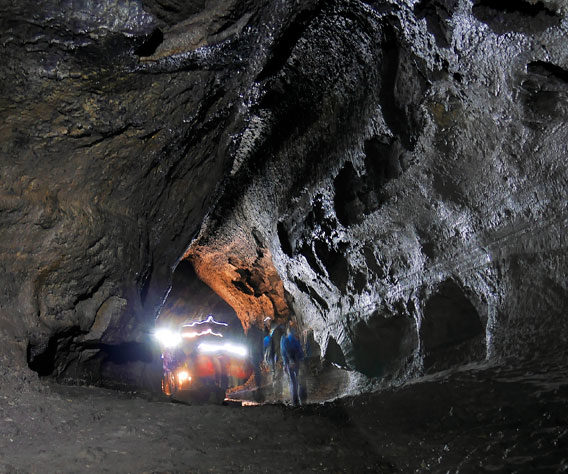
Having completed nearly 300 EarthCaches, it is difficult to pin down a single favorite. However, some highlights include “Umpire Rock,”GC1G4W0, where an urban EarthCache teaches a glaciology lesson in New York City’s Central Park, “Cabo da Roca – DP/EC33,” GC1HGAY, and many other EarthCaches along Portugal’s west coast developed by danieloliveira, which brought the local landscape alive for me during a tour with the EarthCache developer himself, and “Ape Cave,” GCZ8ZQ, which took me about a mile through a lava tube on the flank of Mount St. Helens. Yellowstone National Park has several dozen EarthCaches of which I’ve completed 27 during 2 visits, which greatly enhanced my experience to one of the most amazing “living” geology locations in the world.
Tell us one cool fact we may not know about the Earth.
As a result of melting glaciers retreating from areas long-covered by ice, many parts of Alaska are “rebounding,” which means they are increasing in elevation.
Any cool stories to share?
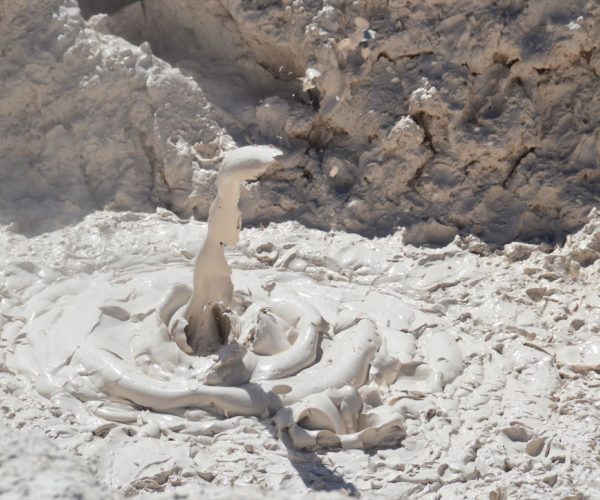
My brother and two nephews accompanied me on my first visit to Yellowstone National Park in 2013. After visiting “No Finger Painting Allowed,” GC1ZTH2, and watching the many mud pots burp and gurgle while we inhaled sulfur-laden fumes, my youngest nephew exclaimed “this place is disgustingly awesome!” Having a youngster think anything in a natural setting is “awesome,” is, well, “awesome!”
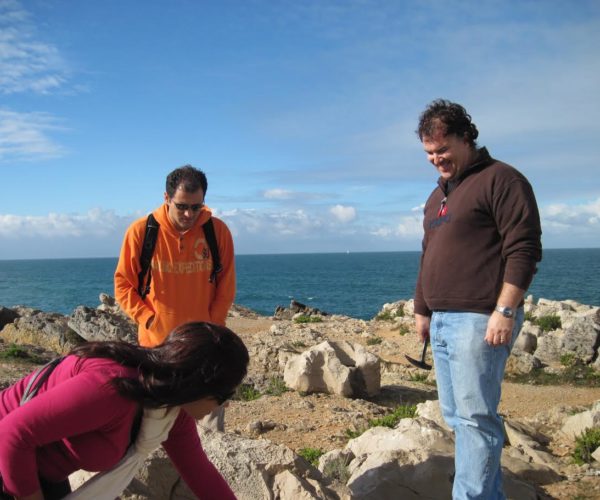
Portuguese EarthCache Field Trip with Danieloliveira (right) and BTRodrigues (left) and Natasha.
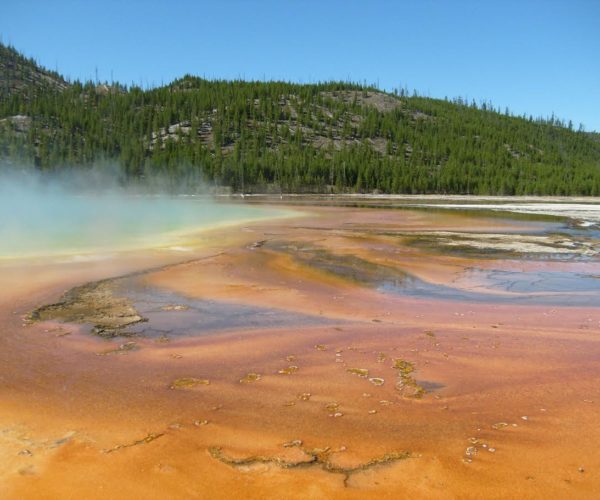
Rainbow's End: Grand Prismatic Spring—GC1JY47
Turnagain Arm Tidal Bore Earthcache—GCN6YV
Umpire Rock—GLMWJAP2
Cabo de Roca—GLN7NVEB
Ape Cave—GCZ8ZQ
No Finger Painting Allowed—GLNN6T73
There are currently 24,271 active EarthCaches in the world. Have you ever found an EarthCache? Tell us about your experiences in the comments below!
On October 9, you can earn a new souvenir by learning more about the Earth (aka geocaching’s game board). All you have to do is go out and find an EarthCache on International EarthCache Day!
On International EarthCache Day, this special geocache type will be free to all players in the Geocaching® app.* The app makes finding and logging EarthCaches easy. Just send your answers to the geocache owner via Message Center!
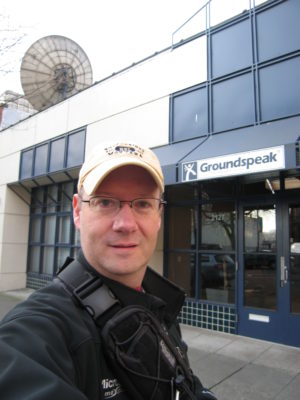
On March 24, 2009, Jon Stanley (username: Moun10Bike) stood on 5th Avenue in downtown Seattle, WA. He snapped a selfie before walking into the nondescript office across the street. It was Jon’s first day at a new job.
Jon’s first day at Geocaching HQ.
“I took a selfie — perhaps my first-ever — of me arriving at Groundspeak on my first day working here,” said Jon. “I was told I was employee #28.”
Jon had a long history with the game before joining the company behind Geocaching.com, now known as Geocaching HQ. He first met Founder Jeremy Irish in 2000. Over lunch, the two discussed software that Jon had provided for an early version of the website. “The community was small then and I was in the same geographic area,” Jon said. “So it was natural that we would end up getting together.”
Jeremy realized that Geocaching.com’s traffic would quickly outgrow the website he’d started as a hobby site. In 2000, he partnered with two co-workers, Elias Alvord and Bryan Roth, to start a new company. With the proceeds from selling 144 geocaching t-shirts, they began to scale the website to keep up with its growing audience. The three founders continued working at their day jobs while managing the website on the side.
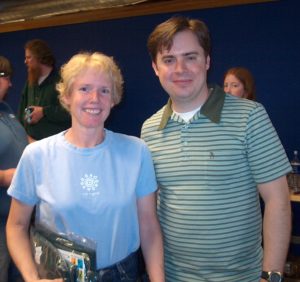
Cathy Hornback (username: Prying Pandora) first met the founders when they spontaneously showed up at her Cache In, Trash Out® Event. “I almost peed my pants when they just showed up. No warning.”
Cathy with Geocaching.com Founder Jeremy Irish in 2006.
Today, Cathy wears multiple hats: player (she’s going on 15,000 finds), volunteer reviewer, and Community Volunteer Support Coordinator at Geocaching HQ. “We exist because one guy had a crazy idea to hide a bucket of trinkets for other people to find with their newly accurate GPS receivers. Then another guy (Jeremy) had the gumption to build a website to list them all,” said Cathy.
Cathy first met Jon in 2005 while looking for the same geocache. Five years later, she joined him as an employee at Geocaching HQ. “We exist because of our community’s engagement,” Cathy said. “Without them, there would be nothing.”
Jon and Cathy were welcomed on their first days at Geocaching HQ by another long-time geocacher, Annie Love (username: Love). “I still pinch myself daily that I get to work here,” Annie said. “Geocaching was my hobby before I started working here and it’s a dream to get to do something I love for work. Sure, I sit at a desk most of the time, but getting to help people with this game for work is pretty awesome.”
Annie joined Geocaching HQ on January 29, 2007. “My first job was to work as the receptionist at the front desk, answer phone calls and emails about the game of geocaching.”
When Annie started, there were a dozen or so employees and 353,685 active geocaches. Today, Geocaching HQ has 74 employees and the website lists nearly 3 million geocaches hidden all over the world.
Annie, now Partner Programs Manager, said, “We really listen to our community. We might not be able to make everything to perfection overnight, but we definitely hear the wants and needs of the community and apply that directly to what we work on.”
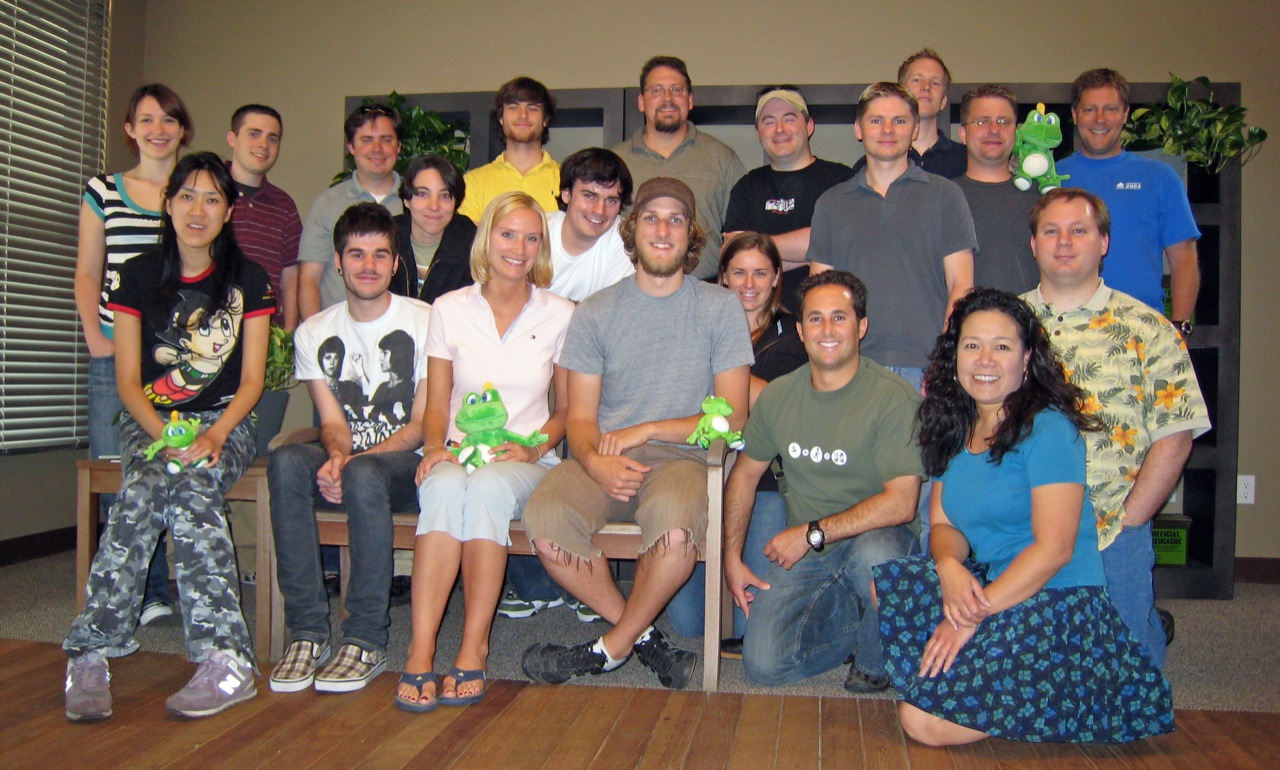
A company photo taken in June 2007, shortly after Annie and Jenn started.
A few months later, Jenn Seva (username: MissJenn) joined Geocaching HQ as employee #17, having previously served as a Community Volunteer Reviewer. “I started as a player of the game in 2001. I’m lucky enough to have combined my hobby and my livelihood without ruining either one of them.”
Now Senior Manager of Tourism and Travel, Jenn said, “Geocaching HQ is different than most other companies because we are made up of employees who want to be here. We want to delight our community and encourage people to go play outside. I don’t feel like just an insignificant cog in a giant wheel.”
Jon, Cathy and Annie feel similarly. “You only need to talk to the founders or any employee to see that we are passionate about the game and keeping people engaged with a fun and rewarding pastime for years to come,” said Jon. “While we may seem to move slow, it is not because of a lack of desire to improve things, only that we are a lot smaller than people know. I see our purpose to be good custodians of the game and provide the tools and means for people to have and share these experiences and adventures.”
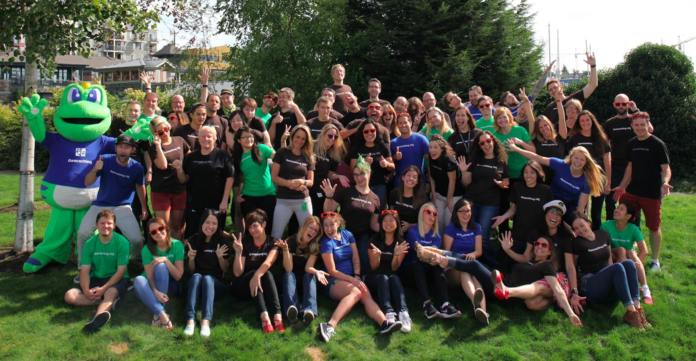
A company photo taken last summer.
Sixteen years later, Geocaching HQ remains a strong, independent organization on a mission to enable adventure, exploration, and discovery. We are led by our original founders and we have no outside investors or influences who would maximize profits at the expense of the game.
Annie said, “The community creates the game. We want to create the best tools to play it.”
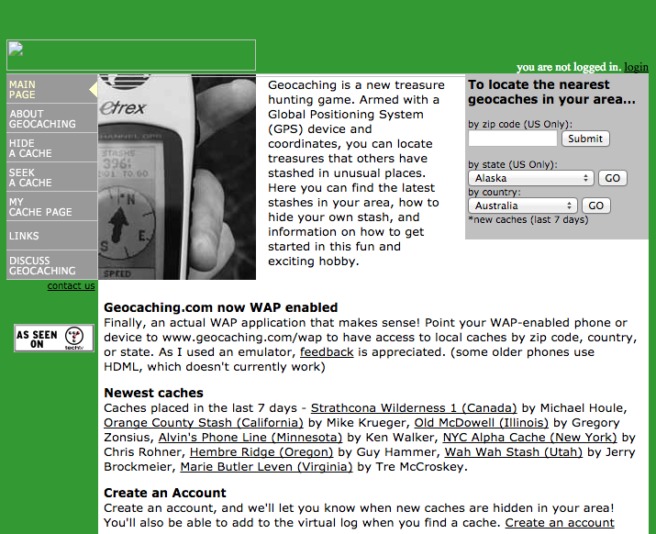
Geocaching.com on November 9, 2000.
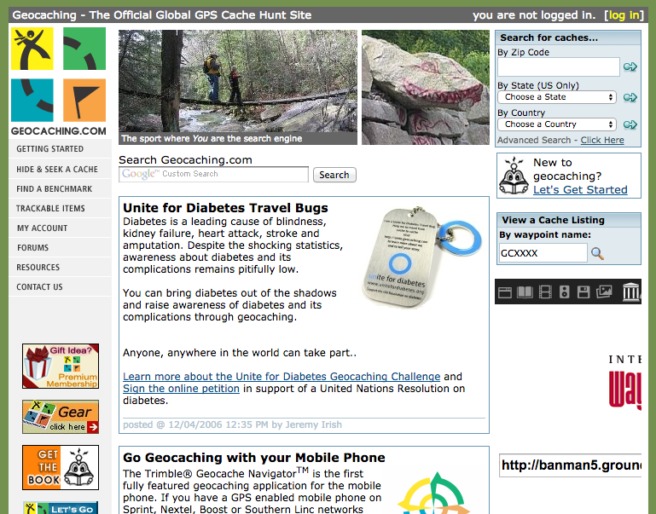
Geocaching.com on January 29, 2007. There were 353,685 active geocaches then.
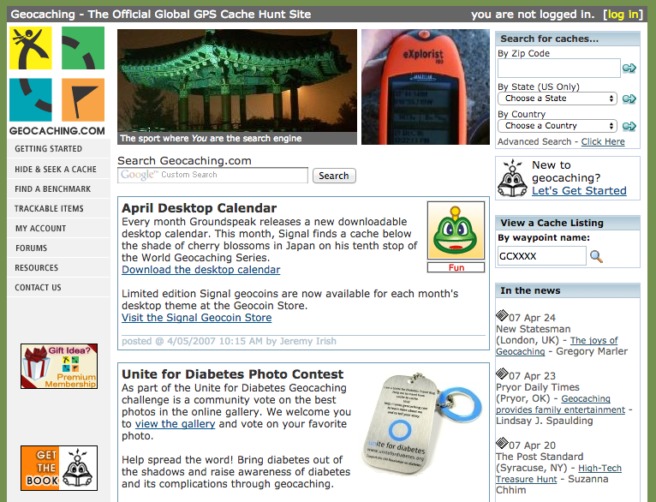
Geocaching.com on April 30, 2007. There were 391,592 geocaches at the time.
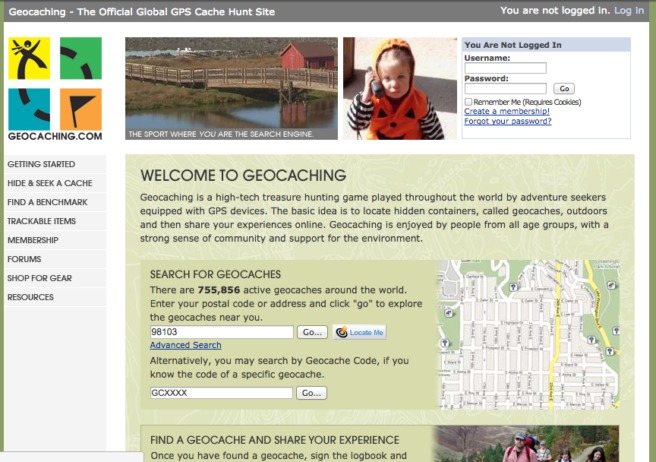
Geocaching.com on March 26, 2009. There were 755,856 geocaches listed at the time.
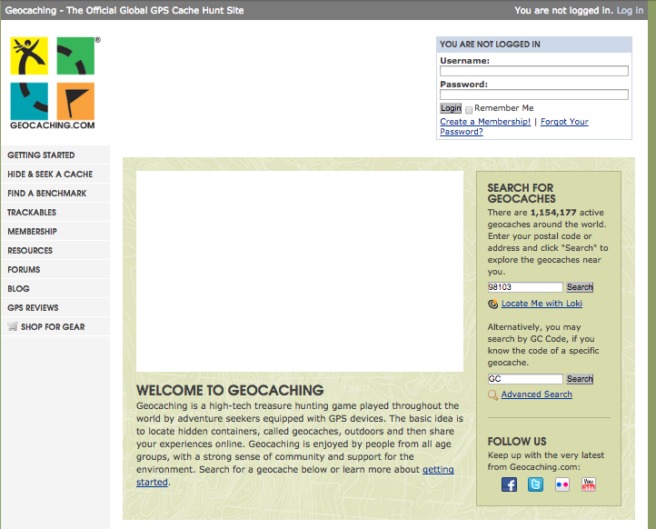
Geocaching.com on August 13, 2010. There were 1,154,177 geocaches in the world.
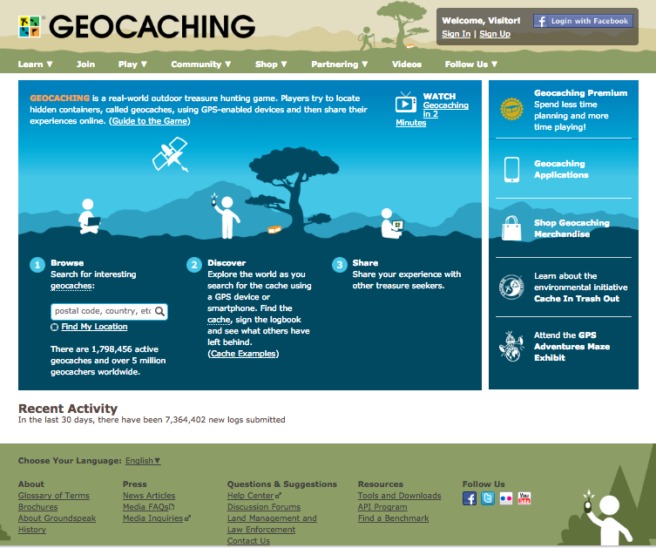
Geocaching.com on June 20, 2012. There were 1,798,456 geocaches then.
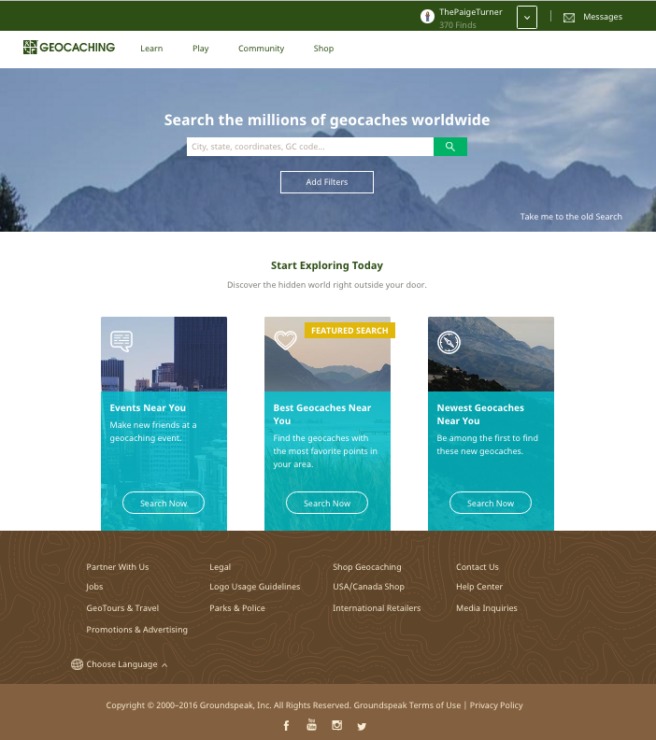
Geocaching.com today. There are 2,921,888 active geocaches in the world.
Have questions about Geocaching HQ? Post them in the comments below.