Du dachtest bisher, MEGA-Events seien etwas Großes? GIGA-Events sinddie größte Event-Art und werden von über 5000 Geocachern besucht.Diejenigen, die daran teilnehmen, erhalten das seltene GIGA-Icon in ihr Profil,zusätzlich zu der Möglichkeit, sehr viele Geocacher aus aller Welt zu treffen.
Das neue Suchtool ist dank Eurer Hilfe jetzt live. Ein großes Dankeschön von uns allen hier in der Geocaching-Zentrale für Eure Teilnahme an der jüngsten Vorschau und für die Übermittlung Eures Feedbacks. Eure Fragen und Kommentare waren die treibende Kraft für mehrere Änderungen und Aktualisierungen, die die neue Suche noch besser gestaltet haben.
Also nochmals vielen Dank für all Eure Hilfe – wir können es kaum erwarten, Euch die nächste Vorschau zu zeigen!
Mehr Ergebnisse schneller – mit dem neuen Suchtool
Wir sind stolz, den Start des neuen Geocache-Suchtools bekannt zu geben. Es ist schneller, benutzerfreundlicher und hilft Dir dabei, genau das Abenteuer zu finden, auf das Du aus bist – und dies ist alles der Geocaching-Community zu verdanken. Wir fragten Geocacher am Anfang unserer Arbeit am Upgrade, was sie sich wünschen. Anschließend stellten wir Geocaching Premium-Mitgliedern vor der Einführung eine Vorschau auf das neue Tool zur Verfügung.
Jetzt ist das Suchtool voll und ganz einsatzbereit. Probiere es aus und suche nach Pi-Tag-Events und Mystery Caches in Deiner Umgebung, um Dir Deine Pi-Tag-Souvenirs am 14. März zu verdienen.
On March 14, aka Pi Day, you can earn two special souvenirs. One can be gained by attending an event. The other, by finding a Mystery Cache like this one. This Mystery Cache in particular takes you on a tour through the many art installations on and near the MIT campus. Throughout your journey, you’ll have to take a few directional readings and solve some relatively easy math. After you find this one, all you need to do is log an event for the other souvenir—and then, maybe there’s a surprise waiting for you…
What geocachers are saying:
“Finally! Brewer has been going to MIT for five years now and during that time he has been working to solve this. Patience, grasshopper. Well, sort of… there always seemed to be something that kept him from completing the cache. Today, he took his saved coordinates and went to GZ. His coordinates were within 6 ft. Not bad. So I guess all that time at MIT has helped. He even opened the log book. Seriously, this was a wonderful cache, A favorite in our book!” – Trail Buzzards
“Found it! Found it! Catkin is back in her office (on the campus of a fine institution…) doing the happy dance post-find, since that might have proven embarrassing at GZ. Add me to the list of seekers who did not recognize the cache and ignored it a frustratingly large number of times in search of this smiley. Fortunately I came prepared for the field work and the smiley is now mine! Cache container is in great shape, though the log is close to full. Thank you NTP for this engaging, edifying expedition!” – Catkin&Golden
“Waaa! Awesome! I finally discovered this brilliant little hide after several fruitless trips to the river (I couldn’t get the sculpture coordinates/bearings right and would wind up with a different GZ every time). What a wonderful cache– everything from the creative hide to the simple adventure-oriented puzzle to the beautiful buildings and sculptures and views. Here, have a favorite point to add to your well-deserved pile!” – Rainbow Crash
“I’ve always enjoyed art, especially public art. This cache, and another long archived one, was a way to invite the caching community to go for a small walking tour of the MIT campus and see what public art MIT has to offer to the local community. I was also quite insistent that the cache be wheelchair friendly since my father had great difficulty walking at the time….A puzzle, and a multi, are the only ways to get a cacher to visit more than one spot, or more than one piece of art. Also, at the time, caching was pretty young. Puzzles, back then, were essentially gimmes that took only a few seconds to solve. (First letter of the sign is a 7, that sort of thing) and I wanted to stir up the local caching community. Based on emails and meeting cachers at events I know I was successful at that. Cachers either flocked to my puzzles or, more likely, ignore them, but that’s fine also.I have enjoyed [all the favorite points and positive logs]. I don’t use geocheckers on my puzzles, I prefer interacting directly with the seeker. This puzzle hasn’t had much interaction, since it is all solved on the ground, but I do enjoy helping a cacher work through my puzzles. The Favorite points are nice, but sharing a beer at an event is a far better way to enjoy a cache! I was exceptionally moved to find that a local cacher was secretly battling cancer, and he used to work on hard puzzles, including mine, to take his mind off his therapy during the long train ride from NH to Boston for treatment. Cube Root was one of my two Boston area caches that actually got to find during one trip to the hospital. (And yes, that cacher did eventually beat the cancer!)
Photos:
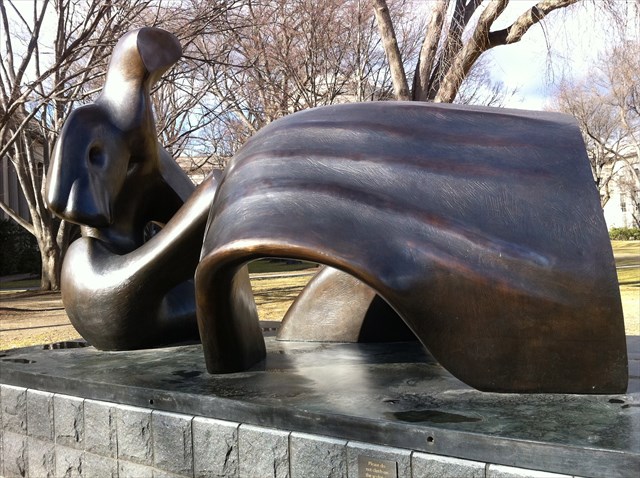
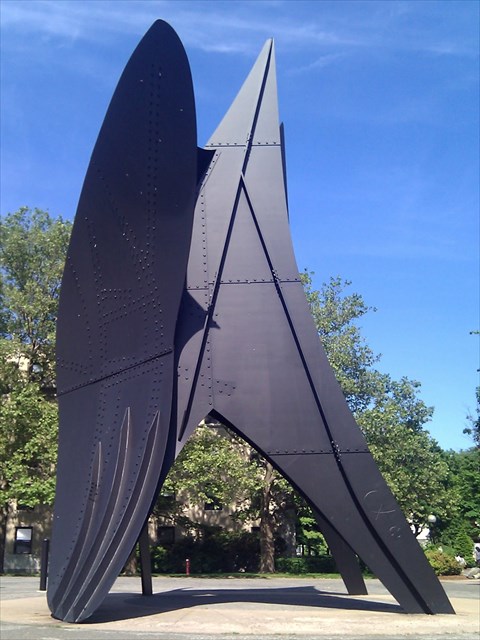
Another sculpture you’ll see when solving this puzzle. Photo by foragessAlexander Calder’s “The Big Sail” Photo by geocacher niraDMark di Suvero’s “Aesop’s Fables, II” Photo by geocacher niraD
What’s the most puzzling geocache you’ve ever found? Tell us in the comments.
Continue to explore some of the most engaging geocaches around the globe. Check out all the Geocaches of the Week on the Geocaching blog. If you would like to nominate a Geocache of the Week, just fill out this form. Thanks!
Earn one out of two souvenirs on Saturday, March 14 Pi Day by finding a Mystery Cache.
(Earn the other souvenir by attending any Geocaching event on March 14)
Does the thought of having to decode encrypted messages make you break out in hives? If yes, then take a deep breath and find your happy place because we have just the tips to sooth your Mystery Cache anxiety and prepare you for March 14th, 2015.
About to sing an “Ode to the Golgafrinchan Phone Workers”…GC32A0H
Mystery Caches (also known as Puzzle caches or Unknown caches) are a type of geocache for those who enjoy an extra challenge.
They require geocachers to solve complicated puzzles in order to decode the correct cache coordinates or crack secret clues to unlock a cache’s stash. If you haven’t encountered this kind of cache before the prospect may seem daunting, but have no fear! Mystery Caches are fun way to spice up any geocaching adventure while flexing your beefy brain muscles.
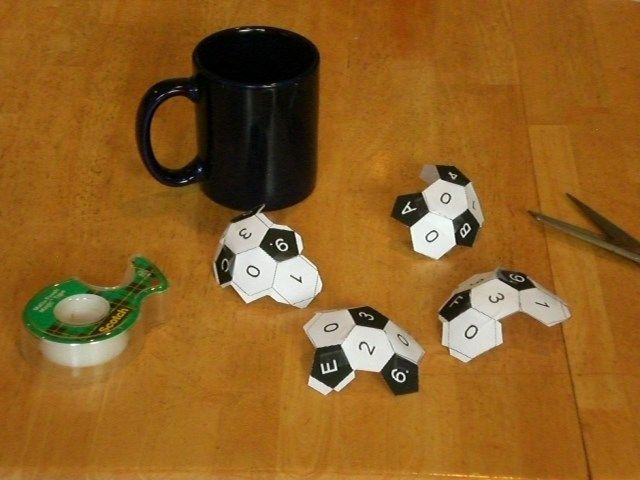
Working on the solution for GC2400Z “Truncated Icosahedron,” a puzzle cache by PhilNi
So don your trenchcoat and channel your inner Sherlock.
(‘Cause who wouldn’t want to be Benedict Cumberbatch?). Here are Geocaching HQ’s top tips for Mystery Caches:
Practice Makes Perfect. Start easy by tackling Mystery Caches that have a one or two star difficulty rating. The more caches you conquer over time the more tricks of the trade you’ll pick up and the easier it’ll become.
Check what type of puzzle needs to be solved. There are different kinds of Mystery Caches that call for different strategies, so before you head out check to see what the requirements entail. Some caches are in-the-field, meaning you have to use visual clues from the surrounding location to decipher the coordinates or unlock the cache. Other caches can be solved before you even step out the door! These ask you to solve a particular puzzle off of the geocache’s webpage or lookup information on the internet.
Gather the Mystery Gang. Two heads are better than one! Bring your geocaching pals along, not only is geocaching more fun when you have your buddies but they can help you brainstorm through those extra tricky questions.
It’s all in the name. A hint to the cache’s location may be located in the cache’s or cache owner’s name or give you an idea of where the cache may be or what it may look like.
When in doubt use Google. Search engines may not have the answer to everything, but they have the answer for a lot of things. So if you’re truly stuck, look to the internet to give you a helping hand. Some cache pages may even include answer checkers to see if you guessed the correct coordinates.
Check for invisible ink. Sometimes cache owners will hide clues on a geocache’s webpage in white font. Highlight the page to reveal the secrets that were right in front of your nose the whole time. Bonus points if you caught this one! You’re a Puzzler already!
The source code isn’t just a movie. Cache owners may add comments with hints in the cache’s html source code. To find this open the source code on your browser’s menu selection and search for comments.
Stumped? Don’t hesitate to send a message to the cache owner. There’s no shame in asking for help…and a small hint might just be what you need to get started.
Mystery caches are an excellent way to sharpen the geocaching saw. If you’re looking for a little cache-speration check out our Mystery Cache Pinterest board. Want to take all this info (and more) with you? The Geocaching Shop has just the right book for you: How To Puzzle Cache.
Do you love a good Mystery? Tell us about your puzzling geocaching experiences or share your favorite puzzle tips! Be careful not to reveal any cache spoilers.



 Das neue Suchtool ist dank Eurer Hilfe jetzt live. Ein großes Dankeschön von uns allen hier in der Geocaching-Zentrale für Eure Teilnahme an der jüngsten Vorschau und für die Übermittlung Eures Feedbacks. Eure Fragen und Kommentare waren die treibende Kraft für mehrere Änderungen und Aktualisierungen, die die neue Suche noch besser gestaltet haben.