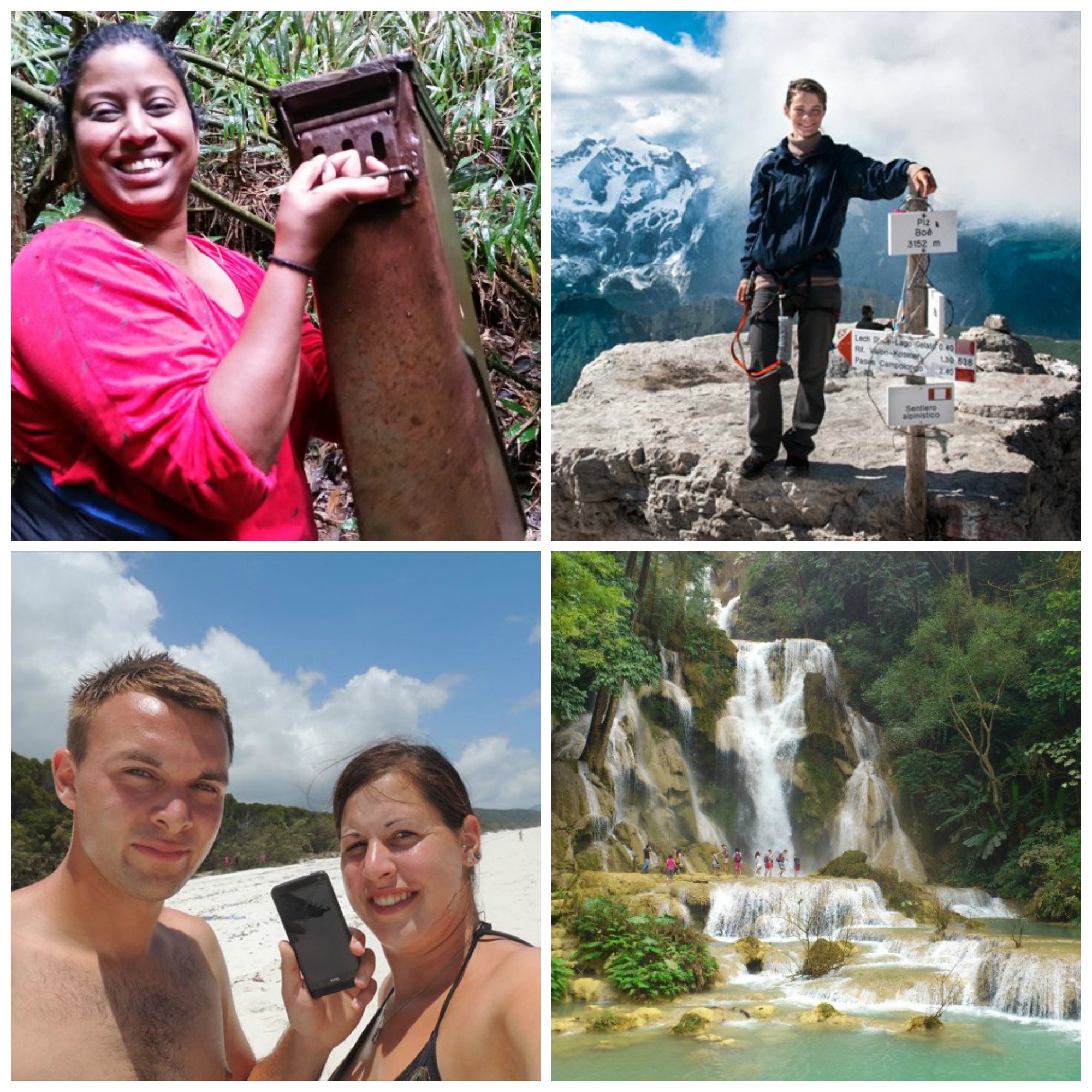
So you’ve been geocaching for six months now… or is it six years? Whatever the number, there comes a time when you stop saying, “I go geocaching” and start saying, “I am a geocacher.”
At this point, you’ve probably found quite a number of geocaches and hidden a few as well. You’ve dipped your toes into different cache types, and you’ve played around with logging trackables. You’ve grown from a wee geo-acorn into a strong geo-oak tree.
Capitalize on your experience by mentoring newbie geocachers you encounter along the way. These five tips should help you get started.
1. Be kind, rewind, then pay it forward
So someone just logged “Found It!” on a geocache but in their log they wrote, “We searched everywhere but couldn’t find it today.” Did this person just log a find they didn’t actually earn? Yes. Did they commit a cardinal sin? No. Take a moment, give a newbie the benefit of the doubt, and kindly remind them that to log a find, they have to find the log! Your interaction with this person may be the first contact they’ve ever had with another geocacher, so be kind and pay it forward.
2. Teach them the ways of the log
Are newbies always writing short logs (TFTC) on your geocaches, and you want more, more, more? Send them this friendly link to motivate them to channel their inner Billy Shakespeare: 5 Tips for Writing the Best Log in the World.
3. Give a lesson in trackable etiquette
If you own a geocache that’s big enough for trackables, include a friendly note about trackable etiquette. And better yet, include a description of what trackables are and how to log them! New geocachers are often confused about the difference between trackables and SWAG, and what better place to have information about this than in the geocache itself.
4. Be the hostess with the mostest
Whether you’re hosting or attending an event, make sure new geocachers are welcome, included in the conversation, and feel comfortable. As a host, make a new geocacher’s life easier by putting up a “We’re Geocachers!” sign at your table so they know where to find you. As an attendee, take ownership of making the new cacher feel comfortable, especially if you’re lucky enough to live in a tight-knit geocaching community.
5. There are no stupid questions — and newbies have TONS of questions
“What does ‘TFTC’ mean? What’s a ‘Jasmer‘? What are those question-mark geocaches in the middle of the lake?” We all know the jargon like the back of our hand, but all this geo-speak can be overwhelming to a new geocacher. Be a Jedi to padawans and teach them to use the force. The way our community grows positively is by educating those who actually want to learn. And don’t forget to tell them about our forums,Help Center, and the online geocaching glossary.
Guest blog written by avid geocacher (and dedicated nurse) Kelley Piekarek*.
A Floridian geocacher was reaching for a cache when she felt something bite her arm. Thinking nothing of it, she signed the log, replaced the cache, and moved on. Shortly thereafter her arm became red, swollen, and felt hot to the touch. The area surrounding the bite began to form what appeared to be an infection; her arm became very painful and she was running a high fever.
She went to the emergency room where it was confirmed that she had been bitten by a brown recluse spider. The area was surgically cleaned, she was put on antibiotics, and is now on the road to a full recovery.
Most spiders are absolutely harmless to humans. Of the 4,000+ species of spiders found in North America, only two are dangerous to humans—the brown recluse and the black widow.
Geocachers are fortunate to enjoy the wonders of nature. But as we all know, nature can be a bit scary sometimes. If you are informed and aware of your environment, you can avoid spiders bites and know what action to take if you’re bitten.
Brown Recluse
The brown recluse can be identified by the violin-shaped spot behind its eyes.
The brown recluse is ¼ to ½ inch long, and can be identified by the violin-shaped spot behind its eyes. They are native to North America and live predominantly in the Midwestern United States.
Black Widow
The black widow can be identified by a red, yellow, or white hourglass shape on their lower abdomen.
The black widow can be identified by a red, yellow, or white hourglass shape on their lower abdomen. There are many species of widow spiders found worldwide, but the North American variety is about ½ inch long.
Black Widow Distribution
Where do spiders like to hide?
Spiders like to hide in wood piles
Both spiders are found in similar locations. Inside, they prefer to hide in small, dark locations such as closets, cellars, garages, vents, stored boxes, and within the cracks and corners of walls. Outside they prefer to live like a geocache—underneath rocks, in wood piles, and inside hollow tree trunks.
What do spider bites look and feel like?
The bites from brown recluse (left) and black widow spiders (right)
The bite of the brown recluse is usually painless and goes unnoticed, but it may feel like a bee sting or there may be a burning sensation. Symptoms usually develop in 2-8 hours starting with a small white blister at the site of the bite.
Many bites will cause a small red mark that will heal without problems or scarring. However redness, blistering, an open sore, and a black area may develop and take months to fully heal. Other symptoms include severe pain at the site of the bite, severe itching, nausea, vomiting, fever, and/or muscle pain.
The bite of the black widow is similar to the brown recluse, and initially may look like two tiny Dracula fang marks. It feels like a pinprick, but also may not be felt at all. There may be slight swelling, redness and a spot that forms a target shape. Fifteen to sixty minutes later a dull muscle pain will spread from the bite area to the entire body. If the bite is on the upper body, the pain will be in the chest. If the bite is in the lower body, the pain will be in the abdomen.
What to do if you’ve been bit
Seek medical help if you think you’ve been bit by a brown recluse or black widow spider
Most spiders bites are non-venomous and require no specific treatment, but if you suspect you have been bitten by a brown recluse or black widow:
Seek medical attention right away
Remain calm to keep your circulation relaxed
Apply a cold pack to the area to relieve swelling and discomfort
Do not apply a tourniquet
If possible, bring the spider with you to the doctor’s office or ER for identification
How to avoid spiders
You’ve probably heard that spiders are more afraid of you than you are of them and that’s true. They’d prefer to avoid contact with humans all together, but they will defend their space. If you live in an area where co-existing with brown recluse and black widow spiders are part of the landscape, take some precautions:
Outdoors
Watch for spider webs, which are the most obvious signs a spider is nearby
Wear gloves and long-sleeved shirts, long pants, and sturdy shoes
Move rocks and debris with a stick when looking for your cache to protect your hands
At Home:
Keep your home clean and clutter free
Bits of food can attract bugs which will in turn attract spiders, so vacuum and wipe down surfaces often
Store your things in sealed plastic storage boxes or plastic bags with the edges taped shut
When unpacking stored items, shake items out thoroughly before use
Keep the sides of your home free of plants and debris
Keep your house clean and clutter free to avoid spiders
Stay safe out there, my friends. Be prepared and know what to do should a spider bite you, and keep on cachin’!
How do you stay safe while enjoying your favorite hobby?
*If the name Kelley Piekarek sounds familiar, it may be from this story that made national geocaching news in February 2015.
The Republic of Turkey is transcontinental—spread across Eastern Europe and Western Asia. It is surrounded by three seas: The Mediterranean, Black Sea, and the Aegean Sea. The unique geographic location and varied landscape give Turkey a diverse cultural richness that is evident in every region of the country. You’d be hard pressed to find a more passionate, fun, and cosmopolitan group of geocachers anywhere in the world.
And here’s the big news: Turkey is the newest Geocaching country souvenir to be released this year!Souvenirs are virtual pieces of art that are displayed on your Geocaching profile page when you find a geocache in certain locations.
Just five of the many wonderful geocache you can find in Turkey
To celebrate, we are also highlighting five must-see geocaches from this marvelous land. Come with us, won’t you?
First stop: Istanbul. A gorgeous city that straddles two continents, ranks as the world’s 5th-largest city proper, and is the largest European city.
Istanbul is an enormous city that connects Europe and Asia, East and West
This Mystery Cache acts as a tour guide for the Sultanahmet district—a must see for any visitor. Framed as a mystery, this geocache leads you through the center of the Old City of Istanbul and many of the city’s points of interest (POI). You’ll need at least two days to solve this Mystery, but you’ll experience Topkapı Palace, Hagia Sophia/Ayasofia Mosque, the Grand Bazaar, and Basilica Cistern so it is definitely worth it.
This Virtual Cache is found at the Fatih Sultan Mehmet Bridge, also known as the Second Bosphorus Bridge, which crosses the Bosphorus strait and connects Europe with Asia. You’ll need to visit by automobile (on top) or boat (underneath). No pedestrians and certainly no stopping on the bridge allowed!
Enjoy the 24-hour hustle and bustle of Istiklal Street, bursting with shops, cafes, bars, and nightlife. No cars are allowed in this area, and the streets are full of locals and tourists alike looking for some fun. Find this beloved Traditional cache full of great Trackables and SWAG, then write a heartfelt log from a lovely street cafe over wine or coffee.
Next stop: Bodrum. Previously a simple fishing village, Bodrum has become a tourist mecca with idyllic beaches, boutique hotels, and a shining marina over the last few decades.
Bodrum is located in the southwest Aegean Region of Turkey
GC1HN97 – Gokart15 [Bodrum Castle]Site of a long ago Turkish invasion, construction began in the 14th century with the Knights Hospitaller and has continued into the 20th century. Bodrum Castle is a stunning array of English, French, Spanish, and German-influenced Medieval architecture. The cache is a small tin box that you’ll find between a rock and a hard place.
Final stop: Antalya. Antalya is full of beaches, mosques, churches, Turkish baths, and museums.
Antalya is the largest Turkish city on the Mediterranean coast
This EarthCache is a series of several waterfalls created from two large karstic sources that merge, go underground, and then resurface to form the falls. This geocache is best experienced from a boat for a truly spectacular view. But if you decide to take a boat, make sure you’re alright with the possibility of getting soaked.
Inspired yet? Turkey has so much to offer in terms of scenery, culture, and geocaching.
We’ll unveil one new souvenir every week until all FIVE are officially released and awarded by mid December. Souvenirs that are currently available can be found here. A list of of currently available Geocaching souvenirs and even the ones you’ve already earned can be found on Geocaching.com. And, if you’ve already found a geocache in Turkey, we will retroactively add this souvenir to your profile after all five country souvenirs are announced.
Whether you’re developing an app, building a website or designing Tupperware containers, it’s important that you have people in your organization who are passionate about understanding people — people who are committed to discovering what makes the lives of those in their community better. At Geocaching HQ, there is a whole team of folks responsible for making sure we’re building the right tools at the right time to meet the needs of geocachers around the world.
Meet the Product Team:
These guys!
In January, we introduced you to Jayme, our User Insights Analyst at Geocaching HQ. Jayme collects feedback from geocachers about our apps and features by working with playtesters, coordinating surveys and even organizing special games designed to collect feedback. Recently, Jayme and the rest of her Product teammates — the people who work with departments across the company to determine the “what”, “how”, “when” and “why” for everything we build — took their insights-gathering on the road to the Going Caching Mega Event in Rome, Georgia.
We asked Jayme to share some of the Product Team’s takeaways from the experience with us:
Why did the Product Team decide to take a trip to Going Caching in Rome, Georgia?
The first User Insights Games — games designed to collect feedback from geocachers about our features — were a success at the 2014 Geocaching Block Party, so we were looking for a way to expand the program and bring voices in from other regions and demographics. Geocaching’s Founder, Jeremy Irish, had attended the Going Caching Mega Event the previous year and thought it would be a great place to host the next User Insights Games because the event attracted players with a wide range of experience levels.
What were you trying to achieve by taking the User Insights Games on the road?
Geocachers participate in User Insights Games at the Going Caching Mega Event.
We had a few different goals in mind for these games:
First, we wanted to invite geocachers to help us prioritize various community-suggested features for the Geocaching website and apps — and have fun playing a game too!
We also saw this as an opportunity to share what it’s like to be on the Geocaching Product Team with the community. When Geocaching HQ makes decisions on a new (or old) feature, we have to consider how people play the game differently across the world and across interests. That’s actually one of the coolest things about geocaching — it allows for you to play the game just the way you like it. But not everyone likes the same aspects of the game which can make deciding which features to focus on (and when) very challenging. All the geocachers who participated in these games were made “Honorary Product Team members” for the day, and were presented with some of the challenges we get to think about every day.
Finally, we wanted to spread the word about how we gather feedback about product and ways to stay involved. The games are just one step in the lengthy process of creating new geocaching features.
What are the steps to deciding on a new geocaching feature?
We usually start with a thread in the User Insights forums and follow up by sending out surveys to the global geocaching community. (Editor’s note: Make sure you’re signed up to receive the Geocaching Weekly Newsletter to be notified about these surveys.) We’ve played User Insights Games with folks at the Geocaching Block Party and Going Caching, as well as with geocachers at Mega-Events in Germany, Czech Republic, Spain, and Sweden. We’re hoping to bring these games to more geocachers around the world in 2016.
What happened at the User Insights Games at the Going Caching Mega Event?
Geocachers play “Buy a Feature”.
We played with 75 different geocachers over a three day period in four separate two hour sessions. Whew! This time, groups were given a set amount of Monopoly money and were then asked to “purchase” various features — and making sure to consider geocachers of different skill level living in different places with different likes and dislikes. They purposefully were not given enough money to purchase everything (similar to how we have to consider resource constraints here at Geocaching HQ) so the groups had to collaborate and make some decisions together.
What will you do with your learning from the User Insights Games?
As members of the Product Team, it’s our job to be the voice of the geocaching community, based on the insights we gather at games like these. These learnings are shared with others at Geocaching HQ and are central to the product development process, ensuring that we design new features with many different geocachers’ interests in mind.
What was the highlight of the event for you?
It’s incredibly fun to watch a team of 5-7 geocachers collaborate on a specific topic. They may not agree on everything, but watching them get a bit vulnerable and share their passion for geocaching with each other (and us) is pretty special. Ideas are shared, listened to, and friends are made — all in a two hour whirlwind of fun and games.
One geocacher pulled me aside at one point and said, “I was wondering to myself why you don’t just ask us the questions and save the time, and then I thought that probably wouldn’t be any fun. I see what you guys did here. You tricked us into having fun AND giving you feedback. Well played.”
Anything else you’d like to add?
The whole team would like to give a HUGE thank you to:
The event organizers and their crew for working with us to bring User Insights Games to the Going Caching Mega Event. It was the first time we had taken our more formal, organized games on the road and, thanks to their awesome teamwork and planning, it was wildly successful.
The city of Rome, Georgia for donating the use of their beautiful ECO Center. We needed a large space to hold the sessions and the ECO Center was an amazing place to play for the week.
All the geocachers who shared two hours of their time with us. There were so many things to do and geocaches to find at this event, and we greatly appreciate that they made the choice to spend their valuable time with us!
Are you a geocacher? (If not, then you may be reading the wrong blog.) If yes, we want to hear from you! Take this survey to share your two cents on Challenge Caches and check out this blog post for other ways you can give your feedback.